


Well Water Treatment in Sunnyvale: Clear, Safe Water From Your Own Well
Treatment built around what your well water actually tests for – iron, bacteria, hardness or sediment – rather than a package sold before anyone looked.
What’s Covered on This Page
- Recognize the Warning Signs of Untreated Well Water
- Match the System to What’s in Your Water
- When a Water Test Says You Don’t Need a New System
- What to Expect Before Your Well Water Treatment Install in Sunnyvale
- How the Well Water Treatment Installation Works
- How fast can you test my well water in Sunnyvale?
- What happens when the technician shows up for a well water visit?
- Why does my well water smell like rotten eggs or stain my fixtures?
- How do I know which well water system I need?
- Do I still need to retest my well water after it comes back clean?
- Is my well water regulated the same way as city water in Sunnyvale?
Recognize the Warning Signs of Untreated Well Water
So how do you know it’s time to call somebody? Look at your toilet tank. See orange or brown streaks inside it? That’s iron. Smell something like rotten eggs when you run the shower? That’s sulfur, and it’s common out here.
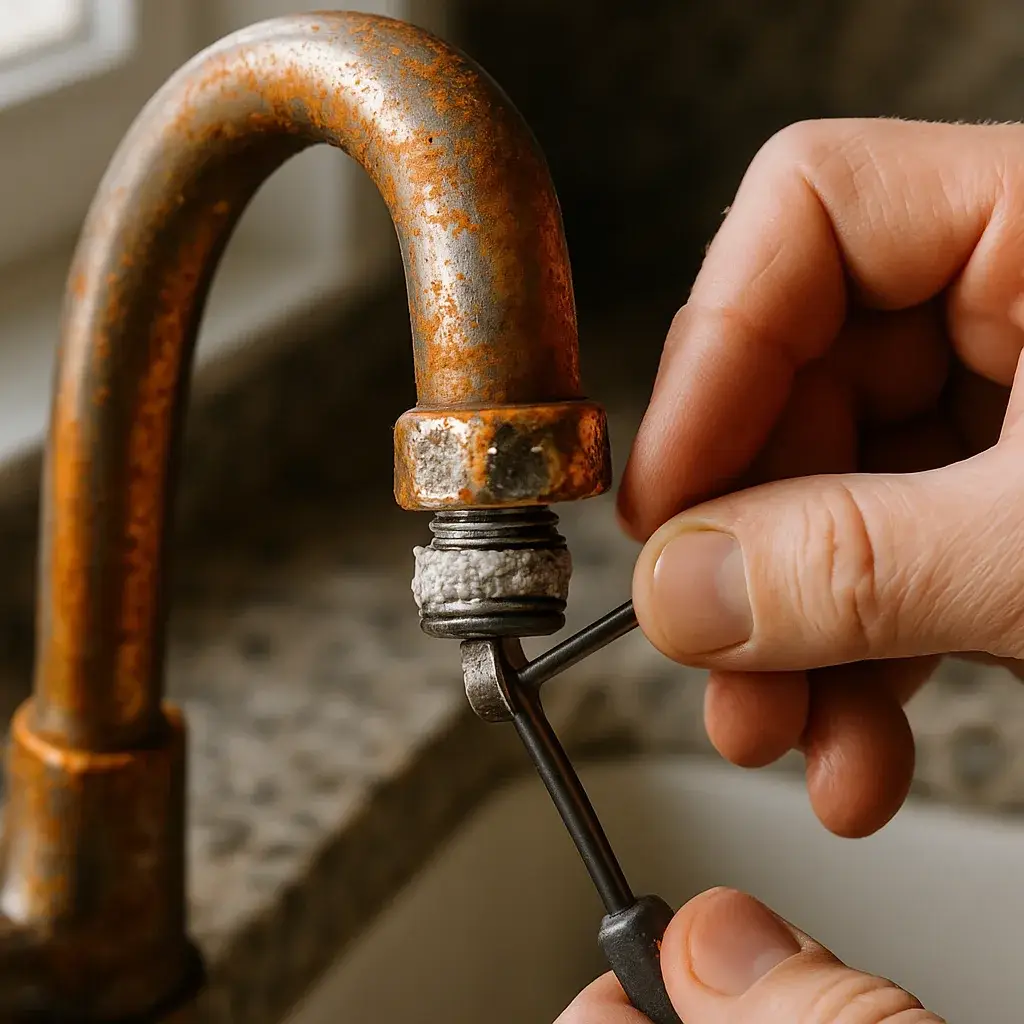
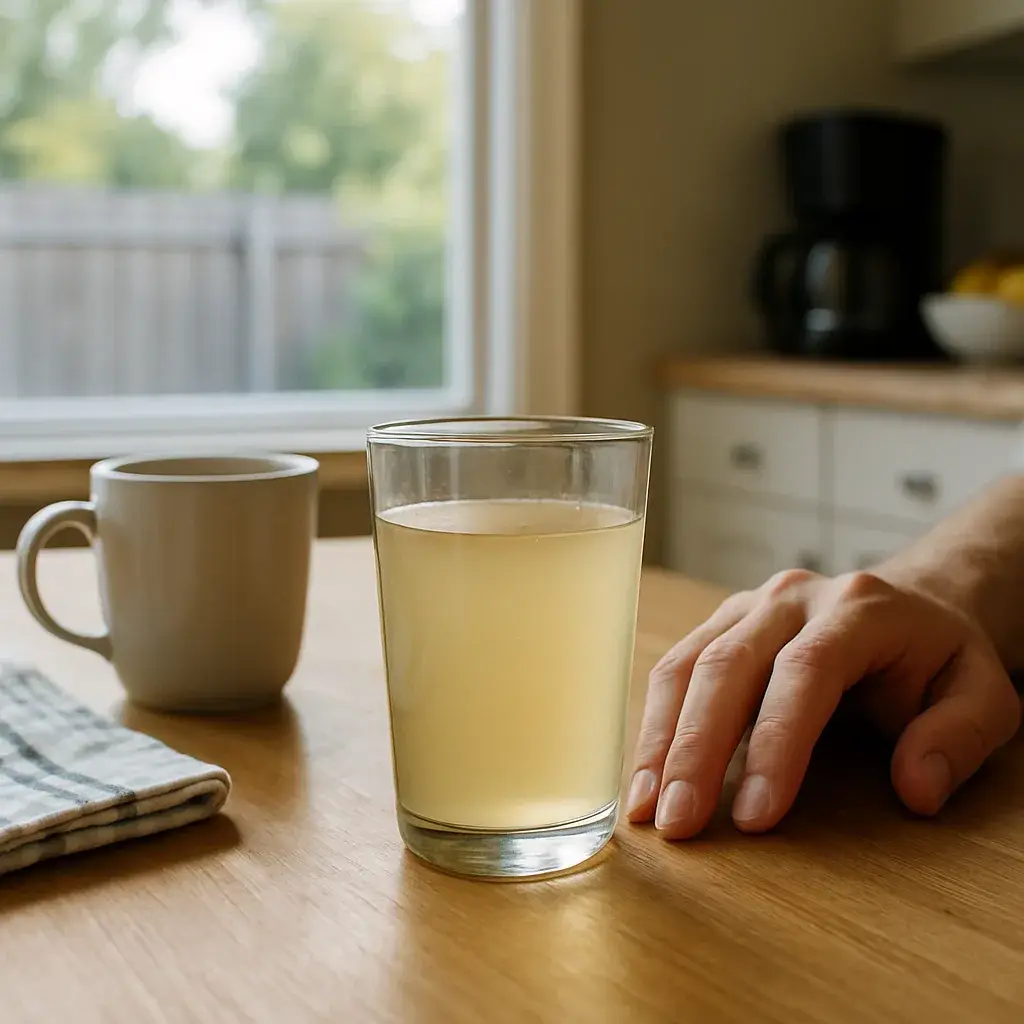
We get calls from Sunnyvale homeowners describing the same handful of complaints. Cloudy glasses of water. A film on dishes fresh out of the dishwasher. Laundry that comes out dingy even with plenty of detergent. It’s hard water or iron, sometimes both.
- Rust colored or brown stains in sinks, tubs, or on laundry
- A rotten egg or sulfur smell coming from the tap
- Cloudy, hazy, or discolored water straight from the faucet
- White, crusty scale building up around faucets and shower heads
- Water heater making popping or rumbling sounds, a sign of sediment buildup
Here’s the thing, none of these signs tell you the exact fix on their own. A water test does that. It shows what’s in your water, sediment, iron, hardness minerals, sometimes bacteria. Skip the test and you’re guessing at a system. Guessing means paying for stages you don’t need or missing one you do.
Match the System to What’s in Your Water
A water test tells us what we’re dealing with. Not a guess, not a sales pitch, real numbers. Sediment shows up as grit in the toilet tank or cloudy water. Iron shows up as orange staining on tubs and sinks. Bacteria and nitrates don’t show up at all until someone gets sick. That’s why we test rather than assume.
Every well on a property is different. Even two houses on the same road can pull from different depths or aquifer conditions. So the system has to match your test results, not a generic package.
- Sediment filtration for grit, cloudiness, and particles that clog fixtures and appliances
- Iron filtration for staining, metallic taste, and buildup in water heaters
- Water softening for hardness that leaves scale on faucets and shortens appliance life
- UV purification for bacteria when a test flags biological contamination
- Combination multi-stage setups when the test shows more than one issue, which is common
It’s not just one problem. Iron and hardness show up together more than folks expect. A single-stage filter just won’t cut it then.
We size the system to your flow rate and household demand too. A bigger family running two bathrooms and a washer needs more capacity than someone using well water for a smaller home. Get the sizing wrong and you’ll notice a drop or the system working overtime, wearing out faster than it should.
When a Water Test Says You Don’t Need a New System
Not every well water test ends with a recommendation to install a treatment system. That’s a good outcome. If your sample comes back clean of bacteria, nitrates, arsenic, and other common Central Texas contaminants, with mineral levels within acceptable ranges, you may not need to spend money on filtration or conditioning equipment right now. A clean result simply confirms your well is producing safe water at that moment. It doesn’t mean your water will always test clean. That’s why the recommendation shifts from installation to monitoring.
This distinction matters more for well owners than most people realize. The Texas Commission on Environmental Quality regulates public water systems and requires them to test regularly and report results. Private wells serving individual homes in Sunnyvale and surrounding Dallas County and Kaufman County areas don’t fall under that same oversight. Nobody is checking your well’s water quality on a schedule but you. That responsibility, and the cost of testing, rests entirely with the homeowner.
Because well water conditions change with rainfall, nearby land use, agricultural runoff, and even seasonal water table shifts, a clean test today is a snapshot, not a guarantee. Groundwater in this part of Texas can pick up bacteria after heavy spring rains or show rising nitrate levels if a neighboring property changes fertilizer use. A well that tested clean last year could show a problem this year without any change in how the water looks, tastes, or smells.
- Retest annually for bacteria, and every one to two years for nitrates and common minerals
- Retest immediately after any flooding, well repair work, or a noticeable change in taste, odor, or color
- Keep written records of past results so you can spot gradual trends, like slowly rising hardness or iron
- Retest sooner if a household member is pregnant, an infant, or has a compromised immune system
- Consider a broader panel every few years to catch contaminants a basic annual test might miss
If your well tests clean now, the smartest move isn’t to install equipment you don’t need. It’s to build a regular retesting habit and know what warning signs would prompt an earlier check. That approach saves money today while protecting your household down the road.
Need help with Well water treatment?
Call Today, Get Service Today. Xtreme Air Services is ready to help.
What to Expect Before Your Well Water Treatment Install in Sunnyvale
Well water treatment isn’t a one-size-fits-all purchase. Reputable Sunnyvale providers use a test-then-quote model instead of quoting blind over the phone. Before any equipment is recommended, a technician draws a water sample and runs it through lab or field testing to identify exactly what’s in your well: iron, sulfur, hardness minerals, sediment, bacteria, or a combination. That test result, along with your household’s water flow rate (typically measured in gallons per minute), determines which treatment stages you need and how the equipment should be sized.
Because every well is different, pricing varies more than it does for city water customers. Most Sunnyvale and rural Forney installations fall between $1,500 and $5,000 depending on contaminant severity, number of treatment stages, and equipment quality. The most frequently installed setup, a multi-stage system combining sediment filtration, iron removal, water softening, and sometimes UV disinfection, typically runs $2,200 to $3,600 installed. Homes with heavier iron staining, sulfur odor, or higher bacteria counts sit toward the upper end of that range, while simpler sediment-and-softening jobs land closer to the lower end. For a closer look at how these numbers break down by equipment type, see our detailed well water treatment cost guide.
- Number and type of contaminants found in your test results
- How many treatment stages your system requires (filtration, softening, iron removal, UV)
- Your home’s flow rate and peak water demand
- Equipment tier: standard versus high-capacity or commercial-grade components
- Accessibility of your well, tank, and existing plumbing
Expect a service-call fee of $26 to $99 for the initial visit and water test. That fee is fully credited toward your installation if you move forward with treatment, so you’re not paying twice. Financing options are also available for homeowners who prefer to spread out the cost of a larger multi-stage system rather than paying the full amount upfront.
One detail that sets local service apart: the same licensed team handles both the plumbing and the treatment installation, so you’re not coordinating two separate contractors. Work is performed under HVAC License #TACLA29023C, with Master Plumber Larry Breedlove overseeing plumbing connections, tank tie-ins, and equipment placement. That means fewer scheduling headaches and a single point of accountability from the initial water test through final installation.
How the Well Water Treatment Installation Works
Well water quality around Sunnyvale varies block by block depending on depth, soil composition, and proximity to old agricultural land. Because of that variability, a proper treatment installation always starts with data, not guesswork. A technician pulls a raw water sample and runs it through lab or field testing for hardness, iron, manganese, tannins, pH, and in some cases nitrates or coliform bacteria left over from decades of orchard and farm use in the area.
- Test the water: An analysis identifies exact contaminant levels and hardness grains per gallon. This determines equipment sizing rather than a one-size-fits-all guess.
- Design the system: Based on lab results, the technician specs out the right combination of components, such as a water softener for hardness, an oxidizing filter for iron and manganese, or a carbon stage for taste and odor.
- Install the treatment stages: Each component is plumbed in sequence, often sediment filtration first, followed by iron or softening media, then a final polishing or carbon stage.
- Connect near the tank or main line: The system ties into the plumbing after the well pump delivers water to the tank. This ensures treated water reaches every fixture in the home.
- Run a startup verification test: Once installed, water is re-tested at the tap to confirm hardness, iron, and pH readings fall within target ranges before the job is signed off.
Installation typically takes a half day to a full day depending on how many treatment stages are needed and how accessible the mechanical room or wellhead area is. Older Sunnyvale properties with well systems tucked into crawlspaces or detached utility sheds sometimes require extra time for plumbing modifications.
Understanding this separation upfront helps set realistic expectations for both timeline and cost. Bundling assumptions about pump repairs into a treatment quote is one of the most common sources of confusion for well owners in the area.
Frequently Asked Questions
Common questions about Well water treatment
How fast can you test my well water in Sunnyvale?
We can usually get a technician out within a day or two of your call, six days a week. Sunnyvale sits across Dallas and Kaufman counties, so we bring the right paperwork for either side before we even knock on your door. During the visit we draw a sample right at your tap. You get real numbers back, not a guess, so you know exactly what your well is producing before any equipment gets discussed.
What happens when the technician shows up for a well water visit?
The technician starts by drawing a water sample straight from your tap and asking about any staining, smell, or taste changes you’ve noticed. They’ll check your toilet tank and faucets for the tell-tale rust or scale marks common in Sunnyvale wells. From there they run field or lab testing for iron, sulfur, hardness, sediment, and bacteria. You get clear results before any system gets recommended, so nothing is guesswork.
Why does my well water smell like rotten eggs or stain my fixtures?
That rotten egg smell is sulfur, and orange or brown staining is iron, both very common in Sunnyvale groundwater. Wells here pull from mineral-heavy ground layers, so these signs show up often across Dallas and Kaufman county properties. A water test confirms the exact levels so we can match a filtration system to your specific well instead of installing equipment that doesn’t address what’s in your water.
How do I know which well water system I need?
Your water test tells us that, not a sales pitch. Sediment shows up as grit or cloudiness, iron shows up as staining, and bacteria or nitrates often show no visible sign at all. Many Sunnyvale wells have more than one issue at once, so a single-stage filter often isn’t enough. We size the system to your test results and your household’s water use, so it handles daily demand without wearing out early.
Do I still need to retest my well water after it comes back clean?
Yes, a clean test today is a snapshot, not a guarantee for the future. Private wells in Sunnyvale don’t fall under the same oversight as public water systems, so nobody checks your water on a schedule except you. We recommend retesting for bacteria yearly and checking nitrates and minerals every one to two years, plus retesting right away after flooding, well repairs, or any change in taste or smell.
Is my well water regulated the same way as city water in Sunnyvale?
No, private wells are not regulated like municipal systems. The Texas Commission on Environmental Quality oversees public water systems and requires regular testing and reporting, but private wells serving individual homes in Sunnyvale don’t fall under that same rule. That means testing responsibility, and the cost of it, is entirely on the homeowner. Building a regular retesting habit is the best way to catch changes early, especially after heavy spring rains.
Ready to Get Started?
Call 972-288-2263 Today, Get Service Today.