


What Are the Most Common Questions and Problems People Have With Air Duct Cleaning?
The duct problems we get called about most, and what each one usually turns out to be once we look.
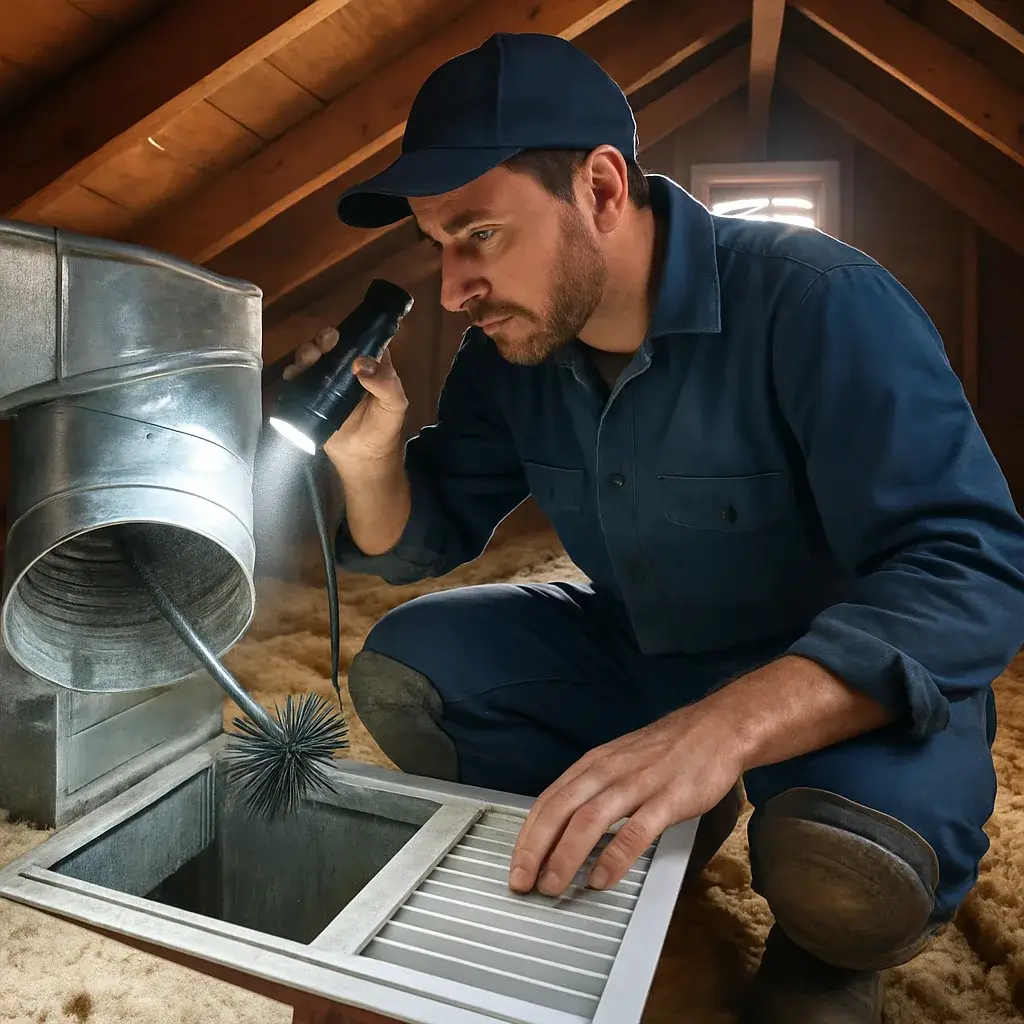
What’s Covered on This Page
Dust Keeps Coming Back Even After a Cleaning
This is one of the questions we hear most from people looking into duct cleaning for the first time. Duct cleaning removes what’s built up inside the supply and return lines right now. It doesn’t stop new dust from forming in the house or getting pulled back into the system afterward. If your filter is the wrong size, loose in its slot, or overdue for a change, dust keeps riding the airflow straight back into the ducts within weeks.
Many older Sunnyvale and DFW homes have attic-run ductwork. Attic ducts take a beating from heat cycling over the years. Small gaps at the joints or a return line pulling air from the attic instead of the living space will feed dust into the system constantly. We’ve seen ducts that were clean six months earlier already lined with buildup again, and it almost always comes back to a leak point or a return drawing from the wrong place. That isn’t the cleaning falling short, by the way.
Pets, remodeling work, and a dry Texas summer with the windows shut tight all add dust load faster than normal. None of that means the ductwork needs cleaning again right away. It’s just what a house does. As part of a duct cleaning visit, we check airflow and look at the register and grille condition. You will know if something upstream of the ducts is working against the cleaning.
- Filter fit and change schedule matter as much as the duct cleaning itself.
- Attic ductwork with gaps or loose joints can pull in dust between the attic and the living space.
- Return ducts drawing air from an unconditioned space will reintroduce dust fast.
- Normal household activity, pets, and construction dust all add new buildup over time.
If duct sealing turns out to be part of the picture, that’s a separate job from the cleaning itself. It gets priced and scoped on its own. We won’t fold repair work into a cleaning quote without walking you through it first.
Musty or Unusual Odors Aren’t Always a Duct Cleaning Issue
A musty smell when the AC kicks on is one of the most common reasons people call about air duct cleaning. But the smell doesn’t always start in the ducts. In many North Texas homes, especially older ones with attic-run systems, the odor traces back to standing water in the condensate drain pan, a slow AC drain line, or moisture sitting on the evaporator coil. Humidity swings between a hot Texas summer and a sudden cold front can leave enough condensation around the coil to grow a musty smell that travels through the vents. This happens even when the ductwork itself is clean.
A sharp, electrical smell usually means something at the blower motor or a component, not dust. A sour or rotten smell that shows up suddenly, especially near one register, can mean something got into the ductwork or a wall cavity. A dusty, dry smell that only happens the first few minutes the system runs after sitting off is more often just settled dust burning off a component. It usually fades on its own.
- Musty, damp smell that’s steady while the AC runs: often condensate drain or coil moisture, not the ducts.
- Sharp or burning smell: usually electrical, not dust related.
- Sudden sour or rotten smell from one area: sometimes something in the ductwork or a wall cavity.
- Faint dusty smell only at startup: usually normal and temporary.
This is why we don’t sell duct cleaning off a phone description of a smell. Our ductwork inspection looks at the actual buildup inside the supply and return runs before we quote anything. If the smell is pointing somewhere else, like the coil or the drain line, we’ll say so instead of running a cleaning that won’t touch the real source. We also offer evaporator coil cleaning, AC drain line cleaning, and air quality testing. If the inspection points away from the ducts, there’s a real next step instead of guessing twice.
Our air duct cleaning service page walks through what’s included.
Uneven Airflow Usually Points to More Than Buildup
One room runs warm while another stays cold. Or a vent barely pushes air at all. That’s the airflow complaint we hear most from people looking into air duct cleaning, and it makes sense why. A vent that isn’t moving much air feels like a dead end. Duct buildup is an easy thing to point at.
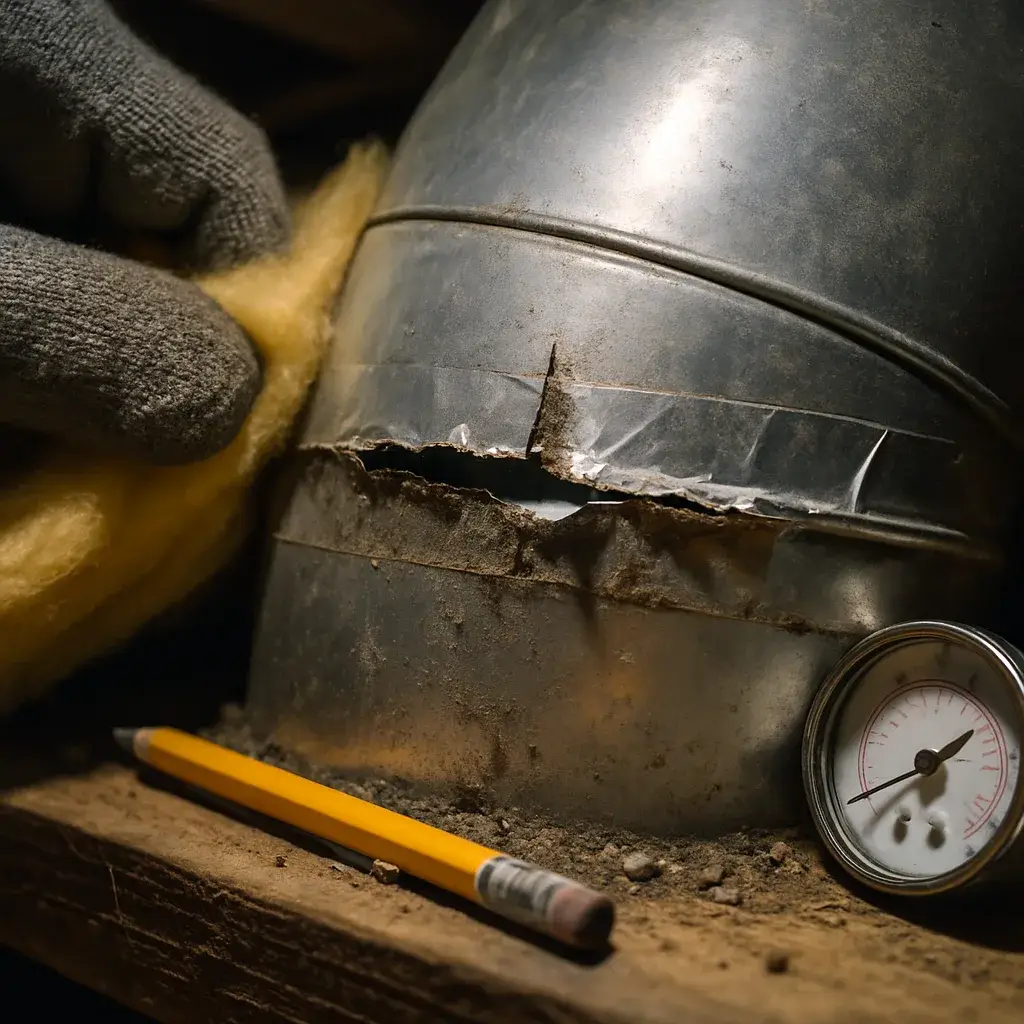
Dust and debris inside the ductwork can narrow the path air travels through, especially at bends, transitions, and near the return. Over years, that buildup thickens on the interior walls of the duct, and the supply air that reaches the room drops off. Homes with pets, homes that skip filter changes, or homes near construction dust tend to show heavier buildup when we run a camera through the line.
Buildup is only one possible cause. Airflow trouble often comes from somewhere else entirely. A disconnected duct in the attic, a closed or damaged damper, an undersized return, or a blower motor that’s lost strength can all produce the same symptom: a room that never feels right. We’ve opened attic access expecting heavy buildup and found a duct run that had come apart at a joint instead. Cleaning wouldn’t have touched that.
This is why we look at the whole system before we call it a duct cleaning problem. A ductwork inspection using a camera shows what’s inside the line, not just what buildup might be doing at the register. We also check register and grille condition. A grille packed with dust can choke airflow on its own without the duct behind it being dirty at all.
- Visible dust blowing out when the system kicks on, which usually points to buildup near the supply registers.
- One or two rooms consistently weaker than the rest, which can mean a duct run issue rather than buildup spread evenly through the system.
- Airflow that’s weak system-wide, which often traces back to the blower or return size rather than the ductwork itself.
- A musty smell with the weak airflow, which is a different issue from buildup and gets flagged separately rather than folded into a standard cleaning.
If the inspection points to buildup, cleaning the supply and return ductwork along with the registers and grilles is the fix. We check airflow again afterward to confirm it made a real difference. If it points somewhere else, like duct sealing or a mechanical issue, we’ll say so before any cleaning work starts. Homes across the Sunnyvale and greater Dallas-Fort Worth area see this kind of mixed cause fairly often, particularly older slab homes where duct runs have shifted over the decades.
Anyone weighing whether the airflow problem is worth a service call can get a sense of what a standard cleaning includes and what it doesn’t on our air duct cleaning page before booking anything.
Need help with Air duct cleaning?
Call Today, Get Service Today. Xtreme Air Services is ready to help.
Not Every Home Needs Duct Cleaning on the Same Schedule
People ask us this all the time: how often does duct cleaning need to happen? There’s no single number that fits every house. A newer home in a Frisco subdivision with a tight, well-sealed system can go a lot longer between cleanings than an older slab home near Sunnyvale with an attic-run system that’s been open to dust and rodents for twenty years.
The real drivers are the size of the system, how many vents and returns it has, how much buildup has collected, and how easy the ductwork is to reach. A bigger home with more registers has more surface area for dust to settle. A system with hard-to-access runs in a low crawlspace or a tight attic takes longer to clean properly. That affects timing too, not just cost.
- Pets in the home, especially shedding dogs and cats, add hair and dander to the ductwork faster than a pet-free house.
- A recent remodel or foundation repair can send drywall dust and debris straight into the supply and return lines.
- Allergy or asthma concerns in the household are a common reason people move up their schedule, even if the ducts don’t look overdue.
- Homes near a construction zone or a dirt road pull in more particulate through the return air, especially during North Texas dry spells and windy fronts.
- A system that’s run hard through a Texas summer without regular filter changes tends to load ductwork faster than one that’s been maintained.
We’d tell you plainly if your home didn’t need it yet. Some houses we look at have light dust and clean coils, and pushing a full cleaning on that kind of system doesn’t do much for you. Others have visible buildup at the registers or musty air coming through the vents. That’s a different conversation.
Part of what we look at during a ductwork inspection is buildup level and airflow, not just a calendar date since the last cleaning. That’s also where sanitizing gets discussed, since it’s an add-on some homes benefit from and others don’t need at all. Our air duct cleaning page breaks down what a visit includes and what moves the price.
Extra Work We Find Gets Quoted Separately, Not Bundled In
A standard visit covers the full duct cleaning, register cleaning, and an airflow check. That’s the job we quote up front. What it doesn’t cover is anything we find once we’re inside the ductwork that goes beyond dust and debris. When that happens, we stop, explain what we’re looking at, and give you a separate price before touching it. Nothing gets added to your bill without you seeing it first.
This isn’t rare in older DFW homes. Ductwork sits in attics that swing from freezing to well over 120 degrees across a Texas year. The clay soil under many Sunnyvale and Mesquite-area slabs shifts enough over decades to pull duct joints loose. Add rodents, past DIY patch jobs, or a duct run that was never sealed right at installation, and you get problems a camera or a technician’s hands can find. A basic cleaning was never meant to fix these issues.
- Mold growth inside the ductwork, which requires remediation rather than cleaning.
- Torn, crushed, or disconnected flex duct sections found while inspecting a run.
- Loose or unsealed joints losing conditioned air into the attic.
- Damaged or rusted metal ductwork that needs repair before it can be cleaned effectively.
- Any corrective work uncovered during the inspection that falls outside the original scope.
We’d rather tell you about a torn duct run than clean around it and let you think the job’s done. If we find something, you get a written price for that specific fix. You decide whether to move forward that day or later. You’re never locked into more work than you agreed to when you booked.
Duct sealing and duct repair are both things we handle. If extra work does turn up, it can be addressed by the same crew instead of coordinating a second company. Our air duct cleaning pricing guide breaks down the ranges by vent count and system size.
Ready to Get Started?
Call 972-288-2263 Today, Get Service Today.