


HVAC Repair in Carrollton: Warning Signs, What It Costs, and When to Call
Repairs that fix the cause, not just the symptom – with quick checks to try first and a clear call on what can wait.
What’s Covered on This Page
- Signs Your System Needs a Repair Call
- Checks You Can Try Before Calling a Technician
- What Happens During a Repair Visit
- What Drives the Cost of a Repair
- Why Licensing Matters for a Repair in Your Home
- What is the $5000 rule for HVAC?
- How much does a typical HVAC service call cost?
- What does an HVAC technician do during a repair?
- Can I fix my HVAC system myself?
Signs Your System Needs a Repair Call
Your system usually tells you something is wrong before it quits. The trick is knowing which changes matter. Here’s what to watch for and what it often means inside the unit.
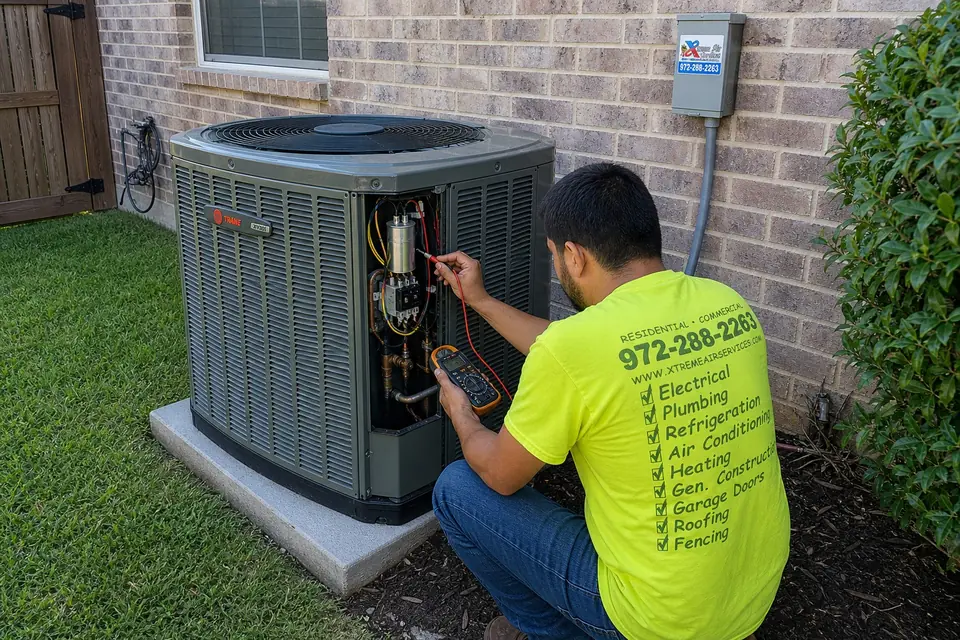
- Warm or lukewarm air from the vents. The fan runs, but the air isn’t cold. This often points to a failed capacitor, a refrigerant leak, or an outdoor unit that isn’t starting.
- Weak airflow in some or all rooms. A worn blower motor, a frozen coil, or a choked filter can all cut the air coming out of your registers.
- Ice on the copper lines or the indoor coil. Frost in July means air or refrigerant isn’t moving the way it should.
- Buzzing, clicking, grinding, or squealing. A steady hum from the outdoor unit with no fan spinning is a classic capacitor or motor sign. Grinding often means a motor bearing is wearing out.
- Water near the indoor unit or a ceiling stain below the attic. A clogged drain line backs up fast and can soak drywall before you notice.
- Short cycling. The system kicks on, runs a few minutes, shuts off, and starts again. That wears parts out and leaves your home sticky.
- A burning, electrical, or musty smell from the vents. Any new smell is worth having looked at.
- The system won’t turn on, or won’t turn off. This can be a thermostat problem, a tripped safety switch, or a failed control board.
- Your power bill jumps with no change in weather or habits. A struggling part makes the whole system work harder for the same comfort.
In winter, the list shifts a little. A furnace that clicks but won’t light, a heat pump blowing cool air on a cold morning, or rooms that never warm up all point to parts like an ignitor, a dirty flame sensor, or a reversing valve.
Carrollton summers are hard on equipment. When it’s triple digits outside, your attic can get far hotter, and that’s where many local air handlers and drain lines live. Heat like that is tough on capacitors, motors, and wiring. A part that was just tired in spring can give out in August, right when you need it most.
Here’s the good news. Most of the repair calls we get are a single common failure fixed on the first visit. A capacitor, a motor, a clogged drain, a sensor. Those are normal wear items, and swapping one out gets your home comfortable again without talk of a new system.
What turns a small repair into a bigger one is time. A unit that keeps running on a bad capacitor strains its motors. A slow refrigerant leak makes the compressor work harder every day. A backed-up drain line turns into a ceiling repair. If you notice one of these signs, that’s the right moment to have it checked, not after the next symptom shows up.
You don’t have to figure out which part failed. Just tell us what you’re seeing, hearing, or smelling. That’s enough to get started.
Checks You Can Try Before Calling a Technician
Not every problem needs a technician. A lot of calls come down to a setting, a switch, or a filter, and you can check those yourself in about ten minutes. If one of these fixes it, great. You just saved yourself a service call.
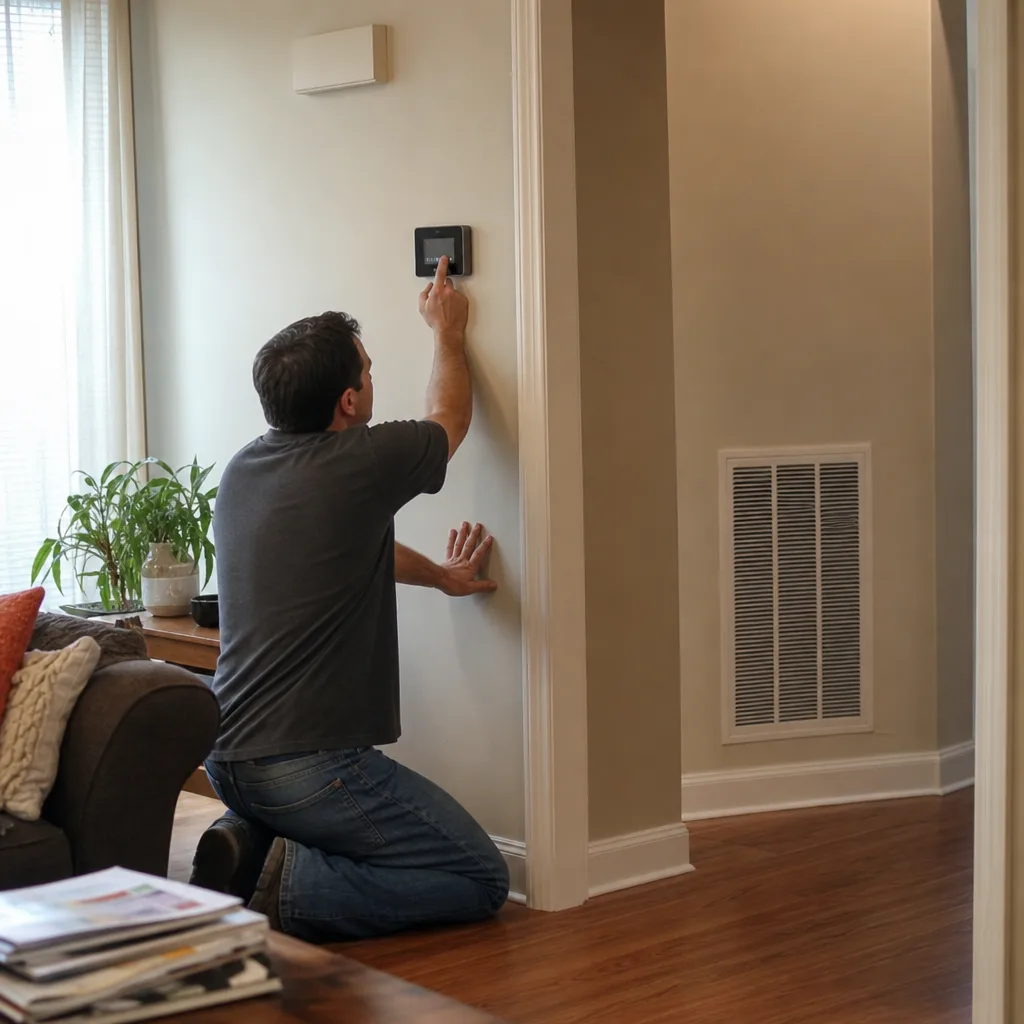
- Check the thermostat first. Make sure it’s set to Cool or Heat, not Off. The set temperature should be below the room temperature for cooling, or above it for heating. If the screen is blank, try fresh batteries.
- Look at the fan setting. If it’s set to On instead of Auto, the fan keeps running even when the system isn’t cooling. That can feel like warm air coming from the vents when nothing is broken.
- Check your breakers. Your system usually has one breaker for the indoor unit and one for the outdoor unit. Also look for the disconnect switch in the small box on the wall near your outdoor unit, and make sure it’s on. If a breaker has tripped, you can reset it once. If it trips again, leave it off. That’s an electrical problem, not a reset problem.
- Change the air filter. A clogged filter can cut airflow, freeze the coil, and make the system shut itself down. If you can’t remember the last time you changed it, start here.
- Make sure the furnace or air handler door is closed tight. Many units have a safety switch behind that panel. If the door isn’t seated all the way, the blower won’t run.
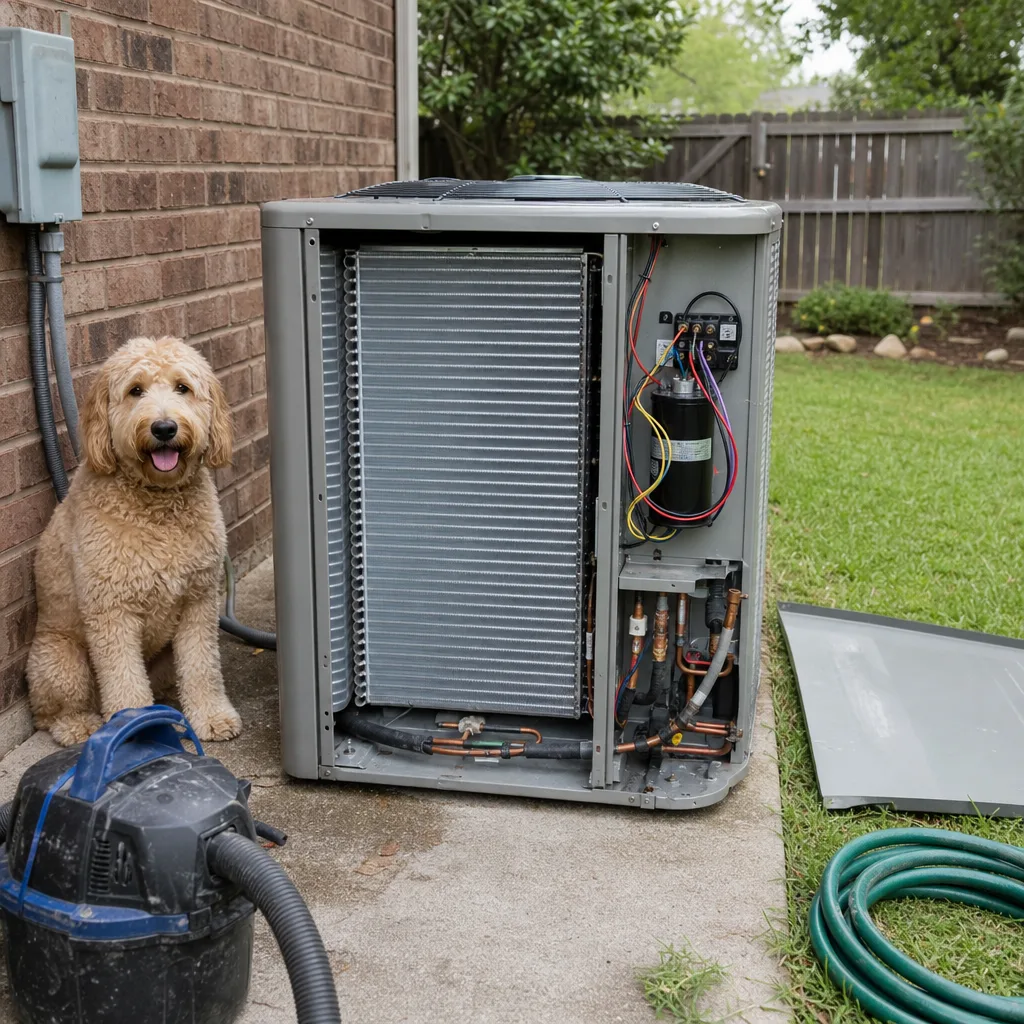
- Look in the drain pan under the indoor unit. Many systems have a float switch that shuts everything off when the pan fills with water. If the pan is full, the drain line is likely clogged. Some homeowners clear it with a wet-dry vac at the outside end of the drain line.
- Give the outdoor unit room to breathe. Clear away grass clippings, leaves, and anything stacked against it. It needs open space around it to push heat out.
- Open your registers. Closed or blocked vents, especially behind furniture or rugs, can make rooms feel warm and put extra strain on the system.
- If you see ice on the lines or the coil, turn the cooling off and let it thaw. Don’t chip at the ice. A frozen coil usually means low airflow or low refrigerant, so if it freezes again after you change the filter, it needs a closer look.
Some things are past the point of a homeowner fix. Leave these to a licensed technician:
- Anything inside the outdoor unit’s electrical panel. Capacitors can hold a charge even after you shut off the power.
- Refrigerant of any kind. Adding or handling it takes proper training and tools, and a system that’s low has a leak that needs to be found.
- Gas furnace parts, burning smells, or any sign of scorched wiring.
If you’ve worked through these checks and the problem is still there, you haven’t wasted your time. Knowing the breaker is fine, the filter is new, and the thermostat is set right helps narrow down what’s wrong. When you call, just tell us what you already tried.
What Happens During a Repair Visit
A repair visit has three jobs: find the part that failed, fix it, and prove the system works again. On most calls that’s one worn part, handled on the first trip. You’ll know the price before anything gets replaced.
Same-day service is available across Carrollton. There’s no extra charge for nights or weekends, so a breakdown on a Saturday evening costs the same as one on a Tuesday morning. The person at your door is a licensed and insured technician, background-checked and drug-tested.
Here’s how the visit goes.
- You tell us what you noticed. The warm air, the hum, the water in the pan, and the checks you already tried. That gives the technician a head start.
- The technician finds the cause. Good HVAC diagnosis means testing, not guessing. That usually means checking power at the indoor and outdoor units, testing the capacitor and motors, looking at the coil and drain line, and measuring how much the air cools as it passes through the system. The goal is to name the failed part, not just treat the symptom.
- You get the price first. We use upfront flat-rate pricing that you approve before work starts. No meter running, and no number that grows while someone’s in your attic.
- The repair gets done. The failed part is repaired or replaced, and diagnosis, labor, and the standard replacement part are all part of that repair.
- The system gets tested and the area gets cleaned up. The technician runs the system and confirms it’s cooling or heating the way it should before calling the job finished.
There’s a $26-$99 service-call fee to come out and diagnose the problem. If you go ahead with the repair, that fee is credited toward it. So you’re not paying twice to learn what’s wrong and then fix it.
Sometimes the look inside turns up more than one problem. A motor that’s been running on a weak capacitor may be worn too, or a refrigerant leak may be behind a frozen coil. When that happens, you’ll hear about it plainly before any extra work starts. Additional failed parts, major components like a compressor, code upgrades, and permits aren’t part of a standard repair. They’re quoted separately so you can decide. Financing isn’t usually needed for a smaller repair, but it’s available on larger repairs and replacements if your system needs more than a single part.
If your air handler sits in the attic, as many do around Carrollton, it helps to clear a path to the attic access and the outdoor unit before the technician arrives. Put pets in a separate room if you can. That gets the diagnosis started faster and your home cool again sooner.
The point of all this is simple. A small failure caught early is usually a small, clear-priced fix. You see what’s wrong, you approve the price, and you watch the system run before anyone leaves.
Have questions? We’re happy to help.
Call Today, Get Service Today. Xtreme Air Services — Carrollton is ready to help.
What Drives the Cost of a Repair
Most HVAC repairs with Xtreme Air Services fall in a typical price range of $150-$700. The most common job is finding the one part that failed, repairing or replacing it, and confirming the system runs right. That usually lands between $150 and $400. Where your repair falls depends on a few things you can understand before anyone picks up a tool.
- How much has failed. A single worn part is a smaller job than a failure that has spread. A capacitor that quit last week is a quick swap. One that’s been failing all summer may have taken a motor down with it.
- The part itself. Some parts cost more than others, and some are easier to get. A common capacitor or contactor is a standard item. A control board built for one specific model can cost more and may take longer to get.
- Your equipment’s age and brand. Older systems can use parts that are harder to find. Some brands use their own parts that cost more than general replacements.
- Whether more than one part is involved. When the diagnosis turns up two problems, like a leak behind a frozen coil, each one adds to the job. You’ll hear about each one separately so you can choose what to fix.
- When it breaks. Many companies charge more after hours. We don’t. There’s no extra charge for nights or weekends, so a Sunday night breakdown is priced the same as a Tuesday morning.
Here’s what that looks like in real life. Say your outdoor unit hums but the fan won’t spin on a hot afternoon. If it’s just the capacitor, that’s a small, common repair. If the fan motor has been straining against a weak capacitor for weeks, the motor may need replacing too. Same symptom, two different prices. The only difference is how long the problem went on.
That’s why calling early tends to cost less. The cost factors above are mostly about how far a failure has spread and how hard the part is to get. You can’t control the second one. You can usually control the first.
You also won’t be guessing at the final number. With upfront flat-rate pricing, you approve the price before any work starts. The service-call fee, and what is and isn’t part of a standard repair, are covered in the visit section above.
No matter who you call, these questions help you judge any quote:
- Is this the full price, or does it change based on time spent?
- Do you charge more for nights, weekends, or holidays?
- Which part failed, and can you show me?
- Is anything else worn that I should know about, and what happens if I wait on it?
- Does the diagnosis fee count toward the repair if I go ahead?
A good technician answers all of these plainly. If you get vague answers about price before the work starts, that’s worth noticing.
Watch Our Video
See How We Handle HVAC system repair in Carrollton
Xtreme Air Services — Carrollton
Why Licensing Matters for a Repair in Your Home
An HVAC repair isn’t like hanging a shelf. Your technician works around high-voltage wiring, gas lines on a furnace, and refrigerant under pressure. They may also spend an hour in your attic, where one wrong step can put a foot through your ceiling. A license tells you the person doing that work has been trained and tested for it. Insurance tells you that you’re not on the hook if something goes wrong.
In Texas, HVAC contractors are licensed by the Texas Department of Licensing and Regulation, or TDLR. Xtreme Air Services holds HVAC License #TACLA29023C. You don’t have to take our word for it. You can look up any contractor’s license on TDLR’s website before you let them in your home, and we’d encourage you to.
A license matters for more than paperwork. It also protects the main point of this page, which is that most breakdowns are one worn part with a clear price. That only stays true if the person diagnosing your system gets it right. Someone without the training might add refrigerant to a system that’s really leaking. They might swap a motor when the capacitor was the problem. Or they might reset a tripped breaker without asking why it tripped. Each of those leaves the real problem in place, and a small repair turns into a bigger one.
Here’s what licensing and insurance protect you from:
- Unsafe electrical work. Capacitors and contactors run on high voltage. A bad connection can damage your equipment or start a fire.
- Gas furnace mistakes. Ignitors, flame sensors, and gas valves need to be handled by someone who knows how to test the system safely afterward.
- Refrigerant shortcuts. As covered above, refrigerant takes proper training and tools. Topping it off without finding the leak just puts off the next breakdown.
- Damage you’d pay for. If an uninsured worker falls through your ceiling or floods your drywall, you could be left holding the bill.
- No one to call back. A licensed company has a name, a license number, and a record it has to answer for.
Trust inside your home matters too. Every technician we send is licensed and insured, and background-checked and drug-tested. When you open your door to someone, your family is home and your things are right there. You should feel good about who’s walking through. As a Trane Comfort Specialist, our team is also used to working on the equipment many North Texas homes already have.
Before any company sends a technician, it’s fair to ask three things. What’s your license number? Are you insured? Is the person coming to my home background-checked? A company that’s proud of its answers will give them to you right away. If you get a pause or a dodge, keep looking.
If your system is showing one of the signs above, now’s the time to have it checked, while it’s still a small fix. Call Xtreme Air Services and talk to a real person today. Same-day service is available across Carrollton, with no extra charge for nights or weekends.
Call 469-269-6099
Frequently Asked Questions
Common questions about HVAC system repair
What is the $5000 rule for HVAC?
It’s a rule of thumb some homeowners use to decide between repair and replacement: multiply the age of your system by the estimated repair cost, and if that number tops $5,000, replacement may make more sense. It’s only a guideline, not a fixed formula. A 12-year-old unit with a $400 repair lands at $4,800, which still favors fixing it. The real factors are how many parts have failed and whether your system is near the end of its expected life.
How much does a typical HVAC service call cost?
A service call to diagnose the problem runs between $26 and $99. That fee covers a technician coming out, testing your system, and telling you exactly what failed before any repair work starts. If you decide to move forward with the repair, that diagnostic fee gets credited toward the total, so you’re not paying twice.
What does an HVAC technician do during a repair?
An HVAC technician tests your system’s electrical components, airflow, and refrigerant levels to find the exact part that failed, then repairs or replaces it and confirms the system runs correctly afterward. This isn’t guesswork. It means checking power at the indoor and outdoor units, testing the capacitor and motors, and measuring how much the air cools as it moves through the system, so you get a clear answer instead of a swapped part that might not fix the real problem.
Can I fix my HVAC system myself?
Some simple issues are safe to check yourself, like a thermostat set wrong, a tripped breaker, or a dirty air filter, and those take about ten minutes to rule out. Anything involving the outdoor unit’s electrical panel, refrigerant, or gas furnace parts should go to a licensed technician, since capacitors can hold a dangerous charge even with the power off and refrigerant work requires proper training and tools.
Ready to Get Started?
Call (469) 269-6099 Today, Get Service Today.