


Dryer Vent Cleaning in Plano: Clear Pricing, No Surprise Bills
The whole dryer vent line cleared, not just the opening – to cut fire risk and help your dryer dry.
What’s Covered on This Page
- Signs Your Dryer Vent Needs Cleaning
- What Drives the Price of Dryer Vent Cleaning
- What Happens During a Dryer Vent Cleaning Visit
- Moving Into a Plano Home With an Unknown Vent History
- When DIY Vent Cleaning Falls Short
- How often should I get my dryer vent cleaned?
- How long does a dryer vent cleaning visit take?
- Is dryer vent cleaning worth paying for?
- Can I just clean the dryer vent myself with a brush kit?
Signs Your Dryer Vent Needs Cleaning
Your dryer pushes hot, wet air through a vent line and out of your home. Each load leaves a little lint behind in that line. Over time it builds up, the air slows down, and your dryer starts working harder to do the same job. You usually won’t see the clog itself. You’ll see what it does to your laundry and your laundry room.
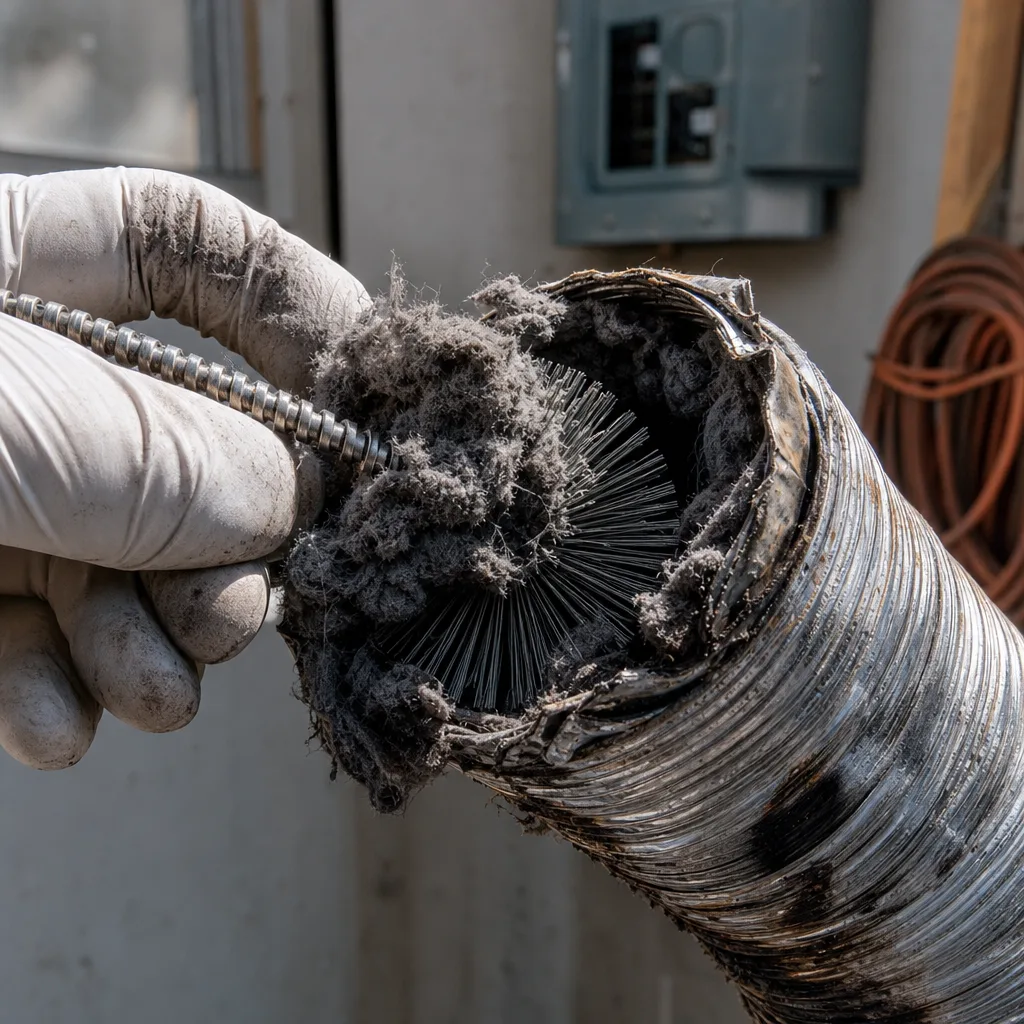
- Clothes need two cycles to dry. Towels and jeans still damp after a full cycle are the most common first sign. The heat is there, but the wet air has nowhere to go.
- The dryer or your clothes feel very hot. If the top of the dryer or the clothes are much hotter than they used to be, heat is getting trapped instead of leaving through the vent.
- You smell something scorched or musty. A hot, burnt smell can mean lint is sitting near the heat. A musty smell often means damp air is stuck in the line.
- Lint shows up in odd places. Look behind the dryer, around the door seal, on the floor, or around the vent cover outside. Lint escaping there means it isn’t leaving the way it should.
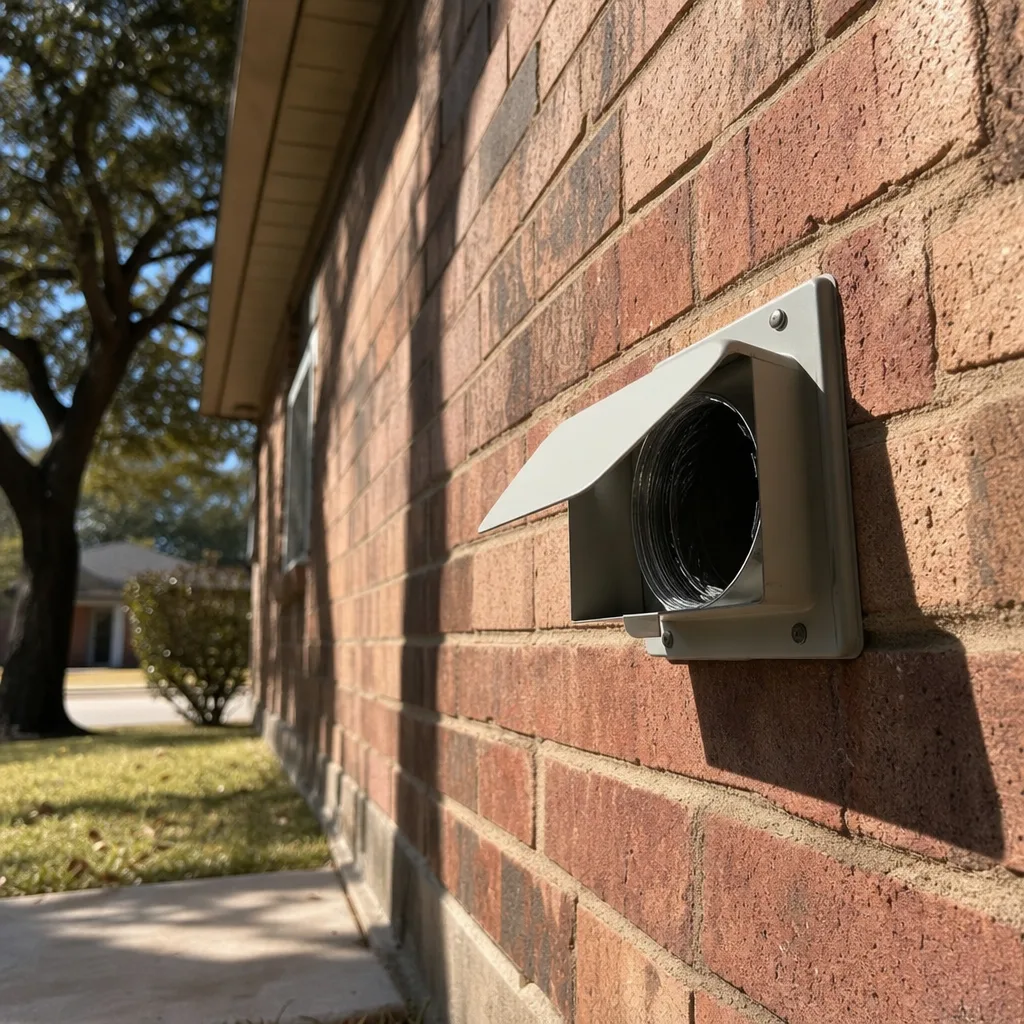
- The outside flap barely moves. With the dryer running, the flap on your outside vent cover should open and you should feel a steady push of warm air. A weak puff, or nothing, points to a blockage.
- The laundry room gets hot and humid. That trapped air has to go somewhere, and sometimes it’s back into the room.
- The dryer shuts off before the cycle ends. Many dryers have a safety switch that trips when they overheat, and a blocked vent is a common reason they do.
In a Plano summer, it’s easy to blame a stuffy laundry room on the Texas heat. But if the room feels hot every time the dryer runs, even in cooler months, look at the vent before you blame the weather.
Here’s a quick check you can do yourself. First, clean the lint screen. Then start the dryer and walk outside to the vent cover. Depending on how your home was built, that might be on an outside wall or up on the roof. If the vent is on a wall and you can reach it safely, hold your hand near it. Strong, warm airflow is a good sign. Weak airflow with a clean lint screen usually means the line needs cleaning.
Now, the honest part. If the airflow outside is strong and your clothes still come out damp, the vent may not be the problem. It could be the dryer’s heating parts, which is a job for an appliance repair pro, not a vent cleaning. We’d rather you know that up front than pay for a service that won’t fix what’s wrong.
If you’re seeing two or more of these signs, or you can’t remember the last time anyone cleaned the line, it’s time to have it looked at. A cleaning clears the buildup, and checking the airflow afterward is how you know the air is moving freely again.
What Drives the Price of Dryer Vent Cleaning
Most dryer vent cleanings with Xtreme Air Services run $100 to $175. That’s our most common job: we clear the lint and debris out of your vent line to get air moving again and lower your fire risk, then test it for proper exhaust. Across all dryer vent jobs, our typical range is $100 to $250. Where your home falls in that range depends on how your vent is built and how much lint is packed inside it.
Here’s what moves the price up or down:
- Vent length and routing. A short, straight run from a dryer on an outside wall is the simplest job. A long run with several bends takes more time to clean, because lint likes to settle in every turn. That’s common when the laundry room sits in the middle of the house or upstairs.
- Roof vs. wall termination. A vent that ends on a wall near the ground can usually be cleaned from both ends without much fuss. A vent that ends on the roof means working up top, which adds time and care.
- Level of buildup. A line that was cleaned a year or two ago goes faster than one that’s never been touched. Heavy, packed lint takes longer to break loose and pull out.
- Accessibility. If the dryer is wedged into a tight closet, or the outside cover sits behind shrubs or up high, it takes more work to reach both ends of the line.
Your cleaning includes a full cleaning of the vent line and an airflow and exhaust check, so you know the air is moving freely when we’re done. It doesn’t include vent repair, rerouting, or other fixes we find during the visit. Say we find a crushed section behind the dryer or a vent cover that’s falling apart. We’ll show you what we found and quote that work separately. You decide whether to go ahead. Nothing gets added to your bill without your say.
There’s a $26 to $99 service-call fee. If you go ahead with the work through Xtreme Air Services, that fee is credited toward the repair, so it isn’t an extra charge on top. Our pricing is upfront and flat-rate, and you approve it before work starts. No meter is running while we’re in your laundry room, and there’s no extra charge for nights or weekends.
We don’t usually offer financing on a job this size. Financing is available on larger repairs and replacements.
Whoever you call, ask these questions before you hire:
- Is the price flat, or does it grow by the hour?
- Do you clean the whole line from the dryer to the outside cover, or just the part you can reach?
- Will you check the airflow after cleaning to prove it worked?
- Is there a trip fee, and does it count toward the job?
- If you find damage, will you quote it before doing anything?
Clear answers to those questions tell you what you’re paying for. They also tell you the vent will really be clear when the truck pulls away.
What Happens During a Dryer Vent Cleaning Visit
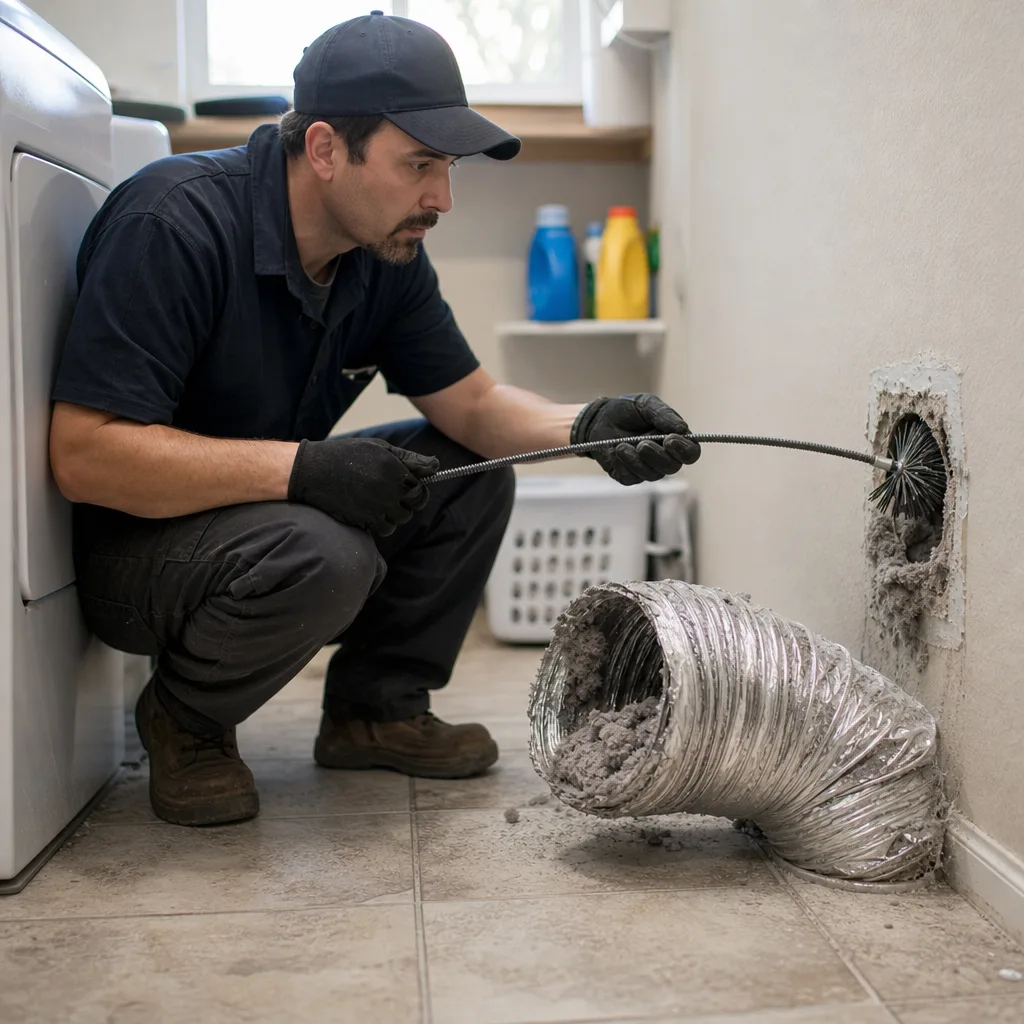
A dryer vent cleaning visit has one job. We clear the lint and debris out of your whole vent line, from the dryer to the cover outside. Then we check that hot air is leaving your home the way it should. That last step matters most. A vent isn’t fixed because it looks clean at the ends. It’s fixed when the air moves.
A few minutes of prep before we arrive can make the visit faster and easier:
- Clear a path to your dryer. Move laundry baskets, shelves, or anything stacked in front of it or on top of it.
- Know where your vent ends. If you’re not sure whether it’s on an outside wall or up on the roof, that’s fine. Just tell us what you know when you call.
- Make a short list of what you’ve noticed, like damp towels after a full cycle, a hot laundry room, or a weak flap outside.
- Plan for pets. Doors to the outside and the laundry room may be open for a while during the visit.
The cleaning covers the full line, not just the first few feet you can see behind the dryer. Lint packs in where you can’t reach it, inside bends, in long runs through walls, and in sections that climb up to a roof cover. That’s where a quick DIY brushing often falls short. If even part of the line stays packed, your dryer keeps working too hard.
After the cleaning comes the airflow and exhaust check. This is how you know the job worked, not just that someone was there. With the dryer running, warm air should push out of the outside cover in a steady stream. If it does, your line is clear. If it doesn’t, something else is still slowing the air down, and we’ll tell you what we think it is.
Sometimes the check turns up a problem that cleaning can’t fix. A section of vent might be crushed behind the dryer, or the outside cover might be broken. As covered in the pricing section, that work gets quoted separately. You’ll see what we found and decide what to do. Nothing extra happens without your okay.
Once the line is clear, you should notice the difference on your next load. Towels should dry in one cycle. The top of the dryer shouldn’t feel as hot. The flap outside should open wide while the dryer runs. Keep cleaning the lint screen after every load, and watch for the signs above coming back over time.
Our licensed and insured technicians are background-checked and drug-tested team members, so you can feel good about who’s in your home. Same-day service is available. Your upfront flat-rate price is approved before any work starts, and there’s no extra charge for nights or weekends. Your neighbors across North Texas have given Xtreme Air Services a 4.8-star reputation across more than 2,900 reviews on Google, Angi, and HomeAdvisor.
Call 469-527-5131
Ready when you are – get in touch today.
Call Today, Get Service Today. Xtreme Air Services — North Plano is ready to help.
Moving Into a Plano Home With an Unknown Vent History
When you buy or rent a home in Plano, the dryer vent comes with it, along with whatever’s packed inside. You don’t know how many loads the last family ran. You don’t know if anyone ever cleaned the line, or what happened when they pulled their dryer out to move. That unknown is the best reason to start fresh. One cleaning turns a guess into a known starting point.
Moving day is hard on vents. The hose behind the dryer gets yanked, kinked, or crushed when the old dryer comes out and a new one slides in. Sometimes it gets left off the wall completely, so hot, damp air blows into your laundry room or into the wall. Once the dryer is pushed back into place, you won’t see any of it.
A home inspection doesn’t settle the question either. Inspectors usually look at what they can see, like the hookup and the outside cover. They don’t run a brush through the line or check how much lint is sitting in the bends.
Before you run your first load, take a few minutes to check these:
- Look behind the dryer. If the hose is thin plastic or foil and it’s crushed or torn, replace it with a sturdier one before you dry anything.
- Find where the vent ends. Walk around the outside walls. If you can’t find a cover, the vent may end on the roof.
- Check the outside cover. Make sure the flap isn’t stuck shut, painted over, or blocked by a bird’s nest or a pile of lint.
- Ask the seller or landlord when the vent was last cleaned. A dated receipt tells you far more than “a while ago.”
Pay extra attention if your new home has two stories or the laundry room sits upstairs or in the middle of the house. The line can run a long way through walls and ceilings before it reaches the outside, and you have no idea how much of it the last owner ever reached.
Here’s the honest part. Moving doesn’t mean you need a cleaning. You can probably wait if three things are true: the seller gives you a receipt from the last year or so, the hose behind the dryer looks solid, and you feel strong, warm air at the outside cover during the quick check described earlier. Just keep an eye out for the warning signs above.
If you can’t check those boxes, a first cleaning with an airflow check gives you a clean line and a date to count from. You’ll stop wondering about the last owner and start keeping track yourself. If we find a crushed hose or a broken cover, you’ll get a quote before any work happens, as covered in the pricing section.
Call 469-527-5131
Watch Our Video
See How We Handle Dryer vent cleaning in Plano
Xtreme Air Services — North Plano
When DIY Vent Cleaning Falls Short
Sometimes you can clean your own dryer vent, and it works fine. If your dryer sits against an outside wall and the vent runs a few feet straight out to a cover you can reach from the ground, a brush kit from the hardware store can do the job. You can get to both ends, you can see most of the line, and there’s not much room for lint to hide. If that sounds like your setup, go for it. Cleaning the lint screen after every load and brushing out a short line now and then is good upkeep.

The trouble starts when the line gets longer, turns corners, or climbs. A brush on a flexible rod does well in a straight pipe. In a long run with several elbows, it tends to slide past the lint sitting in the turns. It can also push loose lint farther down the line, where it packs tighter than before. You pull the brush back out, see a pile of lint on the floor, and feel like the job’s done. Meanwhile, the worst of the clog is still sitting 15 feet away inside a wall.
Here’s where DIY usually comes up short:
- Your vent ends on the roof. Cleaning from the top means climbing up and working at the cover. On a Plano roof in July, that’s hot, slow, and not where most people want to spend a Saturday. Cleaning only from the dryer end leaves the top of the line untouched.
- The line has more than a couple of bends. Every elbow is a spot where lint settles and a brush can skip right over it.
- The run is long or goes through ceilings. Most home brush kits come with a set length of rods. If your line is longer than the kit, part of it never gets touched.
- You can’t see the joints. Inside a wall, a section can come apart or sag. A brush won’t tell you that, and pushing hard can make a loose joint worse.
- The brush gets stuck. A rod head that snaps off or jams in a bend turns a quick chore into a bigger problem than the lint ever was.
There’s one more gap, and it’s the big one. After a DIY cleaning, you don’t really know if the line is clear. You can feel for air at the outside cover, and that’s a good start. But a weak push can still feel okay to your hand. That’s why the airflow and exhaust check matters. It’s the step that tells you the whole line is open, not just the parts the brush reached.
So be honest with yourself about your setup. A short, straight wall vent is a fine weekend job. A long, bendy line, an upstairs laundry room, or a roof cover is where a pro saves you time and leaves you with a line you know is clear. If you already tried a brush kit and your towels still take two cycles, the clog is likely somewhere the brush couldn’t get to.
Call now
Frequently Asked Questions
Common questions about Dryer vent cleaning
How often should I get my dryer vent cleaned?
Most homes need the vent line cleaned about once a year, but your schedule depends on how much laundry you run and how your vent is built. A long line with several bends or a roof termination traps lint faster than a short, straight wall vent. If you’re noticing damp towels after a full cycle or a hot laundry room, don’t wait for the yearly mark, have it checked sooner.
How long does a dryer vent cleaning visit take?
A typical visit covers clearing lint from the full line, from the dryer to the outside cover, then checking airflow to confirm it worked. Simple setups with a short, straight run go faster than homes with a long vent, several bends, or a roof termination, since lint packed into turns takes more time to break loose and pull out.
Is dryer vent cleaning worth paying for?
Yes, because a clogged vent makes your dryer work harder, run hotter, and take longer to dry each load. Clearing the line restores normal airflow, which can mean towels drying in one cycle instead of two and a laundry room that doesn’t heat up every time you run a load.
Can I just clean the dryer vent myself with a brush kit?
You can if your dryer sits against an outside wall with a short, straight line you can reach from both ends. A brush kit tends to fall short on longer runs, roof terminations, or lines with several bends, since lint settles in the turns where a rod can’t reach, and you won’t really know if the whole line is clear without checking airflow afterward.
Ready to Get Started?
Call (469) 527-5131 Today, Get Service Today.