


Whole-Home Water Filtration Installation in Allen
Point-of-entry filtration for Allen's treated surface water, and how it solves different problems than a softener.
What’s Covered on This Page
- Allen’s Surface Water Supply Is Why Homeowners Consider Whole-Home Filtration
- Whole-Home Filtration Solves Different Problems Than Water Softening
- What a Point-of-Entry Filtration Installation Includes
- What Drives Filtration Cost Up or Down
- How the Installation Is Performed and Tested
- How long does a whole-home water filtration installation take?
- Can I install a whole-home water filter myself?
- Will a whole-home filter affect my outdoor sprinklers or hose bibs?
Allen’s Surface Water Supply Is Why Homeowners Consider Whole-Home Filtration
If you live in Allen, your water doesn’t come from a private well in the backyard. It’s surface water, meaning it comes from lakes and reservoirs. It gets treated at a plant and piped across the city to your meter. That’s good news. Treated city water has to meet federal drinking water standards before it ever reaches your faucet.
Surface water picks up a lot on its way to you, though, and treatment adds a few things of its own. To keep water safe in miles of pipe, utilities add a disinfectant like chlorine or chloramine. That’s the right call for public health. It’s also the reason some folks notice a pool-like smell in the shower or an off taste in a glass of water. Lake water can also shift with the seasons, so your water may taste a little different in late summer than it does in spring.
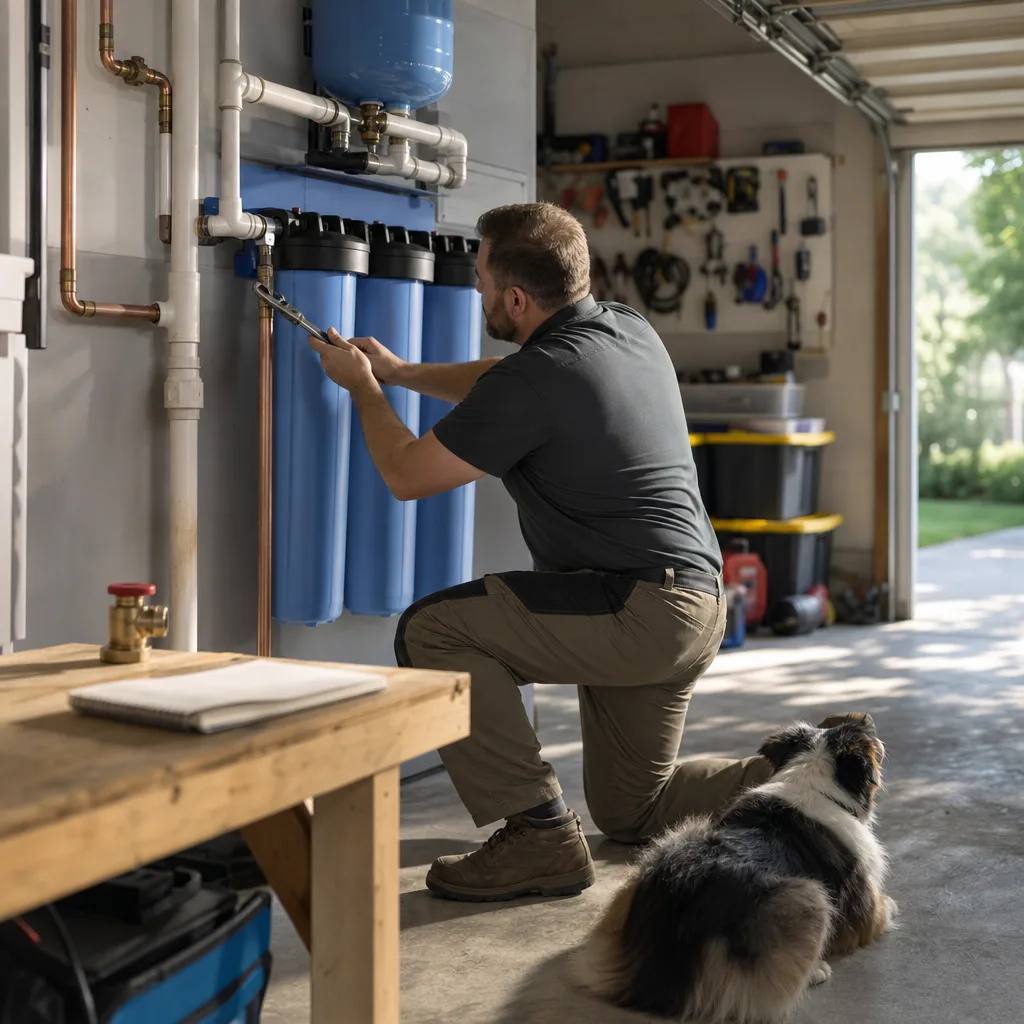
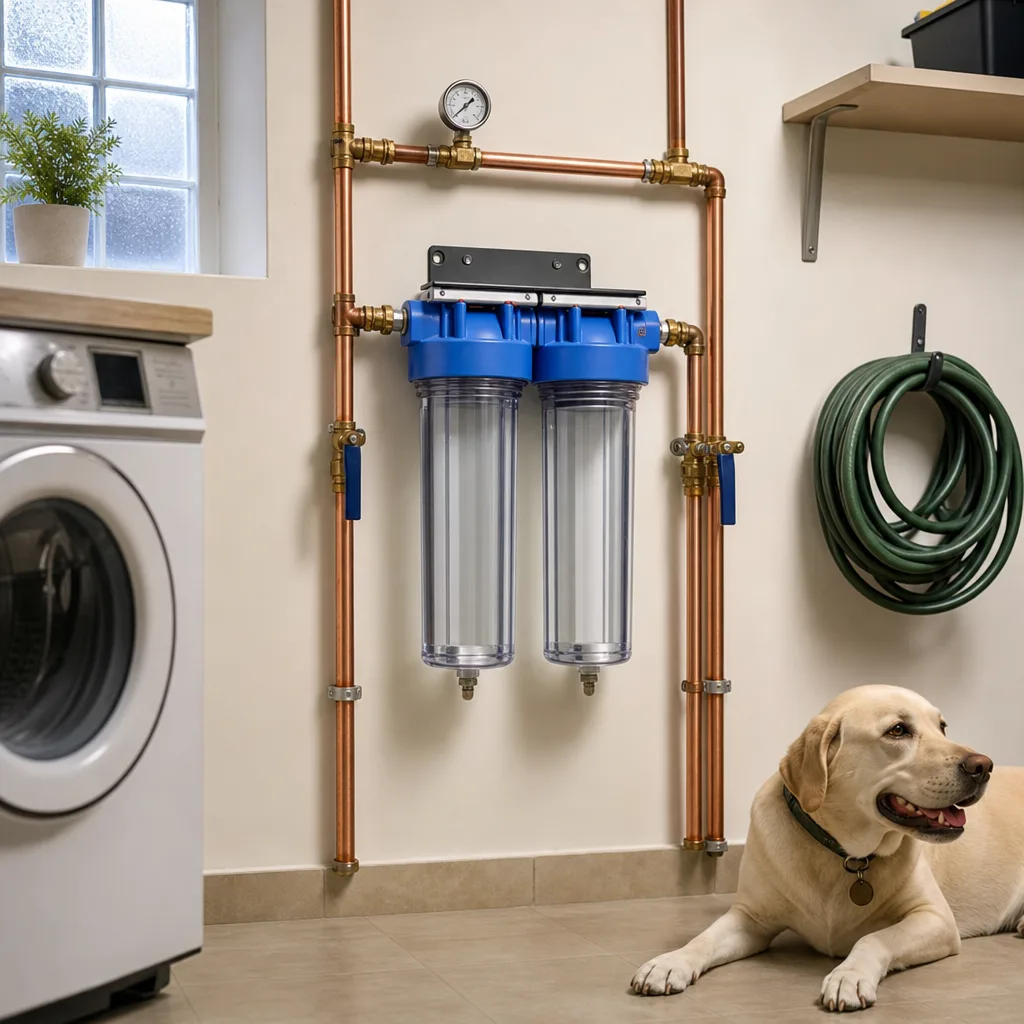
A whole-home system, also called point-of-entry filtration, sits where the main water line enters your house. Every drop gets filtered before it splits off to the kitchen, bathrooms, laundry, and water heater. A pitcher or fridge filter only treats what you drink. A whole-home filter covers what you shower in, cook with, and wash with too.
Here’s what homeowners on treated surface water usually want a whole-home filter to handle:
- Chlorine or chloramine taste and smell at every faucet, not just the kitchen sink
- Sediment and fine particles that can build up in aerators, showerheads, and appliance screens
- Dry skin or hair that some people link to disinfectant in their shower water
- Peace of mind that the whole family is using the same filtered water
Now for the straight answer on what a filter won’t do. If your real complaint is white crust on faucets, spots on dishes, or scale in your water heater, that’s hard water. Hardness comes from dissolved minerals, and most carbon and sediment filters aren’t built to remove them. Water softener installation is the fix for that, and some homes end up pairing a softener with a filter. If your water already tastes fine and none of the issues above bother you, you may not need a whole-home system at all. A good faucet filter for drinking water could be all you’re after.
That’s why water testing should come before any sales talk. A test shows what’s coming through your line, whether that’s disinfectant levels, sediment, or hardness. Then the system can be matched to your water instead of guessed at. Filter type and number of stages are among the biggest things that move the price of an install. Testing first keeps you from paying for stages your home doesn’t need, or missing one it does.
Whole-Home Filtration Solves Different Problems Than Water Softening
A filter and a softener can look alike. Both are tall tanks or housings near your main water line. But they do two different jobs. If you buy one expecting it to do the other’s job, you’ll be let down.
Think of it this way. A filter catches and grabs things. A softener swaps things out. A carbon filter holds onto chlorine, chloramine, and the tastes and smells that come with them. A sediment filter traps sand, grit, and tiny particles. A softener uses resin beads to trade the minerals that cause scale for sodium or potassium. It doesn’t touch the chlorine smell, and a filter doesn’t stop the white crust.
So start with what you’re noticing at home:
- Your shower smells like a pool, or a glass of water tastes off. That points to a filter.
- You see spots on the shower glass, crust on faucets, or your water heater is getting noisy. That points to a softener.
- Both bother you. That’s when it makes sense to pair them.
The install isn’t the same either. A softener needs a drain to flush itself, a spot to add salt, and usually an outlet for its control valve. Some whole-home filters need a drain too, mainly carbon tanks that rinse themselves out. Cartridge-style filters don’t. That’s why drain access is one of the things that can move the price of a filter install up or down.
Many newer homes have a built-in water loop, often in the garage, made for this kind of equipment. If your home has one, hooking up a system is simpler. If it doesn’t, adding a loop is extra work. So is any electrical work. It helps to know that before you get a price, not after.
Upkeep is different too. With a softener, you check and refill salt. With a filter, you change cartridges or replace the media on a schedule. How often depends on how much water your family uses and the system’s size. Ask about upkeep before you choose. A system you won’t keep up with won’t keep working for you.
What if your budget only covers one system right now? Go with the problem that bugs you every day. If the smell is why you’re here, start with the filter. If scale is costing you faucets, fixtures, and water heater life, start with the softener. A good setup leaves room to add the other one later without tearing anything out.
Our team installs whole-home filtration and softeners. That includes carbon filtration systems, sediment filters, and water softener installation. So you can hear an honest answer about which one your water needs. A water test settles it, and you won’t end up paying for a tank that solves the wrong problem.
What a Point-of-Entry Filtration Installation Includes
Once your water test points to filtration, the next question is simple. What do you get for the money? A point-of-entry install puts the filtration system at your main water supply, so it treats the whole home. Then it’s connected and tested before anyone calls the job done. The price depends on the type of system, not a one-size-fits-all number.
Here’s what’s included in a whole-home water filtration installation with Xtreme Air Services:
- The system and all materials
- Professional installation by licensed and insured technicians
- All connections to your main water supply
- Startup and testing, so you know it’s working before we leave
- Haul-away of your old unit, if you have one
Here’s what’s not included unless your quote says so. We’d rather you hear it now than find out on install day:
- A plumbing loop, if your home doesn’t already have one
- Electrical work
- Code corrections
- Permits, unless stated
Those extras aren’t hidden fees. They depend on your home. If your garage already has a water loop and the right setup, as covered above, none of them may apply. If your home needs one, it shows up on your quote before any work starts. That’s what upfront flat-rate pricing means to us. You see the price and approve it, and there’s no meter running.
What moves your price up or down within that range comes down to five things:
- Filtration type and stages. A single sediment stage costs less than a sediment stage plus carbon. Your water test decides how many stages you need.
- Flow rate and capacity. The system has to keep up when the shower, dishwasher, and washing machine run at the same time. A bigger household needs more capacity.
- Condition of your existing plumbing. Old or worn pipes and fittings near the main line may need attention before a new system goes on.
- Drain access, mainly for self-rinsing carbon tanks.
- Code upgrades, if anything at the connection point doesn’t meet current code.
There’s a $26 to $99 service-call fee for the visit. If you go ahead with the work, that fee is credited toward the job, so you’re not paying twice to find out what your home needs.
If the full cost is more than you want to pay at once, flexible financing is available on qualifying installations and larger jobs, on approved credit.
When you compare quotes from any company, ask the same questions. Is the old unit hauled away? Is startup and testing included? Is the system sized for your family’s water use, or just for the price? Are a loop, electrical work, or permits extra? Clear answers tell you more about a quote than the bottom-line number does.
Not sure what your Whole-home water filtration installation project needs? Ask us.
Call Today, Get Service Today. Xtreme Air Services — Allen is ready to help.
What Drives Filtration Cost Up or Down
You’ve seen the five things that move an install price. The install price is only half the story, though. What you pay on install day and what you pay to keep the system running are tied together. A choice that saves money now can cost more later, and the reverse is true too.
The biggest tradeoff is cartridge versus tank. A cartridge system usually costs less to put in. It doesn’t need a drain, and the housings are smaller. But you’ll swap cartridges for as long as you own it, and that cost adds up year after year. A self-rinsing carbon tank often costs more up front because it may need drain access and more room. In return, the media inside tends to last much longer between changes. Neither one is the right pick for every home. It depends on your water, your family’s water use, and how hands-on you want to be.
Here’s a simple way to think about it. If you plan to stay in your home a long time, look at what the system will cost you over several years, not just on day one. If you might move in a couple of years, a lower upfront price may make more sense.
There are also a few things you can do to keep your price from creeping up:
- Test your water first. Stages you don’t need are the easiest money to waste, and a missed stage means paying again later to add it.
- Size for how your home really uses water. Count bathrooms and people, and think about your busiest morning.
- Find out if you already have a water loop and a nearby outlet. Many garages have one. Mention it when you call so your quote reflects what’s really there.
- Plan ahead if a softener might come later. Leaving room in the layout now means you won’t have to redo pipes to fit it in.
- Ask what replacement cartridges or media cost and how often you’ll need them for your household.
One more thing about a cheap quote. A system that costs less but doesn’t fit your water, or can’t keep up when everyone’s getting ready at once, isn’t a savings. You’ll either live with weak pressure and off-tasting water, or you’ll pay to fix it. The goal isn’t the lowest number or the fanciest system. It’s the system that matches what’s in your water and how your family uses it.
If the right system costs more up front than you’d planned, the financing mentioned above on qualifying installations, on approved credit, can spread it out. Then you don’t have to settle for a system that only fits the budget for this month.
Watch Our Video
See How We Handle Whole-home water filtration installation in Allen
Xtreme Air Services — Allen
How the Installation Is Performed and Tested
On install day, your system goes in at the main supply, gets connected, and is started up and tested before the job is called done. Here’s what a proper point-of-entry install looks like, so you know what’s happening and what to watch for.
First, a few choices get settled before any pipe is cut. The biggest one is where the system sits and what it feeds. If your home has a water loop in the garage, that’s usually the spot. Next comes a question many people don’t think to ask: are your outdoor hose bibs and sprinklers on the filtered side? Watering the lawn through a carbon filter uses up the media fast and gives you nothing for it. In many homes, the outdoor lines can stay on unfiltered water.
Then the work itself. A good install usually follows this order:
- The main water is shut off and the lines are drained. Plan on your water being off for part of the visit.
- The old unit comes out, if you have one. It’s hauled away as part of the job.
- A bypass valve goes in. This lets you send water around the system for a cartridge change or a repair, so you’re never stuck without water.
- Stages go in the right order. Sediment comes first to catch grit, then carbon. That way sand doesn’t clog the carbon early.
- If you have a self-rinsing carbon tank, its drain line is connected so it can flush itself the right way.
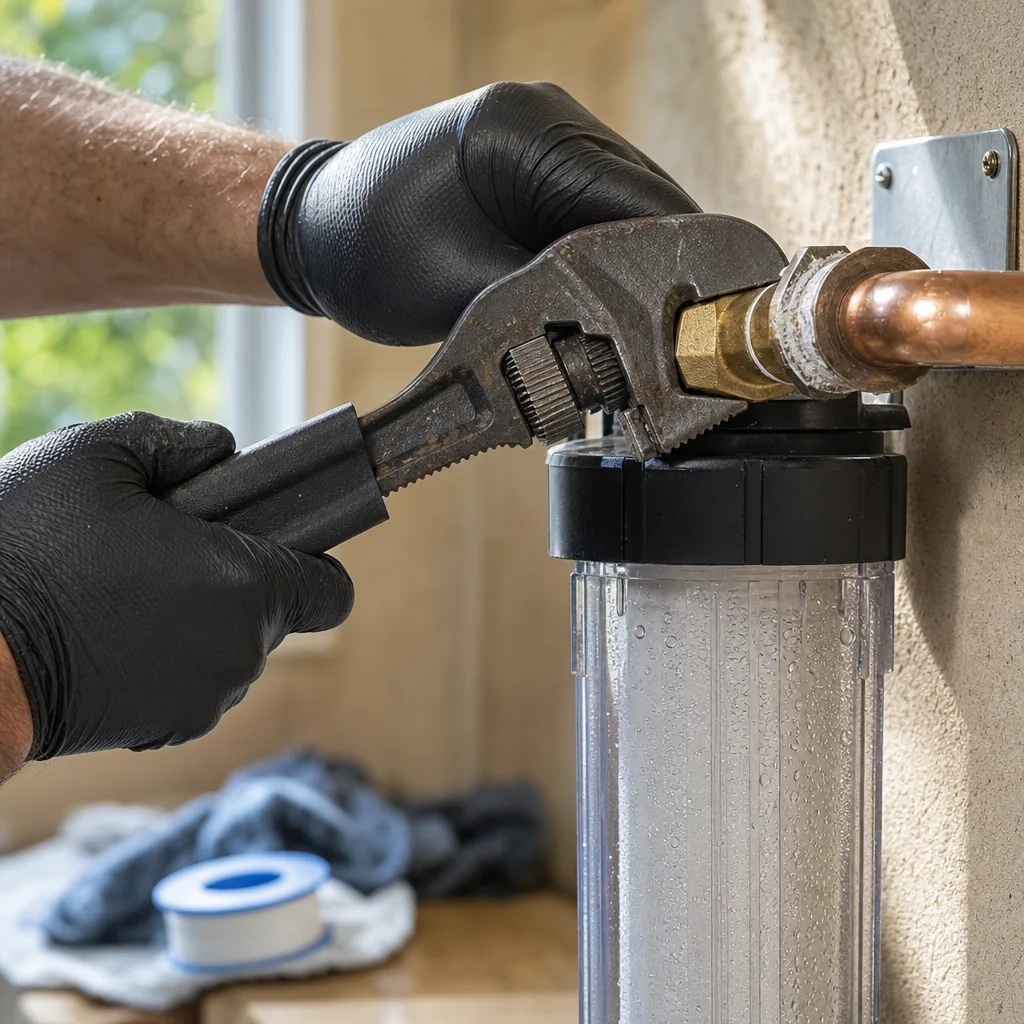
- Fittings are tightened and supported, so the weight of the system doesn’t pull on your pipes.
One detail is worth asking about. In some homes, metal water pipes are part of the electrical grounding. A plastic filter housing can break that metal path. A careful installer checks for this and keeps the ground connected around the system.
Startup is where a lot of rushed jobs fall short. New carbon media has fine black dust in it, so the system needs a good flush before you use the water. Then the water comes back on slowly, and every fitting gets checked for drips under full pressure. After that comes a flow check. Run a shower, a sink, and the washing machine at once and see if the pressure holds. That’s the real test of whether the system was sized right.
Before the tech leaves, you should know these things:
- Where the bypass valve is and how to use it
- How to shut the water off at the system
- When your first cartridge or media change is due
- That every connection is dry, with no drips under the housing or tank
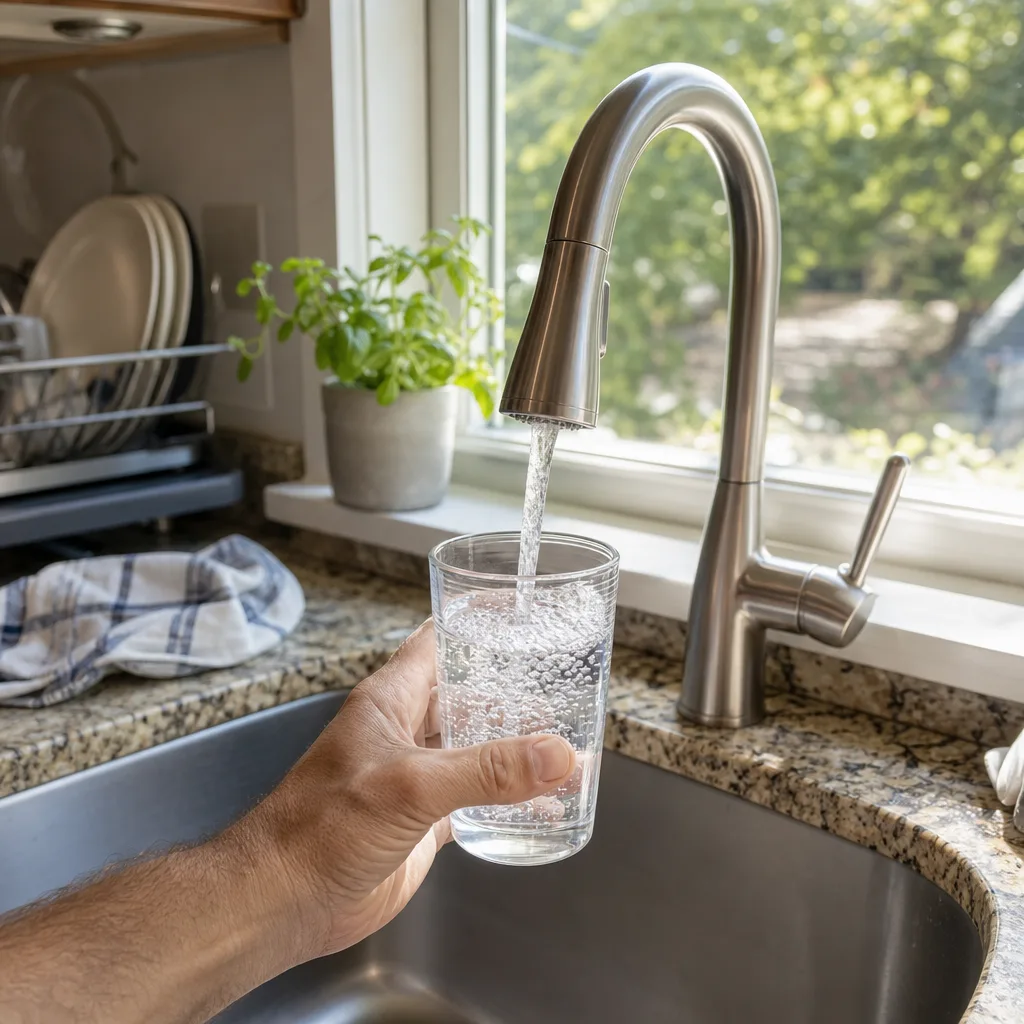
Want to see proof for yourself? A chlorine test strip at the kitchen tap is a cheap way to check. Filtered water should show little to no chlorine compared with water from an unfiltered outdoor spigot.
For the first day or two, a few things are normal. Faucets may sputter as trapped air works its way out. Water may look a little cloudy and then clear in a glass. Your water heater fills with filtered water a bit at a time as you use hot water, so the shower may take a day or so to fully change. Dripping fittings, black water that won’t clear, or pressure that drops when two taps run are not normal. Those mean something needs another look.
Frequently Asked Questions
Common questions about Whole-home water filtration installation
How long does a whole-home water filtration installation take?
Plan for your water to be off for part of the day while the main line is drained, the old unit is removed, and the new system is connected. Most of that time goes to doing the connections right, setting up the bypass valve, and flushing new carbon media before startup. The job isn’t done until the tech runs a flow check with a shower, sink, and washing machine going at once to confirm your pressure holds.
Can I install a whole-home water filter myself?
You can buy a system yourself, but tying it into your main water line is where mistakes get expensive. The install has to account for bypass valve placement, correct stage order so sediment doesn’t clog the carbon, and in some homes, keeping your electrical grounding path intact if pipes are part of that system. A water test first also keeps you from buying stages your home doesn’t need.
Will a whole-home filter affect my outdoor sprinklers or hose bibs?
It depends on how your system is plumbed, and that’s a question worth asking before install day. Watering your lawn through a carbon filter wastes the media fast for no benefit, so in many homes the outdoor lines are kept on unfiltered water while the rest of the house gets filtered. Ask your installer to confirm which lines are on the filtered side before the work begins.
Ready to Get Started?
Call (469) 299-8996 Today, Get Service Today.