


Dryer Vent Cleaning in Fort Worth: Do You Need It Now?
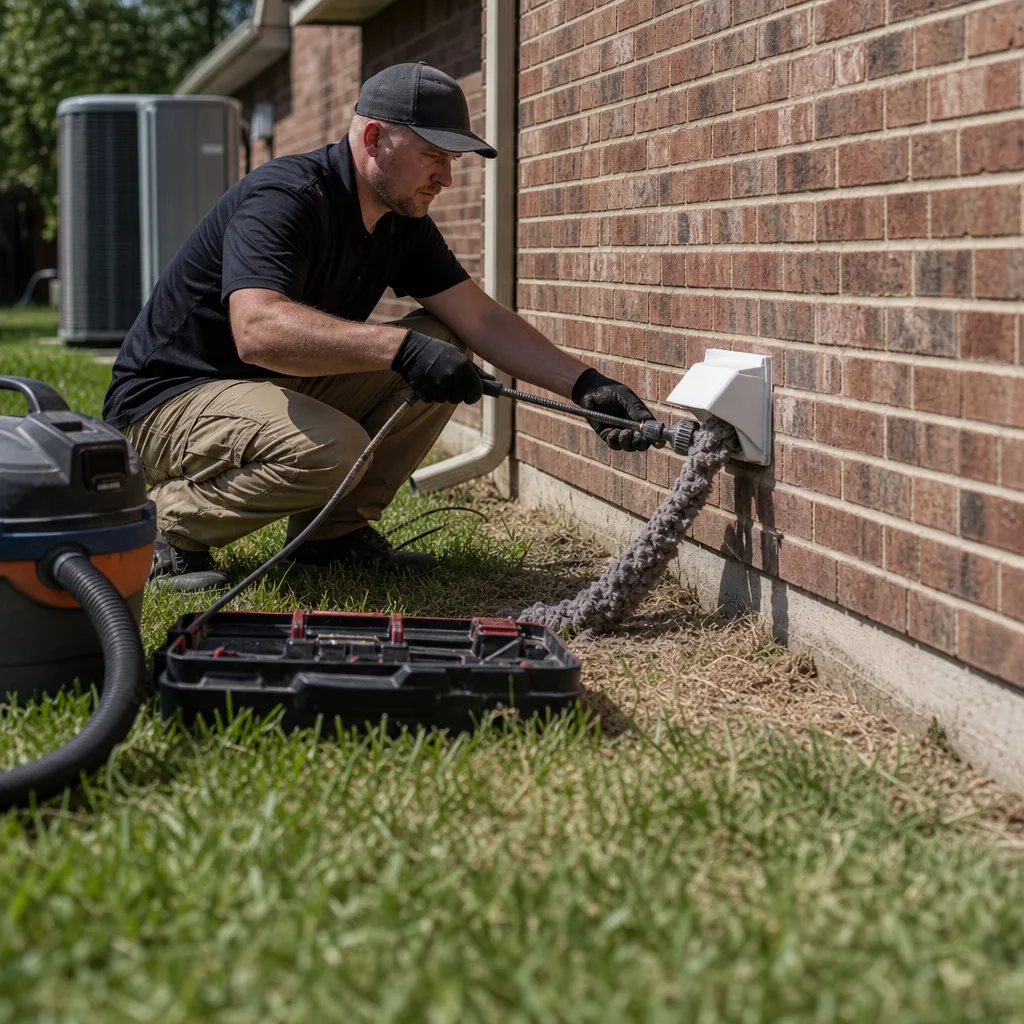
The whole dryer vent line cleared, not just the opening – to cut fire risk and help your dryer dry.
What’s Covered on This Page
- Lint Trap Cleaning and Vent Line Cleaning Are Not the Same Job
- Signs Your Dryer Vent Line Needs Cleaning
- Check These Yourself Before You Call
- What’s Included in a Dryer Vent Cleaning Visit
- What Happens During the Cleaning
- How often should I get my dryer vent cleaned in Fort Worth?
- Can I clean my own dryer vent instead of calling someone?
- How long does a professional dryer vent cleaning take?
Lint Trap Cleaning and Vent Line Cleaning Are Not the Same Job
If you pull the lint off the screen after every load, good. Keep doing that. It’s the single best habit you can have with a dryer. But a lot of folks think that’s the whole job, and it isn’t.
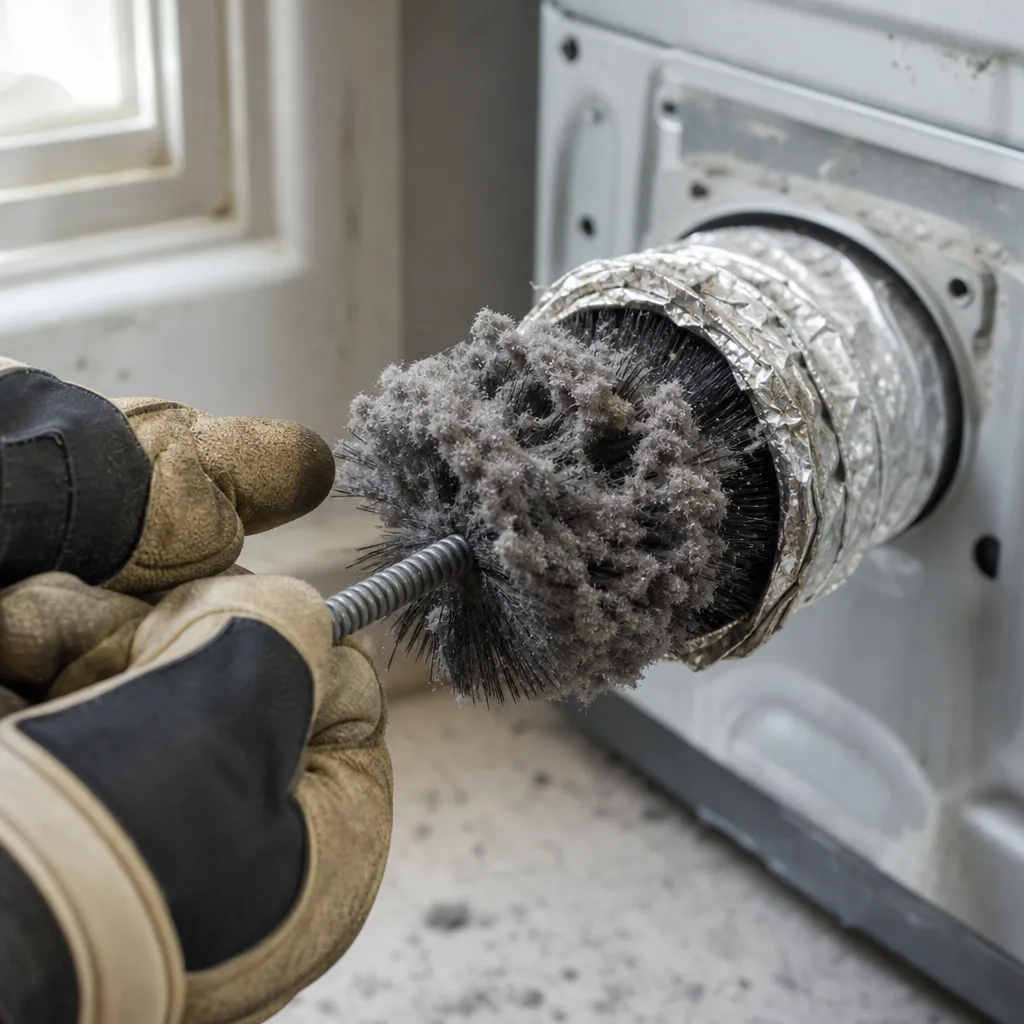
The screen is a filter, and no filter catches everything. Fine lint slips through every time you run a load. It rides the hot, damp air out the back of the dryer and into the vent line. That line runs from the dryer, through the wall or up through the attic, and out to a vent cap on the side of your house or on the roof. Lint likes to settle in a few spots along the way:
- The flexible hose right behind the dryer, especially if it’s crushed or kinked from being pushed against the wall
- Bends and elbows, where the air slows down and drops what it’s carrying
- Long runs, since air loses push the farther it has to travel
- The vent cap outside, where lint can pack around the flap so it can’t swing open
Over time, those small bits stack up. The opening gets narrower, and the hot air has a harder time getting out. Your dryer keeps running hotter and longer to do the same work. That trapped heat sitting next to built-up lint is why vent cleaning is treated as a fire-safety job, not just a way to dry clothes faster.
So how do you know the line is the problem and not the screen? Here’s what people usually notice first:
- Towels and jeans need a second cycle, even though the screen is clean
- The top of the dryer or the clothes feel much hotter than they used to
- Your laundry room feels warm and sticky while the dryer runs
- You smell something hot or burnt near the dryer
- You go outside while it’s running and the vent flap barely moves, or doesn’t open at all
That last one is a quick test you can do yourself in a minute. Start the dryer, walk outside, and look at the vent cap. You should feel a strong, warm push of air and see the flap open wide. A weak puff tells you something is blocking the line.
Now for the honest part. If your dryer sits close to an outside wall with a short, straight vent, you may be able to pull the dryer out, unhook the hose, and clear it yourself. That’s a fair weekend job for a handy homeowner. It gets harder when the line runs a long way through the house, turns several corners, or ends on the roof. Those runs are hard to clean all the way through without the right tools, and that’s where a pro earns the visit.
When our team cleans a vent line, we don’t stop once the lint is out. Every cleaning includes an airflow and exhaust check, so you know the air is really leaving your home the way it should.
Signs Your Dryer Vent Line Needs Cleaning
Slow drying and a lazy vent flap are the big ones, and we covered those above. A blocked line leaves other clues around your home too, and some of them are easy to miss.
Start outside. Look at the siding and ground under your vent cap. A fuzzy gray coat of lint there means lint is building up at the exit and spilling out. If you see no lint at all and the airflow is weak, the clog may be farther up the line, somewhere you can’t see.
Then check inside. These signs point to air that isn’t leaving the way it should:
- Your dryer shuts off partway through a cycle, or the heat cuts out. Most dryers have a safety switch that kills the heat when things get too hot, and a blocked vent is a common reason it trips.
- Water beads up on the laundry room window or walls, or the room smells damp and musty. That moisture is supposed to go outside.
- Lint dust collects on the floor or wall behind the dryer. The hose may be leaking or loose.
- The hose has come off the wall connection completely. Now the dryer is blowing hot, wet, lint-filled air into the wall or the room.
- You hear chirping or scratching near the vent cap, or you spot twigs and grass poking out. Birds and critters like to nest in vent openings, and a nest can plug the line fast.
Some homes need a cleaning even when nothing seems wrong yet. That’s true if you’ve just moved in and don’t know when the vent was last cleaned. It’s also true if your family runs the dryer every day, if you have pets that shed, or if you’ve had work done that may have pushed the dryer back and crushed the hose. Lint builds up quietly, so you can’t wait for it to show you a sign.
Roof vents are tricky. If your line runs up through the attic and out the roof, you can’t just walk outside and watch the flap. You won’t see lint piling up on the siding either. In those homes, you lose most of your early warnings, so it’s smart to have the line cleaned on a set schedule instead of waiting for trouble. Hot North Texas summers make the attic even hotter, and that’s the last place you want lint packed against a warm line.
One sign alone, like a single slow load, isn’t a reason to worry. Two or three together, or any burnt smell or mid-cycle shutoffs, tell you it’s time to get the line cleaned and the airflow checked.
Check These Yourself Before You Call
A few problems that look like a clogged vent are really quick fixes you can handle yourself. Run through these before you book anything. If one of them solves it, you just saved yourself a service call.
Wash your lint screen, don’t just wipe it. Dryer sheets can leave a thin, waxy film on the mesh that you can’t see. Hold the screen under the faucet. If the water pools on top instead of running through, that film is blocking air. Scrub it with warm, soapy water and a soft brush, let it dry, and put it back. Some people find their drying time drops with just this one step.
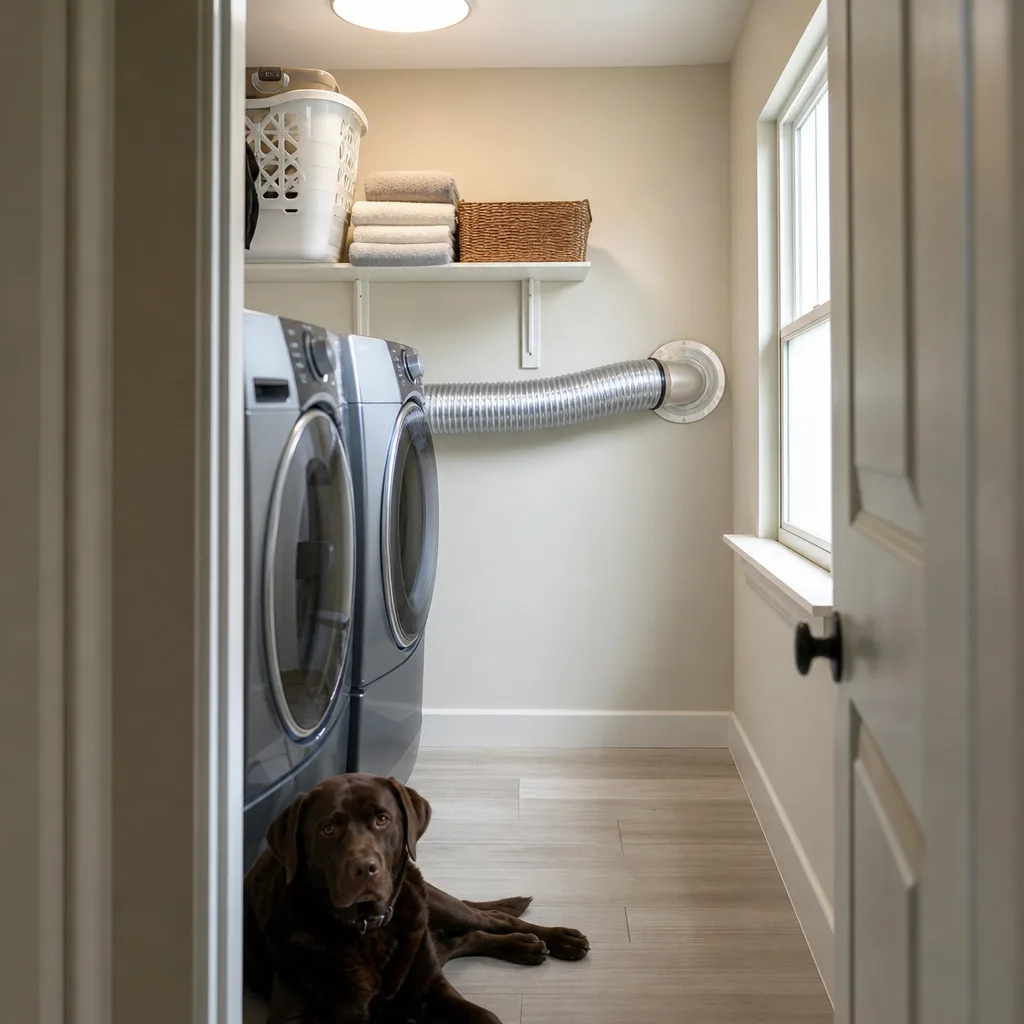
Look at the hose behind the dryer. Slide the dryer out a little so you can see the hose that connects it to the wall. Here’s what to look for:
- Flat spots, kinks, or a sharp bend where the dryer was pushed back too far
- A white plastic hose or a thin foil hose that crushes when you squeeze it. Those ridges trap lint, and your dryer’s manual will tell you what kind of duct it’s made to use.
- Extra hose bunched up in loops. Longer isn’t better here. A shorter, straighter run moves air more easily.
- Loose clamps or tape that has peeled away at either end
If the hose is crushed or loose, fixing or replacing that short piece may be all you need. If you have a gas dryer, it’s smart to leave the moving to a tech. The gas line behind it shouldn’t get bent or yanked.
Check the vent cap for a screen. Some vent caps outside have a mesh screen over the opening to keep birds out. It sounds helpful, but lint catches on that mesh fast and plugs it. If yours has one, clean it off. Clearing a packed cap by hand is a fair job for you if you can reach it safely from the ground.
Think about the last storm if your vent exits through the roof. Fort Worth gets its share of spring hail, and a dented or bent roof cap can keep the flap from opening. You may be able to spot damage from the yard. Don’t climb up there just to look.
On an electric dryer, check the breaker. If the drum spins but the clothes come out cool and damp, the dryer may not be heating at all. Electric dryers often run on a double breaker, and when one half trips, the drum can still turn without making heat. Look at your panel and reset it if it’s tripped. If it keeps tripping, that’s an electrical problem, not a vent problem, and it needs a pro.
So what if you’ve done all this? Your screen is clean, the hose is in good shape, the cap is clear, and the breaker is fine. Your clothes still take two cycles. That tells you the blockage is inside the wall or the attic, in the part of the line you can’t reach. That’s the job a full vent line cleaning is for.
Ready when you are – get in touch today.
Call Today, Get Service Today. Xtreme Air Services — Fort Worth is ready to help.
What’s Included in a Dryer Vent Cleaning Visit
You’ve checked the screen, the hose, and the cap, and the problem is still there. Now you want to know what you’re paying for. Here’s the plain answer.
Every dryer vent cleaning from our team includes two things:
- A full vent cleaning. We clear the lint and debris from the whole vent line, from the dryer to the vent cap outside. That includes the part inside your walls or attic, not just the short piece you can reach.
- An airflow and exhaust check. Once the line is clear, we test it to make sure hot, damp air is leaving your home the way it should.
That second step matters. A line can look clean and still not move air well. The check tells you the job worked, so you’re not left guessing after we leave.
For most homes, the price for dryer vent cleaning runs $100 to $250. Our most common job, a standard vent line cleaning with the airflow check, falls between $100 and $175. Where your home lands depends on four things:
- Vent length and routing. A short, straight run to an outside wall takes less time than a long line that turns several corners.
- Roof or wall termination. A vent that ends on the roof takes more work to reach and clean than one that ends on the side of the house.
- How much buildup there is. A line that hasn’t been cleaned in years takes longer than one that gets regular care.
- Accessibility. A dryer tucked in a tight closet or a line that’s hard to get to adds time.
There’s also a service-call fee of $26 to $99. If you go ahead with the work, that fee is credited toward it. You’ll know the price before we start, because we use upfront flat-rate pricing that you approve first. No meter running, and no extra charge for nights or weekends.
Cleaning clears the line. It doesn’t fix a line that’s broken. If we find a problem while we’re there, it isn’t part of the cleaning price. Some examples:
- A crushed or torn section of duct that needs replacing
- A run that’s too long or has too many turns and needs rerouting
- A damaged vent cap, like a roof cap bent by hail
- A loose or disconnected joint inside the wall
Any repair or rerouting like this gets quoted separately. We’ll show you what we found, explain why it matters, and give you the price. Then you decide. You can say yes, wait, or have it handled another time. If you need it fixed, our team also does duct and vent repair, so you don’t have to find a second company.
Financing usually isn’t offered for a small job like a vent cleaning. It is available on larger repairs and replacements if a bigger fix turns up.
So you get a clear line, proof that air is moving, and an honest look at anything else that needs attention. Our licensed and insured technicians treat your home like family while they’re in it.
Watch Our Video
See How We Handle Dryer vent cleaning in Fort Worth
Xtreme Air Services — Fort Worth
What Happens During the Cleaning
You don’t need to do much before a vent cleaning. A little prep makes the visit smoother, and knowing what a good cleaning looks like helps you tell whether the job was done right.

Before the tech arrives, take a few minutes to:
- Finish any load that’s running and let the dryer cool down
- Clear baskets, shelves, and clutter from around the dryer so it can slide out
- Make sure the vent cap outside can be reached, whether that’s a side gate, a fence, or a patch of shrubs
- Let us know if your vent ends on the roof, so we come ready for it
- Put pets in another room, since doors and the dryer will be moved around
When our technician gets there, you’ll go over the price first. We use upfront flat-rate pricing, so you approve the cost before any work starts.
A thorough cleaning usually goes like this. The dryer gets pulled away from the wall and unhooked from the vent line. Then the line gets cleaned along its whole length, from the wall connection behind the dryer all the way to the cap outside. On a long run with several turns, that often means working from both ends so lint can’t get pushed deeper into a bend and left there. The cap gets cleared too, including any lint packed around the flap.
Next, the dryer gets reconnected and pushed back without crushing the hose behind it. That step matters more than people think. A clean line won’t help much if the hose is flattened against the wall again. With a gas dryer, the gas line behind it also needs gentle handling while the dryer is moved.
Last comes the airflow and exhaust check. This is how you know the cleaning worked and the air is really leaving your home, instead of just looking clean.
If something turns up along the way, like a torn section of duct or a bent cap, you’ll be shown what was found before anything else happens. Repairs are quoted on their own, and the decision stays with you.
After the visit, you can check the results yourself. Run a load and do the same flap test from earlier. The flap should open wide with a strong, warm push of air. Over the next few loads, watch for these changes:
- Towels and jeans dry in one cycle again
- The top of the dryer and your clothes don’t feel as hot
- The laundry room stays cooler and less sticky while the dryer runs
- No more mid-cycle shutoffs or burnt smells
If your vent runs up through the attic and out the roof, this check counts even more. You can’t see that line, and a Fort Worth summer makes the attic the hottest spot in the house. A tested line means you’re not guessing about what’s going on up there.
Call now
Frequently Asked Questions
Common questions about Dryer vent cleaning
How often should I get my dryer vent cleaned in Fort Worth?
Most homes do fine with a cleaning once a year, but that changes based on how you use your dryer. If you run loads daily, have pets that shed, or your vent line runs through the attic and out the roof, plan on cleaning it more often since you lose the easy warning signs like a weak vent flap outside. Homes with a short, straight line to an outside wall can sometimes stretch longer between cleanings.
Can I clean my own dryer vent instead of calling someone?
You can clear the short hose behind the dryer and the cap outside yourself if you’re handy and the run is short and straight. It gets a lot harder once the line turns several corners, runs a long way through the house, or ends on the roof, because those stretches are tough to reach and clean all the way through without the right tools. That’s usually the point where a pro visit pays off.
How long does a professional dryer vent cleaning take?
A standard cleaning usually takes well under an hour once the technician starts, though the exact time depends on how long and twisted your vent line is and how much buildup has collected. A short, straight run to an outside wall goes faster than a long line with several bends or one that ends on the roof. Either way, the visit wraps up with an airflow check so you know the line is clear, not just that lint was removed.
Ready to Get Started?
Call (817) 677-1907 Today, Get Service Today.