

Dallas - Fort Worth Water Heater Repair & Replacement
One of the most important pieces of equipment in your home is your hot water heater. It provides reliable hot water for your family throughout the year, ensuring you always have what you need to take a nice hot shower, wash clothes, or do the dishes. So, when your hot water heater stops working or you notice a drop off in the capacity in your system, it may be time for water heater repairs or replacement. Regardless of what problems you have with your hot water supply, contact Xtreme Air Services for immediate assistance. Our team of highly trained Dallas / Ft. Worth area plumbers will walk you through the process of repairing or choosing a new hot water system for your home.
We’re the top choice for water heater repairs, service, sales, and installation in Dallas / Fort Worth and we’re ready to serve you with the speed and professionalism you need. For emergency water heater repair service or preventative maintenance, contact Xtreme Air Services. We have 24-hour emergency plumbing repair services available for homes and businesses across Dallas Fort Worth. So, no matter if it’s day or night, our plumbers will take care of your repairs for you.
Why Choose Us?
Providing expert service from people who genuinely care about meeting your needs and exceeding your expectations is what we're all about. At Xtreme Air Services, we believe in doing right by our customers. That’s why all of our work comes backed by our 100% satisfaction guarantee. When you do business with Xtreme Air Services, you can depend on our company and our team members for quality that includes these assurances:
Finding Your New Water Heater
Did you know that the less hot water you use, the more energy you save? After heating and cooling, water heating accounts for the second largest portion of your home’s energy usage, so you can save energy by using less hot water. An easy way to do this is to use cold water when you only need the water for a short period of time. When you turn the hot water on and off quickly, your hot water heater will probably be unable to heat the water quickly enough to reach the faucet before you turn it off. Water heaters have improved vastly over the years. The water heaters available today offer improved energy efficiency, affordability, and flexibility. If the time has come to replace your hot water system, here’s a quick look at the different types of models that are available for your home.
Tank Water Heaters
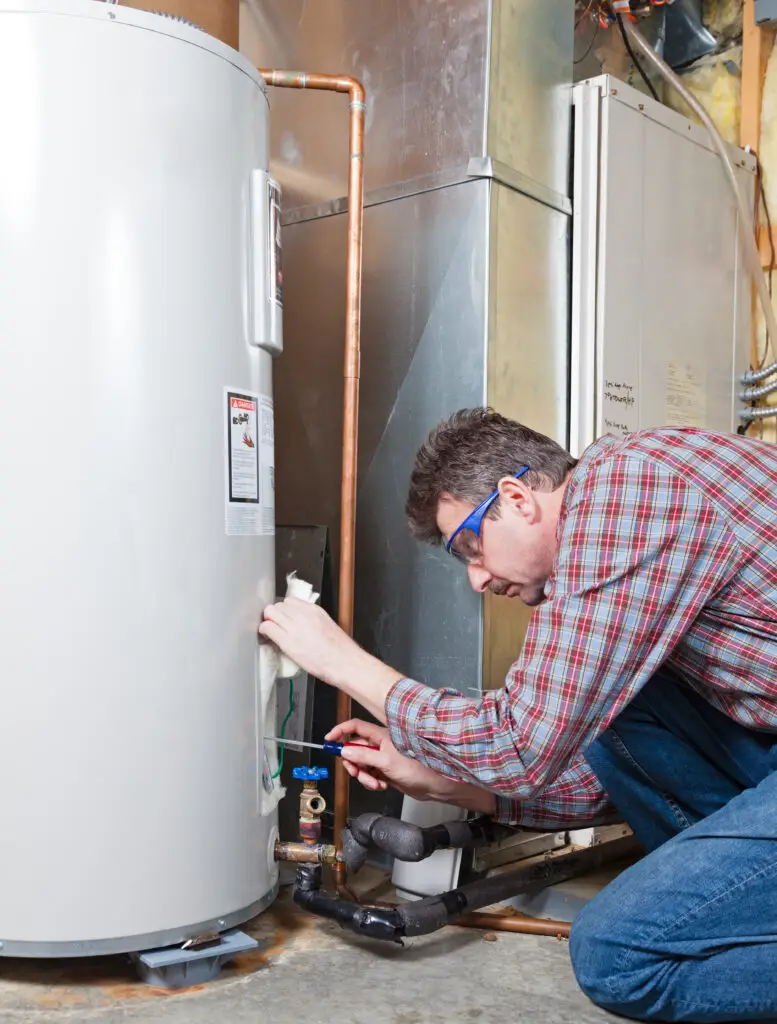
The most common form of hot water heating is a traditional tank system. A tank water heater is generally very effective and provides reliable hot water for your home. If you haven’t bought a new hot water heater in some time, you’ll be surprised by how much more energy efficient today’s tank models are than just a few years ago.
There are a few things to keep in mind when choosing a tank hot water heater, however. First, you must consider hot water tank capacity. Every home has a certain amount of water it will use in one hour. This is how hot water tanks are measured – their one hour peak capacity. If you turn on every shower, hot water faucet and dishwasher in your home for an hour, how much hot water do you need? The realistic amount your home uses will help determine how big of a tank you’ll need.
Tank hot water heaters, while more efficient than they once were, are still not the best options around. They use fuel to heat water continuously, whether you’re using it or not. So, even if you don’t use hot water all day, you’re paying money to heat it for no reason. You can take some steps to reduce the consumption, such as cutting the holding temperature to just 120°F instead of 140°F and cleaning your tank once every 6 months.
However, regardless of how frequently you clean your tank and where you keep the temperature, you’ll still always use energy to keep the water hot whether it’s in use or not. That’s why tankless hot water heaters are becoming so popular.
TANKLESS WATER HEATERS
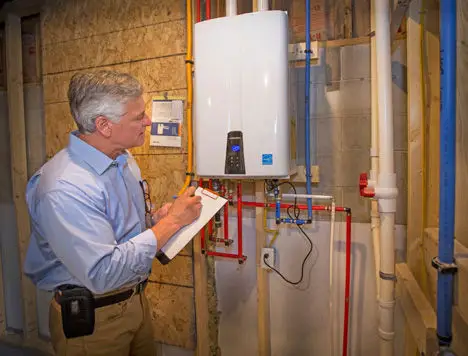
Tankless systems work by instantly heating the water only when you need it. Rather than storing water in a tank and constantly using energy to keep it hot, a tankless water heater flash heats water when a fixture calls for it, delivering a continuous flow of hot water for as long as you need it.
The upfront cost of a tankless water heater is greater than that of a conventional tank water heater, but tankless water heaters will typically last much longer and have lower operating and energy costs, which helps offset its higher purchase price. Most tankless water heaters have a life expectancy of more than 20 years compared to 10-12 years for tank water heaters. They also have easily replaceable parts that extend their life by many more years.
Water Heater Installation
Once you’ve selected a type of hot water heater, you’ll need a professional to install it. The process requires careful measurement of your water needs, placement of the system and recalibration of the heating source.
To ensure you get the best service possible, contact Xtreme Air Services today. Our Dallas, Ft. Worth area water heater technicians work closely with homeowners to choose and install water heaters that fit their specific needs. Whether you’re ready to start the installation process now or you’d first like to discuss your options more in–depth with a technician, call us today.
What Our Clients in Dallas Say About Us?
Water Heater Repair, Replacement & Installation in Dallas, TX
Xtreme Air Services provides complete water heater care for Dallas, TX homes and businesses. Our licensed, bonded, and insured plumbers handle:
- Water heater repair for no hot water, leaks, pilot light, and thermostat problems
- Water heater replacement and new installation with free estimates
- Electric and gas tank water heater service
- Tankless water heater installation and repair
- Emergency water heater repair
We service all major water heater brands. Explore our full residential plumbing services, or see our slab leak repair team.
Signs You Need Water Heater Repair or Replacement
Catching water heater trouble early prevents cold showers and water damage. Common warning signs include:
- No hot water, or not enough hot water for your household
- Water that takes too long to heat
- Rusty or discolored hot water
- Popping, rumbling, or banging noises from the tank
- Water pooling around the base of the tank
- A unit more than 8 to 10 years old
If you notice any of these, contact us for an inspection before the problem gets worse.
Emergency Water Heater Repair in Dallas
No hot water or a leaking tank in Dallas? Xtreme Air Services offers fast, same-day and emergency water heater repair. Call (972) 288-2263 and we will dispatch a plumber as soon as possible.
Water Heater Services — Frequently Asked Questions
Do you repair water heaters in Dallas, TX?
Yes. We repair electric, gas, and tankless water heaters in Dallas, including no hot water, leaks, pilot light, and thermostat problems on all major brands.
Do you replace and install water heaters in Dallas?
Yes. We provide water heater replacement and new installation in Dallas, TX with free estimates on every project.
Do you service electric, gas, and tankless water heaters?
Yes. We service and install standard electric and gas tank water heaters as well as tankless systems.
Do you offer emergency water heater repair in Dallas?
Yes. We provide same-day and emergency water heater repair across Dallas, TX and the surrounding metro.
How long does a water heater last?
Most tank water heaters last about 8 to 12 years. If yours is in that range and needs frequent repairs, replacement is usually the more cost-effective choice.
How North Texas Hard Water Affects Your Water Heater
If your water heater seems to be working harder than it should, North Texas water is often the reason. Water across the Dallas–Fort Worth metroplex — including Garland, Mesquite, and the surrounding communities — tends to be hard, carrying dissolved calcium and magnesium. Over time those minerals settle to the bottom of a storage tank as sediment. That layer insulates the burner or heating element from the water, so the unit runs longer, uses more energy, and wears out sooner. The popping or rumbling sound many homeowners hear is usually sediment shifting, not a serious mechanical failure — but left alone it shortens the tank’s life and can speed up corrosion.
A yearly tank flush clears that sediment and helps protect the anode rod, the sacrificial component that keeps the tank itself from rusting. Tankless models are affected too: hard water scales the internal heat exchanger, so periodic descaling keeps them heating at full efficiency. If you have already noticed rust-tinted water, longer waits for hot water, or a climbing gas bill, it is worth reviewing the 5 sure signs your water heater is no longer keeping up before a slow decline turns into an emergency.
Repair or Replace? How to Weigh the Decision
Not every hot water problem calls for a new unit. A failed thermostat, heating element, thermocouple, or pilot assembly is usually a straightforward repair, and a solid tank with plenty of service life left is worth fixing. Replacement tends to make more sense when several of these line up at once:
- The tank is past roughly 10–12 years old, which is typical for storage models in our area.
- The estimated repair cost is approaching half the price of a new unit.
- You are seeing rust-colored water, moisture around the base, or a tank that leaks.
- The household has outgrown the unit and simply runs out of hot water.
Sizing matters as much as age. A family that keeps running short may need a larger tank or a unit with a higher first-hour rating rather than a like-for-like swap. Tankless upgrades cost more upfront but deliver continuous hot water and free up floor space, which appeals to growing households and anyone tired of waiting on a recovery cycle. If you are comparing options for the whole home, our residential plumbing services team can walk you through the tradeoffs between gas, electric, and tankless before you commit.
What to Expect During Your Water Heater Service
When you call about a water heater, the first step is an accurate diagnosis — not a guess. A technician checks the burner or elements, the thermostat, the gas or electrical supply, venting, and the condition of the tank so you understand exactly what is failing and why. From there you get a clear, upfront explanation of your options, whether that is a targeted repair or a full replacement.
On a replacement, the work goes beyond simply setting a new tank. That includes safely draining and hauling away the old unit, connecting water, gas or electrical, and venting to code, and adding a thermal expansion tank where required. Local municipalities across the Dallas–Fort Worth area generally require a permit and inspection on a water heater replacement, and handling that paperwork is part of doing the job right. Before we leave, the new unit is tested for proper temperature, safe operation, and leak-free connections. Ready to get a look at your system? Reach out to schedule your water heater service and we will take it from there.
More Water Heater Questions From DFW Homeowners
How often should I flush my water heater in Dallas–Fort Worth? Because our water is hard, flushing the tank once a year is a good rule of thumb. Homes with especially heavy sediment or no water softener may benefit from flushing a bit more often to protect efficiency and extend the unit’s life.
Do tankless water heaters work well through Texas cold snaps? Yes. Groundwater arrives colder during a hard winter freeze, which means a tankless unit has to raise the temperature further and can deliver a lower flow rate on the coldest days. Sizing the unit correctly for your household demand is what keeps the hot water steady when a cold front rolls through.
Do I really need a permit to replace a water heater? In most DFW municipalities, yes — a permit and inspection help confirm the installation meets current code for gas, venting, and safety. A proper installer pulls the permit and coordinates the inspection as part of the project.
What size water heater does my home need? It depends on how many people are in the household and how many fixtures run at once, not just the gallon number on the label. A four-person home that regularly runs out of hot water is often better served by a larger tank or a tankless upgrade than by an identical replacement.