


AC Drain Line Cleaning in Sunnyvale: Fix the Leak, Restart the Cooling
Clearing the condensate line that backs up and shuts a Sunnyvale system down, before it soaks a ceiling.
What’s Covered on This Page
- Warning Signs Your AC Drain Line Is Clogged
- When a Clogged Filter, Not the Drain Line, Is the Real Problem
- How Xtreme Air Services Clears a Clogged Condensate Line in Sunnyvale
- What Drives the Cost of AC Drain Line Cleaning
- Why Float Switches Trip and Shut Down Your AC
- How fast can you get to my Sunnyvale home for a clogged AC drain line?
- What happens when your technician shows up to clean my drain line?
- Why do so many Sunnyvale homes get clogged AC drain lines?
- How do I know if it’s my drain line or just a dirty filter?
- Why does my AC keep shutting off on its own during hot afternoons?
- How often should I have my AC drain line cleaned to avoid problems?
Warning Signs Your AC Drain Line Is Clogged
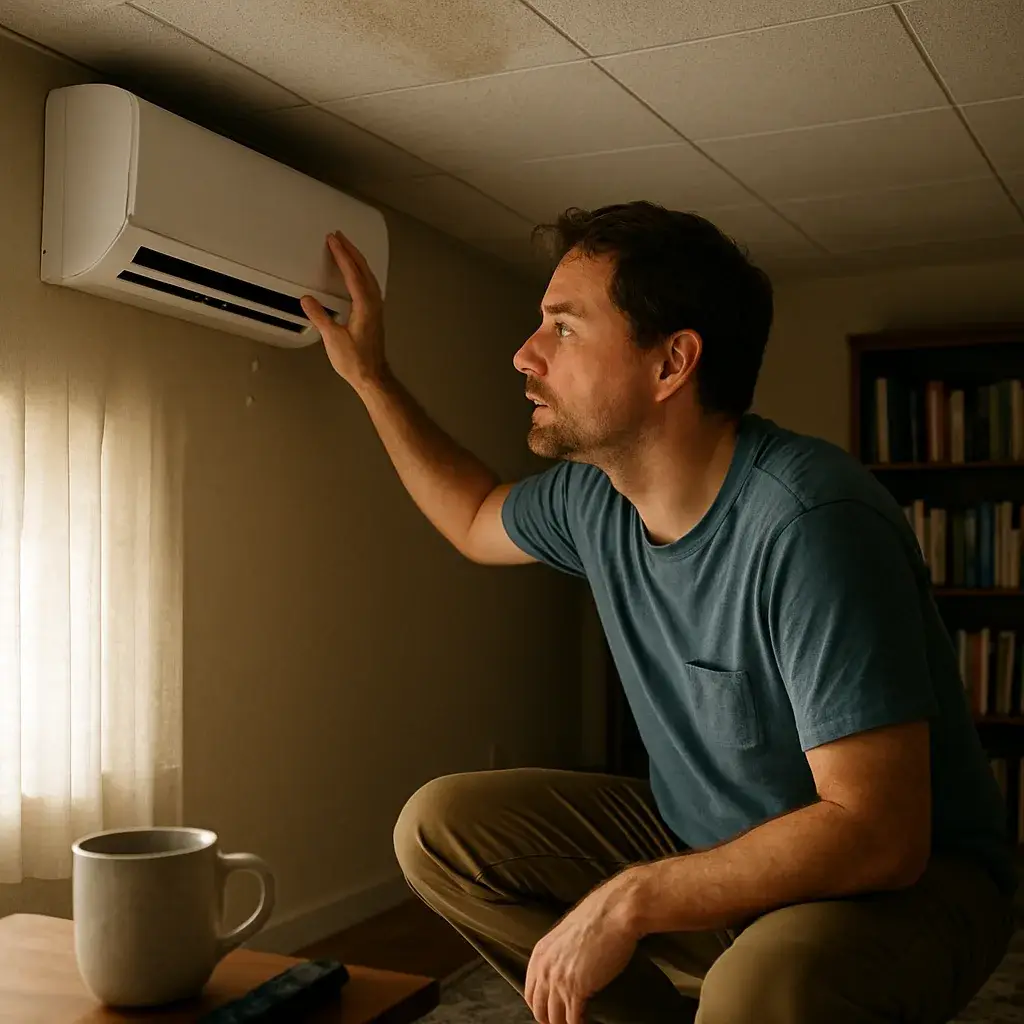
Water where it shouldn’t be, that’s the first clue. You’ll notice a puddle near your indoor air handler, a stain spreading across the ceiling below an attic unit, or water dripping from a vent. In older homes near Sunnyvale’s downtown area, AC units are often tucked in the attic with condensate lines running through tight, low-slope spaces. Those lines clog fast once summer humidity kicks in.
Not sure if it’s the drain line or something else? A musty, mildew smell near your vents is another sign, algae and gunk build up inside the line and start to smell. And if your system suddenly shuts off even though the thermostat looks fine, that’s often the drain pan’s safety switch doing its job, stopping the unit before water overflows.
- Standing water or a wet spot near your indoor unit
- A musty smell coming from your vents when the AC runs
- Your AC shutting off on its own during a hot afternoon
- Higher humidity indoors even with the AC running
- Visible mold or algae near the drain line access point
We see this every week once the temperature climbs. A homeowner calls thinking their whole system is failing, but it’s a clogged line backing up into the pan. Small problem, big mess if you wait.
When a Clogged Filter, Not the Drain Line, Is the Real Problem
Here’s something we see all the time. A homeowner calls worried about a drain line backup, water on the floor near the air handler, maybe a musty smell. But when we look closer, the real culprit is a filter so packed with dust it’s choking the whole system.
A dirty filter restricts airflow across the evaporator coil. That coil gets too cold, ice builds up, and once it melts, water shows up in places it shouldn’t. It looks exactly like a drain problem. It isn’t.
So how do you tell the difference? Pull the filter and hold it up to a light. Can you see through it? If not, that’s your answer, not the drain line. A clogged drain usually shows water pooling right at the base of the indoor unit or dripping from a specific overflow pipe outside. A dirty filter shows up as weak airflow, a system that runs longer than it used to, or ice on the coil itself.
Attic-mounted systems in a lot of Sunnyvale homes make this trickier, since you can’t always see the coil without pulling a panel.
If your filter’s the problem, swap it out and give the system a day to catch up before assuming anything’s broken. Filters are a homeowner job, not a service call. And if the water keeps coming back after a fresh filter’s in place, now you’re looking at the drain line, not the filter.
How Xtreme Air Services Clears a Clogged Condensate Line in Sunnyvale
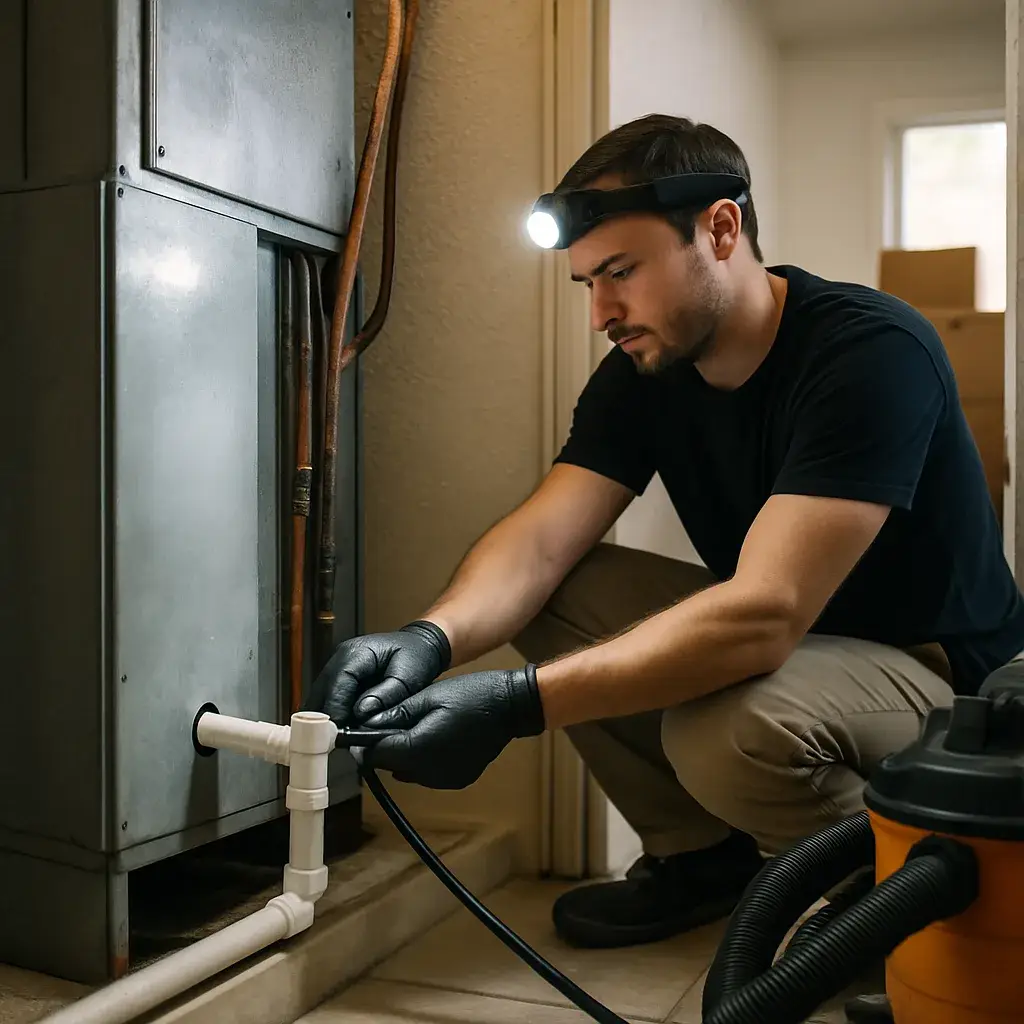
Here’s what happens once we’re standing in front of your air handler. A lot of Sunnyvale homes have the AC unit up in the attic, and attic heat cooks that condensate line all summer, speeding up the algae and gunk buildup inside it. So the first thing we do isn’t grab a tool, it’s figure out where the clog sits.
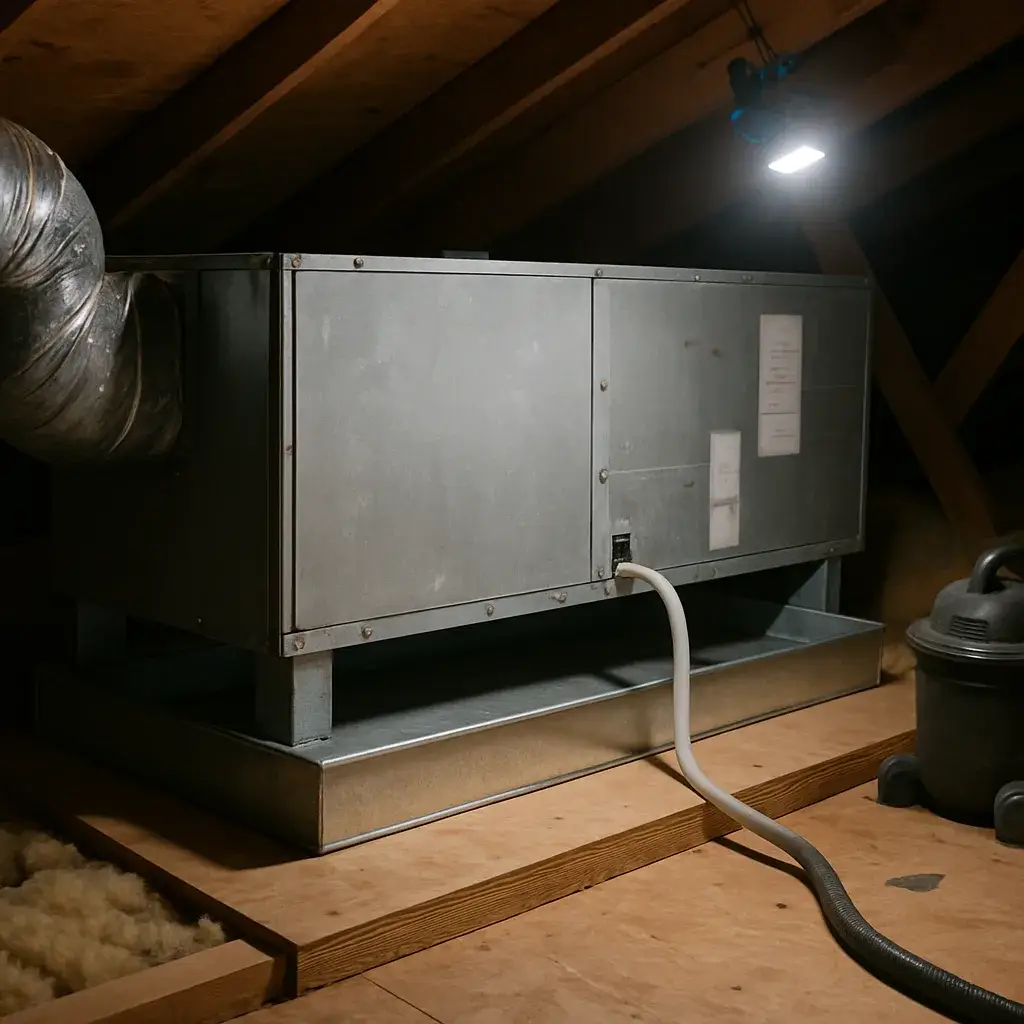
- Check the drain pan for standing water and look for the shutoff switch tripping, that tells us how backed up things really are.
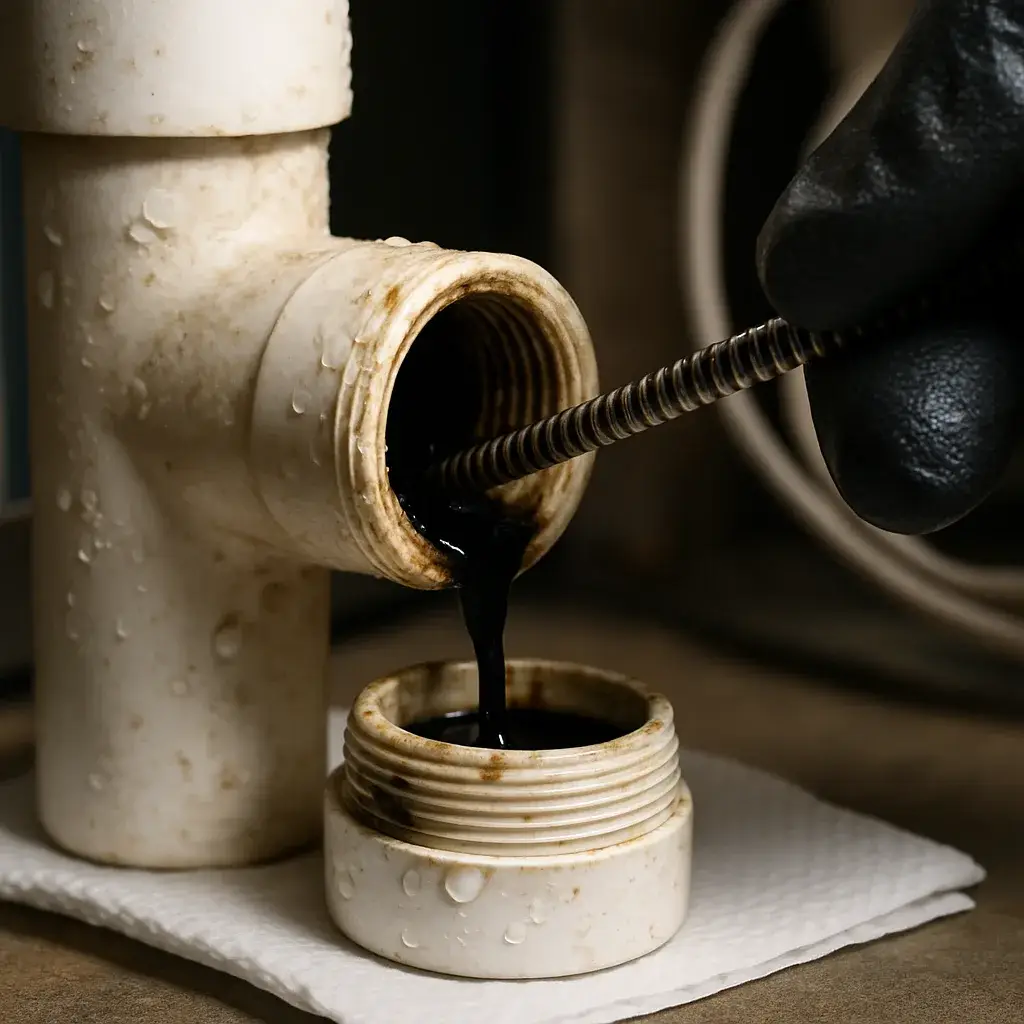
- Locate the access point, usually a T-fitting near the air handler, and open it up.
- Use a wet vacuum on the outside end of the line to pull the clog out rather than pushing it deeper.
- Flush the line with water to make sure it’s fully clear, not just partially open.
- Run the system and watch the drain to confirm water’s moving the way it should.
- Check the drain pan and condensate pump, if there’s one, since those can cause the same symptoms as a clogged line.
That last step matters more than people think. Most of the time it really is just the line, but every once in a while the pan’s cracked or the pump’s shot, and that’s a different repair altogether. We’ll tell you straight if that’s the case, no guessing games.
Most of these visits wrap up quick. Our technicians are licensed and insured, and they’re not going to leave your attic access panel worse than they found it.
Thinking about AC drain line cleaning? Let’s talk.
Call Today, Get Service Today. Xtreme Air Services is ready to help.
What Drives the Cost of AC Drain Line Cleaning
Most AC drain line cleaning jobs fall in the $100 to $350 range, and the most common job, clearing the condensate drain line and confirming proper drainage, runs $100 to $200. That’s a wide window because every clog is different.
So what pushes a job toward the higher end? How bad the clog is matters a lot, an easy clear takes minutes, a stubborn one packed with algae and sludge takes longer. Where the line runs matters too. A drain line in an open attic is a quick job. One buried behind drywall or squeezed into a tight closet takes more time to reach.
And here’s the big one: whether the drain pan or condensate pump needs attention. Our drain line cleaning covers clearing the line, testing drainage, and cleanup, that’s it. If the pan’s cracked or the pump’s failing, that’s a separate repair, and we’ll walk you through it before we touch anything.
- Severity of the clog, from a light rinse to a packed line
- Access to the drain line, open attic versus a tight or finished space
- Whether the drain pan or condensate pump also needs work
We charge a $26 to $99 service call fee just to come out, and that fee gets credited toward the repair if you move forward with us. No meter running, no surprise add-ons. Financing isn’t typically part of a job this size, we save that for the bigger repairs and full system replacements.
Why Float Switches Trip and Shut Down Your AC
Your AC just shuts off, no warning, no strange noise first. If that’s happened to you, that’s the float switch doing exactly what it’s built to do. It’s a small safety device sitting in the drain pan or right on the condensate line, and its job is watching for water that’s backing up instead of draining out. When it senses the water climbing too high, it cuts power to the system before that water spills into your ceiling or walls.
So the switch isn’t broken. It’s doing its job, the problem is upstream of it. A lot of homes around Sunnyvale run the air handler in the attic, so the drain line relies on gravity to move water out to the roof or a nearby drain. Any sag, kink, or buildup in that run backs the water up fast, and the float switch trips almost right away.
- Algae and sludge growing inside the line from constant moisture
- Dust and lint pulled off the evaporator coil and settling in the drain
- A sagging or disconnected line section trapping standing water
- A pan that’s already full because the line downstream is blocked
We see this every week, especially once the humidity climbs in the summer months. And it’s almost always the line, not the switch itself.
Frequently Asked Questions
Common questions about AC drain line cleaning
How fast can you get to my Sunnyvale home for a clogged AC drain line?
We move quickly once you call, especially during summer when attic heat speeds up clogs. Most Sunnyvale calls come in when a homeowner sees water pooling near the indoor unit or the AC shuts off on a hot afternoon. Since the drain pan’s safety switch is already protecting your system, a same-week visit is usually fine. But if water is actively dripping onto floors or ceilings, tell us that when you call so we can prioritize your visit.
What happens when your technician shows up to clean my drain line?
Your technician checks the drain pan first, looking for standing water or a tripped safety switch to gauge how backed up the line is. Next, they find the access point, usually a T-fitting near the air handler, and use a wet vacuum to pull the clog out from the outside end. Then they flush the line and run the system to confirm water drains properly. They’ll also check your condensate pump if you have one, since a bad pump can mimic a clogged line.
Why do so many Sunnyvale homes get clogged AC drain lines?
Older Sunnyvale homes near downtown often have AC units tucked in the attic, with condensate lines running through tight, low-slope spaces. Attic heat cooks those lines all summer, which speeds up algae and gunk buildup inside. Once humidity climbs in the warmer months, clogs form fast. If your system is attic-mounted, expect drain line issues to show up sooner than in a home with a ground-level unit.
How do I know if it’s my drain line or just a dirty filter?
Pull your filter and hold it up to a light. If you can’t see through it, that’s likely your problem, not the drain line. A clogged drain usually shows water pooling right at the base of the indoor unit or dripping from an overflow pipe outside. A dirty filter shows up as weak airflow, longer run times, or ice on the coil. Swap the filter first and give it a day before assuming the drain line is clogged.
Why does my AC keep shutting off on its own during hot afternoons?
That’s usually your float switch doing its job. It’s a small safety device sitting in the drain pan or on the condensate line, and it shuts the system down when water backs up too far. This protects your ceiling and floors from overflow damage. If it keeps tripping, the line is likely clogged and needs clearing. It’s a good early warning sign, not something to ignore or reset repeatedly.
How often should I have my AC drain line cleaned to avoid problems?
Most Sunnyvale homeowners benefit from a check once a year, ideally before summer humidity kicks in. Attic-mounted systems clog faster because heat speeds up algae growth inside the line. If you’ve had a clog before, or you notice a musty smell near your vents, it’s worth checking sooner. Catching a slow drain early means a quick cleaning instead of water damage to your ceiling or floors.
Ready to Get Started?
Call 972-288-2263 Today, Get Service Today.