


AC Sensor Repair in Sunnyvale: Stop the Short-Cycling Fast
Sensor and control diagnosis for Sunnyvale systems that short-cycle or read the wrong temperature.
What’s Covered on This Page
- Short-Cycling and Warm Air Point to a Failing AC Sensor
- When a Sensor Repair Isn’t the Real Problem
- What Happens During an AC Sensor Repair Visit
- How AC Sensor Repair Pricing Works
- Sunnyvale Summers Push AC Sensors to Fail Faster
- How fast can you get someone out for AC sensor repair in Sunnyvale?
- What happens when a technician arrives to repair an AC sensor?
- Why do AC sensors fail so often in Sunnyvale homes?
- How do I know if my AC problem is the sensor and not something else?
- Can I check anything myself before calling for AC sensor repair?
Short-Cycling and Warm Air Point to a Failing AC Sensor
Your AC kicks on, runs for two or three minutes, then shuts off. Ten minutes later it starts back up and does the same thing. That pattern is called short-cycling, and around here, AC sensor repair is exactly what fixes it. A failing sensor is one of the cheapest, fastest problems your AC can have. Most homeowners assume the compressor’s shot or the whole unit needs replacing. It usually isn’t that at all.
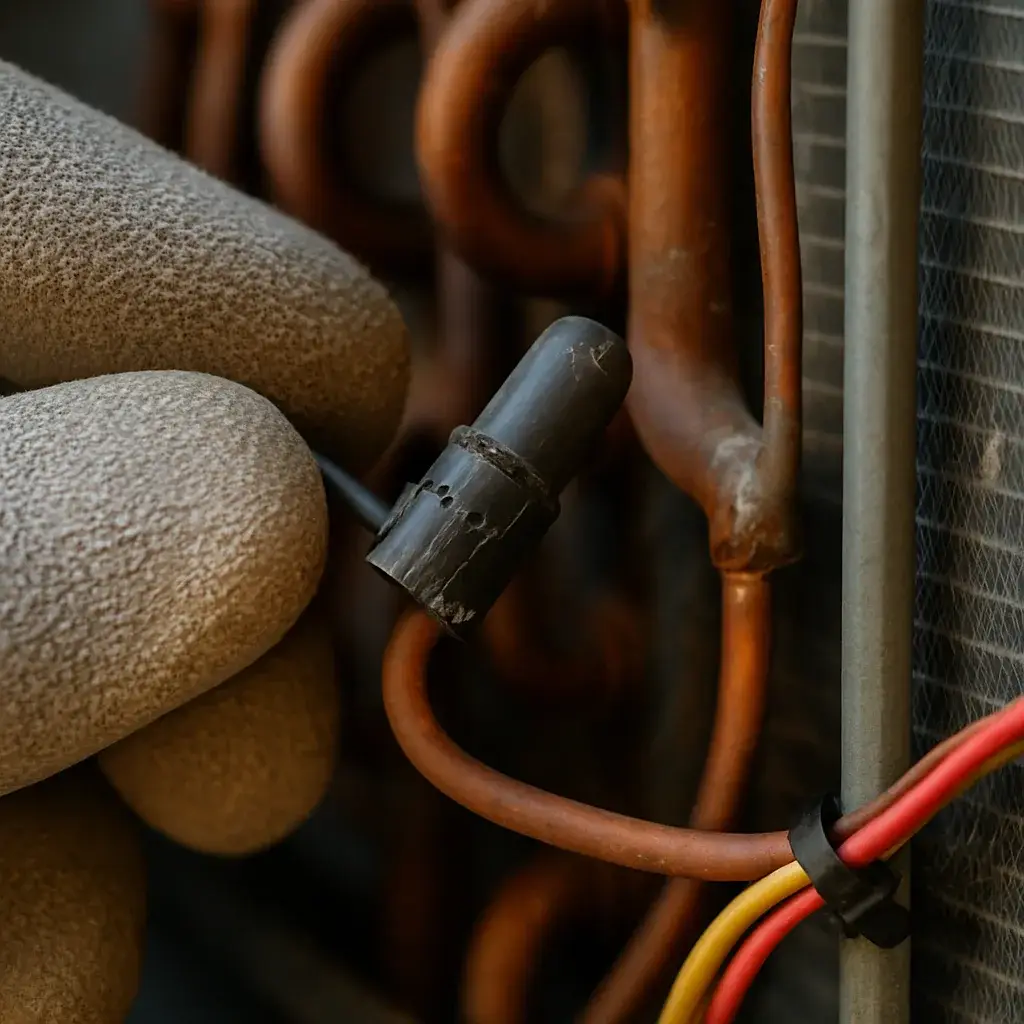
The sensor we’re talking about is a small thermistor that sits near the evaporator coil. Its job is reading the coil temperature and telling the control board when to cycle the compressor. Simple part, small part. But when it drifts out of range or fails, the board gets bad information and shuts things down to protect the system. That’s your short cycling, right there.
- AC runs a few minutes, stops, then starts again on its own, over and over
- Vents blow warm or lukewarm air even though the unit sounds like it’s running fine
- Thermostat shows the set temperature, but the room never cools down
- Compressor cycles on and off multiple times in a single hour
A lot of homes in Sunnyvale run the air handler up in the attic, and attic temps here can climb well past 130 degrees on a July afternoon. That kind of heat cooks wiring and sensor housings faster than you’d see in a garage-mounted unit up north. So the sensor drifts, corrodes, or a connection works loose, and the system starts guessing wrong about coil temperature. That’s one of the most common calls we take all summer.
When a Sensor Repair Isn’t the Real Problem
Not every cooling problem is a sensor problem. We’d rather tell you now than send a tech out for something you could’ve fixed yourself.
If your thermostat screen is blank, check the batteries first. Sounds simple, but we get calls where that’s the whole fix. A dirty air filter can also choke airflow enough to trip a sensor’s normal reading, so the sensor looks bad when it’s really just buried in dust. Swap the filter, wait an hour, see what happens.
Ice on the indoor coil is a different animal entirely. That usually points to low refrigerant or a blocked return, not a sensor. And if your outdoor unit isn’t spinning at all, that’s more likely a capacitor or a tripped breaker than a thermistor issue.
- Whole house warm, breaker fine, thermostat lit up but system won’t kick on at all
- Ice building up on the indoor coil or the copper line outside
- Outdoor fan not spinning, no hum, nothing
- Cooling fine downstairs but not upstairs, or vice versa
Any of those, and you’re looking at a different repair. A sensor problem usually shows up as short-cycling, a system that runs but never quite gets to temp, or a display that shows an error code tied to temperature sensing. If your symptoms don’t match, don’t force it. We’ll tell you straight if we come out and find something else going on.
What Happens During an AC Sensor Repair Visit
You call, we come out. AC sensor repair is usually one of the shorter visits we run in a day. No tearing apart the system, no guessing games, just a clear process from start to finish.
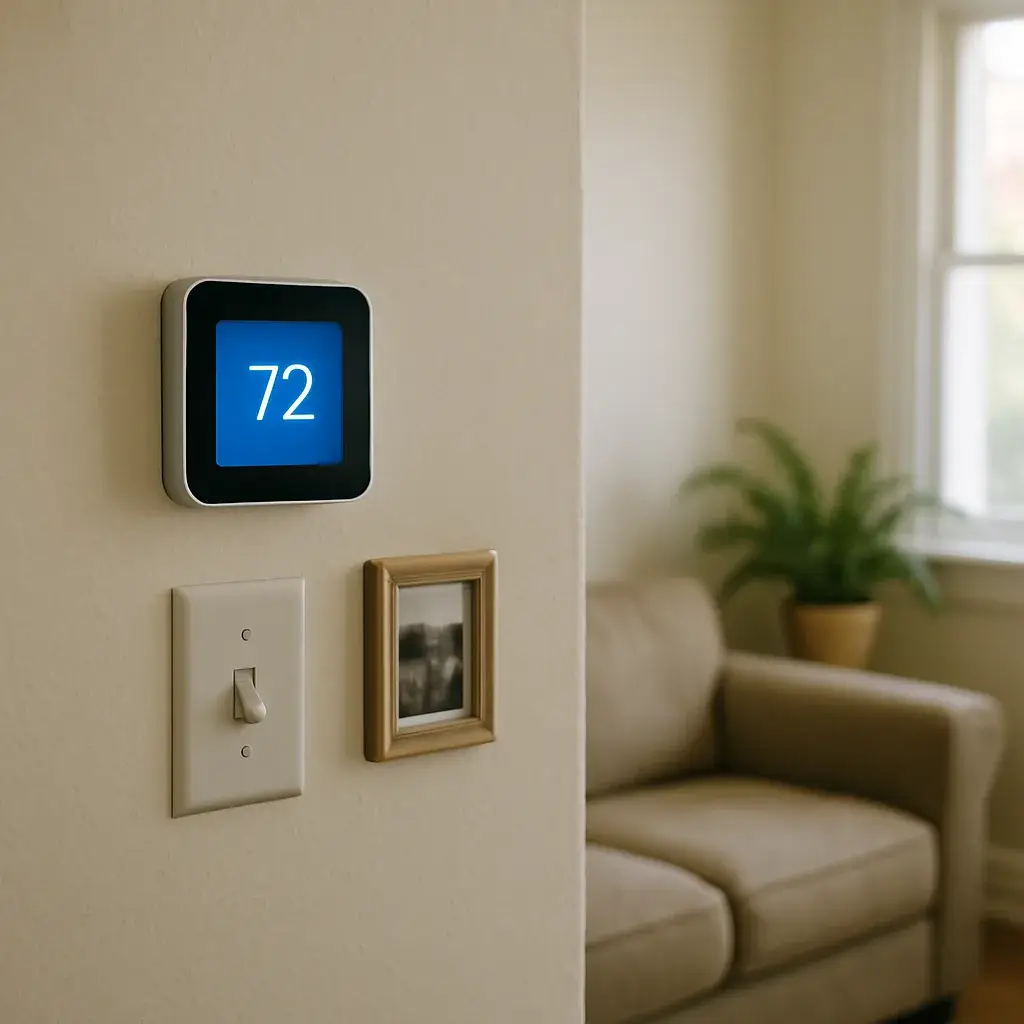
- The technician checks your thermostat readings against what the system is doing, since a bad sensor often shows up as a mismatch between the two.
- Next comes a visual and electrical check of the sensor itself, usually a small thermistor near the evaporator coil.
- If the sensor is reading wrong, shorted, or corroded, we confirm it before touching anything else.
- We repair or replace the failed part and reconnect the wiring the right way.
- The system gets run through a full cycle so we can watch the new reading match reality.
- We clean up, walk you through what was wrong, and confirm your cooling holds steady before we leave.
A tech doesn’t leave until the reading’s stable. No extra parts get swapped unless something else failed, and we’ll show you what we found before doing anything more.
Our technicians are background checked and drug tested, so the person standing in your Sunnyvale kitchen is someone you can trust in your home, not a stranger off a job board.
Need help with AC sensor repair?
Call Today, Get Service Today. Xtreme Air Services is ready to help.
How AC Sensor Repair Pricing Works
Here’s the honest answer on cost. Most AC sensor repair calls run $100 to $200. That’s the typical price for the most common job: our tech finds the failed part, usually a thermistor or sensor fault, repairs or replaces it, and checks the system runs right before leaving. One visit, one fix.
Not every job is that simple, though. What pushes a repair toward the higher end?
- How bad the failure is and how far it’s spread
- Whether the part is easy to get or has to be tracked down
- The age and brand of your equipment
- If more than one part failed at the same time
That last one matters more than people think. A sensor fault sometimes points to a bigger issue hiding behind it, and if we find a second failed part, that changes the job.
There’s a service call fee too, $26 to $99 depending on the situation, but it gets credited toward your repair if you move forward with us. We never charge extra for nights or weekends, a Saturday call costs the same as a Tuesday afternoon. What’s included in that price is diagnosis, labor, the standard part, testing, and cleanup. What’s not included is anything beyond that first fix, like a second failed component or a code upgrade, and we’ll always quote that separately before touching it.
Sunnyvale Summers Push AC Sensors to Fail Faster
Sunnyvale summers don’t just make your AC work harder. They cook the one part that tells your system when to work at all: the sensor.
A lot of homes out here, especially the newer subdivisions built up around Sunnyvale over the last couple decades, run their air handler in the attic. Attic space in July can hit well past 140 degrees. That kind of heat doesn’t break the whole unit, it just confuses one small part, the thermistor sensor that reads coil and air temperature. Once that reading drifts, the system either runs nonstop trying to catch up or shuts itself down early to protect the compressor.
Notice your AC short-cycling on a hot afternoon, kicking on for two minutes then stopping? That’s usually the sensor talking, not the compressor failing.
We see this every week once the heat sets in, and it’s the same sensor, same fix. Older units feel it worse because the sensor and its wiring have had more summers to bake and corrode. Once one sensor starts drifting, it rarely fixes itself with time off or a cooler week.
But not every AC hiccup means a new sensor. Sometimes it’s a loose wire baked brittle by heat, sometimes it’s a coil sensor that just needs cleaning. Same story every August around here.
Frequently Asked Questions
Common questions about AC sensor repair
How fast can you get someone out for AC sensor repair in Sunnyvale?
We schedule most AC sensor repair calls the same day you reach out, especially during summer when attic units are working hardest. Short-cycling can mean your home stops cooling within hours, so we treat these calls with urgency. When you call, tell us what the AC is doing (running a few minutes, shutting off, warm air from vents), and we’ll get a technician on the way fast. You don’t need to wait until the problem gets worse to book a visit.
What happens when a technician arrives to repair an AC sensor?
Your technician checks the thermostat reading against what the system is doing, then inspects the sensor near the evaporator coil for corrosion or a bad connection. If the sensor is at fault, we repair or replace it and run the system through a full cycle to confirm the reading holds steady. You’ll get a plain explanation of what we found before any extra work happens. The whole visit is usually one of the shorter calls we run in a day.
Why do AC sensors fail so often in Sunnyvale homes?
Attic heat is the main reason. Many Sunnyvale homes, especially newer subdivisions, keep the air handler in the attic, where temperatures can top 130 degrees on a summer afternoon. That heat cooks the sensor’s wiring and housing faster than a garage-mounted unit would ever see. Over time the sensor drifts out of range or corrodes, and the control board starts getting bad readings. That’s why short-cycling calls spike here every July and August.
How do I know if my AC problem is the sensor and not something else?
A sensor problem usually shows up as short-cycling, a system that runs but never reaches temperature, or an error code tied to temperature sensing. If there’s ice on the indoor coil or your outdoor fan won’t spin at all, that points to a different repair, not the sensor. Tell us your exact symptoms when you call, and we’ll let you know what it sounds like before we schedule anything.
Can I check anything myself before calling for AC sensor repair?
Yes, a couple quick checks can save you a call. Swap your air filter first, since a dirty filter can choke airflow and make a normal sensor look like it’s failing. Wait about an hour after swapping it and see if the short-cycling stops. If your thermostat display is blank, replace the batteries before assuming the system itself is broken. If neither fixes it, that’s when it’s time to book a real diagnosis.
Ready to Get Started?
Call 972-288-2263 Today, Get Service Today.