


What to Expect From a Backup Power Assessment
What a backup power assessment covers and the problems we look for at Sunnyvale, TX homes.
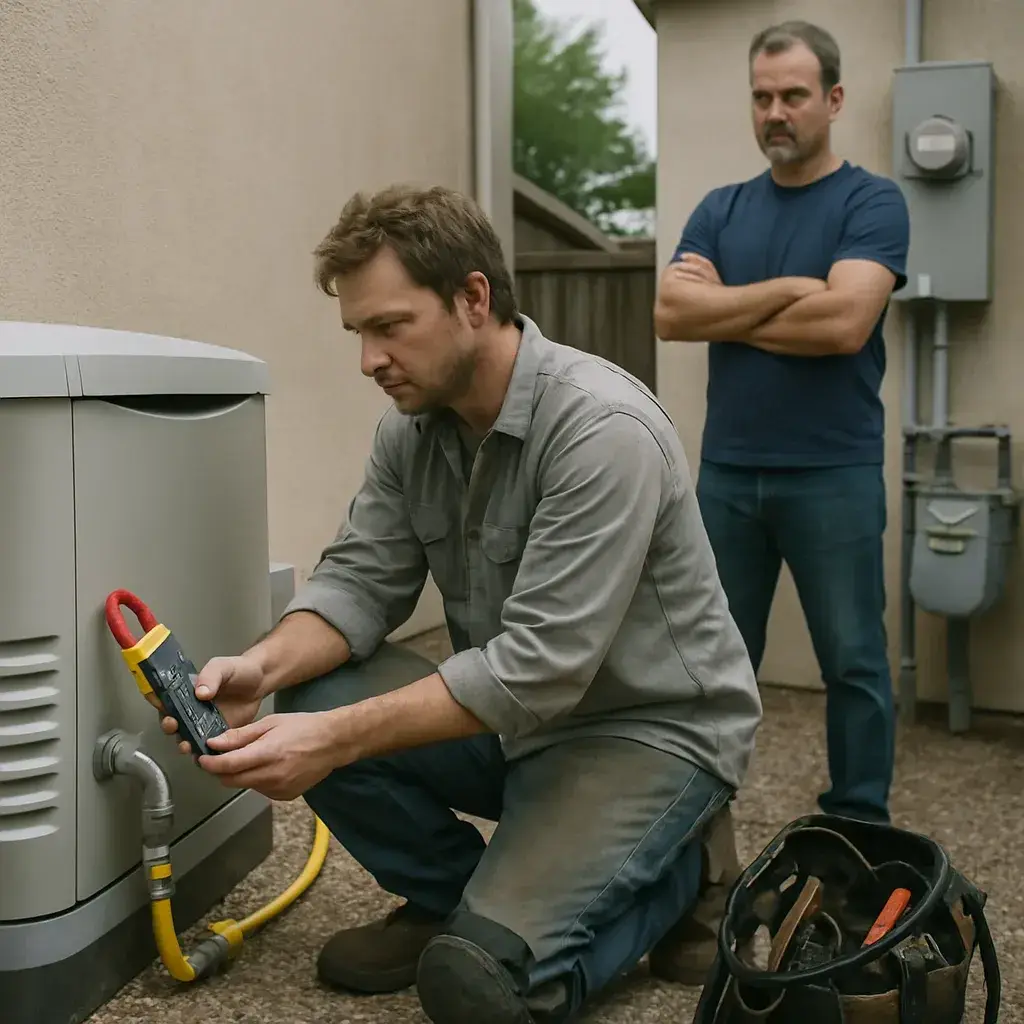
What’s Covered on This Page
- Sizing Confusion Is the Most Common Concern Buyers Bring to This Visit
- Choosing Between Whole-Home, Portable, and Battery Backup Is a Frequent Sticking Point
- Gas Line and Meter Capacity Are Checked Before Any Standby Unit Is Recommended
- A Transfer Switch Is a Required Part of a Whole-Home System, Not an Add-On
- Placement and Clearance Rules Shape Where a Unit Can Physically Go
Sizing Confusion Is the Most Common Concern Buyers Bring to This Visit
Most people who call us for a backup power assessment are not sure how much generator they need. That is normal. You may be weighing two things at once: buying more generator than your house will ever use, or buying something too small to carry the AC compressor and the well pump at the same time. Both concerns make sense. Both are what this visit is for.
Sizing gets confusing because a home’s electrical load is not obvious from the outside. A 2,400 square foot house in Frisco with a single AC condenser draws differently than an older Mesquite home running a window unit plus a sump pump plus a refrigerator in the garage. Square footage alone does not tell the story. Neither does guessing off what your neighbor bought. The real number comes from adding up the circuits and equipment you want covered during an outage, then matching that total to what a given generator can start and sustain, especially high-draw items like AC compressors that pull a heavy surge the moment they kick on.
We walk the property with you and go through what matters to your household or business. Do you want whole-home coverage, or just the essentials, refrigerator, a few lights, the garage door, maybe one AC unit to keep bedrooms livable during a summer outage? We talk through those choices during the visit and lay out the generator or battery options that fit, along with where a transfer switch and the generator pad would go. That is the needs assessment and the recommendations, and that part of the visit is often complimentary (people usually appreciate that).
We will not oversell you a bigger unit than your situation calls for. We also will not tell you a small portable unit will run your whole HVAC system if it will not. Some homes do not need whole-home standby power. A portable generator hookup covers what they need for far less complexity. Other homes, especially ones with a single AC system that has to run through a Texas summer outage, need enough sizing to start and hold that compressor. That is a real difference, and it is worth getting right before you spend money on equipment.
This visit does not include installation, equipment, or the fuel line and transfer switch work that comes after you decide. Those are separate, priced steps once you know what you are buying. Our pricing page covers those costs in detail.
Choosing Between Whole-Home, Portable, and Battery Backup Is a Frequent Sticking Point
Most people come to us already leaning one way. Then their neighbor mentions a different setup, and now they are not sure again. This is the question we hear most during a backup power assessment: whole-home standby, a portable unit, or a battery system. There is no single right answer for everyone, so we walk through it with you instead of pushing a default.
A whole-home standby generator kicks on by itself during an outage and can run your AC, your refrigerator, your well pump if you have one, and your lights all at once. That matters a lot in North Texas summers, when a storm knocks out power for a day or two and the last thing you want is a hot house with no way to cool it down. The tradeoff is footprint and fuel connection. Whole-home units need a concrete pad, a permanent gas or propane fuel line connection, and a transfer switch tied into your panel (the switch is not the flashy part, but it matters).
Portable generators cost less up front and do not need a permanent installation. But they only run what you plug into them. They need someone home to set them up and fuel them. They cannot legally connect straight into your home’s wiring without a transfer switch anyway. We do portable generator hookups for people who want backup for a few key circuits, a fridge, some lights, a window unit, without the bigger commitment.
Battery backup systems are quiet, do not need fuel, and turn on instantly with no start-up delay. They are a good fit for shorter outages or for homes with solar. The real limitation is capacity. A battery system can run a smaller number of circuits for a set number of hours before it needs recharging, so if you are expecting multi-day outages during an ice storm, a battery alone usually is not enough on its own.
The right choice depends less on brand preference and more on what you need covered. A homeowner with a family member on home medical equipment has different priorities than a family that just wants the fridge and a few lights during a summer storm. We look at your panel, your circuits, and what you would want running during an outage, then talk through sizing and options that match that. This part of the assessment is often complimentary, though detailed load calculations or formal engineering work can carry a fee.
We will tell you plainly if a portable unit covers what you need instead of steering you toward a bigger installation you do not need yet. And if a whole-home system is the better fit for your situation, we will walk you through the fuel line, pad placement, and transfer switch pieces so there are no surprises later.
Gas Line and Meter Capacity Are Checked Before Any Standby Unit Is Recommended
Before we recommend any generator size, we check what your existing gas line and meter can deliver. This is one of the most common things buyers do not think to ask about, and it is a big part of what a backup power assessment covers. A generator only runs as well as the fuel supply behind it, and a lot of homes in North Texas were built with a gas meter sized for a furnace, a water heater, and maybe a cooktop. Nobody planned for a 20kW standby unit pulling from that same line.
What people notice is usually surprise. Homeowners assume that because their house already has gas service, adding a whole-home generator is a simple hookup. Sometimes it is. But often the existing meter and line were sized years ago for a smaller appliance load, and a standby generator adds real demand on top of everything else running in the house. If the supply is not there, the unit can struggle to reach full output right when you need it most, during a storm outage with the AC, well pump, and refrigerator all trying to run at once.
This happens because gas utilities size meters to the load a builder or homeowner requested at the time, not to future additions. That is just how meters get sized in the first place, based on what was installed then, not what might get installed years later.
Here is what we do about it. As part of the assessment, we look at your current meter capacity and gas line, figure out the additional load a proposed generator would add, and tell you plainly whether the existing setup supports it. If it does, we move forward with generator sizing and consultation and the fuel line connection needed for a whole-home standby generator installation and transfer switch installation. If it does not, we say so before you spend a dime on equipment. That might mean talking with your gas utility about upsizing the meter, running a new gas line, or in some cases, sizing down to a unit your current supply can support.
Watch Our Video
See How We Handle Backup Power Assessment in Sunnyvale
Xtreme Air Services — Serving Sunnyvale and surrounding areas
Need help with Backup power assessment?
Call Today, Get Service Today. Xtreme Air Services is ready to help.
A Transfer Switch Is a Required Part of a Whole-Home System, Not an Add-On
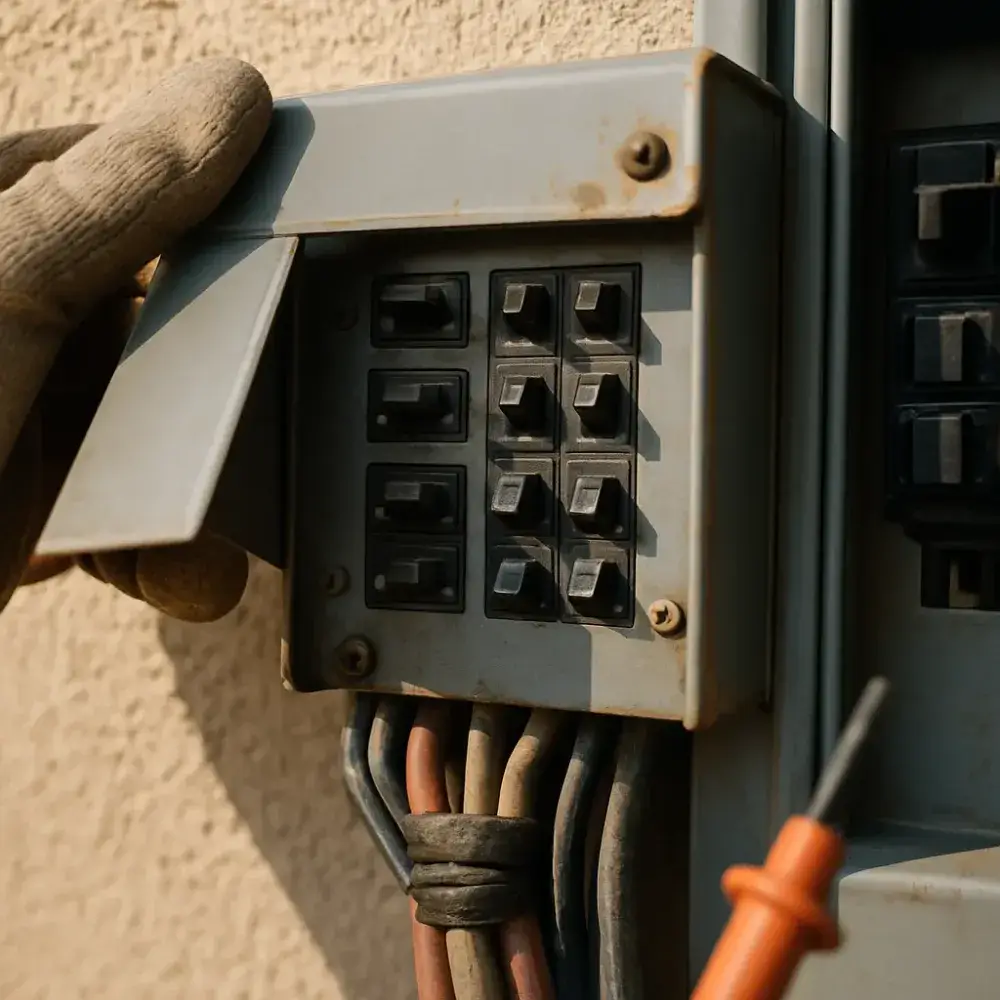
A generator without a transfer switch is just a big box that hums in your yard. The transfer switch is the part that moves your home’s electrical load off the grid and onto backup power, safely and in the right order. People sometimes come to us thinking the generator itself is the whole purchase, then learn during a backup power assessment that the switch, the wiring, and the placement all matter just as much as the unit’s size.
Here is why it is not optional. Without a transfer switch, there is no safe way to keep your home’s wiring isolated from the utility line while a generator feeds it. Feeding power backward into a dead grid line is a real hazard, both for utility crews working to restore power and for your own house wiring. That is part of why this work falls under electrical code, and why it gets pulled with a permit and inspected. We install to code as a licensed electrical contractor, and a transfer switch is a core part of that install, not a line item we tack on later.
The other reason it is built into the assessment is sizing. A whole-home standby generator, a smaller unit meant to cover a few circuits, and a portable generator hookup all pair with different transfer switch setups. During the consultation we look at your panel, your service size, and which circuits matter most to you, refrigeration, well pump, a couple of bedrooms with window units, a sump pump, whatever it is, and we size the switch and the generator together. Sizing one without the other is how homeowners end up with a generator that cannot run what they bought it to run.
Placement is part of the same conversation. The transfer switch typically lands near your main panel, and the generator pad or placement has its own clearances to worry about, distance from windows and doors, fuel line connection, and drainage. We walk that with you on-site rather than guessing from a phone call, because every home’s panel location and yard layout is different. Older homes around Dallas and Fort Worth with additions or subpanels sometimes need extra wiring runs that a newer subdivision home would not.
None of this changes what the assessment itself costs you. It is a needs assessment and options conversation, not the installation, and it does not include equipment or wiring work. If you decide to move forward, the transfer switch, the generator, and the installation labor get priced out separately with a written flat-rate quote before anything is installed.
Placement and Clearance Rules Shape Where a Unit Can Physically Go
Where a generator can sit on your property is one of the first things that comes up during a backup power assessment, and it surprises a lot of homeowners how much it narrows the options. A standby generator needs clear space around it for airflow and service access, and it cannot sit right up against a wall or under a window. Manufacturer clearance requirements set a minimum distance from the home, from fences, and from anything else that could block airflow to the unit or trap exhaust near a living space.
During the visit, we walk the exterior with you and look at where the electrical service comes into the house, where the gas line runs if you are considering a natural gas unit, and where the concrete or composite pad can go. On a lot of newer subdivisions across Frisco and Allen, side yards are narrow and HOA rules add another layer. Some communities restrict visible equipment to the back of the house or require screening. Older homes in established Dallas and Mesquite neighborhoods often have more side yard room, but older electrical services or aging gas meters can mean extra work to connect a transfer switch or run a new fuel line.
Setback from doors and windows matters too. Most standby units need to sit a set distance from any opening that could let exhaust drift indoors, which rules out a lot of tight side yards on smaller lots. If your property backs up to a fence line or shares a tight easement with a neighbor, that can eliminate a spot that otherwise looked convenient. We have measured plenty of side yards where the only workable spot ended up being near the back patio instead of the side of the house, simply because that is where clearance worked out once we accounted for windows, the AC condenser, and the property line.
Sound is part of placement too, not just code. A generator running during an outage is not silent, and putting it too close to a bedroom window or a neighbor’s patio can turn a helpful backup system into a source of complaints down the road. Part of what we look at on-site is whether a slightly less convenient spot might make more sense once you account for where people sleep and where neighbors spend time outdoors.
Placement also affects what size unit will physically fit and how the fuel line or gas line needs to run underground or along the house. All of this gets mapped out and explained during the visit, not left as a guess for later. For homeowners weighing a whole-home standby generator installation, understanding placement upfront avoids the situation where a unit gets sized and ordered before anyone confirms it fits where you wanted it.
See our full backup power assessment service in Sunnyvale for what the complete job involves.
Ready to Get Started?
Call 972-288-2263 Today, Get Service Today.