


What to Expect With Boiler Replacement: Common Questions and Issues Buyers Ask About
Rising bills on an aging boiler, repeat repairs, kettling and rumbling noises, uneven heat and short-cycling, and piping that will not match a new high-efficiency unit.
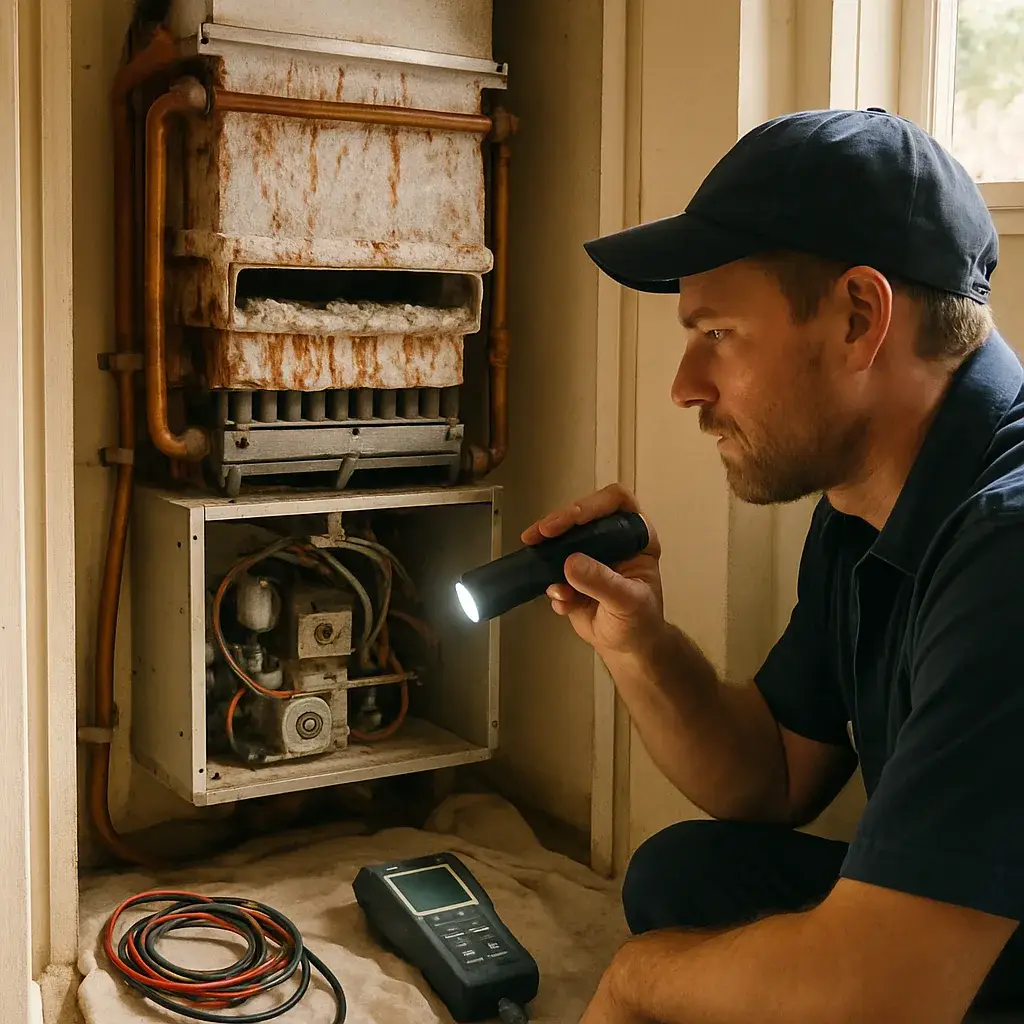
What’s Covered on This Page
- Rising Bills and an Aging Boiler Are the Most Common Reason People Start Asking About Replacement
- Frequent Repairs or a Repair Quote Close to Replacement Cost Are a Common Turning Point
- Kettling or Rumbling Noises Are Usually Linked to Mineral Buildup, Not Automatic Failure
- Uneven Heat or Short-Cycling Is Often a Sizing Issue, Not a Defect in the Boiler Itself
- Existing Piping and Venting Don’t Always Match a New High-Efficiency Boiler
- Related Links
Rising Bills and an Aging Boiler Are the Most Common Reason People Start Asking About Replacement
Most calls we get about boiler replacement start the same way. A property owner notices their heating bill crept up over a couple of seasons. Nothing else in the building changed. That pattern points to declining efficiency in the boiler itself, not a sudden failure. Boilers don’t usually announce they’re wearing out with a dramatic breakdown. They just get less efficient at turning fuel into heat, quietly, year over year.
A few things drive that decline. Scale and sediment build up inside the heat exchanger over time, especially in areas with harder water like North Texas. That buildup acts like insulation between the flame and the water being heated. The boiler has to run longer to hit the same setpoint. Combustion components like burners and controls also lose precision with age. So the unit burns fuel less cleanly than it did when it was new. You’ll notice it gradually on your utility bill long before it shows up as a no-heat call.
This is also where things get case by case. A boiler that’s ten years old with a clean maintenance history and a bill increase tied to a cold snap is a different situation. It’s not like a twenty-year-old unit with a slow, steady climb across multiple mild winters. We won’t tell you to replace a boiler just because your bill went up one month. Weather, occupancy changes, and even a stuck damper somewhere in the system can all move a bill without the boiler being the cause. Sorting out which one it is takes a look at the actual equipment and the building’s usage pattern. We never guess based on the invoice alone.
If a system evaluation does point to replacement, our boiler replacement work covers everything. We handle sizing and equipment selection, installation, and startup testing. We can walk through what a repair versus a full swap looks like for your building before any commitment is made.
Frequent Repairs or a Repair Quote Close to Replacement Cost Are a Common Turning Point
The most common thing we hear before someone decides to replace a boiler isn’t one big failure. It’s a string of smaller ones. A switch this winter, an ignition problem the next, then a control board a few months later. Each fix is reasonable on its own. Stacked together over one heating season, they start to feel like a pattern instead of bad luck.
The other version of this is a single repair quote. It lands close to what a new system would run. That happens most with older boilers where the failed part sits deep in the unit, like a heat exchanger or a proprietary control board that’s hard to source. Labor to access it, plus the part itself, can climb fast on equipment that’s fifteen or twenty years old.
Why this shows up more on older units comes down to basic wear. Heat exchangers corrode from years of condensation cycling. Gaskets and seals dry out. Manufacturers stop stocking parts for discontinued models, which pushes repair costs up even for something small. It just means the equipment has reached the point where parts availability and repair labor start working against you instead of for you.
When we’re called out on a boiler that’s had repeat visits, we look at the actual repair in front of us. We give you a written flat-rate quote before we touch anything. If a repair is a reasonable fix for a system with life left in it, we’ll say so plainly. If the numbers are close enough to replacement that repair doesn’t make sense, we lay out both options side by side and explain why.
This is also where financing tends to matter most. We offer it on qualifying installations for owners who’d rather not absorb a full replacement cost in one shot. If you want the specific numbers behind these decisions, we lay them out on our pricing page.
We don’t automatically push replacement just because a boiler has needed a couple of visits. Two service calls in five years on an otherwise sound unit is normal wear, not a warning sign. It’s the combination of age, repeat failures, and rising repair cost that moves the decision, not any one visit by itself.
Any boiler we install carries our workmanship warranty on the labor and the manufacturer’s warranty on the equipment itself. And we include our 100% satisfaction guarantee on the job overall.
Kettling or Rumbling Noises Are Usually Linked to Mineral Buildup, Not Automatic Failure
A popping, rumbling, or kettle-like sound coming from a boiler almost always points to mineral scale. It’s not a boiler about to fail outright. People usually notice it during the heat-up cycle. It’s a series of dull thumps or a low rumble that sounds like a kettle just before it whistles. It can be loud enough to hear from another room in a commercial building.
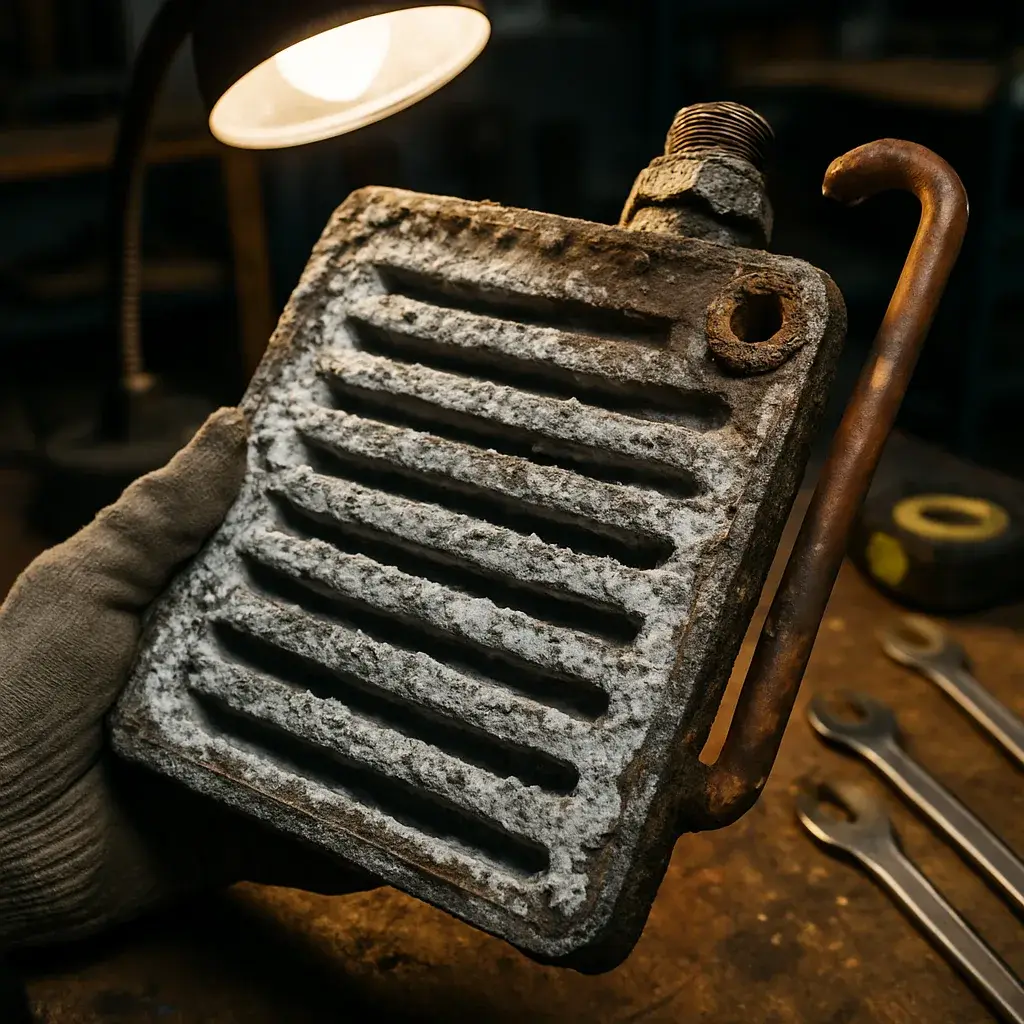
Water carries dissolved minerals. Over years, those minerals settle out as scale on the inside of the heat exchanger. North Texas water runs hard, so this buildup tends to happen faster here. The scale layer acts like insulation. Instead of heating evenly, water gets trapped under that layer and flashes into small steam pockets. When those pockets collapse, they make the popping and rumbling sound you hear.
It doesn’t mean the boiler is about to shut down. But it does mean the heat exchanger is working harder than it should. Efficiency drops as the scale thickens. A boiler with heavy kettling has to burn more fuel to produce the same heat output, and that cost shows up on your utility bill long before the unit stops running.
What we look at during a boiler consultation is how far along the scale buildup is. We also check the heat exchanger’s age. Boiler cleaning and boiler servicing can clear lighter scale and quiet the noise down. But if the deposits have been building for many years, cleaning buys time. It doesn’t reverse wear that’s already happened to the metal. We’ll say so plainly rather than sell a cleaning as a permanent fix on a unit near the end of its practical life.
That’s the point where boiler replacement usually makes more sense than repeated servicing. A newer unit with a clean heat exchanger runs quieter, transfers heat more evenly, and doesn’t carry the years of scale history the old one does. We handle boiler installation, boiler upgrades, and boiler system design for buildings across Sunnyvale and the surrounding DFW area. So the conversation about repair versus replacement happens with someone who does both kinds of work.
If the noise shows up alongside water treatment gaps or a boiler that’s been serviced on an irregular schedule, boiler safety inspections can confirm what’s driving it before anyone commits to a bigger job.
Ready when you are – get in touch today.
Call Today, Get Service Today. Xtreme Air Services is ready to help.
Uneven Heat or Short-Cycling Is Often a Sizing Issue, Not a Defect in the Boiler Itself
One room stays warm while another never quite gets there. Or the boiler fires up, shuts off a few minutes later, then fires again. People often assume this means the unit is broken. Most of the time it means the boiler was sized or piped for a different job than the one it’s doing.
A boiler that’s too big for the heating load will satisfy the thermostat fast. It shuts off before it’s run long enough to heat evenly through the radiators or baseboard loops. That’s short-cycling. A boiler that’s too small runs constantly and still can’t keep up in the coldest rooms, usually the ones farthest from the mechanical room or on an exterior wall. Either way, the symptom looks the same to a homeowner: inconsistent comfort.
Existing piping and zoning play a part too. A home with multiple zones set up years ago, then added onto, can end up with imbalanced loops even after a new boiler goes in. That’s a design question, not a defect in the equipment.
This is why sizing isn’t something we skip past on the way to a bigger unit. Through our boiler consultation and boiler system design work, we look at the actual heating load. We check the existing radiators or baseboard and how the zones are laid out before recommending equipment. If zoning is part of the fix, that’s covered under our zoning system installation and inspection services.
Here’s the part some people don’t want to hear: a bigger boiler is not a safer bet. Oversizing feels like it should solve uneven heat. But it usually makes short-cycling worse and can shorten the life of the unit. Matching the boiler to the actual load, not rounding up, is what gets the even heat people are after.
We cover this kind of sizing and design work as part of our boiler replacement projects across the Sunnyvale and DFW area. It’s worth understanding before you compare quotes on equipment alone.
Existing Piping and Venting Don’t Always Match a New High-Efficiency Boiler
A lot of the older boilers we see around Sunnyvale and the rest of DFW were vented straight into a metal flue or a masonry chimney. That worked fine for the equipment they were built for. High-efficiency condensing boilers run cooler exhaust. And that exhaust carries moisture. Send it up an old metal flue and you get corrosion. Send it up a masonry chimney built for a hotter, drier gas appliance and you can run into the same problem. So a lot of these jobs need new sidewall venting run in PVC or CPVC, not just a swap at the boiler.
Condensing boilers also produce condensate. This water has to drain somewhere. Older systems didn’t need this. A new one does, and that means a condensate line and sometimes a neutralizer before it can go to a drain. Homes with the mechanical room in a spot far from a floor drain sometimes need more piping to get there than the homeowner expected going in.
Gas line sizing is another one people don’t think about until we bring it up. Some higher-output boilers need more gas volume than the old line was sized to deliver. If the existing line is undersized for the new unit’s input rating, that’s a real limitation. It either gets addressed or the new boiler won’t perform the way it’s rated to.
Piping and venting were sized for the equipment on hand at the time, often decades ago. Standards and equipment have moved since then. A straight one-for-one swap isn’t always physically possible once you’re dealing with a condensing unit.
This is why we walk the mechanical room and trace the venting path and gas line before we write a number. A standard replacement using existing connections is one job. A replacement that needs new venting, a condensate line, or a larger gas line is a different scope. We’d rather tell you that up front than have it show up as a surprise once the old unit is already out.
We put all of that in writing. It includes what’s included and what isn’t, before any work starts. If your situation needs modification beyond a standard connection, that’s called out separately. You’re deciding with full information.
Ready to Get Started?
Call 972-288-2263 Today, Get Service Today.