


Should You Repair or Replace Your Central Air Conditioning Installation?
When we would repair the system you have, when replacement is the better answer, what a $7,000 to $10,000 replacement includes and excludes, and how we walk you through the decision.
What’s Covered on This Page
- When We’d Recommend a Repair
- When We’d Recommend Replacement
- What a Replacement Includes (and What It Doesn’t)
- How We Help You Decide
- Related Links
- How do you decide whether to repair my system or recommend a new installation?
- Does an older AC unit automatically mean I need a full replacement?
- When would you tell me to replace my system instead of taking my repair money?
- How does a typical repair cost compare to a full installation price?
- Can you tell me over the phone whether I need a repair or a full replacement?
- Is financing available if I decide on a full replacement instead of a repair?
When We’d Recommend a Repair
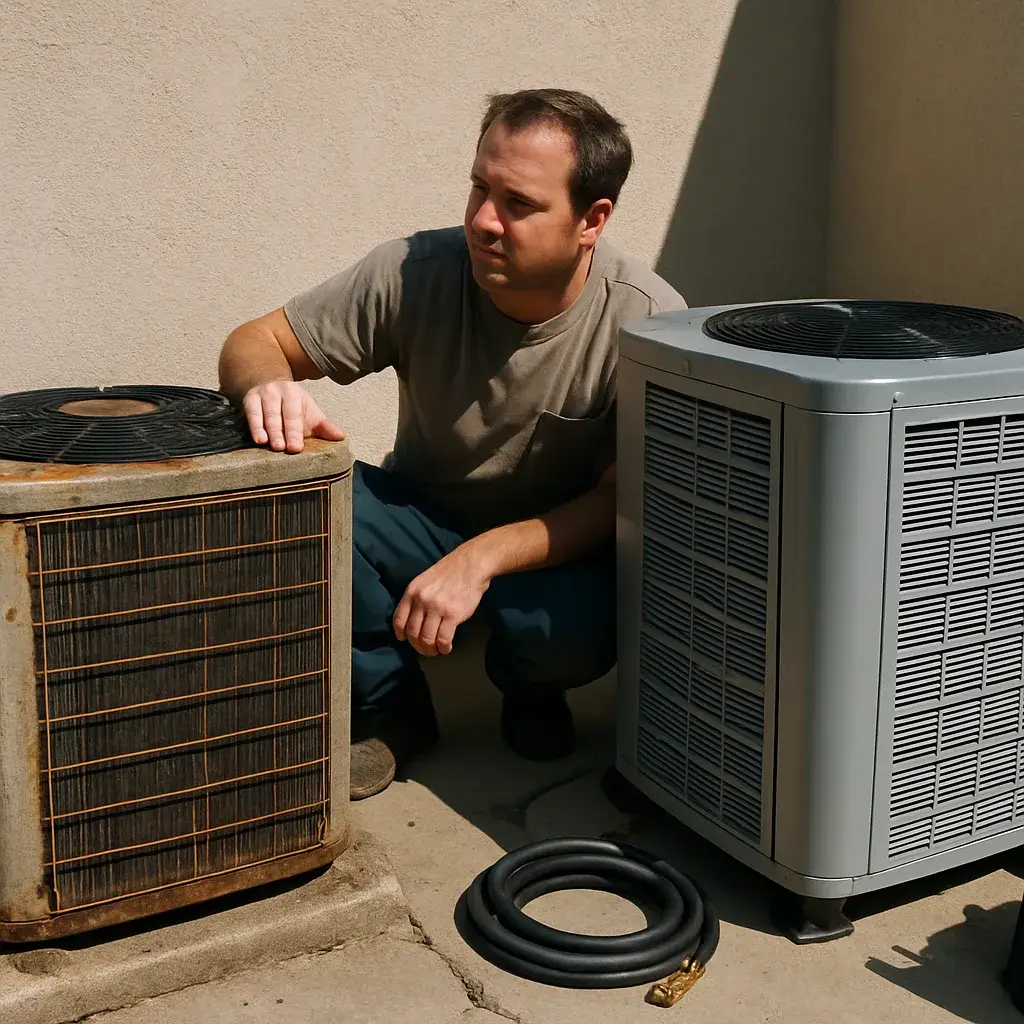
Texas summers push central air conditioners hard. A unit that is 5 to 10 years old, with regular maintenance, usually has plenty of service life left. If it has a single, isolated problem (like a blown capacitor, failed contactor, or refrigerant leak), repair is almost always the right call. No need to jump to a full replacement.
We also weigh the repair cost against what a new installation would cost. If the repair estimate is a small fraction of a comparable installation, and your unit has years of expected life remaining, repairing helps keep your investment safe. You don’t have to pay for a new system too early.
Component compatibility matters too. When the indoor coil, outdoor condenser, and ductwork are properly matched in capacity and still working well, replacing just the failed part brings back full performance. Mismatched or aging components with a new unit often cause efficiency losses. So we check the whole system, not just the symptom.
- System age is under 10 to 12 years with a documented maintenance history
- The failure is isolated, not the third or fourth breakdown this year
- Repair cost falls well below the replacement threshold for the unit’s age
- Coil, condenser, and ductwork are matched and structurally sound
- Parts and refrigerant type are still readily available
During every diagnostic visit, our technician finds the actual root cause. They walk you through it in plain language before any work is approved. Whether we recommend a repair or a replacement, you’ll receive a written, flat-rate quote upfront. There are no surprises, and no pressure to decide on the spot.
When We’d Recommend Replacement
We’d point you toward replacement when the system works against you, not for you. This usually means an older unit that keeps needing attention. Or a condenser or coil has failed outright. Maybe your system just can’t keep the house comfortable, no matter how many small fixes it gets. At that point, a repair is a patch on a system that’s already telling you it’s done.
A full central air conditioning installation, with a new condenser and coil, typically runs $7,000 to $10,000. This is for a standard, like-for-like job using your existing connections. A wider range we see across different homes is $5,500 to $13,000. What moves that number is the size and efficiency of the equipment (SEER2 rating and tonnage), the brand and model you pick, how easy the equipment is to access, the condition of your existing ductwork and wiring, and whether any code upgrades, permits, or custom fabrication come into play. That price includes the equipment, professional installation, startup and testing, and hauling away the old unit. It doesn’t include duct, electrical, or plumbing modifications or permit costs unless we’ve spelled those out ahead of time.
If your system is a few years old and one part failed, we’d usually recommend repairing it. Replacement only makes sense when the repairs start stacking up. Or the equipment is aging out. Or the cost of fixing it starts getting close to what a new system costs anyway. We’re not going to talk you into a new system just because it’s a bigger job for us.
Before we recommend either path, we look at your home’s cooling load. We check the age and condition of your current equipment. And we look at how your ductwork is holding up. That’s part of an AC system consultation, not a guess made from the driveway. If replacement is the right call, we walk you through the equipment options. You get a flat-rate price in writing before anything gets ordered. Financing is available on qualifying installations, too, if that helps spread out the cost.
Whatever we install is backed by our workmanship warranty on the labor. The manufacturer’s warranty covers the equipment. Our 100% satisfaction guarantee covers the job overall. If you want the full breakdown of what drives the price up or down on our central air conditioning installation page, it’s laid out in more detail there.
What a Replacement Includes (and What It Doesn’t)
In Sunnyvale, a standard like-for-like central air conditioning installation typically runs $7,000 to $10,000 installed. This covers a new condenser and evaporator coil, sized to match your existing ductwork and home layout. Across all job types, total installed costs range from $5,500 to $13,000. The spread is driven by equipment tonnage, SEER2 efficiency ratings, brand selection, rooftop or side-yard access constraints common in older North Texas homes, and the condition of your current ductwork or electrical wiring.
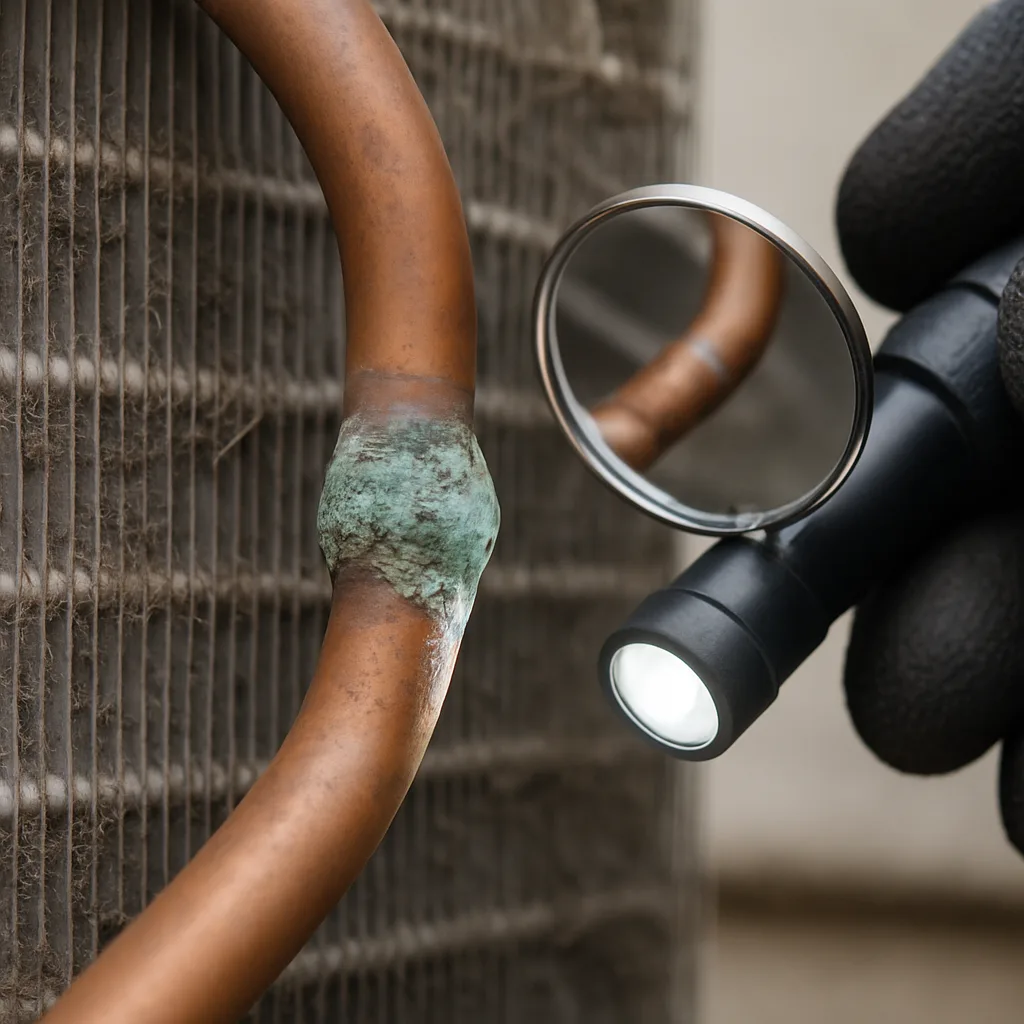
A properly scoped quote defines what’s bundled into that price. Reputable installers include the following as standard.
- New condenser, coil, and all required refrigerant lines and materials
- Professional installation by licensed, insured technicians
- Standard electrical and refrigerant line connections to existing infrastructure
- System startup, refrigerant charge verification, and performance testing
- Haul-away and disposal of your old condenser and coil
What’s not automatically included is where many homeowners get surprised mid-project. Older DFW homes, especially those built before the 1990s, often have undersized electrical panels. They may also have disconnected or leaky ductwork, or wiring that no longer meets current code. Addressing these issues is legitimate and necessary work. But it’s separate from the base installation price unless your contractor has inspected your system beforehand and built it into the quote.
- Ductwork repairs, resizing, or replacement
- Electrical panel upgrades or new dedicated circuits
- Plumbing modifications for condensate drainage
- Code corrections identified during inspection
- Town of Sunnyvale permit fees, unless stated upfront in your written estimate
Before signing anything, ask your installer to walk through the quote line by line. Confirm in writing whether permits and any ductwork or electrical corrections are included or billed separately. This single question prevents most of the disputes that arise after installation day.
Financing is available on qualifying installations, subject to approved credit. This can help offset the upfront cost of higher-efficiency equipment or unexpected ductwork repairs. For a complete cost breakdown by job type and home size, see our central air conditioning installation pricing guide.
Have questions? We’re happy to help.
Call Today, Get Service Today. Xtreme Air Services is ready to help.
How We Help You Decide
Deciding whether to repair an aging system or move forward with a full central air conditioning installation shouldn’t feel like guesswork. Sunnyvale summers push older units hard. (Especially in older parts of the Metroplex, where homes from the 1960s and 70s often still run original ductwork.) That’s why our process starts with a same-day diagnostic visit from a licensed technician. They inspect your system on-site and explain what’s going wrong in plain, straightforward language. No jargon, no vague warnings. Just a clear picture of the mechanical issue and what it means for your home.
Once the diagnosis is complete, we don’t push you toward the most expensive option. Instead, you receive a written, flat-rate quote before any work begins. Repair and replacement costs are laid out side by side. This lets you compare the short-term cost of a repair against the long-term value of a new, energy-efficient system. We factor in your unit’s age, refrigerant type, and how many repairs it’s already needed.
- Same-day diagnostic visit with a clear, jargon-free explanation of the problem
- Written flat-rate quote showing repair and replacement costs side by side
- No work begins without your explicit approval
- Financing options available for larger replacement projects
- Final walkthrough to confirm the work and explain coverage before we call the job done
If replacement makes more sense, financing is available. It helps spread out the cost of a larger investment. This is especially useful for Sunnyvale homeowners upgrading to higher-efficiency systems that qualify for utility rebates. Nothing moves forward until you give the go-ahead. And there’s never any pressure to decide on the spot.
Before we consider any job finished, we walk through the completed work together. We point out what was done. And we explain exactly what’s covered under warranty. That final conversation is part of the job, not an afterthought.
Frequently Asked Questions
Common questions about Central air conditioning installation
How do you decide whether to repair my system or recommend a new installation?
We decide after a diagnostic visit, not a guess from the driveway. We look at the system’s age, whether the failure is isolated, and whether the coil, condenser, and ductwork are still matched and sound. If repair cost falls well below what a new installation would cost, and your unit still has years of life left, we recommend repair. We never recommend replacement without a demonstrated reason. Every recommendation comes with a written, flat-rate quote before any work is approved.
Does an older AC unit automatically mean I need a full replacement?
No, age alone doesn’t decide it. A unit that’s 5 to 10 years old with regular maintenance usually still has plenty of life left. If it has one isolated problem, like a blown capacitor or a refrigerant leak, repair is almost always the right call. Replacement makes more sense once repairs start stacking up, or the repair cost gets close to what a new installation would cost. We look at the whole system before making that call.
When would you tell me to replace my system instead of taking my repair money?
We’d point you toward replacement once the system works against you instead of for you. That usually means an older unit that keeps needing attention, a condenser or coil that failed outright, or a system that can’t keep the house comfortable no matter how many small fixes it gets. At that point, a repair just patches a system that’s already done. We won’t steer you toward a bigger job just because it pays more.
How does a typical repair cost compare to a full installation price?
A full central air conditioning installation typically runs $7,000 to $10,000, with a wider range of $5,500 to $13,000 depending on your equipment and home. We weigh your repair estimate against that range during the diagnostic visit. If the repair cost is a small fraction of a comparable installation, and your unit still has years of expected life, repairing protects your investment. If the repair estimate creeps close to that installation range, replacement usually makes more financial sense.
Can you tell me over the phone whether I need a repair or a full replacement?
No, we can’t make that call without seeing the system in person. Matching components, checking ductwork condition, and confirming the actual cause of a failure all require a diagnostic visit. A phone estimate would be a guess, and we don’t recommend replacement or repair without a demonstrated reason. Once a technician has looked at your equipment, you’ll get a written, flat-rate quote before any work is approved.
Is financing available if I decide on a full replacement instead of a repair?
Yes, financing is available on qualifying installations and larger jobs, subject to approved credit. This applies to full central air conditioning installations, not smaller repair visits. It’s worth asking about when you’re comparing the cost of repair against the cost of a new system. Financing can make the replacement option more workable if your repair estimate is already close to installation cost.
Ready to Get Started?
Call 972-288-2263 Today, Get Service Today.