


What Are the Most Common Problems With Central Air Conditioning Repair?
The handful of problems behind most central AC calls – a failed capacitor, a refrigerant leak, a frozen evaporator coil, and a clogged condensate drain – and the usual cause and fix for each.
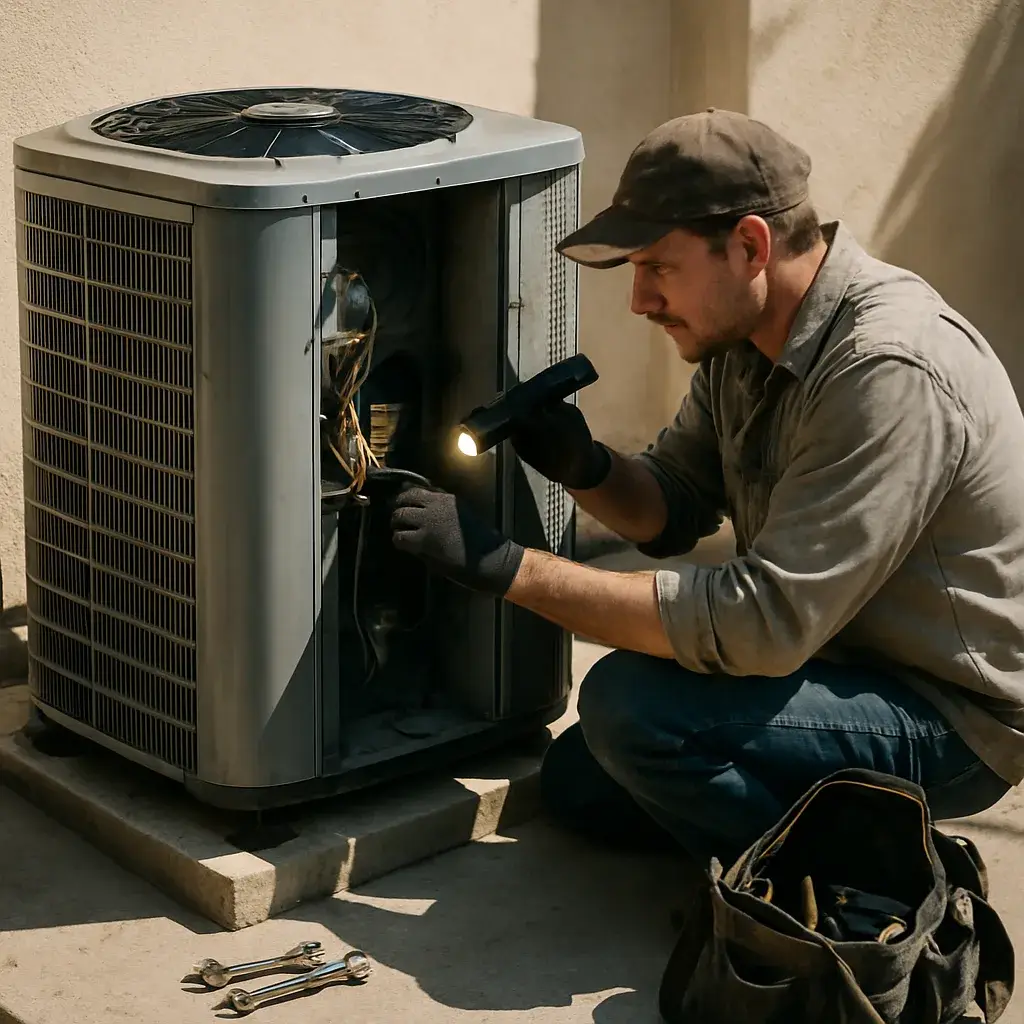
What’s Covered on This Page
- The Central AC Problems We Get Asked About Most
- A Failed Capacitor Is a Common Reason a System Won’t Start
- Refrigerant Leaks Usually Show Up as Weak Cooling, Not No Cooling
- A Frozen Evaporator Coil Usually Traces Back to Airflow
- Clogged Condensate Drain Lines Are a Seasonal Issue
- Related Links
- Why is my air conditioner running but not cooling the house?
- Why is my AC blowing warm air?
- Why is my house still not cooling after I cleaned the filter?
- Why is my AC leaking water?
The Central AC Problems We Get Asked About Most
Warm air blowing from the vents is the call we hear most in July and August. Sometimes it’s a low refrigerant charge from a slow leak. Other times the capacitor that starts the compressor has worn out, which is common once a system passes the ten to fifteen year mark in Sunnyvale’s heat. We check refrigerant, test the capacitor and compressor, and confirm the actual cause before recommending anything.
Weak airflow usually traces back to a dirty filter, a failing blower motor, or ductwork that’s leaking air into the attic. Attic-run ducts take a beating from Texas heat swings, and connections can loosen over the years. We inspect the air handler and accessible duct runs to find where the air is going.
A frozen evaporator coil is one homeowners often notice themselves, ice on the indoor coil or the line set outside. It’s almost always a symptom of restricted airflow or low refrigerant, not the root problem itself. We treat the coil, then track down why it froze in the first place, because refreezing is common if that step gets skipped.
A system that won’t turn on at all can be electrical rather than mechanical: a tripped breaker, a bad thermostat, or a failed control board. We test the electrical path before assuming a bigger part has failed. Sometimes the fix turns out smaller than expected, and we’ll tell you that plainly rather than quote a bigger job.
Grinding, squealing, or clicking noises point to motor bearings, a loose blower wheel, or electrical relay wear. We diagnose these on site, since the sound alone doesn’t tell the whole story.
- Warm air from vents: often refrigerant loss or a worn capacitor
- Weak airflow: dirty filters, blower motor wear, or duct leaks
- Frozen coil: usually a downstream sign of an airflow or refrigerant issue
- System won’t start: check electrical and thermostat before assuming compressor failure
- Unusual noises: motor, blower wheel, or relay wear
We repair these issues across the Sunnyvale and greater DFW area, and every diagnosis comes with a written explanation before any work begins.
A Failed Capacitor Is a Common Reason a System Won’t Start
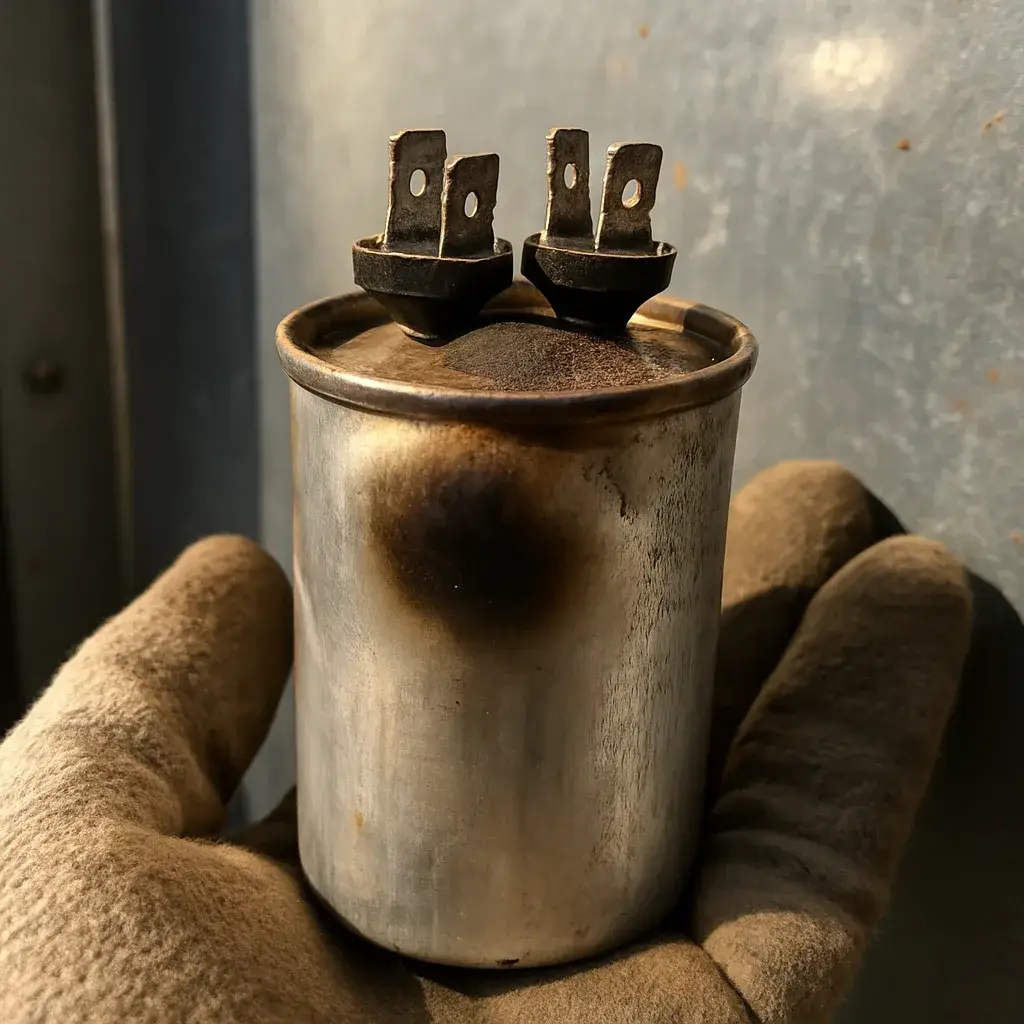
A capacitor failure is one of the most common reasons a central air conditioner won’t start at all. You flip the thermostat down, and nothing happens outside, or the outdoor unit hums for a second and then goes quiet. Sometimes the fan spins slow, like it’s trying and can’t quite get there. That’s usually the capacitor, a small part about the size of a soda can that stores and releases the electrical charge the compressor and fan motor need to kick on.
Homes across Sunnyvale and the rest of the Dallas-Fort Worth Metroplex ask about this one a lot, especially in July and August. Capacitors wear down from heat and from the number of on-off cycles a system runs through a summer. A unit sitting outside in North Texas heat, running long hours to keep up with 100 degree afternoons, puts real stress on that part year after year. Older homes with original equipment tend to see it more, but newer systems aren’t exempt either.
- The outdoor unit hums but the fan doesn’t spin
- The system trips the breaker when it tries to start
- You hear a clicking sound and then silence
- The indoor blower runs but the outside unit never kicks on
A technician checks the capacitor with a meter during the diagnostic visit, right alongside the contactor, the wiring, and the rest of the electrical components that work together to start the system. A weak or blown capacitor reads clearly on that test, it’s not a guess. If that’s the cause, we write up a flat-rate quote before any work starts, so you see the cost and approve it first.
One thing worth knowing going in: a capacitor that’s been struggling for a while can put extra strain on the compressor it’s supposed to help start. Most of the time a straightforward swap gets the system running again the same visit. But if a system has been trying to start on a failing capacitor for a long stretch, the diagnostic visit is what tells us whether anything else needs attention, not a guess made over the phone.
If you’re weighing whether this falls under a bigger issue or a smaller one, our repair process page walks through how the whole job works from the first call to the finished visit. Once a capacitor is replaced, the technician tests the system together with you before leaving, so you see it running before we consider the job done.
Refrigerant Leaks Usually Show Up as Weak Cooling, Not No Cooling
A refrigerant leak almost never shuts a system off completely. What we see more often is a house that cools fine for an hour, then starts creeping back up in temperature, or vents that blow air that feels lukewarm instead of cold. The system is still running. It’s just not moving enough heat out of your home anymore.
Refrigerant doesn’t get used up like fuel. If your system is low, it’s low because it’s leaking out somewhere, usually at a coil connection, a worn valve, or a small crack in the copper line that’s developed over years of vibration and expansion. Texas attic heat makes this worse. Line sets that run through a hot attic expand and contract every summer, and that stress adds up over time.
A few things people notice before they call us:
- The house takes longer to cool than it used to, even with the thermostat set the same
- Ice or frost forming on the copper line outside or on the indoor coil
- A hissing or bubbling sound near the unit that wasn’t there before
- Higher electric bills because the system runs longer to reach the same temperature
Frost on the line is a real tell. When refrigerant is low, the temperature inside the coil drops and moisture in the air freezes on contact. That’s not the system working extra hard, it’s the system struggling to move heat at all.
When we get a call for weak cooling like this, our technician checks refrigerant pressures, looks for the leak point, and tells you plainly what’s found before anything gets touched. Recharge or leak repair depends on where the leak is and how old the system is, and that’s a conversation we have with you in your home, not a guess over the phone. If the coil or line has failed outright, that’s a different job than a simple recharge, and we’ll say so.
This is one where we’ll tell you straight if a repair isn’t the better move. An older system with a slow leak in a coil that’s already near the end of its life sometimes costs more to chase than to replace, and we’d rather tell you that up front than patch something twice.
For a full look at what a repair visit involves and what drives cost, our service page walks through the rest of it.
Have questions? We’re happy to help.
Call Today, Get Service Today. Xtreme Air Services is ready to help.
A Frozen Evaporator Coil Usually Traces Back to Airflow
A frozen evaporator coil almost always comes down to airflow or refrigerant, not the coil itself. Something is stopping warm air from moving across the coil, or the refrigerant charge is off, and ice builds up where it shouldn’t.
You’ll usually notice weak or warm air from the vents, a hissing or dripping sound near the indoor unit, or ice visible on the coil or refrigerant lines. Some homeowners see water pooling near the air handler once the ice starts melting.
A dirty air filter is the most common root cause we run into on this kind of visit. A clogged filter chokes off airflow across the coil, the coil gets colder than it should, and moisture in the air freezes on it. A dirty evaporator coil, closed or blocked supply vents, and a failing blower motor can all cause the same restriction. On the refrigerant side, a low charge from a slow leak drops coil temperature below normal and ice forms even with good airflow.
Attic-mounted systems, common across older Sunnyvale and DFW-area homes, add a wrinkle. Summer attic temperatures swing hard, and a system already working against a dirty filter or restricted duct has less room for error before ice starts forming.
On a diagnostic visit, our technician checks the filter and coil for buildup, confirms the blower motor is moving the air it should, and tests the refrigerant charge and pressures. If a leak is behind a low charge, that’s a separate repair from a simple coil cleaning, and we’ll walk you through which one applies before any work starts. We won’t guess at a leak repair without testing first, and we won’t recharge a system that’s actively leaking, since it just refreezes.
One thing worth knowing going in: a frozen coil needs to thaw before we can accurately test it, so a same-day diagnostic visit may involve some wait time built into the appointment. That’s normal and not a sign of anything more serious. If you want a fuller picture of what’s involved in a repair like this, our service page covers the full range of jobs we handle.
Every diagnostic visit is performed by a licensed, insured, background-checked technician who explains what’s found in plain terms before any repair begins.
Clogged Condensate Drain Lines Are a Seasonal Issue
A clogged condensate drain line is one of the most common calls we get once North Texas humidity kicks in for the summer. You’ll usually notice water pooling near the indoor unit, a musty smell from a vent, or the system shutting itself off even though the thermostat looks fine.
This often comes down to a small drain line, because every AC pulls moisture out of the air and has to send that water somewhere. That water travels through a small drain line, usually PVC, and in a hot, humid climate like ours, algae and dust build up inside it over a cooling season. Attic-mounted systems, which are common in the older slab homes around Sunnyvale and Mesquite, make this worse because the line runs a longer distance through hot attic space before reaching the drain.
Most systems have a safety float switch that shuts the AC off the moment water backs up, so you don’t get a flooded ceiling. That’s a good sign the safety feature is doing its job, not a sign something’s broken. But it does mean no cool air until the blockage clears.
One thing worth knowing going in: a slow drain and a fully blocked drain aren’t the same repair. A slow drain might just need a straight clear-out. A fully blocked line, especially one that’s backed up for a while, can mean checking the drain pan, the float switch, and sometimes the coil above it for standing water damage. We won’t quote one price over the phone for both, because we haven’t seen the line yet.
On the visit, we trace the line, clear the blockage, and test that water is flowing and draining correctly before we call it done. If the float switch tripped, we confirm it resets and holds. For homes that deal with this more than once a season, we can talk through what a maintenance visit involves as part of general AC preventive maintenance, since regular checks catch a buildup before it shuts the system down again.
This is one of the more affordable, faster fixes we run into. You can see where it typically lands on our pricing page for a general sense of cost before you call.
For a closer look at how we work through these problems on site, our central air conditioning repair page covers each step from diagnosis to the finished job.
Frequently Asked Questions
Common questions about Central air conditioning repair
Why is my air conditioner running but not cooling the house?
When the fan runs but the air never gets cold, the cause is almost always low refrigerant, a frozen evaporator coil, or a compressor that has stopped. Low refrigerant means a leak somewhere, because refrigerant is not consumed the way fuel is. A frozen coil usually traces back to airflow, most often a dirty filter or a weakening blower. A compressor that has quit while the indoor fan keeps running is the expensive one, and a technician can confirm which it is in a single visit.
Why is my AC blowing warm air?
Warm air at the vents most often means the outdoor unit isn’t running even though the indoor blower still is. Go look at the condenser outside: if that fan isn’t spinning, the usual causes are a failed capacitor, a tripped breaker, or a bad contactor. If the outdoor fan is spinning and the air is still warm, low refrigerant becomes the more likely answer. Either way it’s a diagnosis rather than a guess, and it’s typically repaired on the same visit.
Why is my house still not cooling after I cleaned the filter?
A clean filter only fixes the problem when restricted airflow was the cause in the first place. If cooling didn’t improve, the restriction sits further in, usually a dirty evaporator coil, a blocked or collapsed duct, or a blower motor no longer moving enough air. It can also mean the filter was never the issue and the system is low on refrigerant. Cleaning it was still the right first step, because ruling it out narrows the list.
Why is my AC leaking water?
Water pooling near the indoor unit almost always means the condensate drain line is clogged. Your system pulls humidity out of the air and drains it away, and when algae blocks that line the water backs up in the pan and overflows. Many systems shut themselves down on a float switch when this happens, which is what protects your ceiling and flooring. It is one of the faster and more affordable repairs we handle.
Ready to Get Started?
Call 972-288-2263 Today, Get Service Today.