

Commercial Electrical in Sunnyvale: Fast, Licensed Repairs That Keep Your Business Running
Licensed diagnostics and repair for Sunnyvale businesses – same-day response on active hazards like sparking outlets, dead panels, and total power loss.
What’s Covered on This Page
- Warning Signs of a Failing Commercial Electrical System
- Who Is Legally Allowed to Do Commercial Electrical Work in Texas
- When You Don’t Need an Electrician Yet
- What Happens During a Commercial Electrical Repair Visit
- Electrical Upgrades for Older Buildings in Sunnyvale’s US-80 Corridor
- How fast can you get an electrician to my Sunnyvale business?
- What happens when your electrician arrives at my building?
- Why do older Sunnyvale business parks have more electrical problems?
- Do I need a licensed electrician for commercial work, or can any contractor do it?
- Is a tripped breaker or warm outlet always an emergency?
Warning Signs of a Failing Commercial Electrical System
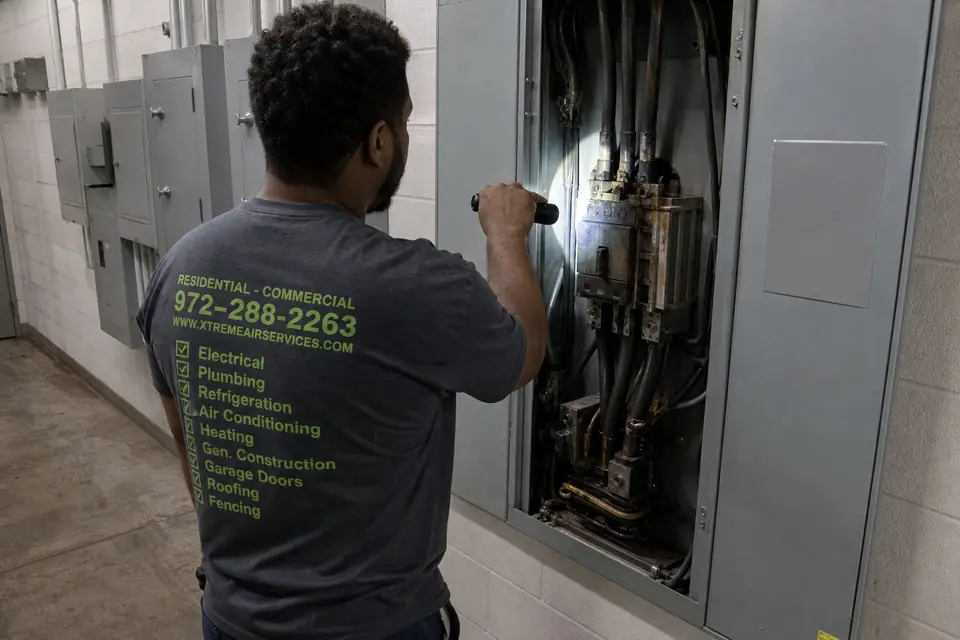
Most business owners don’t notice electrical trouble until it stops them cold. Your building usually gives you small warnings first, but they’re easy to brush off. A light flickers whenever the rooftop unit kicks on. A breaker that never tripped now trips twice a week. An outlet near the break room feels warm to the touch. Any one sign might mean nothing on its own. When signs repeat or appear together, something in the panel or wiring is probably working harder than it should.
- Lights that flicker, dim, or buzz, especially when other equipment starts up
- Breakers that trip more than once a month or won’t reset cleanly
- Outlets or switch plates that feel warm or show scorch marks
- A burning smell near the panel, an outlet, or a piece of equipment
- Equipment shutting down at random with no clear cause
- A humming or buzzing sound coming from the electrical panel itself
We see this every week in older strip centers and business parks along Sunnyvale’s commercial corridors. Many were wired decades ago and now run far more equipment than their original panels were sized to handle. Add three rooftop units cycling nonstop during a summer heat wave, and an overloaded panel will start showing signs. Not sure whether you’re seeing a real problem? That’s a fair question. A proper diagnosis gives you the answer instead of a guess over the phone.
Who Is Legally Allowed to Do Commercial Electrical Work in Texas
Commercial electrical work in Sunnyvale is not governed by city ordinance alone. State law controls it through Texas Occupations Code Chapter 1305. The Texas Department of Licensing and Regulation, commonly known as TDLR, administers that law. It applies uniformly across every Texas municipality. A business license or general contracting credential alone does not legally authorize commercial electrical installations, repairs, or alterations. The person performing or directly supervising the work must hold a valid TDLR-issued electrical license. The business contracting for the work must typically carry a separate electrical contractor license too.
Chapter 1305 establishes several license tiers relevant to commercial projects. Knowing the differences matters when you vet a contractor for a Sunnyvale building.
- Master Electrician: authorized to perform, plan, and supervise electrical work independently and to hold a contractor license
- Journeyman Electrician: authorized to perform electrical work under the supervision of a licensed master or contractor
- Electrical Contractor license: required for a business that contracts to perform electrical work and separate from the individual technician’s license
- Apprentice registration: permits supervised on-the-job training but not independent commercial work
State licensing and local permitting serve different functions, so don’t confuse the two. TDLR licensing determines whether a person or company is legally qualified to perform electrical work anywhere in Texas. City permitting is a project-level requirement handled by the local building department. That department reviews plans and conducts inspections for a particular job and address. Its inspectors confirm that the work complies with adopted building and electrical codes. A Sunnyvale commercial property owner needs both. A properly licensed electrician must do the work, and the city permit allows inspectors to verify the installation before occupancy or energizing.
For business owners, this distinction has real consequences. Hiring an unlicensed person for a panel upgrade, tenant buildout, or new circuit installation is more than a quality risk. It violates state law and may lead to fines, failed inspections, insurance complications, or voided warranties. Confirming that licensed technicians will perform the work is a basic legal safeguard, not an optional preference.
When You Don’t Need an Electrician Yet
Not every flicker or electrical hiccup in your office, warehouse, or storefront calls for an electrician that same afternoon. Older commercial buildings can occasionally show small, harmless signs. Knowing an annoyance from a hazard can save you the cost of an unnecessary dispatch. It also keeps your team from worrying over something minor.
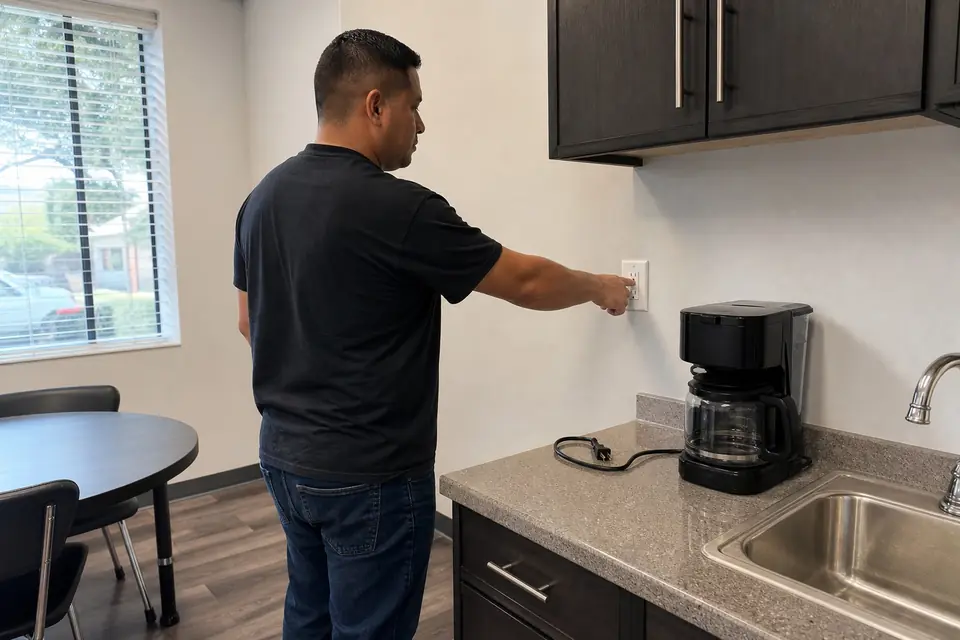
- A GFCI outlet in a break room or restroom trips once, then holds after you press reset. Humidity, a coffee maker surge, or a temporary moisture problem can cause a one-time trip.
- One dead outlet appears tied to a specific device, such as a space heater or printer, rather than the whole circuit. Unplug that device and test another appliance in the same outlet. If it works, the appliance may be the problem instead of your wiring.
- A bulb or LED driver burns out in one fixture. Replace the bulb first. If the new one lights normally, the fixture and circuit are likely working.
These situations do not require an emergency call, but mention them at your next scheduled inspection. Repeated GFCI trips can point to a developing problem, even when the outlet resets cleanly each time.
We would rather tell a Sunnyvale business owner that an issue is minor and may resolve itself. That’s better than sending a truck for a five-minute fix billed at emergency rates. Our regular customers call us when something serious happens because they know we won’t manufacture urgency where none exists.
Not sure what your Commercial electrical project needs? Ask us.
Call Today, Get Service Today. Xtreme Air Services is ready to help.
What Happens During a Commercial Electrical Repair Visit
The break room outlets go dead on a Monday morning. Maybe a tenant reports a panel humming louder than it should. You call us, and here’s what happens next.
- We ask a few quick questions by phone, so your technician knows what to bring.
- A technician arrives and performs a full diagnosis. That includes checking the panel, wiring, and failed part.
- We explain the problem in plain English and give you the repair price before work starts.
- We repair or replace the failed part, then test the system to confirm it’s working properly.
- We clean up, check the repair again, and walk you through the completed work.
The visit includes that diagnosis, the labor, and the standard replacement part. If we find another failed part inside the panel, we’ll quote it separately. We’ll do the same if the job requires a code upgrade or permit. You approve any added work before we touch it, so there are no surprise line items later.
The service-call fee is between $26 and $99. If you approve the repair, we credit that fee toward the job. That keeps the cost of finding the problem low.
Many problems take one replacement part and one visit. Our technicians are licensed and insured, and nights and weekends cost the same as weekdays. A Friday afternoon breaker failure won’t turn into an overtime bill.
Electrical Upgrades for Older Buildings in Sunnyvale’s US-80 Corridor
The US-80 corridor through Sunnyvale has a mix of building types rarely found in one service area. A decades-old light-industrial warehouse or strip retail center may sit next to a modern construction project. Electrical needs can vary widely from one property to the next. A contractor unfamiliar with the corridor’s history may misdiagnose a problem or miss code issues.
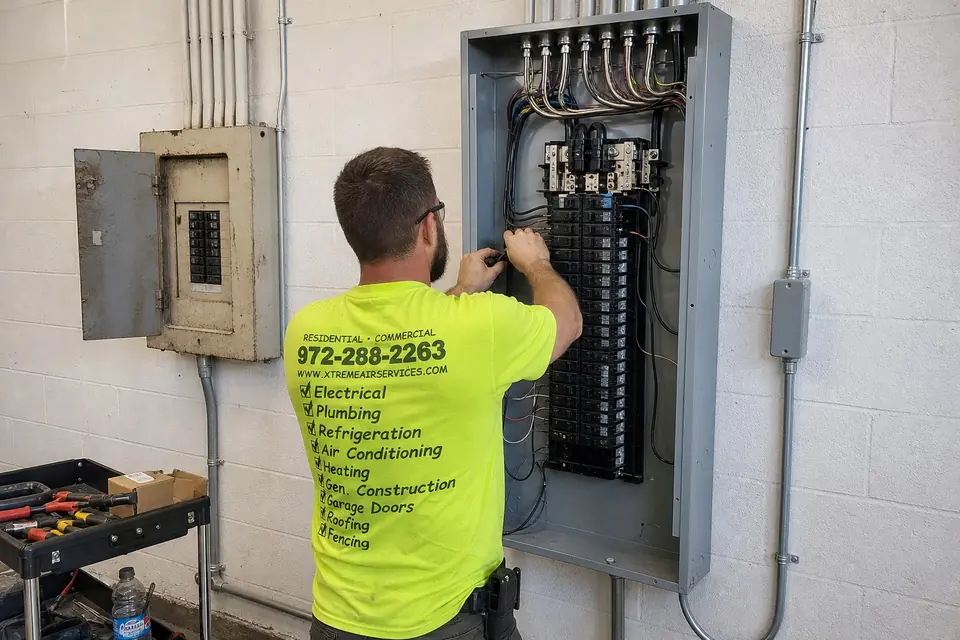
Older buildings along US-80 were often wired for far less electrical demand than today’s businesses require. A retail space once powered a few lights and a cash register. Now, it may support point-of-sale equipment, HVAC upgrades, security systems, commercial kitchen equipment, or fleet EV chargers. A panel sized for the original load can become a bottleneck. Buildings from this period may also have aluminum branch wiring, undersized subpanels, and outdated grounding. Each condition can create safety and insurance concerns when left unaddressed.
- Panel capacity checks to determine whether you need a service upgrade before adding equipment or tenants
- Identification of aluminum wiring or knob-and-tube remnants that no longer meet current code
- Grounding and bonding corrections that bring older systems up to modern safety standards
- Subpanel additions for businesses that expanded their square footage without adding matching electrical capacity
- Load calculations for buildings adding HVAC, kitchen equipment, or EV charging stations
New construction along the corridor has different demands. These projects need code-compliant rough-in work done right the first time. Inspection delays can postpone tenant move-in dates and cost far more than the electrical work. Conduit runs, panel placement, and circuit plans should be coordinated early in the build. Planning should account for current code and reasonable future capacity. That can help the building avoid another overhaul in ten years.
Accurate work starts with knowing how buildings along US-80 differ and why. A panel that looks fine outside may still be undersized for today’s load. A newer building may have rough-in mistakes that don’t appear until the final inspection. An on-site assessment by someone familiar with the corridor is the fastest route to a correct diagnosis.
Frequently Asked Questions
Common questions about Commercial electrical
How fast can you get an electrician to my Sunnyvale business?
We prioritize calls with active hazards like sparking, burning smells, or total power loss, and get to those the same day. For non-emergency issues, like a breaker that trips occasionally, we schedule within a day or two so your business isn’t shut down waiting. When you call, tell us exactly what you’re seeing. That helps us figure out how urgent your situation really is and get the right technician out to you.
What happens when your electrician arrives at my building?
Your electrician starts by asking what you noticed and when it started, then checks your panel and the affected circuits before touching anything. This diagnosis step matters because guessing wastes your time and money. Once we find the cause, we explain what’s wrong in plain terms and what it will take to fix it. You’ll know the scope of the work before anyone starts repairs, so there are no surprises mid-job.
Why do older Sunnyvale business parks have more electrical problems?
Many strip centers and business parks along Sunnyvale’s commercial corridors were wired decades ago for far less equipment than they run today. Add multiple rooftop units cycling nonstop during summer heat, and an original panel can get pushed past its limit. That’s when you see flickering lights, frequent breaker trips, or warm outlets. If your building fits this description, a panel evaluation before peak summer season can catch problems early.
Do I need a licensed electrician for commercial work, or can any contractor do it?
You need a technician holding a valid TDLR-issued electrical license, not just a general contractor or business license. Texas Occupations Code Chapter 1305 requires this for every commercial electrical job in the state, including Sunnyvale. The business you hire should also carry a separate electrical contractor license. Skipping this isn’t just risky work quality-wise. It can mean fines, failed inspections, or insurance problems if something goes wrong later.
Is a tripped breaker or warm outlet always an emergency?
Not always. A GFCI outlet that trips once and resets cleanly, or one dead outlet tied to a single appliance, usually isn’t urgent. But sparking, a burning smell, a breaker that won’t stay reset, or a total loss of power means you need someone on site right away. If you’re unsure which category you’re in, describe what you’re seeing when you call. We’ll tell you whether it can wait.
Ready to Get Started?
Call 972-288-2263 Today, Get Service Today.