


What Causes the Most Common Drain Cleaning Problems?
Slow drains, repeat clogs, and multiple fixtures backing up – what each pattern usually means and when store-bought cleaner makes it worse.
What’s Covered on This Page
Slow-Draining Sinks, Tubs, and Showers
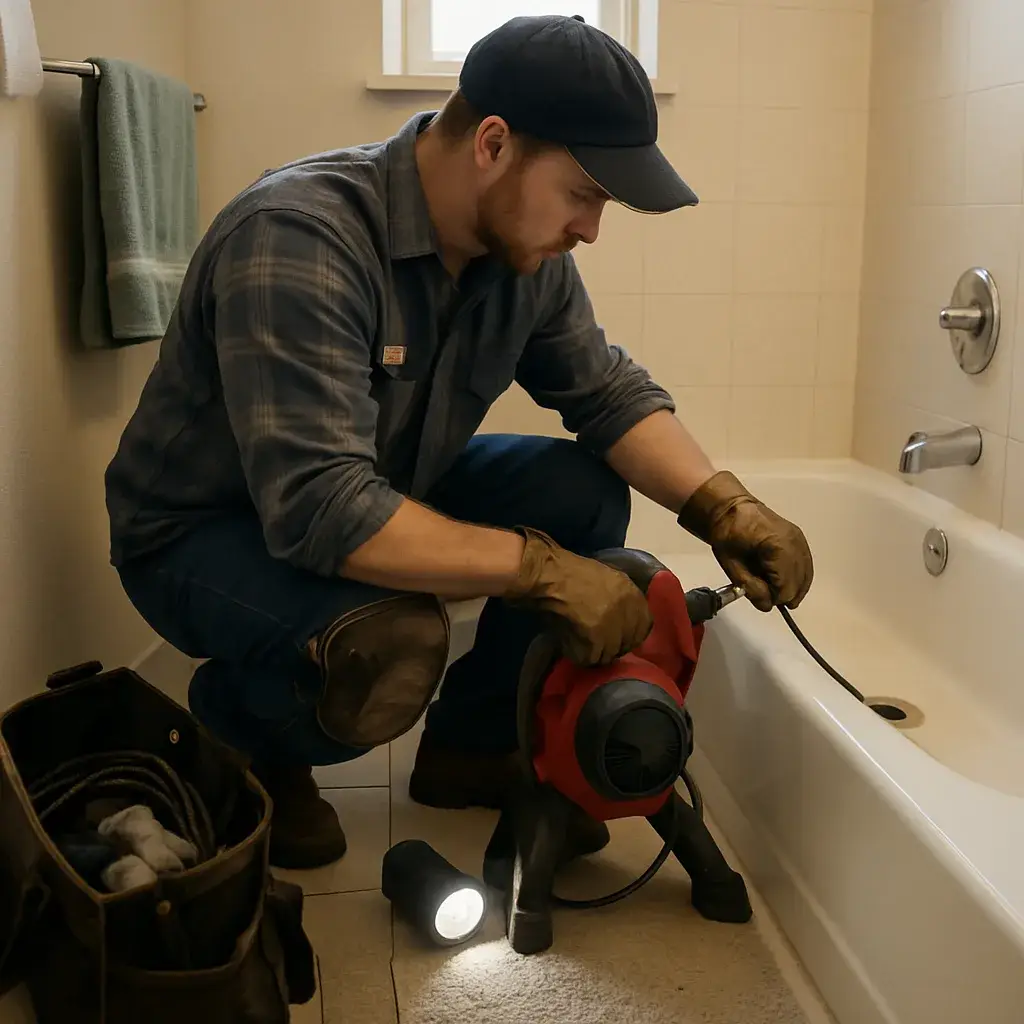
You notice it first at the bathroom sink or in the shower. Water that used to disappear in a few seconds now sits around your ankles or pools in the basin. This is a common reason people call us about drain cleaning. It rarely means anything dramatic is going on underneath your house.
In North Texas homes, especially older slab-on-grade houses built between the 1950s and 1990s, this slowdown usually comes from a few things. Bathroom drains collect hair and soap scum that clumps and narrows the pipe over time. Kitchen sinks slow down from grease and food particles that cool and harden inside the line. And because a lot of our area has hard water, mineral scale builds up on the inside of older pipes and shrinks the space water has to move through.
A slow drain in one fixture is usually a local clog close to that fixture. But when multiple drains in the house slow down at the same time, that’s a different signal. It often points to something further down the line, closer to the main stack or the sewer connection. We check for that during the visit, rather than just assuming.
When we come out for drain cleaning, we find the actual blockage. The work includes clearing the clog, testing the flow to confirm water is moving the way it should, and cleaning up before we leave. If a camera inspection or hydro-jetting looks like the better tool for a tougher or deeper clog, we’ll walk you through that separately. That’s outside a standard drain cleaning visit.
A slow drain that’s been ignored for months, especially in an older home with cast iron or galvanized pipe, can sometimes turn into something more involved than a simple clearing. We’d rather look at it while it’s still a slow drain, not after it stops draining altogether.
If you want to see what a typical drain cleaning call runs before you book anything, our drain cleaning pricing guide breaks down what’s included and what moves the price.
Recurring Clogs in the Same Drain
When a drain keeps backing up in the same spot, it usually means something bigger is happening. Standard drain cleaning clears what’s blocking the line right then. It doesn’t change why buildup collects there.
We see this pattern a lot in North Texas homes, for a few specific reasons. Kitchen sink lines clog again when grease cools and hardens on rough pipe walls. This gives the next debris something to grab onto. Bathroom drains repeat when hair and soap scum wrap around a spot where the pipe already narrows. And in older slab homes across Sunnyvale and our surrounding towns, the expansive clay soil can shift a drain line enough to create a low spot. We call this a belly. Water and waste settle there instead of flowing through.
- Same kitchen drain clogging again: often grease buildup at a joint or fitting.
- Same bathroom drain clogging again: usually hair and soap scum at a narrowed section of pipe.
- Whole-line backups that return: can point to a low spot, a partial pipe break, or root intrusion in older cast iron or clay lines.
If a drain keeps clogging in the same place, snaking it again probably won’t fix the real problem. A sewer camera inspection shows what’s happening inside the pipe. This could be a belly, a cracked joint, or roots working into an older line. Hydro jetting can clear heavier buildup a standard cable can’t touch. Rooter service handles root intrusion directly. We won’t run the same cable through the same spot a second and third time and call that a solution.
Homes built from the 1950s through the 1990s on slab foundations are the ones we see this in most often. Older cast iron and clay pipe has had decades to shift, corrode, or take on root intrusion from mature trees. Newer subdivision homes with PVC lines see it less. But soil movement can still create low spots over time.
If you want the specifics on what a first visit covers, what gets checked, and how we handle escalation to a camera or jetting, our drain cleaning service page lays out the full process.
A single drain cleaning visit resolves most calls the first time. But repeat clogging in the exact same location is the signal worth paying attention to before scheduling another basic cleaning.
Multiple Drains Backing Up or Gurgling at the Same Time
When your toilet, shower, and kitchen sink all act up together, it’s rarely three different clogs. It’s usually one big clog. That blockage sits deeper in the main line, past where those fixtures connect. If your toilet gurgles when the washing machine drains, or the tub backs up when someone flushes, air is getting trapped. This means the main wastewater line leaving your house has a blockage somewhere.
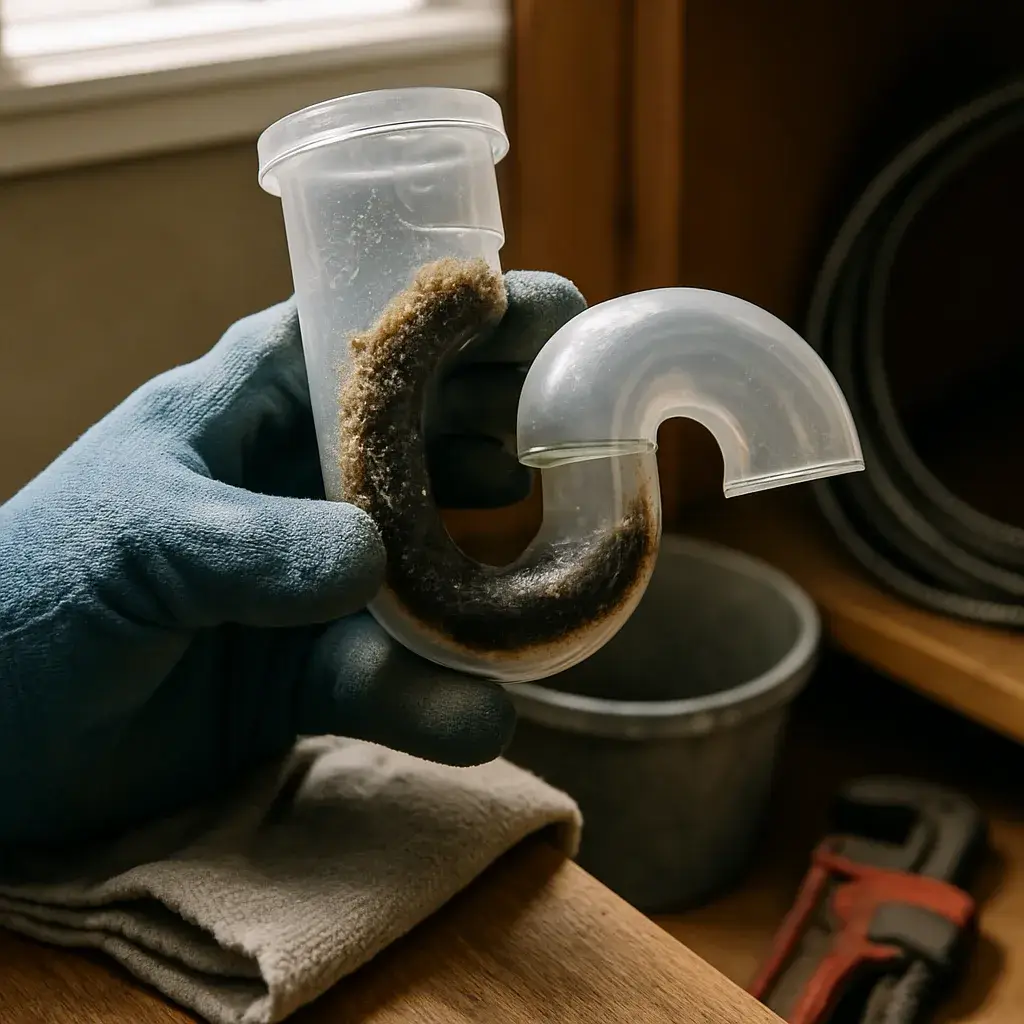
Many older slab-on-grade homes around Sunnyvale, Mesquite, and Forney have this line running under the foundation. Tree roots, searching for moisture in our expansive clay soil, are a common culprit. Grease and sediment can also build up over years. (We see this a lot in North Texas.) Homes built in the 1960s through 1980s often have cast iron or clay sewer pipe. These materials corrode and shift, especially with normal North Texas ground movement.
Most people try to fix the obvious symptom first, plunging a toilet or pouring something down the sink. But the problem just keeps coming back, a few days later, in a different fixture. That pattern, more than any single clog, points to an issue in the main line, not just a branch line.
We start by confirming the blockage’s location and severity. Standard drain cleaning clears most clogs and confirms proper flow, usually in one trip. If the blockage is deeper, tied to roots, or the line needs a closer look, we can use hydro-jetting or a sewer camera inspection. This lets us see what’s happening inside the pipe before we suggest next steps. These specific services are quoted separately from a standard clearing. The equipment and time involved are different.
Not every multi-fixture backup needs a camera and jetting right away. Some clear with standard drain cleaning, just like a single slow drain. But if it keeps coming back after we clear it, that’s often a sign the clog has a source. Root intrusion or a low spot in aging pipe are common problems a snake alone won’t solve for good.
You can see typical costs and what’s included on our drain cleaning page before you call. That’s what we call upfront flat-rate pricing.
Ready when you are – get in touch today.
Call Today, Get Service Today. Xtreme Air Services is ready to help.
Using Store-Bought Drain Cleaner Before Calling a Plumber
A lot of people reach for a bottle of drain cleaner before they call anyone. That’s a fair first move for a slow bathroom sink, but it has real limits worth knowing before you decide what to do next.
Store-bought drain cleaners use a chemical reaction. They break down hair, soap film, and light grease near the drain opening. That’s the clog they’re built for. They don’t do much for a clog further down the line, past a bend, or deep in the pipe. And they do nothing for tree roots in a sewer line. If the water is still slow after one treatment, pouring in more often just adds chemical to standing water without touching the real blockage.
There’s also a pipe question. Older galvanized pipe and some older cast iron lines can be more sensitive to repeated chemical exposure than modern PVC. We’ve seen drains in homes around Sunnyvale and Mesquite where years of chemical cleaner use left a residue. It made the clog worse by the time a technician got there. That’s not true for every home, but it happens often enough that it’s worth knowing upfront.
Mixing different brands or types of drain cleaner in the same drain is a real safety concern. Some combinations produce heat or fumes. If a first bottle didn’t clear things, the answer isn’t a second, different bottle. It’s a technician who can see what’s happening in the pipe.
When we get called after chemical cleaner has already been used, our drain cleaning service still starts the same way. We find where the clog sits before we touch it. For most calls, clearing the line and confirming the water flows handles it in one visit. If the clog is further down, tied to grease buildup, or looks like roots, that’s a separate conversation. Hydro jetting, sewer camera inspection, and root work are quoted on their own, not folded into a standard drain cleaning call.
If you’re trying to figure out what a visit like this typically runs before you call, our drain cleaning pricing guide breaks down what moves the cost.
Not every slow drain needs a truck. If a plunger or a single round of chemical cleaner clears a simple sink clog, that’s a fine outcome. You don’t need us for it. We’d rather you know when to call than call every time.
Telling a Simple Clog Apart from Roots or Pipe Damage
A slow drain or a damaged sewer line can act pretty similar. Water might back up, a sink drains slow, or a toilet makes gurgling sounds. On the surface, those signs seem the same. It could be a wad of hair or a cracked pipe under the slab.
Usually, if just one fixture is giving you trouble, that’s a local clog. Grease in a kitchen line, hair and soap scum in a bathroom, or even a toy in a toilet trap are common. We clear those with standard drain cleaning most of the time. And we always test the flow before we say the job is done.
It’s a different story when multiple drains back up at the same time. This is especially true if the lowest fixture in your house, like a tub or floor drain, acts up first. That pattern points to the main line, not just one branch.
Older neighborhoods around Dallas, Mesquite, and Forney still have many homes built before root-resistant pipe materials were common. Mature trees near a sewer line can become a real factor over the years. Recurring backups at the same spot, particularly outdoors near a cleanout, can mean roots are getting into a joint.
Slab-on-grade homes across the DFW area add another challenge. The expansive clay soil we have here shifts with our wet and dry weather cycles. That movement can stress pipes under the foundation over time. This is a different problem than a clog. No amount of drain clearing fixes a shifted or cracked line.
Sometimes we can’t tell you the exact issue just from your description over the phone. Slow drains, gurgling, and multiple-fixture backups can come from a simple clog or something structural. A camera inspection often confirms it. Our drain cleaning service starts with clearing the line and testing flow. If the pattern points toward roots or a damaged section, that’s identified and quoted as its own job. It’s not part of a basic clearing visit.
- One fixture slow or backed up: usually a local clog in that line.
- Multiple drains backing up together, lowest fixture first: often points to the main line.
- Recurring backups at the same cleanout or yard spot over months: can indicate root intrusion.
- Gurgling with no clear clog and a home built on a slab with mature trees nearby: worth a camera look before assuming it’s simple.
If a drain keeps acting up after clearing, or backs up in more than one spot, tell us when you call. That helps us schedule the visit with the right expectations upfront.
Ready to Get Started?
Call 972-288-2263 Today, Get Service Today.