


What Are the Most Common Emergency Plumbing Problems?
The emergency plumbing failures we get called out for most, and what each one usually takes to put right.
What’s Covered on This Page
Burst or Leaking Pipes: What to Expect
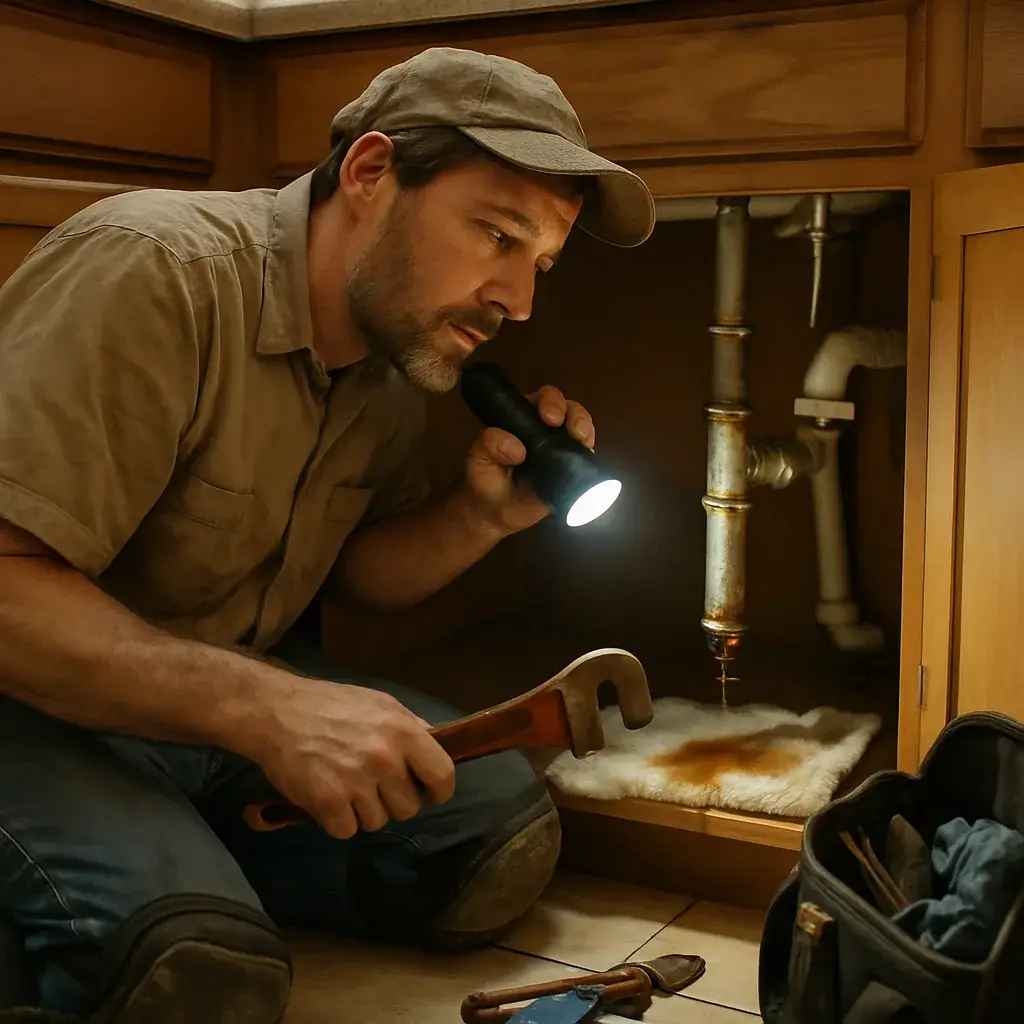
Most people notice a leaking or burst pipe in a few ways. Maybe water pools under a sink or around the water heater. A ceiling or wall might get a brown ring that keeps spreading. We’ve seen yards stay wet in one spot even during a dry week. Or your water bill comes in higher than usual with no clear reason. Sometimes it’s a sudden event, like a pipe letting go with water running fast. Other times it’s slower, a drip behind a wall that takes weeks to show itself.
A lot of this comes down to what’s under and around your home. Sunnyvale and the towns around it sit on clay soil. This soil expands and contracts with rain and drought. That movement puts stress on the pipe under a slab foundation over the years. We also get hard winter freezes most years in North Texas. This can crack pipes in an attic or an exterior wall. Older homes with galvanized pipe are also more prone to corrosion. This thins the pipe wall until it finally gives.
When you call about a leak or a burst pipe, here’s what happens. We talk through what you’re seeing. We get a technician out the same day whenever we can. A licensed, insured plumber locates the actual source of the leak, not just where water is showing up. They’ll walk you through what’s going on in plain language. Before any repair starts, you get a flat-rate price in writing. You’ll know the total cost up front, with no hourly meter running. Most repairs finish in that same visit. But if the situation points to something bigger, like a slab leak or an old section of pipe that needs replacing, we’ll tell you. We’ll lay out the options rather than starting work you didn’t approve.
- Water pooling near a fixture, water heater, or foundation wall
- A ceiling or wall stain that keeps spreading or feels damp
- A wet spot in the yard that doesn’t dry out
- A water bill that’s noticeably higher with no obvious cause
- A sudden drop in water throughout the house
Costs on this kind of repair vary a lot. It depends on where the leak is and what caused it. We break that down on our Emergency plumbing service page. That page includes what’s typically part of a standard repair visit.
Water Heater Failure or Leaking: What to Expect
A water heater failing usually means puddles around the base, popping noises, or cold water. Sometimes you’ll notice a slow, damp spot near the tank. It might grow over days. Other times, you’ll come home to a soaked garage or closet. You know right away something’s wrong.
Tanks fail for a few common reasons. The inner tank can corrode over years. Once it leaks from a crack, you can’t patch it. Fittings and valves can also wear out or loosen. This can look like a full tank failure, but it’s often a smaller, fixable leak. We’ve noticed a lot of hard water across the Dallas-Fort Worth area, and that leads to sediment buildup. This can shorten a tank’s life. It causes overheating and early failure.
When we get a call about this, a licensed technician will come out. We find the actual source of the leak first. Sometimes it’s a valve or fitting. That can be repaired the same visit. Other times, the tank itself is compromised. It needs to be replaced. We inspect it, then explain what we see in plain language. You get a written flat-rate price before any work starts. We won’t guess what’s going on.
A leaking tank isn’t something you can patch and hope holds. Once the tank shell is cracked or corroded through, no sealant or fitting swap can fix it. We’ll tell you if that’s what we’re looking at. We won’t try to sell you a temporary repair on a tank that’s done.
Our typical service call and repair range for this kind of problem is on our emergency plumbing cost page . It covers what drives the cost up or down for a job.
If you are planning a water heater upgrade (not dealing with an active leak), that’s a separate job. It has its own pricing and timeline. It’s worth talking through separately with a technician.
Clogged or Backed-Up Drains: What to Expect
A backed-up drain means water won’t go down. You might hear gurgling from another fixture, or water could back up in a tub or floor drain when you run the washing machine. In homes built on a slab (which is most of them around Sunnyvale), that gurgling in a different room is the tell. It means the blockage is further down the line, not just at the one drain.
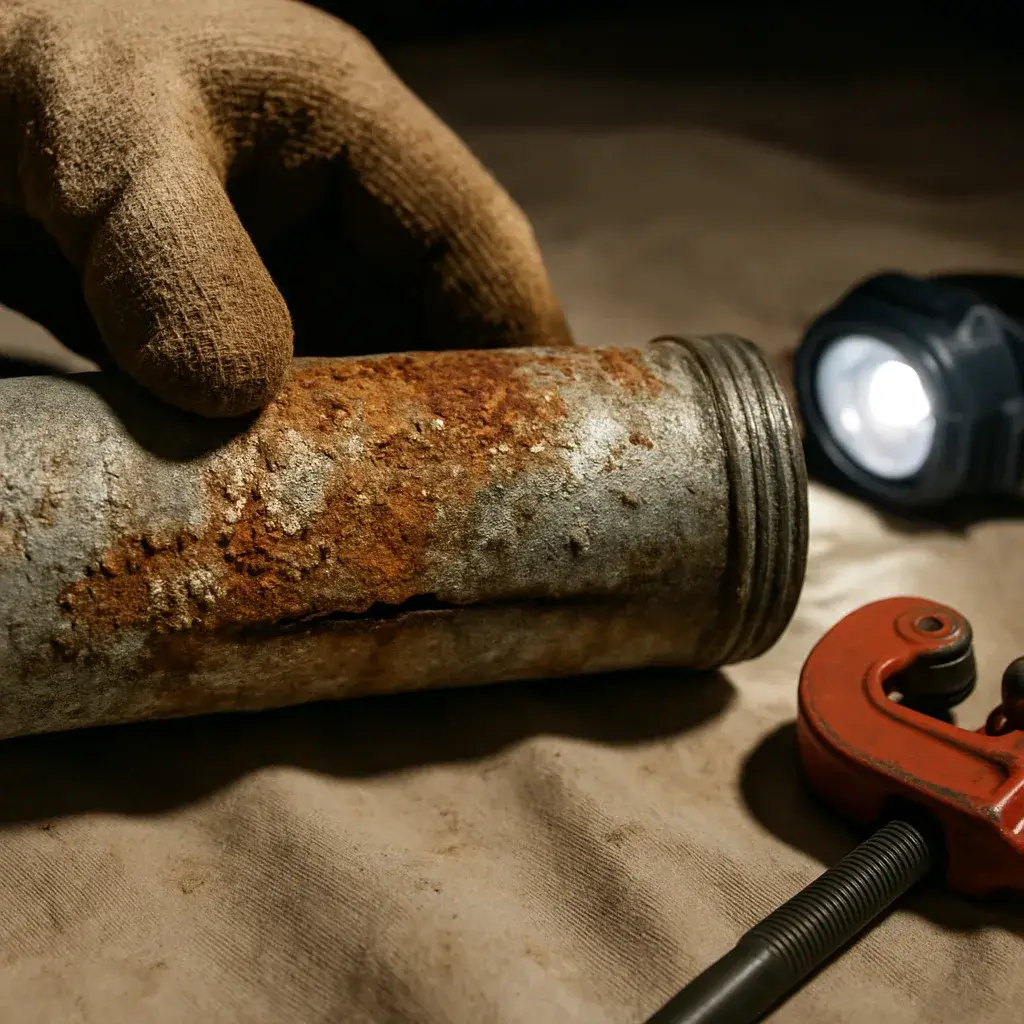
Most of the time, it’s grease, hair, or soap buildup narrowing a pipe over years. For older Sunnyvale-area homes with cast iron or clay drain lines, tree roots working into a joint are a common cause. This is especially true on properties with mature trees near the sewer line. Newer subdivisions on PVC see this less, but buildup and the occasional flushed wipe or toy still lead to plenty of calls, as you might imagine.
It’s worth knowing this upfront: a plunger or a store-bought drain cleaner often fixes single-fixture clogs. If it’s just one sink or tub and a plunger clears it, you don’t need us for that. We’d rather you save the call for when it comes back, spreads to more than one fixture, or won’t clear at all.
- Single slow drain: usually a local clog we clear with drain cleaning equipment.
- Multiple drains backing up together, or backing up when you run water elsewhere: this usually means a main line issue.
- Recurring backups in the same spot: this often points to a root intrusion or a low spot in the line. A camera look is a good idea.
- Sewer smell with the backup: a sign we’ll want to check the line, not just the fixture.
When we get the call, a technician runs a cable or hydro jetting equipment to clear the line. We confirm it’s flowing by running water through it while we’re still there. If a drain keeps coming back or the blockage looks bigger than a standard clog, we can run a sewer camera inspection. This lets us see what’s really going on in the pipe. Sometimes a first visit clears it. Sometimes the camera shows something like a root intrusion or a pipe issue that needs its own repair. We’ll tell you which one you’re looking at before we recommend anything further.
We price drain cleaning and sewer work as flat-rate jobs. We quote the price before we start. You can see how that pricing breaks down on our emergency plumbing pricing page.
Thinking about Emergency plumbing? Let’s talk.
Call Today, Get Service Today. Xtreme Air Services is ready to help.
Sewer Line Backups: What to Expect
A sewer line backup usually shows up as more than one drain acting up at the same time. You might notice the toilet gurgles when the washing machine drains, or water backs up into the shower when you run the kitchen sink. A bad smell from a floor drain or cleanout is another sign. If it’s just one sink or one toilet, that’s often a local clog. When several fixtures act up together, it usually points to the main line. It’s a good way to tell the difference.
In North Texas, tree roots are a common cause. Older sections of clay or cast iron pipe (common in homes built from the 1950s through the 1990s) develop small cracks. Roots find their way in looking for moisture. The clay soil across Dallas County and Kaufman County also shifts with our wet and dry cycles. This puts pressure on older lines. It can cause bellies or separated joints. Grease, wipes, and paper buildup add to the problem in any home, old or new.
We start with a sewer camera inspection. That way we can see what’s happening in the line instead of guessing. This tells us if it’s a simple clog we can clear with hydro jetting or a rooter service. Or it might be something more involved, like a damaged section that needs trenchless sewer repair. We won’t recommend replacing a line if a cleaning solves it. And we won’t tell you a cleaning fixed things if the camera shows a cracked or collapsed pipe underneath.
That’s the one part of this we’d rather say plainly up front: what a backup needs depends entirely on what the camera finds. We can’t know the scope until we look. A simple clog and a damaged line get treated differently, and the price reflects that difference. If you want a sense of what that range looks like before you call, our emergency plumbing pricing guide breaks down what drives cost on jobs like these.
Learn more about how we handle these calls on our emergency plumbing service page, where we cover response times and what to expect from the visit itself.
Gas Leaks or Suspected Gas Line Issues: What to Expect
A rotten-egg smell near your stove, water heater, or gas meter is the most common sign. You might also hear a faint hissing near a gas line. Sometimes, you’ll see dead patches of grass over a buried line outside. None of these tell you exactly where the leak is from, though. And that’s why it’s not a do-it-yourself situation.
Gas lines can leak from corroded fittings or a cracked connector. Ground movement can shift a buried line. Simple wear at a joint that wasn’t quite tightened right can also cause issues. We’ve noticed that North Texas clay soil expands and contracts a lot. This movement can stress underground gas piping over time. It’s similar to how it stresses slab foundations.
Once you’re safe and have made that call, our licensed plumbers find the actual source. We use gas leak detection equipment to trace the line. We check fittings and connections. This helps us confirm if the issue is on your house side of the meter or if the utility company needs to handle it. If it’s a repair we can make, we explain what we found in plain terms. You’ll know the price before we start any work.
Gas line repair and installation both have to meet code. That’s not optional for us. We won’t shortcut it to save a step. A gas leak isn’t a place to guess, by the way. It’s why this falls under our emergency plumbing service.
We treat it like any other urgent call. Day or night, weekday or weekend, there’s no extra charge for after-hours timing. We won’t use your worst moment to pad the bill.
We won’t reconnect or restore gas service until we’re confident the repair holds. We always test the area. If a fix needs the utility company’s involvement, we’ll tell you plainly. We won’t pretend we can finish something outside our scope.
Ready to Get Started?
Call 972-288-2263 Today, Get Service Today.