


What Are the Most Common Generator Repair Problems?
The generator faults we see most often in Sunnyvale, what causes them, and what to expect when a technician arrives.
What’s Covered on This Page
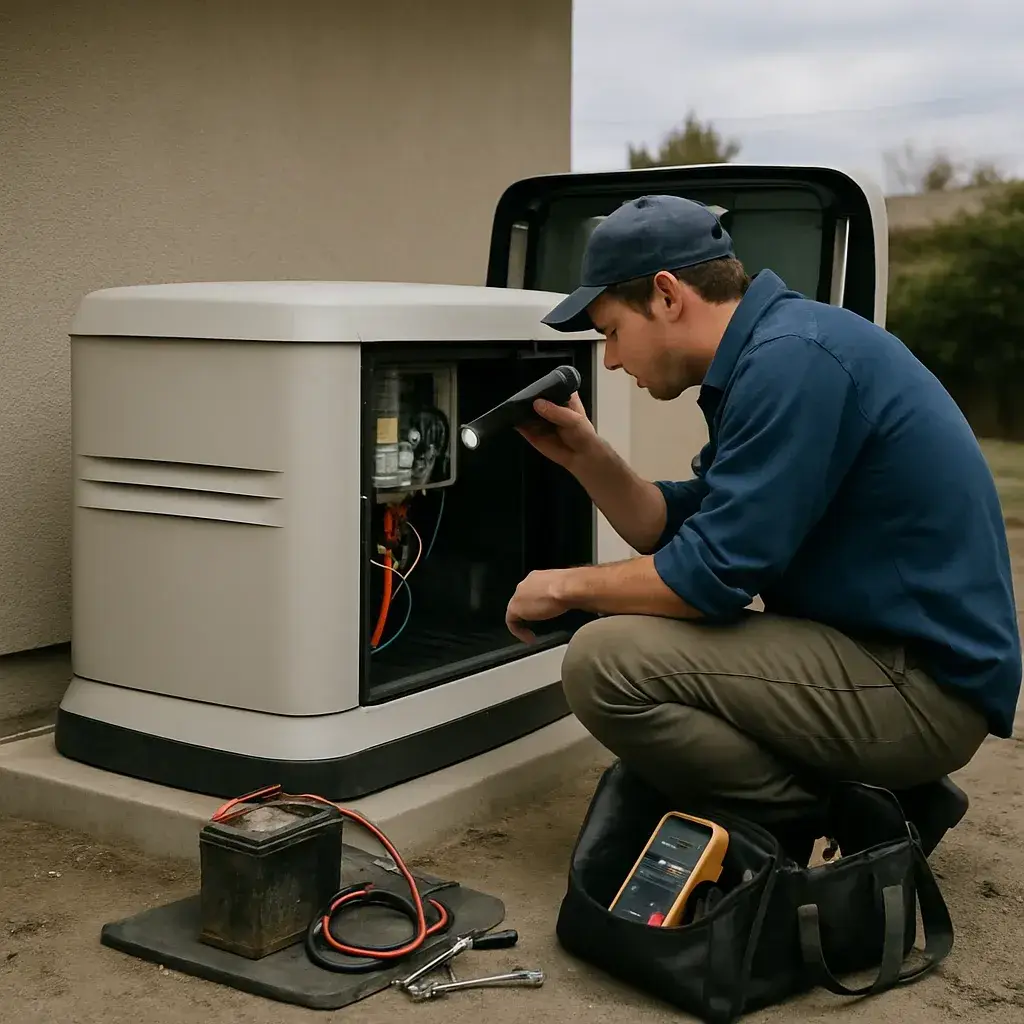
- Battery-Related No-Start Issues Are a Common Cause of Generator Failures
- Fuel Supply Problems Can Keep a Generator From Starting or Running Smoothly
- A Generator That Runs but Doesn’t Power the House Often Points to the Transfer Switch
- Control Board and Sensor Faults Can Cause Shutdowns or Error Codes
- Skipped Routine Maintenance Is a Frequent Contributor to Generator Failures
- What issues come up most often with generator repairs?
- What should I expect during a generator repair visit?
- How do you handle it when the fix turns out to be something small?
- Do you charge extra for nights or weekend generator repair calls?
- What’s worth a call versus normal wear on a generator?
- What does your guarantee cover on generator repair work?
Fuel Supply Problems Can Keep a Generator From Starting or Running Smoothly
A generator that cranks but won’t catch, or starts and then dies within a minute or two, points us toward fuel before anything else. That’s true whether we’re looking at a natural gas standby unit outside a home in Sunnyvale or a propane-fed unit at a business in Rockwall. Fuel problems show up as slow starts, rough idling, surging, or a unit that runs fine for a few minutes and then quits. What that costs is broken down on our Generator Repair Costs page.
With natural gas units, the most common culprit is a fuel supply valve that got bumped shut, or a line that wasn’t sized right for the generator’s demand when it was installed. We’ve also found regulators that fail closed or partially closed, which starves the engine of gas right when it needs full flow to carry a load. Propane units bring their own wrinkles: a tank running low without anyone noticing, a regulator freezing up in cold weather, or old fuel that’s picked up moisture or debris sitting in the line. Propane setups outside Sunnyvale run into the cold-weather version of this.
Sitting fuel is its own problem, especially with portable units and standby generators that only run for testing every so often. Fuel that sits for months can start to break down, gum up injectors, or clog a carburetor’s small passages. That’s part of why generator maintenance and load testing matter. They’re not just about proving the unit works. They’re about catching a fuel issue before a storm knocks the power out and you need the generator to run for hours. A long Sunnyvale outage is exactly the wrong time to find a fuel problem.
Diagnosing a fuel problem means working through it in order rather than guessing. We check the supply at the source first (tank level, valve position, line pressure), then move into the regulator and follow the line to the carburetor or fuel injection system. On a propane unit, we also check the tank’s vapor withdrawal rate, because a tank that’s too small or too cold can’t release propane fast enough to keep a generator running under a full load, even with plenty of fuel left in the tank. We check that on every Sunnyvale propane call.
Most fuel-related calls get resolved on the first visit once we find where the flow is restricted. A clogged filter, a stuck regulator, or a valve that needs replacing are common jobs, not full rebuilds. When it’s a bigger issue, like an undersized gas line that was never right for the generator’s demand, we’ll walk you through what fixing that involves and what it costs before any work starts. If you’re trying to figure out what a fuel supply repair typically runs, our Generator Repair Costs page lays out the rundown. Either way, you get a written price before we touch anything, and the same rate whether it’s a Tuesday afternoon or a Saturday night. Same rate anywhere in Sunnyvale.
A Generator That Runs but Doesn’t Power the House Often Points to the Transfer Switch
This one confuses people every time. The generator starts, it runs smooth, you can hear it working out in the yard or on the pad, and yet the lights inside stay off. When we get called out for this, the transfer switch is usually where the problem sits, not the generator itself. It is one of the more common Sunnyvale service calls we run.
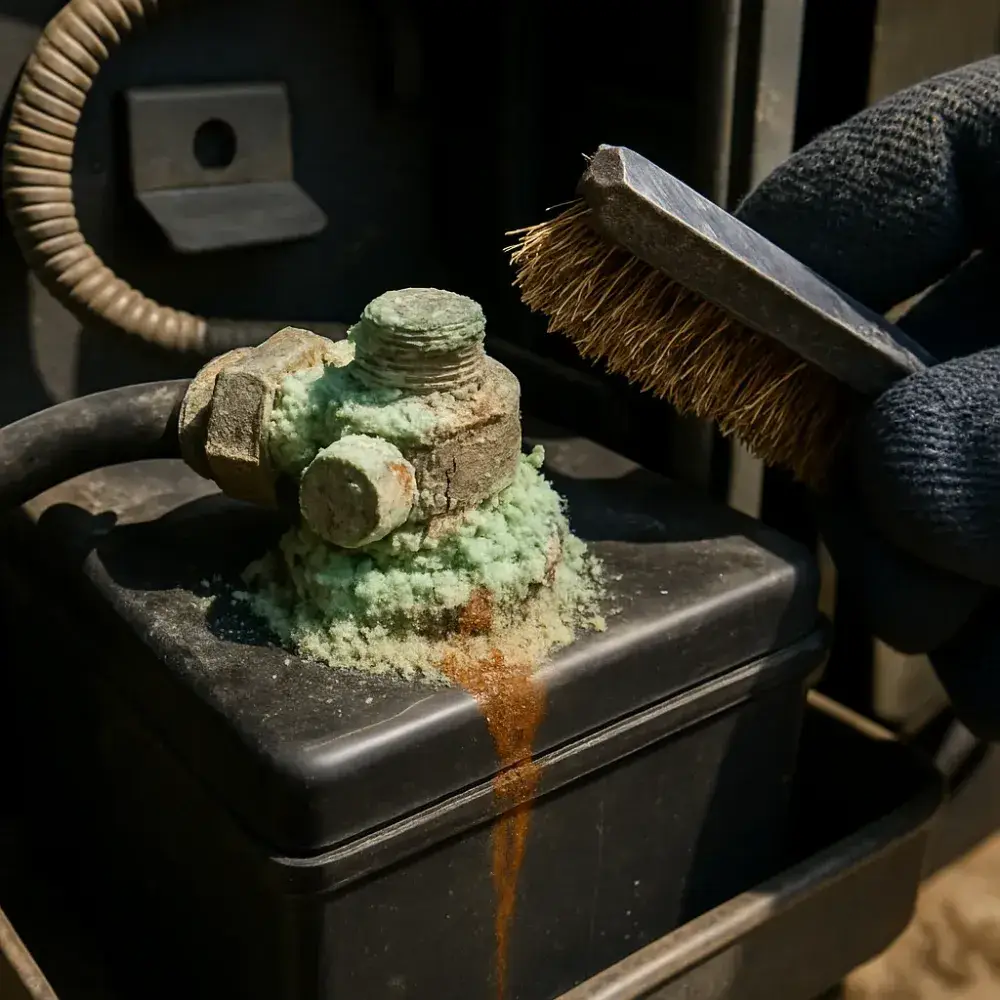
The transfer switch decides where your home’s power comes from. Under normal conditions it pulls from the utility line. When the power drops, it’s supposed to switch the house over to the generator instead. If that switch doesn’t move, or only moves partway, your generator can run all day and your house won’t see a single watt of it. We’ve found switches stuck from corrosion, switches with a failed control board, and switches that were never wired to cover the full panel in the first place, so half the house stays dark even though the switch technically worked. Older Sunnyvale installs are the usual culprit there.
People also bring this up when only some rooms or circuits have power and others don’t. That’s usually not a mystery fault. It’s how the transfer switch and load setup were designed. Whole-home standby systems are meant to carry the full panel. Smaller setups, or older installs done for just a few circuits, only ever power what they were wired for. A lot of homeowners inherit a generator system from a previous owner and don’t know which kind they have until the power goes out. We sort that out on the first Sunnyvale visit.
What we check on site: we test the transfer switch’s automatic operation directly, confirm it’s sensing the utility outage, and check the connections and control wiring between the generator, the switch, and the panel. We also check the switch’s own power supply, since a dead battery or blown fuse inside it will stop it from throwing even when everything else is fine. Then we test under an actual load, not just a no-load run, because a switch that seems to move fine can still fail to carry the house once real demand hits it. A real Sunnyvale outage will find that weakness fast.
The fix depends on what we find. Sometimes it’s a control board or a relay inside the switch. Sometimes it’s a wiring connection that’s loosened up over time from heat cycling. Either way, this falls under the standard diagnose-and-repair visit we quoted earlier, and we confirm the actual cause before replacing anything. If you’re weighing what a visit like this typically runs, our Generator Repair Costs page lays out the ranges. If the switch or panel setup itself needs a change rather than a repair, that’s a conversation we have with you directly, in plain terms, before any work starts.
Watch Our Video
See How We Handle Generator Repair in Sunnyvale
Xtreme Air Services — Serving Sunnyvale and surrounding areas
Thinking about Generator Repair in Sunnyvale? Let’s talk.
Call Today, Get Service Today. Xtreme Air Services is ready to help.
Control Board and Sensor Faults Can Cause Shutdowns or Error Codes
Your generator shows a blinking light or a numbered fault code, then stops running or refuses to start at all. That’s usually the control board or one of the sensors feeding it information, not the engine underneath. The board reads signals from oil pressure sensors, coolant temperature sensors, and the battery, then decides whether the engine is safe to run. When one of those readings looks wrong to the board, even if the underlying part is fine, the board shuts the whole unit down rather than risk damage.
We see a few patterns come up again and again. A corroded or loose sensor connection can send a false low-oil-pressure signal, which shuts down a generator that has plenty of oil in the crankcase. A weak battery can trip a “check battery” code even though the charging system itself is working fine. Storm season adds another layer. A near lightning strike or a power surge on the utility line can scramble a control board’s programming or damage its circuitry outright, and that generator won’t start again until the board gets reset or replaced. We’ve had calls where the homeowner assumed the whole unit was dead after a storm, and it turned out to be the board, not the engine. Sunnyvale storm season produces a few of those every year.
Error codes themselves aren’t always a straight answer. The same code number can point to a sensor that’s failed, a wire that’s chafed through, or a board that’s lost its calibration. A code tells you where to look, not exactly what’s broken. Diagnosing it right means testing the sensor itself, checking the wiring harness for continuity, and confirming what voltage the board is seeing, in that order, before anyone replaces a part. Swapping the board first because it’s the easiest part to blame is how a repair bill gets bigger than it needs to be. We trace it properly on every Sunnyvale call.
Age and exposure matter too. A generator that sits outside year-round in North Texas heat, then gets hit with a sudden cold snap, puts real stress on the plastic housings and connectors around these sensors. We find brittle wiring and corroded terminals more often on units past the eight to ten year mark, especially ones that haven’t had a professional look at the wiring during annual service. Sunnyvale humidity and heat swings accelerate that wear.
Board and sensor work is diagnostic-heavy compared to some other generator repairs, since the fault has to be traced before anything gets ordered or replaced. Costs on jobs like this run in the same range as most other generator repair calls, and you can see what’s typically included on our generator repair pricing page.
Skipped Routine Maintenance Is a Frequent Contributor to Generator Failures
Most of the no-start calls we get trace back to a generator that sat untouched for a year or more. That’s the pattern we see across Sunnyvale and the rest of the Dallas-Fort Worth area, not because owners are careless, but because a generator is easy to forget. It sits outside, quiet, and you don’t think about it until a storm knocks the power out and it doesn’t turn on.
Generators run a short self-test cycle on their own schedule, so the unit looks fine from the outside. But the battery underneath can be losing charge for months, the fuel line can be gumming up, and the air filter can be collecting dust the whole time. None of that shows up until the generator needs to carry a real load during an outage. Sunnyvale outages tend to run long enough to expose it.
Here’s what we notice most often when a generator hasn’t had any upkeep in a while: a weak or dead battery, stale fuel or a clogged fuel line, a dirty air filter restricting airflow, and corrosion building up on battery terminals or connections. Any one of these can stop a generator from starting or cause it to stall once running. We diagnose the fault first, whether it’s the battery, the fuel system, the controls, or the starting components, then replace the failed part and test the unit under load before we call the job done. Every Sunnyvale repair ends with that load test.
Skipped maintenance shows up a little differently depending on the generator. Smaller portable units tend to suffer from stale fuel and carburetor issues if they sit for a season without running. Whole-home standby generators, since they’re wired into the house and often left alone for a year or two between events, tend to develop battery and starting problems, or corrosion at the connections, since they’re outdoors and exposed to North Texas humidity and heat swings year-round. Sunnyvale sits right in that pattern.
We won’t tell you that regular upkeep guarantees a generator fires up every single time. It doesn’t work that way with any mechanical equipment. What we can tell you is that most of the failures we’re called out for are the kind that a periodic look at the battery, fuel, and filter would have caught early, before the generator needed to perform. Generator maintenance and annual service are both things we handle, along with load testing to confirm a unit will carry your home or business if the power goes out. We schedule Sunnyvale maintenance visits ahead of storm season.
If you’re deciding whether a generator repair call is worth it, or whether the unit is telling you something bigger is wrong, our Generator Repair in Sunnyvale page walks through what a diagnostic visit covers and what it doesn’t. Most of these calls get fixed on the first visit once we know what we’re looking at.
See our full generator repair service in Sunnyvale for what the complete job involves.
Frequently Asked Questions
Common questions about Generator Repair in Sunnyvale
What issues come up most often with generator repairs?
Most calls we get involve one of three things: a battery that won’t hold a charge, a fuel supply issue that keeps the unit from starting or running steady, or a transfer switch that won’t move power over to the generator. These three cover the majority of no-start and no-power calls across DFW. Each one has its own symptoms, and we work through them in order until we find where the problem sits. Most of these are diagnosed and fixed in one visit.
What should I expect during a generator repair visit?
We start by diagnosing the fault, checking the battery, fuel system, controls, or starting components depending on how the unit is acting. Once we find the cause, we replace the failed part and test the generator to confirm it starts and carries a full load. Most generator repair calls are resolved on the first visit since batteries, filters, and common valves are parts we carry. If something bigger is wrong, like a fuel line or charging module, we’ll explain what that involves before continuing.
How do you handle it when the fix turns out to be something small?
We fix what’s wrong, even when that’s smaller than what got you worried. If a loose battery terminal or corroded connection is causing a no-start, we clean and tighten it rather than replace parts that don’t need replacing. The same goes for fuel valves and simple blockages. A generator repair call doesn’t have to end in a big parts bill to be worth making, and plenty of them don’t.
Do you charge extra for nights or weekend generator repair calls?
No, we charge the same rate whether it’s a weekday afternoon or a Saturday night. Generators tend to fail exactly when you need them, during outages, storms, or off-hours, so we don’t add a charge for timing. For a breakdown of what typical generator repairs run, our pricing guide covers the details.
What’s worth a call versus normal wear on a generator?
A fault code on the control panel, a unit that clicks but doesn’t crank, or a generator that runs but doesn’t power the house are all worth a call. Normal wear looks more like a battery that’s simply aged out, something routine maintenance and a load test usually catch early. If you’re not sure which one you’re seeing, a technician can check the battery, fuel system, and transfer switch and tell you what’s happening.
What does your guarantee cover on generator repair work?
We back our generator repair work with a 100% satisfaction guarantee. That’s paired with upfront flat-rate pricing, so you know the cost before any work starts, plus no added charge for after-hours or weekend calls. If something about the repair doesn’t sit right with you, that guarantee is what stands behind it, not just the parts and labor.
Ready to Get Started?
Call 972-288-2263 Today, Get Service Today.