


A/C System Installation in Allen: How to Know It’s Time and Who to Trust
New AC systems sized to your Allen home and installed right – with an honest look at whether a repair still makes sense.
What’s Covered on This Page
- Signs Your AC System Needs Replacing, Not Just Repair
- When Repair Still Makes More Sense Than Installation
- How to Verify an AC Installer Before You Hire One
- What’s Included When You Install a New AC System
- What Drives AC Installation Cost Up or Down
- What is the $5,000 rule for deciding on a new AC system?
- How long does a typical AC installation take?
Signs Your AC System Needs Replacing, Not Just Repair
When your AC acts up, the first question isn’t “What’s broken?” It’s “Am I fixing a problem, or am I paying to keep an old system limping along?” A bad capacitor or a worn fan motor is a normal repair. But some signs tell you the whole system is near the end of the road, and that more repair money won’t buy you much more time.
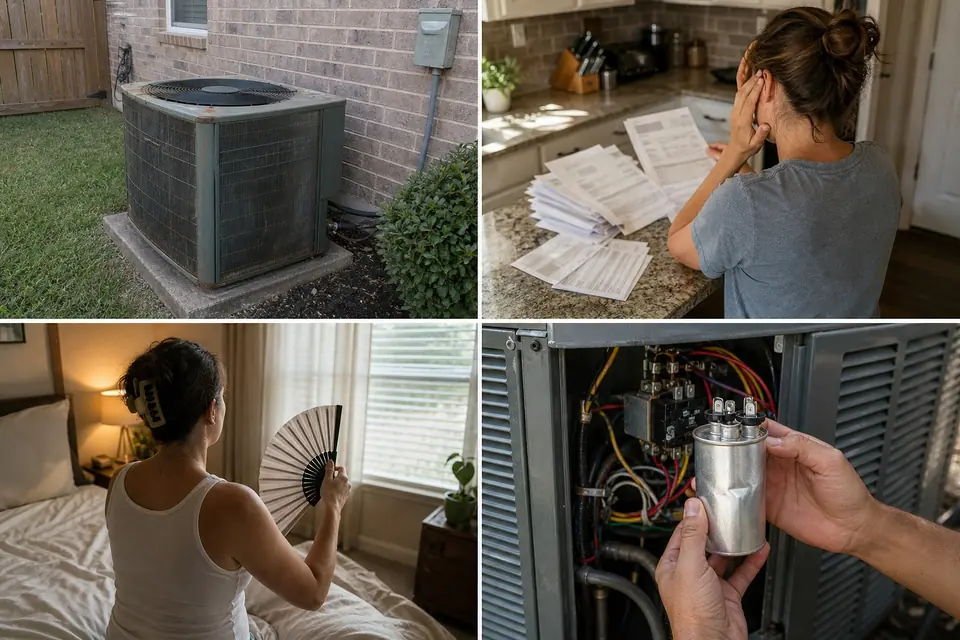
- It’s getting up in years. Most central AC systems last somewhere in the range of 10 to 15 years. Long Texas cooling seasons put a lot of hours on them. If yours is in that range and starting to struggle, it’s worth pricing a replacement before you put money into a big repair.
- You’re calling for repairs every season. One fix is normal. A new problem every summer usually means parts are wearing out one after another.
- It uses R-22 refrigerant. Older systems often run on R-22, which isn’t made in the U.S. anymore. What’s left is scarce and costly. If your system has a leak, refilling it with R-22 can get expensive fast.
- The compressor or coil failed on an older unit. These are the big parts. Replacing one on a system that’s already near the end of its life often costs a large share of what a new system would.
- Your bills keep creeping up. If your power bill rises summer after summer and your habits haven’t changed, your system is likely working harder to do the same job.
- It can’t keep up on hot afternoons. The system runs nonstop, upstairs rooms stay warm, or the house feels muggy even when the thermostat says it’s cool. A tired system often loses its ability to pull humidity out of the air.
- It’s louder than it used to be. Grinding, rattling, or banging from the outdoor unit can point to parts wearing out inside.
Here’s the honest side. If your system is fairly young, has been reliable, and just needs one part, repair it. Swapping out a failed capacitor or clearing a clogged drain line doesn’t call for a new system, and nobody should tell you it does. The same goes for a dirty filter or a tripped breaker. Check those first, because sometimes that’s all it is.
Picture a common July moment. Your AC quits on a 100-degree day. The tech finds a failed compressor on a system that’s had a few repairs before and still runs on R-22. You could fix it, but you’d be putting a lot of money into old equipment that could fail again next summer. That’s when replacing it often makes more sense.
The point isn’t to replace as soon as possible. It’s to make the call with clear facts in front of you: your system’s age, its repair history, and what the fix would really cost compared to a new system. With those three things, the choice usually gets pretty obvious.
When Repair Still Makes More Sense Than Installation
Repair is the better choice when your system is fairly young, the fix is reasonable compared to its value, and the real problem can be solved without new equipment. A new AC is a big purchase. You shouldn’t make it just because something broke on a hot day.
Before you decide, ask three questions. How old is the system? How much will this repair cost? How many good years are likely left after it’s fixed? A few hundred dollars to fix a five-year-old system that’s been reliable is an easy yes. The same bill on a worn-out unit you’ve already repaired twice is a different story. The age and the repair history matter more than the size of any one bill.
Some problems look like a failing AC but come from somewhere else. A new outdoor unit won’t fix any of these:
- Leaky or crushed ductwork in the attic. Cool air escapes before it reaches your rooms, so the back bedroom never cools down no matter what equipment is running.
- Dirty coils. A coated indoor or outdoor coil can’t move heat well, and the system runs long and weak. Cleaning often brings it back.
- A thermostat that’s failing or in a bad spot. If it sits near a sunny window or a kitchen, it can read wrong and run the system at the wrong times.
- Too few return vents or a blocked return. The system can’t pull in enough air, so it struggles even when nothing inside it is broken.
If one of these is the real cause, putting in a new system just moves the same problem onto more expensive equipment. North Texas attics get very hot in summer, so duct and airflow problems up there are worth ruling out before anyone talks about replacement.
Repair also makes sense when it buys you time. Say your system is getting older but still fixable, and it quits in the middle of July. Fixing it now gets your family cool tonight. It also lets you plan a replacement later, maybe in the fall or spring, when you can compare options and budgets without sweating through the decision. That’s a smart use of repair money, not a waste.
Refrigerant type matters too. The R-22 problem from the section above doesn’t apply to newer systems. If yours runs on R-410A, refrigerant is still available, so a leak repair and recharge doesn’t automatically mean the end for that unit.
The way to know for sure is a proper diagnosis. Xtreme Air Services charges a $26 to $99 service-call fee, and it’s credited toward the repair if you go ahead with us. You get a clear picture of what’s wrong before you spend real money either way. If the honest answer is that a repair will keep you comfortable for years, that’s the answer you should get.
How to Verify an AC Installer Before You Hire One
A new AC is only as good as the person who puts it in. The same equipment can run great for years or struggle from day one, depending on how it’s sized, connected, and started up. Before you sign anything, take ten minutes to check these things. Any good installer will be glad you asked.
- Check the state license yourself. In Texas, air conditioning contractors are licensed through the Texas Department of Licensing and Regulation (TDLR). Ask for the license number, then look it up on the TDLR website. Make sure the name matches the company on your quote.
- Ask for proof of insurance. If someone gets hurt in your attic or a ceiling gets damaged, you don’t want that landing on you. A real company can show you its coverage without a fuss.
- Ask how they’ll size the system. A good installer doesn’t just copy the tonnage off your old unit. A cooling load calculation looks at your home’s square footage, insulation, windows, and sun exposure. An AC that’s too big cools fast but leaves the house muggy. One that’s too small runs all afternoon and still can’t keep up.
- Get a written quote that spells out what’s included. Equipment, labor, startup, testing, and hauling off the old unit should all be listed. So should anything that isn’t covered.
- Ask about permits. Find out whether your job needs a city permit and whether the permit is in the price or extra.
- Ask who’s coming to your home. You should know whether the techs are employees and whether they’ve been background-checked.
- Read recent reviews. Look for comments about showing up on time, clean work, and prices that matched the quote.
Watch for a few red flags too. A price given over the phone without anyone looking at your home is a guess. So is a quote that just says “new AC system” with one number and no details. And if someone pushes you to sign today or the price goes up, walk away. A real quote will still be good tomorrow.
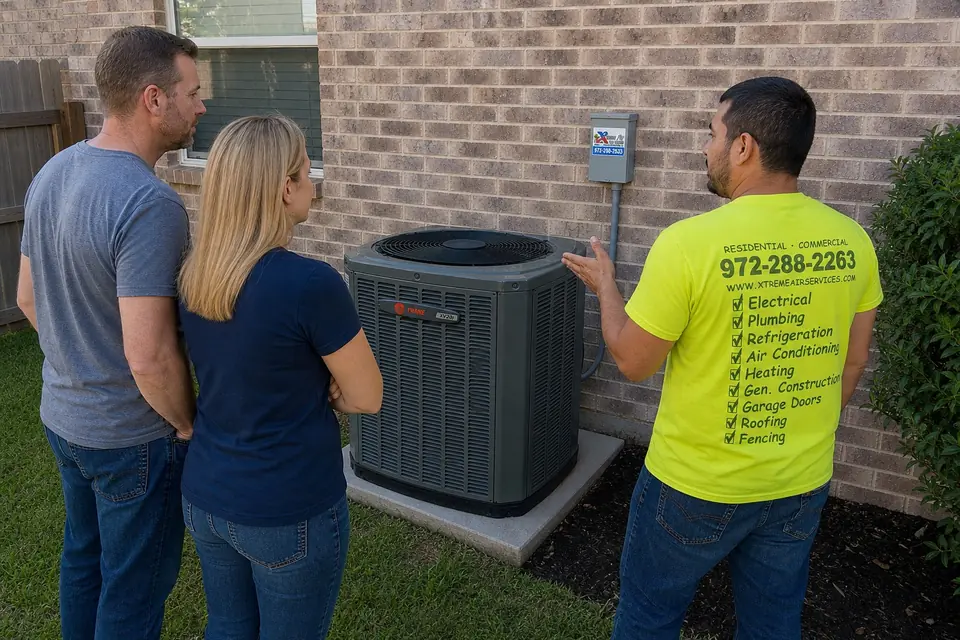
Here’s how we answer those questions. Xtreme Air Services is licensed and insured, and our HVAC license number is TACLA29023C. You can look it up on TDLR yourself. Our technicians are background-checked. We’re a Trane Comfort Specialist, and your neighbors have given us a 4.8-star rating across more than 2,900 reviews on Google, Angi, and HomeAdvisor. We also offer cooling load calculations, so your new system fits your home and not just the old unit’s label.
Our quotes are upfront. A standard installation includes the equipment and materials, professional installation, standard connections, startup and testing, and haul-away of your old unit. Duct, electrical, or plumbing changes, code corrections, and permits aren’t included unless your quote says so. We’ll tell you plainly if your home needs any of those before work starts, so the price you approve is the price you pay. Our office is at 1333 W McDermott Dr in Allen, and you’ll always be able to talk to a real person about your quote.
Have questions? We’re happy to help.
Call Today, Get Service Today. Xtreme Air Services — Allen is ready to help.
What’s Included When You Install a New AC System
Once you’ve decided a new system is the right call, the next question is simple: what are you paying for? With Xtreme Air Services, most A/C installations fall between $5,500 and $13,000. Our most common job, a like-for-like replacement that uses your existing connections with no major changes, runs $7,000 to $10,000. That price covers the equipment and the full installation, plus the items listed in the quote section above.
Your price depends on your home, not a one-size number. These are the things that move it up or down:
- Size of the system. Tonnage is how much heat the AC can pull out of your home in an hour. A bigger home or one with lots of west-facing windows may need more, and that’s why sizing comes from a load calculation and not a guess.
- Efficiency. SEER2 is the efficiency rating on a new AC. A higher number means it uses less power to cool the same space. It costs more up front but can lower your summer bills, which adds up over a long Texas cooling season.
- Brand and model. A basic single-stage unit costs less than a variable-speed system. Variable-speed systems run longer at lower power, which keeps temperatures steadier and pulls more humidity out of the air.
- Ease of access. A tight attic or a hard-to-reach air handler takes more time and care.
- Condition of what’s already there. Worn ductwork, old wiring, or a drain line that needs rework can add to the job.
- Code upgrades, permits, and custom fabrication. Some homes need changes to meet current code, and some jobs need custom sheet metal to make new equipment fit.
If your job is a simple swap, you’ll likely land in that common range. If your ducts are in rough shape or something needs to be brought up to code, your quote will show it as a separate line before any work starts. You won’t find out about it halfway through the install.
Startup and testing is the part people don’t see, but it matters most. A new system has to be charged with the right amount of refrigerant, checked for proper airflow, and run long enough to confirm it’s cooling the way it should. Skip that step, and even top-of-the-line equipment can run short of what it’s built to do. That’s why it’s part of every standard installation, along with hauling away your old unit so it isn’t left sitting beside your house.
A new AC is a big expense, and it rarely shows up at a convenient time. We offer flexible financing on qualifying installations and larger jobs, on approved credit. If the monthly payment fits your budget better than one large check, ask about it when you get your quote.
You’ll know the full scope and the price before you say yes. You’ll also be working with a licensed and insured Trane Comfort Specialist that your neighbors have rated 4.8 stars across more than 2,900 reviews.
Call 469-299-8996
Watch Our Video
See How We Handle A/C system installation in Allen
Xtreme Air Services — Allen
What Drives AC Installation Cost Up or Down
You’ve seen the main factors that set the price. This section covers how they show up in a real home, plus the smaller details that separate a quote that looks low from one that’s complete.
These are the things that can quietly add to the job:
- Old refrigerant lines. If you’re moving off an R-22 system, the copper lines that carry refrigerant between the indoor and outdoor units may need to be flushed or replaced. Newer refrigerants run at different pressures, so old lines aren’t always safe to reuse.
- An old indoor coil. Swapping only the outdoor unit and leaving a worn coil in the attic is like putting new tires on just one side of your truck. The two halves need to work as a pair to cool the way they’re rated.
- Electrical that doesn’t match. A new unit may need a different breaker size or a new outdoor shutoff box. Older wiring sometimes has to be updated before the new system can run safely.
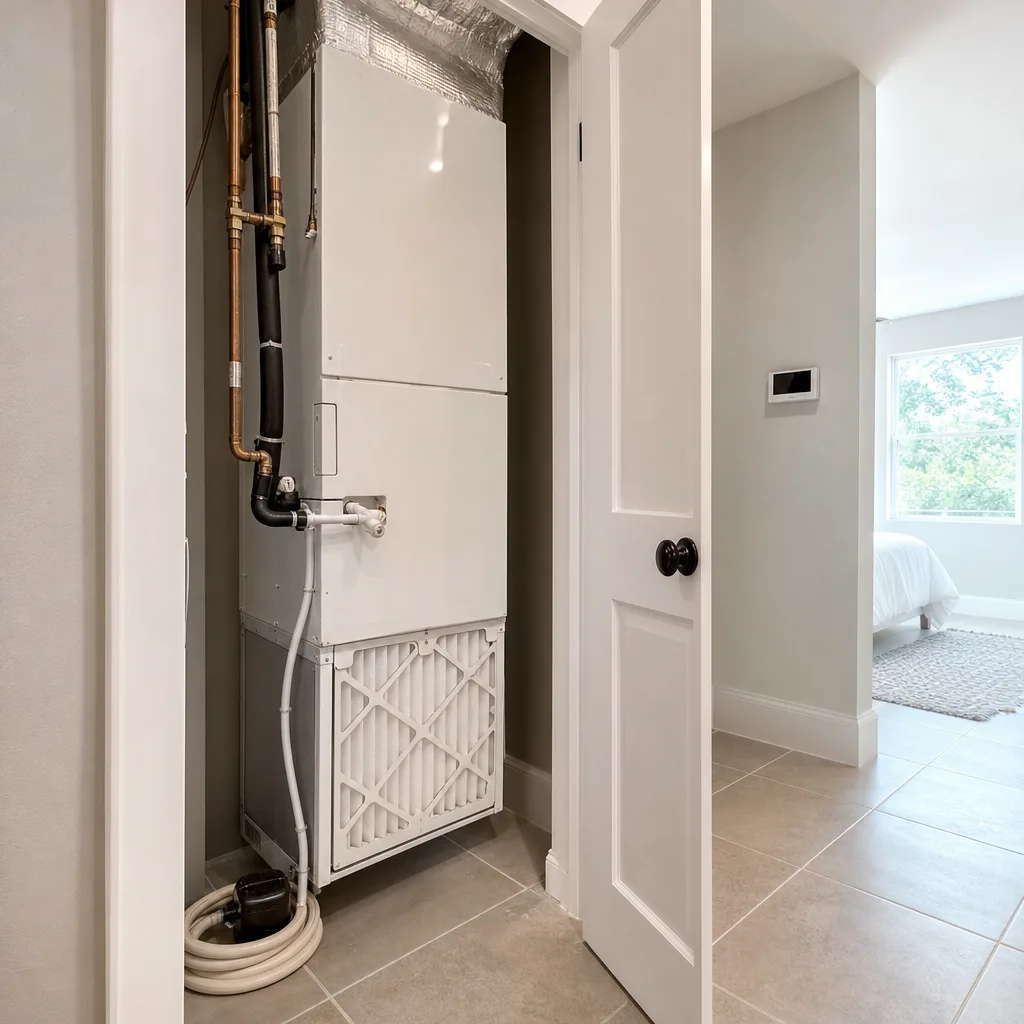
- Attic protection. When the air handler sits in the attic, a drain pan and a float switch under it help keep a clogged drain from leaking through your ceiling. If yours is missing or rusted out, it should be replaced.
- A shifting outdoor pad. North Texas clay soil swells when it’s wet and shrinks when it’s dry, so outdoor pads can sink or tilt over the years. A leaning pad may need to be leveled or replaced so the new unit sits right.
- Ducts that are too small. If your home needs a bigger system than the old one, the ducts may not move enough air for it. Fixing that costs more, but skipping it can leave the new system loud and weak.
Some of this can’t be seen until someone gets into your attic and looks. That’s why a quote given over the phone tends to miss it, and why two quotes for the same home can be thousands of dollars apart.
You have more control over the final number than you might think:
- Get the size right. A load calculation keeps you from paying for a bigger system than your home needs. Bigger isn’t better here. It often costs more and controls humidity worse.
- Pick efficiency for how you live. If you’re home all day through a long Texas summer, a higher SEER2 or variable-speed system can pay off. If the house sits empty most of the day, a solid standard-efficiency system may be the smarter buy.
- Keep what still works. If your ducts and wiring are in good shape, a like-for-like swap keeps the job simple and the cost lower.
- Plan ahead if you can. Replacing a struggling system before it quits gives you time to compare options instead of deciding on the hottest day of the year.
One last thing. The lowest number isn’t always the lowest cost. If one quote is far below the others, ask what it leaves out. Old line sets, no drain pan, or a mismatched coil can save money today and cost you comfort and repair bills for years after.
Frequently Asked Questions
Common questions about A/C system installation
What is the $5,000 rule for deciding on a new AC system?
The $5,000 rule is a quick gut-check some homeowners use: multiply your AC’s age by the repair cost, and if that number tops $5,000, replacement is usually the smarter move. For example, a 10-year-old system with an $800 repair bill lands at $8,000, which leans toward replacing. A 3-year-old system with the same repair lands at $2,400, which leans toward fixing it. It’s a starting point, not a final answer. Your system’s repair history and how well it’s cooling your home still matter more than one formula.
How long does a typical AC installation take?
Most like-for-like AC installations take about a day, from removing the old unit to finishing startup and testing. A straightforward swap that reuses your existing ductwork, electrical, and refrigerant lines goes faster than a job that needs duct repairs, electrical upgrades, or code corrections. If your attic access is tight or your home needs custom sheet metal work, plan on it taking longer. A clear quote before work starts should tell you what your specific job involves.
Ready to Get Started?
Call (469) 299-8996 Today, Get Service Today.