


Dryer Vent Cleaning in Allen: Is Your Vent a Fire Risk or Fine for Now?
The whole dryer vent line cleared, not just the opening – to cut fire risk and help your dryer dry.
What’s Covered on This Page
- Match Your Symptoms to Real Fire-Safety Warning Signs
- Know When You Can Wait and When You Can’t
- What Allen’s Older Housing Stock Means for Vent Age
- What Happens During a Professional Vent Cleaning Visit
- What Dryer Vent Cleaning Costs and What Affects the Price
- How often should I get my dryer vent cleaned?
- Should I just buy a vent cleaning kit instead of calling someone?
- Who does dryer vent cleaning, since it’s not the same as duct cleaning?
Match Your Symptoms to Real Fire-Safety Warning Signs
Your dryer pushes hot, wet air out through the vent line. When lint builds up inside that line, the air slows down. The heat has nowhere to go, so it stays in the dryer and the duct. That trapped heat sits right next to lint, and lint burns easily. That’s why these signs matter.
- Clothes need two cycles to dry. This is the most common early sign. Wet air can’t get out, so your clothes sit in damp heat longer.
- The top of the dryer or the laundry room feels hot. Some warmth is normal. A room that feels like an oven after one load means heat is backing up.
- You smell something scorched or burning. Don’t brush this off. It can mean lint is getting hot enough to char somewhere in the system.
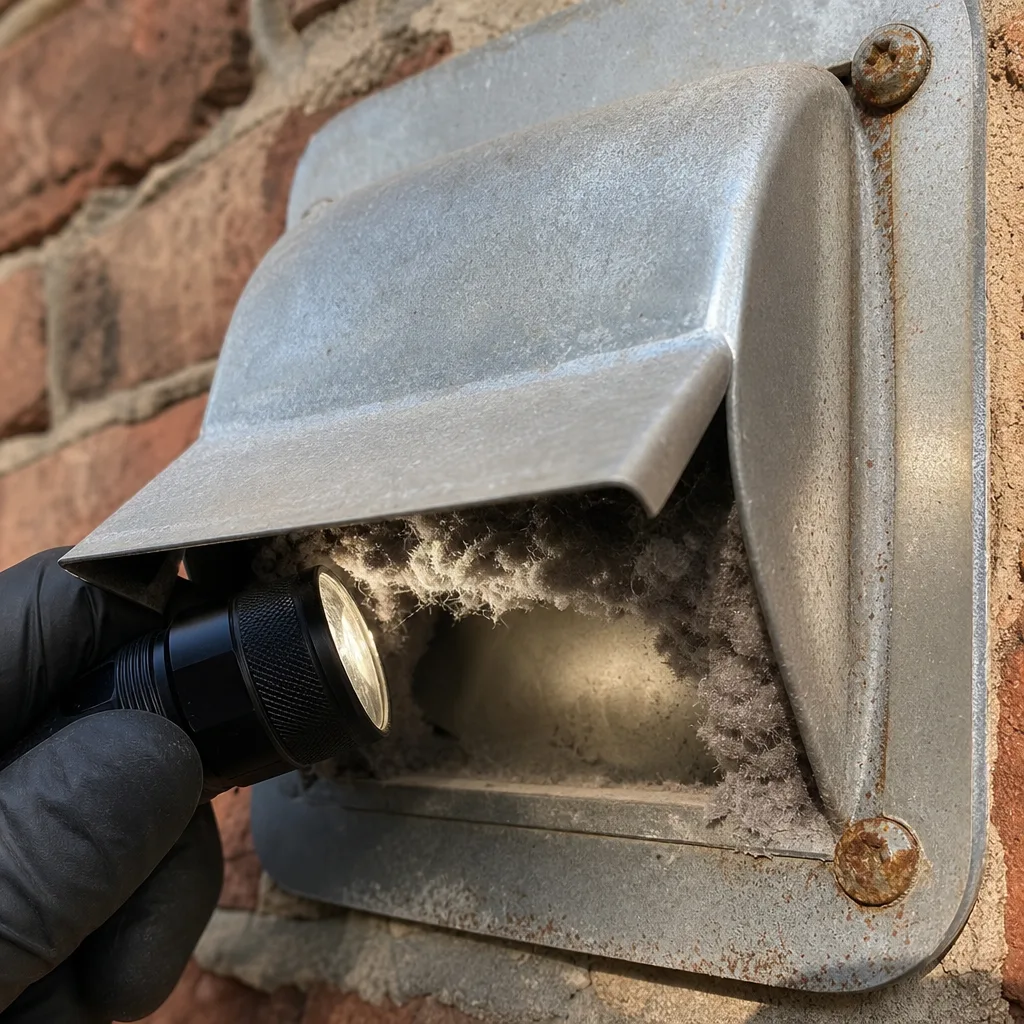
- Little or no air comes out of the outside vent. Go outside while the dryer runs. You should feel a strong, warm push of air and see the flap open.
- Lint collects around the outside hood or behind the dryer. Lint showing up where it shouldn’t usually means the line is full or a joint has come loose.
- Clothes come out hot but still damp, or they smell musty. Moisture is getting trapped instead of leaving your home.
- The dryer shuts off partway through a cycle. Some dryers have a safety switch that cuts power when they overheat. A blocked vent is a common reason for that.
Not every slow dryer has a clogged vent, so check the easy things first. Clean the lint screen. Make sure the drum isn’t overloaded. Pull the dryer out a few inches and look at the flexible hose behind it. If it’s crushed or kinked against the wall, straightening it may solve the problem. If your clothes come out cold and wet, the problem is more likely a heating part inside the dryer. A vent cleaning won’t fix that.
How your vent is routed matters too. Some homes have a short run straight out an exterior wall, so you can see and reach the outside flap. In many North Texas homes, the laundry room sits farther inside the house. The vent climbs through the attic and ends at the roof. On those longer runs, lint has more places to settle, and you can’t easily check the roof cap yourself. Summer attic heat doesn’t help a line that’s already working hard. If your vent ends on the roof and you’re seeing two or more of the signs above, assume the line needs attention.
When our team cleans your dryer vent, the visit includes an airflow and exhaust check after the line is cleared. That way you’re not guessing whether the problem is gone. If the check turns up a crushed section or a bad run that needs repair, we’ll explain what we found and quote that work separately before anything else happens.
Know When You Can Wait and When You Can’t
Not every slow dryer is an emergency, and not every vent needs a pro. Here’s the honest breakdown, so you can decide what makes sense for your home.
You can probably wait, or skip calling us, if all of these are true:
- Your vent runs a short, straight path out an exterior wall, and you can reach both ends.
- You go outside while the dryer runs and feel a strong, warm push of air with the flap opening wide.
- Loads dry in one normal cycle, and the laundry room doesn’t get unusually hot.
- The line was cleaned not long ago, and nothing about how your dryer acts has changed since.
If that sounds like your setup, you can do a lot of this yourself. A vent brush kit from a hardware store works fine on a short wall run. Unplug the dryer first, or shut off the gas if it’s a gas dryer. Then pull the dryer out, disconnect the hose, and brush the line from both ends. Clear any lint packed around the outside hood while you’re out there. If straightening a crushed hose behind the dryer fixed your long dry times, you’re done. You don’t need us for that.
One more honest note: if your clothes come out cold and wet, the vent probably isn’t the issue. As we covered above, that usually points to a heating part inside the dryer. Paying for a vent cleaning won’t fix it.
Don’t wait if any of these apply:
- You smell something scorched or burning. Stop running the dryer until the line has been checked.
- Your dryer shuts itself off partway through a cycle. That’s often the overheat switch doing its job, and it’s telling you heat is trapped.
- Your vent ends on the roof and you’re seeing two or more warning signs. You can’t check that cap from the ground, and a roof isn’t a safe place for a DIY project.
- You’ve already brushed the line yourself, and the dry times and weak airflow outside didn’t get better.
- You see lint, a bird’s nest, or debris stuck in the outside hood that you can’t safely reach.
There’s also a middle ground. Maybe your dryer just takes a little longer than it used to, and nothing else seems off. That’s not an emergency. But slow drying usually gets worse, not better, and every extra cycle means more heat sitting next to lint in the line. If you can’t easily check your vent yourself, schedule a cleaning on your own time instead of waiting for a burning smell to make the call for you.
Long runs are where DIY tends to come up short. When the vent climbs through the attic and has several turns, a store-bought brush may not reach the whole line. It can also push a clump of lint deeper where it’s harder to get out. That’s when the right tools and a proper airflow check after cleaning make a real difference. If your vent is short and easy to reach, though, give it a try yourself first.
What Allen’s Older Housing Stock Means for Vent Age
Allen has a mix of established neighborhoods and newer subdivisions. If your home is one of the older ones, the dryer vent inside your walls may be as old as the house. That matters more than most people think. A vent line isn’t something anyone sees or checks unless there’s a problem. It can go years, even decades, without a real cleaning.

Here’s the part that catches a lot of homeowners off guard. If you bought your house from someone else, you probably have no idea when the vent was last cleaned. It might have been done last year, or it might never have been done at all. The lint screen catches most of the lint, but not all of it. What gets past the screen ends up in the line, and it adds up a little with every load.
Older vent setups can also hide problems that a newer line wouldn’t have:
- Flexible plastic or foil accordion duct. It crushes easily, and its ridges hold onto lint. Today’s better practice is smooth, rigid metal duct for the run inside the walls.
- Joints held together with screws. The screw tips poke into the line and snag lint as it passes, and over time a small catch point can turn into a clog.
- Tape that has dried out. Old tape on joints can loosen in attic heat and let a section sag or pull apart. Lint and moist air then leak into the attic or wall.
- Changes from past remodels. A laundry room that was moved or redone may have a longer, twistier vent run than the house was built with.
- Worn outside hoods and roof caps. Flaps stick, screens clog, and birds sometimes build nests in caps that have been up there for years.
North Texas summers add their own wear. Attic heat in July and August is hard on anything running through it. A vent line that climbs through the attic to the roof goes through that heat cycle year after year. Joints shift, tape lets go, and flexible sections can sag and form low spots where lint settles.
None of this means your older home has a dangerous vent. Plenty of older lines are in fine shape. The point is that age and an unknown history are reasons to have the line looked at and cleaned once, so you have a starting point. After that, you’ll know what you’re working with and can keep an eye on the warning signs we covered above.
Newer homes aren’t off the hook, either. Builders in newer subdivisions often place the laundry room deep inside the house, which means longer vent runs and roof endings. Some new lines also pick up drywall dust or debris during construction. A newer vent is less likely to have worn-out parts, but it can still clog.
When we clean an older line, the airflow check afterward tells you whether the vent is moving air the way it should. If we find a crushed plastic section, a pulled-apart joint, or a run that needs rerouting, we’ll show you what we found. That repair is quoted on its own, and you decide whether to go ahead.
Ready when you are – get in touch today.
Call Today, Get Service Today. Xtreme Air Services — Allen is ready to help.
What Happens During a Professional Vent Cleaning Visit
If you’ve decided your vent needs a pro, you probably want to know two things. What will get done, and what will it cost? Here’s the straight answer, so nothing about the visit catches you off guard.
A real cleaning covers the whole line, not just the part you can see behind the dryer. Any company you hire should be able to tell you how they’ll handle each of these pieces:
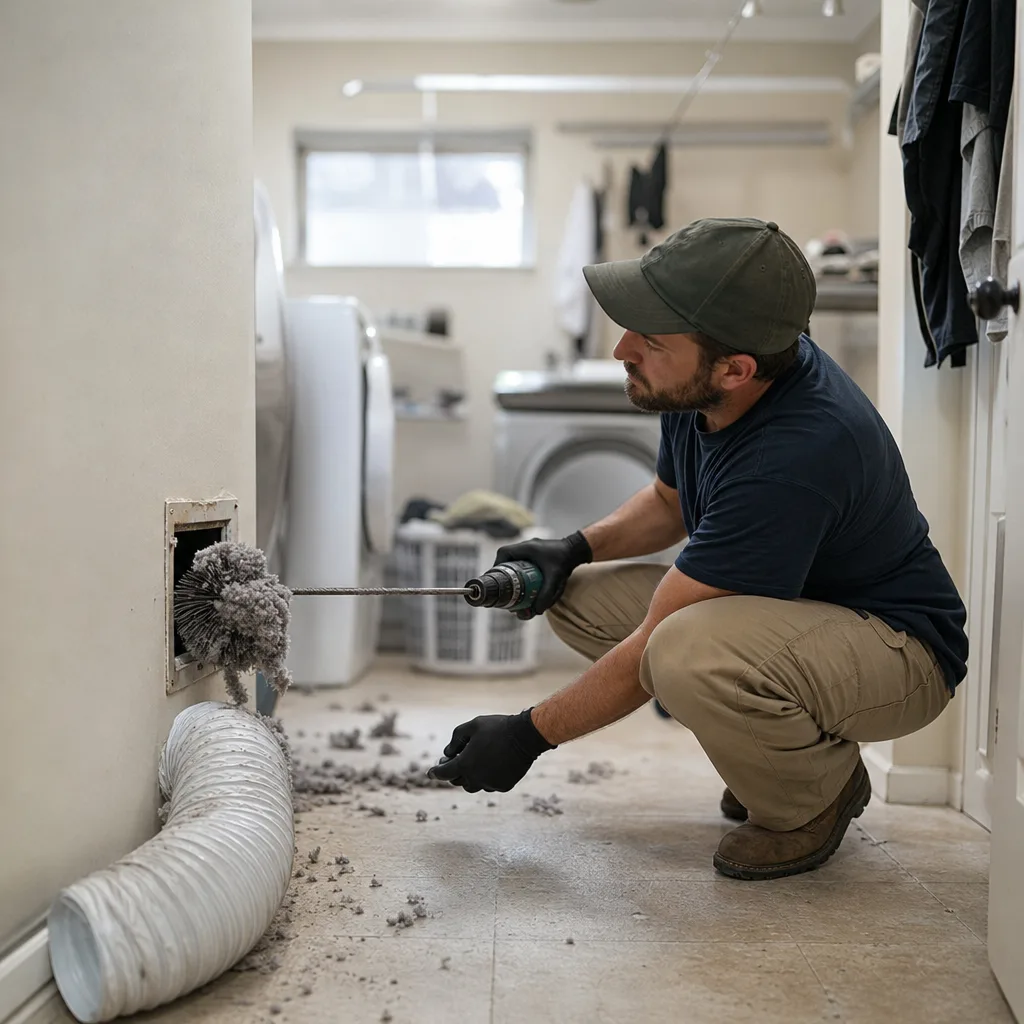
- The transition hose. This is the short hose between the dryer and the wall. It gets checked for crushing and lint, and cleared or flagged if it’s in bad shape.
- The full run inside the walls or attic. This is where most hidden lint lives, especially on long runs with several turns.
- The outside end. On a wall vent, that means the hood and flap. On a roof vent, that means the cap up top, where nests and packed lint like to settle.
- Reconnecting everything. The dryer goes back in place without the hose getting kinked against the wall, which would undo the work.
With Xtreme Air Services, your visit includes a full vent cleaning and the airflow and exhaust check we mentioned earlier. That way you know the line is moving air before we call it done.
You can make the visit go faster with a few small steps. Clear a path to the laundry room and move baskets or shelves away from the dryer. If you know where your vent ends, whether it’s on a wall outside or up on the roof, tell us when you call. If the line runs through the attic, make sure the attic opening isn’t blocked by storage. And if you’ve noticed anything odd, like a burning smell or the dryer shutting off mid-cycle, mention it. It helps us know where to look first.
Here’s how our pricing works for this job. Dryer vent cleaning typically runs $100 to $175. The broader range for vent work is $100 to $250. Where your home falls depends on vent length and routing, whether the vent ends on the roof or a wall, how much buildup is in the line, and how easy it is to reach. A short wall run with light lint sits at the lower end. A long attic run to a roof cap with heavy buildup takes more time.
There’s also a $26 to $99 service-call fee. If you go ahead with the work through Xtreme Air Services, that fee is credited toward it. Financing isn’t usually offered for a smaller job like this one. It’s available on larger repairs and replacements.
Our technicians are licensed and background-checked, and we give you upfront pricing before work starts. You’ll know what the cleaning covers and what it costs before anyone touches your dryer.
Watch Our Video
See How We Handle Dryer vent cleaning in Allen
Xtreme Air Services — Allen
What Dryer Vent Cleaning Costs and What Affects the Price
You already know our range from the visit section above. The bigger question is where your home lands in that range, and how to tell whether any quote you get is fair. Two houses on the same street can have very different vent jobs, and the difference usually comes down to what’s hidden in the walls and attic.

Here’s what each cost factor looks like in a real home:
- Length and routing. A vent that goes 6 feet straight out the back wall is quick work. A vent that runs from a center laundry room, up through the attic, and across the house has more length to clean and more bends where lint packs in tight.
- Roof vs. wall ending. A wall hood can be reached from the ground. A roof cap means a ladder, safe footing on the roof, and extra time to clear the cap and screen. That’s why roof endings tend to cost more.
- How much buildup there is. A line cleaned a couple of years ago might just have a light coating. A line that’s never been cleaned can have lint packed hard in the elbows, and that takes longer to break loose and pull out.
- Access. A dryer stacked in a tight closet, an attic hatch blocked by boxes, or a second-floor laundry room all add time before the cleaning even starts.
Whoever you hire, ask a few questions before you book. These help you compare quotes fairly, so a low number doesn’t turn into a bigger bill once someone’s in your laundry room.
- Does the price cover the whole line, including the roof cap or outside hood?
- Do you test airflow after cleaning, or just run a brush through?
- Is there a trip or service-call fee, and does it count toward the work?
- If you find damage, will you quote the repair and wait for my okay before doing it?
A good company will answer all four without hedging. With us, the answers are already on this page. The cleaning and airflow check are included, the service-call fee is credited if you go ahead, and any repair gets its own quote before anything happens.
You can help us give you a closer number on the phone. Tell us where your vent ends, if you know. Let us know whether your laundry room is on an outside wall or deeper in the house, and whether the house is one story or two. Mention roughly when the vent was last cleaned, or that you don’t know. If you’ve noticed a burning smell, long dry times, or the dryer shutting off, say so. That tells us what we’re walking into before we get there.
One more thing worth saying plainly. If your vent turns out to be short, clean, and moving air well, we’ll tell you that. You shouldn’t pay for work your home doesn’t need.
Call 469-299-8996
Frequently Asked Questions
Common questions about Dryer vent cleaning
How often should I get my dryer vent cleaned?
Most homes need it about once a year, but your home’s setup changes that. A short, straight vent run out an exterior wall can often go longer between cleanings. A longer run through the attic to a roof cap collects lint faster and deserves a yearly check. If you’ve never had it cleaned, or don’t know when it was last done, that’s reason enough to schedule one and set a baseline.
Should I just buy a vent cleaning kit instead of calling someone?
It depends on how your vent is routed. If your dryer sits against an exterior wall with a short, straight line you can see and reach, a store-bought brush kit can work fine. If your vent runs through the attic with several turns, a kit often can’t reach the whole line and can even push lint deeper where it’s harder to remove. Pull the dryer out and look at the hose first; that tells you which situation you’re in.
Who does dryer vent cleaning, since it’s not the same as duct cleaning?
Look for a company that specifically lists dryer vent cleaning as a service, not just general duct cleaning, since the two jobs use different tools and techniques. Ask whether they clean the full line from the transition hose to the outside hood or roof cap, and whether they check airflow afterward to confirm the line is clear. A technician who can answer both questions clearly is set up to do the job right.
Ready to Get Started?
Call (469) 299-8996 Today, Get Service Today.