


Dryer Vent Cleaning in Carrollton: Fire Risk or Just a Slow Dryer?
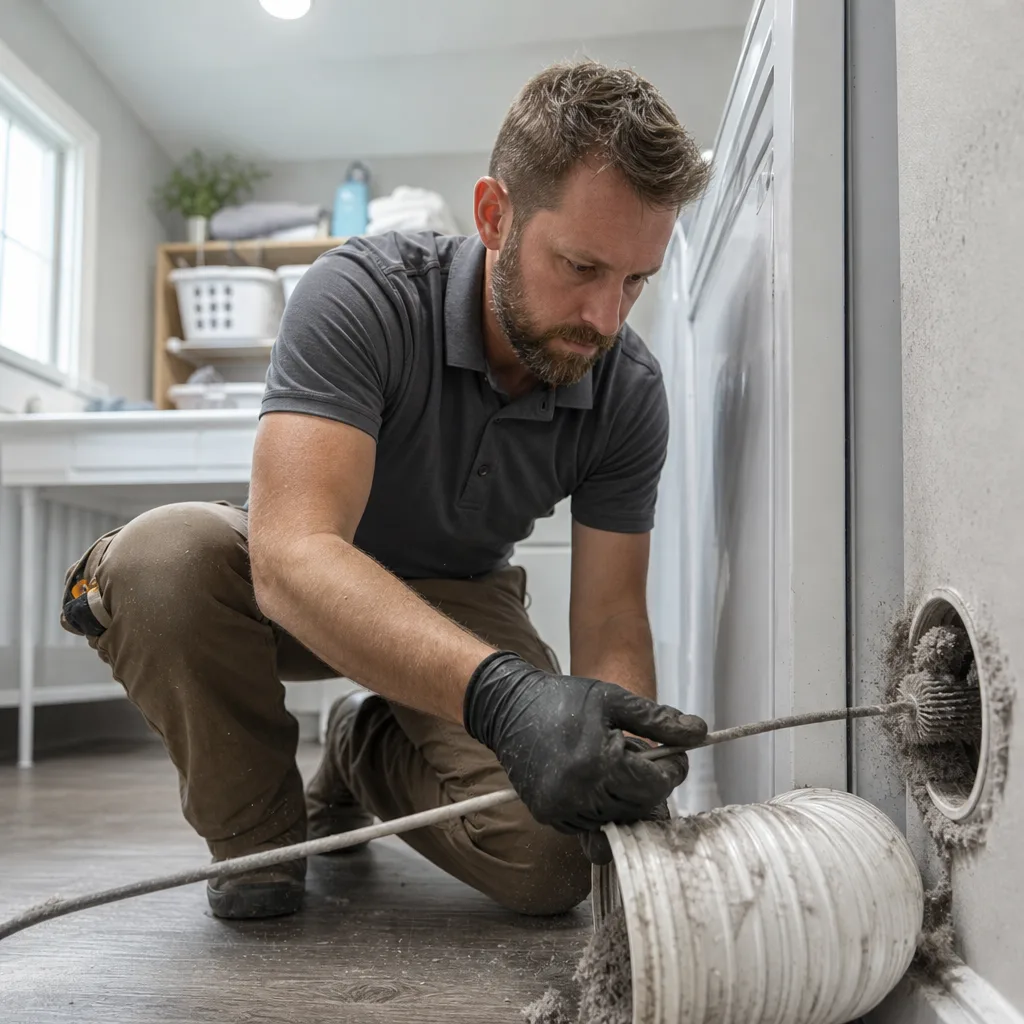
The whole dryer vent line cleared, not just the opening – to cut fire risk and help your dryer dry.
What’s Covered on This Page
- Signs Your Dryer Vent Needs Professional Cleaning
- Why a Dirty Dryer Vent Is a Fire-Safety Issue, Not Just an Inconvenience
- What Lint Trap Cleaning Does Not Replace
- What Happens During a Dryer Vent Cleaning Visit
- What Drives the Cost of Dryer Vent Cleaning
- Who should I call to clean my dryer vent?
- Should I clean the vent myself, or is it worth hiring someone for a full dryer vent cleaning?
- Why does duct and vent cleaning sometimes cost more than people expect?
Signs Your Dryer Vent Needs Professional Cleaning
Your dryer works by pushing hot, wet air out of your home through the vent line. When lint builds up inside that line, the air has nowhere to go. The dryer keeps running, but the moisture stays in your clothes and the heat stays in the machine. Your dryer will usually tell you something’s wrong before it gets serious. Here’s what to watch for.
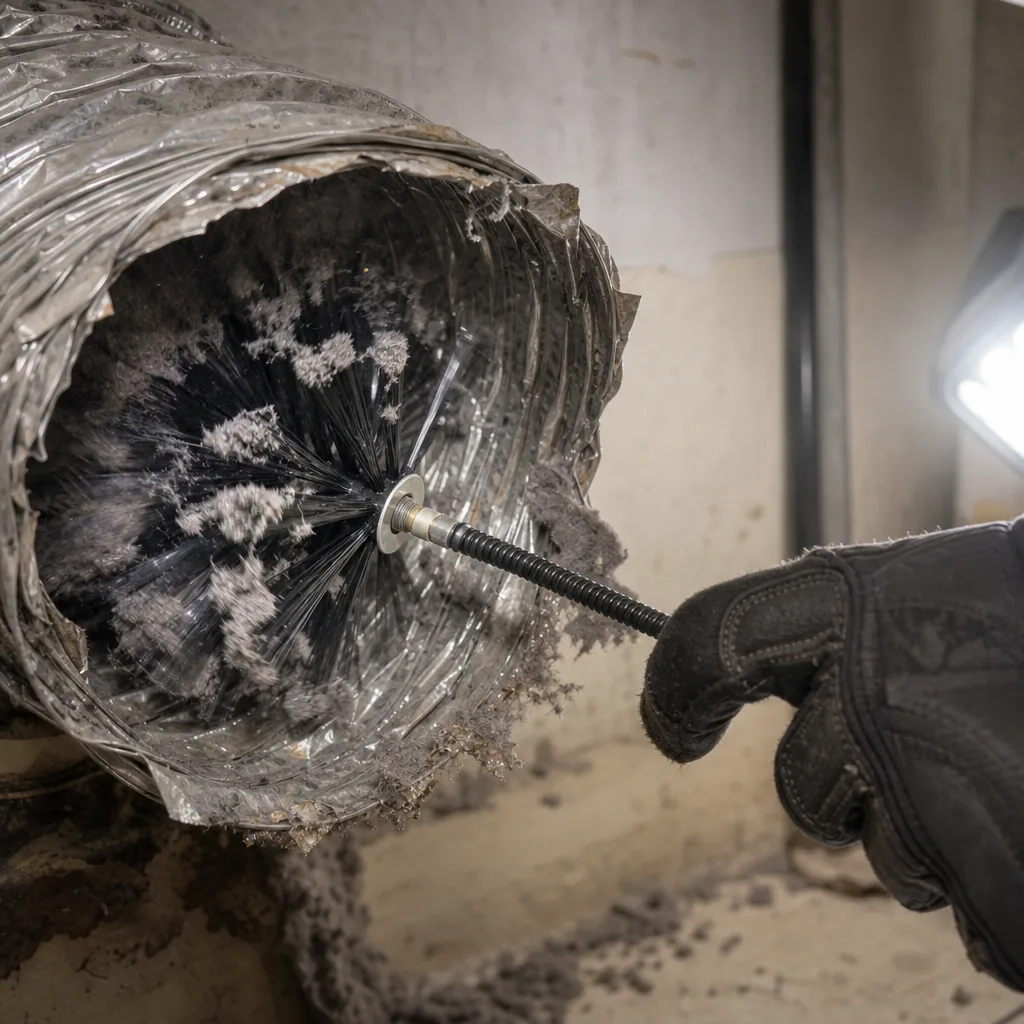
- Clothes take two cycles to dry. A load of towels that used to finish in one cycle now comes out damp. This is the most common sign, and it’s easy to blame on the dryer when the real problem is the vent.
- The dryer or laundry room gets hot. If the top of the dryer feels very hot to the touch, or the room feels like a sauna after a load, the heat isn’t leaving your home the way it should.
- The laundry room feels damp or muggy. Moisture that should be going outside is staying inside. You may notice foggy windows or a musty smell near the dryer.
- You smell something burning. Lint is very flammable. A hot, scorched smell while the dryer runs is the sign to take most seriously.
- The outside vent flap barely moves. With the dryer running, go outside and look at the vent hood. You should feel a strong, warm push of air and see the flap open. A weak puff, or no movement at all, points to a blockage.
- Lint is collecting where it shouldn’t. Lint on the floor behind the dryer, around the outside vent cover, or packed into the flap means air is escaping or backing up.
- The dryer shuts off before the cycle ends. Many dryers have a safety switch that cuts the heat when they run too hot. A clogged vent is a common trigger.
Before you call anyone, do a quick check yourself. Clean the lint screen and wash it if it looks waxy from dryer sheets. Pull the dryer out and look at the flexible hose behind it. If it’s crushed, kinked, or pinched against the wall, straightening it may solve the whole problem. Then check the outside vent cover and clear out any lint or nesting you can easily reach. If the dryer doesn’t heat at all, the vent probably isn’t the cause. That’s a problem with the dryer itself, and cleaning the vent won’t fix it.
If you’ve done all that and the signs are still there, the clog is in the part of the line you can’t see. That might be inside a wall, across an attic, or up to a roof cap. Long runs with several turns and vents that end on the roof tend to hold more lint, and they’re hard to reach safely without the right tools. That’s where we come in. Our dryer vent cleaning clears the lint and debris from the full vent line, and then we check the airflow and exhaust so you know the air is moving out of your home again. You get an answer, not just a guess.
Why a Dirty Dryer Vent Is a Fire-Safety Issue, Not Just an Inconvenience
Lint burns easily, and your dryer makes a lot of heat. A clogged vent traps both in a tight space where the heat can’t escape. That’s why a dirty vent is a safety problem, not just a reason your towels take longer.
Your lint screen catches most of the lint, but not all of it. The fine fuzz that slips past sticks to the inside of the vent line, mostly at bends, joints, and low spots. Every load adds a thin layer. As the opening gets smaller, air moves slower, and slower air drops even more lint. The clog keeps building on itself, one load at a time.
When hot air can’t get out, the heat stays inside the dryer and the duct. The safety switch that shuts your dryer off when it runs too hot is a backup, not a fix. Those parts can wear out, and they can’t protect a lint pile sitting 15 feet down the line. A hot dryer pushing air into a packed duct can heat that lint until it smolders.
The most dangerous lint is usually the lint you’ll never see. It sits inside a wall, across an attic, or just under a roof cap. If your vent runs through the attic to the roof, that line sits in one of the hottest spaces in your home during a North Texas summer. A fire that starts inside a wall or attic can spread before anyone in the house smells smoke. That’s why checking the lint screen and the hose behind the dryer isn’t enough to call the vent safe.
The type of vent you have matters too. Some setups make buildup more likely:
- Thin foil or plastic accordion hose behind the dryer. It crushes easily, and its ridges catch lint.
- Long runs with several turns. Each bend is another place for lint to pile up.
- Roof terminations. Air has to push lint up and out, and a blocked or screened roof cap can stop it cold.
- Gas dryers. They send combustion gases, including carbon monoxide, out through the same vent. A blocked line can push those gases back toward your living space.
If you have a gas dryer and you’re worried about exhaust backing up, we also offer carbon monoxide testing.
Cleaning out the lint is only half the job. The other half is proving the air moves out of your home again. Our dryer vent cleaning includes an airflow and exhaust check, so you’ll know the line is clear all the way to the outside, not just near the dryer. If we find a crushed hose, a bad roof cap, or routing that will just clog again, we’ll show you what we found. Any repair or rerouting is quoted separately, and you approve the price before any of that work starts.
A slow dryer is easy to put off. But the same clog that wastes your time and energy is the one sitting next to a heat source in a part of your home you can’t see. Clearing it and testing the airflow is how you know it’s handled.
What Lint Trap Cleaning Does Not Replace
Cleaning your lint screen after every load is a great habit. Keep doing it. But the screen only protects the first few inches of the system. Think of it like brushing your teeth. It matters every day, but it doesn’t replace a full checkup.
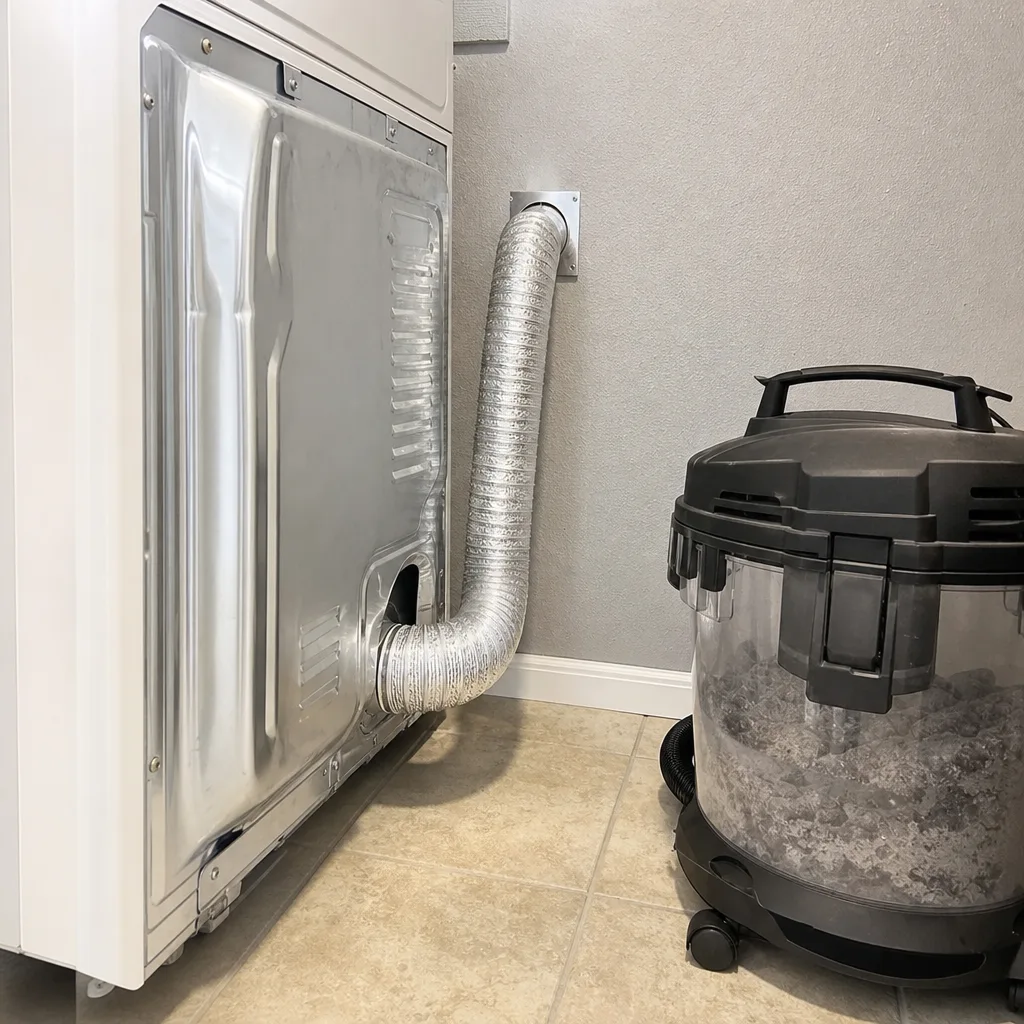
Here’s what a clean lint screen never touches:
- The inside of the dryer cabinet. Lint can collect around the screen housing and under the drum. That’s a dryer service issue, not a vent issue, but it’s worth knowing it’s there.
- The hose behind the dryer. Lint coats the inside of the hose even when the outside looks fine.
- The wall connection. The spot where the hose meets the vent in the wall is a tight turn, and lint likes to pack in there.
- The full run of the vent line. This is everything between the wall and the outside of your home.
- The outside hood or roof cap. Birds, wasps, and leaves can block the exit even when the line itself is clean.
So a spotless lint screen tells you the screen is clean. It doesn’t tell you the air is leaving your home.
You’ve probably seen brush kits at the hardware store. These kits use a long, flexible rod with a brush on the end that you spin with a drill. Here’s the honest answer: for some homes, they work fine. If your dryer sits against an outside wall and the vent runs a few feet straight out to a wall flap, you can likely clean it yourself. Pull the dryer out, take off the hose, run the brush through from both ends, and vacuum up what comes out. If the air pushes hard out the flap afterward, you’re in good shape.
The trouble starts when the run gets longer or more complicated. A brush kit has real limits:
- It can shove lint into a tighter clog at the next bend instead of pulling it out.
- It can pull apart a joint inside a wall or attic, and you won’t know it happened. Then lint and hot, damp air blow into a space you can’t see.
- It can get stuck partway down a long line.
- It doesn’t reach a roof cap from the ground, and climbing onto a hot roof with a drill isn’t a safe weekend project.
The biggest gap is proof. When you finish with a brush kit, you’re guessing the line is clear. You can’t easily tell whether the lint came out or just moved further down the line.
That’s the part a professional cleaning adds. Our dryer vent cleaning clears the full vent line, not just the parts you can reach from the laundry room. Then we check the airflow and exhaust, so you know the air is moving all the way out. If your laundry room sits in the middle of the house, upstairs, or vents through the roof, that check is what tells you the job is really done.
Keep cleaning that screen every load. Just don’t count on it to cover the part of the system it was never built to reach.
Ready when you are – get in touch today.
Call Today, Get Service Today. Xtreme Air Services — Carrollton is ready to help.
What Happens During a Dryer Vent Cleaning Visit
A dryer vent visit is a short, simple job. You’ll know the price before we start, you’ll see what we found, and you’ll know the air is moving out of your home before we leave. Here’s how it works.
You don’t have to do much to get ready. A few small things help the visit go faster:
- Clear a path to the laundry room and move baskets or shelves away from the dryer.
- Know where your vent comes out, if you can. It might be a flap on an outside wall or a cap on the roof. If you’re not sure, that’s fine. Finding it is part of the job.
- Tell us what you’ve noticed, such as two-cycle loads, a hot laundry room, or a burning smell. It helps us know where to look first.
- Let us know if your dryer is gas or electric.
The person at your door is a licensed and insured technician. Every member of our team is background-checked and drug-tested, because you’re letting someone into your home and you deserve to feel easy about it. Same-day service is available, and there’s no extra charge for nights or weekends.
Before any work starts, your technician looks at your setup and gives you an upfront flat-rate price. You approve it first. No meter running, no surprise total at the end. What sets the price is your vent itself:
- Vent length and routing. A long line with several turns takes more work than a short, straight one.
- Roof vs. wall termination. A roof cap is harder to reach than a wall flap.
- Level of buildup. A lightly coated line and a packed one aren’t the same job.
- Accessibility. A dryer tucked into a tight closet or a second-floor laundry room can take longer to reach.
For a typical dryer vent cleaning, most homes fall between $100 and $175. The typical price range runs from $100 to $250, depending on those factors. There’s a $26 to $99 service-call fee, and it’s credited toward the repair if you go ahead with Xtreme Air Services. This is a smaller job, so financing isn’t typically offered for it. Financing is available on larger repairs and replacements.
Once you’ve approved the price, we clean the full vent line. That’s the whole run from the dryer to the outside, not just the hose and the first few feet. Then we do the airflow and exhaust check described above, so you know the air is really leaving your home.
Sometimes the cleaning turns up something a cleaning can’t fix. It might be a crushed hose, a damaged roof cap, or a route with so many turns it will clog again fast. Repair and rerouting aren’t part of the cleaning. If we find a problem like that, we’ll show you, explain it in plain English, and give you a separate price. You decide whether to fix it now, later, or not at all. There’s no pressure either way.
When we’re done, you’ll have a vent that’s been cleaned end to end. You’ll also have a tested exhaust and a clear answer about the condition of your line. You won’t be left wondering whether the problem was handled.
Watch Our Video
See How We Handle Dryer vent cleaning in Carrollton
Xtreme Air Services — Carrollton
What Drives the Cost of Dryer Vent Cleaning
You’ve already seen our price range and what moves it. Here’s how to figure out where your home will likely land, and how to tell a fair quote from one that leaves things out.
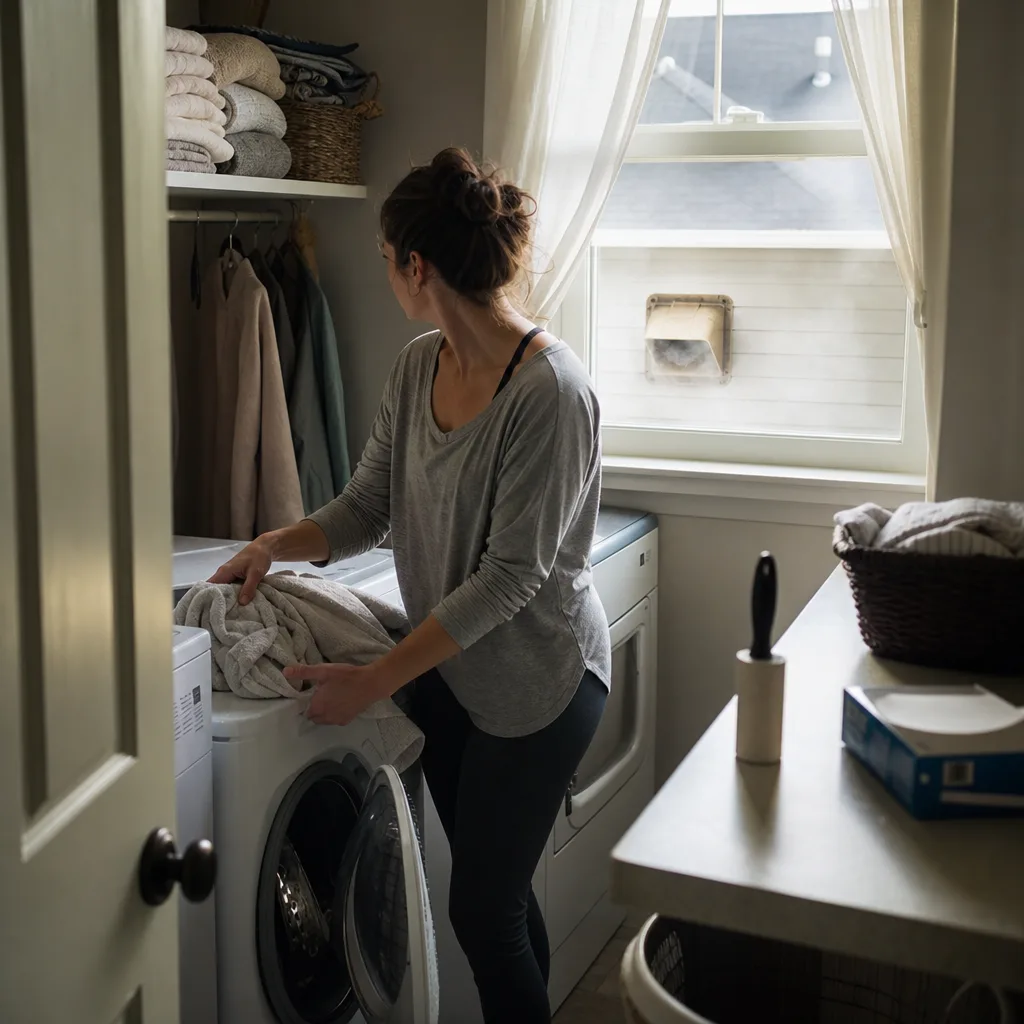
You can make a pretty good guess before you call. Walk to your laundry room, then find where the vent leaves your home.
- Toward the lower end: your dryer sits on an outside wall, the vent runs a few feet straight out to a wall flap you can reach from the ground, and the line has been cleaned in the last few years.
- Somewhere in the middle: the vent passes through a wall or ceiling with a turn or two, or nobody remembers the last time it was cleaned.
- Toward the higher end: your laundry room is upstairs or in the middle of the house, the line crosses the attic to a roof cap, or the exit is packed with lint, leaves, or a nest.
Layout matters more than most people expect. In a lot of two-story homes, the laundry room sits upstairs or near the center of the house, so the vent has a long way to travel. Every extra foot and every bend gives lint another place to settle. It also gives the technician more line to clear and more work to reach the exit.
Keep the cleaning price and the repair price separate in your mind. The cleaning covers clearing the line and checking the airflow. Fixing what’s wrong with the line is a different job. A crushed hose behind the dryer, a joint that’s come apart in the attic, or a roof cap that traps lint behind a screen won’t be fixed by cleaning. Those costs depend on what’s found, which is why they get their own price.
Whoever you hire, these questions will tell you a lot:
- Will I get a set price before work starts, or am I paying by the hour?
- Does the cleaning cover the whole line to the outside, including a roof cap?
- Do you test the airflow when you’re done, or just run a brush through?
- Is there a trip fee, and does it count toward the work?
- If you find damage, do I get a separate price before you fix anything?
A low advertised number isn’t much help if it only covers the hose behind the dryer and the first few feet of the line. Then you’re left with the same clog further down and no proof the air is getting out. A fair quote tells you exactly what gets cleaned, what gets tested, and what would cost extra.
With us, the answers are short. You get an upfront flat-rate price that you approve before we start. The cleaning covers the full line and includes an airflow and exhaust check. The service-call fee is credited toward the work if you go ahead with us. Any corrective work is quoted separately, and the choice is yours.
Call now
Frequently Asked Questions
Common questions about Dryer vent cleaning
Who should I call to clean my dryer vent?
Call a licensed technician who cleans the full vent line, not just the hose behind the dryer. Look for someone who checks airflow at the outside vent when they finish, so you know the air is leaving your home. A general handyman or a one-size-fits-all duct cleaner may skip the roof cap or attic run, which is often where the worst clogs sit.
Should I clean the vent myself, or is it worth hiring someone for a full dryer vent cleaning?
You can handle it yourself if your dryer sits on an outside wall with a short, straight run to the vent flap. If your laundry room is upstairs, in the middle of your house, or vents through the roof, a brush kit often just pushes lint further down the line instead of pulling it out. At that point, hiring someone who checks the full line and tests the airflow is the safer call.
Why does duct and vent cleaning sometimes cost more than people expect?
The price usually reflects how hard the line is to reach and how much buildup has to come out, not just the time spent. A vent that runs through an attic to a roof cap takes more work than a short wall vent, and a packed line takes longer to clear than a lightly coated one. Getting a flat price upfront, before any work starts, is the best way to know what you’re paying for.
Ready to Get Started?
Call (469) 269-6099 Today, Get Service Today.