


Electrical Troubleshooting in Carrollton: Find the Fault, Know the Fix
The fault traced to where it starts, with a clear written summary before any repair begins.
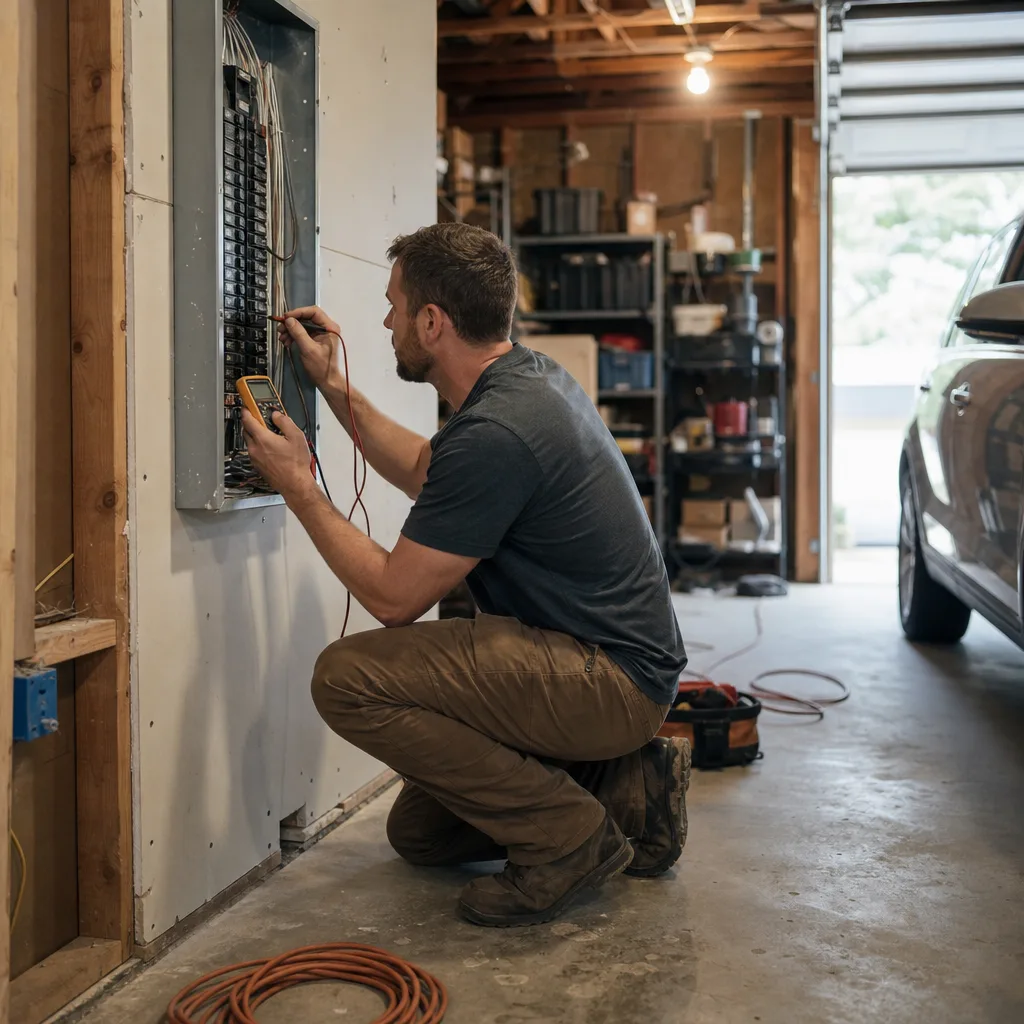
What’s Covered on This Page
- What an Electrical Troubleshooting Visit Includes
- Signs Your Home Needs a Professional Diagnosis
- When You Don’t Need an Electrician Yet
- What Drives the Cost of a Diagnostic Visit
- Diagnosis Versus Repair Under Carrollton Code
- What should I do if my power goes out but my neighbor’s house still has electricity?
- Can a lightning strike or storm damage cause hidden electrical problems I won’t notice right away?
- Is it normal for an electrical fault to only show up at certain times of day?
What an Electrical Troubleshooting Visit Includes
Here’s what you’re paying for. When a breaker keeps tripping or an outlet goes dead, the fix is often simple once someone knows where the problem is. The hard part is finding it. This visit traces the fault back to its source, so you don’t pay to swap parts that were never broken.
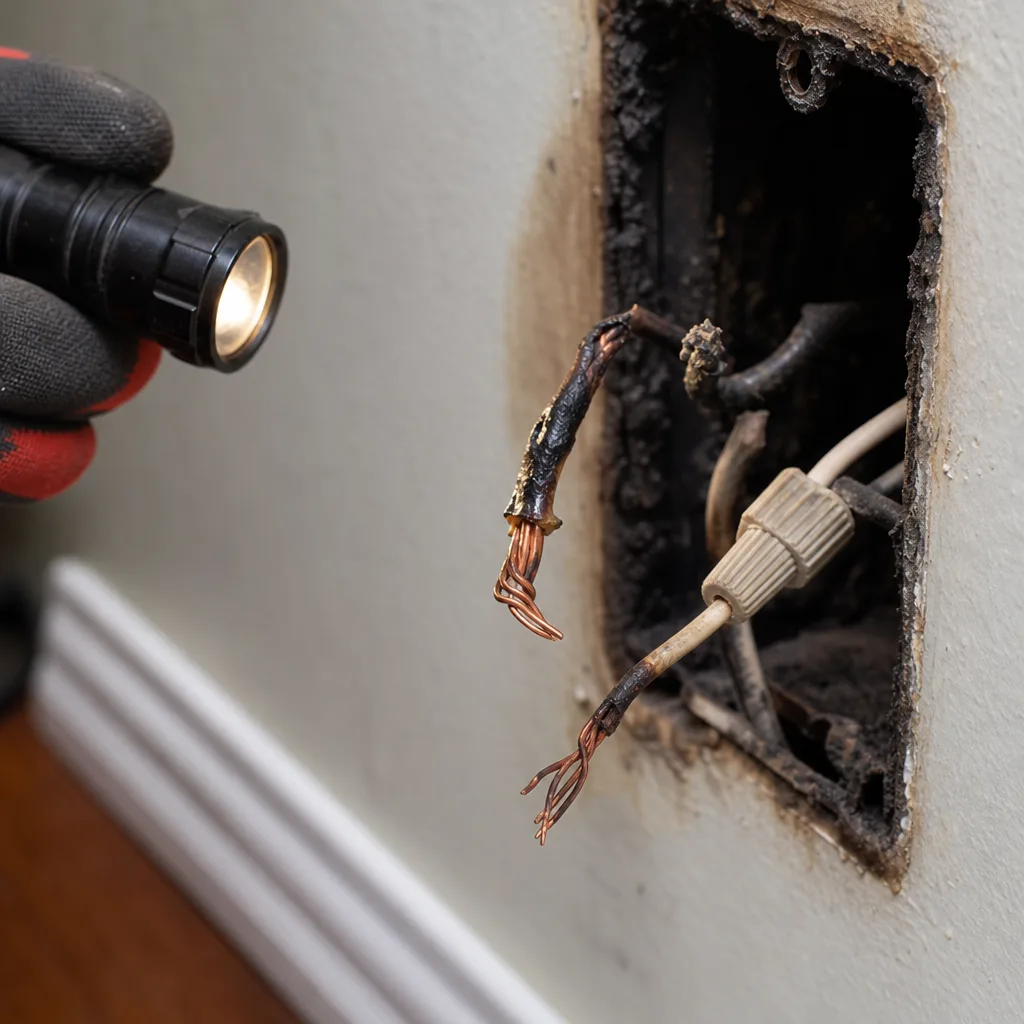
- An on-site diagnosis of the problem you called about, such as a dead outlet, a breaker that won’t stay on, or a fault that comes and goes.
- Tracing the problem to its source, not just the spot where you noticed it.
- A clear written summary of what we found and what we recommend next.
That written summary matters more than you might think. It’s yours to keep. You can read it at your kitchen table, ask us questions, and make your decision without anyone standing over you. If you want a second opinion, you already have the findings in writing.
The visit doesn’t include any repairs or corrective work the diagnosis turns up. If we find a loose connection, a worn breaker, or damaged wiring, fixing it is a separate job. You’ll see the upfront flat-rate price before any work starts, and nothing happens until you approve it.
Our most common job is diagnosing a dead outlet, a tripping breaker, or an intermittent fault, and it runs $100 to $200. Our typical range for troubleshooting is $100 to $350. There’s also a $26 to $99 service-call fee, and it’s credited toward the repair if you go ahead with Xtreme Air Services.
Where your visit falls in that range depends on a few things:
- How complex the fault is. A single dead outlet is quicker to find than a problem that only shows up some days.
- Your home’s size and circuit count. More circuits means more ground to cover.
- Access. Wiring that’s hard to reach, like behind finished walls, in a tight attic, or at a panel blocked by shelves, takes longer to get to.
- Specialized test equipment. Some faults need more than basic testing to pin down.
The diagnostic fee is also often credited toward the repair if you proceed. That means the money you spend finding the problem often counts toward fixing it.
We don’t typically offer financing for a visit this size. It’s available on larger repairs and replacements, so if your summary points to something bigger, like an electrical panel upgrade, ask us about financing then.
Nights and weekends cost the same as any weekday. The person at your door is a licensed, background-checked, and drug-tested technician who’ll treat your home with respect and explain what they find in plain English.
Signs Your Home Needs a Professional Diagnosis
Some electrical problems happen once and never come back. Others keep coming back because something behind the wall, in the attic, or inside the panel isn’t right. The difference is usually a pattern. If you’ve reset the same breaker or outlet more than once, and the problem shows up again, that’s your sign it needs to be traced to its source.
- A breaker trips again soon after you reset it, even when nothing big is running on that circuit.
- An outlet, or a whole row of outlets, went dead, and pressing the GFCI reset button didn’t bring them back.
- Lights dim or flicker in one room, or across the house, when the AC or another large appliance kicks on.
- An outlet or switch plate feels warm, looks scorched, or makes a buzzing sound.
- You smell hot plastic or burning near an outlet, switch, or your panel, and you can’t find where it’s coming from.
- Something works some days and not others, like a ceiling fan that cuts out on hot afternoons but runs fine in the morning.
- A circuit stopped working after a storm, or after someone did work on the house.
The problems that come and go are the hardest to find on your own. A loose connection can work fine at 8 a.m. and fail by 4 p.m. In a North Texas summer, attics get very hot, and heat makes metal connections expand and shift a little. A wire that’s barely holding can lose contact once the temperature climbs, then work again after things cool down overnight. That’s why the problem seems to disappear right before you decide to call someone.
Here’s a common way it plays out. You reset the bedroom breaker on Sunday. It holds until Tuesday, then trips again with only a lamp and a phone charger plugged in. That’s too little load for a simple overload, so something else on that circuit is causing it. Resetting it a third time won’t tell you what that something is.
Storm season is another trigger. After hail and severe thunderstorms roll through North Texas, you might notice an outlet that quit, a GFCI that won’t reset, or lights acting strange. Those are worth a look, because the cause isn’t always where the symptom shows up.
Now for the honest part. You don’t always need a professional, and you shouldn’t pay for a visit you don’t need.
- A breaker tripped once while a space heater and a hair dryer were running on the same circuit. You reset it, and it’s held since. That’s a simple overload. Move one of those to a different circuit.
- A GFCI outlet in your kitchen or bathroom tripped, you pressed reset, and it’s stayed on. That outlet did its job.
- Your whole street is dark. That’s on Oncor’s side, not your wiring, so report the outage to Oncor.
- One lamp flickers, and nothing else does. Try a new bulb first, then try the lamp in a different outlet.
If it happened once and has an obvious cause, you’re fine. A repeating problem, or one with heat, smell, or scorch marks, is the kind that’s worth tracing.
When You Don’t Need an Electrician Yet
Not every dead outlet or odd flicker means something’s wrong inside your walls. Before you book a visit, a few simple checks can save you the trip fee. None of them mean opening your panel or touching wiring. If any check below solves it and the problem doesn’t come back, you probably don’t need us.

- The outlet might be on a wall switch. Many living rooms and bedrooms have an outlet wired to a switch by the door so you can turn on a lamp when you walk in. Flip the nearby switches and test the outlet again.
- A GFCI somewhere else might control it. One GFCI outlet can protect other outlets down the line, and the reset button isn’t always in the same room. Look for one in the garage, a bathroom, the kitchen, or outside by the patio. Press reset on each one you find.
- The appliance might be the problem, not the circuit. If a vacuum, microwave, or window unit trips a breaker no matter which outlet you plug it into, the fault is likely inside that appliance. Stop using it and get the appliance checked or replaced. An electrician can’t fix that from the wall.
- Your bulbs and dimmer might not match. A lot of LED bulbs flicker or buzz on older dimmer switches. If the flicker only happens on one dimmed light, try a bulb labeled dimmable or one made for your type of dimmer before you assume it’s a wiring issue.
- A smoke alarm is chirping. A single chirp every minute or so usually means a low battery. Change the battery first. If a hardwired alarm keeps chirping after that, it may be old and due for replacement.
Some problems are real but belong to a different kind of call. If only the breaker for your AC or outdoor unit keeps tripping and everything else in the house is fine, the cause is often inside the cooling system itself. That’s an AC electrical repair, and you’ll want an HVAC technician to look at it, not a general electrical troubleshooting visit.
The same goes for planned work. If nothing is broken and you just want more outlets in the garage, a new ceiling fan, or a circuit for an EV charger, you don’t need anyone to diagnose anything. That’s installation, and you can ask for a quote on that job directly.
It’s also fine to wait and watch. If something happened once and you can’t find a cause, write down the date, the time, the room, and what was running. If it never happens again, you’re done. If it does, those notes help whoever traces it find the pattern faster, and that can mean less time on the clock.
There’s one limit to all of this. Waiting only makes sense for problems that are quiet and harmless. Heat, a burning smell, buzzing, or scorch marks, the warning signs covered above, aren’t the kind of thing to watch over a weekend. Turn off what you can safely turn off and have it looked at.
Not sure what your Electrical troubleshooting project needs? Ask us.
Call Today, Get Service Today. Xtreme Air Services — Carrollton is ready to help.
What Drives the Cost of a Diagnostic Visit
You’ve already seen our price range and the four things that move it. The more useful question is which of those you can control, and what to ask any electrician before they get started. A little prep on your end can mean less time spent searching and a visit closer to the low end.
Here’s what you can do before the technician gets there:
- Clear a path to your panel. If boxes, shelves, or a bike are in front of it in the garage, move them. Time spent moving your stuff is time not spent finding the fault.
- Find out exactly what’s dead. Walk the house and test each outlet with a lamp or phone charger. Put a sticky note on the ones that don’t work. That map saves real time.
- Hand over your notes. If you’ve been writing down when the problem happens, as we suggested above, share them. A pattern points straight to the likely cause.
- Open up the attic hatch. Clear the closet or hallway under it. Attic work in a North Texas summer goes slowly, so easy access helps.
- Tell us what changed. A new appliance, a recent storm, a remodel, or someone else’s repair can all be clues that narrow the search.
Some things you can’t control. A fault that comes and goes might not show up while the technician is in your home. A loose connection that only fails in the afternoon heat can take longer to catch than a dead outlet that’s dead all the time. That’s not a reason to skip the call. It’s just why those visits tend to cost more than a simple one.
It also helps to know how pricing works across the trade. Some electricians charge by the hour, so the bill grows the longer the search takes. Others charge a set diagnostic fee. Some add a separate trip charge, and some don’t. None of these is wrong, but you should know which one you’re getting before anyone takes off a cover plate. With us, you get upfront flat-rate pricing that you approve before work starts.
Whoever you call, ask these questions first:
- Is the price a set fee or by the hour?
- Is there a trip fee on top of the diagnosis? Does any of it count toward the repair?
- Will I get the findings in writing?
- Will I see the repair price before any work starts?
- Is the electrician licensed by the Texas Department of Licensing and Regulation?
- Do nights or weekends cost more?
If you get a vague answer to any of these, keep calling around. Clear answers to all six are what a fair diagnostic visit looks like, from us or anyone else.
Watch Our Video
See How We Handle Electrical troubleshooting in Carrollton
Xtreme Air Services — Carrollton
Diagnosis Versus Repair Under Carrollton Code
Finding the problem and fixing it are two separate steps, and that split works in your favor. The diagnosis tells you what’s wrong. The repair is a separate decision you make after you’ve read the findings, seen the price, and had time to think.
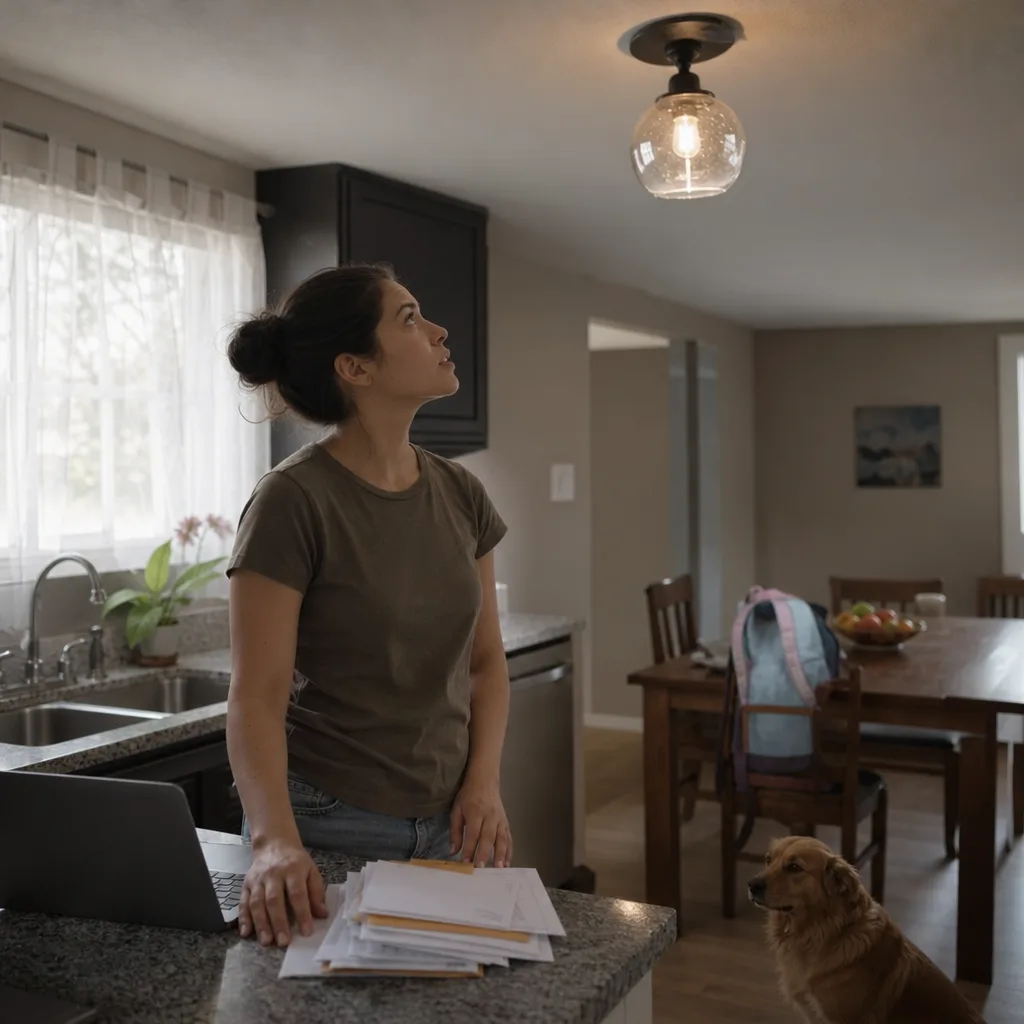
Here’s why that matters. Say a bedroom breaker keeps tripping. Without a diagnosis, someone might swap the breaker, charge you for it, and leave. If the real cause is a loose connection two outlets down the line, the new breaker trips just like the old one did. You’ve paid for a part you didn’t need. When the cause is traced first, the repair goes after the thing that’s broken.
Code comes into play at the repair stage. Electrical code changes over the years, so a home built a few decades ago wasn’t wired to today’s rules. That’s normal, and it doesn’t mean your house is unsafe. But when a repair replaces or changes part of the system, the new work generally has to meet current code, not the code from the year your home was built.
A simple example: if a dead outlet near your kitchen sink needs to be replaced, the new one may need GFCI protection. That’s the kind with the test and reset buttons, which cuts power fast if electricity starts going where it shouldn’t, like through water. The old outlet may never have had it. So a small fix can come with a small upgrade, and you should know that before the work starts.
Some repairs also need a permit and an inspection. In Carrollton, that runs through the City of Carrollton for homes inside city limits, even though the city stretches across parts of Dallas, Denton, and Collin counties. Swapping a switch usually isn’t a permit job. Bigger work, like replacing a panel or running new circuits, often is. If your findings point to that kind of repair, ask whoever does the work whether a permit is needed and who pulls it.
Your written summary helps you sort it all out. Use it to ask these questions before you approve anything:
- Which of these items is a safety problem that shouldn’t wait?
- Which ones can wait, and for how long?
- Does any part of the repair bring that area up to current code?
- Will this repair need a permit or a city inspection?
- What’s the price for each item, so I can choose what to do now?
You don’t have to fix everything at once. If the summary lists a loose connection and an aging panel, you might handle the connection today and plan for the panel later. That’s your call. A good diagnosis gives you the facts to make it, without anyone guessing and without anyone pushing.
If a breaker won’t stay on, an outlet went dead, or something in your Carrollton home works one day and quits the next, start by finding out why. Our licensed technicians will trace it to the source, put the findings in writing, and show you the upfront flat-rate price for any repair before work begins. There’s no extra charge for nights or weekends, and when you call, you’ll talk to a real person.
Call 469-269-6099
Frequently Asked Questions
Common questions about Electrical troubleshooting
What should I do if my power goes out but my neighbor’s house still has electricity?
Check your breaker panel first, since a single dead circuit usually means a tripped breaker or local wiring fault, not a utility outage. If the whole street is dark, that’s an Oncor Electric Delivery issue and you should report it to them directly. But if it’s just your home, especially one circuit or outlet, that points to something in your wiring that’s worth tracing to its source.
Can a lightning strike or storm damage cause hidden electrical problems I won’t notice right away?
Yes, storm damage can cause faults that show up days or weeks later, not just at the moment of the strike. After hail or severe thunderstorms common in North Texas, keep an eye out for outlets that quit working, GFCIs that won’t reset, or lights that start acting strange. Those delayed symptoms are worth having traced, since the cause isn’t always in the same spot where you notice the problem.
Is it normal for an electrical fault to only show up at certain times of day?
Yes, this is common and usually points to a loose connection rather than a simple overload. In North Texas summers, attic heat makes metal connections expand and shift, so a wire barely holding contact can fail in the afternoon heat and work fine again once things cool overnight. If you notice a pattern, like a breaker that holds all morning but trips by late afternoon, write down the time and what was running so it’s easier to trace.
Ready to Get Started?
Call (469) 269-6099 Today, Get Service Today.