


Home Rewiring in Fort Worth: Know If You Need It Before You Call
A straight answer on whether your house needs rewiring or a smaller repair, and what a full project involves.
What’s Covered on This Page
- Signs Your Wiring Needs Attention
- When You Don’t Need a Full Rewire
- How Xtreme Air Services Inspects and Rewires a Home
- What Rewiring Costs and What Affects the Price
- Permits and Licensing You Should Verify
- How long does rewiring a Fort Worth home take?
- Can I live in my house while it’s being rewired?
- Does rewiring affect my homeowners insurance in Fort Worth?
Signs Your Wiring Needs Attention
Wiring hides behind your walls, so you only see the clues it leaves. Here’s what those clues look like in a real home, and what each one usually tells you.
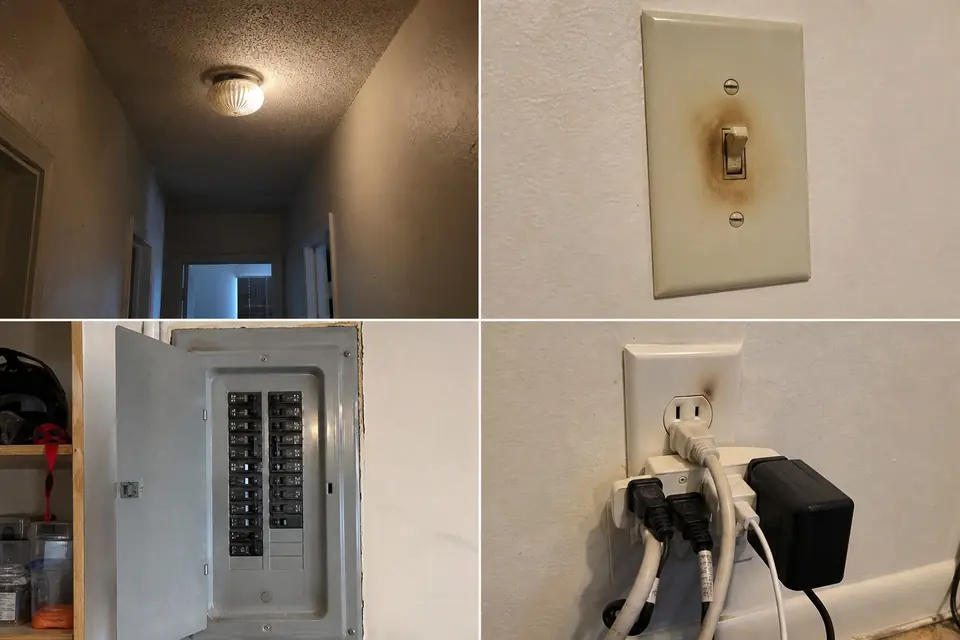
These signs point to old or worn-out wiring:
- Two-prong outlets in most rooms. They usually mean the circuits have no ground wire. A ground wire gives stray electricity a safe path away from you and your electronics.
- A fuse box instead of a breaker panel. Fuses aren’t dangerous by themselves. But they often go with wiring that was never built for today’s appliances.
- Cloth-covered wire in the attic or basement. Older insulation like this can get brittle and crack with age and heat.
- Knob-and-tube wiring. These are wires run on little ceramic knobs and through tubes. This system is far older than modern grounded wiring.
- Aluminum branch wiring. Some homes from the 1960s and 1970s used it for outlets and lights. Its connections can loosen and heat up over time.
- Extension cords and power strips everywhere, because there just aren’t enough outlets for how your family lives now.
These signs mean your system is under strain:
- Lights that dim or flicker when the AC, microwave, or dryer kicks on.
- Breakers that trip again and again, especially in summer when the AC runs hard all day.
- Outlets or switch plates that feel warm to the touch.
- A faint buzzing or crackling sound from an outlet, switch, or the panel.
These signs shouldn’t wait for a convenient weekend: a burning or hot-plastic smell with no clear source, scorch marks or brown stains around an outlet, sparks when you plug something in, or a small shock from a switch or appliance. Any of these means heat is building somewhere it shouldn’t. Get a licensed electrician to look at it soon, not someday.
Now for the honest part. One of these signs alone doesn’t mean you need a whole-home rewire. A single breaker that trips may just be one overloaded circuit, and adding a dedicated circuit can fix it. One warm outlet may be one loose connection or a worn-out device. A panel that’s simply too small can sometimes be handled with an electrical panel upgrade, while the wiring in the walls stays in place. Electrical troubleshooting is often the right first step, and it costs a lot less than a rewire.
Rewiring starts to make sense when the signs show up together, or all over the house. For example, you might have two-prong outlets in every bedroom, cloth wire in the attic, and lights that dip every time the AC starts. That isn’t one bad part. That’s a wiring system that’s reached the end of its useful life. Patching it one problem at a time usually costs more in the long run, and it still leaves the rest of the old wire in your walls.
If you’re not sure which group your home falls into, that’s normal. You can’t see inside your walls, and you shouldn’t have to guess. A technician can open the panel, check a few outlets and the attic runs, and tell you plainly whether you’re looking at a repair or a rewire.
When You Don’t Need a Full Rewire
A full rewire is a big job, and it’s not always the right one. Here’s when we’d tell you to hold off or go smaller, even though it means a smaller job for us.
Your wiring is fairly new. If your home went up in the 1990s or later, the wire in your walls is most likely modern grounded cable that still has plenty of life left. Problems in a newer house usually come from a worn device, a loose connection, or a circuit asked to do too much. Those get fixed where they are, not by pulling wire out of every wall.
Only part of the house is old. Lots of homes have been added onto or partly updated over the years. Maybe the original bedrooms still have old wire, but the kitchen and the newer addition were redone later. In that case, a partial rewire of just the old circuits can make more sense than redoing the whole house. You pay for the part that needs it and leave the good wiring alone.
Your only real issue is missing grounds. Two-prong outlets don’t always mean the wire itself is bad. If the wire is in good shape, there are smaller options:
- Run a ground wire to the circuits that need it most, like the ones feeding your computer, TV, or kitchen.
- Add GFCI protection. In many cases, code allows a GFCI outlet in place of an ungrounded one, as long as it’s labeled correctly. A GFCI shuts off power fast if current goes where it shouldn’t. It does protect people, but it doesn’t give sensitive electronics a true ground.
- Do both, using grounding where you need it and GFCI protection everywhere else.
You have aluminum wiring that’s otherwise sound. The weak spot with aluminum branch wiring is usually where it connects to outlets, switches, and other wires. Fixing those connection points can be a real option instead of tearing it all out. An electrician should check the whole system first, though, to confirm the wire runs themselves are in good shape.
You’re selling and the inspector flagged a few items. A home inspection report can look scary. But a short list of problems, like a missing GFCI, an open junction box, or one old run of wire, usually calls for targeted code corrections. Ask for each item to be priced on its own before anyone talks to you about a full rewire.
You’re planning a remodel soon. If your wiring is old but not showing any of the urgent signs from the section above, it can be smart to wait. Rewiring costs less and makes less mess when the walls are already open. If a kitchen or bath remodel is coming in the next year or so, plan the electrical work as part of it. That way you only patch drywall once.
One caution goes with all of this. A smaller fix only makes sense after someone has looked at your wiring. Picking the cheaper option because it’s cheaper, without checking what’s behind the walls, can leave a real problem in place. The goal is the right-sized job for your house, whether that’s one outlet, a few circuits, or the whole thing.
How Xtreme Air Services Inspects and Rewires a Home
A rewire sounds like a giant, messy project. Most of the worry goes away once you know what happens and in what order. Here’s how the job comes together, from the first look to the final test.
It starts with a look at what you’ve got. A technician checks your panel, opens a few outlets and switches, and looks at the wire runs in the attic. That’s where you see what the walls are hiding: cloth insulation, missing grounds, old splices, or aluminum connections. The visit comes with a $26 to $99 service-call fee, and that fee is credited toward the work if you go ahead with Xtreme Air Services.
Next comes the plan and the price. You get upfront flat-rate pricing, and you approve it before any work starts. There’s no meter running and no surprise at the end. The plan should spell out how many circuits you’re getting, whether your panel needs an upgrade, and which rooms come first.
Your house shapes how the wire gets in. Many North Texas homes are single-story ranch houses on concrete slabs, with no crawlspace underneath. On a house like that, new wire usually comes down from the attic into the walls. Electricians fish it through small openings instead of tearing out whole walls. In a Fort Worth summer that attic gets brutally hot, so attic work often goes best early in the day. Tight attic access or walls with no easy path can add time, and that’s one reason two homes of the same size can be priced differently.
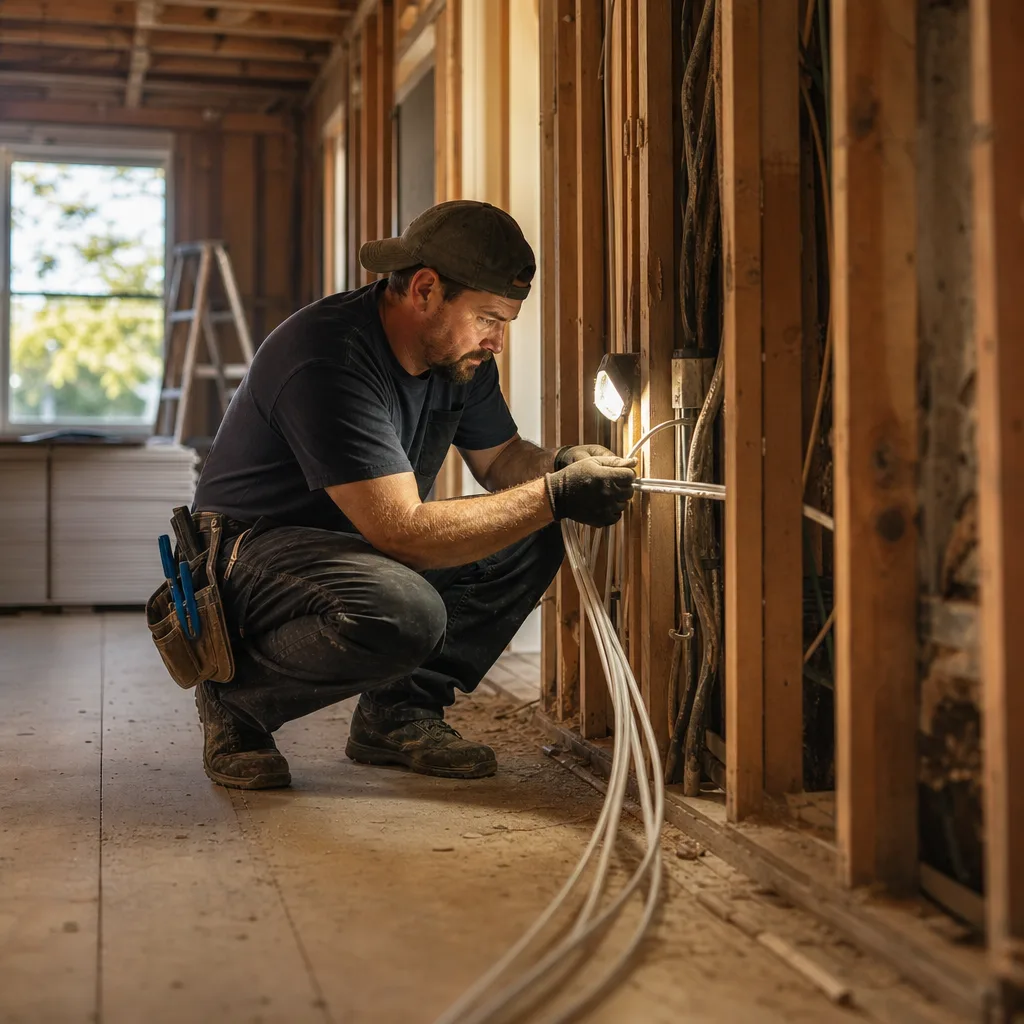
Then the old system comes out and the new one goes in, usually circuit by circuit, so you’re not left without power for days. The rewire covers:
- New wire and materials for the circuits in the scope of your job
- Professional installation by licensed and insured technicians
- New devices, like outlets and switches
- Proper grounding, so you get real three-prong outlets that are grounded
- Startup and testing of every circuit before the job is called done
It helps to know what isn’t in the price, so nothing catches you off guard. Drywall finishing and paint aren’t included. Neither are fixture upgrades or code corrections beyond the agreed scope. Permits aren’t included unless your quote says so. Ask about each of these up front, and get the answer in writing before you approve the plan.
You’ll also have people in your home for several days, so it matters who they are. Our team members are background-checked and drug-tested. You should expect them to treat your house the way you would, cleaning up at the end of each day and telling you what’s next.
Last comes testing, and it’s the step that matters most. Every new circuit gets powered up and checked before the job is called done. When the work is finished, you should be able to plug in, flip on, and run the AC without the lights dipping. If a big project like this needs to be spread out, financing is available on qualifying larger jobs, on approved credit.
Have questions? We’re happy to help.
Call Today, Get Service Today. Xtreme Air Services — Fort Worth is ready to help.
What Rewiring Costs and What Affects the Price
Here’s the number you came for. A home rewiring job with Xtreme Air Services typically runs $8,000 to $20,000. Our most common job is replacing outdated or unsafe wiring throughout the home with new circuits, devices, and grounding, inspected and tested. That job usually lands between $10,500 and $15,000.
That’s a wide range, and it’s wide for a good reason. We price by home size and scope, not by a one-size-fits-all number. A small two-bedroom house with an easy attic is a very different job from a bigger home that needs more circuits and a new panel. The price follows the work your house needs. That’s why the right-sized job matters so much. If only part of your home needs new wire, you shouldn’t pay to rewire all of it.
These are the things that move your price up or down:
- Home size and number of circuits. More rooms and more circuits mean more wire, more devices, and more hours.
- Wall, attic, and crawlspace access. A roomy attic above open wall cavities goes faster than tight spaces or walls with no clear path for new wire.
- Condition of the existing wiring. Brittle insulation, old splices, or surprises found behind the walls can add work.
- Panel upgrades. If your panel can’t safely carry the new circuits, it may need to be replaced as part of the job.
- Drywall repair. Small openings get made to fish the wire, and patching them is part of the overall cost.
- Code upgrades. Bringing circuits up to current code can add items you didn’t have before, like grounded outlets in every room.
- Permits. These add to the total, and your quote should say plainly whether they’re included.
Two homes on the same Fort Worth street can come in at different prices. One might have an open attic and a panel with room to spare. The other might need a panel upgrade and have walls that are hard to reach. Same square footage, different job.
Before you approve any rewiring quote, from us or anyone else, ask these questions:
- How many circuits does this price cover, and which rooms?
- Is a panel upgrade included, or is it priced separately?
- Who pulls the permit, and is it in this price?
- What happens to the price if you find something unexpected inside the walls?
- Is drywall patching included, and does that include finishing and paint?
- Is this the full price, approved before work starts, or an estimate that can grow?
Clear answers to those questions protect your budget. We give you upfront flat-rate pricing, and you approve it before any work begins, so you know the number going in. The visit to look at your wiring carries a service-call fee that’s credited toward the job if you go ahead. Financing is available on qualifying larger jobs, on approved credit, if spreading the cost out helps your family.
Call 817-677-1907
Watch Our Video
See How We Handle Home rewiring in Fort Worth
Xtreme Air Services — Fort Worth
Permits and Licensing You Should Verify
A rewire replaces the wiring in your whole house. That’s not a job to do quietly with no paperwork. Two checks protect you more than anything else. The first is that the person doing the work holds a real electrical license. The second is that the work gets permitted and inspected.
In Texas, electricians are licensed by the Texas Department of Licensing and Regulation, or TDLR. A license means the person has passed state exams and is allowed to do electrical work. You don’t have to take anyone’s word for it. TDLR lets you look up a license online by name or license number. Before you sign anything, ask for the license number and check it yourself. It takes a couple of minutes.
Here’s what to confirm before work starts:
- The electrical license is active, and it matches the company or person on your quote.
- The contractor carries insurance. Ask for proof, because people will be working inside your walls and attic for days.
- Your quote says who is responsible for the permit and whether the permit cost is included.
- An inspection is part of the plan, and you’ll know about when it happens.
In Fort Worth, a whole-home rewire generally needs an electrical permit from the city. A city inspector then checks the work. The inspection often happens before the walls are closed up, so the inspector can see the new wire, the boxes, and the connections. That’s a second set of eyes on a job you can’t see once it’s done.
It’s tempting to skip the permit to save a little money or a few days. We’d tell a neighbor not to. Unpermitted electrical work can come back to haunt you. A home inspector may flag it when you go to sell. A buyer’s lender or your insurance company may ask questions about it. Then you’re stuck opening walls to prove work that should have been signed off the first time.
There’s a small detail worth knowing too. Permits aren’t included in our rewiring price unless your quote says so. That’s why it pays to ask about the permit up front and get the answer in writing, along with the other questions from the pricing section. If the permit and inspection are clearly covered before anyone touches a wire, you won’t get a surprise at the end.
Our technicians are licensed and insured, and our team members are background-checked and drug-tested. Whether your home needs a full rewire, a few circuits, or one repair, we’ll walk you through what the work involves and what it’ll cost before you decide.
Call now
Frequently Asked Questions
Common questions about Home rewiring
How long does rewiring a Fort Worth home take?
Most whole-home rewires take several days, not weeks, because the work is usually done circuit by circuit so your home isn’t without power the whole time. A smaller home with easy attic access moves faster than a larger home with tight crawlspaces or a panel upgrade included. Fort Worth’s slab-on-grade ranch homes often let wire run down from the attic into the walls, which keeps the timeline shorter than homes needing walls opened up throughout.
Can I live in my house while it’s being rewired?
Yes, most families stay in their home during a rewire since the work happens circuit by circuit instead of cutting all power at once. You may lose power to one area of the house for part of a day while that section is being worked on. Expect small openings cut into drywall to fish wire through, with patching included but finishing and paint handled separately.
Does rewiring affect my homeowners insurance in Fort Worth?
It can, especially if old wiring like knob-and-tube or aluminum branch circuits is replaced with modern grounded wire. Some insurers charge more, or even decline coverage, for homes with outdated wiring types still in the walls. Once a rewire is permitted and inspected, you’ll have documentation showing the upgrade, which is worth sharing with your insurance company.
Ready to Get Started?
Call (817) 677-1907 Today, Get Service Today.