


AC Replacement in Frisco: What’s Included and When It’s Time
An honest read on whether it's time to replace, what a standard replacement includes, and the permit step explained.
What’s Covered on This Page
- Signs Your System Needs Replacement, Not Another Repair
- When Repair Still Makes More Sense Than Replacement
- What a Standard AC Replacement Includes
- The Frisco Permit Step Most Companies Skip Explaining
- How the Replacement Gets Sized and Installed
- What is the $5,000 rule people mention for AC replacement?
- Does the size of my house decide what size AC I need?
- How long does a typical AC replacement take in Frisco?
Signs Your System Needs Replacement, Not Another Repair
Nobody wants to hear “you need a new system.” It’s a big expense, and it’s fair to wonder if you’re being sold something you don’t need. Here’s the straight version. These are the signs that tell you another repair is just buying time.
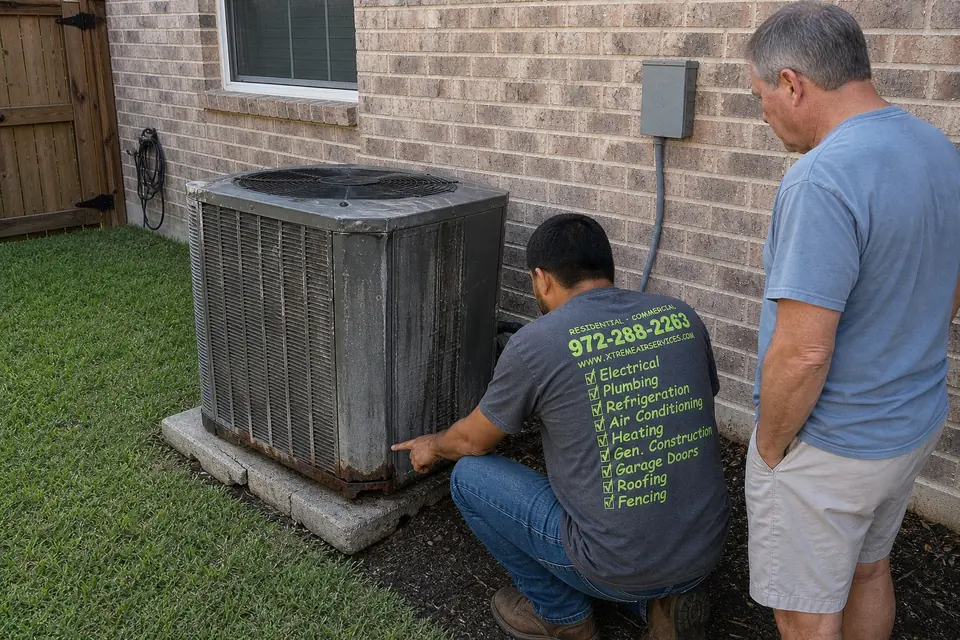
- Your system is getting up in years. Frisco summers are long and hot, so your AC runs hard for months at a time. An older unit has a lot of wear on its compressor, motors, and coils. When one big part fails on an aging system, the next one often isn’t far behind.
- It uses R-22 refrigerant. Older systems often run on R-22, which is no longer made for new use. That makes it costly to recharge, and it’s a sign the whole system is from an older generation. If your unit leaks R-22, fixing the leak and refilling it can cost a lot for a system that’s near the end anyway.
- The repair is a major one. A failed compressor or a leaking coil on an older system is a big bill. Putting that money into worn equipment rarely pays off when the rest of the system is just as old.
- You’re calling for repairs every summer. One fix is normal. A new problem every July is your system telling you something.
- Your bills keep climbing. If your electric bill is up but your habits haven’t changed, your AC may be losing efficiency. Older systems have to run longer to cool the same space.
- Some rooms never cool down. Hot upstairs bedrooms, sticky air, or a system that runs all day and still can’t keep up can mean the unit is worn out or wasn’t sized right for your home in the first place.
Now the other side, because it matters just as much. If your system is fairly young and the problem is a capacitor, a fan motor, a clogged drain line, or a thermostat issue, repair it. Those are common, smaller fixes. Replacing a healthy system over one of them doesn’t make sense. The same goes for a unit that’s been well maintained and still cools your home evenly without running nonstop.
Here’s a simple way to think about it. Picture a big repair bill on one side and the age of your system on the other. The older the system and the bigger the bill, the more that money belongs in new equipment instead of old parts. When both are small, repair it and move on.
When our licensed and insured technicians look at your system, you’ll get the honest answer, repair or replace, with upfront flat-rate pricing before any work starts. You can see the options side by side and decide what’s right for your home and your budget. No pressure, and no meter running while you think it over.
When Repair Still Makes More Sense Than Replacement
Sometimes a new AC won’t fix what’s bothering you. Sometimes the timing just isn’t right for you. Either way, putting thousands into new equipment would be a mistake. Here’s when we’d tell you to hold off.
The problem is your ducts, not your unit. Say an upstairs bedroom stays hot, or one end of the house never feels right. It’s easy to blame the AC. But the cause is often air that never makes it to that room. It might be leaking out of a torn duct in the attic. It might be stuck behind a crushed run, or held back by a clogged filter or closed vents. A brand-new system pushing air through the same leaky ducts will give you the same hot room, just with a bigger bill. Duct sealing or a zoning system may be the real fix, and it costs far less than new equipment.
A newer system has a leak we can reach. A refrigerant leak on an older R-22 unit is one thing. On a newer system, it’s a different story. If the leak is at a spot we can get to, like a fitting or a valve, fixing it and recharging the system is usually the sensible move. The compressor and coils still have plenty of life in them.
You’re moving soon. If you plan to sell in the next year or so, a solid repair that keeps the house cool is often enough. You may not get back what you spend on a new system. Keep any repair records handy, because buyers and inspectors will ask how old the system is.
You need to get through the summer first. Replacing a system is a big decision. You shouldn’t have to make it in a sweaty hurry in the middle of August. If a reasonable repair gets your older unit running again, it can buy you time. You can compare options, think about efficiency, and look at your budget without feeling rushed. Just know you’re buying time. Don’t keep pouring money into the same aging system every year.
Your system is short cycling or freezing up. That means it turns on and off too often, or ice forms on the lines. Both problems can look serious. Often the cause is simple, like a dirty coil, a blocked drain, low airflow, or a thermostat in a bad spot. Have someone find the real cause before you assume the system is done.
Finding out costs less than guessing. Our service call fee is $26-$99. If you go ahead with the repair through Xtreme Air Services, we credit that fee toward the repair. A real answer about your system costs a lot less than replacing one you didn’t need to replace.
If your system can be repaired for a fair price and it’ll keep your home comfortable, that’s what we’ll recommend. A new system should solve a problem you have.
What a Standard AC Replacement Includes
Once you’ve decided a new system is the right call, the next question is simple. What am I paying for? You should know that before anyone touches your old unit, not after.
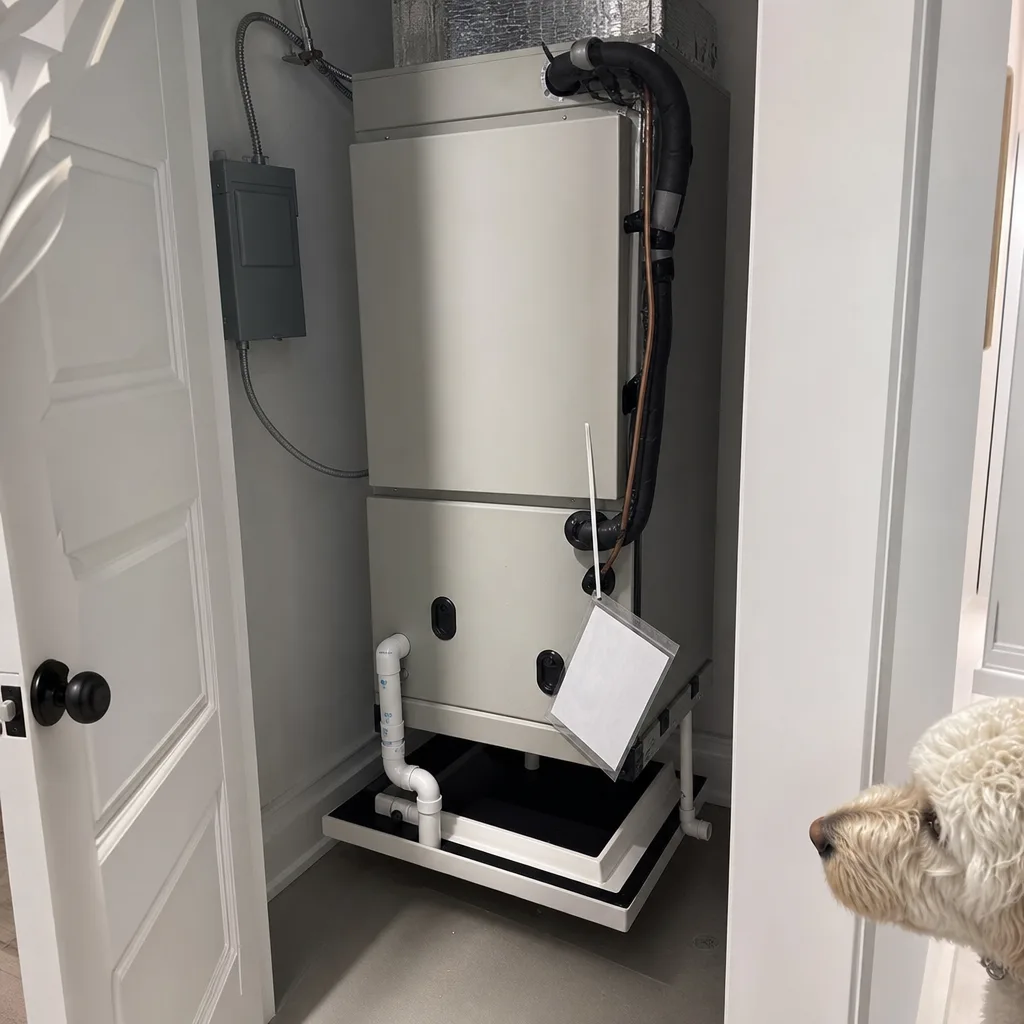
Our most common job is a standard like-for-like AC replacement. That means we swap your old system for a new one that fits the same space and uses your existing connections, with no major changes to your home. For that kind of job, the price is usually $6,400-$9,200.
Here’s what’s included in a standard replacement:
- The new equipment and materials needed for the job
- Professional installation by our licensed and insured technicians
- Standard connections to the lines, wiring, and ductwork you already have
- Startup and testing, so you know the system is running before we leave
- Haul-away of your old unit, so it isn’t left on the side of your house
Some things fall outside a standard job. Here’s what isn’t included unless your quote says so:
- Changes to your ductwork
- Electrical modifications
- Plumbing modifications
- Code corrections
- Permits
Why leave those out? Because they depend on your home, not on the AC. Two houses on the same street can get the exact same system and still need very different work around it. One might have ductwork in good shape and wiring that’s ready to go. The other might have ducts that need work or an electrical setup that has to be brought up to current code before a new unit can go in. Rolling all of that into one flat number would mean guessing, and guessing usually means you pay for it.
That’s also why our full range for AC replacement runs wider, from $5,000-$12,000. The biggest things that move the price are the size of the system, its efficiency rating, and how easy it is to reach. A unit in a tight North Texas attic in the middle of summer takes more work than one that’s easy to get to. Brand and model, the condition of your existing ducts and wiring, code upgrades, permits, and any custom fabrication can push the number up or down too.
Here’s what that looks like for you. Say your old unit is the same size you need, your ducts are holding up, and the connections are in good shape. You’re likely looking at a standard job. Now say the technician finds a duct problem or an electrical issue that has to be fixed first. That’s a separate line item. You’ll see it on your quote and approve it before the work happens.
That’s how we price everything: upfront flat-rate pricing you approve before work starts. No surprises, and no meter running. If a new system is a big expense right now, flexible financing is available on qualifying installations and larger jobs, on approved credit. As a Trane Comfort Specialist, we can also walk you through efficiency options in plain English. That way you’ll know what a higher SEER2 rating, meaning how efficiently the system cools for the power it uses, would cost up front and what it could mean for your summer electric bills.
Thinking about AC replacement? Let’s talk.
Call Today, Get Service Today. Xtreme Air Services — Frisco is ready to help.
The Frisco Permit Step Most Companies Skip Explaining
Here’s a part of AC replacement that often gets a quick mention or none at all: the permit. Swapping out a central air system isn’t the same as changing a filter. In Frisco, like most North Texas cities, replacing HVAC equipment typically needs a permit from the city, and the work may be inspected after it’s done.
That can sound like red tape. It’s really a second set of eyes on work you can’t easily check yourself. An inspector looks at things like the electrical connection to the new unit, how the refrigerant lines and drain are run, and whether the equipment is set up safely. Most of that sits in your attic or behind a panel, so you’d never spot a problem until something went wrong.
A skipped permit can also catch up with you later. When you sell your home, a buyer’s inspector may ask how old the system is and whether the replacement was permitted. Unpermitted work can slow down a sale or send you scrambling for paperwork at the worst time.
So why isn’t the permit part of our standard price? For the same reason duct and electrical changes aren’t. Permits and code corrections depend on your home and what the job turns up, not on the AC itself. On our quotes, permits aren’t included unless the quote says so. That way you see it as its own line and you aren’t paying for a guess baked into one big number.
Whoever you hire, ask these questions before you sign:
- Does this job need a city permit, and who’s getting it, you or me?
- Is the permit cost on this quote, or will it show up later?
- If the inspection finds a code issue, what does fixing it cost, and do I approve that first?
- Is your company licensed for HVAC work in Texas, and what’s the license number?
That last question matters more than people think. In Texas, HVAC contractors are licensed through the Texas Department of Licensing and Regulation, also called TDLR. A licensed contractor’s number should be easy to give you and easy to look up. Ours is HVAC License #TACLA29023C. If a company hesitates to share a license number or brushes off the permit question, take that as your answer.
None of this should slow you down much or make the job harder on you. It should just be clear. When you know who’s handling the permit and what it costs, the paperwork works for you instead of becoming a surprise.
Watch Our Video
See How We Handle AC replacement in Frisco
Xtreme Air Services — Frisco
How the Replacement Gets Sized and Installed
A new AC only fixes your comfort problem if it’s the right size and it’s put in right. The brand on the box matters less than you’d think. A top-of-the-line system that’s sized wrong or installed in a hurry can feel worse than the old one.

AC size is measured in tons. That’s how much heat the system can pull out of your home in an hour, not its weight. It’s tempting to think bigger is better, especially after a hot Frisco summer. It isn’t. An oversized system cools the air fast and shuts off before it has time to pull moisture out. You end up with a house that’s cool but sticky, and a system that turns on and off all day. An undersized system has the opposite problem. It runs nonstop on the hottest afternoons and still can’t catch up.
The simple way to size a system is to match whatever tonnage was there before. The trouble is, the old unit may have been the wrong size from day one. Your home may also have changed since then. Maybe you added insulation, swapped out windows, or finished a room over the garage. A proper cooling load calculation looks at your actual house. It checks square footage, insulation, windows, which way the house faces, how much afternoon sun it gets, and how many stories it has. Xtreme Air Services offers cooling load calculations, so the size you get comes from your home, not a guess.
Once the size is set, the install is where a good job and a so-so job split apart. Here’s what careful work should cover:
- Matching the indoor coil to the new outdoor unit. A mismatched pair won’t hit its efficiency rating and can wear out early.
- Cleaning out the refrigerant lines and pulling a deep vacuum before charging. This clears out moisture and air that can damage a new compressor.
- Charging refrigerant to the manufacturer’s specs, not by feel.
- Setting up the condensate drain and drain pan correctly. Many North Texas homes have the indoor unit in the attic, so a bad drain can mean a stained ceiling later.
- Checking airflow, so the new system moves the right amount of air through your ducts.
Attic work is worth a special mention. North Texas attics get brutally hot in summer, and that heat makes careful work harder. Line connections, wiring, and drain setup in a cramped, hot attic are exactly where rushed work cuts corners. It’s also part of why access affects price, as we covered above.
Startup and testing is included in our standard replacement for a reason. It’s how you know the system is doing its job before anyone packs up. A good technician should be able to show you the system is cooling properly and draining the way it should. They shouldn’t just flip it on and call it done.
Whoever you hire, ask two things. Will you size this for my home, or just match the old unit? And how will you test it before you leave? If you get clear answers to both, you’re talking to someone who plans to get it done right the first time.
Frequently Asked Questions
Common questions about AC replacement
What is the $5,000 rule people mention for AC replacement?
It’s a rule of thumb, not an official standard: multiply the repair cost by the age of the system, and if that number tops $5,000, replacement usually makes more sense than another repair. For example, a $700 repair on a 10-year-old unit comes out to $7,000, which leans toward replacing. It’s a quick gut check, not a final answer. Your technician should still look at your actual system before you decide.
Does the size of my house decide what size AC I need?
Not by itself. Square footage is only one piece of sizing a new system. Insulation, window placement, how much afternoon sun your house gets, and the number of stories all affect the right tonnage. That’s why a proper cooling load calculation looks at your whole home instead of just square feet, so you don’t end up with a system that runs nonstop or cools too fast without pulling out humidity.
How long does a typical AC replacement take in Frisco?
Most standard replacements are completed in a single day, start to finish. That includes removing the old unit, installing the new system, connecting it to your existing lines and ductwork, then running startup and testing before anyone leaves. If a code issue or duct problem turns up during the job, that can add time, but you’ll be told about it and asked to approve it before work continues.
Ready to Get Started?
Call (469) 490-3595 Today, Get Service Today.