


Dryer Vent Cleaning in Frisco That Clears the Whole Line, Not Just the Opening
The whole dryer vent line cleared, not just the opening – to cut fire risk and help your dryer dry.
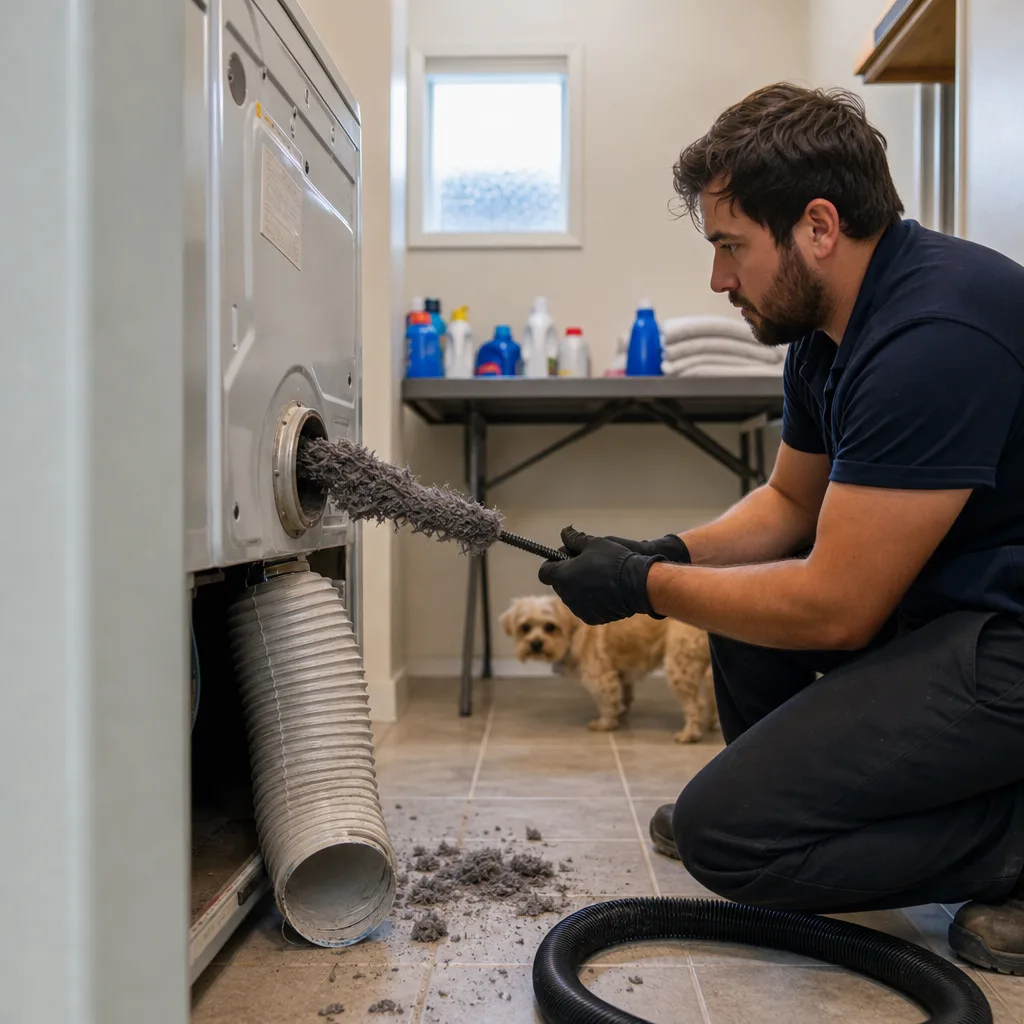
What’s Covered on This Page
- Dryer Vent Cleaning Is Not the Same as Duct Cleaning
- Signs a Frisco Home Needs This Service Now
- What Happens During a Dryer Vent Cleaning Visit
- What Drives the Cost Up or Down
- Why a Licensed HVAC Contractor Handles This Job
- How often should I get my dryer vent cleaned?
- Can a blocked dryer vent damage my dryer?
- Does a dryer vent cleaning include checking the outside cap?
Dryer Vent Cleaning Is Not the Same as Duct Cleaning
A lot of folks think these are the same job because both have the word “vent” or “duct” in them. They’re not. They’re two different systems in your home with two different jobs, and they get dirty for two different reasons.
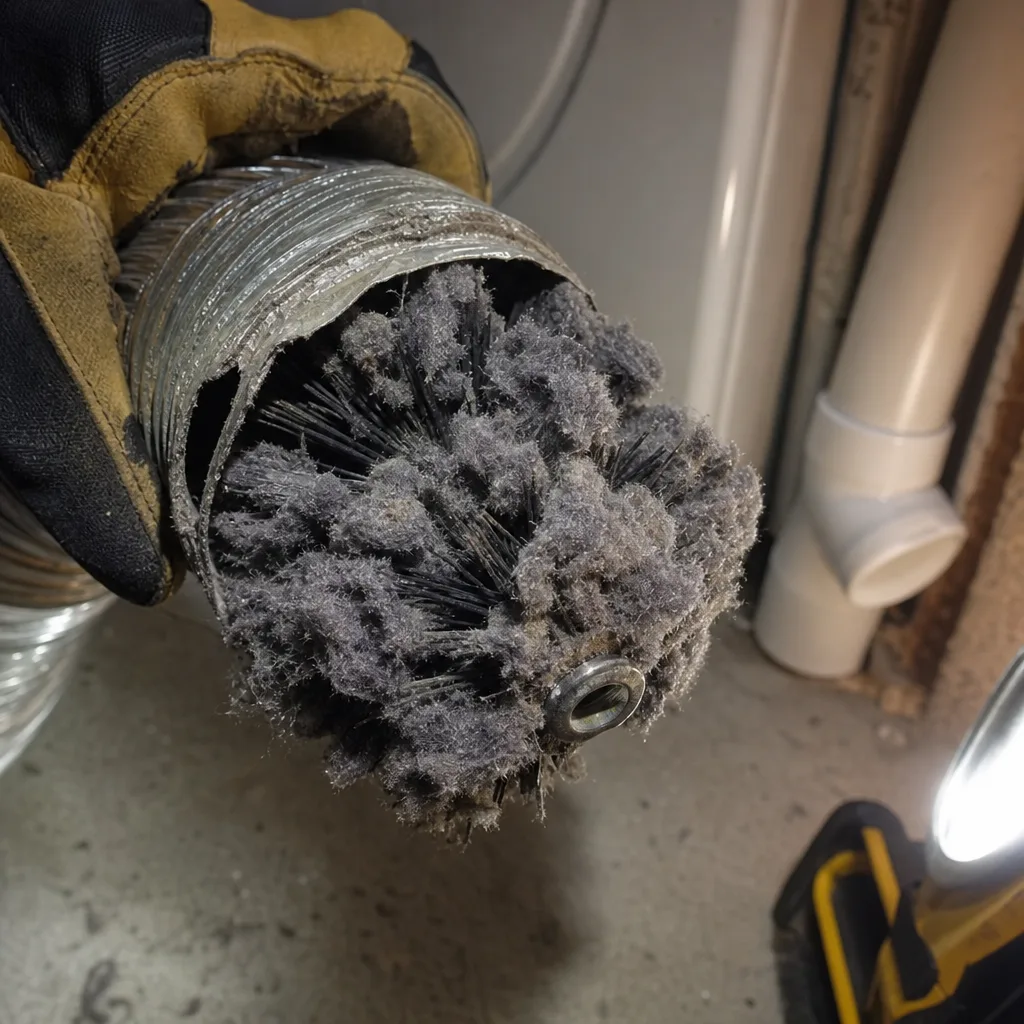
Your dryer vent is a single run of pipe. It starts behind your dryer and ends at a cap on an outside wall or up on the roof. Every load pushes hot, damp air through it, and that air carries lint. The lint trap catches a lot of it, but not all of it. What gets past the trap sticks to the inside of the pipe, and it builds up a little more with every load.
Your air ducts are part of your heating and cooling system. They’re the bigger network of supply and return lines that run through your attic or walls and connect to the registers in each room. They collect household dust, not dryer lint. They also don’t carry heat from a dryer.
Here’s why that matters to you:
- Duct cleaning doesn’t touch your dryer vent. The two systems aren’t connected, so a duct cleaning won’t clear lint out of the dryer line.
- A new HVAC filter doesn’t help your dryer. Filters protect your heating and cooling system, not the pipe behind your laundry room.
- The warning signs are different. Clothes that take two or three cycles to dry, a dryer that’s hot to the touch, or a burning smell in the laundry room point to the dryer vent. Dusty registers or stuffy rooms point to the air ducts.
- The risk is different. Built-up lint sits in a pipe that carries heat, which is why dryer vent cleaning is treated as a fire-safety job and not just a cleanliness one.
Say your towels are coming out damp after a full cycle and the laundry room feels warmer than the rest of the house. That’s a dryer vent problem. Cleaning every air duct in your home won’t change it. On the other hand, if your dryer works fine but you’re dusting the same bedroom shelf every two days, the dryer vent probably isn’t your issue.
When we clean a dryer vent, the job covers the full vent line plus an airflow and exhaust check. That way you know the air is getting outside, not just that the pipe looks cleaner. If we find a crushed section, a bad connection, or a vent that needs rerouting, that’s separate work. We’ll explain it and quote it before anything gets done.
We also offer air duct cleaning, so you don’t have to guess which company handles which job. Tell us what you’re noticing at home, and we’ll point you to the service that fits. If you only need one, you only pay for one.
Signs a Frisco Home Needs This Service Now
You already know the big three from above: long dry times, a hot dryer, and a burning smell. But a blocked vent usually drops smaller hints first. Most of them take about two minutes to check, and you don’t need any tools.
Start the dryer on a heat setting, then walk outside and find where the vent ends. On a lot of homes, that’s a small cap on a side or back wall. Here’s what to look for:
- The flap on the vent cap barely moves or doesn’t open at all. With a clear line, you should feel a steady push of warm air.
- Lint is caked around the cap or piled on the ground below it.
- Something has been building inside the cap. Birds and other small critters like the warm, sheltered spot.
- The cap is cracked, bent, or stuck shut.
Back inside, pay attention to the laundry room itself:
- The room gets humid or muggy when the dryer runs, or you see moisture on the window or walls.
- Your clothes come out hotter than normal but still feel damp at the seams.
- The dryer shuts off partway through a cycle, or it shows an airflow or vent warning. Many newer dryers flag this on their own.
- The flexible hose behind the dryer is crushed, kinked, or pulled loose from the wall.
Where your vent ends matters too. In plenty of newer two-story Frisco homes, the laundry room sits upstairs or in the middle of the house. When that happens, the vent may run a long way through the attic and come out on the roof. You can’t easily see that cap from the yard, so the outdoor check above won’t tell you much. Longer runs with more turns also give lint more places to collect. If your dryer vents through the roof and you’ve never had it cleaned, that alone is a good reason to have it looked at.
Storms count as well. North Texas hail and high winds can crack or knock loose a roof vent cap. After a rough storm season, a dryer that suddenly takes longer is worth a closer look.
If you’ve done those checks and you’re still seeing a weak flap, lint at the cap, a sweaty laundry room, or a dryer that quits mid-cycle, the problem is likely inside the vent line where you can’t reach it. That’s the point where a full cleaning and airflow check makes sense. It also tells you for sure that the air is making it all the way outside.
What Happens During a Dryer Vent Cleaning Visit
You already know the visit covers the whole vent line plus an airflow and exhaust check. You also know repairs get quoted on their own. What most people want to know next is simple: what will this cost, what do I need to do, and will anything catch me off guard? Here’s the straight answer.
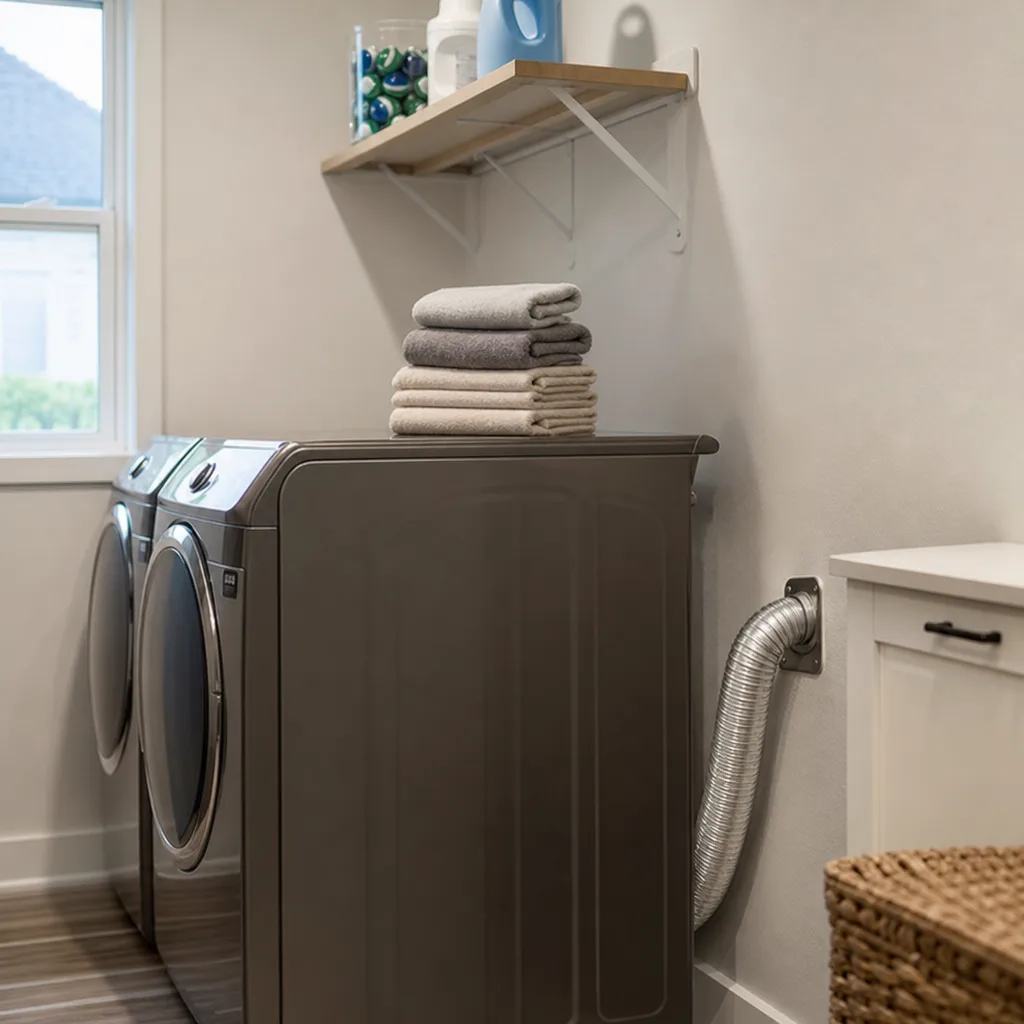
For most homes, a standard dryer vent cleaning runs $100-$175. Across all the jobs we do, the typical range is $100-$250. Where your job lands depends on four things:
- Vent length and routing. A short, straight run to an outside wall takes less work than a long line with several turns.
- Roof or wall termination. A cap on the roof means working up top, which takes more time than a cap you can reach from the yard.
- How much buildup there is. A vent that’s never been cleaned usually holds more lint than one that gets done regularly.
- Accessibility. A dryer squeezed into a tight closet, or a vent line that’s hard to get to, adds time.
If your laundry room is upstairs and the vent runs through the attic to the roof, like the two-story Frisco layouts mentioned above, expect to be toward the higher end. A first-floor laundry venting straight out a back wall is usually toward the lower end.
There’s also a service-call fee of $26-$99. If you go ahead with the work, that fee is credited toward it, so you aren’t paying twice just to have someone show up. We use upfront flat-rate pricing. You see the price and approve it before any work starts, and there’s no meter running while we’re in your home.
Financing usually isn’t offered for a job this size. It’s available on larger repairs and replacements if the visit turns up something bigger that you need to plan for.
You’ll have a licensed and insured technician in your home. Every technician is background-checked and drug-tested, and they’ll treat your laundry room like it’s part of your home, because it is. Same-day service is available, and there’s no extra charge for nights or weekends. If the only time that works for you is a Saturday, you’ll pay the same as you would on a Tuesday.
When the job is done, you’ll know the vent is clear and that air is making it outside. If we spot anything else, like a crushed section or a loose connection, you’ll get a plain explanation and a separate price. Then it’s your call whether to fix it now, later, or not at all. Nobody will push you.
Ready when you are – get in touch today.
Call Today, Get Service Today. Xtreme Air Services — Frisco is ready to help.
What Drives the Cost Up or Down
You’ve already seen the price range and the four things that move it. So let’s make it practical. Here’s how to tell where your home will likely land before you call, what to ask any company you’re thinking about hiring, and how to keep your next cleaning on the lower end.
You can get a good idea of your job from your laundry room. Answer these quick questions:
- Is your laundry room on the first floor, against an outside wall? Your vent is likely short and simple.
- Is it upstairs or in the middle of the house? The line probably runs through the attic, and maybe out the roof.
- Can you remember the last time the vent was cleaned? If you can’t, plan on more buildup.
- Is your dryer tucked into a tight closet or stacked with the washer? That can take more time to reach.
Share those answers when you call. They help us give you a clearer picture of the price up front, and they help you spot a quote that doesn’t add up.
Whoever you hire, these questions keep you from getting surprised:
- Is the price flat-rate, or are you charging by the hour? With hourly billing, a slow job costs you more.
- Does the cleaning include an airflow check at the outside cap, or just brushing the pipe?
- Is there a trip fee, and does it count toward the work if I go ahead?
- Does a roof cap cost extra, or is it part of the quote?
- If you find damage, will you show me and price it before you fix it?
A good company will answer all five without hedging. Our answers are simple. Upfront flat-rate pricing, an airflow and exhaust check with every cleaning, a service-call fee credited toward the work if you move ahead, and no repair work until you’ve seen the price and said yes.
Buildup is the one cost factor you control. A vent that’s been ignored for years holds more lint, which means more time to clear it. Here are a few habits that keep your next visit simple:
- Clean the lint screen before every load, not every few loads.
- Keep the hose behind the dryer straight, and don’t push the dryer flat against the wall.
- Look at the outside cap now and then, and clear any lint you can reach.
- Don’t wait for warning signs to come back before you schedule the next cleaning.
Repairs are priced on their own for a reason. Crushed pipe, loose joints, or a cracked roof cap knocked around by a North Texas hailstorm are different jobs from a cleaning. Some homes need them and plenty don’t. Keeping them separate means you only pay for what your vent needs, and you get to decide on your own timeline.
Our licensed and insured, background-checked technicians serve Frisco from our office on Warren Parkway. Same-day service is available, and there’s no extra charge for nights or weekends.
Call 469-490-3595
Watch Our Video
See How We Handle Dryer vent cleaning in Frisco
Xtreme Air Services — Frisco
Why a Licensed HVAC Contractor Handles This Job
A dryer vent is an exhaust line. It’s a pipe that has to move hot, damp air a set distance, around a few turns, and push it out a cap on your wall or roof. Getting that right is an airflow job, and airflow is what HVAC contractors work on every day. That’s why it makes sense to have a heating and cooling company clean your vent and confirm the air is getting outside.
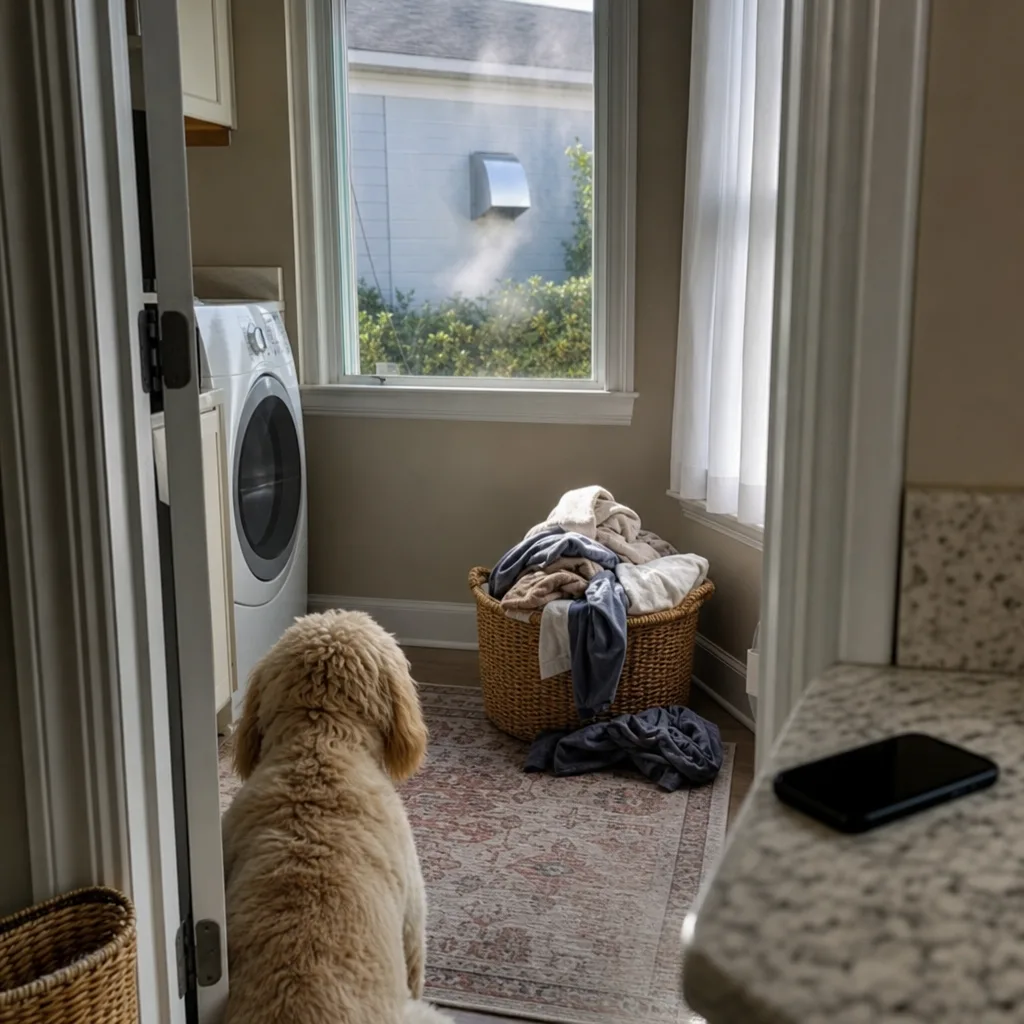
Here’s the honest part. Plenty of people can run a brush through a straight, short vent. If your laundry room is on an outside wall and the line is only a few feet long, you don’t need a master tech to keep it clear. The difference shows up when something isn’t right inside the line.
Some problems are hard to spot unless you know how exhaust lines are supposed to work:
- A vent run that’s too long or has too many bends for the dryer to push air through, even when it’s clean.
- Sections in the attic that have sagged, so lint and moisture collect in a low spot.
- A vent line that was tied into the wrong place, or a cap that doesn’t open the way it should.
- Duct joints that have pulled apart in the attic, so warm, linty air blows into your home instead of outside.
In a two-story Frisco home with an attic run to the roof, these problems hide where you can’t see them. A clean pipe that still can’t breathe is still a problem. Finding that out, and telling you plainly, is the part of the job that matters most for fire safety.
It also helps that we work on more than one system. If the vent turns out to be fine but something else behind the dryer catches our eye, you’re not starting over with a new company. Our team handles HVAC duct and vent repair, gas line repair and gas leak detection for gas dryers, and dedicated circuit installation for electric ones. If the issue is in your home’s air ducts and not the dryer line, we offer air duct cleaning too. One trusted team for HVAC, plumbing, electrical, and refrigeration means one call, one company that’s accountable, and one person to ask when you have a question.
Here’s the proof behind that:
- Texas HVAC License #TACLA29023C. It’s a real number you can look up.
- A Trane Comfort Specialist, a credential tied to heating and cooling work.
- A 4.8-star reputation across more than 2,900 reviews on Google, Angi, and HomeAdvisor.
- Family-owned and operated, with North Texas families who keep calling us back.
None of that cleans a vent by itself. What it tells you is who’s showing up at your door, and that they’re accountable for doing it right the first time.
Call 469-490-3595
Frequently Asked Questions
Common questions about Dryer vent cleaning
How often should I get my dryer vent cleaned?
Most homes do well with a cleaning once a year, but it depends on how much you use your dryer and how long your vent run is. A first-floor laundry room with a short, straight vent can sometimes go longer between cleanings. A two-story Frisco home with an attic run to the roof will build up lint faster because of the extra length and turns. If you’ve never had yours cleaned, or you can’t remember the last time, that’s a sign it’s due now.
Can a blocked dryer vent damage my dryer?
Yes, a blocked vent makes your dryer work harder than it should. When air can’t push out through the line, heat and moisture back up into the machine, which is why clothes take longer to dry and the dryer itself runs hotter to the touch. Over time that extra strain wears on the dryer’s parts faster than normal use would. Clearing the vent line takes that stress off the machine.
Does a dryer vent cleaning include checking the outside cap?
Yes, every cleaning includes an airflow and exhaust check at the outside cap, not just brushing out the pipe. That step confirms the air is making it outside, since a pipe can look clear inside while the cap flap still barely moves. If the cap is cracked, bent, or blocked by something like a critter nest, you’ll be told about it and given a separate price before any repair work starts.
Ready to Get Started?
Call (469) 490-3595 Today, Get Service Today.