


Air Duct Cleaning in Irving: Do You Need It?
What a standard duct cleaning covers and costs, and how to tell if your home actually needs one.
What’s Covered on This Page
- Signs Your Ducts Need Cleaning
- When You Might Not Need a Full Duct Cleaning
- What’s Included in a Standard Air Duct Cleaning
- How Air Duct Cleaning Pricing Works
- What Happens During an Irving Air Duct Cleaning Visit
- Will the crew need to go into every room of my Irving home?
- What kind of equipment is used to clean the inside of the ductwork?
- Is it normal for dust to come back quickly after a duct cleaning?
Signs Your Ducts Need Cleaning
You don’t need to guess. Most of the clear signs are things you can check yourself in about five minutes with a flashlight and a screwdriver. Here’s what’s worth paying attention to.
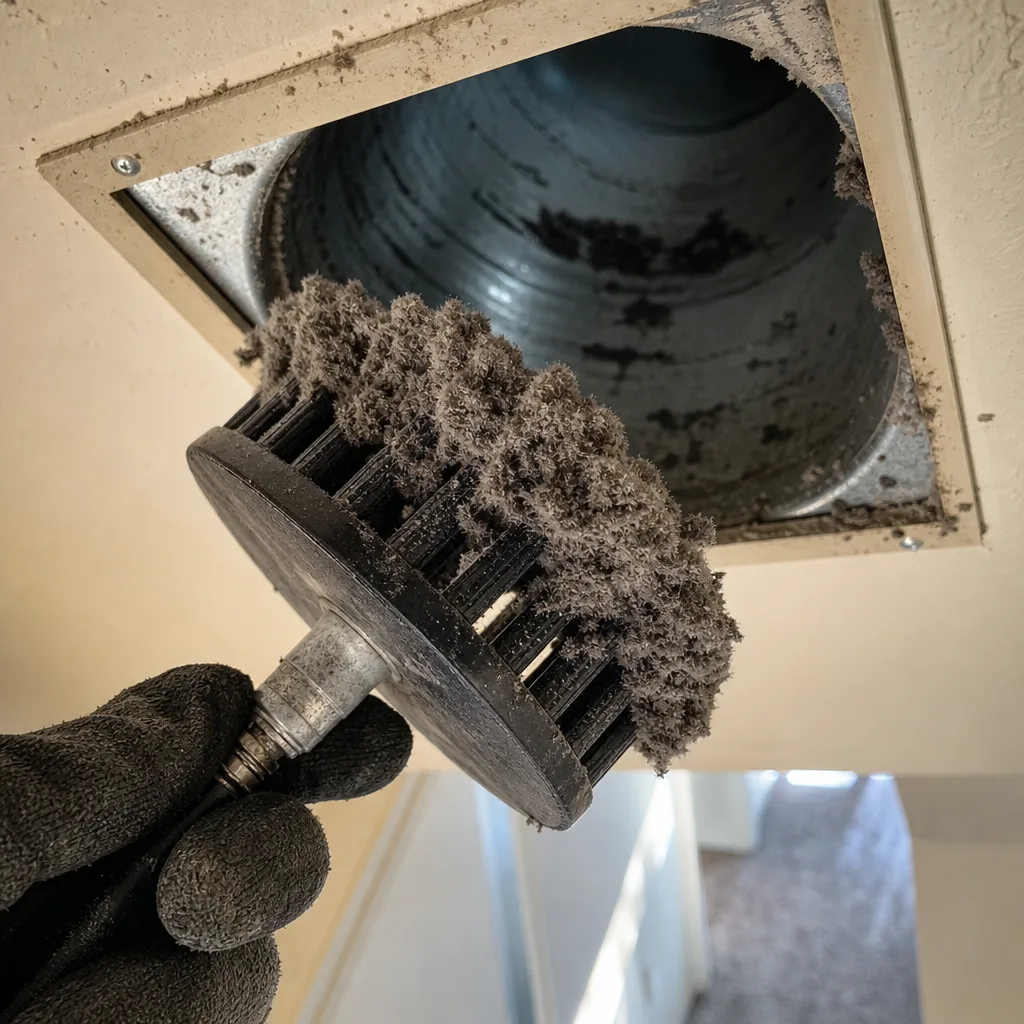
- Puffs of dust when the system kicks on. If you see a little cloud come out of a supply vent when the air starts, something loose is sitting inside the duct.
- Thick, gray buildup behind the return grille. Take off the big return cover and shine a light inside. A light film is normal. Clumps, lint mats, or debris you can grab with your fingers are not.
- Signs of pests. Droppings, nesting material, or a stale animal smell coming from the vents means the ducts need cleaning. It also means any opening that let critters in should get found and closed.
- A recent remodel. Sanding drywall, cutting tile, or tearing out flooring throws fine dust everywhere. If the system ran during the work, a lot of that dust ended up in the ducts.
- You just moved in. If you don’t know when the ducts were last cleaned, or the last owners had several pets or smoked, a cleaning gives you a fresh start.
- Heavy pet hair. Homes with dogs or cats that shed a lot build up hair in the returns faster than you’d expect.
In a lot of North Texas homes, the air handler and much of the ductwork sit up in the attic. That’s out of sight, so buildup and pest problems can go unnoticed for years. Your registers and returns are your best window into what’s going on up there.
Now for the honest part. Some signs people blame on dirty ducts usually have another cause.
- Dust on your shelves and tables. Every home gets dusty. People, pets, open doors, and dry Texas wind all add to it. If your registers and returns look clean, cleaning the ducts probably won’t change much.
- Weak airflow in one room. Check your air filter first. A clogged filter is the easiest fix there is, and you can change it yourself. If the filter is fine, a crushed, torn, or disconnected duct may be the cause. Cleaning won’t fix that. It takes duct repair, which is separate work.
- A musty smell or dark spots you think might be mold. Regular duct cleaning isn’t mold remediation. If there’s real mold growth, it has to be handled as its own job, and the moisture behind it needs fixing too, or it comes back.
That’s why our cleaning includes an airflow check. If your vents still feel weak after the ducts are clean, you’ll know the problem is somewhere else, like a leak or a damaged run. We’ll show you what we found and quote any extra work separately before anything else gets done. You decide what happens next, with no pressure and no surprises.
When You Might Not Need a Full Duct Cleaning
You might not need a full duct cleaning if your registers and returns look clean, nothing in your home has changed, and your system is running fine. Duct cleaning fixes a real problem. It isn’t a chore you have to do on a schedule. If there’s no problem to fix, keep your money.
Here’s when we’d tell you to hold off:
- Your ducts were cleaned in the last few years, and nothing has changed since then. You haven’t remodeled, added pets, or had pests. Clean ducts don’t get dirty overnight.
- Only one register looks grimy. That’s usually dust on the cover or just inside the opening, not dirt through the whole system. You can clean it yourself.
- Someone told you it’s time because of the calendar. No rule says ducts need cleaning every year or two. Go by what you see behind the grilles, not by a date.
- You’re hoping it will help your allergies. If your ducts aren’t visibly dirty, cleaning them may not change how you feel. A good filter changed on time often does more.
- Your house won’t cool down. If it’s July and the air coming out isn’t cold, you have an AC problem. Duct cleaning won’t bring the cold air back.
Cleaning one register takes about 10 minutes. Turn the system off at the thermostat. Unscrew the cover, wash it in the sink with warm, soapy water, and let it dry. While it’s off, vacuum just inside the opening as far as your hose can reach. Then screw the cover back on, and you’re done.
The best way to keep your ducts clean is to change your air filter on time. The cooling season runs long in North Texas, so your system pulls a lot of air through that filter for months. When a filter is clogged or fits poorly, dust slips past it and settles in the ducts. Check your filter often during the hot months, and swap it out when it looks gray.
There’s one more case. If your ducts were cleaned and the dust came back fast, another cleaning probably isn’t the answer. In homes where the ductwork runs through the attic, a gap in a return duct can pull in attic dust and bits of insulation every time the system runs. That’s a sealing problem. Cleaning again would just put you back where you started. Duct sealing is separate work, and it goes after the actual source of the dust.
We’d rather you spend your money where it helps. If you take off a return grille and it looks fine, that’s a good answer. It means you can skip this job for now. Check again after your next big change, like a remodel or a new pet.
What’s Included in a Standard Air Duct Cleaning
A standard air duct cleaning from our team covers three things. We clean your whole-home ductwork, clean your registers, and check your airflow. The goal is simple. We get the dust and debris out of your ducts so air moves better and the air coming out of your vents is cleaner.
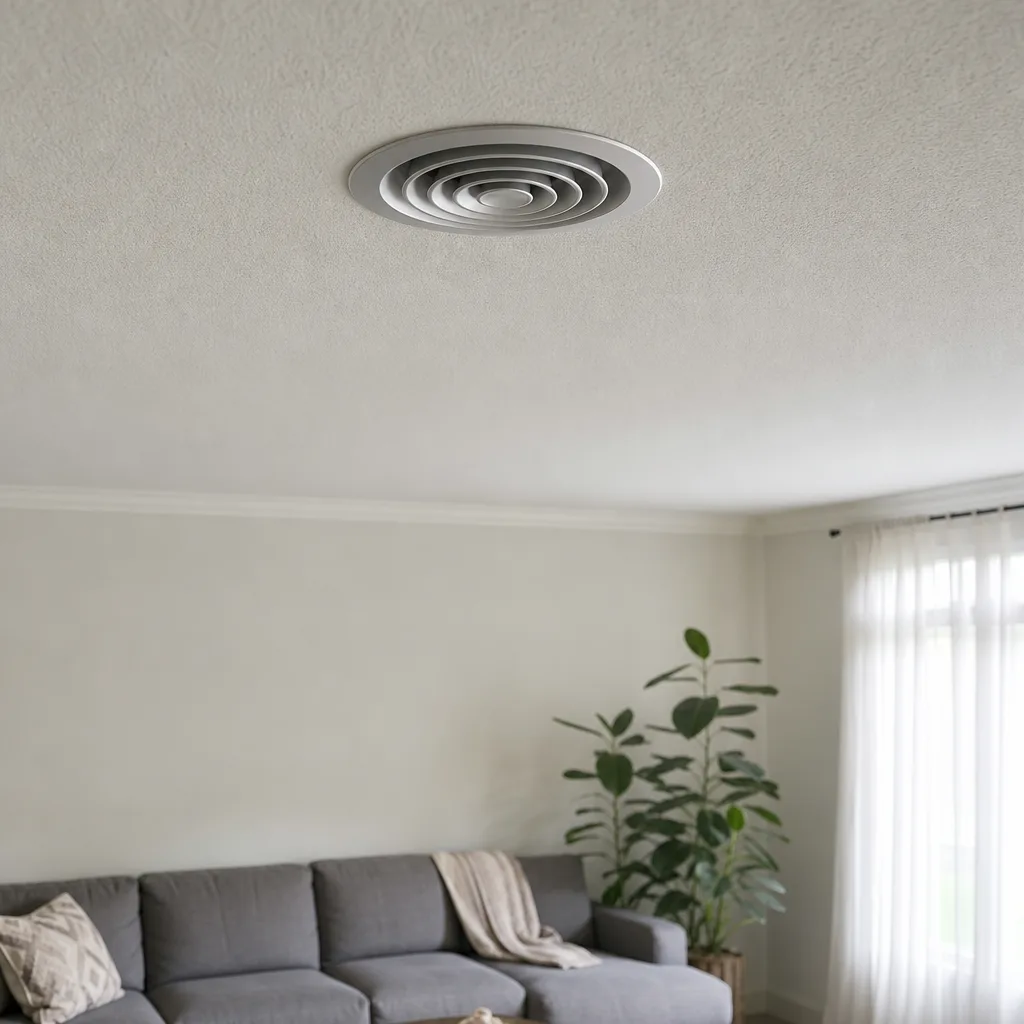
- Full duct cleaning. This covers both sides of your system. The supply ducts carry air to your rooms, and the return ducts pull it back to the system. A cleaning that skips the returns leaves out the side where dust and pet hair pile up.
- Register cleaning. Your vent covers get cleaned too, so you don’t end up with gray grilles sitting on clean ducts.
- An airflow check. This tells you whether the cleaning fixed the problem or whether something else is going on.
Here’s what a standard cleaning doesn’t include, so nothing catches you off guard:
- Mold remediation
- Duct repair or sealing
- Any corrective work found during the visit
If one of those comes up, we quote it separately, as we covered above. Nothing extra happens unless you say yes.
We price air duct cleaning by vent count. That means the number of supply vents and returns in your home is the biggest part of your price. Our most common job is cleaning the whole-home supply and return ductwork, and it runs $300 to $475. Across all the homes we clean, the typical range is $300 to $700.
These are the things that move your price up or down:
- How many vents and returns you have
- The size of your system
- How much buildup is inside the ducts
- How easy the ducts are to reach
- Whether you add sanitizing
Ease of access matters more in North Texas than you might think. In many homes, the air handler and ductwork sit up in the attic. A cramped attic with low clearance takes more work than an open one. Sanitizing is optional. You can ask about it, but you don’t have to add it.
There’s also a $26 to $99 service-call fee. It’s credited toward the repair if you go ahead with Xtreme Air Services. Financing isn’t usually offered for a smaller job like this one. It’s available on larger repairs and replacements.
Whoever you hire, ask a few plain questions first. Is the price per vent or one flat number? Are the returns included? Is sanitizing extra? What isn’t covered? A good company will answer all four without hesitating. With us, you get the price upfront and approve it before any work starts. No meter running, and no surprises when the job’s done.
Need help with Air duct cleaning?
Call Today, Get Service Today. Xtreme Air Services — Irving is ready to help.
How Air Duct Cleaning Pricing Works
Duct cleaning companies price their work in one of three ways. They charge per vent, charge one flat price for the whole house, or charge by the hour. Once you know which model a quote uses, it’s much easier to tell whether two prices really match up.
- Per vent. You pay based on how many supply vents and returns your home has. You can count them yourself, so you can check the math before anyone shows up. This is how we price our air duct cleaning.
- Flat whole-house price. One number covers the whole home. It looks simple, but ask what it assumes. Some flat prices only cover a set number of vents and charge more for each one past that.
- Hourly. You pay for time on the job. It’s harder to predict, because a cramped attic or heavy buildup can stretch the clock, and you won’t know the total until the work is done.
Here’s why vent count matters more than square footage. Picture two Irving homes of about the same size. One is an older single-story house with a vent in each room and one central return. The other is a newer two-story home with extra ceiling vents and returns on each floor. The second home has a lot more ductwork to clean, even though the floor plans are close in size. A price based on square footage alone would miss that difference.
Be careful with a very low advertised price for a whole house. A full supply and return cleaning takes real time and equipment. A rock-bottom number often means only part of the system gets cleaned. It can also mean the real price shows up after the crew is inside your home. If a quote seems far below the others, ask exactly which ducts it covers and what gets added once the work starts.
When you set quotes side by side, line up the same things. Check how many vents and returns each one counts, whether the returns are cleaned, and which add-ons are listed separately. Sanitizing is the main optional add-on with us. Dryer vent cleaning is its own service, so if you want it done, ask for it by name instead of assuming it’s part of the duct job.
Our price ranges and service-call fee are listed above, so you’re not walking in blind. Your quote is built on the vents and returns you have, so you can check it against your own count. Anything that comes up outside a standard cleaning gets its own separate quote, and you approve it before any of that work begins.
Watch Our Video
See How We Handle Air duct cleaning in Irving
Xtreme Air Services — Irving
What Happens During an Irving Air Duct Cleaning Visit
A duct cleaning visit has three parts. First, the technician looks over your system. Next comes the cleaning. Last, the work gets checked and you get a walk-through. You’ll know your price before any work starts, and you’ll see the results before the technician leaves.

A little prep on your end makes the visit go smoother and faster. Here’s what helps:
- Clear a path to every vent and return. Slide furniture off floor vents and roll back any rugs that cover them.
- Make the attic hatch easy to reach. In a lot of Irving homes, it’s a ceiling hatch in a hallway or closet, or a pull-down ladder in the garage. Move boxes, shelves, or a parked car out of the way.
- Put your pets in a closed room. The technician will open vents and walk in and out, and you don’t want a curious dog or cat getting underfoot.
- Make a quick note of problem rooms. Point out any room that runs hot, gets dusty fast, or smells stale, so the technician knows where to look closely.
When the technician arrives, they’ll walk through your home with you. They count the supply vents and returns, take a look behind the return grille, and check the ductwork they can reach. Then you get your upfront price. Nothing starts until you approve it. If they spot something outside a standard cleaning, like a crushed duct or signs of a pest entry point, you’ll hear about it right then, not on the bill.
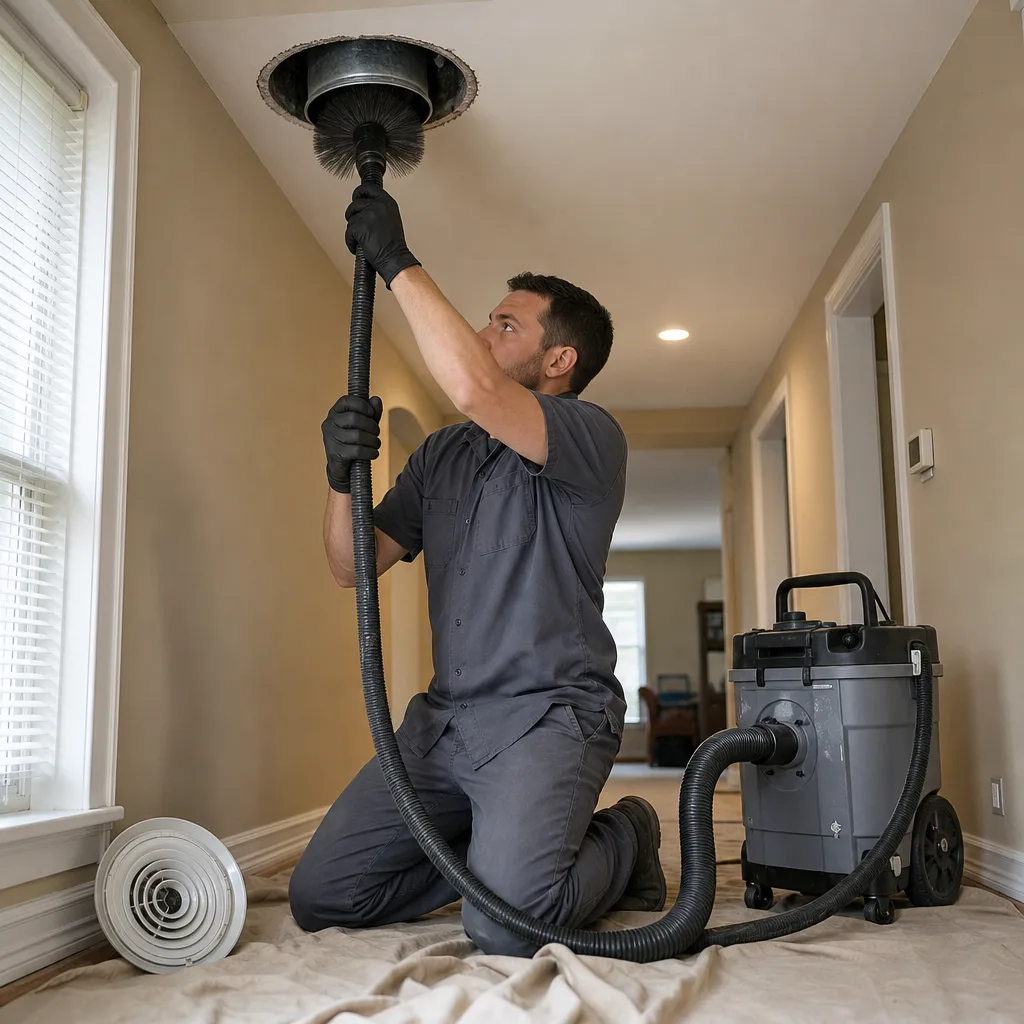
Your system gets shut off while the work is done. A proper cleaning loosens the buildup and pulls it out of the system. It doesn’t just stir it up and push it deeper into the ducts. Both the supply side and the return side get cleaned, and your register covers come off and get cleaned too. Since so much North Texas ductwork runs through the attic, expect the technician to spend some time up there.
How long the visit takes depends on how many vents you have, how much buildup is inside, and how easy your attic is to work in. A single-story home with open attic space usually goes faster than a two-story home with tight crawl room.
Before the technician leaves, they run the airflow check and go over what they found. Don’t be shy about looking for yourself. Pull off a return grille and shine a flashlight inside, the same quick check we talked about earlier. You should see a clear difference. It’s also a good time to put in a fresh air filter, so your clean ducts stay clean longer.
You’ll have licensed and insured technicians in your home, and every team member is background-checked and drug-tested. You get a clear price before the work and a clear answer after it. If your registers and returns show the signs we covered, the next step is easy.
Call 469-200-2166
Frequently Asked Questions
Common questions about Air duct cleaning
Will the crew need to go into every room of my Irving home?
Yes, we check every room with a supply vent or return so no part of your system gets skipped. A full cleaning covers both the supply side that feeds your rooms and the return side that pulls air back, since missing either leaves dust and pet hair behind. In Irving homes with ductwork running through the attic, we also need clear access to the hatch, so having rooms reachable helps the visit move faster.
What kind of equipment is used to clean the inside of the ductwork?
We use equipment designed to loosen buildup inside the ducts and pull it out, not just stir it up and push it deeper into the system. Both the supply and return sides get cleaned this way, and the register covers come off for a separate cleaning. This matters most in North Texas homes where the ductwork sits up in the attic, since loose debris up there can otherwise just resettle after a weak cleaning.
Is it normal for dust to come back quickly after a duct cleaning?
No, and if it does, another cleaning usually isn’t the fix. In homes where the ductwork runs through the attic, a gap in a return duct can pull in attic dust and insulation bits every time the system runs, which is a sealing problem, not a dirt problem. If this happens after your cleaning, ask about duct sealing instead of repeating the same service.
Ready to Get Started?
Call (469) 200-2166 Today, Get Service Today.