


Air Duct Cleaning in Dallas: What’s Included, What’s Not, and What It Costs
What a standard duct cleaning covers and costs, and how to tell if your home actually needs one.
What’s Covered on This Page
- What Air Duct Cleaning Includes and What It Doesn’t
- Signs Your Dallas Home’s Ducts Need Cleaning
- When Duct Cleaning Won’t Fix the Real Problem
- How Air Duct Cleaning Pricing Works
- What Happens During a Duct Cleaning Visit
- Will my house be dusty right after the duct cleaning is done?
- Is there a best time of year to get ducts cleaned in Dallas?
What Air Duct Cleaning Includes and What It Doesn’t
You should know exactly what you’re paying for before anyone climbs into your attic. Here’s the plain version of what a standard visit covers.
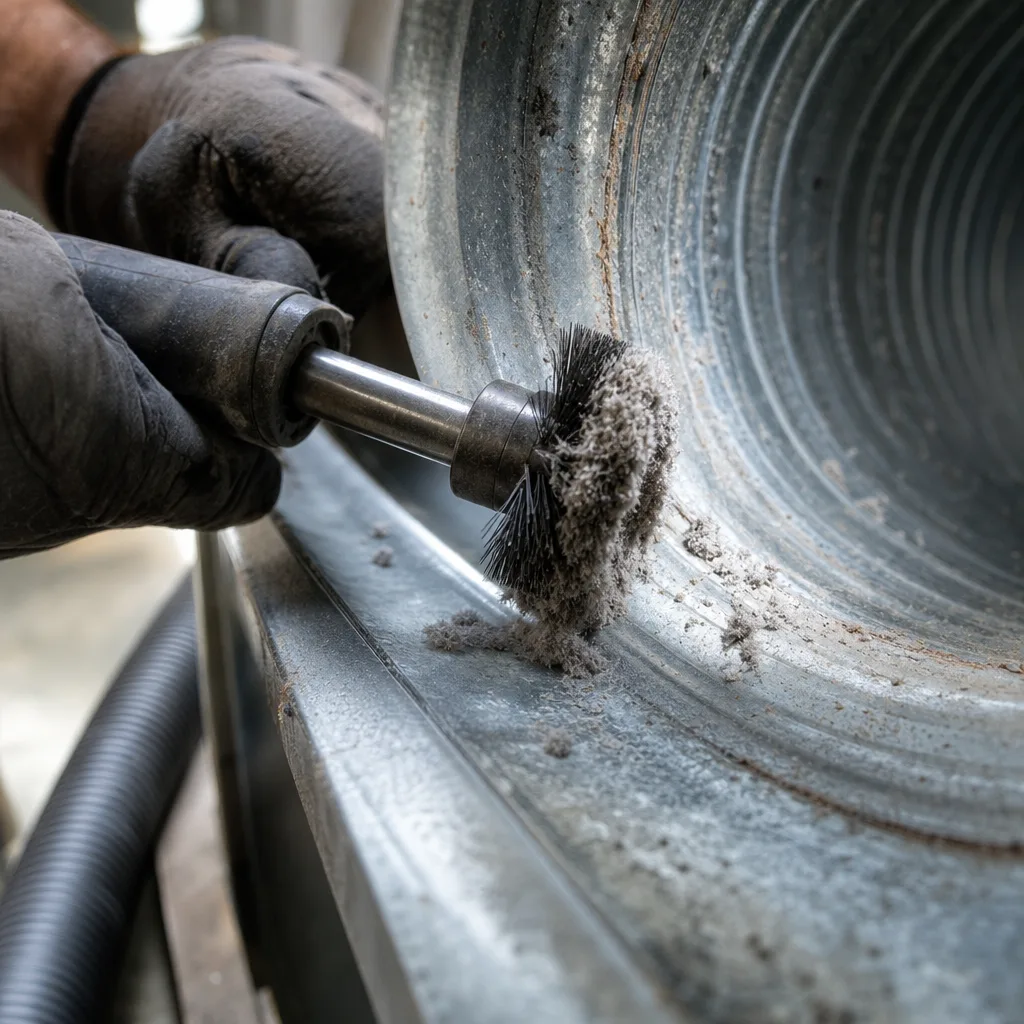
- Full duct cleaning. We clean your whole-home ductwork, both supply and return. Supply ducts carry cooled or heated air out to your rooms. Return ducts pull air back to your system. Dust and debris build up in both, so we clean both.
- Register cleaning. The grilles and vent covers on your walls, floors, and ceilings get cleaned too. Those are the parts you see, and they’re often where dust shows up first.
- An airflow check. Once the ducts are clean, we check how air is moving through your vents. That tells you whether the cleaning solved your airflow complaint or whether something else is going on.
That airflow check matters more than it sounds. In a lot of Dallas homes, the ductwork runs through the attic, and those attics get brutally hot in summer. Ducts up there can get crushed, pulled loose, or kinked over the years. Cleaning won’t fix a duct that’s come apart. The airflow check helps you find out whether you’ve got one.
Some things aren’t part of a standard cleaning. We’d rather tell you now than have you find out on the invoice.
- Mold remediation. If there’s mold growing in your ducts, cleaning alone isn’t the answer. Mold needs moisture, so the moisture problem has to be found and fixed, and the mold has to be properly removed. That’s a different job.
- Duct repair and sealing. Torn, leaky, or disconnected ducts need repair or sealing, not cleaning. We offer duct sealing and HVAC duct and vent repair as separate services.
- Corrective work found during the visit. If we spot a problem while we’re cleaning, we’ll show it to you and quote it separately.
Here’s what that last point means for you. Say the airflow check shows one back bedroom still getting weak air after the cleaning. We’ll show you what we found and explain it in plain English. Then we’ll give you a separate price for the fix. With our upfront flat-rate pricing, you approve the price before any work starts. If you’d rather wait or think it over, that’s your call.
Sanitizing is an add-on, not part of the base cleaning. You can choose to add it, and it does change the price. Ask about it when you call if it’s something you want.
A few related jobs come up a lot, and each one is its own service. Dryer vent cleaning clears lint from the line that runs from your dryer to the outside. Coil cleaning takes care of the coils inside your HVAC system. Air quality testing helps if you’re trying to figure out what’s in your air. UV-C air purification is an upgrade some homeowners add after their ducts are clean.
Signs Your Dallas Home’s Ducts Need Cleaning
You don’t need to guess whether your ducts are dirty. They usually give you clues you can see, smell, or feel. Duct cleaning makes the most sense when you can point to one of these signs, not just because it’s been a while.
- Dust puffs out of a vent when the system kicks on. If you see a little cloud when your AC starts, or dust settles on furniture right under a register, that dust is coming from inside the ducts.
- You can see buildup past the grille. Pull a register cover off and shine a flashlight inside. A clean duct looks dull and a little dusty. A thick gray layer, clumps, or loose debris means it’s time.
- You’ve had a remodel or construction work. Drywall dust and sawdust get pulled into return vents and sit in the ductwork long after the cleanup is done.
- There are signs of pests. Droppings, nesting material, or a dead-animal smell near a vent means something got into your ducts. That needs to come out.
- You just moved in. If you don’t know the home’s history, a cleaning gives you a fresh start, especially if the last owners had pets or smoked.
- The house gets dusty again fast. If you dust on Saturday and it’s back by Tuesday, your ducts may be blowing old debris around every time the system runs.
Some of these signs are more common in Dallas homes. Many older ranch homes built on slab foundations have their ductwork running through the attic. A return duct up there that has a gap or a loose joint can pull in attic dust and insulation, then blow it into your living room. That’s also why hail season matters. After a roof replacement, shingle grit and debris can end up in the attic, and a leaky return can pull some of it into the system.
Our long cooling season plays a part too. Your AC may run hard for months at a time here, and every hour it runs, it moves air through your ducts. More run time means more chances for dust to build up.
A few signs point somewhere else. A musty or moldy smell, or dark spots on the duct surfaces, can mean moisture and mold. That’s a different job than cleaning, as covered above. Rooms that stay hot no matter what may have a crushed or disconnected duct rather than a dirty one. Cleaning won’t fix either of those. The airflow check at the end of a cleaning helps you tell the difference, so you aren’t left guessing.
If you’re noticing two or three of the signs on the list, the ducts are worth a closer look. If you’re only seeing one, and it’s mild, a new filter and a few weeks of watching might tell you everything you need to know.
When Duct Cleaning Won’t Fix the Real Problem
Duct cleaning removes dust and debris. That’s the whole job. If the thing bugging you isn’t caused by dust and debris, a clean duct won’t change it. Here are the complaints where cleaning usually isn’t the answer, and what tends to be behind them instead.

- One room is always hotter than the rest. In a lot of Dallas ranch homes, the back bedroom sits at the end of the longest attic duct run, or it doesn’t have enough return air to pull heat out. That’s a design and airflow balance problem, not a dirt problem. HVAC system balancing or a zoning system is the kind of fix that targets it.
- The house feels sticky even when it’s cool. Clean ducts don’t remove moisture from your air. Clammy rooms in summer often point to an AC that’s too big for the house and shuts off before it can pull the humidity out. A cooling load calculation tells you whether your system is the right size, and a dehumidifier can help in the meantime.
- Weak airflow at every single vent. When the whole house is short on air, the blockage is often at the system itself, not in the ducts. A dirty evaporator coil, a caked blower wheel, or a coil that’s freezing up can choke airflow before it ever reaches a duct. Coil cleaning or a blower repair fixes that. Cleaning the ducts doesn’t.
- Dust that comes back no matter what. If a leaky return in the attic is pulling in insulation and grit, as covered above, a cleaning just resets the clock. Duct sealing stops the leak, and that’s what keeps the dust from coming back.
- High energy bills. Dirty ducts are rarely the main reason your bill jumped. Leaky ducts, an aging system, or a coil that needs cleaning are more likely to be costing you money during a long Dallas cooling season.
Allergies deserve a straight answer too. Lots of people book duct cleaning hoping it will calm someone’s allergies or asthma. There’s no solid proof that cleaning ducts alone makes a real difference for most people. If allergies are your main reason for calling, air quality testing will tell you more about what’s in your air. Better filtration, like a HEPA setup, is often what makes the bigger change day to day.
You don’t always have to figure this out on your own before you call. Tell us exactly what you’re noticing, like which rooms, what time of day, and whether it’s dust, heat, or that sticky feeling. That usually points to whether cleaning is the right fix or something else is going on. If it’s something else, we’ll tell you so. We won’t sell you a cleaning that won’t solve your problem.
Need help with Air duct cleaning?
Call Today, Get Service Today. Xtreme Air Services — North Dallas is ready to help.
How Air Duct Cleaning Pricing Works
Most whole-home duct cleanings we do fall between $300-$475. The full typical range runs $300-$700. We price by vent count, so the number of supply vents and returns in your home is the biggest thing that sets your number.
Pricing by vent count is simple to check yourself. Walk through your house and count every vent that blows air out, then count the return grilles that pull air back in. Have that number ready when you call, and you’ll get a much closer idea of your price before anyone comes out.
A few other things can move your price up or down:
- Number of vents and returns. More openings means more ductwork to clean.
- System size. A larger home with a bigger system usually has longer duct runs and more branches.
- Level of buildup. Ducts after a remodel, or ones that haven’t been touched in years, take more time than ducts with light dust.
- Accessibility. In many Dallas ranch homes the ductwork runs through the attic. A tight attic, a hard-to-reach trunk line, or a return tucked behind a wall adds time.
- Sanitizing. It’s an add-on, so choosing it changes the total.
There’s also a service-call fee of $26-$99. If you go ahead with the work, that fee is credited toward the job, so you aren’t paying it on top of your cleaning.
You’ll see the price before we start. With our upfront flat-rate pricing, you approve the number first. There’s no meter running while we’re in your attic. If the airflow check turns up something like a disconnected duct, that’s quoted separately, as covered above, and you decide whether to do it.
Financing usually isn’t offered for a job this size. We do offer financing on larger repairs and replacements, so if the visit turns up a bigger problem, ask about it then.
Whoever you hire, these questions help you compare quotes fairly:
- Is the price for the whole home, both supply and return ducts, or only some vents?
- How do you count vents, and does the return count separately?
- Is there a service-call or trip fee, and is it credited if I go ahead?
- What’s included, and what costs extra?
- Will I approve the price in writing before work starts?
- If you find a problem, do you stop and quote it, or just add it to the bill?
A very low advertised price that only covers a handful of vents can end up costing more once the rest of the house gets added. Getting clear answers to these questions up front keeps that from happening to you.
Call 469-213-3107
Watch Our Video
See How We Handle Air duct cleaning in Dallas
Xtreme Air Services — North Dallas
What Happens During a Duct Cleaning Visit
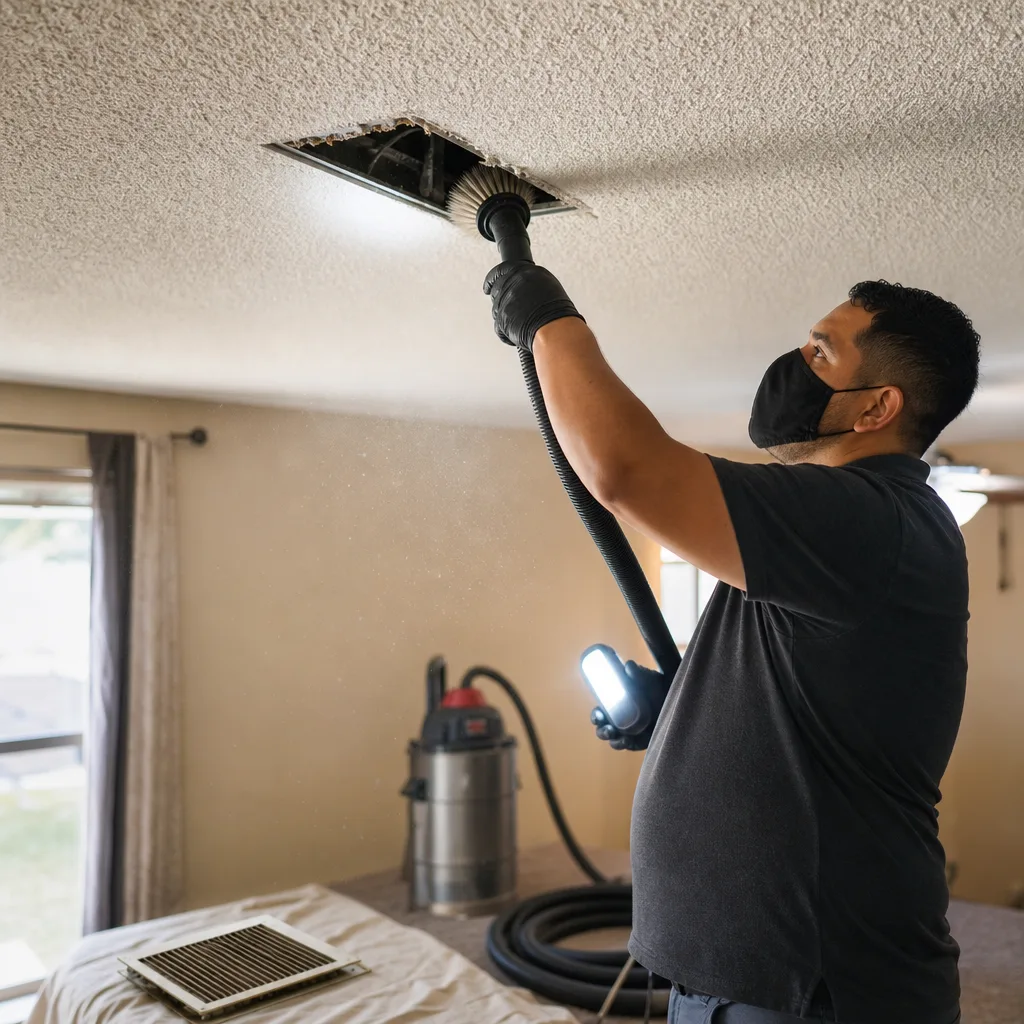
Most of a duct cleaning visit comes down to access. If the technician can reach every vent, every return, and your attic without moving a lot of things, the visit goes smoother. You’ll also get more useful answers about your system.

A little prep the day before helps a lot:
- Clear the space in front of every supply vent and return grille. Floor registers under rugs, beds, or couches are the ones people forget.
- Make your attic access easy to reach. In many Dallas ranch homes, that’s a pull-down ladder in a hallway or the garage, so move anything parked underneath it.
- Put pets in a closed room away from the vents. Doors and attic hatches will be opening and closing.
- Write down your problem rooms. If the back bedroom runs warm or the den gets dusty fast, tell the technician up front.
- Know where your air filter is, and keep a fresh one on hand.
When the technician arrives, you’ll go over the price first. With our upfront flat-rate pricing, you approve the number before anyone starts. Then the work moves through the house room by room, with trips up into the attic where your ductwork runs. If you want to plan your day around it, ask when you call how long your system will be off.
In a Dallas summer, the attic is the toughest part of the job. Those spaces get extremely hot, and that’s also where crushed or loose ducts tend to hide. The technician will be up there working, not just glancing in from the hatch, so make sure that path is clear.
Before the technician packs up, take a few minutes to check the work yourself:
- Walk through the rooms you wrote down and hold your hand up to the vents. You should feel steady air in each one.
- Look at the registers. They should be clean, not just dusted on the front.
- Ask what the airflow check showed, especially for any room that’s been giving you trouble.
- If something turned up, ask to see it. Get the separate quote before you agree to any extra work.
- Put in a fresh filter once the job is done, so the new filter catches what’s left in the air instead of an old, clogged one.
If a room still feels weak after the cleaning, say so before the technician leaves. That’s the best time to talk it through, while the attic is open and the results are right in front of you.
You’re letting someone into your home and your attic, so it matters who shows up. Our licensed and insured technicians are background-checked and drug-tested, and they’ll explain what they find in plain English.
Call 469-213-3107
Frequently Asked Questions
Common questions about Air duct cleaning
Will my house be dusty right after the duct cleaning is done?
You might notice a little dust settling the first day, but it should clear up fast. Any leftover dust is just what got stirred up near the vents during the job, not a sign of a problem. Running a fresh air filter right after the visit helps catch what’s left in the air.
Is there a best time of year to get ducts cleaned in Dallas?
Spring or early fall works best, right before your system has to work hardest. Your AC runs for months straight through the Dallas summer, so getting ducts clean before that heavy use starts means less dust gets pushed through the house all season. It also gives you a chance to catch attic duct problems before triple-digit days make the attic too brutal to work in comfortably.
Ready to Get Started?
Call (469) 213-3107 Today, Get Service Today.