


Emergency HVAC Service in Plano: Know When to Call and What It Costs
Real emergencies handled fast – with simple checks to try first and the cost explained before anyone is dispatched.
What’s Covered on This Page
- What Counts as an HVAC Emergency
- When You Can Wait for a Regular Appointment
- What an Emergency Repair Costs and What’s Included
- What Happens During an Emergency HVAC Visit
- Common Failures Behind Plano Emergency Calls
- What is the $5000 rule for HVAC?
- Can I call for emergency AC maintenance, or only for repairs?
What Counts as an HVAC Emergency
Not every HVAC problem has to be fixed tonight. The real question is simple: is your home still safe for the people in it, and is something getting worse by the hour? If the answer is no to the first part or yes to the second, call for help today.
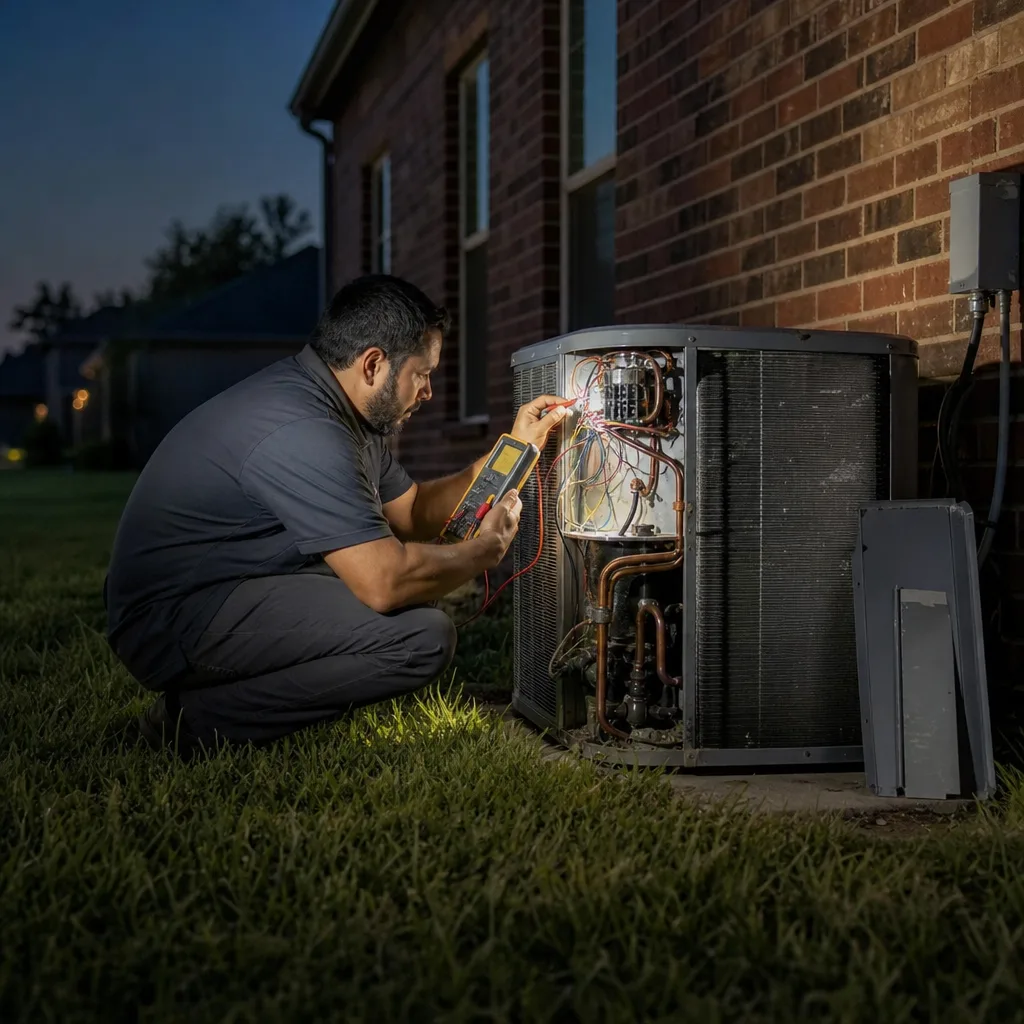
Call for same-day help if you notice any of these:
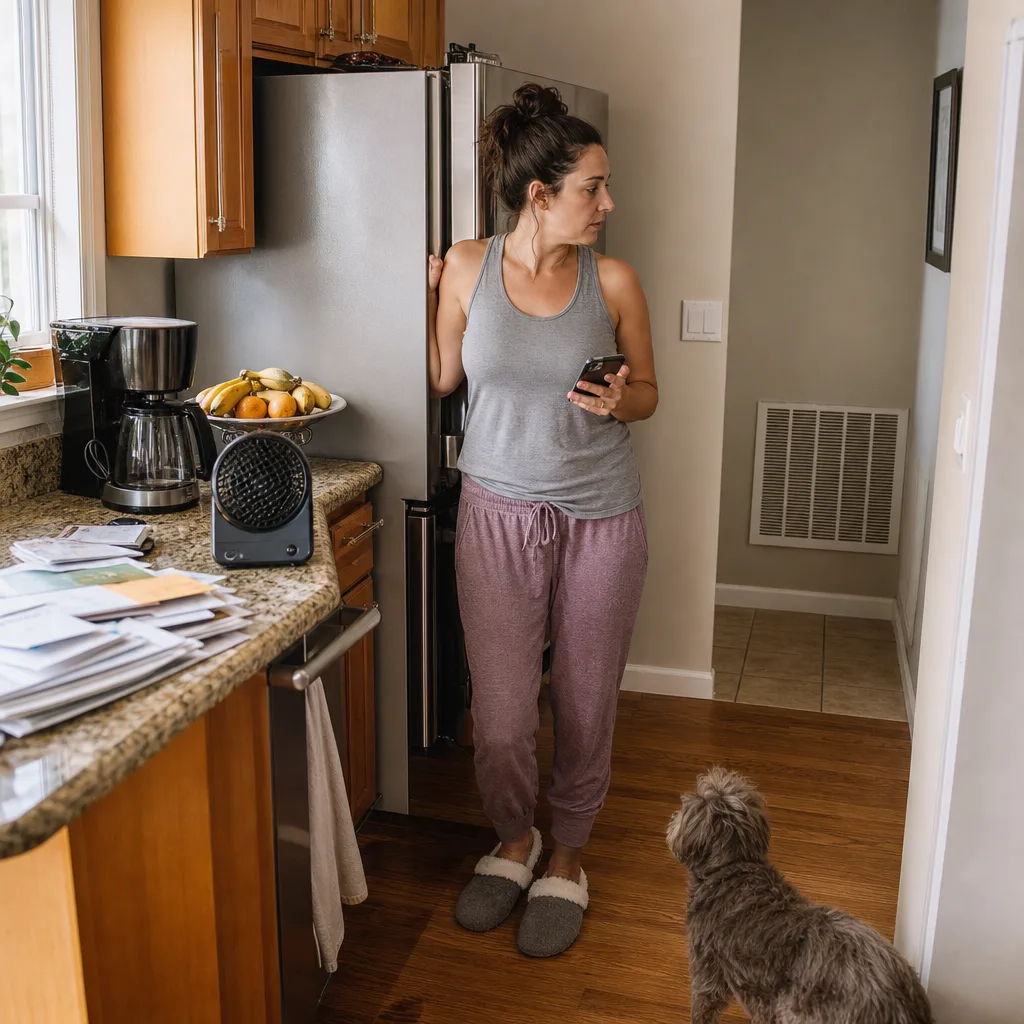
- Your AC quit on a hot Plano afternoon and the house keeps climbing past 85 degrees, especially with a baby, an older parent, someone with a health condition, or pets at home.
- Your heat stopped during a hard freeze and the indoor temperature keeps dropping.
- Water is dripping from a ceiling, a vent, or around the indoor unit. Most North Texas homes keep the air handler in the attic, so a clogged drain line can soak drywall and insulation fast.
- You smell burning or hot electrical odors, or a breaker trips again right after you reset it.
- You hear loud banging, grinding, or screeching that wasn’t there before.
- Your business can’t run without it, such as a server room heating up, a restaurant kitchen too hot to work in, or stock that has to stay cool.
One more thing. A gas smell or a carbon monoxide alarm is a safety emergency before it’s a repair job. Treat it that way first, then call us about the equipment.
Here’s the honest part. Some problems can wait a day or two without hurting you or your system. One room runs a little warmer than the rest. The system cools, just slower than it used to. Your energy bill crept up. A new hum or click shows up, but the house stays comfortable. Those are worth a regular repair visit, not a rush call.
Before you call anyone, take two minutes and check these:
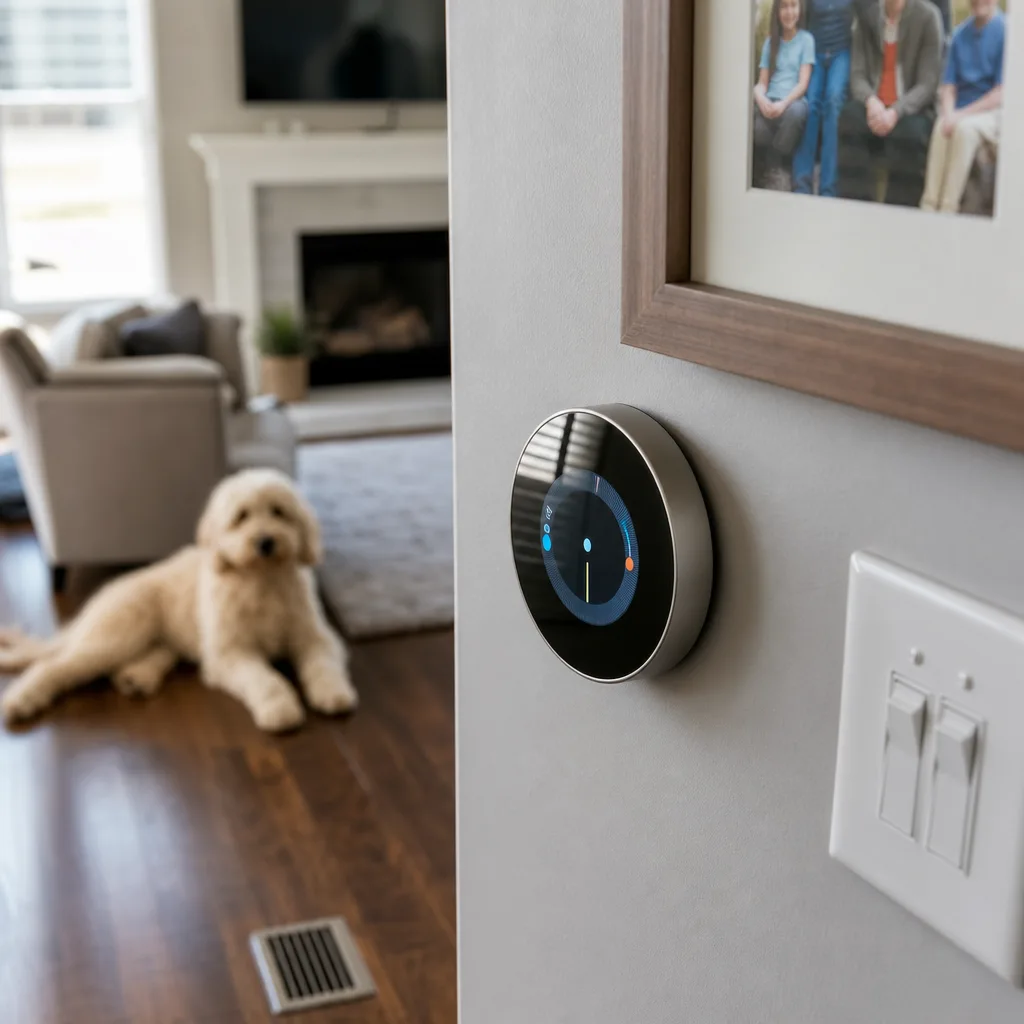
- Thermostat: make sure it’s set to cool or heat, the temperature setting is right, and the screen isn’t blank. Dead batteries can shut it off.
- Breaker: look for a tripped HVAC breaker in your panel and reset it once. If it trips again, leave it off.
- Filter: a filter packed with dust can choke airflow and make the system freeze up or shut down. Swap it if it looks gray and clogged.
If one of those fixes it, great. You just saved yourself a service call. If the system still won’t run right, or you saw ice on the indoor coil or the copper line outside, turn the system off and let a technician take a look.
A lot of people wait until Monday because they’re afraid of an after-hours bill. You don’t have to. Xtreme Air Services charges no extra for nights or weekends, so the cost of getting help Saturday night is the same as Tuesday morning. That means you can decide based on what your home needs, not on the calendar.
When You Can Wait for a Regular Appointment
If your problem is on the “can wait” side, you don’t need a technician tonight. Book a regular repair visit for the next few days and use the time well. A few easy habits take strain off the system, and some simple notes can make the visit faster when it happens.
Here’s how to ease the load while you wait:
- Set the thermostat a few degrees higher than usual in summer, or a few degrees lower in winter. A system that’s struggling has a better chance of keeping up with a smaller goal.
- Don’t drop the setting way down to cool the house faster. It won’t. It just keeps a weak system running longer and harder.
- Close the blinds on sunny windows in the afternoon. The late-day sun in North Texas can heat a room faster than a tired AC can cool it.
- Run your ceiling fans. They don’t lower the temperature, but moving air helps you feel cooler, so you can live with a higher setting.
- Keep the outdoor unit clear. Pull back grass clippings, leaves, and anything stacked against it so it can breathe.
Next, keep a few notes. When does the problem show up? Is it worst in the afternoon heat, or just when the system first kicks on? What does the noise sound like, and where does it come from? What does the thermostat say, and what’s the temperature in the house? Do you have pets, a locked gate, or a tight attic? A technician can start in the right spot when you tell them it only happens around 4 p.m. on hot days, instead of trying to catch a problem that’s gone quiet.
Here’s what waiting looks like when it’s working. Say your system runs long on a 98-degree afternoon, but the house still settles at 78 by evening and everyone sleeps fine. That’s a system asking for attention, not one that’s failing. A regular appointment makes sense.
Waiting stops making sense when things change. Watch for these signs that your problem is moving into emergency territory:
- The indoor temperature climbs a little higher each day, even with the setting raised.
- The system starts turning on and off every few minutes instead of running steady cycles.
- A sound that was a faint hum gets louder or turns into a rattle or grind.
- The system was keeping up, and now it can’t.
If any of those happen, the warning signs from the section above now apply to you. Don’t wait for the appointment date.
One last honest point. If your system is slow but still working, it’s often in better shape for a planned visit than a rushed one. You’ll have time to ask questions, get the price before any work starts, and decide on a repair without a hot house pushing you. If what you’re dealing with is really wear that a yearly HVAC maintenance or tune-up visit would catch, that’s worth knowing too.
What an Emergency Repair Costs and What’s Included
Most emergency HVAC repairs with Xtreme Air Services cost $200-$525. That covers the most common job. We find the failed part, repair or replace it, and make sure your system runs right before we leave. Most calls are a single common failure fixed on the first visit. Across all emergency repairs, our typical range is $200-$900.
Here’s how the money works, so nothing catches you off guard.
- Service-call fee: $26-$99 for us to come out. If you go ahead with the repair, that fee is credited toward it, so it isn’t an extra charge on top.
- Upfront flat-rate price: once the technician finds the problem, you get the price before any work starts. You approve it first. There’s no meter running while we work.
- Same price any hour: as covered above, a Saturday night call costs the same as a Tuesday morning one.
Your repair price includes:
- Diagnosis, so you know exactly what failed
- Labor
- The standard replacement part
- Testing to confirm the system runs correctly
- Cleanup
Some things aren’t part of that price unless we quote them separately: additional failed parts, major components, code upgrades, and permits. If one of those comes up, it gets its own quote. You decide on it as a separate step instead of finding it on the bill later.
Several things move the price up or down. These include how much of the system failed, what the part costs and whether it’s easy to get, how old your equipment is and what brand it is, and whether more than one part gave out. A single worn part on a newer system tends to sit near the low end. An older system that needs a hard-to-find part, or one with two failures at once, will cost more. The technician should tell you which situation you’re in before you approve anything.
Financing isn’t usually offered for a smaller job like this one. It is available on larger repairs and replacements. So if your repair turns into a talk about a major component or a new system, ask about your options before you decide.
Whoever you call, these questions will tell you a lot before you say yes:
- Is there a trip or service-call fee, and does it count toward the repair?
- Will I get the full price before any work starts?
- Do you charge more for nights, weekends, or holidays?
- What does the price include, and what would cost extra?
- Are you licensed and insured in Texas?
A good company answers all five without hesitation. For the record, our team is licensed and insured, and our HVAC license number is TACLA29023C. You can check it yourself before we ever show up.
Have questions? We’re happy to help.
Call Today, Get Service Today. Xtreme Air Services — North Plano is ready to help.
What Happens During an Emergency HVAC Visit
When your system quits, you want to know what you’re signing up for before someone walks through your door. An emergency visit with Xtreme Air Services follows four steps. We find what failed, give you the price, fix it, and prove it works. You’ll talk to a real person when you call, and same-day service is available. Our licensed and insured technicians are background-checked and drug-tested, so you know who’s in your home.
You can make the visit faster with a few minutes of prep while you wait:
- Clear a path to the attic access. In most Plano homes the air handler sits up there, so move boxes and anything else stored under the pull-down ladder.
- Unlock the gate to the outdoor unit and put pets in another room.
- If you saw ice on the lines or water coming from the indoor unit, leave the system off.
- Have your notes ready on when the problem started and what you heard or smelled. Those are the details covered earlier on this page.
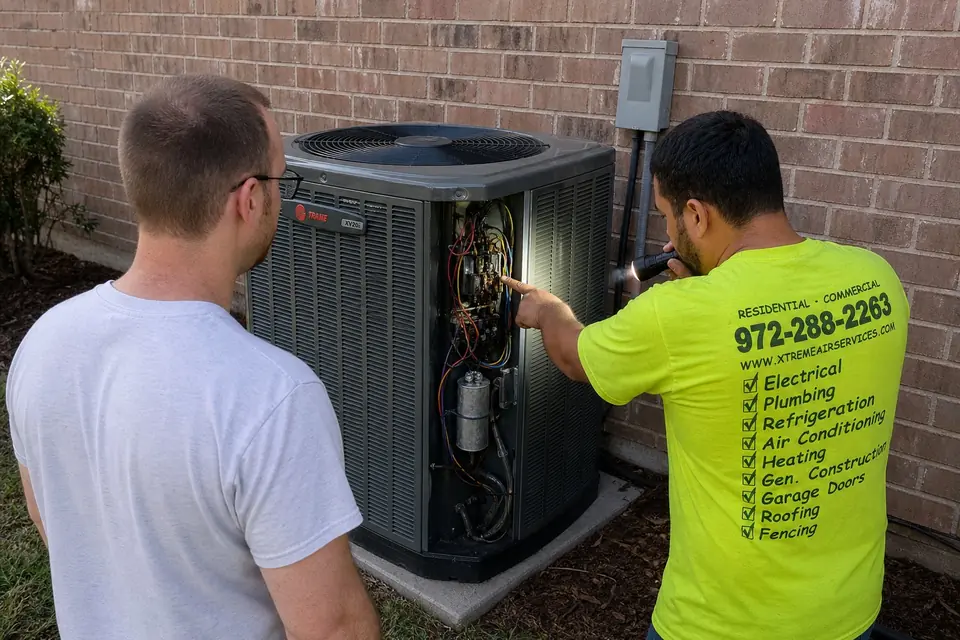
Finding the problem comes first, because guessing costs you money. A good diagnosis works from the simple to the complex. The technician checks power and the thermostat, then the outdoor unit, and then the indoor side. Some of the usual suspects in a North Texas summer are easy to miss without testing. A worn capacitor can keep the outdoor fan or compressor from starting. A clogged drain line can trip a safety switch and shut everything down. A frozen coil means something is choking airflow or refrigerant. A failing blower or fan motor might still hum but not spin.
Most calls turn out to be a single common failure that gets fixed on the first visit. The technician will show you what failed and explain it in plain English, not a pile of part numbers.
Next, you get the price before any work starts. That’s the upfront flat-rate pricing explained above, and nothing moves forward until you approve it. If the technician finds a second failed part or a major component, you’ll hear about it as its own quote and decide on it separately. It won’t be a surprise on the bill.
Once you say yes, the technician repairs or replaces the failed part. Then comes the step that matters most to you. They run your system and confirm it heats or cools the way it should. Swapping a part and leaving isn’t good enough if the house is still warm an hour later. Testing is part of the job, and so is cleanup, so your attic ladder and floors are left the way you found them.
By the time the technician leaves, you should know three things. You’ll know what broke, what was done about it, and that your system is running right again. If any of those isn’t clear, ask. You deserve a straight answer in your own home.
Call 469-527-5131
Watch Our Video
See How We Handle Emergency HVAC service in Plano
Xtreme Air Services — North Plano
Common Failures Behind Plano Emergency Calls
When your system quits, it can feel like the whole thing died at once. Usually it didn’t. Most emergency calls come down to one worn part that gave out under stress. Here’s how to match what you’re noticing to the likely cause, so you walk into the conversation with your technician already knowing what to ask.
- The outdoor unit hums but the fan won’t spin. This often points to a capacitor. That’s a small part that gives the fan and compressor a jolt to get started. Weeks of 100-degree days wear capacitors down, and they tend to quit on the hottest afternoon of the year.
- The indoor fan blows, but the outdoor unit stays silent. A contactor may be the problem. It’s the switch that tells the outdoor unit to turn on. Its contacts can burn or pit over time, and bugs sometimes crawl inside and block it.
- The system shuts off and won’t restart, and you find water in the pan under the attic unit. Your AC pulls a lot of water out of humid summer air. If algae or sludge clogs the drain line, a safety switch shuts the system down to keep that water out of your ceiling.
- Warm air comes from the vents, and you see ice on the copper line outside. The indoor coil has frozen. A dirty filter can cause this. So can low refrigerant.
- You hear humming inside, but little or no air comes out of the vents. The blower motor, or the part that helps it start, may have failed. Attic heat in a North Texas summer is hard on motors that run for hours every day.
- The heat won’t come on during a cold snap. On a gas furnace, a cracked ignitor or a dirty flame sensor is a common cause. If you have a heat pump, a sudden hard freeze can push a weak part past its limit.
One point about refrigerant is worth knowing. Your AC doesn’t burn through it the way a car burns gas. If the level is low, there’s a leak somewhere. Adding more without finding the leak just buys you time. A real fix means finding the leak and repairing it, and we handle refrigerant recharge and leak repair as its own service.
Storm season can also break things. Hail can flatten the thin metal fins on your outdoor unit. That makes it harder for the unit to get rid of heat. A unit with damaged fins may keep running but struggle to keep up, and on a hot day that strain can push a tired part over the edge.
Notice that most of these are single parts. A capacitor, a contactor, a clogged drain, or an ignitor isn’t the same as a dead system. That’s why most calls are a single common failure fixed on the first visit, and why the pricing above starts where it does. Bigger news, like a failed compressor, is less likely. If it does happen, you’ll hear about it as its own quote and decide on it separately.
You don’t have to diagnose any of this yourself. Still, telling your technician “the outside fan hums but won’t spin” points them to the right spot faster than “it’s broken.”
Frequently Asked Questions
Common questions about Emergency HVAC service
What is the $5000 rule for HVAC?
The $5000 rule is a simple way to decide between repair and replacement, not a fixed charge. You multiply the age of your system by the estimated repair cost, and if that number tops $5,000, replacement usually makes more financial sense than another repair. A 12-year-old system facing a $450 repair lands at $5,400, which leans toward replacement. A 5-year-old system with the same repair lands at $2,250, which leans toward fixing it.
Can I call for emergency AC maintenance, or only for repairs?
Emergency calls are for breakdowns, not routine maintenance. If your AC has stopped cooling, is leaking, or is making new grinding or screeching noises, that is an emergency worth a same-day call. Routine maintenance, like a seasonal tune-up or filter check, should be scheduled as a regular appointment instead of an after-hours call.
Ready to Get Started?
Call (469) 527-5131 Today, Get Service Today.