


Air Duct Cleaning in Dallas: Know What You’re Paying For
What a standard duct cleaning covers and costs, and how to tell if your home actually needs one.
What’s Covered on This Page
- How Air Duct Cleaning Pricing Works
- Signs Your Dallas Home Needs Duct Cleaning
- When You Don’t Need Professional Duct Cleaning Yet
- What Happens During a Duct Cleaning Visit
- Will Your House Be Dusty or Disrupted After Cleaning
- Do duct cleaners go into every room of my house?
- What are the downsides of duct cleaning if I don’t need it?
- How long does a typical duct cleaning visit take?
How Air Duct Cleaning Pricing Works
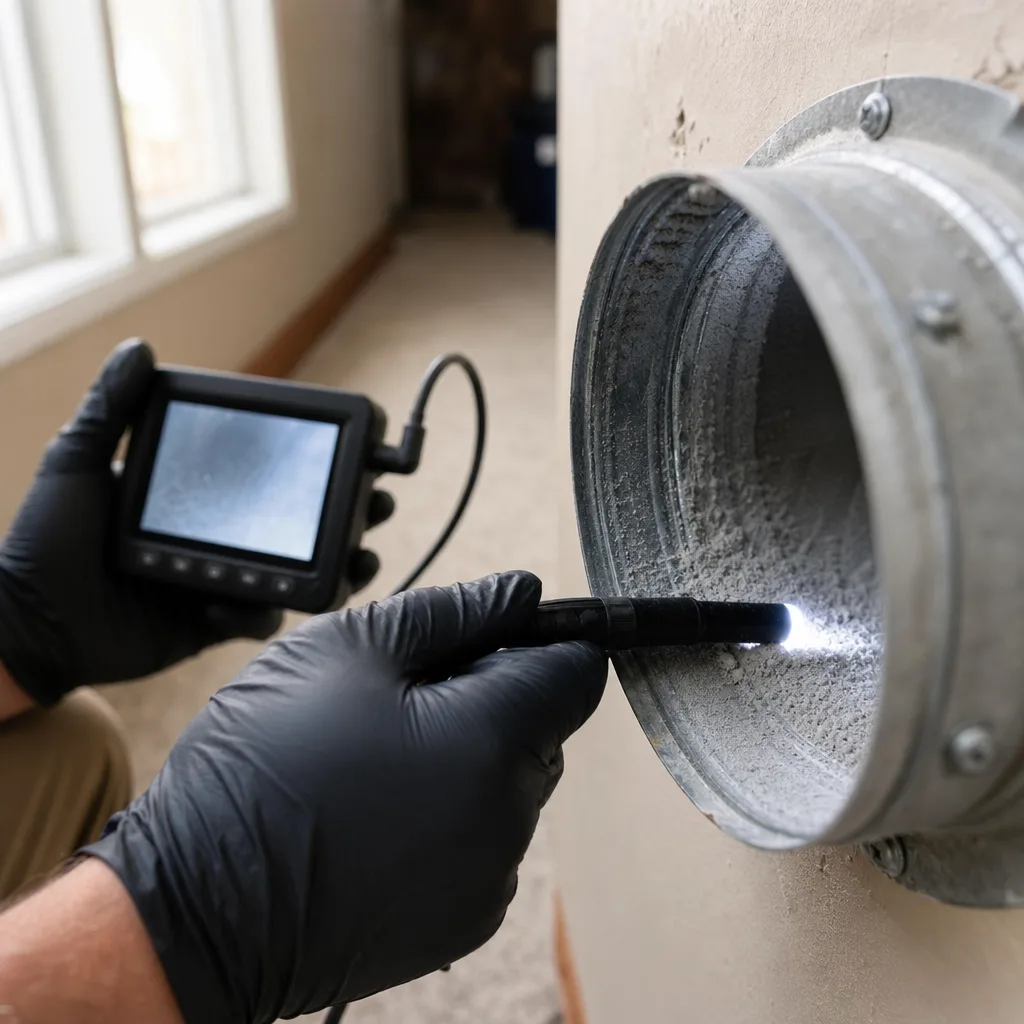
Duct cleaning isn’t a one-size job, so a single flat price for every house doesn’t make sense. Our pricing is based on vent count. Every supply vent and return in your home is one more run of ductwork we have to clean. That’s why a small two-bedroom place and a big two-story home won’t cost the same. Counting vents gives you a fair, upfront flat-rate price that you approve before any work begins. No meter is running while we’re in your attic.
Here’s what moves the price up or down:
- Number of vents and returns. This is the biggest factor. More openings means more duct to clean.
- System size. A larger home often has a bigger system, or more than one, with longer duct runs.
- Level of buildup. Ducts with heavy dust, debris, or leftover construction mess take more time than ducts that get light use.
- Accessibility. In a lot of Dallas homes, the ductwork runs through the attic. A tight, low attic with hard-to-reach runs takes more work than one with easy access.
- Sanitizing. If you add sanitizing to the cleaning, it adds to the cost. It’s your choice, not something we tack on.
Our standard job covers full duct cleaning for your supply and return ductwork, register cleaning, and an airflow check. It doesn’t include mold remediation, duct repair or sealing, or any corrective work we find during the visit. If our technician spots a crushed duct or a loose connection, we’ll show you, explain it in plain English, and give you a separate quote. You decide whether to go ahead. Nothing gets done or billed without your okay.
We charge a $26-$99 service-call fee. If you move forward with the work, that fee is credited toward the job. Financing isn’t usually offered for a smaller job like duct cleaning, but it’s available on larger repairs and replacements if the visit turns up something bigger.
Whoever you hire, be careful with very low whole-house prices. A rock-bottom ad price often means a quick pass through a few vents, then an upsell once the crew is inside your home. Before you book with anyone, ask these questions:
- Is the price based on my vent and return count, and how many do you think I have?
- Does the price include both supply and return ducts, or only the supply side?
- What exactly is included, and what would be quoted separately?
- Will I see and approve the full price before work starts?
A good company will answer all four without dodging. If the answers stay vague, that tells you what the final bill might look like.
Signs Your Dallas Home Needs Duct Cleaning
Duct cleaning is worth your money when there’s a clear reason for it. Dusty vent covers alone don’t prove your ducts are dirty. These signs point to real buildup inside the ductwork.
- Dust puffs out of the vents. When the system kicks on, you see a little cloud. You might also see a gray film settle on furniture a day or two after you dust.
- You just finished a remodel. Drywall dust, sawdust, and paint grit get pulled into the return vents. That fine dust then rides back through every room each time the system runs.
- You’ve found signs of pests. Mice and other critters like warm attics. If you’ve seen droppings, nesting, or chewed insulation near your ductwork, the ducts need a look.
- You moved into an older home. You don’t know when the ducts were last cleaned, or if they ever were. Years of dust, pet hair, and debris can sit in there.
- You smell something musty when the air comes on. That smell needs to be checked, not covered up.
Dallas homes have a few things working against clean ducts. In many houses here, the ductwork runs through the attic. A Dallas attic gets very hot in summer, and your system runs almost all day from late spring into fall. More run time means more air moving through the ducts, and more chances for dust to build up. A lot of homes around town were built from the 1950s through the 1990s. Some still have their original ductwork, with seams and joints that have loosened over the years. A loose joint in the attic can pull in attic dust and insulation, then blow it straight into your living room.
Some problems look like dirty ducts but aren’t. Cleaning alone won’t fix these:
- Weak airflow in one room. This is often a crushed, kinked, or disconnected duct, not dust. The airflow check that comes with our cleaning can help find it.
- Dust that keeps coming back quickly. Leaky ducts pulling in attic air are a common cause. Duct sealing is the fix for that, and it’s quoted on its own.
- Visible mold inside the ducts. Mold needs remediation and a fix for the moisture causing it. Cleaning by itself won’t solve it.
Sometimes you don’t need us at all. If the only dust you see is on the vent covers, pop them off and wash them in the sink. If your filter is clogged, swap it out and see if things improve over the next few weeks. A cheap filter that’s been in place too long can cause a lot of the dust people blame on their ducts. Allergies alone, with no other signs, aren’t a strong reason to book duct cleaning either.
If you’ve seen dust clouds, had a remodel, found pests, or moved into a home with unknown ductwork, cleaning makes sense. Our technician will look first and tell you what’s really going on. We’d rather you pay for the right fix than for a cleaning that won’t solve your problem.
When You Don’t Need Professional Duct Cleaning Yet
Lots of folks pick up the phone about duct cleaning before they really need it. Here’s when it makes sense to hold off, even though that means one less job for us.
- You’re in the middle of a remodel. Wait until the drywall is sanded, the floors are done, and the dust has settled. If you clean halfway through, the next round of sanding just coats the ducts again. While the work is going on, tape plastic over the return vents near the work area so less dust gets pulled into the system.
- You’re replacing your ductwork or your system soon. If new ducts or a new system are planned for the next few months, don’t pay to clean ducts that are coming out anyway. Put that money toward the new install.
- Your ducts were cleaned recently and nothing has changed. Maybe they were cleaned in the last couple of years, and you haven’t had a remodel, pests, or a water problem since. In that case, there’s usually no reason to clean them again just because time has passed.
- The smell is coming from somewhere else. A musty smell when the AC runs often starts at the indoor coil or a clogged drain line, not in the ducts. In a Dallas summer, that coil stays wet for months at a time. Duct cleaning won’t touch it. Evaporator coil cleaning or AC drain line cleaning is the right fix there.
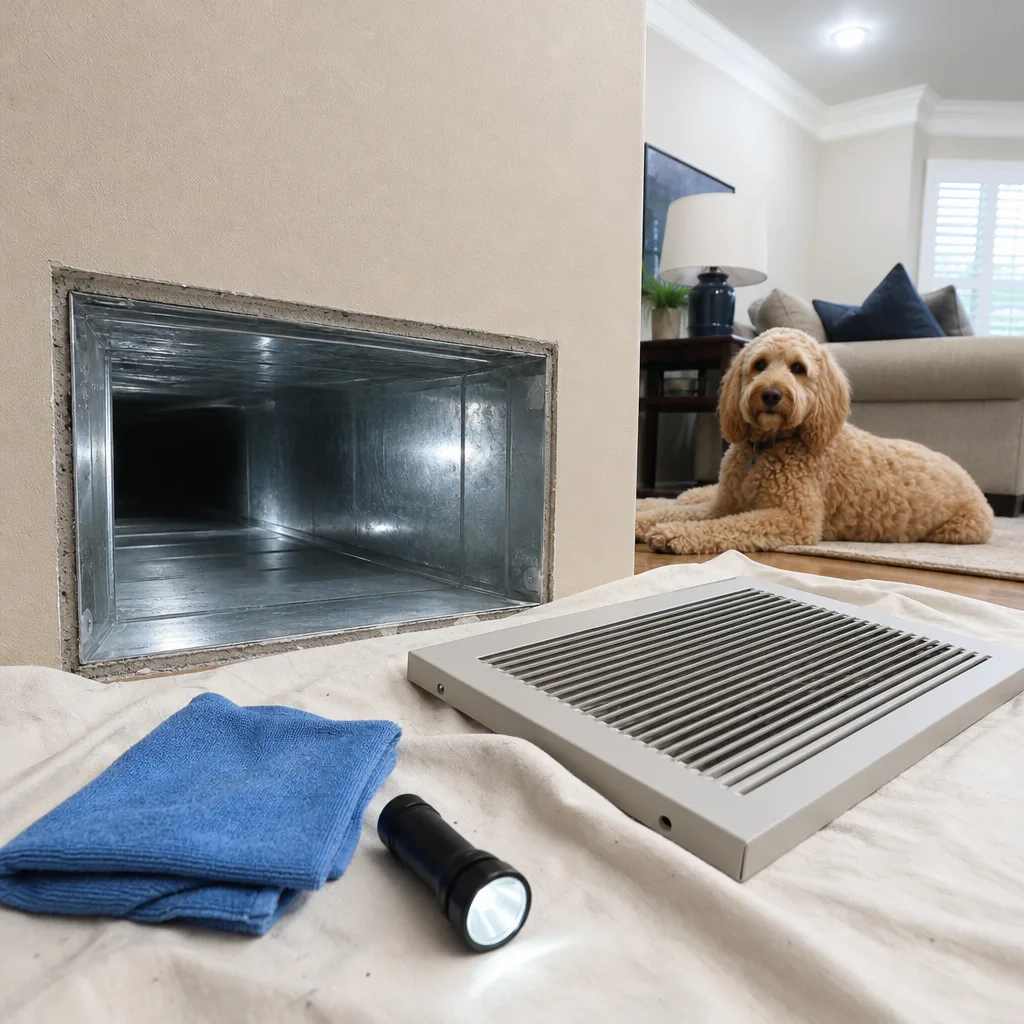
Not sure what’s inside your ducts? Here’s a five-minute check you can do yourself. Unscrew one supply register, ideally in a room far from your air handler, and shine a flashlight inside. A thin, even layer of dust on the metal or inside a flex duct is normal. It mostly sits there and doesn’t blow around.
What you’re really looking for is something more than that: thick clumps, mats of pet hair, chunks of debris, droppings, or anything that looks damp. If all you see is a light film, your ducts are fine for now. Screw the cover back on and look again in six months.
Try the same check on a return vent too, since returns tend to catch more dust than supplies. If the return looks clean and the supply looks clean, you’ve got your answer without paying anybody.
You don’t have to decide on the spot if someone calls or knocks with a duct cleaning offer you didn’t ask for. Do the flashlight check first. Ducts that look clean don’t need to be cleaned.
Waiting costs you nothing when the ducts look fine. If the check turns up heavy buildup later, or one of the signs above shows up, that’s when cleaning is worth your money.
Need help with Air duct cleaning?
Call Today, Get Service Today. Xtreme Air Services — Oak Lawn is ready to help.
What Happens During a Duct Cleaning Visit
A duct cleaning visit should feel simple and out in the open. You’ll know what we’re doing, what it costs, and what we found before you pay for anything.
A little prep on your end helps the visit go faster:
- Clear a path to every vent and return, including the ones hiding behind a couch, a bed, or a dresser.
- Make sure we can reach the attic hatch or pull-down ladder. In a lot of Dallas homes, that’s where your ductwork runs.
- Put pets in a closed room so they stay calm and out of the way.
- Plan to have an adult at home who can look over and approve the price.
First, we count. Our technician walks through your home and counts every supply vent and return. Since that count sets the price, you’ll see your upfront flat-rate number and approve it before any work starts. If something doesn’t make sense, ask. We’ll walk you through it.
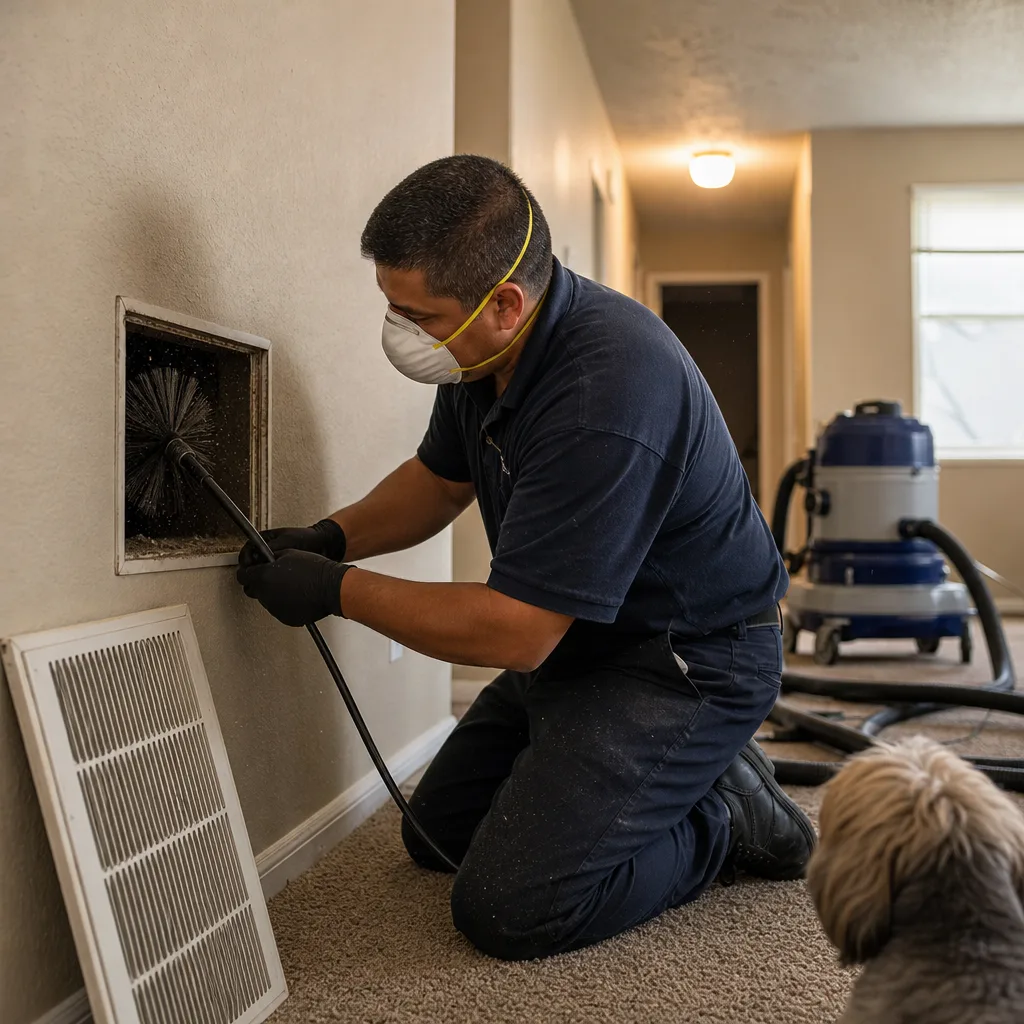
Next comes the cleaning. We clean your whole-home supply and return ductwork to pull out the dust and debris. Both sides matter. Your returns pull air in from every room, so they catch a lot of the dust in your house. If only the supply side gets cleaned, dirty returns keep feeding that dust right back into the system. We also clean your registers, the vent covers you see on your walls, floors, and ceilings.
Then we check the airflow. This is how you know the work made a real difference. It’s also how we spot a room that still isn’t getting enough air. A room that stays weak after a good cleaning usually has a duct problem, not a dust problem. If we find something like that, we’ll show it to you and quote it separately, and you decide what happens next.
You don’t have to just take our word that the job is done. Once we leave, grab your flashlight and do the same check from earlier. Pull one supply register and one return and look inside. You should see clean metal or clean duct liner, not clumps, pet hair mats, or debris. Over the next few weeks, you should also notice less gray dust settling on your furniture.
Keeping your ducts clean comes down mostly to your air filter. Put in a fresh one after the cleaning, then check it often. In a Dallas summer, your system runs almost all day, so a filter fills up faster than it does in spring or fall. A clean filter catches the dust before it ever reaches your ducts.
Call 469-269-6373
Watch Our Video
See How We Handle Air duct cleaning in Dallas
Xtreme Air Services — Oak Lawn
Will Your House Be Dusty or Disrupted After Cleaning
A good duct cleaning shouldn’t leave your house dustier than it was before. The whole point is to pull dirt out of the ductwork and carry it away. It shouldn’t stir that dirt up and spread it across your furniture. If your home looks worse when the crew leaves, something went wrong.

Here’s what’s normal on cleaning day, and what isn’t.
- Your AC or heat will be off while the ducts are being worked on. In July or August, a Dallas house warms up fast with the system shut down. If you can, book a morning slot so the cleaning wraps up before the hottest part of the afternoon.
- It’ll be loud. Duct cleaning equipment makes a steady, heavy noise, much like a big shop vacuum running. If you work from home or have a baby napping, plan around it.
- There’ll be some foot traffic. The ductwork in many Dallas homes runs through the attic, so expect trips up and down the hatch. That hatch often sits in a hallway, closet, or garage ceiling. Your prep work from earlier keeps that path clear.
- Registers come off and go back on. Each vent cover gets removed, cleaned, and put back in place.
What you shouldn’t see is a haze in the air, gray dust piled up on the floor under the vents, or a fine coat on your counters. Those are signs that loosened dust escaped into your living space instead of getting collected. Whoever you hire, ask them before they start how they keep the dust contained. A company that does this work right will have a clear, simple answer.
You might notice one small puff of dust the first time the system kicks back on. That’s usually a little loose debris near the registers clearing out. It should settle quickly and not happen again. If dust keeps blowing out of the vents for days, that’s worth a call. It can point to a leaky duct pulling in attic dust, which cleaning alone won’t fix.
A standard cleaning shouldn’t leave a strong smell behind either. Sanitizing is different. It’s an optional add-on, and you choose whether you want it. If you add it, ask what product will be used and whether you, your kids, or your pets should stay in another part of the house while it goes in. Anyone in your home with asthma or bad allergies may also be more comfortable in a different room during the noisy part of the job.
Once the crew is gone, your home should look the way it did that morning. The difference is that less dust is riding around in the air you breathe. Your days should look the same too, just with less dust on the end tables. If you have to clean up after the cleaners, you didn’t get the job you paid for.
Frequently Asked Questions
Common questions about Air duct cleaning
Do duct cleaners go into every room of my house?
Yes, a full job covers every supply vent and return in your home, not just a few rooms. That’s why we count every vent and return before giving you a price, since each one is a run of ductwork that needs cleaning. Skipping rooms to save time leaves dirty ducts feeding dust right back into the ones that were cleaned.
What are the downsides of duct cleaning if I don’t need it?
The main downside is paying for work that won’t fix your real problem. If weak airflow is caused by a crushed or disconnected duct, cleaning alone won’t help, and you’d need a repair instead. If a musty smell is coming from a wet evaporator coil, which is common during a long Dallas summer, cleaning the ducts won’t touch it. That’s why we check things out before recommending a cleaning, so you’re not paying for the wrong fix.
How long does a typical duct cleaning visit take?
Most whole-home jobs take a few hours, depending on how many vents and returns your home has and how hard they are to reach. A home with ductwork tucked into a tight, low attic takes longer than one with easy access. Heavy dust or debris buildup also adds time compared to ducts that just see light, everyday use.
Ready to Get Started?
Call (469) 269-6373 Today, Get Service Today.