


Water Heater Installation in Dallas: Licensed, Permitted, Done Right
Like-for-like tank swaps by licensed plumbers, with what the price covers and when a permit applies spelled out.
What’s Covered on This Page
- What a Standard Water Heater Installation Includes
- Signs You Need a New Water Heater, Not a Repair
- Why Dallas Requires a Permit and a Licensed Plumber
- What Drives Your Installation Cost Up or Down
- What Happens During Your Installation Visit
- How long does a water heater installation take?
- Can I install my own water heater to save money?
- What happens to my old water heater after a new one is installed?
What a Standard Water Heater Installation Includes
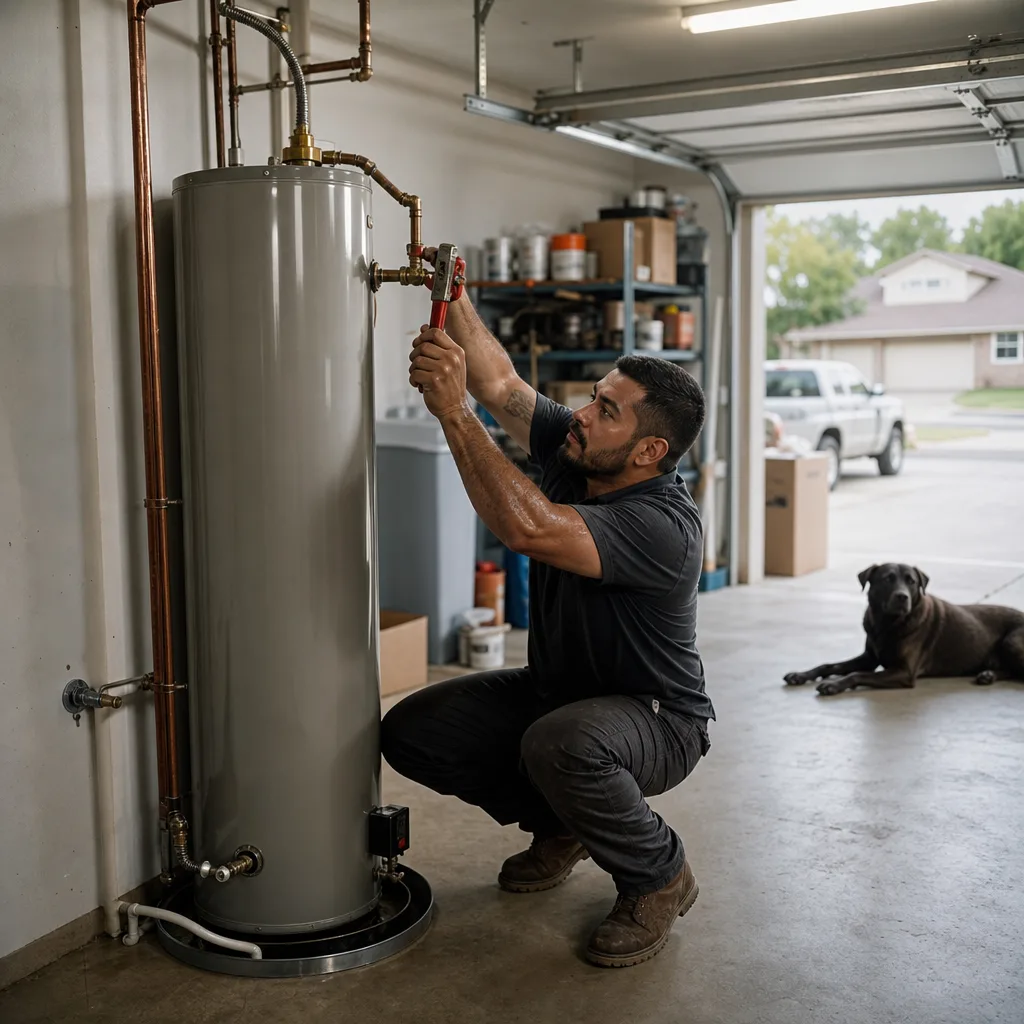
When you hear a price for a new water heater, you should know exactly what it buys. Here’s the plain version. A standard job means we’re replacing your old tank with a new tank in the same spot, hooked up to the same lines you already have. Nothing gets moved or rebuilt. That’s the most common water heater job we do, and it typically costs $1,700-$2,600.
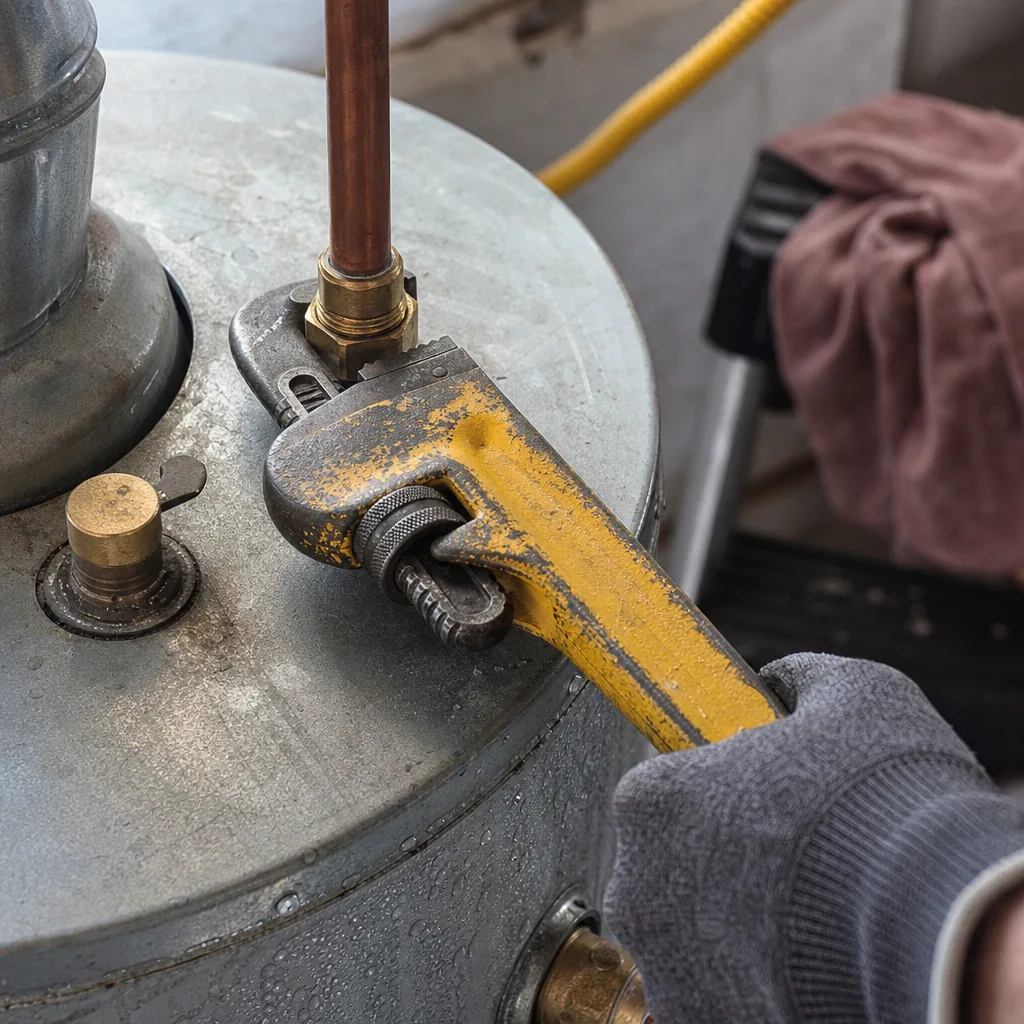
Here’s what that price covers:
- The new water heater and the materials needed to install it
- Professional installation by licensed and insured technicians
- Standard connections to your existing water, gas or electric, and vent lines
- Startup and testing, so you know it’s heating before we leave
- Haul-away of your old unit, so you’re not stuck with a heavy, rusty tank in the garage
Startup and testing matter more than most people think. A new tank has to fill completely before it’s turned on. The connections need to be checked for leaks, and the burner or heating elements need to come up to temperature the right way. Skipping those steps is how a brand-new heater ends up leaking or running cold the first week.
Some work falls outside a standard swap, and we’d rather tell you now than surprise you later. The following aren’t included unless your quote says so:
- Plumbing, electrical, or vent changes, like moving the heater or rerouting lines
- Code corrections, which are fixes needed to bring an older setup up to current rules
- Permits
This is where Dallas homes can differ. A water heater that’s been sitting in an older home for years may be connected in a way that doesn’t meet today’s rules. A tank tucked into an attic or a tight closet is harder to reach than one sitting in an open garage. Those details don’t make the job a problem. They just mean the price may land outside the standard range.
Across all our water heater work, prices typically run $1,200-$3,500. Where your job lands depends on a few things: the size and efficiency of the new tank, the brand and model you pick, how easy it is to get to, the shape your existing plumbing and wiring are in, any code upgrades, permits, and any custom work. These figures are for tank water heaters. Tankless water heater installation is a different job with its own page.
You’ll get upfront flat-rate pricing and approve it before any work starts, so there’s no meter running. If we come out first to look at your setup, there’s a $26-$99 service-call fee. That fee is credited toward the job if you go ahead with Xtreme Air Services. If a new heater wasn’t in this month’s budget, flexible financing is available on qualifying installations, on approved credit.
Signs You Need a New Water Heater, Not a Repair
Not every water heater problem means you need a new one. A lot of them come down to one worn-out part that can be swapped in an afternoon. The trick is knowing which problems live in a part and which ones live in the tank itself. Once the tank is the problem, a repair is just money spent on borrowed time.
These are the signs that point to replacement:
- Water leaking from the tank body. If water is coming from the tank itself and not from a pipe, valve, or fitting, the inside of the tank has rusted through. There’s no patch for that. It’s going to get worse, not better.
- Rusty or brown water from the hot taps only. If your cold water runs clear but your hot water looks rusty, the tank may be corroding from the inside. That usually means it’s near the end of its life.
- Loud rumbling or popping. That noise often comes from mineral buildup baking on the bottom of the tank. Dallas water is hard, so minerals settle out every time the water heats. A flush can help early on. When the buildup has been there for years, it can wear out the tank and make it work harder to heat.
- Hot water runs out faster than it used to. When the same family with the same habits starts getting shorter showers, the tank may be losing usable space to sediment, or it may just be too small for how you live now.
- An older tank that keeps needing repairs. Check the label on the side of your heater for the manufacture date. If your tank is getting into its second decade and you’ve paid for a couple of fixes already, putting that money toward a new one usually makes more sense.
Now the other side, because you deserve a straight answer. These problems are usually repairs, not replacements:
- A drip from a pipe connection, the drain valve, or a fitting on top of the tank
- A gas heater whose pilot won’t stay lit, which often traces back to a small part
- An electric heater with lukewarm water, which is often a bad heating element or thermostat
- Water that’s too hot or not hot enough after someone bumped the temperature setting
If your tank is fairly young and the problem is one of these, a water heater repair is the smart move. You don’t need a new heater, and nobody should talk you into one.
Sometimes it’s not clear from the outside. Say you walk into the garage and find a small puddle under the heater. It could be a loose fitting that takes ten minutes to fix. It could also be the tank starting to fail. The only way to know is to find exactly where the water is coming from. That’s the first thing a technician should check before anyone mentions a price for a new unit.
When it does come down to replacement, most homeowners are looking at the standard like-for-like swap described above. Knowing the signs ahead of time means you walk into that conversation already understanding why it’s the right call, not just taking someone’s word for it.
Why Dallas Requires a Permit and a Licensed Plumber
A water heater looks like a simple appliance. It’s really a tank of scalding water under pressure, tied into your gas or electric service, and in many cases venting exhaust out of your home. That’s why the City of Dallas treats replacing one as plumbing work that needs a permit and an inspection, not as swapping out a refrigerator.
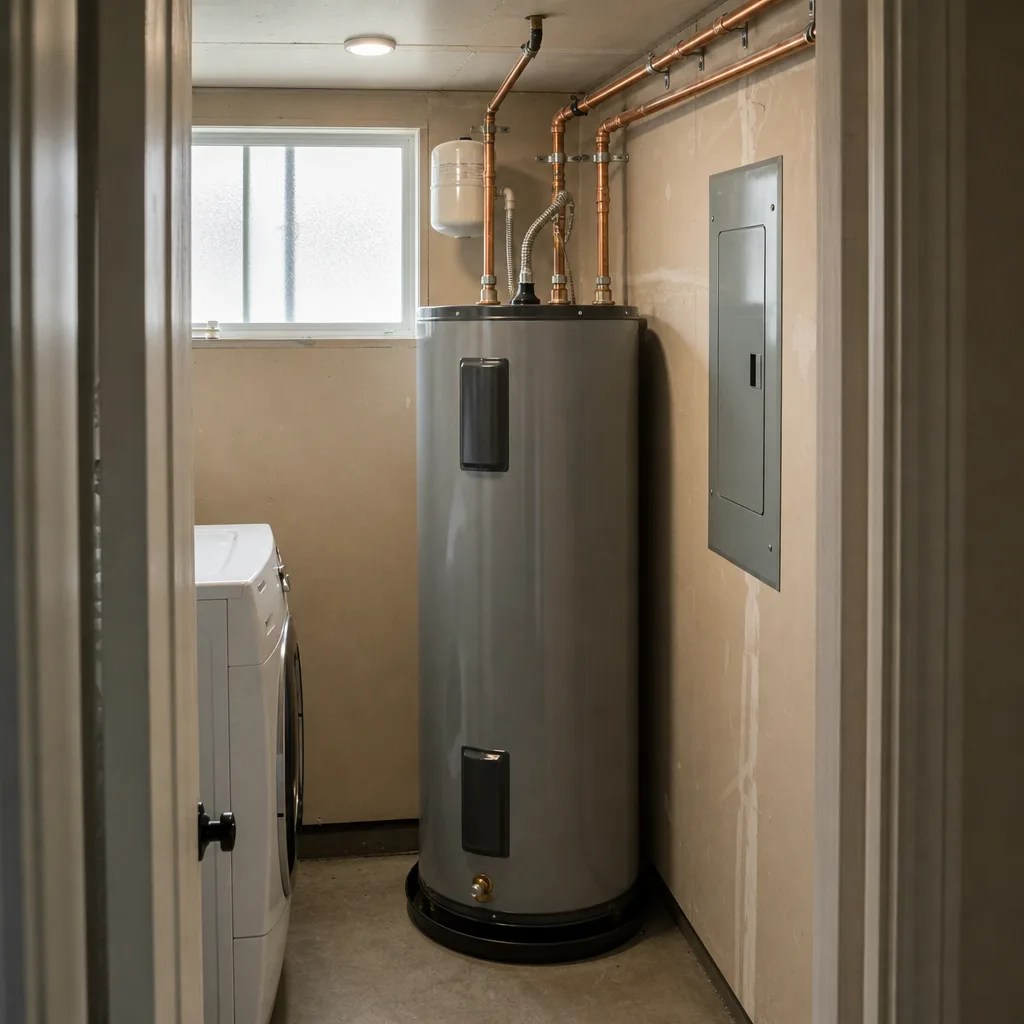
The permit isn’t paperwork for its own sake. It’s the step that gets a second set of eyes on the parts of the install that can hurt someone if they’re done wrong. An inspection typically looks at things like these:
- The temperature and pressure relief valve and its drain line. This valve lets water out if the tank gets too hot or the pressure climbs too high. If it’s missing, blocked, or piped the wrong way, that safety release can fail.
- Gas connections. A gas line that isn’t tight or isn’t connected the right way is a fire and safety risk.
- Venting on gas units. The exhaust has to leave your home properly. A poor vent can push carbon monoxide back into the house, and you can’t see or smell it.
- Electrical hookups on electric units. The wiring and breaker have to match what the new heater needs.
- Drain pans and placement. This matters most for a heater in an attic or upstairs closet, where a leak can soak a ceiling before anyone notices.
This is also where an older Dallas home can surprise you. A heater that’s been in place for twenty years was likely installed under older rules. When it’s replaced, the new setup has to meet today’s requirements. That can mean a relief line gets rerouted, a vent gets corrected, or a pan gets added. It’s the code-correction work mentioned in the pricing section above. It isn’t anyone padding the bill. It’s what passing inspection takes.
The license matters for the same reason. In Texas, plumbing work is done by licensed plumbers who’ve shown they know these safety rules. Our plumbing work runs under Master Plumber Larry Breedlove, and our technicians are licensed and insured. Insurance matters too. If something goes wrong in your home, you want the person who did the work to be covered, not you.
Skipping the permit can feel like a way to save money. It usually just moves the risk onto you. An unpermitted install can come up when you sell your home or file an insurance claim after a leak. And if a relief valve or vent was done wrong, nobody caught it.
Before you hire anyone, ask these questions:
- Will you pull the permit, and is it in my quote or a separate line?
- Is a licensed plumber doing or supervising the work?
- Are you insured?
- If my current setup doesn’t meet code, will you tell me what needs fixing before you start?
A good installer answers all four without hesitating. If someone dodges the permit question or offers to skip it to save you a few dollars, that tells you how they’ll handle the parts of the job you can’t see.
Not sure what your Water heater installation project needs? Ask us.
Call Today, Get Service Today. Xtreme Air Services — Oak Lawn is ready to help.
What Drives Your Installation Cost Up or Down
Two homes on the same street can get two different quotes for a new water heater. That’s not guesswork. It comes down to a handful of things you can usually spot yourself before anyone shows up.
Tank size. The bigger the tank, the more it costs. A couple in a small house might be fine with a smaller tank. A family of five with teenagers taking back-to-back showers may need more. If your family has outgrown the tank you have now, going bigger can make sense. Just know a larger tank may not fit the space your old one sat in, and that can add work.
Efficiency and model. Water heaters carry an efficiency rating called UEF, short for Uniform Energy Factor. In plain English, a higher number means less of your energy dollar gets wasted heating water. A more efficient model costs more up front and can cost less to run each month. The brand and model you choose also move the price, so it’s worth asking to see more than one option.
Where the heater lives. This one surprises people the most. A tank sitting in an open garage is the easiest job there is. A tank in an attic is a different story. It has to come down a ladder full of old sediment, and the new one has to go back up the same way. A heater squeezed into a hall closet or under the stairs can mean working around tight walls and doorframes. Same tank, more labor.
The shape of your existing lines. A like-for-like swap only stays standard if what’s already there is in good shape. In older Dallas homes, it’s common to find shutoff valves that won’t close all the way, fittings crusted with hard-water scale, or gas and water lines that have aged right along with the old tank. If a connection can’t be safely reused, it has to be replaced. That’s extra parts and extra time.
Code upgrades and permits. If your old setup was installed under older rules, the new one has to meet today’s, as covered in the permit section above. That work and the permit itself can raise the total.
Custom work. Sometimes a part of the job has to be built to fit your home. That might be a new stand, a different vent run, or moving the heater to a better spot. Anything custom costs more than a straight swap.
Here’s a quick way to size up your own job. Take a look at your current heater and answer these:
- Is it in the garage, or in an attic or closet?
- Do you want the same size tank, or a bigger one?
- Is it gas or electric, and are you keeping it that way?
- Do the valves and fittings on top look clean, or rusty and crusted over?
- Roughly how old is the house and the heater?
If you’re keeping the same size and fuel type in an easy spot with clean connections, you’re likely looking at a standard job. If a few of your answers point the other way, expect the price to land higher in the range. Either way, you’ll see the full flat-rate price and approve it before any work begins, so the number you agree to is the number you pay.
Watch Our Video
See How We Handle Water heater installation in Dallas
Xtreme Air Services — Oak Lawn
What Happens During Your Installation Visit
Knowing how the day will go takes a lot of the stress out of it. Here’s how a proper water heater swap works, from the moment the technician walks in to your first hot shower.
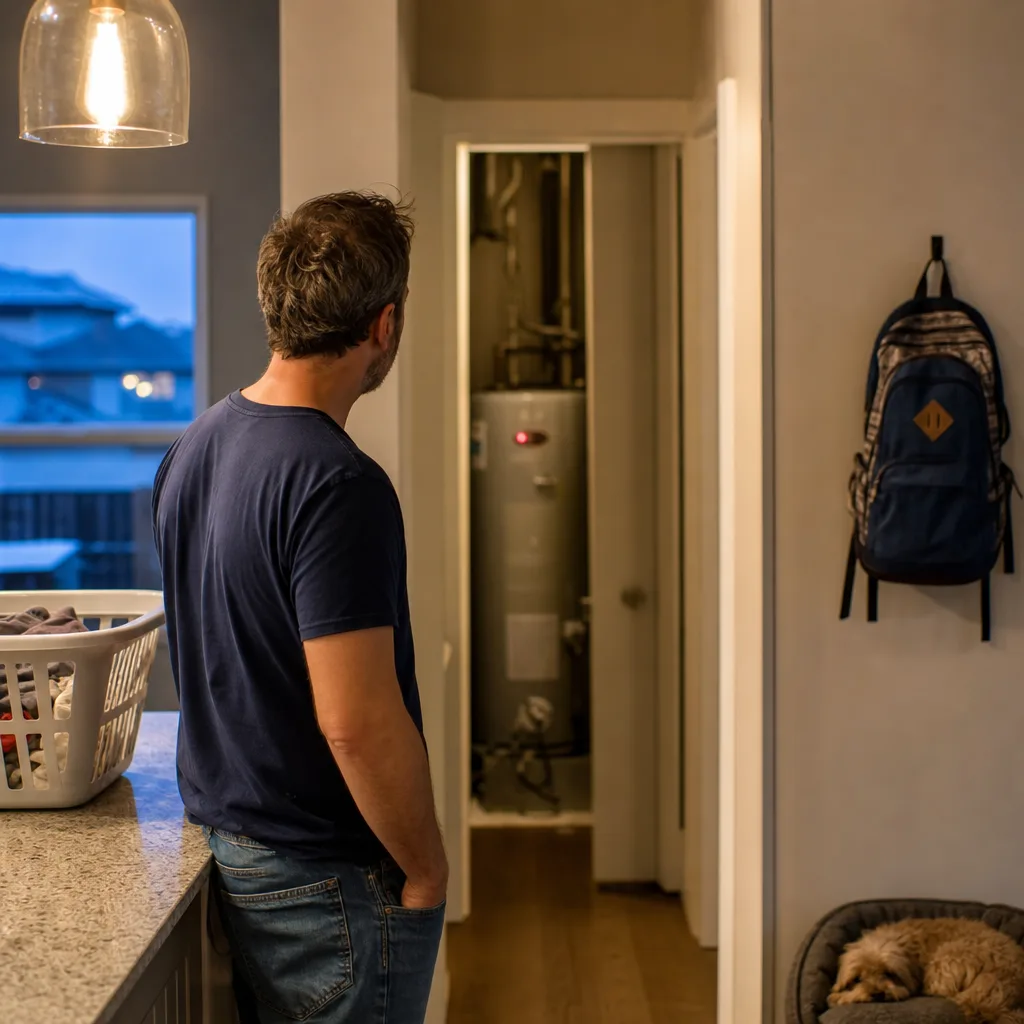
Before anything gets unhooked, you’ll see your upfront flat-rate price and approve it. If your setup needs more than a standard swap, such as a shutoff valve that won’t close or a vent that won’t pass inspection, you should hear about it at this point. You shouldn’t learn about it halfway through the job.
A few things on your end make the visit go faster:
- Clear a path from the door to the heater. Garage heaters often end up boxed in by storage.
- If your heater is in the attic, make sure the hatch and ladder are easy to reach.
- Put pets in another room. The door may be open a lot while tanks go in and out.
- Plan to be without hot water for part of the day, and save the laundry for tomorrow.
The work itself follows a set order:
- Shut off the water supply and the gas or power to the old heater.
- Drain the old tank. With Dallas’s hard water, an older tank can hold a lot of sediment at the bottom. Draining it fully is what makes it safe to carry, especially down an attic ladder.
- Disconnect the old unit and take it out.
- Set the new tank in place, level it, and use a drain pan wherever a leak could damage the home.
- Connect the water lines, the gas or electric service, and the vent on gas units, then run the relief valve line to a safe drain point.
- Fill the tank and bring it up to temperature, using the startup and testing steps covered earlier.
Once the new heater is running, the old one goes with us. Haul-away is part of the job, so a heavy, rusty tank doesn’t end up sitting in your garage.
Don’t let the technician leave until you know these things:
- Where the water shutoff for the heater is, and how to turn the heater off if you ever spot a leak
- What temperature the heater is set to, and how to change it
- About how long it’ll take before you have a full tank of hot water
- Whether the tank should be flushed now and then to clear out mineral buildup
That last question matters in Dallas. If hard water helped wear out your old tank, it’ll work on the new one too. A water softener installation can slow that scale buildup. It’s a separate job with its own page, but it’s worth asking about while someone’s already standing next to your heater.
A good install day shouldn’t hold any surprises. You know the price before work starts and you see each step happen. You’ll also know how your new heater works before anyone packs up.
Call 469-269-6373
Frequently Asked Questions
Common questions about Water heater installation
How long does a water heater installation take?
Most standard tank swaps take just a few hours from start to finish. The time depends on where your heater sits, since a unit in an open garage goes faster than one tucked in an attic or closet. Draining an older tank can also add time if years of sediment have settled at the bottom, which is common with Dallas’s hard water. You’ll be without hot water for part of the day, so it’s smart to plan laundry for tomorrow.
Can I install my own water heater to save money?
You can, but Dallas still requires a permit and inspection for the work, even if you do it yourself. A water heater ties into gas or electric service and often vents exhaust, so mistakes on the relief valve, gas connection, or venting can be genuinely dangerous. Skipping the permit doesn’t remove the risk, it just means nobody checked the work. If your setup is a straightforward like-for-like swap with clean connections, a licensed plumber can usually move through it quickly anyway.
What happens to my old water heater after a new one is installed?
Your old water heater gets hauled away as part of the installation, so you’re not left storing a heavy, rusty tank. This is handled right after the new unit is tested and running. It’s one less thing to arrange on your own after a long day without hot water.
Ready to Get Started?
Call (469) 269-6373 Today, Get Service Today.