


Air Duct Cleaning in Plano: What’s Included and What It Costs
What a standard duct cleaning covers and costs, and how to tell if your home actually needs one.
What’s Covered on This Page
- Signs Your Ducts Need Cleaning
- What’s Included in a Full Duct Cleaning Visit
- Why Pricing Is Based on Vent Count, Not Square Footage
- Air Duct Cleaning vs. Dryer Vent Cleaning
- What to Do If Mold Shows Up in Your Ducts
- Will my house be dusty right after duct cleaning?
- Is dryer vent cleaning really necessary?
- How long does it take ducts to get dirty again after cleaning?
Signs Your Ducts Need Cleaning
Here’s the honest truth. Some ducts need cleaning and some don’t. The trick is knowing which one you’ve got. These are the signs that point to a real buildup inside your ductwork, not just a dusty week.
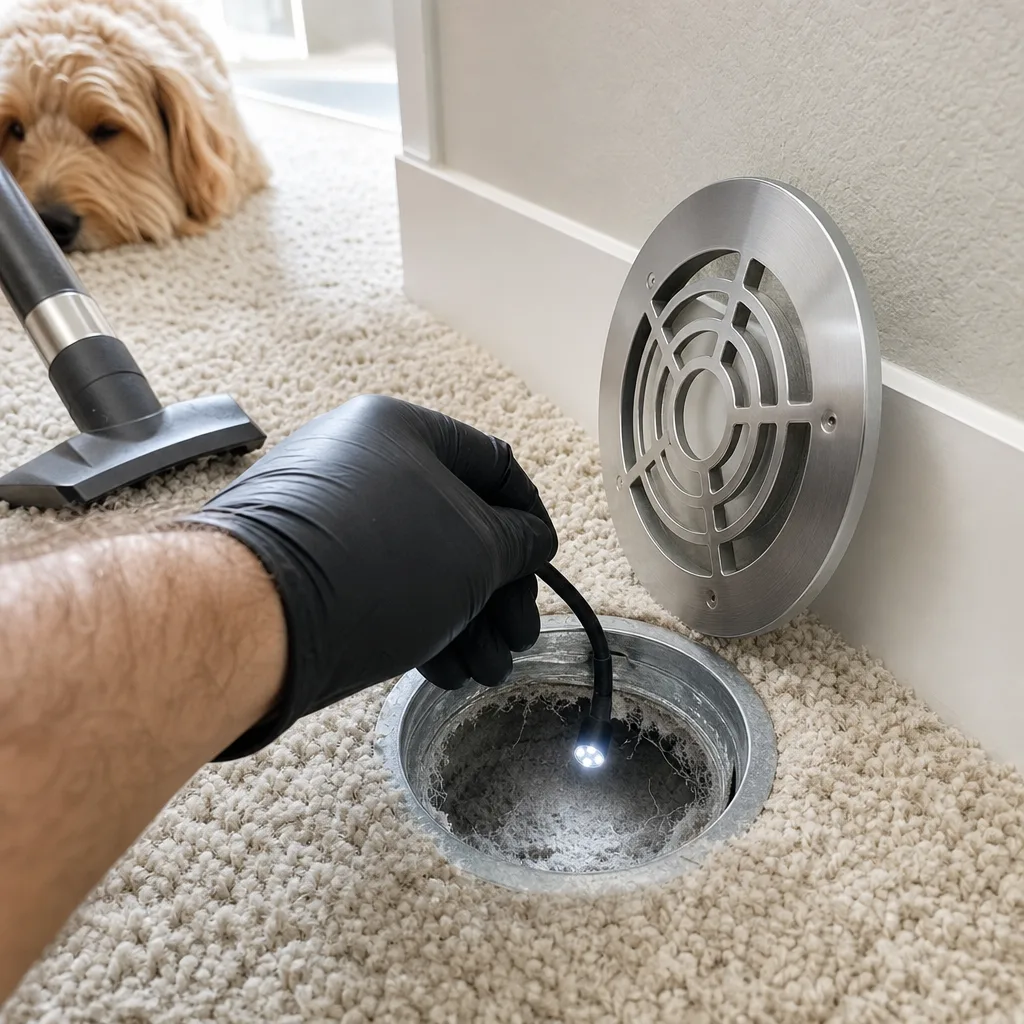
- You can see dust or debris puff out of a register when the system kicks on. That’s material sitting in the ducts and riding the air into your rooms.
- You remodeled, sanded floors, or hung new drywall. That fine dust gets pulled into the return vents and settles inside the ducts long after the crew leaves.
- You’ve had mice, insects, or other pests get into the ductwork. Droppings and nesting material don’t belong in the air your family breathes.
- You just moved in and have no idea when the ducts were last cleaned. A fresh start makes sense when the history is a blank.
- You pull a register cover and see thick, matted dust on the duct walls, not just a light film near the opening.
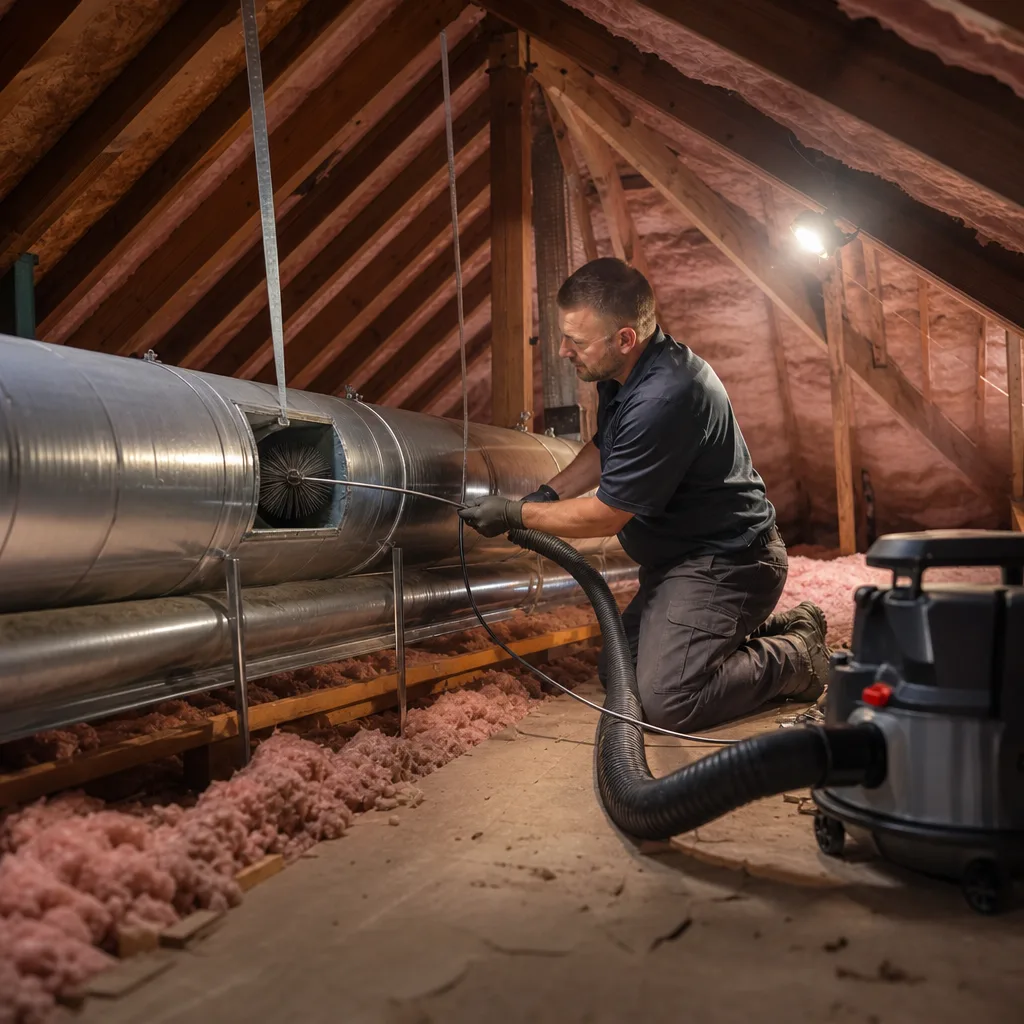
In a lot of North Texas homes, the air handler and duct runs sit up in the attic. Here in Plano, the AC runs for a big part of the year, so a lot of air moves through those ducts. When there’s buildup inside, it has plenty of chances to blow back out into your living space.
Now for the cases where cleaning probably isn’t your fix. We’d rather tell you this up front.
- Your house just feels dusty. Start with the air filter. A clogged or cheap filter lets dust slip past, and swapping it costs far less than a cleaning.
- One room runs hot or weak. That’s often a leaky or crushed duct, a blower issue, or a balance problem. Cleaning won’t seal a gap. Duct sealing or a ductwork inspection is the better first step.
- You see fuzzy growth or smell something musty inside the ducts. Cleaning alone doesn’t solve mold. Mold remediation is a separate job, and the moisture causing it has to be found and fixed too.
Not sure which camp you’re in? That’s normal. You don’t have to guess. Our duct cleaning includes register cleaning and an airflow check, so you’ll know how air is moving through your home when we’re done. If we spot something cleaning can’t fix, like a duct that needs repair or sealing, we’ll show you what we found and quote it separately. Nothing gets added without your okay.
A quick gut check: if you can see it, smell it, or know something got into the ducts, cleaning is likely worth it. If it’s a general dusty feeling and nothing more, change the filter and give it a couple of weeks. If it’s still dusty after that, it’s time for a closer look.
What’s Included in a Full Duct Cleaning Visit
A full duct cleaning covers your whole home’s ductwork, not just the vents you can see. You pay for three things, and you know the price before any work starts.
- Full duct cleaning. We clean both sides of your system. That’s the supply ducts, which push cooled or heated air into your rooms, and the return ducts, which pull air back to the unit. Returns tend to collect the most dust, so skipping them leaves half the job undone.
- Register cleaning. The vent covers and grilles in your walls, floors, and ceilings get cleaned too. That way, clean air doesn’t pass through a dirty cover on its way into the room.
- An airflow check. This tells you how air is moving through your home once the ducts are clear.
Some problems don’t belong in a cleaning visit, and they aren’t in the price. Mold remediation, duct repair or sealing, and any other fix we find along the way are each quoted on their own. As we said above, nothing gets added without your okay. If you only want the cleaning, that’s all you get.
Here’s how the price works. We price duct cleaning by vent count. For our most common job, a whole-home cleaning of the supply and return ductwork, the price is $300 to $475. Our typical range for duct cleaning runs $300 to $700.
Where your home lands in that range depends on a few plain things:
- How many vents and returns you have. More openings means more ductwork to clean.
- The size of your system. A bigger home with a bigger system usually has longer duct runs.
- How much buildup is inside. Light dust takes less work than years of matted debris or a mess left by remodeling.
- How easy the ducts are to reach. Many Plano homes have ducts running through a hot attic, and tight or hard-to-reach runs take more time.
- Whether you add sanitizing. It’s optional and raises the price if you choose it.
There’s a service-call fee of $26 to $99. If you go ahead with the work, it’s credited toward the job, so it doesn’t stack on top of your price. You’ll get upfront flat-rate pricing approved before work starts, so no meter runs while we’re in your attic.
Financing isn’t usually offered for a smaller job like duct cleaning. It’s available on larger repairs and replacements, so if the airflow check turns up a bigger issue, you’ll have options for that.
Before you book with anyone, ask three questions. Do you clean the returns or just the supply side? Is the price set by vent count and approved up front? What happens if you find something the cleaning can’t fix? Clear answers to all three tell you you’re getting a full cleaning, not a quick vacuum of the vent covers with a surprise bill at the end.
Why Pricing Is Based on Vent Count, Not Square Footage
Square footage sounds like a fair way to price a home service. For duct cleaning, it doesn’t tell you much. The size of your floor plan doesn’t show how much ductwork runs above your ceiling. Your vents do.

Every supply vent in your home sits at the end of its own duct run. That run branches off a main trunk line in the attic and snakes over to that one room. Every return grille has its own path back to the unit too. When we clean your system, each of those openings means another run to clean and another cover to clean. The work grows with the number of openings, not with the number of square feet.
Picture two houses on the same Plano street, both about the same size. One is a single-story home with ten supply vents and one big return in the hallway. The other has the same footprint but a second floor, more rooms, more vents, and a return upstairs and down. Some homes like that have two HVAC systems, often one for each floor. Priced by square footage, those two homes would pay about the same. That isn’t fair to either one. The first homeowner would pay for work that never happened, and the second job would get rushed.
Vent count fixes that. It’s tied to the real work, and it’s something you can check yourself before you ever pick up the phone.
Here’s how to count your own vents in about five minutes:
- Walk every room, including closets, bathrooms, and the laundry room. Count each supply register, the smaller vents where air blows out. They can be in the floor, the wall, or the ceiling.
- Count your return grilles separately. These are usually larger and pull air in. You’ll often find them in a hallway, a ceiling, or near the thermostat.
- Check whether you have more than one system. Two thermostats usually means two systems.
- Jot the numbers down and have them handy when you call.
With those numbers, you can have a real conversation about price instead of guessing. You’ll have a good idea where your home falls in the range from the section above before anyone climbs into your attic. Buildup and how hard the ducts are to reach still play a part, as we covered, but the vent count sets the starting point.
This also gives you a simple way to size up any quote. If someone offers one flat price for your whole house and never asks how many vents you have, ask what that price covers. A number that seems too low for a home your size may only cover some of the vents, or it may be a starting point that grows once the work begins. A clear, vent-based price takes that question off the table.
With us, you’ll get upfront flat-rate pricing, and you’ll approve it before work starts. You can count your vents, hear the price, and know it lines up with the work being done in your home.
Need help with Air duct cleaning?
Call Today, Get Service Today. Xtreme Air Services — West Plano is ready to help.
Air Duct Cleaning vs. Dryer Vent Cleaning
These two get mixed up all the time, and it’s easy to see why. Both involve a duct, both collect gunk, and both get cleaned by pros. But they’re two different systems with two different jobs, and cleaning one does nothing for the other.
Your HVAC ducts are a loop. Your AC or furnace pushes air out through the supply vents into your rooms, then pulls it back through the returns to be cooled or heated again. That’s the system we’ve been talking about on this page. When those ducts are dirty, the problem is dust, debris, or pests riding through the air your family breathes.
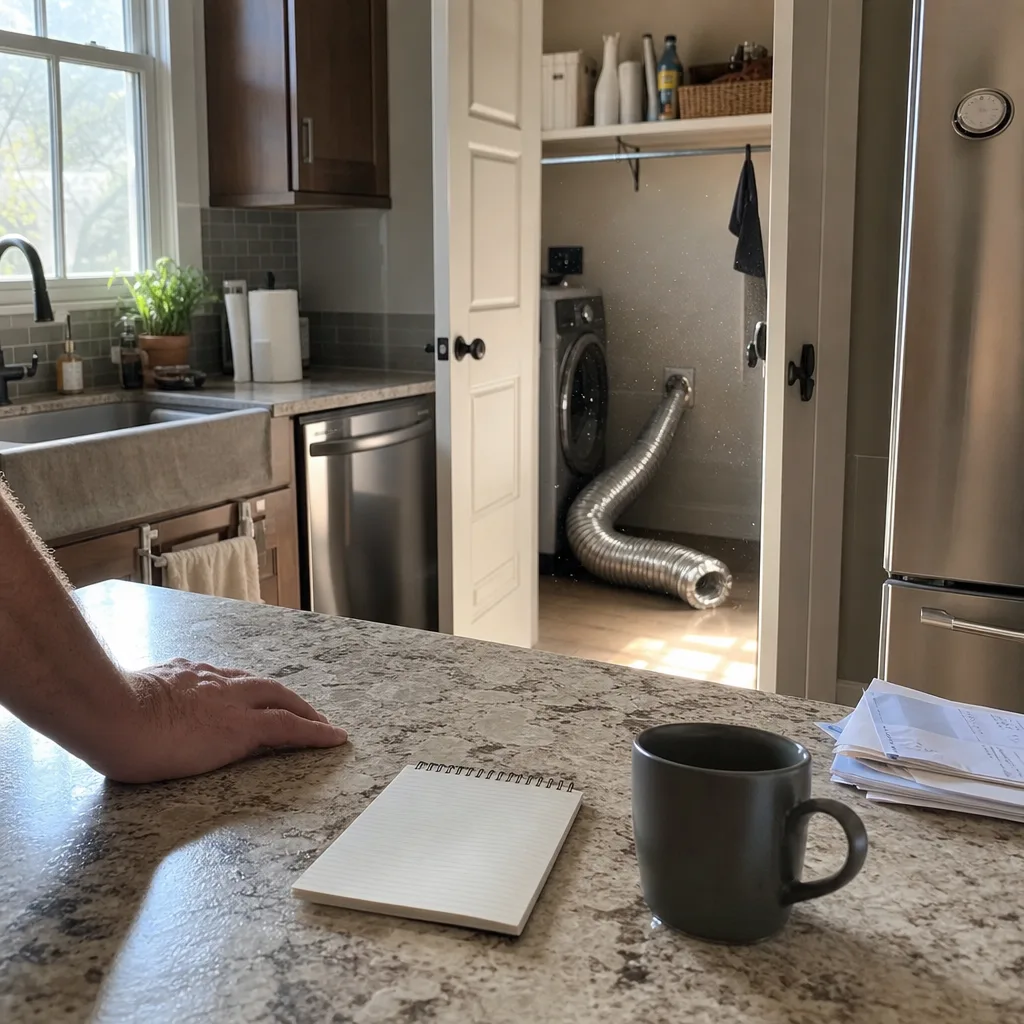
Your dryer vent is a single pipe going one way. It carries hot, damp, lint-filled air from the back of your dryer to the outside of your house. It isn’t connected to your heating and cooling at all. When it clogs, the problem is lint. Lint burns easily, and a blocked vent traps heat right where that lint sits.
Here’s a quick way to tell which one you’re dealing with:
- Dust puffing out of the vents in your ceiling, walls, or floors points to your HVAC ducts.
- Remodeling dust, pests, or an unknown history in a home you just bought points to your HVAC ducts.
- Clothes that take two or three cycles to dry point to your dryer vent.
- A laundry room that gets unusually hot or humid while the dryer runs points to your dryer vent.
- A burning or scorched smell near the dryer points to your dryer vent. Stop using the dryer until someone checks it.
Where your laundry room sits makes a big difference too. In a lot of two-story homes, the laundry room is upstairs or tucked in the middle of the house, far from an outside wall. That means the dryer vent can run a long way, sometimes up through a hot attic to the roof. Long runs with bends catch more lint than a short, straight pipe out the back wall. If your dryer vent takes the long way out, it’s worth keeping an eye on.
One thing to know before you book: dryer vent cleaning isn’t part of the duct cleaning visit or the duct cleaning price we covered above. The duct cleaning includes your supply and return ductwork, your registers, and an airflow check. That’s it. Dryer vent cleaning is its own service, priced on its own.
So which one should you call about? If the trouble shows up in your living space and your vents, it’s your ductwork. If it shows up in the laundry room and in how your clothes dry, it’s your dryer vent. If you’re noticing a little of both, just tell us when you call. We handle both, and we’ll quote each one separately so you can choose what you need.
Watch Our Video
See How We Handle Air duct cleaning in Plano
Xtreme Air Services — West Plano
What to Do If Mold Shows Up in Your Ducts
First, take a breath. Not every dark spot near a vent is mold. Dust can collect around a register and leave a gray or black smudge on the ceiling. Mold usually looks fuzzy or blotchy, it may be green, black, or white, and it often brings a musty smell that gets stronger when the system runs.
If it does look like mold, here’s the key thing to understand. Mold doesn’t grow from dust alone. It needs moisture. As we mentioned earlier, cleaning by itself won’t solve it. If the water source stays, the mold comes back, no matter how clean the ducts get.
In Plano, that moisture often starts in the attic. Your supply ducts carry cold air through an attic that can get extremely hot in summer. When warm, humid air touches a cold duct, it sweats, the same way a glass of iced tea does on your porch. A few other common culprits:
- Leaky duct joints that pull damp attic air into the system.
- A clogged AC drain line that backs up water near the air handler.
- A dirty evaporator coil that holds moisture and dust together.
- Indoor humidity that stays high, even with the AC running.
So the right order matters. Doing these steps out of order means paying for work that won’t last.
- Find the moisture. A ductwork inspection shows where water is getting in, whether it’s a sweating duct, a leak, or a drain problem.
- Handle the mold itself. Mold remediation is its own job. It isn’t part of our duct cleaning, and it isn’t in the duct cleaning price.
- Fix what caused it. Depending on what turns up, that could mean AC drain line cleaning, evaporator coil cleaning, duct sealing, or a dehumidifier to bring indoor humidity down.
- Then clean the ducts. Once the source is fixed and the mold is dealt with, a full cleaning clears out the dust and debris left behind.
If you’re not sure what you’re seeing, air quality testing can help you get past guessing before you spend money on anything else.
What if mold turns up during a cleaning visit you already booked? You’ll hear about it before anything else happens. Any corrective work we find is quoted separately, and nothing gets added without your okay. You stay in charge of the decision.
The honest answer is this: if you have mold, a duct cleaning shouldn’t be the first thing you buy. Fixing the water problem should be. Anyone who offers to clean mold out of your ducts without asking where the moisture is coming from is skipping the part that keeps it from coming back.
Call 469-217-9095
Frequently Asked Questions
Common questions about Air duct cleaning
Will my house be dusty right after duct cleaning?
You may notice a little loose dust settle near the registers for a day or so, but it should not linger. Our process includes cleaning the registers themselves, so what blows out gets wiped away, not left on your floors and furniture. If dust keeps showing up a week later, check your air filter first, since a weak filter lets new dust right back in.
Is dryer vent cleaning really necessary?
Yes, if you notice clothes taking two or three cycles to dry, a hot or humid laundry room during drying, or any burning smell near the dryer. Lint buildup is a fire risk, and a clogged vent forces your dryer to work harder every load. This is separate from duct cleaning, since it’s a single pipe carrying lint-filled air outside, not part of your HVAC system.
How long does it take ducts to get dirty again after cleaning?
It depends on what’s feeding the dust, not a fixed schedule. A home with pets, a recent remodel, or a cheap air filter will build up debris faster than a home with none of those. Swapping your air filter regularly and sealing any leaky ducts you find during the visit both slow the buildup down between cleanings.
Ready to Get Started?
Call (469) 217-9095 Today, Get Service Today.