


Refrigerant Recharge / Leak Repair in Sunnyvale: Get Real Cooling Back, Not Just a Top-Off
Leak detection and proper refrigerant repair in Sunnyvale, so the charge you pay for actually stays in the system.
What’s Covered on This Page
- Warning Signs of a Refrigerant Leak
- A Recharge Alone Rarely Solves the Problem
- When Refrigerant Recharge Isn’t the Actual Issue
- How a Leak Repair Visit Works
- How Refrigerant Repair Costs Are Structured
- How fast can you get someone out to my Sunnyvale home for a refrigerant leak?
- What happens when the technician shows up for a leak repair?
- Why do so many Sunnyvale attics seem to have refrigerant leak problems?
- Can I just get a refrigerant top-off instead of a full repair?
- How do I know if it’s really a refrigerant leak and not something else?
Warning Signs of a Refrigerant Leak
Is your AC running nonstop but the house still feels warm? That’s usually the first clue something’s low on refrigerant. The system works harder, runs longer, and still can’t keep up with a Sunnyvale afternoon in July.
- Warm or lukewarm air coming from the vents even with the thermostat set low
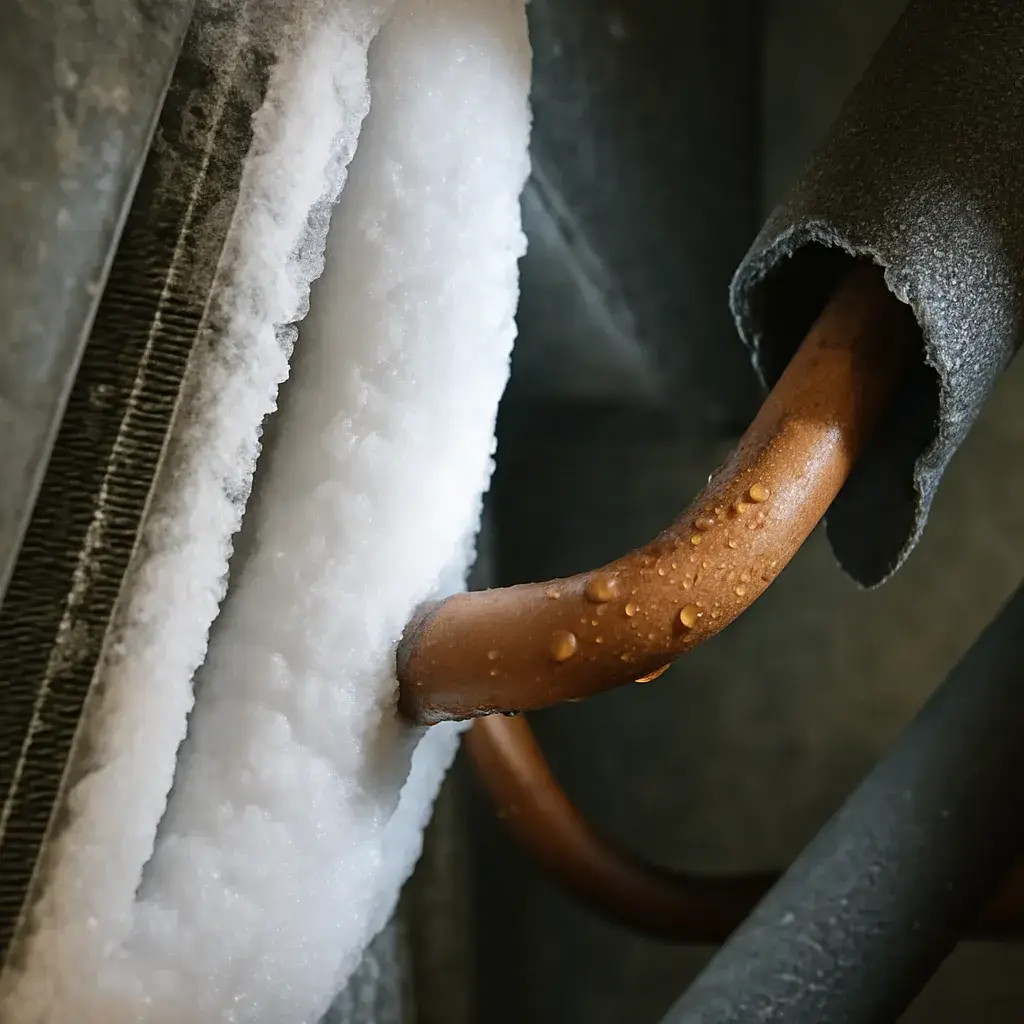
- Ice or frost forming on the indoor coil or the copper line running to the outdoor unit
- A hissing or bubbling sound near the outdoor condenser
- Higher electric bills with no change in how you use the system
- The system short-cycling, turning on and off more than it should
We check attics constantly on service calls, and a lot of Sunnyvale homes run the air handler up there. Heat plus a slow leak speeds up the damage. A tiny pinhole in the coil doesn’t sound like much, but give it a hot summer and low refrigerant turns into a frozen coil fast. The hissing sound is the leak talking to you before the warm air does.
Most residential systems today run on R-410A refrigerant, and it doesn’t just run low on its own. Low refrigerant always means a leak somewhere, never normal wear. That’s the part a lot of homeowners don’t know.
A Recharge Alone Rarely Solves the Problem
Here’s something we hear a lot. A neighbor tells you their guy just added some refrigerant and the AC blew cold again. Sounds simple, right? It isn’t, not really.
Refrigerant doesn’t get used up like gas in a car. Your system is a closed loop, so if the level is low, it’s low because it’s leaking out somewhere. Add more without finding that leak, and you’re just buying a few weeks before the warm air comes back. We see this every week, someone paid for a top-off last summer and now they’re calling us again in July.
A real fix means finding the failed part, whether that’s a worn valve, a corroded coil, or a bad connection, and repairing or replacing it before any new refrigerant goes in. Skip that step, and you’re not fixing anything. You’re just delaying the same call.
There’s also a safety and cost angle most homeowners don’t think about. Newer systems run on R-410A, and some equipment is shifting toward A2L refrigerants with different handling rules. A tech who just tops off the charge without checking readings and leak points can mask a bigger failure until a compressor goes out. That’s a much bigger job than a coil repair.
So if someone offers you a recharge with no mention of finding the leak first, ask why. That’s a fair question, and a straight answer tells you a lot about who you’re hiring.
When Refrigerant Recharge Isn’t the Actual Issue
Here’s something a lot of folks don’t know. Your AC doesn’t burn through refrigerant like gas in a car. If the level is low, something let it out, there’s no other way. But low refrigerant isn’t the only reason a system blows warm air, and calling it in as a leak when it’s something else just wastes your afternoon.
A dirty filter or a coil packed with dust can choke airflow so bad the system acts like it’s low on charge, ice forms on the coil, air comes out weak. We check that first, every time, because a frozen coil traces back to airflow, not refrigerant.
- Thermostat wiring or a bad sensor making the system run short cycles
- A failed capacitor or blower motor keeping air from moving through the ducts
- Duct leaks in an attic run losing cooled air before it reaches the room
- A breaker or electrical fault stopping the unit from starting at all
And if you’ve got an older R-22 system, recharge sometimes isn’t worth chasing at all. That refrigerant’s been phased out and getting harder to source, so a leak on an old unit can turn into a bigger conversation about the equipment itself, not just the leak.
So if your system’s cooling fine one day and struggling the next, that pattern alone doesn’t mean a leak. Sometimes it’s simpler. Sometimes it’s not refrigerant at all.
Ready when you are – get in touch today.
Call Today, Get Service Today. Xtreme Air Services is ready to help.
How a Leak Repair Visit Works
Here’s what happens once we’re standing at your unit. We’re not guessing, we’re testing. Every refrigerant leak repair follows the same basic order, whether it’s a ten-year-old system in an older Sunnyvale home or a newer unit still under its equipment warranty.
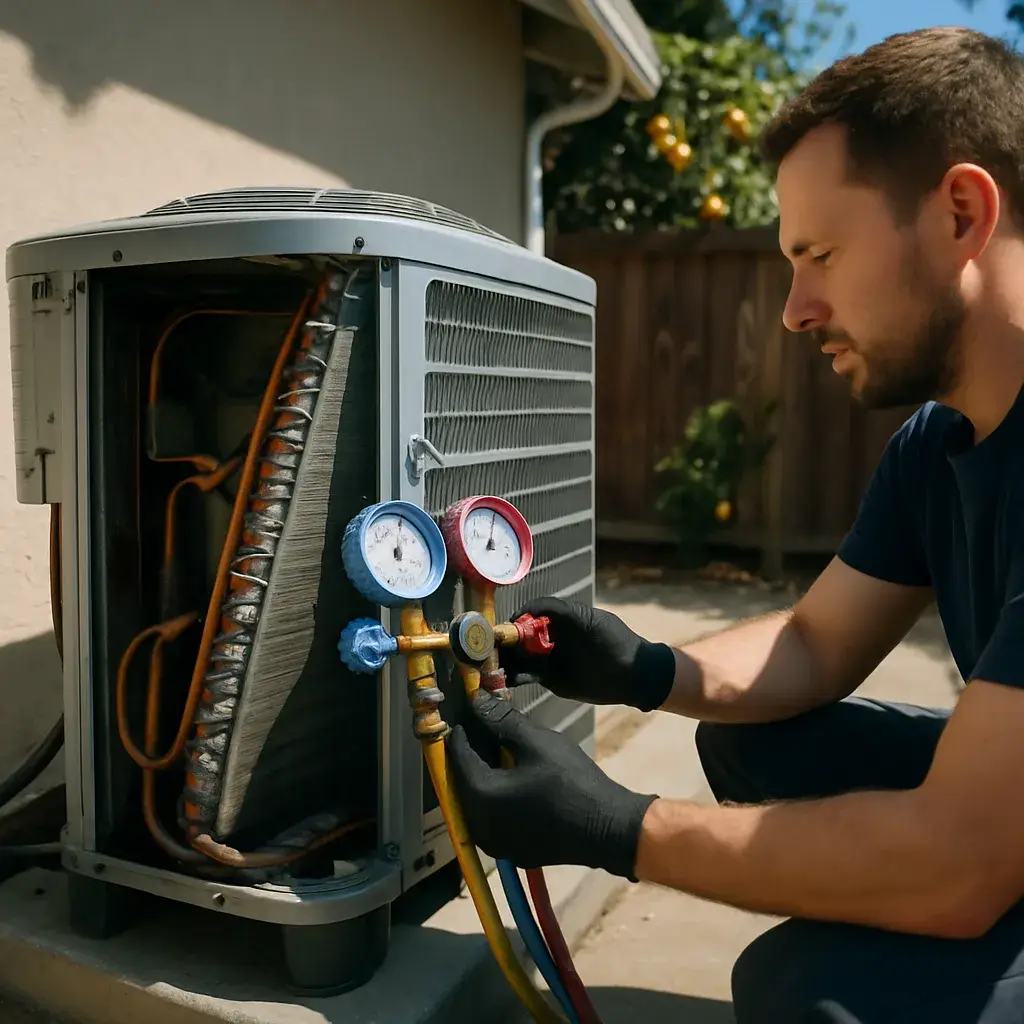
- We hook up gauges and check your system’s pressures against what the equipment should be running.
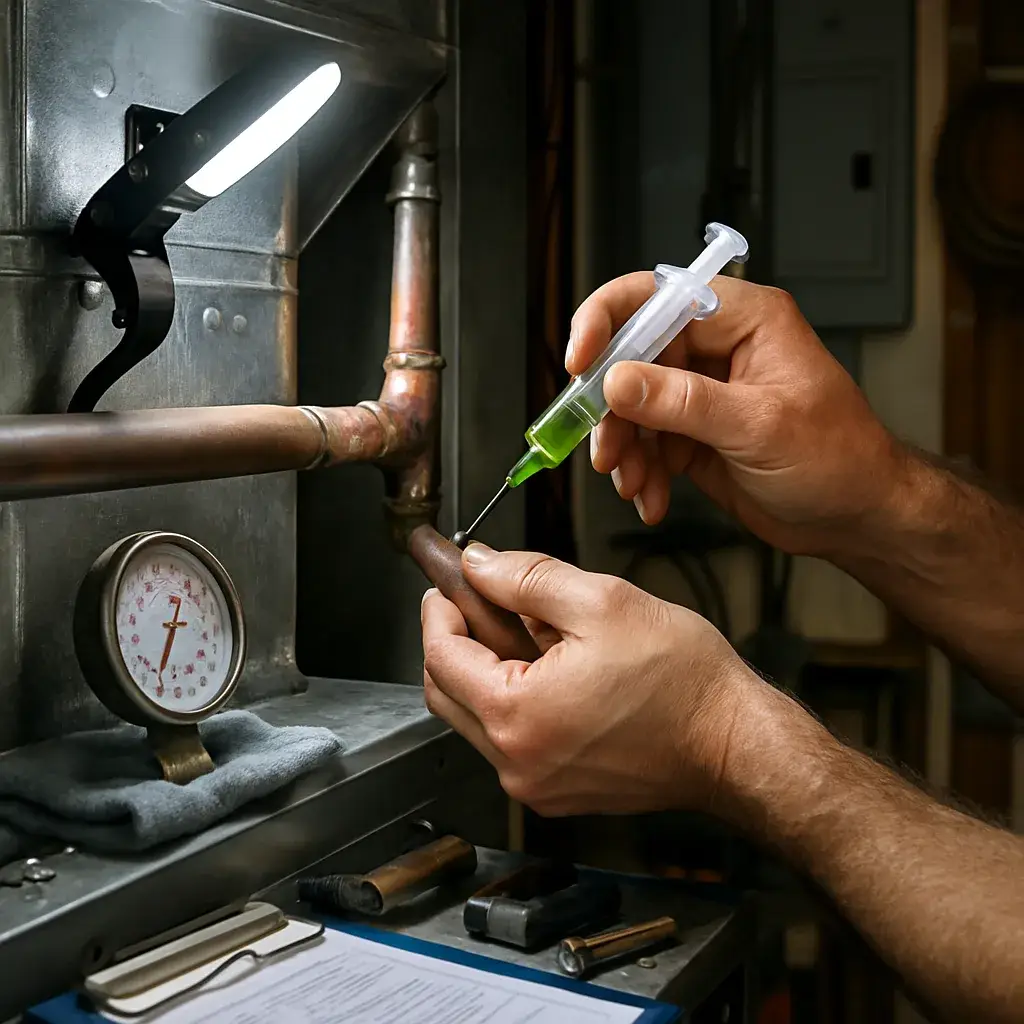
- We run an electronic leak detector or a bubble test along the coils, fittings, and line set to find the exact spot.
- We show you what failed, a cracked line, a bad valve, a corroded coil, before we touch anything.
- We repair or replace the failed part and pull a vacuum on the system to clear out air and moisture.
- We recharge the system with the correct refrigerant for your equipment and bring it back up to the right level.
- We run the system and check supply air temperature to confirm it’s cooling like it should.
Most times it’s one bad spot, not a system falling apart. A tight vacuum matters here, skip it and moisture gets trapped in the line and causes trouble again in a few months. That’s why we don’t rush that step, even on a hot afternoon.
Most of these visits wrap up same day. Xtreme Air Services runs on upfront flat-rate pricing, so you’ll see the number before we start, and it’s the same price whether we’re there on a Tuesday morning or a Saturday night.
How Refrigerant Repair Costs Are Structured
Here’s how we price this job, plain and simple. Most refrigerant recharge and leak repair calls run between 250 and 800 dollars. That covers the diagnosis, the labor, and the standard part needed to fix the leak, plus testing the system after and cleaning up. Bigger jobs, ones with multiple failed parts or an older system that needs more work, can run higher, up to 1,500 dollars total for the full range of AC repair calls we see.
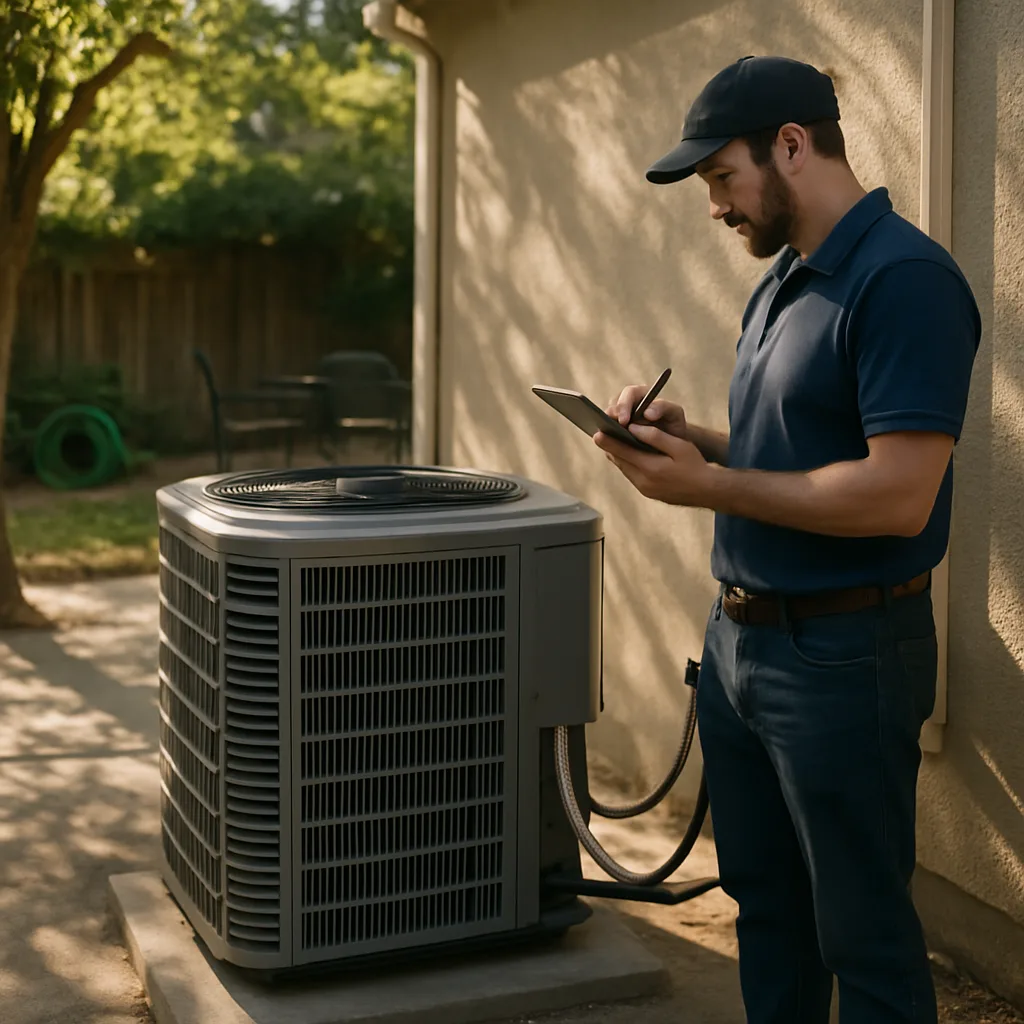
A service call fee of 26 to 99 dollars covers the technician coming out to look at your system. If you move forward with the repair, that fee gets credited toward the job. You’re not paying twice.
So what moves the number up or down? A few things.
- How bad the leak is, and where it’s located in the system
- Whether the part needed is common or has to be tracked down
- The age and brand of your equipment
- Whether more than one component has failed
- Newer systems using R-410A or A2L refrigerant, which affects the repair and recharge process
We don’t charge extra for nights or weekends, so a Saturday call doesn’t cost more than a Tuesday one. Financing isn’t typically needed for a job this size, but if your system needs a bigger repair or a full replacement, financing options are available. Excluded from the quote: extra failed parts we find once we’re in there, major components, or code upgrades. We’ll always talk that through with you before touching anything.
Frequently Asked Questions
Common questions about Refrigerant recharge / leak repair
How fast can you get someone out to my Sunnyvale home for a refrigerant leak?
We typically schedule same-day or next-day visits for refrigerant leak calls across Sunnyvale, especially during peak summer heat. A warm-air complaint or hissing sound near the outdoor unit gets priority since low refrigerant can strain your compressor fast. When you call, tell us what you’re noticing, warm vents, ice on the coil, higher bills, so we can bring the right tools and get your system back to real cooling quickly.
What happens when the technician shows up for a leak repair?
We start by connecting gauges to check your system’s pressures, then use an electronic leak detector to pinpoint the exact failure spot. You’ll see what failed, a cracked line, bad valve, or corroded coil, before we repair anything. After the fix, we pull a vacuum to clear moisture and air, then recharge and test supply air temperature. Most Sunnyvale visits wrap up in one trip, so you’re not waiting days for cool air.
Why do so many Sunnyvale attics seem to have refrigerant leak problems?
A lot of Sunnyvale homes have the air handler installed in the attic, and attic heat speeds up wear on coils and fittings. A tiny pinhole leak that might sit quiet in a cooler space turns into a frozen coil fast once summer attic temperatures climb. We check attic-mounted systems closely on every service call because heat plus a slow leak is a common combination we see across older Sunnyvale neighborhoods.
Can I just get a refrigerant top-off instead of a full repair?
A top-off alone rarely solves the problem because your AC is a closed loop system that doesn’t burn through refrigerant on its own. If the level is low, refrigerant is escaping somewhere, and adding more without finding that spot just buys you a few weeks before warm air returns. A real fix means finding and repairing the failed part first, then recharging so the cooling lasts through the season.
How do I know if it’s really a refrigerant leak and not something else?
Warm air alone doesn’t always mean a leak, since a dirty filter or clogged coil can choke airflow and mimic the same symptoms. We check airflow issues first, because a frozen coil often traces back to restricted air, not refrigerant. If you’re also hearing hissing near the outdoor unit or seeing higher electric bills with no change in usage, that combination points more strongly toward an actual leak worth investigating.
Ready to Get Started?
Call 972-288-2263 Today, Get Service Today.