

Refrigeration Leak Detection in Sunnyvale: Protect Your Walk-In Before It Fails
Electronic detectors, UV dye, and nitrogen pressure testing to find the leak itself in Sunnyvale – including rooftop condensing units that develop pinholes after years of summer heat cycling.
What’s Covered on This Page
- Warning Signs Point to a Refrigerant Leak, Not a Slow Compressor
- Some Cooling Problems Don’t Need Leak Detection
- How Professional Leak Detection Finds the Problem
- Diagnosis and Repair Are Two Separate Steps
- Same-Day Response Keeps Commercial Refrigeration Losses Low in Sunnyvale
- How fast can you get someone out to check a refrigerant leak in Sunnyvale?
- What happens when your technician shows up to look at my system?
- Why do Sunnyvale’s rooftop refrigeration units seem to leak more often?
- Why can’t you just add more refrigerant instead of finding the leak?
- How do you find a leak that isn’t visible or obvious?
- Is my warm air definitely a refrigerant leak, or could it be something simpler?
Warning Signs Point to a Refrigerant Leak, Not a Slow Compressor
How do you know it’s a leak and not an old compressor giving out? It’s a question we hear often. A dying compressor may struggle to start, trip breakers, or hum without kicking on. A leak feels different: your system runs and may sound normal, but it can’t keep up anymore.
- Warm or weak air even though the unit is running normally
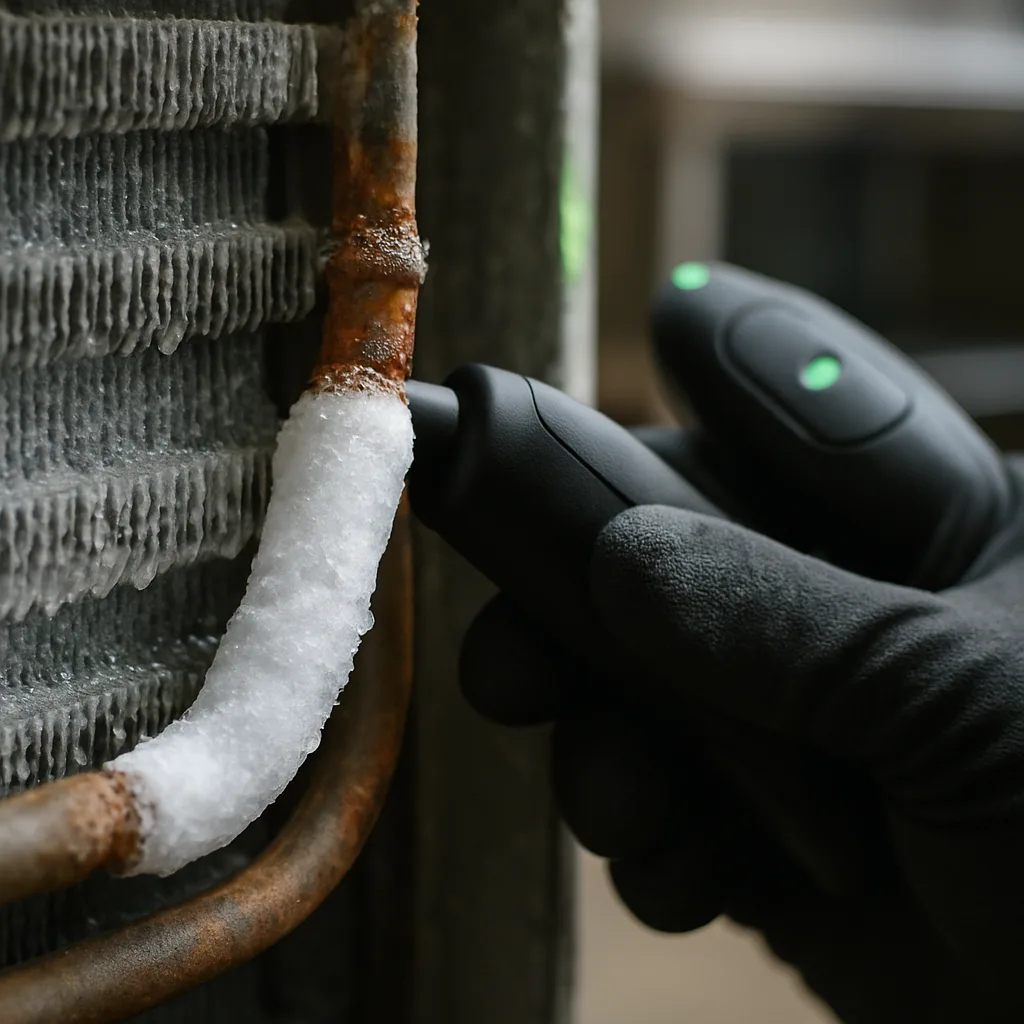
- Ice building up on the copper lines or indoor coil
- A hissing or bubbling sound near the refrigerant lines
- Energy bills creeping up with no change in usage
- The system needing a recharge every season, not just once
We see this every week, especially in Sunnyvale’s rooftop refrigeration units. Rooftop units sit through brutal summer heat. Their copper line joints expand and contract more than those in a conditioned mechanical room. Over the years, that stress can open tiny pinhole leaks at the joints. The compressor may be fine – the problem is a slow leak that’s been growing for months.
A commercial walk-in cooler losing its charge acts much the same way. The compressor keeps running as temperatures creep up a degree or two each day. Nobody may notice until the product is at risk.
Some Cooling Problems Don’t Need Leak Detection
Not every warm-air complaint means you have a leak. We often hear from people near Sunnyvale who expect a major problem when the fix is simple.
A dirty air filter restricts airflow and makes your system struggle without any leak. A condenser coil covered in Texas dust and pollen can do the same thing. It forces the unit to work harder while cooling less. A tripped breaker or bad capacitor can also cause weak cooling. Sometimes the thermostat is set incorrectly, or its battery is dying.
- Airflow feels weak from every vent, not just less cool – check or replace the filter first
- Ice on the indoor coil or refrigerant lines can point to an airflow problem, not necessarily a leak
- The system runs constantly, but the walk-in never pulls down to temperature – sizing or ductwork could be the cause
- The outdoor unit is covered in cottonwood or grass clippings – cleaning the coil may solve the problem
If refrigerant levels were fine at your last service and nothing has changed, you probably don’t need refrigeration leak detection right now.
Wait if the system is brand new and still in its manufacturer break-in period. The same applies if you just changed the filter and haven’t given the system a day to catch up. Starting a diagnostic before ruling out simple causes wastes your time and ours.
How Professional Leak Detection Finds the Problem
First, we inspect the system. Oil residue around a fitting or coil is often the giveaway. Refrigerant carries a small amount of oil, so a leak leaves a greasy trail.
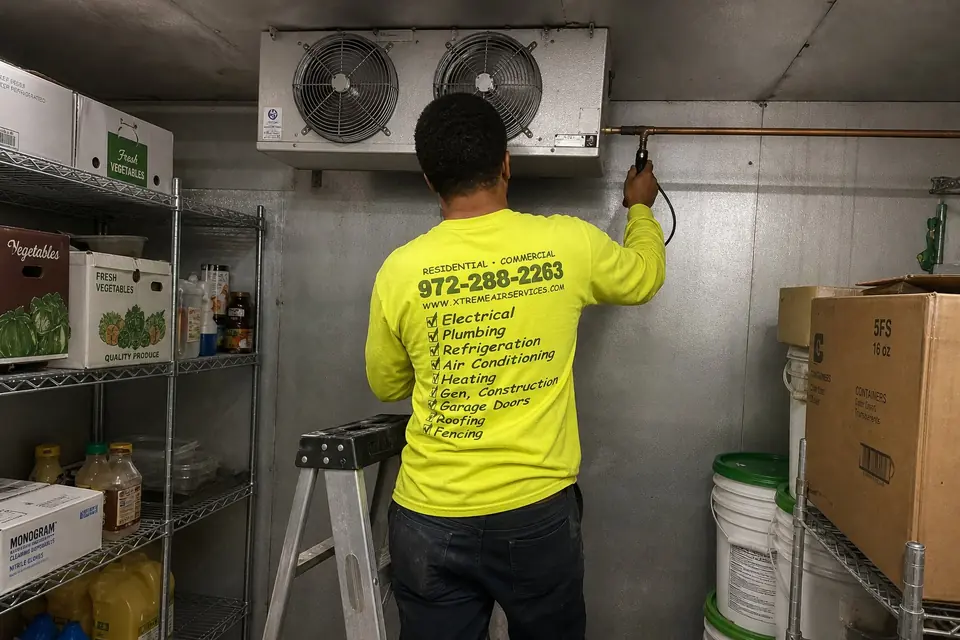
Many walk-in coolers and rooftop units in Sunnyvale’s older commercial buildings have been patched over the years. Old solder joints are common leak points, so we check those early.
- Visual check of coils, valves, and joints for oil stains or frost buildup
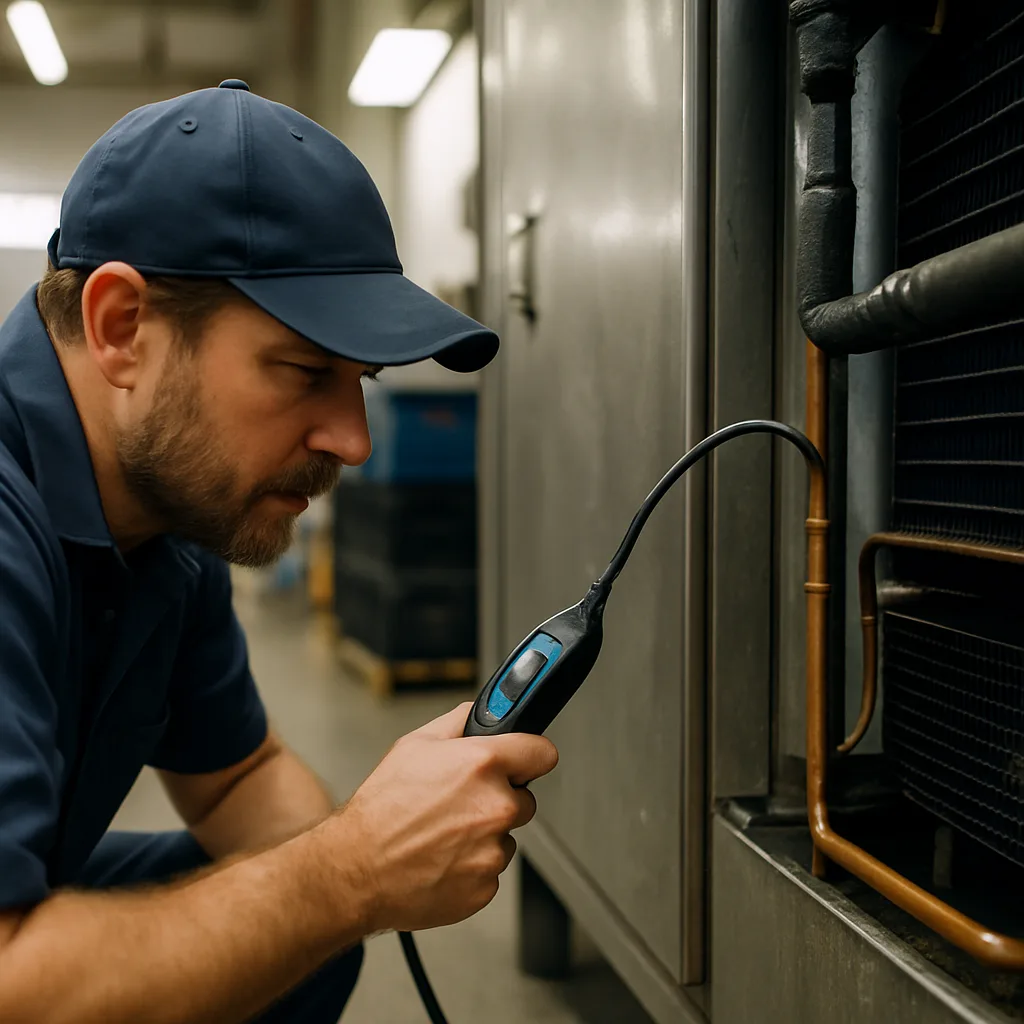
- Electronic leak detector sweep along suspect lines and connections
- UV dye or soap bubble test on any spot the detector flags
- Nitrogen test on the sealed system to confirm the exact leak point
- Written summary of what we found and what it’ll take to fix it
That last step matters because you get the findings in writing, not just a verbal guess.
Why not add refrigerant and call it done? Refrigerant isn’t consumed and doesn’t run low by itself. If the level is down, it escaped through a hole somewhere. Topping it off without finding that hole means you may pay for the same fix again in a few months.
The leak is often at a joint, valve, or worn coil. We’ll show you the exact location before anything gets repaired.
Thinking about Refrigeration leak detection? Let’s talk.
Call Today, Get Service Today. Xtreme Air Services is ready to help.
Diagnosis and Repair Are Two Separate Steps
Many people don’t realize this until we’re standing next to their walk-in cooler: finding the leak and fixing it are different jobs. One tells you what’s wrong, and the other stops the leak.
During refrigeration leak detection, we track down where refrigerant is escaping and why. We use the tools suited to your system. That may be a camera, electronic detector, or gauges and careful testing. The leak isn’t always where the owner expects. It may hide at a fitting, coil seam, or valve that has vibrated loose.
Once we find it, you get a written summary in plain English. It lists what we found and what we recommend doing. You can make the call with real information instead of a guess.
This matters for your wallet too. The visit itself is a $150 to $600 range job. The most common assessment runs $150 to $350. There’s also a $26 to $99 service call fee. That fee gets credited toward the repair if you move forward with us. The detection work becomes part of the fix rather than wasted money. It doesn’t include the repair itself. We quote that separately once we know what we’re dealing with.
Same-Day Response Keeps Commercial Refrigeration Losses Low in Sunnyvale
A walk-in cooler losing its charge during a Sunnyvale lunch rush isn’t a small problem. Temperatures can climb past safe holding levels quickly. That’s inventory you can’t sell or recover. Every hour a leak goes undiagnosed costs you twice: once in spoiled product and again in the health-code risk from food sitting too warm.
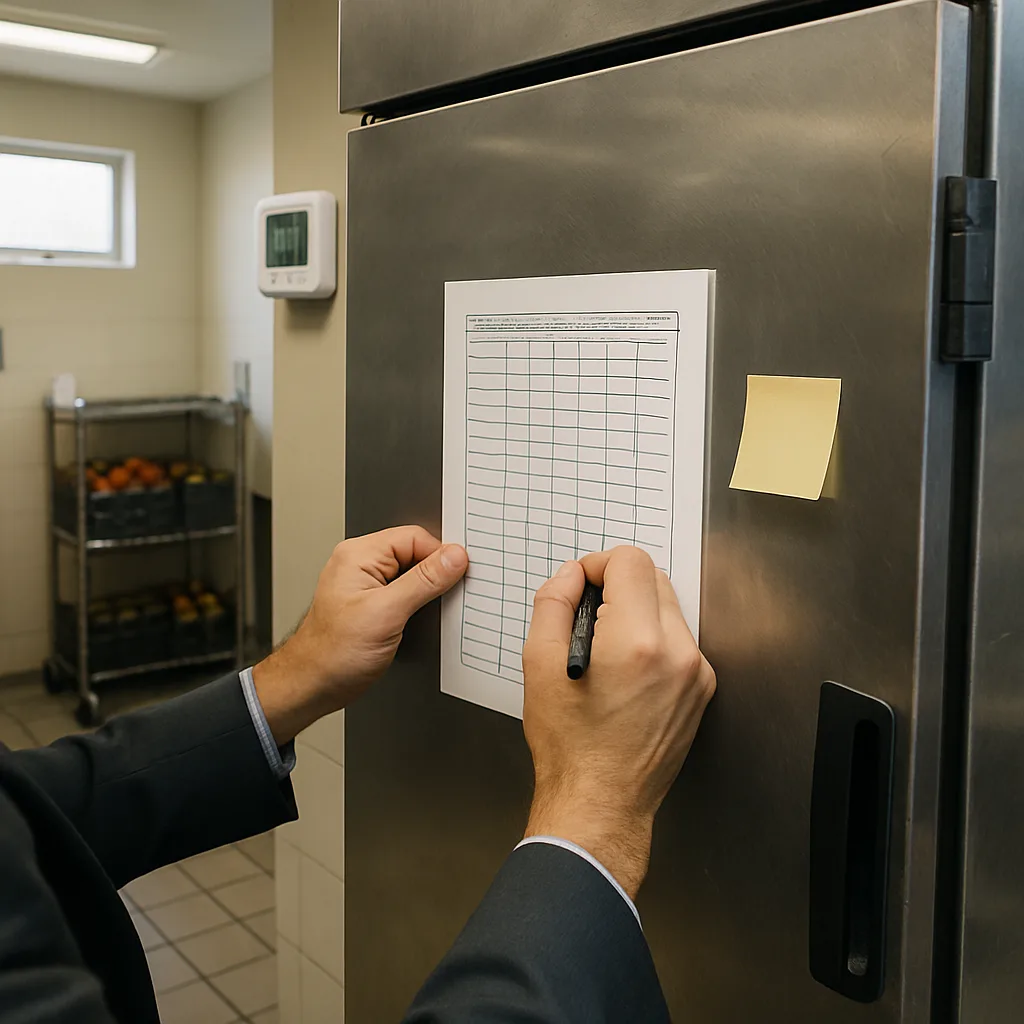
Restaurant owners and small retail operators often report the same signs. The unit runs constantly but never reaches temperature, or ice builds up on the coil. A slow refrigerant leak may have started small and gotten worse.
That’s why same-day service matters so much for commercial refrigeration. A commercial kitchen can’t wait three days for a technician with a gauge set.
- Product loss grows hour by hour once a cooler or freezer drifts above its safe range
- Health inspectors care about documented temperature control, not only the repair date
- Finding a slow leak early usually means a smaller repair than waiting for a full charge loss
- Downtime on a rooftop unit or walk-in affects your staff and customers, not just the equipment
We treat refrigeration leak detection calls for businesses with the urgency a failing walk-in deserves in August. Our team arrives, performs the assessment, and gives you a written summary that day. You can decide on the repair before more product is at risk.
Frequently Asked Questions
Common questions about Refrigeration leak detection
How fast can you get someone out to check a refrigerant leak in Sunnyvale?
We aim for same-day response, especially for commercial walk-in coolers and restaurant refrigeration. A leak that’s losing charge fast can spoil product within hours, so waiting a day or two isn’t worth the risk. When you call, tell us what you’re seeing, warm air, ice on the lines, or hissing sounds. That helps us bring the right tools on the first visit instead of coming back a second time.
What happens when your technician shows up to look at my system?
Your tech starts with a visual check of coils, valves, and joints, looking for oil stains or frost buildup. Refrigerant carries a small amount of oil, so a leak often leaves a greasy trail near the source. From there, we sweep the lines with an electronic leak detector and confirm any suspect spot with UV dye or a soap bubble test. You’ll get a written summary of what we found before any repair work starts.
Why do Sunnyvale’s rooftop refrigeration units seem to leak more often?
Rooftop units sit through brutal summer heat, and that heat makes copper line joints expand and contract more than they would in a conditioned mechanical room. Over years, that stress can open tiny pinhole leaks right at the joints. Your compressor can be perfectly fine while a slow leak like this grows quietly for months. It’s one of the most common reasons Sunnyvale operators call us thinking their compressor is dying when it’s really a leak.
Why can’t you just add more refrigerant instead of finding the leak?
Refrigerant doesn’t get used up on its own, if your level is low, it escaped through a hole somewhere. Topping it off without finding that hole just means you’ll likely pay for the same fix again in a few months. We track down the exact leak point using tools like electronic detectors, UV dye, or nitrogen testing, depending on your system. You’ll see the leak location yourself before any repair happens.
How do you find a leak that isn’t visible or obvious?
We combine several methods until we pinpoint the exact spot. An electronic leak detector sweeps the lines first, then we confirm any flagged area with UV dye or soap bubbles. For sealed systems, a nitrogen test can pressurize the lines and reveal exactly where pressure drops. Old solder joints on older commercial walk-ins and rooftop units are common culprits, so we check those closely on any building with a history of patches.
Is my warm air definitely a refrigerant leak, or could it be something simpler?
Not always, a dirty filter or a dust-covered condenser coil can make your system struggle without any leak at all. Weak airflow from every vent usually points to a filter problem, not refrigerant. If your system was fine at its last service and nothing has changed, you probably don’t need leak detection yet. We’ll rule out the simple stuff first so you don’t pay for a diagnostic you don’t need.
Ready to Get Started?
Call 972-288-2263 Today, Get Service Today.