


Backup Power Assessment: Should You Repair or Replace Your Current System?
How we decide between repairing and replacing backup power equipment in Sunnyvale, and what drives the call.
What’s Covered on This Page
- The Short Answer on Repair vs. Replace for Backup Power
- What Our Backup Power Assessment Covers
- The Factors That Decide Repair vs. Replace
- When We’d Recommend Repairing Your Current System
- When We’d Recommend Replacing Your Current System
- How do you decide whether to recommend a repair or a replacement?
- Is there ever a fee for the backup power assessment?
- What’s the factor most people get wrong when weighing repair versus replace?
- Would you ever recommend replacing a generator that still starts and runs?
- Does the service-call fee count toward anything if I move forward with work?
The Short Answer on Repair vs. Replace for Backup Power
Here’s the short version: a backup power assessment does not decide repair or replace by itself. It tells you which path you are on. When you call us for Backup power assessment, we look at your home or business, your panel, your load needs, and, if you already have a generator, its condition. Then we lay out whether a repair, an upgrade, or a new system makes sense for you. Most of the time this assessment is complimentary, though a fee can apply if you want a full engineering review or a detailed load calculation done on paper.
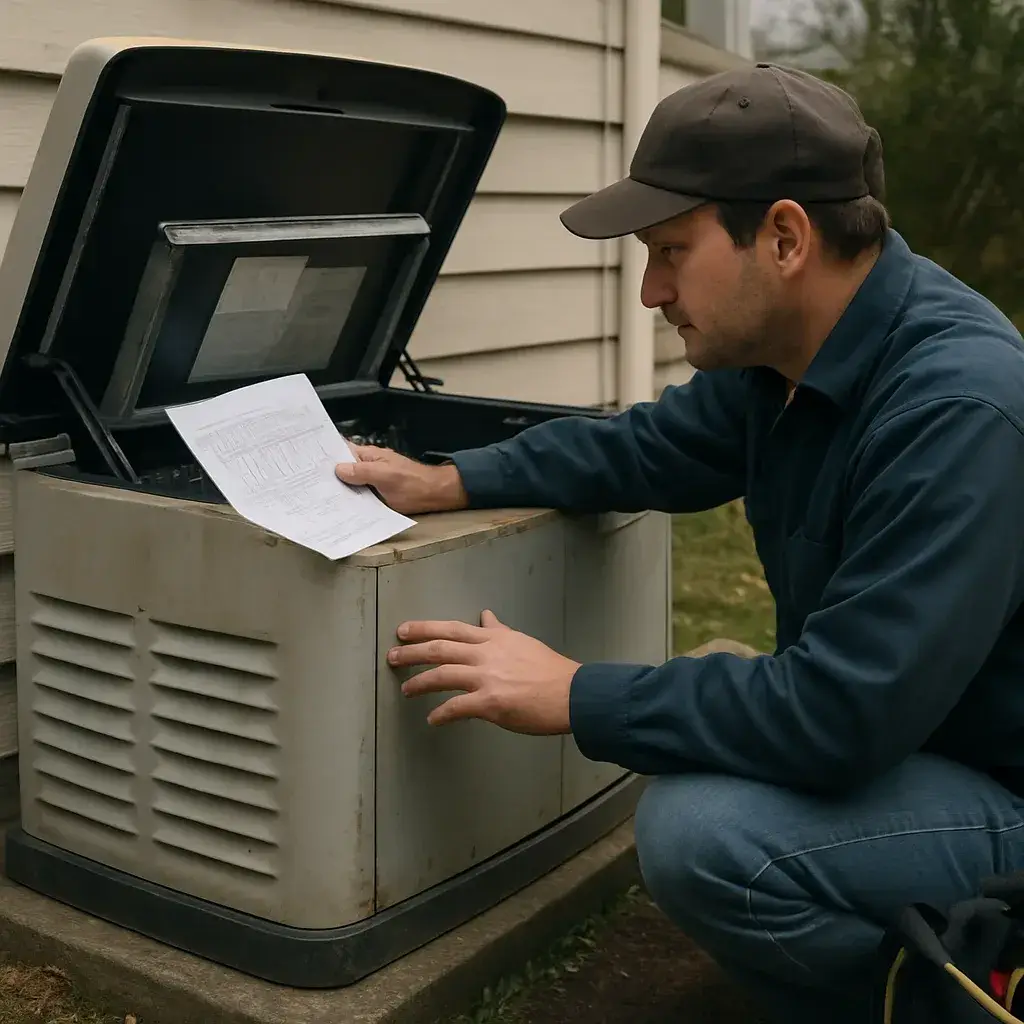
If you already own a generator, the call usually comes down to age, parts availability, and what the load calculation shows. A generator that’s a few years old, still starts reliably, and just needs a transfer switch adjustment or a fuel line reconnection is a repair conversation. We do generator repair, generator maintenance, and generator load testing. If the unit tests out fine and covers what you need it to cover, there is no reason to replace it. But if the load calculation shows your unit is undersized for what you are running now, maybe you added a workshop, a second HVAC system, or medical equipment, that is a different conversation. Sizing it wrong the first time is one of the more common things we find during an assessment, and a repair does not fix that. We run into this regularly on Sunnyvale properties.
If you do not have backup power yet, the assessment is about sizing and consultation. This is where generator sizing / consultation and generator pad / placement come in. We look at your electrical panel, walk through what you want covered during an outage, whole house, or just the essentials, and talk through whole-home standby generator installation versus a smaller setup with a transfer switch. Placement matters too (it always does). Not every yard or slab has a good spot for a generator pad, and we sort that out during the visit, not over the phone. Most Sunnyvale homes we visit land in that range.
If your existing setup is old enough that parts are hard to source, or if a load test shows real problems with the unit itself rather than just the connections, we are not going to talk you into a repair just to make the call worth our time. That is a replacement conversation, and we will say so. This comes up often enough in Sunnyvale that we plan for it.
The assessment covers the needs assessment and the options and recommendations that come out of it. It does not include installation or equipment. Those get quoted separately once you know which direction you are headed. If you do move forward with installation or repair, the service-call fee, when one applies, gets credited toward that work. Financing is not typically part of an assessment, since it is a smaller job, but it is available if you move into a larger installation or generator replacement afterward. Sunnyvale homeowners ask us about this constantly.
What Our Backup Power Assessment Covers
This visit is us coming out to your home or business and figuring out what it takes to keep the lights, the fridge, and the systems that matter running when the grid goes down. We walk your property, look at your electrical panel, and talk through what you need powered during an outage versus what is nice to have. For most homeowners in the DFW area that means the refrigerator, some lighting, a well pump if you have one, and the AC or a mini-split during the summer months. For a business it might mean refrigeration, point-of-sale systems, or the equipment that keeps you open. We build the picture from there (one step at a time). The same applies across our Sunnyvale service area.
This visit is often complimentary, and it is a real look at your setup, not a sales pitch dressed up as a consultation. We do a real load calculation, which just means adding up the electrical demand of what you want backed up so we can size the generator correctly. Undersize it and it trips or will not start your AC compressor. Oversize it and you have paid for capacity you will never use. We would rather walk you through the math than guess. We have seen it play out that way on plenty of Sunnyvale jobs.
Part of the visit covers where a generator or battery system would sit. Setback rules, gas line access, and where your electrical panel is located all affect placement, and older homes around Dallas and Mesquite sometimes have panels in spots that make the installation more involved than a newer subdivision home in Frisco or Allen. We look at that here, not after you have already committed. It is one of the more common questions we field in Sunnyvale.
We talk through the real options, whole-home standby generators wired through a transfer switch versus a smaller portable setup, and explain what each one covers during an outage. A standby system with a transfer switch can carry your whole panel or a set of dedicated circuits automatically. A portable setup covers fewer things and takes more of your involvement when the power goes out. Neither one is the automatic right answer. It depends on your budget, your home’s setup, and how much of your life stops without power. Our Sunnyvale crews handle this as a matter of routine.
What this visit does not include is the installation itself, or any equipment. This is the assessment and the recommendation, the decision-making part. If you move forward with us, the generator, the transfer switch, the pad, and the fuel line connection are a separate scope with their own pricing. We are upfront about that split so you are not surprised later by what was and was not part of the visit. That is true whether you are in Sunnyvale proper or just outside it.
If detailed engineering or a formal load calculation write-up is needed beyond the standard visit, a fee can apply. That is the exception, not the rule, and we will tell you before it applies. Most homeowners get a straightforward walkthrough, a plain-English explanation of sizing, and a recommendation they can use to make a decision, whether that decision is with us or somewhere else entirely. Sunnyvale properties are no different in this respect.
The Factors That Decide Repair vs. Replace
Most of the time there is nothing to repair yet. You do not have a generator or backup battery installed, and the assessment is about sizing the right system before you spend money on equipment. But if you already own a generator and you are wondering whether the assessment should point you toward fixing what you have or upgrading to something bigger, a few real factors settle that question. We factor that in on every Sunnyvale visit.
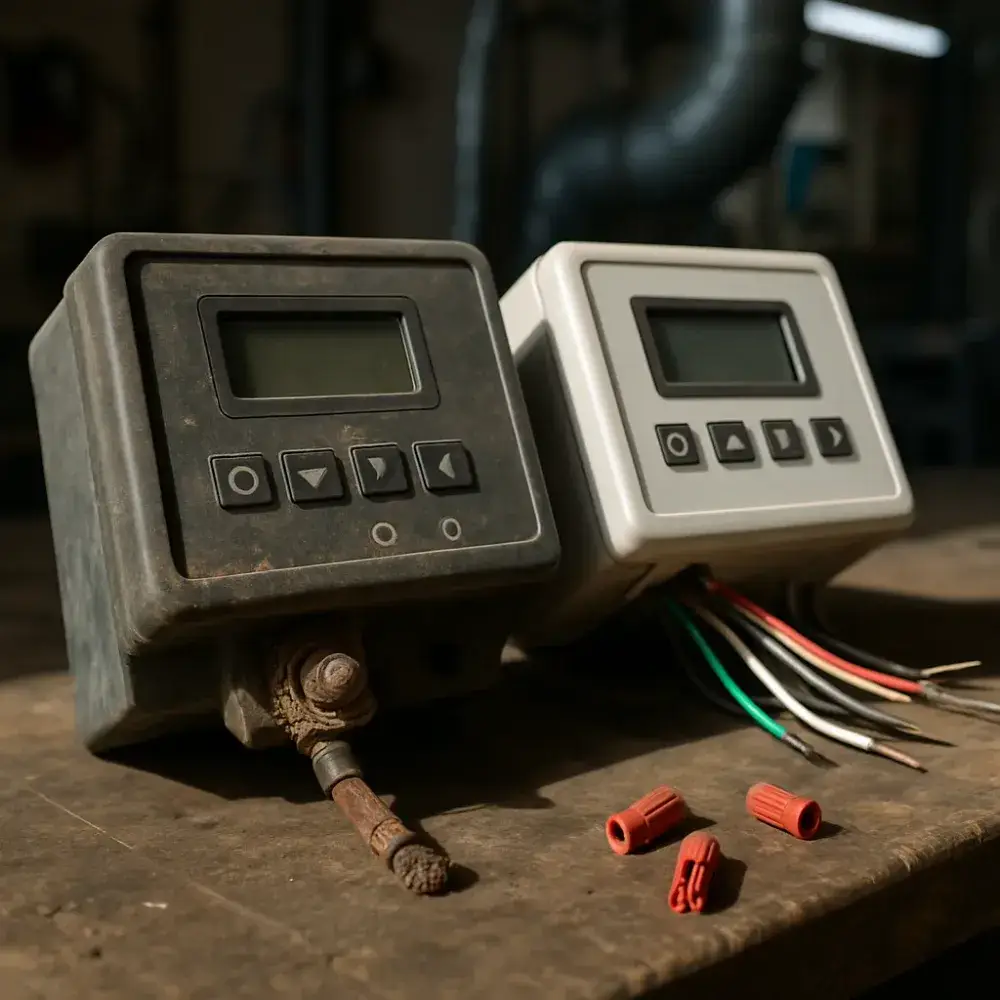
Age and condition of your current unit matters first. A generator that’s ten or fifteen years old, especially one that’s sat outside through DFW summers and ice storms without regular service, is working with worn parts even if it still starts. During the assessment we look at what you have, how it’s held up, and whether it can still cover your actual electrical load or just used to. A unit that’s undersized for a house that’s added central AC, an EV charger, or a converted garage workshop since it was installed is not a candidate for a simple fix. The problem is not the generator. It is the math. Homeowners across Sunnyvale run into the same thing.
Load is the real driver behind most of our recommendations. We do the calculation on what your home or business draws when the grid goes down, refrigeration, well pumps, medical equipment, HVAC, whatever matters to you, and compare that against what your existing setup or a proposed new one can deliver. If a homeowner’s generator was sized years ago for a smaller panel and they have since added a home office that needs to stay up during an outage, that is a sizing gap no amount of maintenance closes. On the flip side, if the unit is a few years old, properly maintained, and sized correctly, there is often no reason to replace anything. The assessment tells you which situation you are in instead of guessing. This is standard practice for our Sunnyvale technicians.
Fuel type and transfer switch compatibility factor in too. Natural gas, propane, and portable setups each have different placement and connection needs, and an older transfer switch may not support the automatic switching a newer system offers. We note this during the visit because it changes what “backup power” looks like for your property, not because it obligates you to a particular product. It holds for Sunnyvale and the nearby Dallas County communities.
Cost is where people expect pressure, and here is where things stand plainly: the assessment itself is often complimentary. Detailed engineering, formal load calculations, or full written design work can carry a fee, usually in the $0 to $300 range depending on scope, but the needs assessment and options recommendation are included at no charge. What’s excluded is the equipment and installation itself, that is a separate decision you make after you see the numbers. Some homes genuinely do fine with a smaller unit sized to a few key circuits, and we will say so if that is what the load calculation shows. We keep that in mind on Sunnyvale service calls.
Watch Our Video
See How We Handle Backup Power Assessment in Sunnyvale
Xtreme Air Services — Serving Sunnyvale and surrounding areas
Not sure what your Backup power assessment project needs? Ask us.
Call Today, Get Service Today. Xtreme Air Services is ready to help.
When We’d Recommend Repairing Your Current System
Most of the time, if your standby generator is under 10 years old and the problem is one part, a bad transfer switch, a dead battery, a fouled fuel line, we will tell you to repair it. A generator load test during your assessment tells us a lot. If the unit starts, runs stable under load, and the engine hours are still low, replacing the whole system usually does not make sense yet. We would rather fix the part that is failing than sell you a new unit you do not need. That has been our experience throughout Sunnyvale.
Here is what we look at before we recommend a direction. We check the transfer switch, since that is the part that decides whether your home gets power when the grid drops, and it is one of the more common failure points we find. We look at the battery and charging system, because a generator that will not crank in a real outage is often a battery problem, not an engine problem. We check fuel lines and connections, run a load test to see how the unit handles an actual demand, and look at the control board. If those come back clean and the issue is isolated, generator repair gets your system back to full function without the cost of a new install. Sunnyvale customers see this play out the same way.
Age and usage matter more than most people expect. A generator that’s had regular generator maintenance and annual service, and that’s seeing normal run hours for a home in the Sunnyvale or greater DFW area, has a lot of life left even after one component fails. We’ve seen units in older, established neighborhoods keep running well past a decade when they’ve had consistent servicing. That’s a different situation than a unit that’s been neglected, skipped its annual service, and is now showing multiple issues at once. One clean fix on a maintained system is a repair conversation. Three or four separate failures on a unit nobody’s serviced is a different conversation, and we will say so.
We also factor in whether the generator was sized right for your home in the first place. Part of this process is generator sizing and consultation, so if the existing unit was undersized for your load from day one, that’s worth knowing even if the current repair is straightforward. It does not automatically mean replace, but it is information you should have before you decide. The Sunnyvale homes we service follow this pattern.
This assessment is often complimentary, and if you do move forward with a repair, the service-call fee, twenty-six to ninety-nine dollars depending on the visit, gets credited toward the work. If your unit tests out fine on a couple of components and needs a straightforward repair, that is what we will put in front of you, in writing, before anything gets touched. We take the same approach on every Sunnyvale project.
When We’d Recommend Replacing Your Current System
If you already have a standby generator or a battery backup setup and it’s more than 10 to 15 years old, struggling to start a load test, or throwing fault codes on a regular basis, replacement usually makes more sense than repair. Age alone does not decide it. We look at how the unit is performing, not just how old it is on paper. A well-maintained generator that’s had regular service can still be a good candidate for repair even at 12 or 13 years in. One that’s been neglected can show its age at half that. That is how we scope it for Sunnyvale customers.
Replacement makes more sense when the transfer switch or the generator itself can no longer support the loads your home or business needs. This comes up a lot in older Sunnyvale and greater Dallas-Fort Worth homes where a generator was sized for a smaller electrical panel years ago, and the homeowner has since added a shop, a pool, or a second HVAC system. In cases like that, it is not about fixing a failing part. It is about sizing you for the load you have today. That is a core part of what this process covers, generator sizing and load calculation, so you are not paying to patch a unit that was undersized from the start.
Repair makes more sense when the core generator or battery hardware is sound and the issue is something isolated, like a transfer switch, a control board, or a fuel line connection. Those are common repair items and do not usually call for a full replacement. If your unit has a manufacturer’s warranty still active, that is another point in favor of repair, since parts and labor may already be covered under terms outside of what we set. Sunnyvale sits squarely in our everyday service area.
This process is a plain walkthrough of your options, generator or battery, sized for your actual home or business, with the tradeoffs laid out clearly. It is often complimentary. A fee may apply if you need detailed engineering, formal load calculations, or design documentation, but the needs assessment and recommendation are included at no charge in most cases. What’s not included is the equipment or installation itself, that is a separate conversation once you know your direction.
If you decide to move forward with a new system, the same flat-rate, written-quote process applies before any work starts, so you know the full cost before you commit. Financing is not typically part of this visit, since it is a smaller-ticket item, but it is available once you move into an actual installation or replacement.
See our full backup power assessment service in Sunnyvale for what the complete job involves.
Frequently Asked Questions
Common questions about Backup Power Assessment in Sunnyvale
How do you decide whether to recommend a repair or a replacement?
We look at the age of your generator, whether parts are still available for it, and what the load calculation shows. If the unit starts reliably and covers what you need powered, a repair usually makes sense. If it’s undersized for your current needs or parts are hard to find, we’ll walk you through replacement instead. The decision comes from what we find during the visit, not a guess made over the phone.
Is there ever a fee for the backup power assessment?
Most of the time, no. The assessment itself is usually complimentary. A fee can apply if you want a detailed engineering review or a formal written load calculation beyond the standard walkthrough. That’s the exception, not the rule, and we’ll tell you before it applies. The needs assessment and our recommendations are included either way.
What’s the factor most people get wrong when weighing repair versus replace?
Many buyers assume price alone should decide it, but parts availability matters just as much. An older generator can be cheap to fix today and hard to fix again next year once the manufacturer stops stocking parts for it. We factor that in alongside the load calculation, not just what today’s repair would cost on its own.
Would you ever recommend replacing a generator that still starts and runs?
Yes, if the load calculation shows it’s undersized for what you’re running now. A generator can start fine and still not cover a workshop, a second HVAC system, or medical equipment you’ve added since it was installed. When that happens, we’ll tell you it’s a replacement conversation instead of trying to make a repair work that won’t fix the sizing problem.
Does the service-call fee count toward anything if I move forward with work?
Yes. The service-call fee, when one applies, runs $26 to $99 and gets credited toward the repair if you decide to move forward with us. This only applies when a fee was charged for the visit, and it’s meant to keep the assessment from feeling like a separate expense from the work itself.
Ready to Get Started?
Call 972-288-2263 Today, Get Service Today.