


AC Not Cooling in the Texas Heat? Get an AC Not Cooling Diagnosis in Sunnyvale
A methodical diagnosis for Sunnyvale homes whose AC runs constantly without ever getting cold.
What’s Covered on This Page
- Common Reasons an AC Runs But Won’t Cool
- Quick Checks Before You Call for Diagnosis
- What a Professional AC Not Cooling Diagnosis Includes
- How AC Diagnostic Fees Work
- Why Sunnyvale AC Systems Struggle in Peak Summer Heat
- How fast can you get someone out to look at my AC in Sunnyvale?
- What happens during an AC not cooling diagnosis visit?
- Why do so many AC problems in Sunnyvale come from the attic install?
- My AC is running but the air feels warm. What’s usually wrong?
- Can a bad capacitor really stop my AC from cooling?
Common Reasons an AC Runs But Won’t Cool
Here’s the confusing part. The unit runs fine, the fan sounds normal, but the air coming out of the vents feels lukewarm, or barely moving at all. That doesn’t mean the whole system is dying. It usually means one specific part isn’t doing its job.
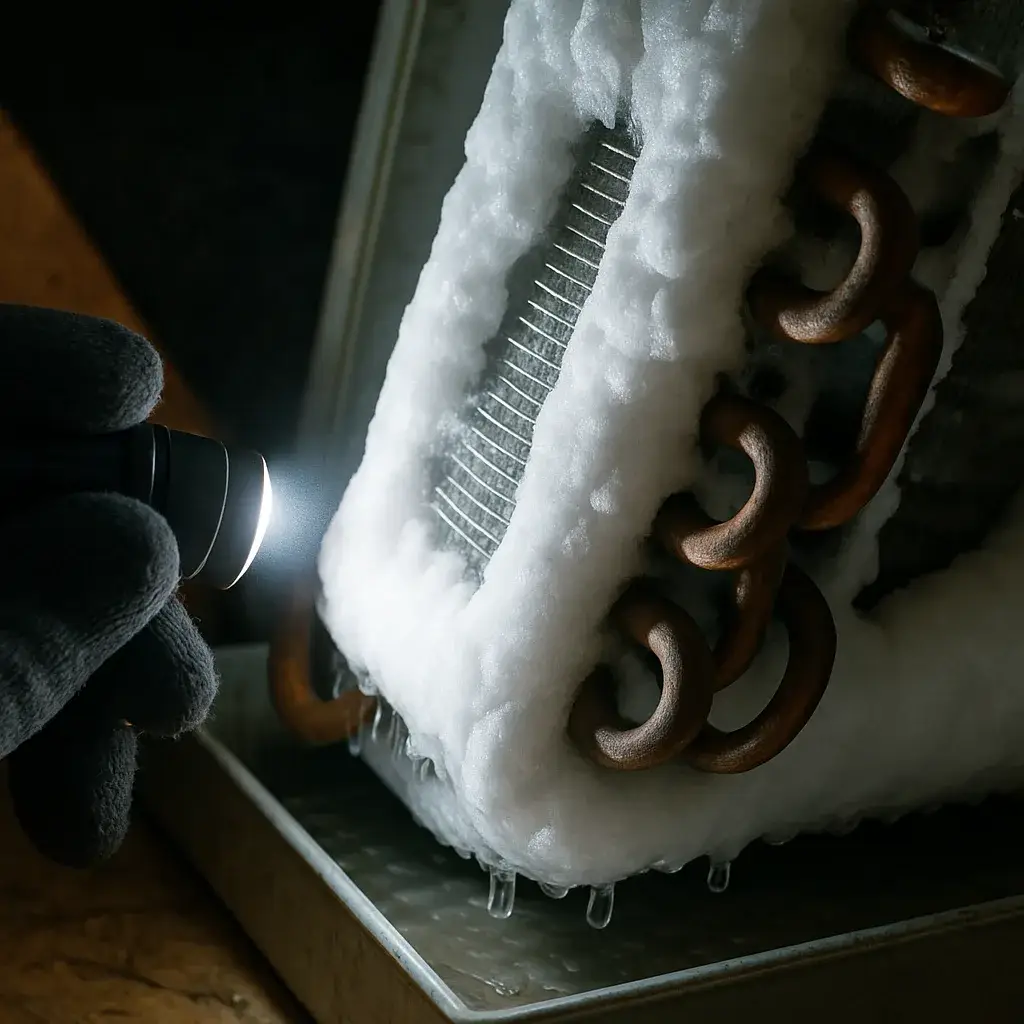
We see the same short list of culprits over and over. A slow refrigerant leak is a big one, the system runs but can’t pull enough heat out of your air. A dirty or frozen evaporator coil is another, ice builds up on the coil and blocks airflow completely.
- Low refrigerant from a slow leak in the lines or coil
- A dirty or frozen evaporator coil blocking airflow
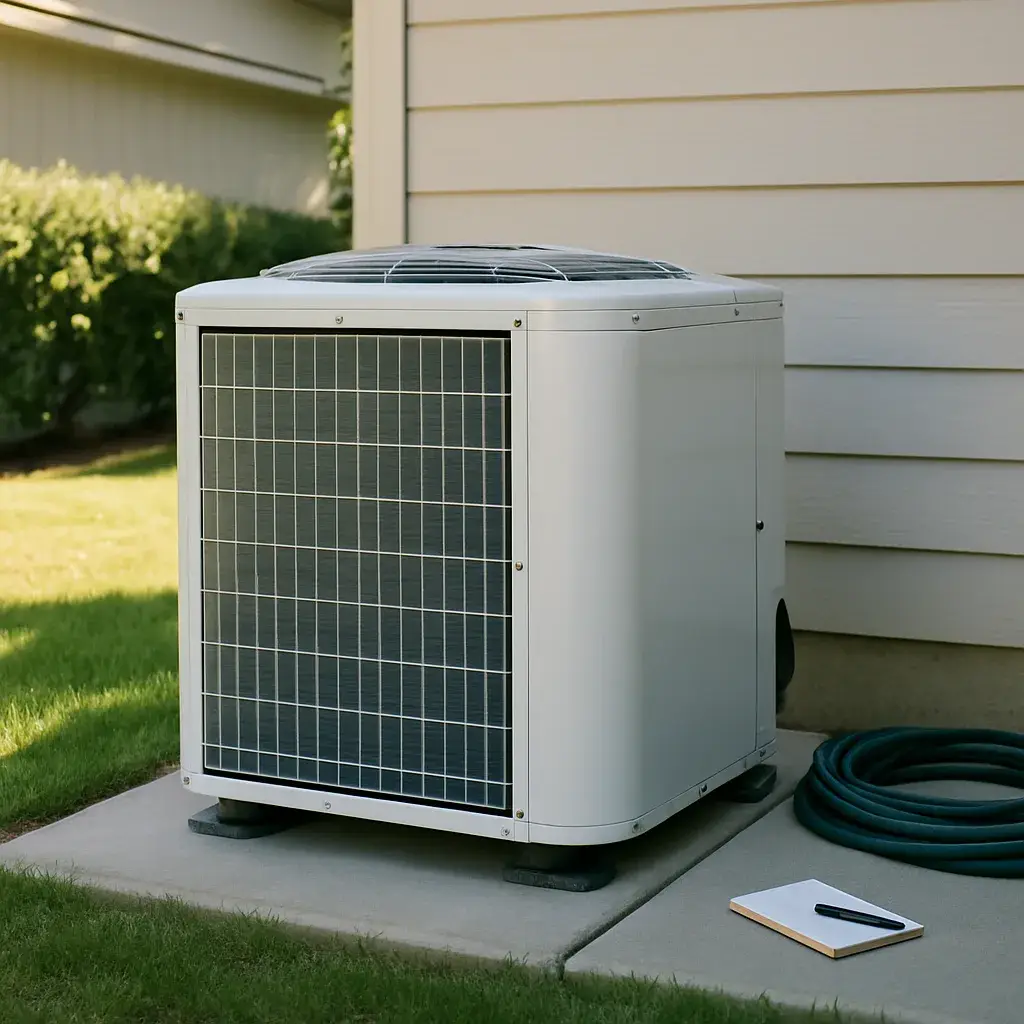
- A dirty outdoor condenser coil that can’t release heat
- A failed or weak run capacitor, the outdoor fan spins slow or not at all
- A clogged air filter starving the system of airflow
- Leaky, disconnected, or crushed ductwork, common in attic-installed systems
That last one matters here. A lot of Sunnyvale homes run the air handler up in the attic, and attic temps can climb past 130 degrees on a summer afternoon. That heat stresses ducts, connections, and coils harder than a garage or closet install ever would.
Most of the time it’s one of these six things.
So why not just guess and swap the part that seems most likely? A capacitor and a refrigerant leak can look almost identical from the thermostat, warm air, short cycling, higher bills, and guessing wrong wastes your money and your time.
Quick Checks Before You Call for Diagnosis
Before you pick up the phone, spend two minutes checking a few things. We’d rather you skip a visit if the fix is that simple.
Most of the time it’s not the checks below, but we’ve shown up to more than one house where the thermostat was set to heat by accident.
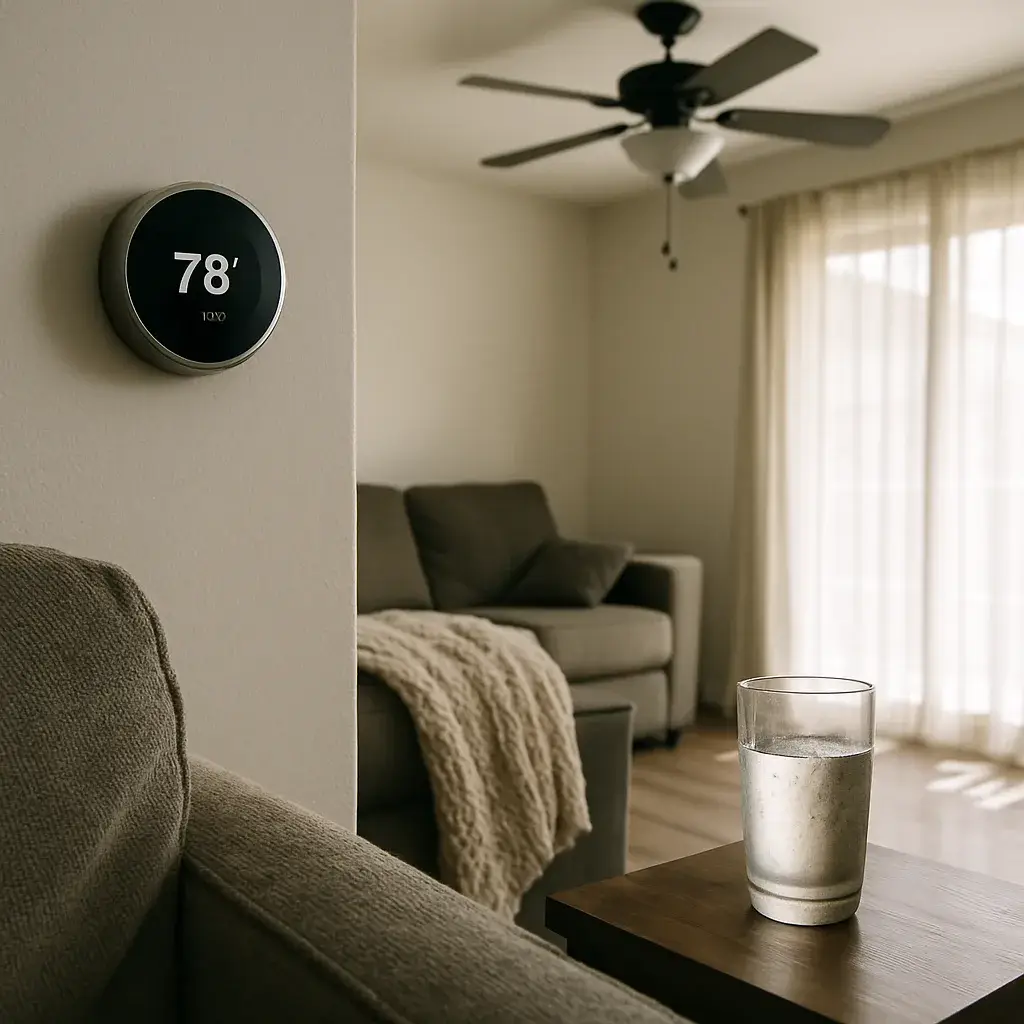
- Thermostat set to cool, not heat or fan only, and the temperature set below room temp
- Thermostat batteries or screen. A dead display means no signal to the system at all
- Breaker panel. A tripped AC breaker will cut power with zero warning and zero noise
- Air filter. A clogged filter can choke airflow so bad the coil freezes over
- Outdoor unit power switch, sometimes called the disconnect, near the condenser itself
Check those five things. If the AC still won’t cool after that, something inside the system needs a trained eye.
A reset breaker that trips again right away? Don’t keep flipping it. That’s usually an electrical fault, not a fluke, and it’s a sign to stop and call rather than force the system back on.
Some homeowners also hear a hum from the outdoor unit with no fan spinning, or notice ice on the copper line. Those are real findings worth mentioning on the phone, they help us know what to expect before we even knock on the door.
What a Professional AC Not Cooling Diagnosis Includes
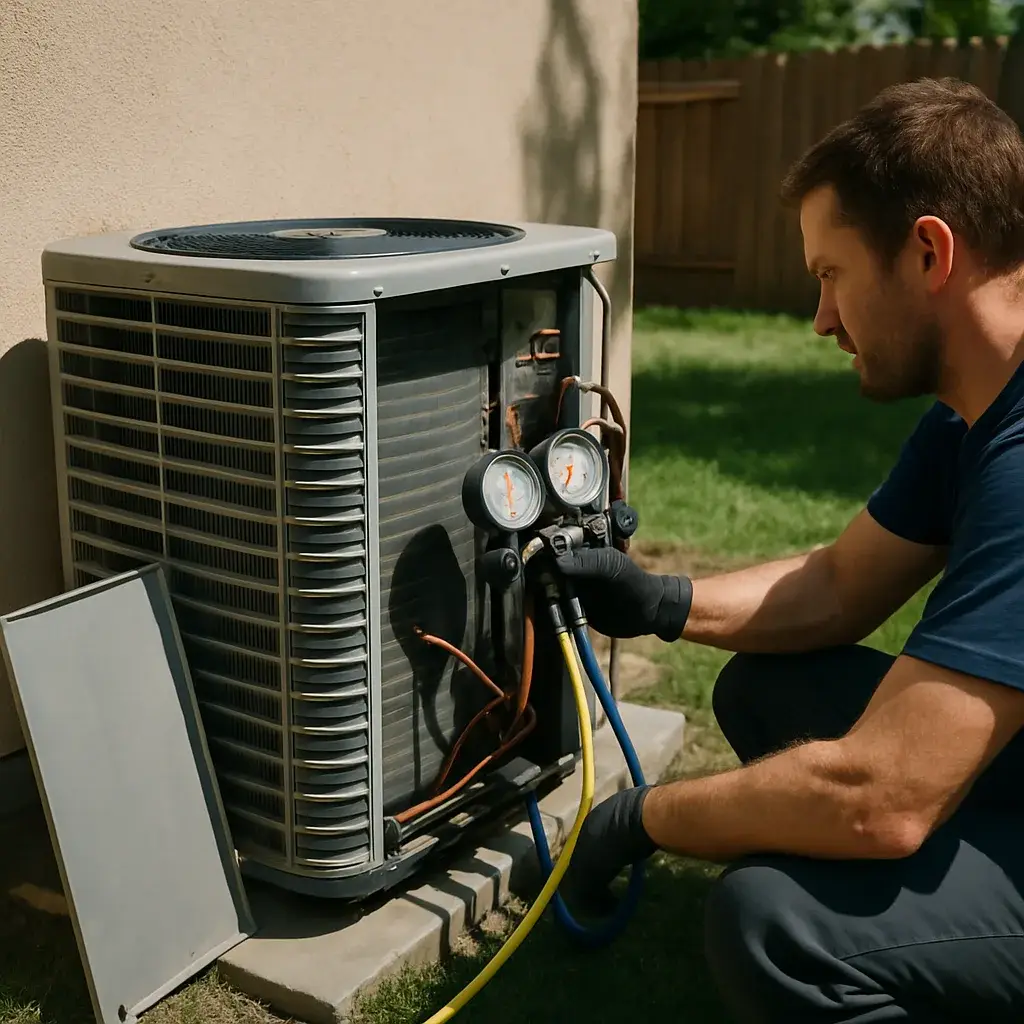
So what happens when a tech shows up for an AC not cooling diagnosis? It follows the same order every time. We’re checking the parts that fail most often first, then working backward until we find the real problem.
- Check the thermostat settings and signal to confirm the system’s even getting the call to cool
- Test electrical components, including the capacitor and contactor, for wear or failure
- Check refrigerant and look for signs of a leak
- Inspect the condenser coil outside and the evaporator coil inside for dirt or ice buildup
- Check airflow at the vents and inspect the blower motor
- Look at the drain line for clogs that can trip a safety switch and shut the whole system down
None of this is guesswork. We’re pulling actual readings, not just listening for a hum and shrugging.
Here’s the part most companies don’t spell out clearly. Our AC not cooling diagnosis is a $75 to $125 job for most homes, on-site assessment plus a written summary of what we found and what we’d recommend next. More complex cases, bigger systems, tight attic access, or jobs needing a camera or leak detector, can run up to $200. That service-call fee, $26 to $99 depending on the visit, gets credited toward the repair if you move forward with us. The diagnosis covers the assessment and the written report. It doesn’t include the actual repair work, that gets quoted separately once we know exactly what’s wrong.
You walk away knowing what’s broken and what it’ll take to fix it. No mystery, nothing to decide on the spot.
Not sure what your AC not cooling diagnosis project needs? Ask us.
Call Today, Get Service Today. Xtreme Air Services is ready to help.
How AC Diagnostic Fees Work
Let’s talk money, that’s usually the second question after ‘can you fix it.’ Our AC not cooling diagnosis runs $75 to $200, with the most common visit landing between $75 and $125. That’s a written assessment, not a guess. You get a clear summary of what’s wrong and what it’ll take to fix it.
What moves the number up or down? A few things, mostly. System complexity matters, so does the size of your property. And if we need special gear, like a camera for the ductwork or leak detection equipment, that adds time and cost.
- System complexity, single-zone units cost less to diagnose than multi-zone or ductless setups
- Property size, a two-story home takes longer to check than a one-bedroom condo
- Specialized equipment, cameras, leak detectors, and meters add to the visit
- Access issues, a hard-to-reach attic unit can slow things down
Here’s the part folks like best. That $26 to $99 service-call fee gets credited toward the repair if you move forward with us. So you’re not paying twice, once to find the problem and again to fix it.
One thing to know upfront, this diagnostic visit covers the assessment and the write-up. Any repair work identified during the visit is separate and quoted before we touch a single wire or coil.
We don’t offer financing on a diagnostic visit alone, that’s for the bigger repairs and replacements down the road. Small job, small commitment. That’s the whole point.
Why Sunnyvale AC Systems Struggle in Peak Summer Heat
Texas summers don’t just make your house warm, they push your whole AC system to its limit. Once outdoor temps sit in the upper 90s and 100s for weeks straight, the condenser outside is working nonstop just to dump heat out of your home. Add an attic-mounted air handler, common in a lot of Sunnyvale homes, and that unit is sitting in space that can hit 130 degrees or more on a summer afternoon. Heat like that stresses capacitors, wears down motors faster, and makes marginal refrigerant levels turn into a full no-cool event.
Newer subdivisions around Sunnyvale often have tighter, better-sealed ductwork. That helps efficiency but also means a system has less room for error when something’s off. Older homes can have undersized ductwork or aging equipment that was borderline even before the heat wave hit. Either way, the system that limped through spring can suddenly quit in July.
We see this every week once temps climb.
So when your AC stops cooling in the middle of a heat spell, it’s rarely random. It’s usually a part that was already weak, finally pushed past its limit by the heat load your system’s been fighting all summer. That’s exactly why a real diagnosis matters, guessing at the fix wastes time your home doesn’t have when it’s 100 degrees outside.
Frequently Asked Questions
Common questions about AC not cooling diagnosis
How fast can you get someone out to look at my AC in Sunnyvale?
We schedule diagnosis visits as quickly as we can, especially once summer heat sets in and calls pick up. The exact timing depends on how full the schedule is that day and where you are in Sunnyvale. If your AC is blowing warm air or not running at all, tell us that when you call. It helps us plan the visit and bring the right tools the first time.
What happens during an AC not cooling diagnosis visit?
A technician checks the system in the same order every time, starting with the thermostat and electrical parts, then moving to refrigerant levels and the coils. We inspect both the outdoor condenser coil and the indoor evaporator coil for dirt or ice. We also check airflow at your vents and look at the drain line for clogs. You get a written summary of what we found before any repair work is quoted.
Why do so many AC problems in Sunnyvale come from the attic install?
Attic heat puts extra stress on ducts, coils, and connections that a garage or closet unit never sees. Sunnyvale attics can climb past 130 degrees on a summer afternoon. That heat can crush ducts, loosen connections, and push refrigerant lines to leak faster. If your air handler sits in the attic, it’s worth mentioning that when you call. It changes what we check first.
My AC is running but the air feels warm. What’s usually wrong?
It’s almost always one of a short list of parts, not the whole system failing. The most common causes are low refrigerant from a slow leak, a dirty or frozen evaporator coil, or a clogged air filter starving the unit of airflow. A weak capacitor can also slow or stop the outdoor fan. Warm air alone doesn’t tell us which one it is, that’s why a real diagnosis matters instead of a guess.
Can a bad capacitor really stop my AC from cooling?
Yes, a failed or weak run capacitor is one of the most common reasons an AC runs but won’t cool. Without it, the outdoor fan spins slow or doesn’t spin at all, so the outdoor coil can’t release heat properly. From the thermostat, this can look almost identical to a refrigerant leak, warm air, short cycling, and higher bills. Testing the capacitor is one of the first things we check on any visit.
Ready to Get Started?
Call 972-288-2263 Today, Get Service Today.