

Gas Furnace Repair in Sunnyvale: Get Your Heat Back Fast
Gas furnace diagnosis and repair – ignitors, flame sensors, gas valves, and control boards – with safety checks on every visit.
What’s Covered on This Page
- Warning Signs Your Furnace Needs Professional Attention
- Common Gas Furnace Failures and What Repairs Involve
- When You Might Not Need a Repair Call Yet
- What Happens During a Professional Repair Visit
- Keeping Your Furnace Running Through Cold Fronts
- How fast can you get a technician to my home in Sunnyvale for a no-heat call?
- What should I expect when your technician arrives to fix my furnace?
- Why do furnaces in older Sunnyvale homes seem to fail more often?
- Can a cold front really cause my furnace to break down overnight?
- My furnace keeps shutting off a few minutes after starting. What’s causing that?
- Do I need a new furnace, or can this be repaired?
Warning Signs Your Furnace Needs Professional Attention
Not every furnace problem announces itself with a bang. Sometimes it’s a whiff of gas near the unit. Sometimes it’s the pilot light flickering out again and again, and you keep relighting it like that’s normal. So how do you know when it’s more than a fluke?
- Furnace won’t turn on, or it starts then shuts off again mid-cycle
- Burner flame looks yellow or orange instead of a steady blue
- You smell gas, or notice a scorched, burning odor near the vents
- Loud banging, screeching, or rattling when the system kicks on
- Rooms heat unevenly, or the air coming out feels lukewarm at best
- Your carbon monoxide detector goes off, or you spot soot around the unit
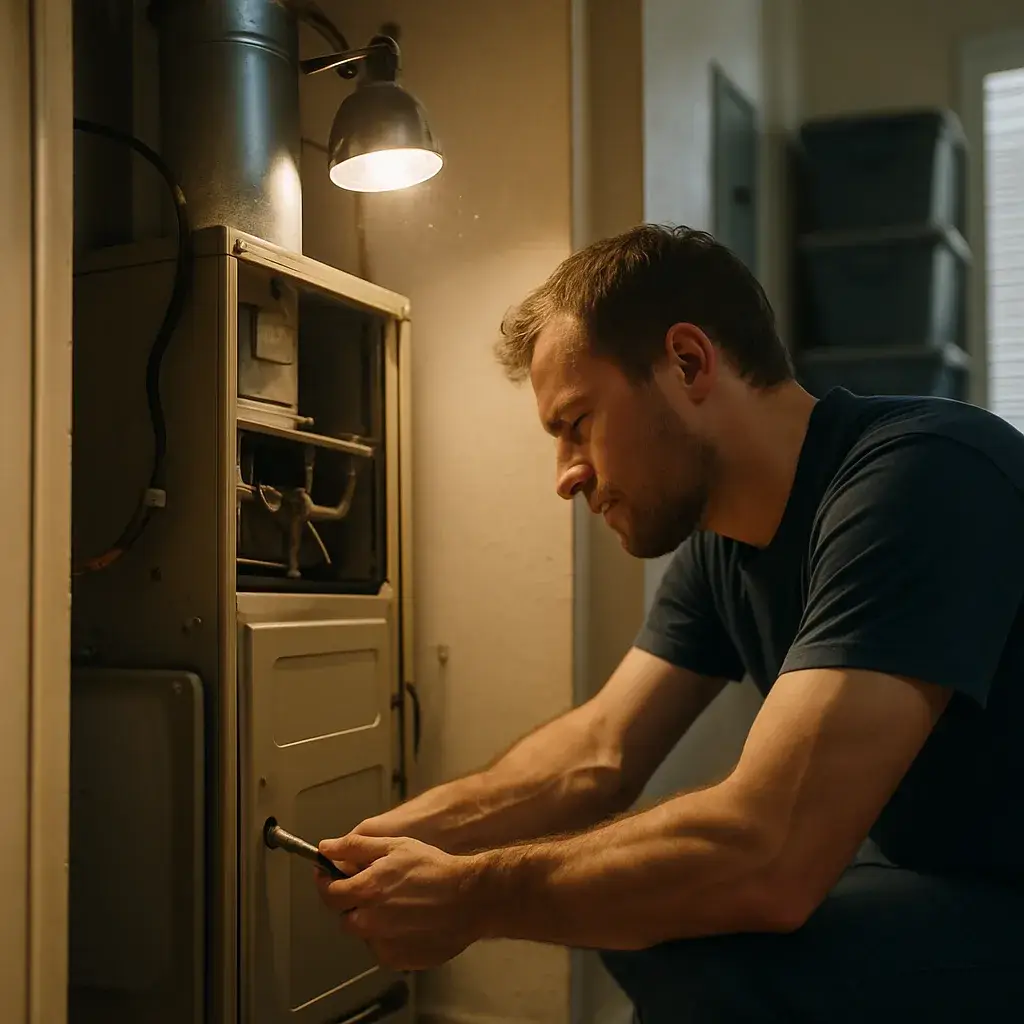
We get calls every winter from older homes around Sunnyvale where the furnace sits tucked into a tight attic space between the rafters. Up there, a cracked heat exchanger or a scorched wire is almost impossible to spot without a flashlight and the right tools. If your system keeps short-cycling or the flame sensor keeps tripping the same fault, that’s not something to keep resetting on your own. Age matters too. An older unit throwing new symptoms usually means a part is wearing out, not acting up for no reason.
Common Gas Furnace Failures and What Repairs Involve
Most no-heat calls come down to one of a handful of usual suspects. We see this every week across Sunnyvale, especially during a hard cold front when a furnace that’s been sitting idle since last winter finally gets asked to work.
Here’s what fails, most often:
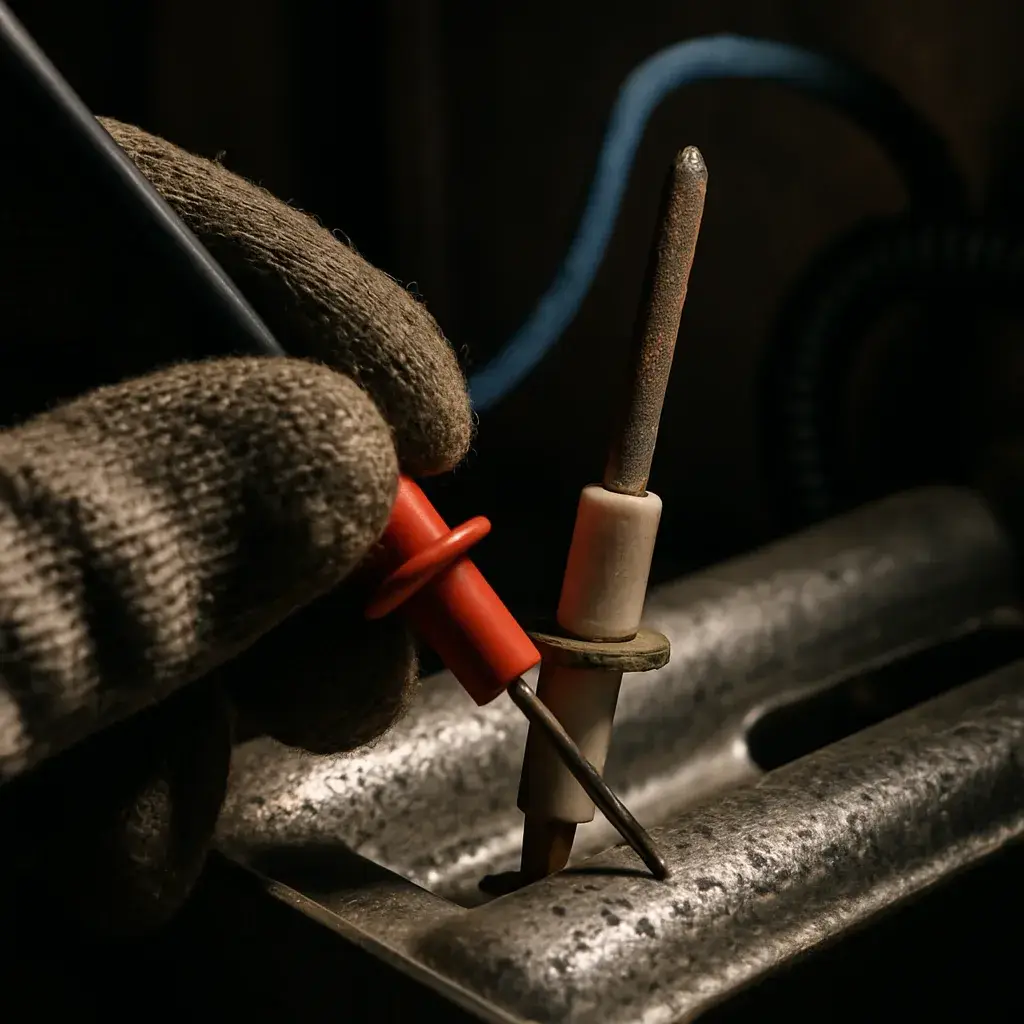
- A cracked or worn out ignitor that won’t light the burners, one of the most common calls we get
- A dirty flame sensor telling the system there’s no flame when there really is one
- A control board that stops sending the right signals to the blower or burners
- A blower motor that’s noisy, weak, or seized and can’t push air through your ducts
- A safety switch or limit control tripping because of restricted airflow or a dirty filter
A repair visit follows a simple path. We find the failed part, confirm it’s the actual cause and not a symptom of something else, replace or repair it, then run the system through a full cycle to check the flame, the airflow, and the shutdown sequence. On most calls that’s the whole job, start to finish, one visit.
Older furnaces in Sunnyvale’s established neighborhoods sometimes need a part that’s harder to source than what you’d find on a furnace installed five years ago. That part availability, not the size of the repair, is usually what stretches a job longer than expected.
Every repair includes a carbon monoxide check before we call the job done. That’s not an upsell. It’s basic safety, and it’s part of doing right by our customers.
When You Might Not Need a Repair Call Yet
Not every cold house means you need gas furnace repair today. Sometimes it’s something you can check yourself in five minutes flat, no toolbox required.
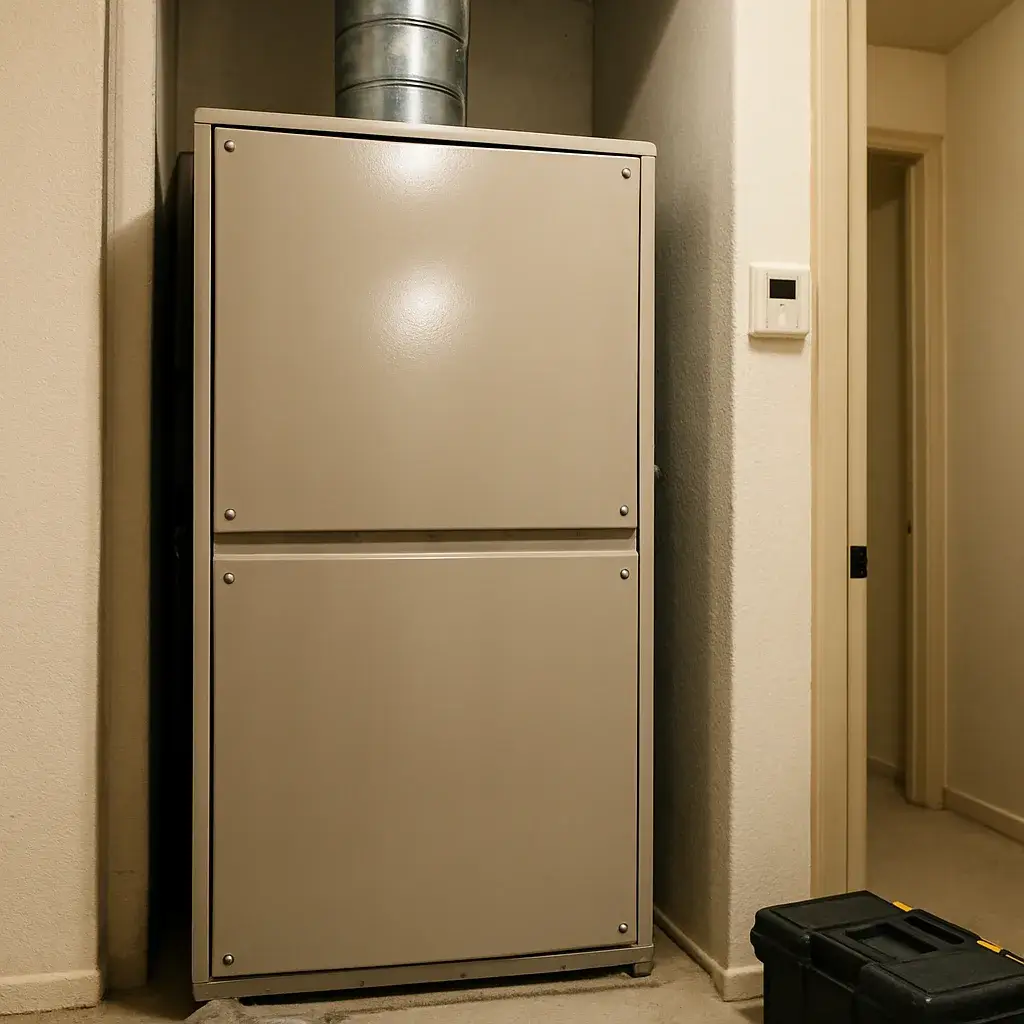
Start with the thermostat. A blank or frozen screen is usually dead batteries, not a broken furnace. Check the breaker panel next, especially after a storm knocked out power for a few hours. A tripped breaker will stop the furnace cold, and flipping it back is free.
- Thermostat screen dark or unresponsive, often just needs fresh batteries
- Breaker tripped in the panel, common after a power blip
- One room cold while others are fine, sometimes a vent got closed or blocked by furniture
- Weak, warm air blowing but the house not heating, check when the filter was last changed
- Furnace won’t start on an older gas unit, sometimes the manual gas valve got bumped shut
Check the filter first. Often a clogged filter is the whole story.
Sound too simple to be the real problem? It’s not. We get plenty of calls that end up being exactly one of these, and we’ll tell you straight if that’s what we find. But if the furnace short-cycles, smells like gas, trips the breaker over and over, or won’t hold a flame after you’ve checked the basics, that’s not a five-minute fix. That’s real gas furnace repair territory, and it’s worth having someone look before it gets worse.
Have questions? We’re happy to help.
Call Today, Get Service Today. Xtreme Air Services is ready to help.
What Happens During a Professional Repair Visit
So what happens when a technician pulls up? First, we ask you what the furnace is doing, or not doing. Banging noise, no heat at all, pilot light won’t stay lit, whatever it is, we want to hear it in your own words before we touch anything.
- We check the thermostat and power first, because sometimes the fix is that simple.
- We test the igniter, flame sensor, and control board to find the exact failed part.
- We explain what’s wrong in plain English and quote the repair before any work starts.
- We repair or replace the failed part using a standard replacement part on the truck.
- We fire the system back up and run it through a full cycle to confirm the heat holds.
Most of the time, it’s one part causing the whole no-heat call. A cracked flame sensor. A stuck igniter. A blower motor that’s tired and loud. We find it, we show it to you, and we fix it on the spot in most cases. That’s the whole visit, start to finish.
The service call fee runs $26 to $99, and it gets credited toward the repair if you move forward with us. Nights and weekends cost the same as a Tuesday afternoon, no overtime surprise waiting at the end.
Keeping Your Furnace Running Through Cold Fronts
Here’s the thing about furnaces in North Texas. They sit idle for eight or nine months, then a cold front rolls through and drops the temperature thirty degrees overnight. That’s exactly when a weak ignitor or a dirty flame sensor decides to quit. We see this every week once the first real cold snap hits Sunnyvale.
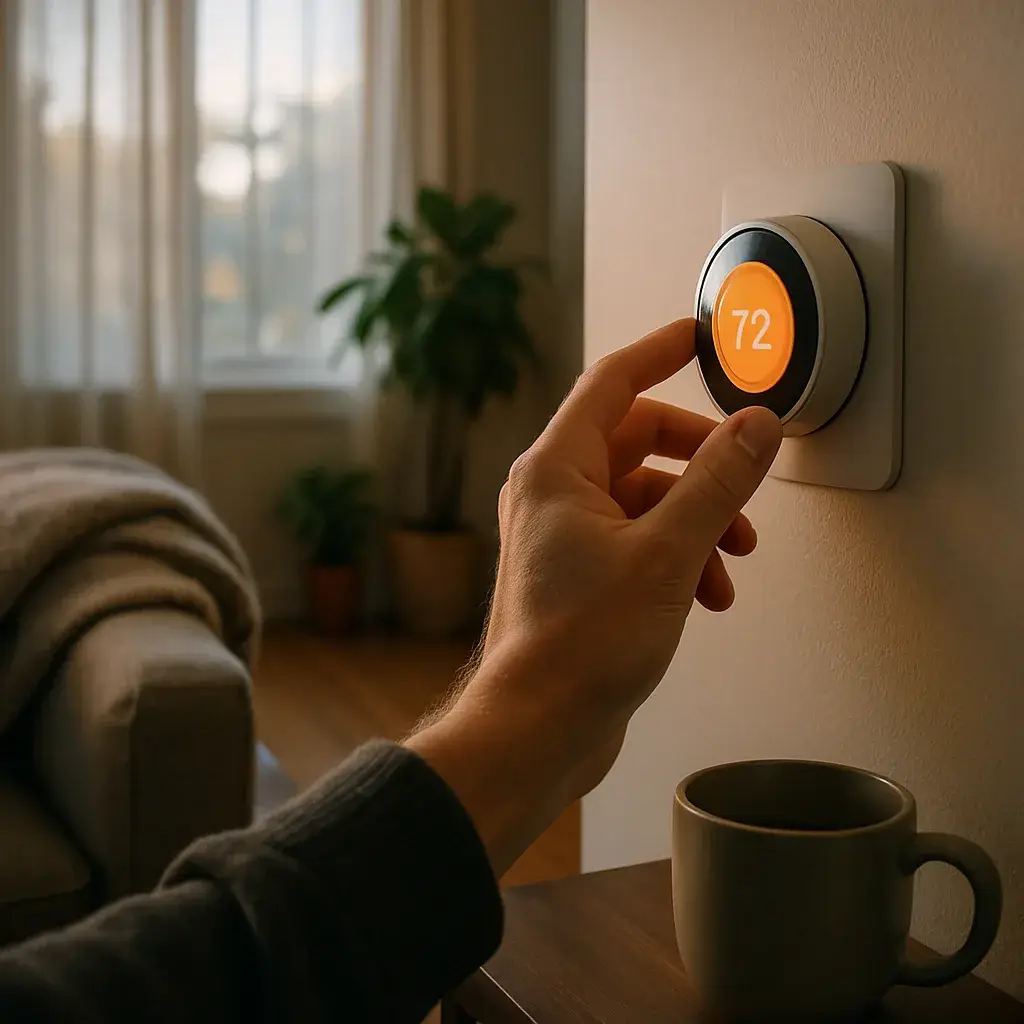
Most furnace failures aren’t random. They’re the result of small things piling up quietly all year, dust on the flame sensor, a filter nobody swapped, a blower motor straining against clogged ducts. Catch those early and you skip the no-heat call entirely.
- Swap the furnace filter every one to three months, more often if you’ve got pets or run the system hard
- Have the flame sensor cleaned before the first cold front, a dirty sensor is one of the most common no-heat calls we get
- Keep the area around the furnace clear, especially in attic setups common in newer Sunnyvale subdivisions
- Test your carbon monoxide detector when you switch the thermostat from cooling to heating
- Book a heating system maintenance visit in early fall, before everyone else waits for the first freeze
And if your furnace hasn’t run since last winter, don’t just crank the thermostat and hope. Let it cycle on a mild day first, that way if something’s off, you’re not stuck without heat during the coldest week of the year. Our technicians are licensed and insured, background-checked, and they’ll walk you through exactly what they find, no guesswork, no upsell.
Frequently Asked Questions
Common questions about Gas furnace repair
How fast can you get a technician to my home in Sunnyvale for a no-heat call?
Most no-heat calls get a same-day visit, especially during a cold front. Furnaces tend to fail right when temperatures drop fast, so we keep room in the schedule for emergency calls. When you call, tell us exactly what the furnace is doing, like banging noises or a pilot light that won’t stay lit. That helps us bring the right parts on the first trip, so you’re not waiting on a return visit for something like a flame sensor or ignitor.
What should I expect when your technician arrives to fix my furnace?
Your technician will start by asking what the furnace is doing before touching anything. We check the thermostat and power first, since sometimes that’s the whole fix. Then we test the igniter, flame sensor, and control board to find the exact failed part. You’ll get a plain-English explanation and a quote before any repair starts. Most calls end with the part fixed on the spot and the system run through a full heating cycle to confirm it holds.
Why do furnaces in older Sunnyvale homes seem to fail more often?
Older Sunnyvale homes often have furnaces tucked into tight attic spaces between the rafters. That location makes it hard to spot problems early, like a cracked heat exchanger or a scorched wire, without a flashlight and the right tools. These units also tend to be older overall, so parts wear out and can be slower to source than parts for a furnace installed in the last five years. That’s usually what stretches a repair longer, not the size of the job.
Can a cold front really cause my furnace to break down overnight?
Yes, a hard cold front is one of the most common reasons furnaces fail. Your system sits idle for eight or nine months, then gets asked to run hard the moment temperatures drop thirty degrees overnight. A weak ignitor or dirty flame sensor that’s been limping along often quits right at that moment. If your furnace worked fine before the cold snap and now won’t hold a flame, that timing is a strong clue about what’s wrong.
My furnace keeps shutting off a few minutes after starting. What’s causing that?
Short-cycling like this usually points to a flame sensor, a safety switch, or restricted airflow from a dirty filter. The system senses something isn’t right and shuts down to protect itself before it will let the burners run again. This isn’t something to keep resetting on your own, since it can point to a real safety issue. Check your filter first, since a clogged one is often the simple cause, then call if it keeps happening.
Do I need a new furnace, or can this be repaired?
Most no-heat calls turn out to be one failed part, not a reason to replace the whole system. Common culprits are a cracked ignitor, a dirty flame sensor, or a tired blower motor, and these get fixed in a single visit most of the time. We find the failed part, confirm it’s the real cause, and repair it, then run a full cycle to check the flame and airflow before we call the job done.
Ready to Get Started?
Call 972-288-2263 Today, Get Service Today.