

Commercial Refrigeration Repair in Sunnyvale: Fast Help When Your Cooler Fails
Same-day repair for walk-in coolers, reach-in cases, and failing condensers across Sunnyvale – diagnosed by symptom, so you learn whether it is a door seal, a fan, or the compressor.
What’s Covered on This Page
- Warm Units, Ice Buildup, and Silent Compressors: What Each Symptom Means
- Emergency Refrigeration Failures vs. Scheduled Maintenance Calls
- When a Quick Check Beats a Service Call
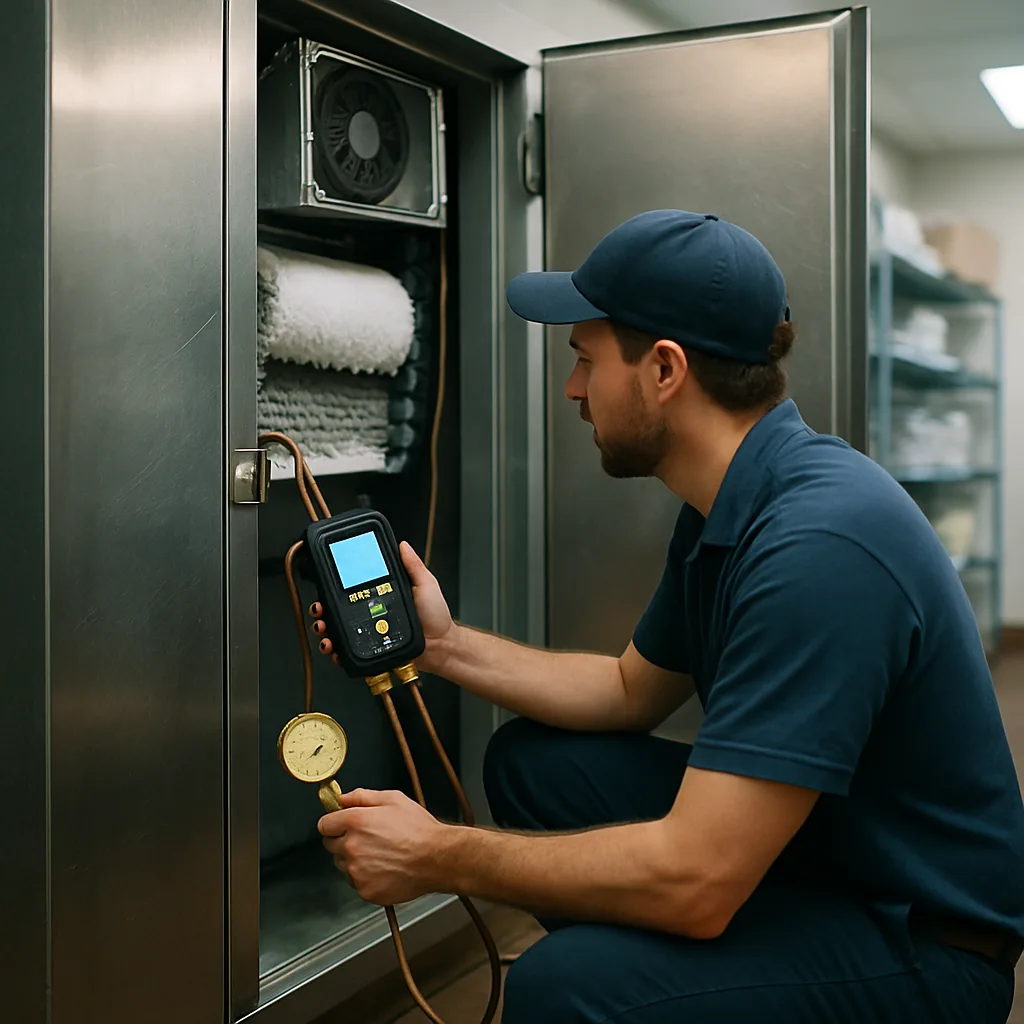
- What Happens During a Commercial Refrigeration Repair Visit
- One Contractor for Refrigeration, Electrical, and Cooling Failures
- How fast can you get to my business in Sunnyvale when my cooler fails?
- What happens when a technician arrives to fix my refrigeration unit?
- Why does my commercial cooler struggle more during Sunnyvale summers?
- Does a warm cooler always mean the compressor is dying?
- How do I know if my refrigeration problem needs same-day repair?
- Do you charge more for nighttime or weekend refrigeration calls?
Warm Units, Ice Buildup, and Silent Compressors: What Each Symptom Means
Warm case temperatures, ice on the coil, and a quiet compressor aren’t random. Each symptom points to a different part of the system.
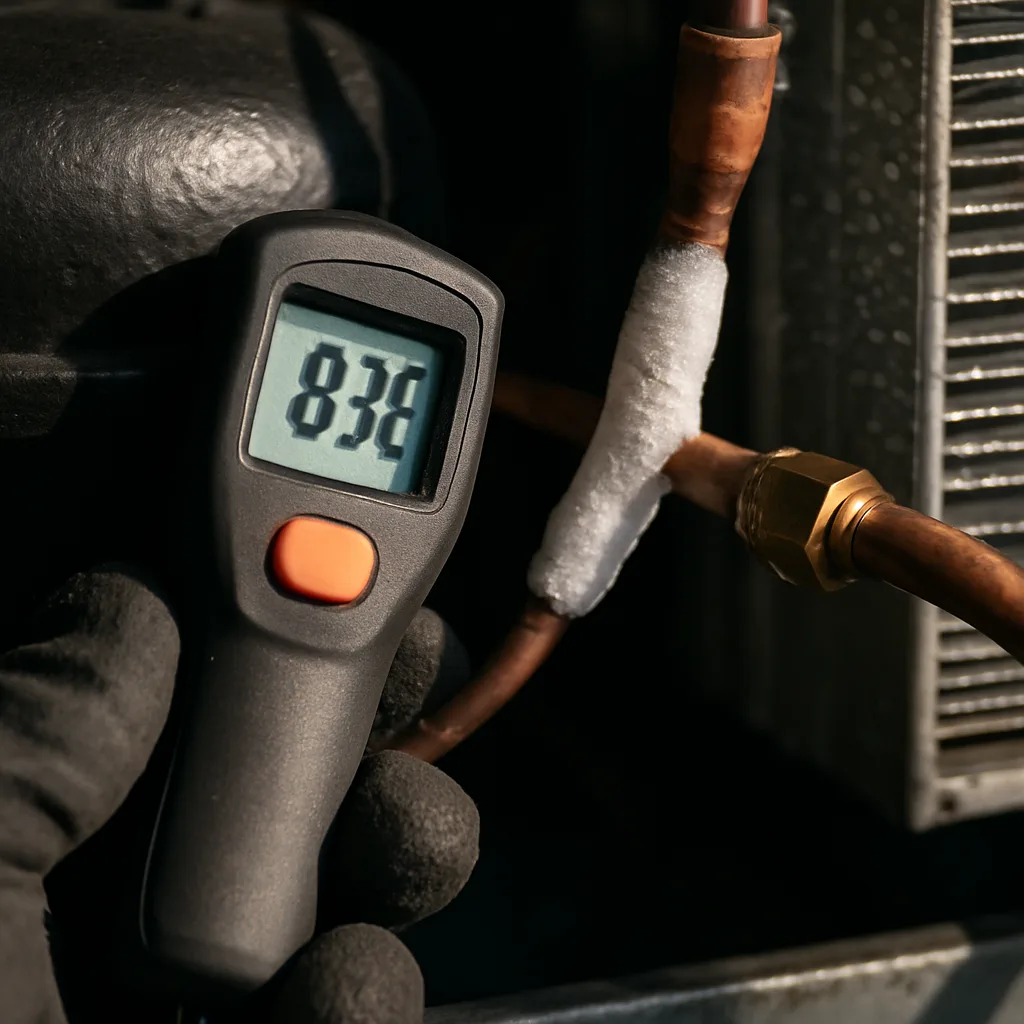
- Warm temperatures while the unit still runs: usually low refrigerant, a dirty condenser coil, or a door seal letting warm air inside
- Ice building up on the evaporator coil: often a defrost timer or heater issue. Product stacked too close to the coil can also block airflow
- Compressor won’t start: could be a bad start capacitor, a tripped high-pressure switch, or a failed compressor
- Unit short cycles on and off: points to electrical trouble or a failing control board
- Water pooling under the unit: almost always a clogged or frozen drain line
Most of the time, it’s one of these five problems rather than a total system replacement. Sunnyvale’s summer heat pushes condenser coils hard. Units tucked into tight mechanical closets with poor airflow take even more strain, and warm cases often appear first. Not sure which problem you have? That’s fine. Most owners can’t distinguish an evaporator problem from a defrost problem, and they shouldn’t have to.
What you can tell us matters more than knowing the technical cause. Describe the sound, smell, temperature, and how long the problem has lasted. That’s enough for us to send a truck with the right parts on board.
Emergency Refrigeration Failures vs. Scheduled Maintenance Calls
Not every refrigeration problem is an emergency. Some are, and knowing the difference can save money and protect your food. If your walk-in cooler or reach-in case stops holding temperature, your product may be at risk. That’s an emergency. Every hour the box stays above a safe temperature could mean more inventory you have to discard.
How do you tell the difference? These problems call for same-day attention.
- The unit isn’t cooling at all, or its temperature has climbed past your safe zone
- The compressor is silent when it should be running
- Ice is building up quickly on the evaporator coil
- You smell something burning, or a breaker keeps tripping
- The condenser fan isn’t spinning. That’s especially serious during Sunnyvale’s summer heat, when the compressor is already under extra load
A unit may still hold temperature while making a new noise or running longer than usual. You may also notice a door gasket getting soft around the edges. Those are maintenance calls, not reasons to panic. We see it every week: someone waits on a small problem until it becomes a Friday night emergency. Scheduling service early usually means a smaller repair without the last-minute scramble.
One thing stays the same either way. We don’t charge extra for nights or weekends. Calling at 9 p.m. about a failed Sunnyvale walk-in costs the same as calling at 9 a.m. Tuesday.
When a Quick Check Beats a Service Call
Not every warm cooler means your compressor is dying. Sometimes the fix takes five minutes and requires no tools.
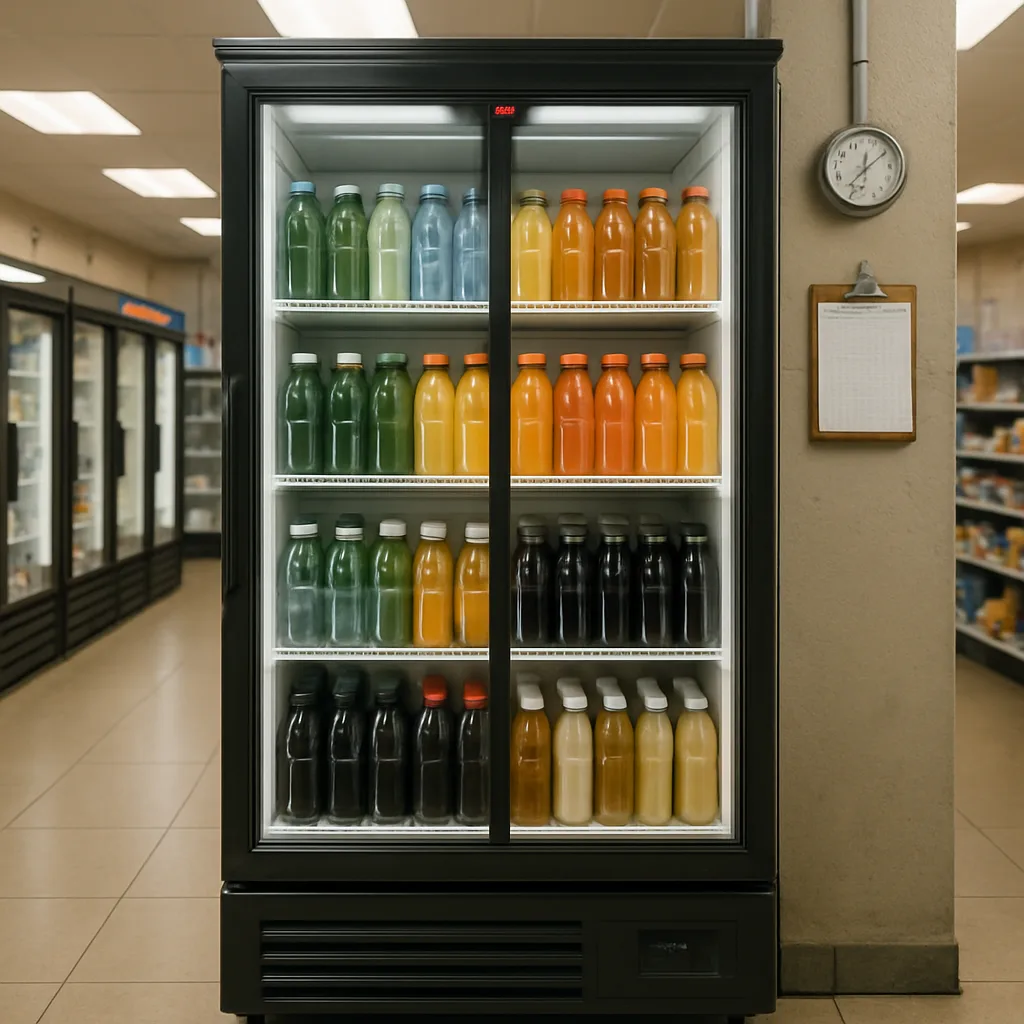
We often hear from kitchen managers who are sure the whole unit is dead. Then they find that someone left the door cracked open overnight. It happens more often than you might think. Before you call anyone, walk over and check a few things yourself.
- Check the door gasket. A torn or dirty seal lets warm air in all day, forcing the unit to run constantly.
- Look at the breaker panel. A tripped breaker can shut down the whole unit without showing an error code.
- Check the thermostat setting. Staff may bump it during a busy shift without realizing it.
- Clear the area around the condenser. Boxes, mops, or supplies stacked against the vents quickly choke off airflow.
- Wipe visible dust from the coils if you can reach them safely. Built-up dust makes the compressor work harder.
If one of those checks finds the problem, great. You just saved yourself a service call.
If the unit is still warm or making a new noise, the problem needs a technician. The same applies when the compressor won’t start. Ice on the evaporator coil, hissing, or a burning-plastic smell can signal an internal failure. Those aren’t DIY repairs. Keeping the unit running can turn a small repair into a bigger one. 80 six days a week.
Not sure what your Commercial refrigeration project needs? Ask us.
Call Today, Get Service Today. Xtreme Air Services is ready to help.
What Happens During a Commercial Refrigeration Repair Visit
Your walk-in cooler is down, and the deli case is climbing past 40 degrees. Here’s what happens after you call.
- A technician arrives after the service-call fee has been explained. There’s no surprise charge waiting at the door.
- We check the compressor, condenser coil, evaporator fan, and refrigerant level to find the failure.
- Often, the cause is one bad part, such as a relay, fan motor, or failed capacitor. We’ll show you the problem before touching anything.
- You get a flat-rate price before we start. You can approve or decline the repair without pressure.
- We repair or replace the failed part. Then we run the unit and watch its temperature drop into range.
- We clean up and test the box once more. Before leaving, we confirm that it’s holding temperature.
The service-call fee runs $26 to $99, and it gets credited toward the repair if you move forward with us. You aren’t paying twice just to learn what’s wrong.
The repair price covers diagnosis, labor, the standard replacement part, testing, and cleanup. If another part fails during the repair, we quote it separately before touching it. The same applies if the unit needs a major component, such as a new compressor. Any code upgrades or permit work triggered by a commercial job are also quoted separately.
Most visits wrap up the same day they start.
Some jobs take longer. A special-order compressor or rare part for an older unit can cause delays. We’ll tell you that upfront instead of leaving you to find out later.
One Contractor for Refrigeration, Electrical, and Cooling Failures
A dead walk-in cooler isn’t always caused by the compressor. The problem may be a tripped breaker, bad control board, or incorrectly wired condenser fan motor. A refrigeration-only company may fix the box but be unable to touch the electrical system. An electrician can reset the breaker but may not know why the compressor keeps short cycling. You end up scheduling two visits and losing another day of uptime.
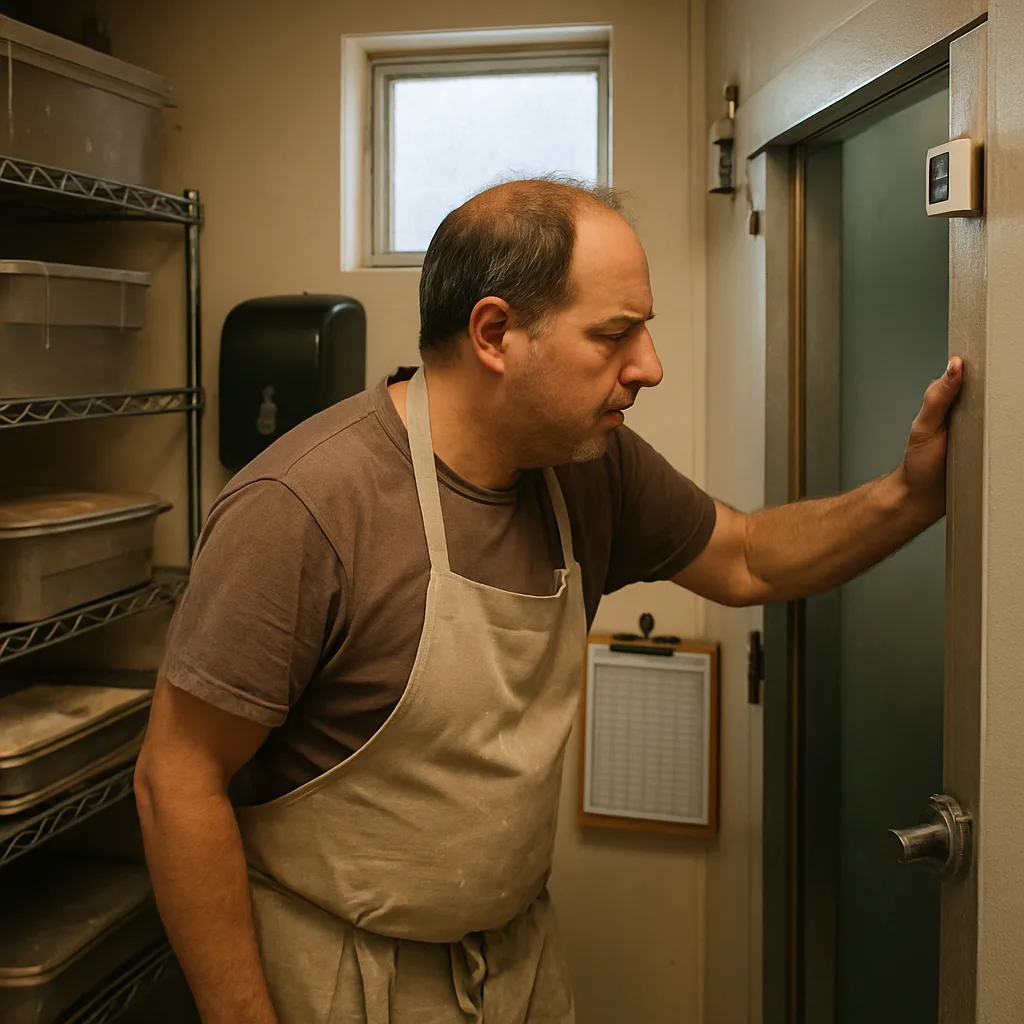
Xtreme Air Services doesn’t split those jobs apart. Our technicians handle the refrigeration and electrical work during the same visit. That matters in Sunnyvale’s older strip-center kitchens and newer build-outs along Highway 80. The wiring behind a failed unit may be as old as the building. We look for cracked contactors, undersized circuits, and corroded connections inside humid walk-ins. We’re licensed and insured for both trades, so we inspect the whole system instead of one failed part.
Many owners don’t see the value of that until they’ve dealt with the alternative. You won’t have a refrigeration technician sending you to an electrician, then an electrician sending you back. Instead, one technician traces the failure from start to finish. If the repair also involves your HVAC system or electrical panel, the same team handles it without a handoff.
For a restaurant or convenience store, that isn’t just easier. It can mean reopening today instead of losing another day’s inventory.
Frequently Asked Questions
Common questions about Commercial refrigeration
How fast can you get to my business in Sunnyvale when my cooler fails?
We treat a warm walk-in or reach-in case as an emergency and move fast to get a truck to you. Every hour your cooler stays warm puts your food at risk, so same-day help is the goal for units that have stopped cooling, gone silent, or started icing up fast. Give us the symptoms, temperature, and how long it’s been happening. That helps us bring the right parts on the first trip instead of guessing twice.
What happens when a technician arrives to fix my refrigeration unit?
First, we explain the service-call fee before any work starts, so there are no surprises. Then we check the compressor, condenser coil, evaporator fan, and refrigerant level to find the actual cause. Most failures trace back to one bad part, like a relay or capacitor. We show you the problem, give you a flat-rate price, and only start once you approve it. Before we leave, we test the unit again to confirm it’s holding temperature.
Why does my commercial cooler struggle more during Sunnyvale summers?
Sunnyvale’s summer heat pushes condenser coils harder than usual, which strains the compressor and can trigger warm cases. Units tucked into tight mechanical closets with poor airflow feel it even more, since hot air has nowhere to escape. This is why warm temperatures often show up first during hot stretches, even in units that ran fine all spring. Clearing space around your condenser and keeping coils clean helps reduce that extra summer load.
Does a warm cooler always mean the compressor is dying?
No, not always, and a five-minute check can sometimes save you a service call. Look at the door gasket for tears, check the breaker panel, confirm the thermostat wasn’t bumped during a busy shift, and clear boxes away from the condenser vents. Kitchen managers often assume the worst, then find a door was left cracked open overnight. If those checks don’t fix it, or you hear new noises or smell burning, it’s time to call a technician.
How do I know if my refrigeration problem needs same-day repair?
If the unit isn’t cooling, the compressor stays silent, or ice is building fast on the coil, that’s a same-day call. A burning smell, a breaker that keeps tripping, or a condenser fan that won’t spin also count as emergencies, especially during Sunnyvale’s hot months when compressors already run hard. A unit that still holds temperature but makes a new noise or has a softening door gasket can usually wait for a scheduled visit instead.
Do you charge more for nighttime or weekend refrigeration calls?
No, we charge the same rate no matter when you call. A failed walk-in at 9 p.m. on a Friday costs the same as a Tuesday morning call. We’ve seen too many owners wait on a small problem to avoid an off-hours call, only to have it turn into a bigger, more expensive repair. Calling early, any time of day or night, usually means a smaller fix and less product lost.
Ready to Get Started?
Call 972-288-2263 Today, Get Service Today.