

Energy Management Systems in Sunnyvale: Smarter Comfort, Lower Bills
Every rooftop unit on one shared schedule, instead of three units fighting each other across the same floor plate.
What’s Covered on This Page
- What an Energy Management System Controls
- Signs Your Building Is Ready for an Energy Management System
- When a Smart Thermostat Is the Smarter Choice
- How Installation and Integration Works in Sunnyvale
- How Energy Management System Pricing Works
- How long does it take to install an energy management system?
- What happens during an energy management system assessment visit?
- Why do Sunnyvale commercial buildings need this more than homes?
- Do I need a full energy management system or just a smart thermostat?
- Can an energy management system stop my rooftop units from fighting each other?
What an Energy Management System Controls
An energy management system isn’t a piece of equipment you can point at. It’s a control layer. Think of it as the manager for your rooftop units, thermostats, and zone dampers. It tells each one what to do and when.
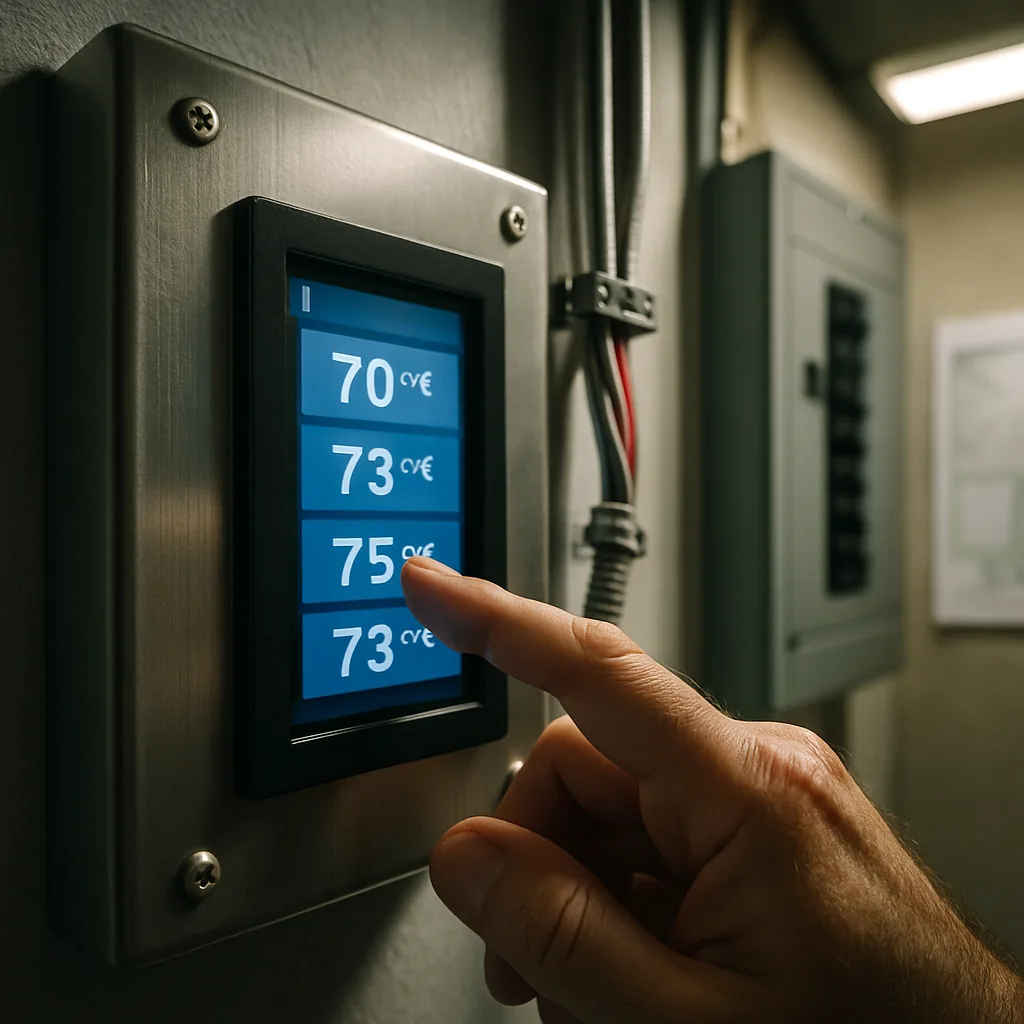
In many Sunnyvale commercial buildings along the Highway 80 corridor, two or three rooftop units run on separate schedules. Sometimes, they fight each other. One unit cools a comfortable space while another struggles to catch up. An EMS puts those units under one schedule so they work together instead of against each other.
- Rooftop unit and zoning schedules, so empty rooms aren’t heated or cooled on the same schedule as the front office
- Thermostat setpoints across multiple zones, adjusted automatically instead of by hand
- Equipment run times based on occupancy or time of day
- Alerts when a unit runs longer than it should. That often signals trouble before a breakdown
What it doesn’t control is just as important. An EMS won’t fix a duct leaking air into unconditioned space. It also won’t replace a rooftop unit that’s on its last leg. It works with what you’ve got. If your equipment is old or undersized, we’ll tell you before discussing controls.
Signs Your Building Is Ready for an Energy Management System
Most Sunnyvale property owners don’t wake up one day and decide they need an energy management system. The need shows up through a pattern of frustrations. Bills keep climbing without an obvious reason. One wing is freezing while another is stifling. New equipment may even leave the electrical panel running hot. If these situations sound familiar, have a licensed electrician evaluate whether an EMS makes sense for your property.
- Rising utility bills with no clear cause. Costs increase month after month, though occupancy, weather, and operating hours remain about the same.
- Multiple HVAC zones running inefficiently. Systems may fight each other, follow outdated schedules, or require staff to override thermostats throughout the day.
- Adding a high-draw load such as an EV charger, backup generator, or new production equipment. First, confirm that the panel and service size can handle it.
- New construction or a major renovation. This is the right time to design load management into the electrical system instead of retrofitting it later.
- Frequent breaker trips, flickering lights, or warm panel covers that suggest the building is operating near its electrical capacity.
Rising bills deserve special attention because Texas operates a deregulated electricity market. The Public Utility Commission of Texas lets commercial customers shop among retail electric providers. Some plans use time-of-use pricing, with rates that change by the hour. That setup only pays off when a building shifts usage away from peak pricing windows. An EMS is built to handle that job. Without automated load shifting, equipment keeps running on its fixed schedule regardless of price. Pairing the right rate plan with an EMS can turn that flexibility into measurable monthly savings.
New construction and major renovations are natural entry points. When walls are open and electrical plans are being redrawn, adding EMS-ready wiring, sensors, and sub-metering costs less. Retrofitting a finished building usually costs more. If you’re planning a Sunnyvale remodel, discuss an EMS with your electrician during design, not after the drywall goes up.
When a Smart Thermostat Is the Smarter Choice
Not every Sunnyvale property needs a full energy management system. A good electrician will tell you that upfront. Say you own a single-story ranch with one HVAC system and an electrical panel with room to grow. If you don’t plan to add high-draw equipment, EV charging, or a major addition, a full EMS is probably overkill. A smart thermostat with a few smart plugs or a basic load-monitoring app may provide 80 percent of the benefit. It also costs a fraction as much.
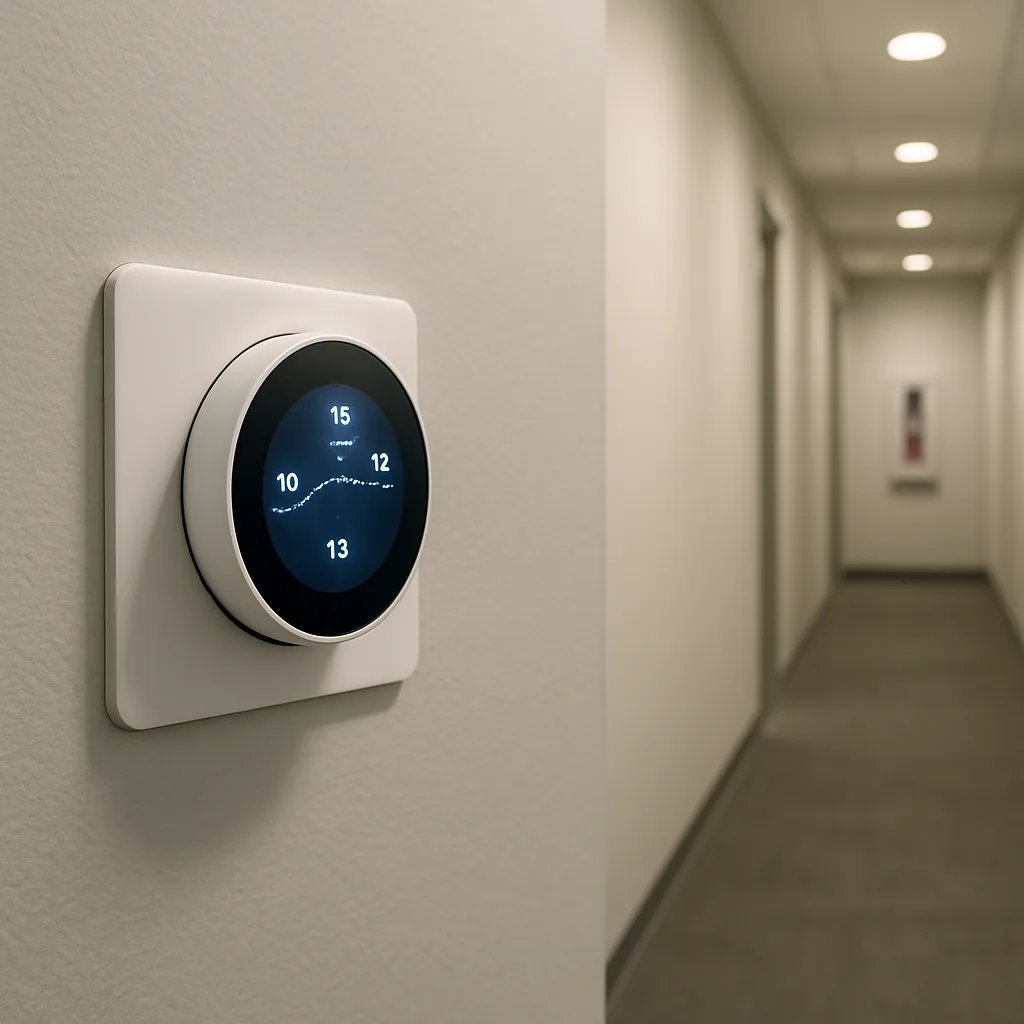
Over-engineering is a real risk. A full EMS involves sub-metering multiple circuits, integrating with your panel, and often adding a dedicated communication gateway. In a simple single-zone building, the hardware and labor can cost several thousand dollars more than a smart thermostat setup. Yet the energy savings and load-management benefits may barely change because there is only one system to manage. You could end up paying for detailed monitoring you’ll never use.
Scale and complexity change the calculation. Multi-zone commercial spaces and larger mixed-use properties with separate HVAC zones create layered demand. So does any property adding a heat pump, EV charging, or battery storage. A smart thermostat can’t see or manage all of those loads. In these cases, an EMS can coordinate them with time-of-use rates, panel capacity, and solar or battery output.
- Single HVAC zone with a panel showing available capacity: a smart thermostat is usually sufficient
- Two or more HVAC zones, or a building larger than roughly 2,800 square feet: an EMS starts to pay off
- Planned EV charging, process equipment, or battery storage addition: an EMS helps sequence loads safely
- Multi-tenant or multi-suite commercial space: an EMS provides visibility a thermostat cannot
A panel and load assessment during an estimate visit will usually make the right choice clear within minutes. This happens before any equipment is specified.
Ready when you are – get in touch today.
Call Today, Get Service Today. Xtreme Air Services is ready to help.
How Installation and Integration Works in Sunnyvale
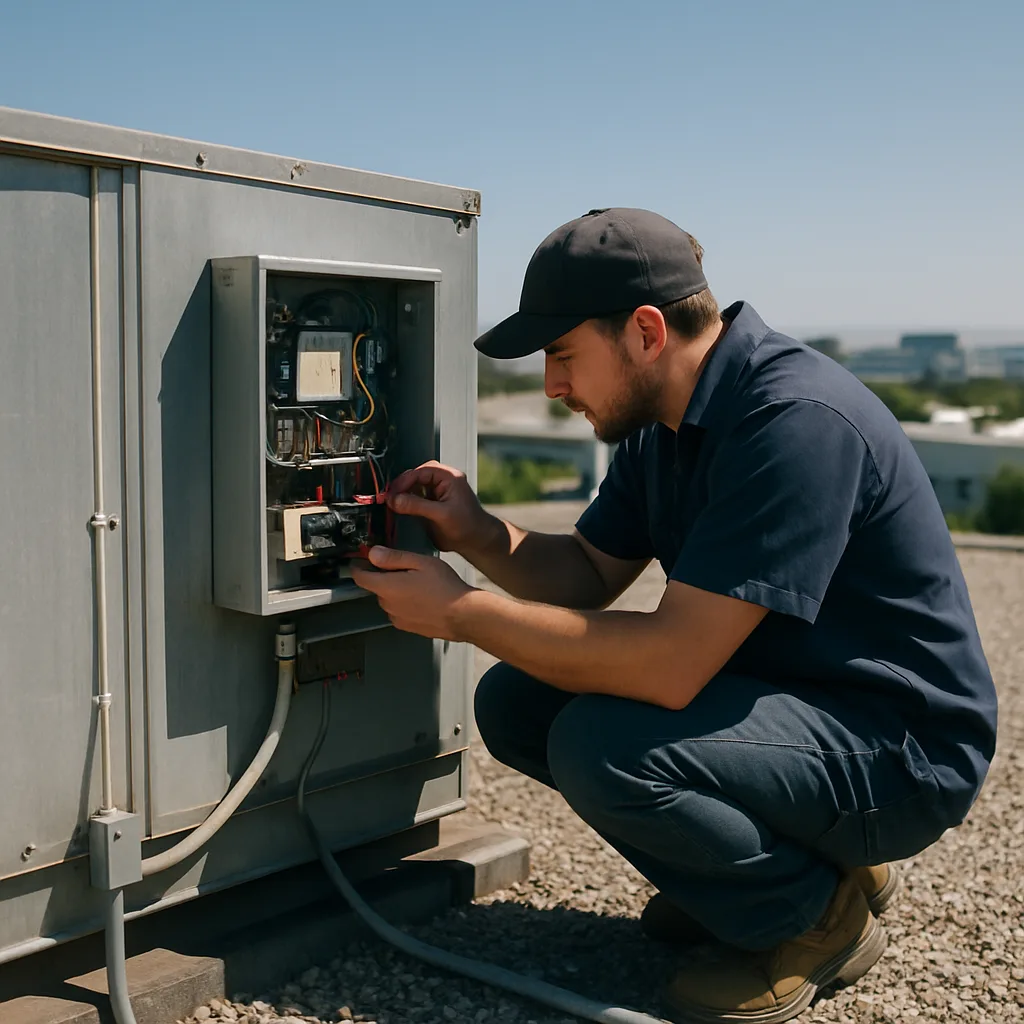
Many flat-roof commercial buildings around Sunnyvale have several rooftop units connected only to wall thermostats. That setup wastes energy when the building sits empty on nights and weekends. Installing an energy management system involves more than mounting a box. We connect your rooftop units, boilers, or chillers through one system so they work together.
Here’s how a typical installation goes from start to finish.
- We walk the building and check your existing RTUs, wiring, and any controls already in place.
- We match EMS components to your equipment. Some buildings need simple programmable controls, while others need full building automation.
- We run and connect wiring between your equipment and the control panel. Whenever possible, we work around existing ductwork and electrical systems.
- We program setpoints, schedules, and zones to match how your building is used.
- We power up and test every connected unit. Then we confirm that its readings match the system reports.
- We show you and your staff how to use the controls.
That last step matters more than people expect. Often, the biggest energy waste isn’t bad equipment. It’s a system nobody knows how to run. If your building has older pneumatic controls behind the walls, we flag them during the walk-through, not after the invoice.
How Energy Management System Pricing Works
There is no single flat rate for an energy management system. Be wary of a contractor who quotes one without visiting your Sunnyvale property. These projects have several moving parts. Pricing follows a scope-based model. Your final investment reflects the building’s size, condition, and complexity rather than a generic package price.
The first major cost driver is the number of systems and zones being integrated. A single-zone retrofit for a small Sunnyvale office requires less labor, wiring, and controller programming. A multi-zone commercial building may have separate HVAC units, lighting circuits, and load panels connected to a central platform. Each additional zone generally requires sensors, thermostats, or relays. It also takes more programming time to make the components work together.
The second driver is the condition of existing ductwork and wiring. Older buildings in Sunnyvale’s commercial corridors may have outdated low-voltage wiring or undersized conduit. Some also have ductwork that needs sealing and balancing before an energy management system can work efficiently. Technicians determine whether the existing infrastructure can be reused, adapted, or must be replaced. That choice directly affects labor hours and material costs.
- Number of HVAC, lighting, and equipment zones requiring integration
- Age and condition of existing ductwork, low-voltage wiring, and control panels
- Local permit requirements and inspection scheduling through the Town of Sunnyvale
- Complexity of the controls platform, including remote access, scheduling, and analytics dashboards
- Whether the project is new construction or a retrofit of occupied space
Permits also affect the total project scope. Depending on the building and extent of the electrical or mechanical work, Sunnyvale may require permit review and inspection. This adds time and administrative costs to the project. Controls complexity matters too. A basic programmable schedule costs less than a networked system with occupancy sensing, demand response, and remote monitoring across several properties.
According to the ENERGY STAR Guidelines for Energy Management published by the EPA, buildings that adopt a structured energy management approach have achieved roughly 2.5 percent average annual energy savings over time. That figure shows why scope and system quality matter more than the lowest upfront price. A properly matched system can keep paying back through lower utility costs year after year.
Every building has a different mechanical and electrical profile. Review our pricing guide for a more detailed breakdown of typical cost ranges by project type.
Frequently Asked Questions
Common questions about Energy management systems
How long does it take to install an energy management system?
Most Sunnyvale installs take one to three days, depending on how many rooftop units and zones need to connect. A single-building retrofit with two or three rooftop units usually wraps up faster than a multi-tenant space with sub-metering on every suite. We check your panel capacity and existing wiring first, so we can give you a real timeline before work starts. New construction projects move quicker because the wiring goes in while walls are still open.
What happens during an energy management system assessment visit?
During the visit, an electrician checks your electrical panel capacity, walks your HVAC zones, and looks for schedule conflicts between rooftop units. You’ll get a clear answer about whether a smart thermostat covers your needs or a full EMS makes more sense. We also flag any duct leaks or aging equipment issues upfront, since an EMS can’t fix those problems. Expect the visit to take under an hour for most single-building properties.
Why do Sunnyvale commercial buildings need this more than homes?
Commercial buildings along the Highway 80 corridor often run two or three rooftop units on separate schedules that fight each other, wasting energy. One unit cools a space while another struggles to keep up nearby. An energy management system puts every unit on one shared schedule instead of letting each run independently. Homes with a single HVAC zone rarely see this problem, which is why a full EMS pays off faster in multi-zone commercial buildings.
Do I need a full energy management system or just a smart thermostat?
You likely only need a smart thermostat if you have one HVAC zone and no plans to add EV charging or other high-draw equipment. A full EMS starts paying off once you have two or more zones, a building larger than roughly 2,800 square feet, or planned high-draw additions. During a panel and load assessment, we’ll walk through your specific setup so you’re not paying for monitoring capability you won’t use.
Can an energy management system stop my rooftop units from fighting each other?
Yes, that’s one of the main jobs an EMS handles. When rooftop units run on separate schedules, one unit often cools a comfortable room while another struggles to catch up nearby, driving up your bill. An EMS puts every unit under one coordinated schedule so they work together instead of overlapping wastefully. This is especially common in Sunnyvale buildings with multiple rooftop units installed at different times over the years.
Ready to Get Started?
Call 972-288-2263 Today, Get Service Today.