


Backflow Testing in Sunnyvale: Fast, Licensed Annual Certification
Annual assembly testing and certification for irrigation and commercial systems, with the paperwork filed for you.
What’s Covered on This Page
- Why Texas Law Requires Annual Backflow Testing
- Signs Your Backflow Preventer Needs Attention Now
- What Happens During a Backflow Test
- How Backflow Testing Pricing Works
- When You Don’t Need a Backflow Test
- How fast can you get out to test my backflow device in Sunnyvale?
- What happens when the technician shows up to test my backflow preventer?
- Why do older buildings along U.S. 80 need extra attention to their backflow assemblies?
- Do I need to be home or on-site during backflow testing?
- What happens if my backflow device fails the test?
- Is my backflow testing notice from Sunnyvale required, or just a suggestion?
Why Texas Law Requires Annual Backflow Testing
Many property owners in Sunnyvale assume backflow testing notices are a local cash grab invented by the city. In reality, the requirement traces directly to Texas Commission on Environmental Quality rule 30 TAC 290.44(h), which obligates every public water system in the state to operate an active cross-connection control program. This rule exists because backflow preventers, the mechanical devices installed at irrigation systems, fire lines, and commercial plumbing, degrade over time. Springs weaken, seals wear, and check valves stick, silently reducing protection against contaminated water flowing backward into the potable supply.
The rule does not simply suggest testing, it requires it annually for any device deemed a health hazard, which covers most commercial connections, irrigation systems, and many residential setups with auxiliary water sources. TCEQ delegates enforcement to the local water purveyor, which in Sunnyvale means the municipal utility or regional water provider administers the cross-connection control program on the state’s behalf. That is why testing notices arrive on water department letterhead rather than from an independent inspector, the utility is legally obligated to track devices, send reminders, and report noncompliant accounts back to the state.
Equally important is who can legally perform the test. That same state law places backflow testing under the jurisdiction of the Texas State Board of Plumbing Examiners, requiring testers to hold a Backflow Prevention Assembly Tester license in addition to standard plumbing credentials. A test performed by an unlicensed individual, even a well meaning handyman, produces no legally valid result. Water providers will reject the paperwork outright, effectively resetting the compliance clock and exposing the property owner to continued violation status.
- TCEQ 30 TAC 290.44(h) mandates annual testing for devices protecting against health hazard cross-connections.
- Water providers administer, but do not invent, the cross-connection control requirement on TCEQ’s behalf.
- Only TSBPE licensed Backflow Prevention Assembly Testers can issue valid results under state law.
- Unlicensed test reports are rejected by water utilities, leaving the property still in violation.
Signs Your Backflow Preventer Needs Attention Now
Not every backflow issue demands an emergency call, but some absolutely do. Knowing the difference can save you from a costly water bill, a code violation, or worse, a contamination event that puts your building’s drinking water at risk. Sunnyvale’s older commercial corridors along U.S. 80 and the industrial parks near Tripp Road often have backflow assemblies installed decades ago, and age combined with our region’s mineral-heavy water supply accelerates wear on internal components. If you notice any of the following, treat it as urgent rather than something to schedule for next month.
- Visible water spraying, dripping, or pooling near the test cocks, even if it seems minor, since this indicates the assembly is actively discharging when it shouldn’t be
- A cracked, warped, or bulging valve housing, which can fail completely under normal water pressure and cause flooding or supply loss
- Corrosion, pitting, or mineral buildup visible on the check valve or bonnet, signaling internal parts may no longer seat properly
- A failed test result from a previous inspection that hasn’t been corrected, especially if the compliance deadline from Sunnyvale’s water authority has already passed
- Unusual noises such as chattering, humming, or banging coming from the assembly during water use
- A noticeable drop in water pressure throughout the building paired with any of the visual symptoms above
On the other end of the spectrum, some situations can safely wait for a standard appointment. A routine renewal notice from the city with no accompanying leaks, cracks, or performance issues simply means your annual test is due, not that something has gone wrong. Similarly, cosmetic surface rust on exterior bolts, minor calcification that hasn’t affected water flow, or an assembly nearing the end of its typical service life without symptoms are all reasons to schedule proactive testing rather than treat the situation as a crisis.
The distinction matters because urgent cases carry real consequences: continued discharge wastes water and money, a compromised check valve threatens cross contamination, and missed deadlines can trigger water service restrictions from the city. When you spot any combination of visible damage and a looming or missed deadline, same-day response isn’t a luxury, it’s the fastest way to protect your property, your compliance standing, and the safety of everyone relying on that water line.
What Happens During a Backflow Test
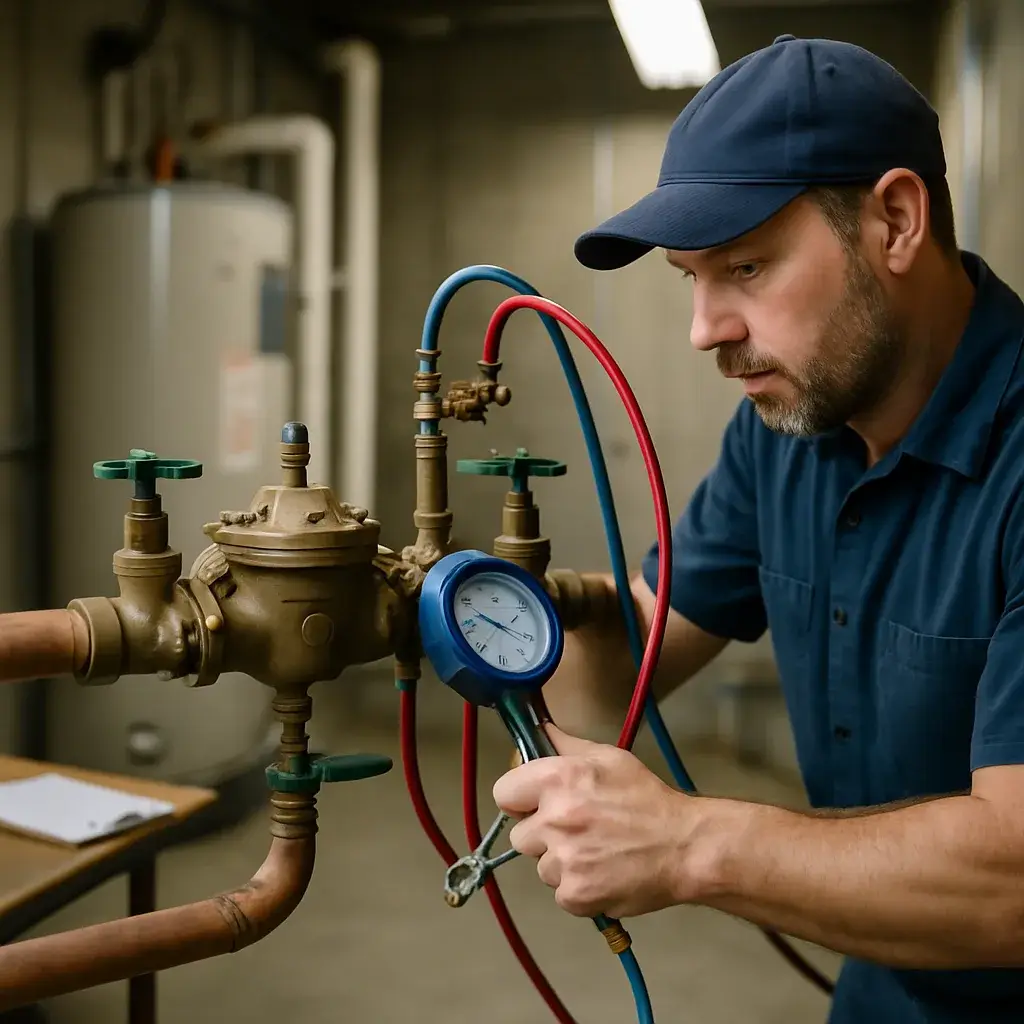
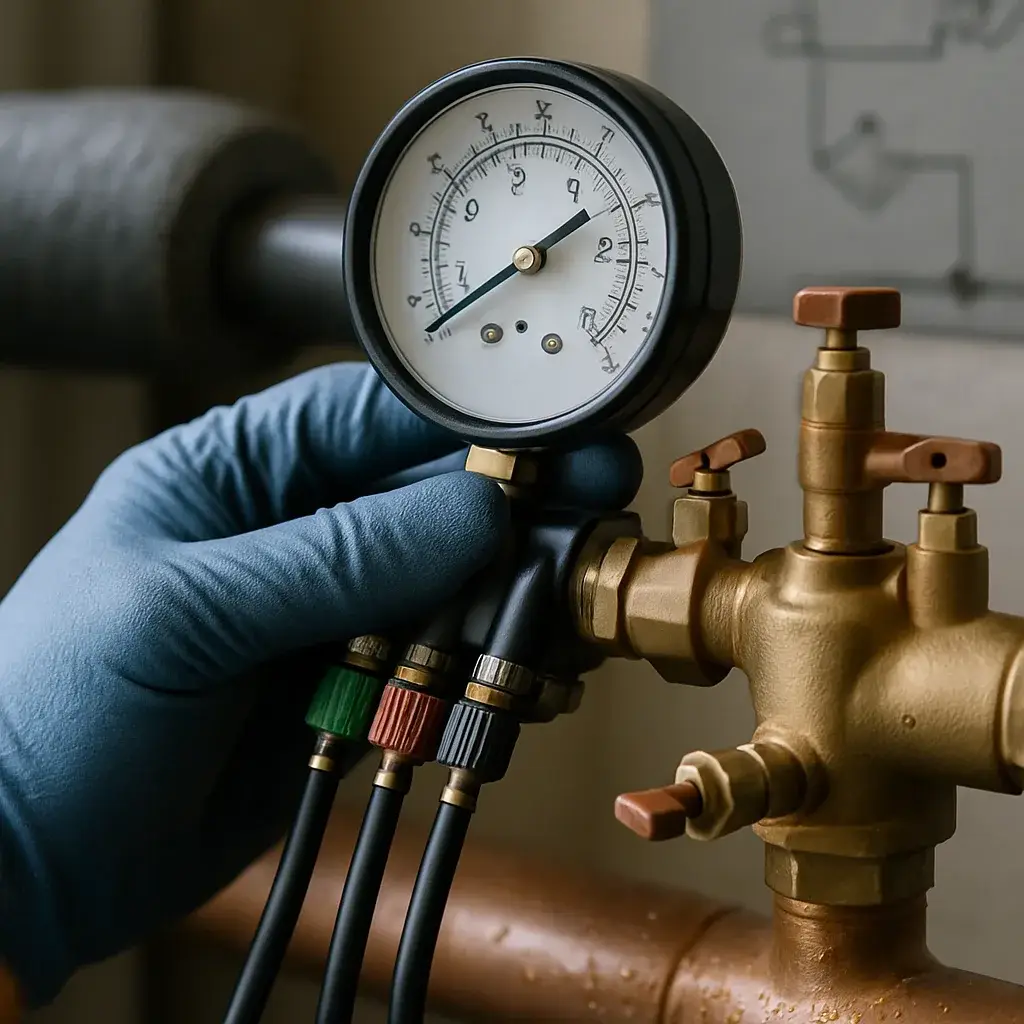
Here’s the thing, backflow testing isn’t complicated to watch, but it does take a trained eye. A certified tester hooks a calibrated gauge kit up to your backflow preventer, the device that keeps dirty water from siphoning back into your clean supply. From there it’s a handful of checks that show whether each internal check valve is holding tight.
- The tester shuts down water flow through the device and connects test cocks to the gauge kit.
- Readings get taken across each check valve, one at a time.
- The relief valve, if the device has one, gets checked separately for proper operation.
- Readings get compared against the minimum differential the device is rated for.
- The tester records results on the certification form your water authority requires.
- Water gets turned back on and the site gets left the way we found it.
Most tests take under an hour. A single residential irrigation valve goes quick, a commercial property with several devices takes longer, obviously. We’ve tested plenty of double-check assemblies that pass clean on the first try, and we’ve caught worn rubber seats that would’ve failed a customer’s paperwork if nobody looked.
You don’t need to do anything special to prepare. Just make sure the device is reachable and not buried under landscaping or boxed in.
If the device fails, we’ll walk you through what a repair involves before touching anything, no work starts without you saying go.
Thinking about Backflow testing? Let’s talk.
Call Today, Get Service Today. Xtreme Air Services is ready to help.
How Backflow Testing Pricing Works
Here’s the honest breakdown. Backflow testing itself is a small job, most homeowners land in the $75 to $150 range for the test and the paperwork. The full range we see runs $75 to $250, depending on what’s on your property.
So what pushes a job toward the higher end? A few things.
- How many backflow devices your property has, some homes have just one, bigger properties or businesses can have several
- The type of device installed, older units sometimes take longer to test and document
- Property size and how easy it is to reach the device, an attic or crawlspace location takes more time than one mounted outside on the wall
Now, here’s the part people don’t expect. The test itself doesn’t include repairs. If your device fails, that’s a separate conversation, and separate cost. We’ll tell you straight if it passed or didn’t, no runaround.
There’s also a service call fee, $26 to $99, and we credit that toward any repair if you decide to move forward with us. We don’t stack fees on top of fees. And financing isn’t typically something you’d need here, this isn’t a big-ticket job like a system replacement, it’s financing territory usually reserved for larger repairs.
Ask any provider two questions before you book: what’s included in the test fee, and is the service call credited if repairs are needed. Those two answers tell you almost everything.
When You Don’t Need a Backflow Test
Not every home in Sunnyvale is required to schedule annual backflow testing. The requirement generally applies only to properties that have a cross-connection between the potable water supply and a secondary system, such as an irrigation network, a fire sprinkler line, or a boiler loop. If your property was built without any of these systems, there is likely no backflow prevention assembly installed at all, which means there is nothing for a technician to test.
- Homes with no front or backyard irrigation system typically have no backflow assembly.
- Properties without a dedicated fire sprinkler line rarely require testing under city code.
- Homes on a single water meter with no secondary plumbing loop usually lack a cross-connection.
- Newer homes without landscaping systems installed at construction may never have needed one.
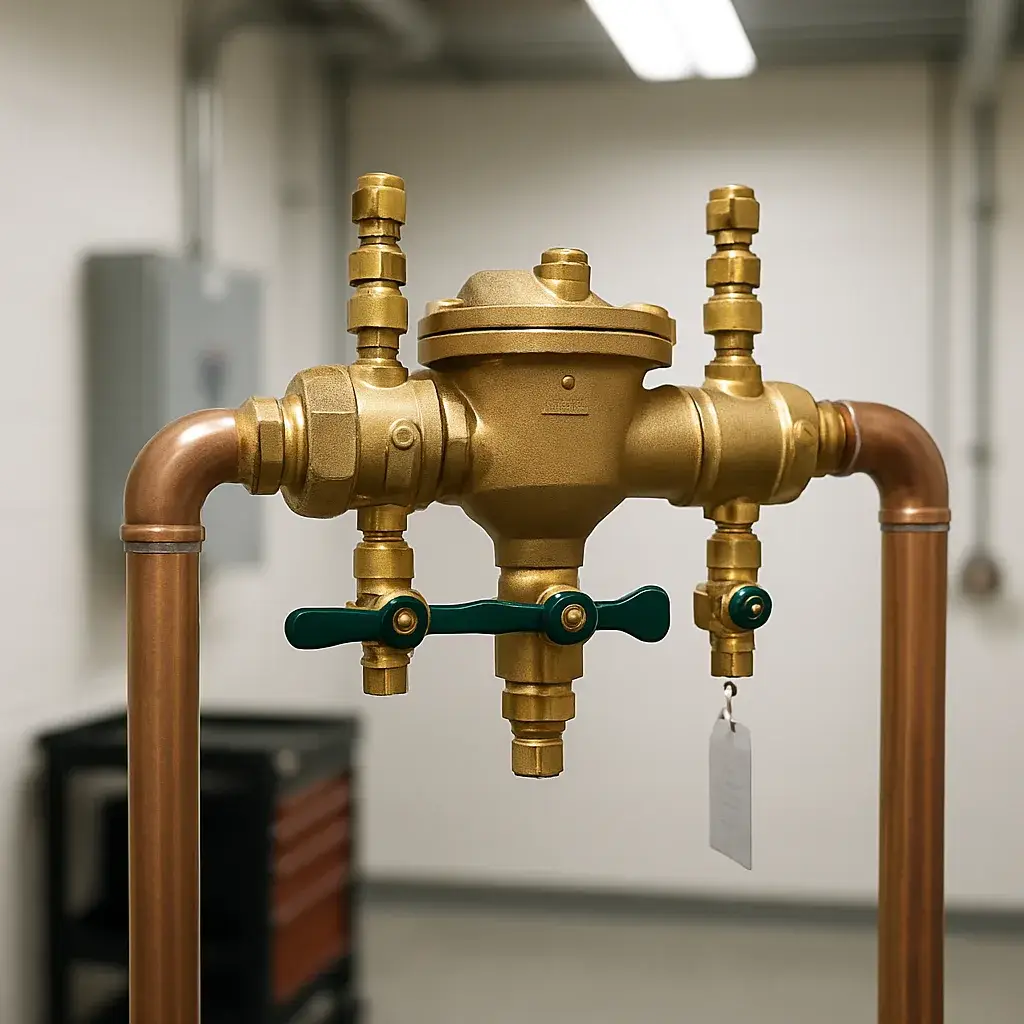
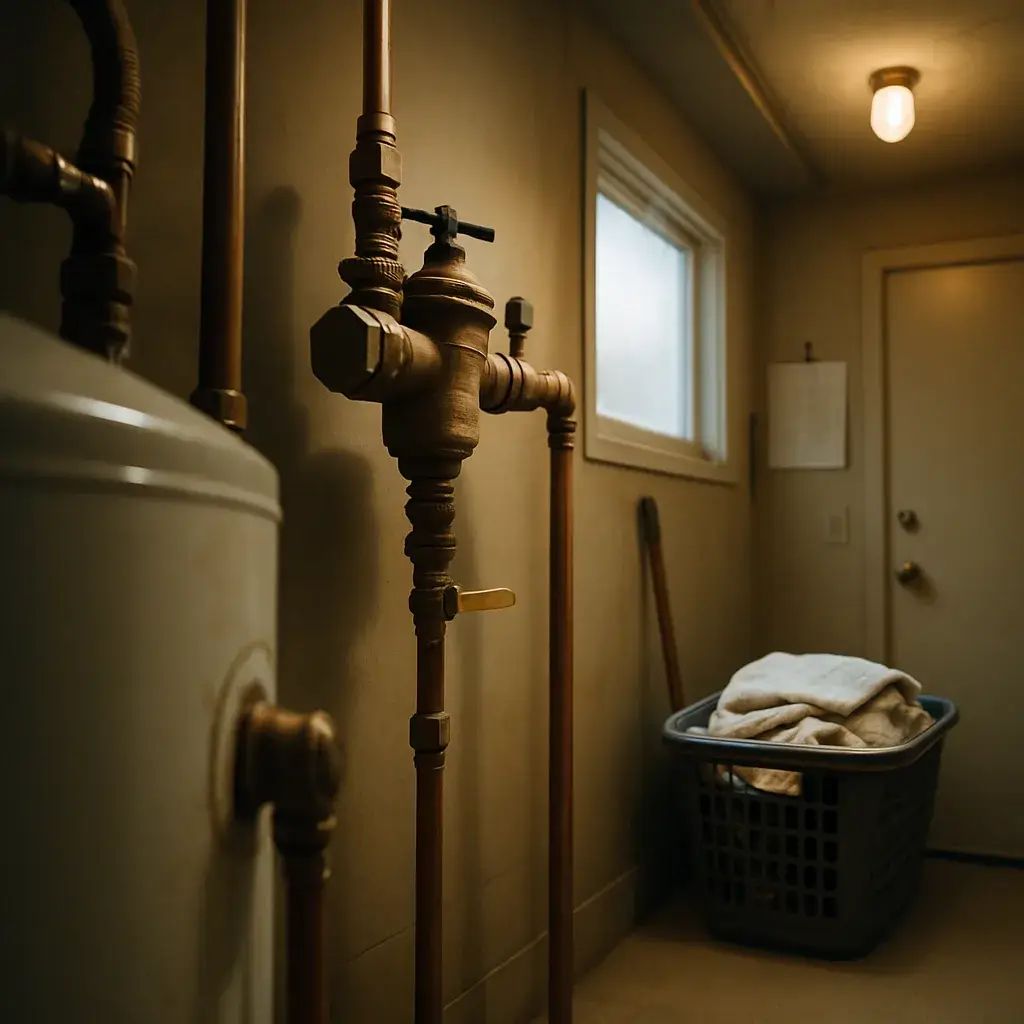
The easiest way to check is to walk the perimeter of your property near where the irrigation line branches off the main water supply, usually close to the water meter or along an exterior wall facing the yard. Look for a brass or bronze valve assembly with two shutoff handles and small test cocks on the sides, often mounted on a vertical pipe a foot or two above ground level, sometimes inside a green plastic box in the lawn. If you cannot find anything resembling this setup anywhere on the property, it is a strong sign your home does not have an assembly subject to Sunnyvale’s testing requirements.
Homeowners can safely do a basic visual check for obvious problems, such as water pooling around the valve, visible corrosion, cracked housing, or a handle that has been snapped off. These signs suggest an assembly exists and may need attention, even if you were unsure of its presence before. However, checking for damage is very different from testing the device itself. Backflow testing involves attaching calibrated gauges to the test cocks and measuring differentials to confirm the internal check valves are sealing properly, a process that requires a certified tester and specialized equipment.
If you’re still unsure whether your Sunnyvale property falls under testing requirements, the city’s water utility records or your original irrigation installation paperwork can confirm whether an assembly was ever permitted and installed at your address.
Frequently Asked Questions
Common questions about Backflow testing
How fast can you get out to test my backflow device in Sunnyvale?
Most backflow tests get scheduled within a few days of your call. We know Sunnyvale water providers set firm deadlines, so we work around your compliance date, not the other way around. If you already received a past-due notice, tell us when you call. We prioritize accounts that risk water service restrictions so you avoid extra headaches with the city.
What happens when the technician shows up to test my backflow preventer?
The technician connects a calibrated gauge kit to your backflow assembly and checks each internal valve one at a time. This takes about 20 to 30 minutes for most residential and light commercial devices. Water gets shut off briefly during testing, so nearby fixtures may lose pressure for a few minutes. You’ll get a pass or fail result on the spot, along with paperwork ready for submission.
Why do older buildings along U.S. 80 need extra attention to their backflow assemblies?
Older commercial properties often have backflow devices installed decades ago, and mineral-heavy water speeds up internal wear. Corrosion and calcification build up inside check valves faster than in newer installations. If your building sits in one of Sunnyvale’s older commercial corridors or the industrial parks near Tripp Road, plan on closer monitoring between annual tests, since these units tend to show problems sooner.
Do I need to be home or on-site during backflow testing?
You don’t need to stay for the whole test, but someone should be available to grant access to the device. Most backflow preventers sit outside near irrigation lines or in a mechanical room, so a key holder or gate code is usually enough. We’ll walk you through results and next steps by phone if you can’t be there in person.
What happens if my backflow device fails the test?
A failed test means a part inside the assembly, usually a check valve or relief valve, isn’t sealing correctly anymore. This needs repair before the device can pass and before your paperwork can be submitted to the water provider. Leaving a failed device unaddressed keeps your account in violation status, since only a passing test result resets your compliance clock with the city.
Is my backflow testing notice from Sunnyvale required, or just a suggestion?
It’s a real legal requirement, not a suggestion or a local cash grab. Texas state law under TCEQ rule 30 TAC 290.44(h) requires annual testing for devices tied to health hazard connections, and your water provider simply enforces that state mandate. Skipping the notice risks both a compliance violation and a genuine safety issue, since a worn device can let contaminated water flow backward into clean supply lines.
Ready to Get Started?
Call 972-288-2263 Today, Get Service Today.