


Electrical Panel Repair in Sunnyvale: Fast, Licensed Fixes for Warning Signs
Burned lugs, failed breakers, and loose bus connections repaired where the panel is sound – and called out honestly when replacement is the safer answer.
What’s Covered on This Page
- Warning Signs Your Panel Needs Repair
- Why Sunnyvale Panels Face Extra Strain in Summer and Winter
- Repair or Replace: How the Decision Gets Made
- When a Breaker Trip Doesn’t Mean You Need an Electrician
- What to Expect During a Panel Repair Visit
- How fast should I call an electrician after noticing panel warning signs in Sunnyvale?
- What happens when an electrician checks out my electrical panel?
- Why do older Sunnyvale homes have more panel problems?
- Does a tripped breaker always mean I need an electrician?
- Can a warm panel cover wait until my next checkup?
- How do you decide if my panel needs a repair instead of a full replacement?
Warning Signs Your Panel Needs Repair
A panel doesn’t just quit one day with no warning. It gives you clues first. Usually, homeowners call us after noticing one small thing that felt off for a week or two before it got worse.
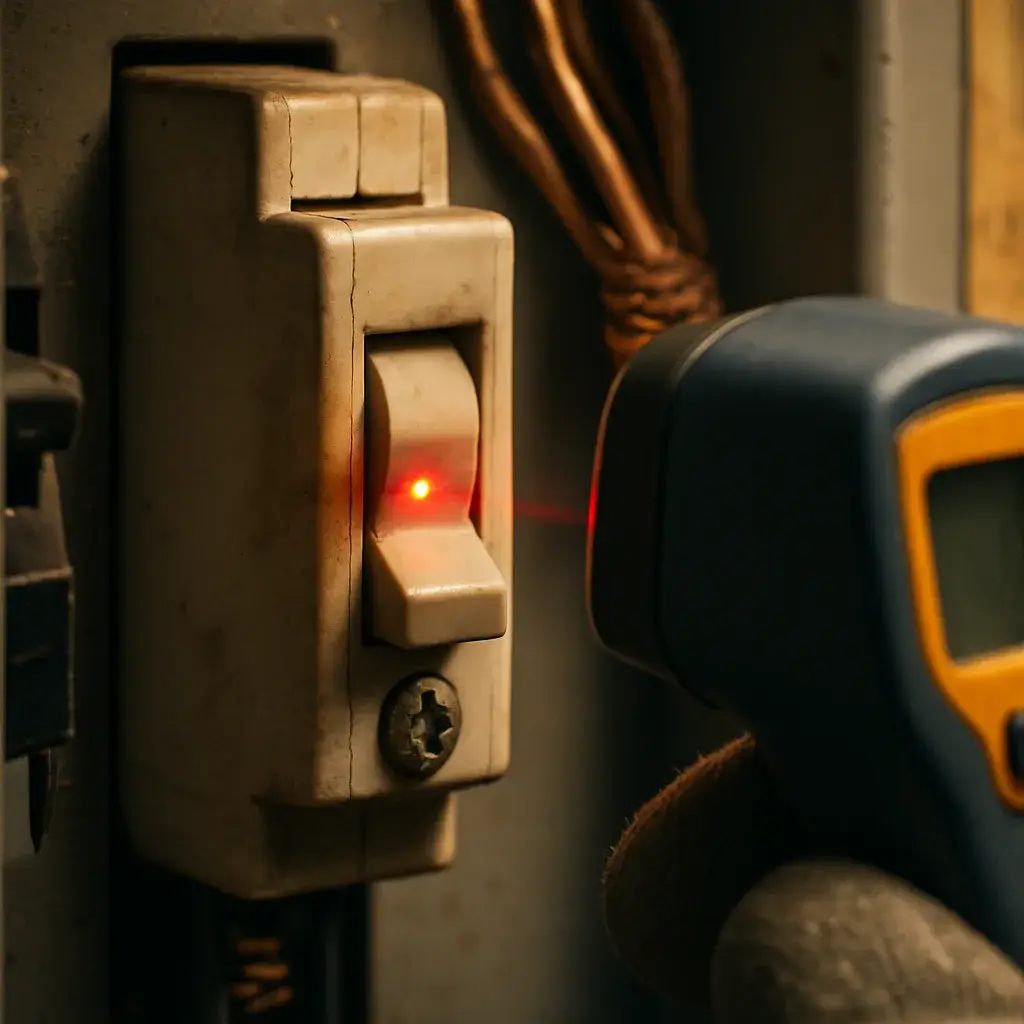
So what should make you pick up the phone? Some signs are obvious. Others are easy to brush off until they’re not.
- A breaker that trips repeatedly, or won’t stay reset no matter how many times you flip it
- The panel cover feels warm or hot to the touch, this is never normal
- A burning or hot-plastic smell near the panel, even a faint one
- Buzzing, crackling, or humming coming from inside the box
- Lights that flicker or dim across the whole house, not just one room
- Rust streaks, water stains, or discoloration around breakers or the panel door
We had a call last summer where a family noticed the TV kept flickering every time the AC compressor kicked on. Turned out to be a loose lug connection working itself hotter every cycle. A quick fix once we found it, but that kind of heat left alone can damage the breaker or worse.
Not every flicker means disaster. But if you’re seeing two or more of these signs together, don’t wait it out.
Why Sunnyvale Panels Face Extra Strain in Summer and Winter
Sunnyvale sits squarely inside the Dallas-Fort Worth climate zone, and that means panels here absorb punishment most of the country never sees. According to National Weather Service Dallas-Fort Worth climate normals, summer highs routinely climb into the upper 90s and low 100s for weeks at a stretch. That kind of heat forces air conditioning compressors to run almost continuously, and sustained high-amperage draw is exactly the condition that ages breakers faster than normal use. A breaker rated for occasional peak load behaves very differently when it is asked to hold steady under near-constant strain for an entire summer.
Older panels installed decades ago were sized for the appliance loads of their era, not for modern central air systems, electric vehicle chargers, and multiple high-draw devices running at once. When a compressor cycles on during a 103 degree afternoon, the inrush current spikes far above steady-state draw. Repeated spikes like this cause micro-arcing inside worn breaker contacts, weakening them well before they show any obvious sign of failure. Homeowners often notice nothing until a breaker trips repeatedly or a panel feels warm to the touch near the AC circuit.
Winter brings a different but equally damaging pattern. The February 2021 ERCOT grid emergency forced thousands of North Texas households to rely on portable space heaters and backup heating on circuits that were never designed to carry that kind of sustained load. That event is still tied to a noticeable rise in post-freeze service calls across the region, and Sunnyvale was no exception. Undersized circuits pushed to their limit during a multi-day cold snap can leave lasting damage to breakers and wiring connections that surfaces months later as intermittent tripping or flickering lights.
- Prolonged summer AC cycles stress aging breakers through repeated inrush current spikes
- Panels sized for older appliance loads struggle with modern EV chargers and high-draw electronics
- Grid emergencies like the 2021 freeze push undersized circuits into extended overload conditions
- Warm panel covers, frequent trips, or a burning odor often signal contacts already weakened by seasonal strain
- Damage from one extreme season frequently does not show clear symptoms until the next
Because these stress patterns are predictable, waiting until a panel fails during the hottest or coldest week of the year is the riskiest possible timing. A licensed electrician who understands Sunnyvale’s seasonal load patterns can catch worn breakers, loose lugs, and undersized circuits before ERCOT emergencies or peak summer draw turn a minor issue into an outage or fire hazard.
Repair or Replace: How the Decision Gets Made
Here’s the question every homeowner asks us the second we open the panel cover. Do I need a repair, or am I about to buy a whole new panel? Most of the time, it’s a repair. A tripped breaker that won’t reset, a burnt lug, a loose bus connection, these get fixed and tested the same visit.
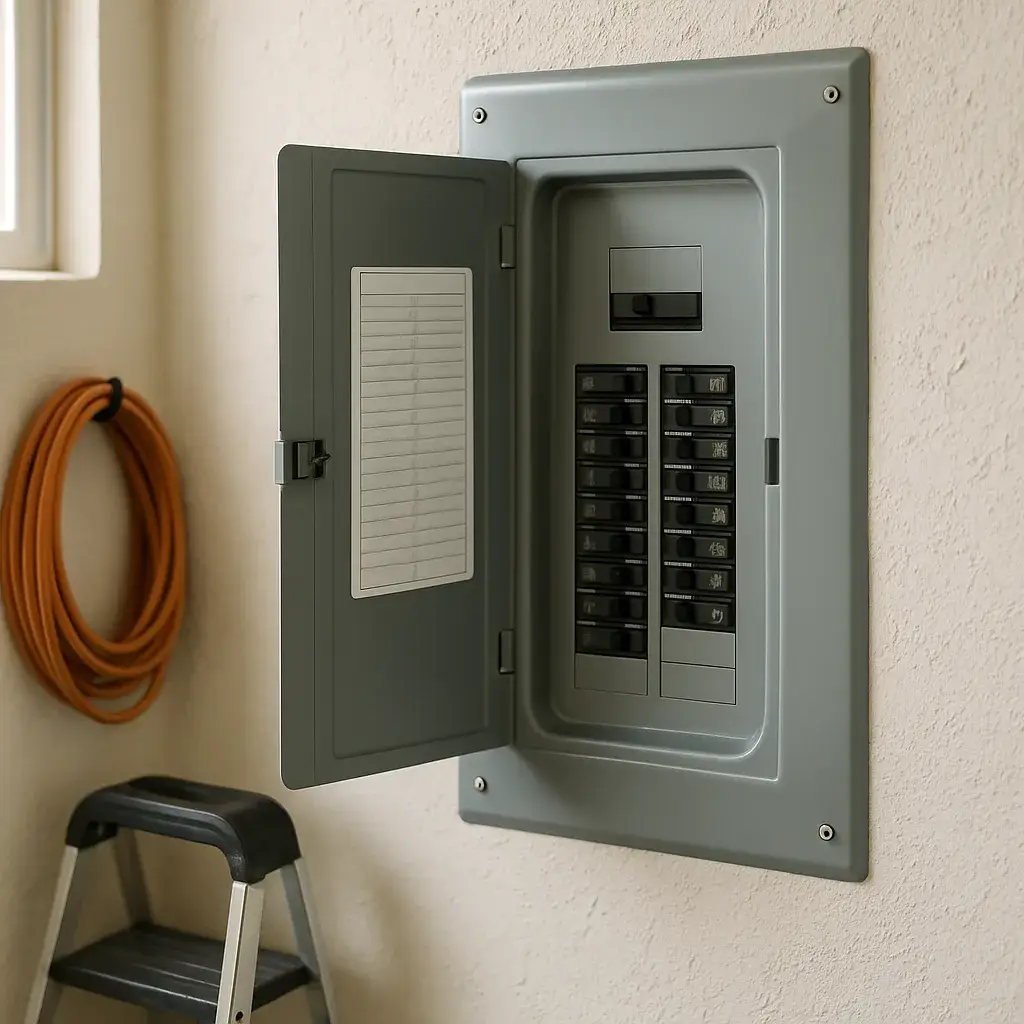
So how do we decide? We look at the panel itself, not just the symptom you called about.
- One dead breaker or a hot, discolored connection, that’s a repair
- Widespread scorching, melted bus bars, or multiple failed slots, that points toward replacement
- An older panel brand no longer making parts, repair gets harder to justify
- Panel undersized for the home’s actual electrical load, repair won’t solve that problem
Breaker availability matters more than people expect. Some older panel brands stopped making replacement breakers years ago, and hunting one down adds time and cost. If your panel’s original manufacturer still stocks parts, the repair is usually straightforward. If it doesn’t, we’ll tell you straight, and sometimes the honest answer is that a full panel replacement makes more sense long term. We’re not going to talk you into a bigger job you don’t need. And we’re not going to patch something that’s going to fail again in six months, either. That’s not doing right by you.
Access plays a role too. A panel buried behind storage boxes in a garage takes longer to reach than one out in the open, and that time shows up in the job.
Ready when you are – get in touch today.
Call Today, Get Service Today. Xtreme Air Services is ready to help.
When a Breaker Trip Doesn’t Mean You Need an Electrician
Not every tripped breaker is a sign of trouble brewing in your panel. Sunnyvale homes, especially the 1950s and 60s ranch-style houses common across Sunnyvale’s older neighborhoods, were wired for a much lighter electrical lifestyle than the one we live now. A single circuit in an older bedroom might have been designed for a lamp and a radio, not a space heater running alongside a hair dryer, a phone charger, and a window AC unit during a September heat spike. When that circuit’s breaker trips, it is doing exactly what it should: cutting power before the wires overheat.
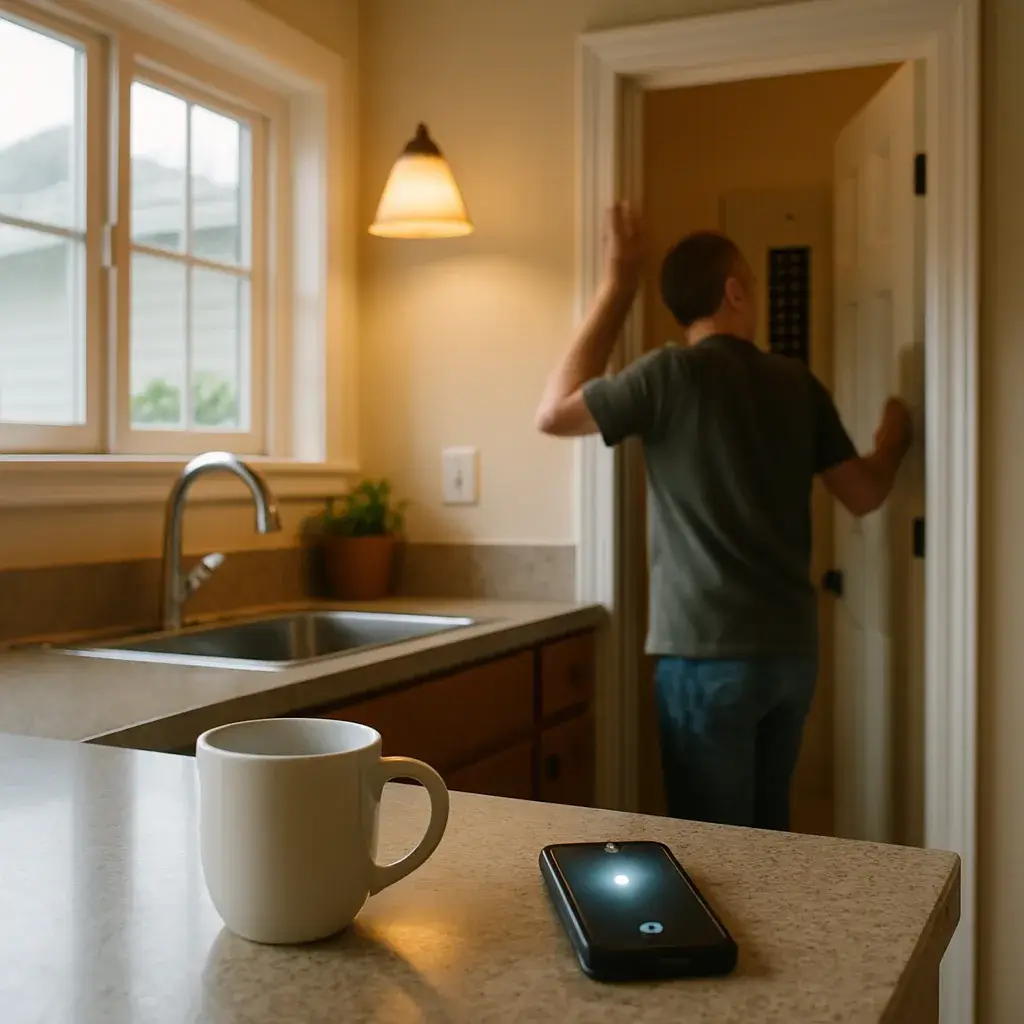
If this happens to you, the sensible first move is simple. Flip the breaker fully to off, then back to on. Unplug or relocate the highest-draw device on that circuit, usually anything that generates heat like a heater, hair dryer, toaster, or window unit. Then just monitor the circuit for a day or two under normal use. If it holds, you had a garden-variety overload, not an electrical fault, and no repair is needed.
- Reset the breaker once and note what was running at the time it tripped
- Remove or move the single largest power draw to a different circuit or outlet
- Avoid daisy-chaining multiple heat-producing appliances on one strip or outlet
- Give the circuit a few normal days of use before deciding it’s fixed
- Write down the date if it trips again, that detail helps a technician diagnose faster
The line to watch is repetition without a new cause. If you reset the breaker, remove the extra load, and it trips again within a short time under normal, unchanged use, that is no longer an overload story. That pattern points to a weakening breaker, a loose connection inside the panel, or a developing short somewhere in the circuit, all of which sit squarely in electrical panel repair territory and are not safe to keep resetting indefinitely.
We would rather tell you that your situation is a two-minute fix than send someone out for a service call you didn’t need. That honesty is also exactly why, when we do say a panel needs attention, Sunnyvale homeowners tend to trust the call.
What to Expect During a Panel Repair Visit
When you call about a suspected panel problem, the first step happens before a technician ever arrives at your home. A Sunnyvale electrician will ask you to describe what you are experiencing: breakers that trip repeatedly, a burning smell near the panel, warm cover plates, flickering lights throughout the house, or a breaker that will not reset at all. These details help the electrician arrive with the right tools, testing equipment, and likely replacement parts already on the truck, which shortens the time between arrival and repair.
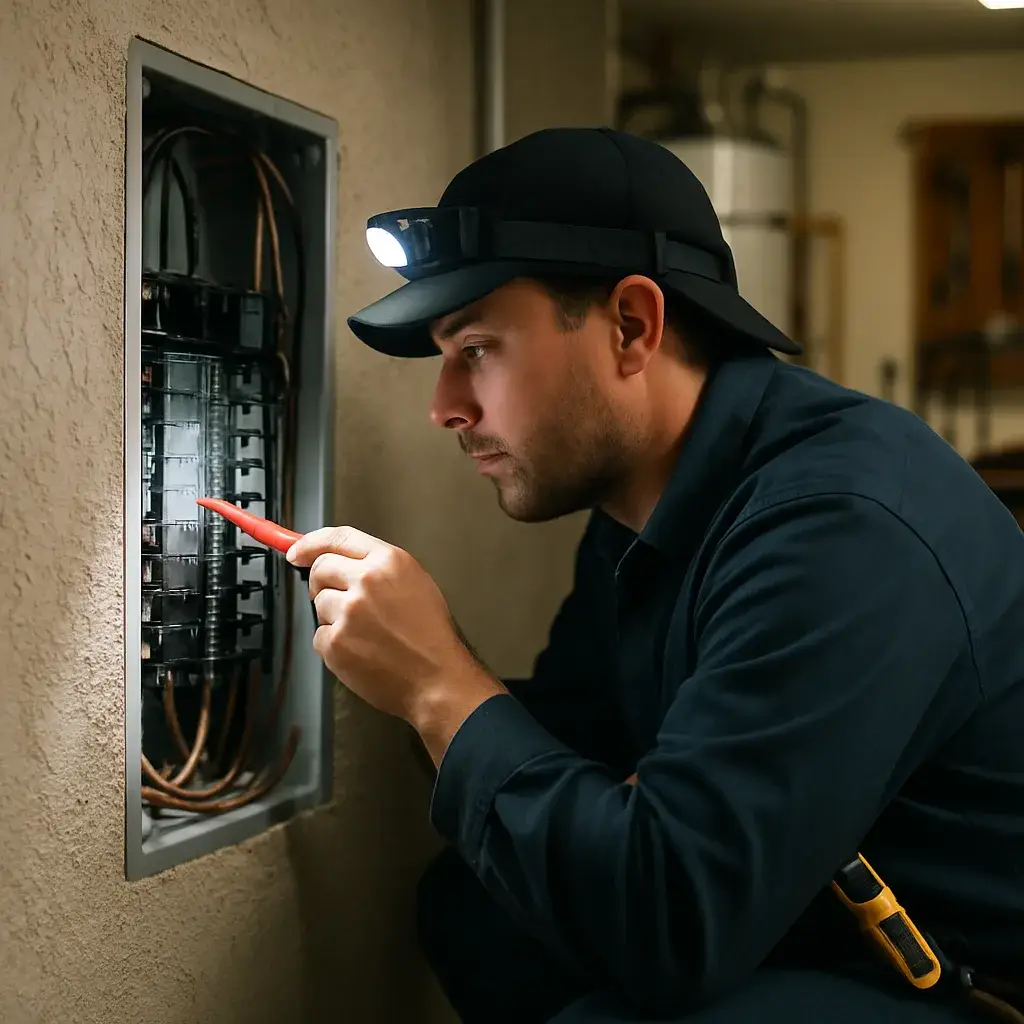
Once onsite, the visit follows a consistent sequence. The electrician performs a visual inspection of the panel exterior and interior, checking for scorch marks, corrosion, loose lugs, or double-tapped breakers. This is followed by diagnostic testing with a multimeter and thermal imaging where appropriate, measuring voltage drop, checking for arcing, and confirming which breaker, bus bar, or wiring connection has failed. Because panels carry live current even when the main breaker is off, this diagnostic phase is not something homeowners should attempt themselves.
- Phone intake to gather symptoms and narrow down likely causes before the visit
- Onsite visual inspection of the panel, breakers, and wiring connections
- Diagnostic testing to isolate the exact failed component
- Repair or replacement of the breaker, bus bar, lug, or wiring section
- Circuit-by-circuit testing to confirm the fix resolved the original symptom
- Final safety verification before the technician leaves the property
Once the failed component is identified, the electrician explains the repair options on the spot, including cost and whether the part is in stock for same-visit completion. After the repair or replacement, every affected circuit is tested individually to confirm normal operation, and the panel is rechecked for proper grounding, torque on connections, and correct labeling before the job is considered finished.
Texas Occupations Code Chapter 1305 requires that electrical work, including panel repair, be performed by a licensed electrician regulated through TDLR, so it is worth confirming license status before work begins. Many panel repairs that involve altering wiring configurations, replacing a panel, or upgrading capacity require a permit, which in Sunnyvale is processed through the city’s building and permitting function. A qualified electrician will handle this paperwork or advise you directly if your specific repair falls under permit requirements, so you are never left guessing about compliance.
Panel repair in Sunnyvale almost always intersects with Oncor, because any work touching the meter or the service entrance needs the power dropped and restored by the utility rather than by us. We arrange that coordination before the truck rolls, so a Sunnyvale panel repair does not stall halfway through the afternoon waiting on a disconnect. On the older side of Sunnyvale we will also tell you plainly when a repair is worth doing and when the panel has simply reached the end of its service life.
Frequently Asked Questions
Common questions about Electrical panel repair
How fast should I call an electrician after noticing panel warning signs in Sunnyvale?
Call the same day you notice a warm panel cover, a burning smell, or a breaker that won’t stay reset. These signs mean heat is already building inside the box. Sunnyvale summers push AC compressors hard, and that steady draw ages weak connections fast. Waiting even a few days can turn a simple repair into a bigger job. If you catch it early, most fixes are quick and don’t require shutting off power to your whole home for long.
What happens when an electrician checks out my electrical panel?
The electrician opens the panel cover, checks every breaker, and looks for heat marks, loose connections, or discoloration. You’ll get a clear answer on the same visit about whether it’s a simple repair or something bigger. We test the fix before we leave, not just tighten a connection and go. If access is tricky, like a panel behind stored boxes, clearing that space ahead of time helps the visit move faster.
Why do older Sunnyvale homes have more panel problems?
These 1950s and 60s ranch-style homes were wired for a much lighter electrical load than modern families use. Panels built decades ago weren’t sized for central air, EV chargers, and multiple high-draw devices running together. When summer AC cycles kick in, the extra strain hits these older systems harder. That’s why breakers in these neighborhoods trip more often and need earlier attention than panels in newer construction.
Does a tripped breaker always mean I need an electrician?
No, not always, but a repeat trip usually does. A single trip from overloading a circuit with too many devices is normal and just needs a reset. If the same breaker keeps tripping, or won’t stay reset at all, that points to a weakened connection or a bigger issue inside the panel. Two or more trips on the same circuit within a short time is a clear signal to get it checked.
Can a warm panel cover wait until my next checkup?
No, a warm or hot panel cover should never wait. This is one of the clearest signs of a loose connection heating up inside the box. We’ve seen cases where ignored heat led to breaker damage that could have been avoided with an earlier call. If the cover feels warm to the touch, especially paired with flickering lights or a faint burning smell, treat it as urgent, not routine maintenance.
How do you decide if my panel needs a repair instead of a full replacement?
It depends on how much damage we find once the cover comes off. A single burnt lug or one dead breaker is usually a straightforward repair. Widespread scorching, melted bus bars, or a panel that’s too small for your home’s current load points toward replacement instead. We also check if the manufacturer still makes parts for your panel brand, since that affects how practical a repair really is long term.
Ready to Get Started?
Call 972-288-2263 Today, Get Service Today.