


Water Conditioner Installation in Sunnyvale: End Hard Water Scale for Good
Salt-free conditioning that stops scale without adding sodium – and a clear explanation of where it beats a softener and where it does not.
What’s Covered on This Page
- Signs Your Home Needs a Water Conditioner
- Water Conditioner vs. Water Softener: Know the Difference
- What Drives Water Conditioner Installation Cost
- Permits and Plumbing Requirements Before Installation in Sunnyvale
- What to Expect During Professional Installation
- How fast can you get a water conditioner installed in Sunnyvale?
- What happens when you arrive to install my water conditioner?
- Does my Sunnyvale home need a permit for water conditioner installation?
- How do I know if my Sunnyvale home has a hard water problem?
- Will a water conditioner require ongoing maintenance after installation?
Signs Your Home Needs a Water Conditioner
North Texas water runs hard, and Sunnyvale is no exception. Minerals build up fast, especially in homes with older galvanized plumbing from the 1950s through the 1990s. We see this every week: crusty white buildup around faucet aerators, spotty glassware straight out of the dishwasher, and shower doors that never look clean no matter how hard you scrub.
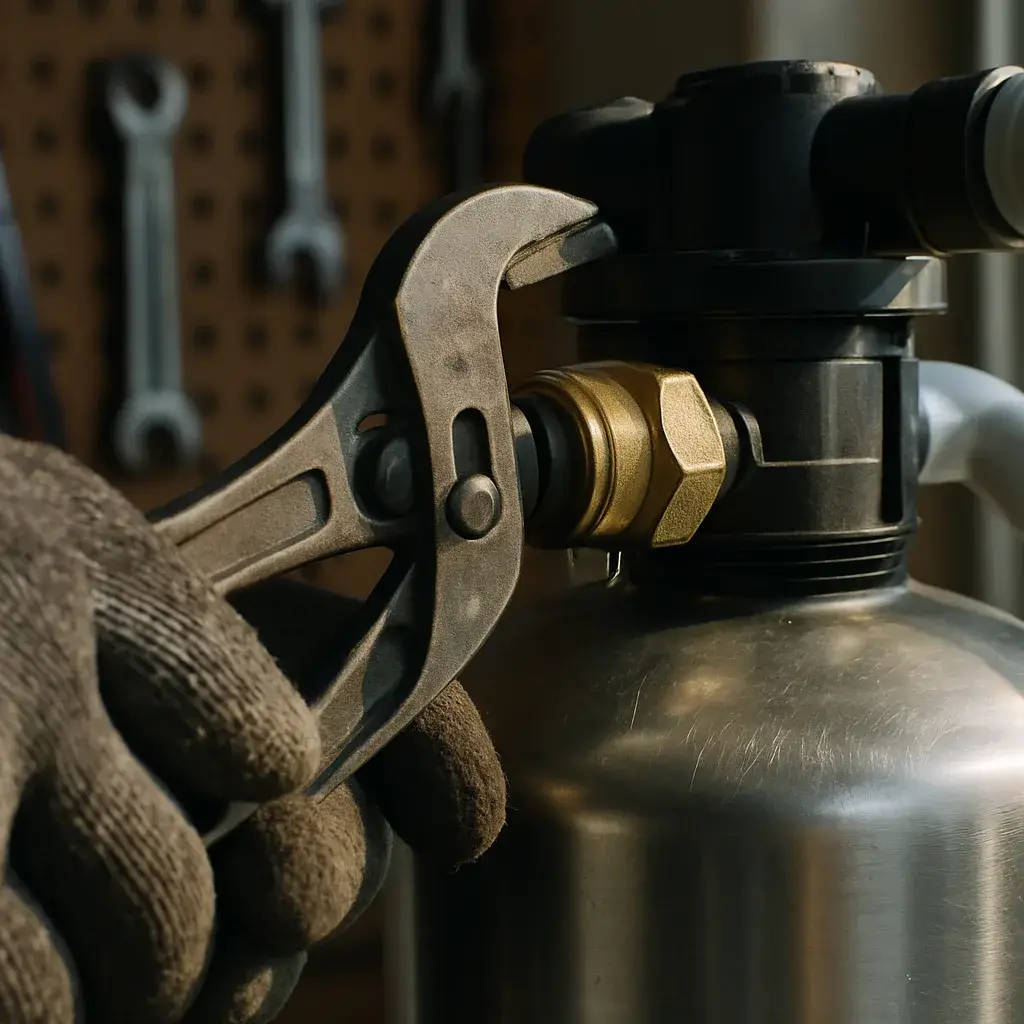
Most folks miss this: your water heater takes the biggest hit. Scale settles at the bottom of the tank. It insulates the burner from the water, forcing the unit to work harder. That’s why so many Sunnyvale homes with attic-installed water heaters hear popping or rumbling sounds. That’s mineral deposit breaking loose as the tank heats up.
- Chalky white or greenish buildup around faucets, showerheads, and the dishwasher’s soap dispenser
- Soap and shampoo that barely lather, leaving a filmy residue on skin and hair
- Popping, cracking, or rumbling noises coming from the water heater tank
- Spots and streaks on dishes and glassware even right after a wash cycle
- Laundry that comes out stiff or dingy, and towels that feel scratchy
Not sure if what you’re seeing is hard water or just an old fixture? That’s a fair and common question. If your appliances are dying young, your fixtures are crusting over within months of cleaning, or your skin feels dry after every shower, hard water minerals are almost always the reason. A quick water test settles the question fast.
Water Conditioner vs. Water Softener: Know the Difference
People use these two words like they mean the same thing. They don’t. A water softener uses salt and resin beads to pull calcium and magnesium out of your water completely. That’s called ion exchange. A water conditioner works differently. It changes the structure of hardness minerals so they stop sticking to pipes, fixtures, and water heater elements. When a Sunnyvale homeowner calls us about white crust on faucets or a water heater dying early, a conditioner is the fix they’re asking for.
So why not just always install a softener? Some homes want that, especially if soft skin and hair are the priority. But softeners need salt bags, a drain line for backwash, and regular maintenance. A conditioner needs none of that. No salt to haul, no brine tank taking up space in the garage, no wastewater going down the drain every few days.
Here’s the honest tradeoff. A conditioner reduces scale buildup and protects your plumbing and appliances. However, your water will still test as hard. If someone in your house has a medical reason to avoid sodium in drinking water, or you just want that softer feel, a softener does something a conditioner can’t.
Not sure which camp you fall into? That’s a normal question. It’s exactly what we walk through before we ever pick up a wrench.
What Drives Water Conditioner Installation Cost
Here’s the honest answer: no two jobs cost the same. Anyone who quotes you a number over the phone without seeing your setup is guessing. A typical price range for water conditioner installation runs $1,200 to $4,000. The most common job, installing a salt-free conditioner at the main supply, usually lands between $1,800 and $2,900. Most of those jobs finish same-day.
So what pushes a job toward the low end or the high end? A few things.
- Conditioner type and capacity – a unit sized for a small home costs less to install than one sized for a bigger household or higher water flow
- Condition of your existing plumbing – older pipe, corrosion, or tight crawl access adds labor time
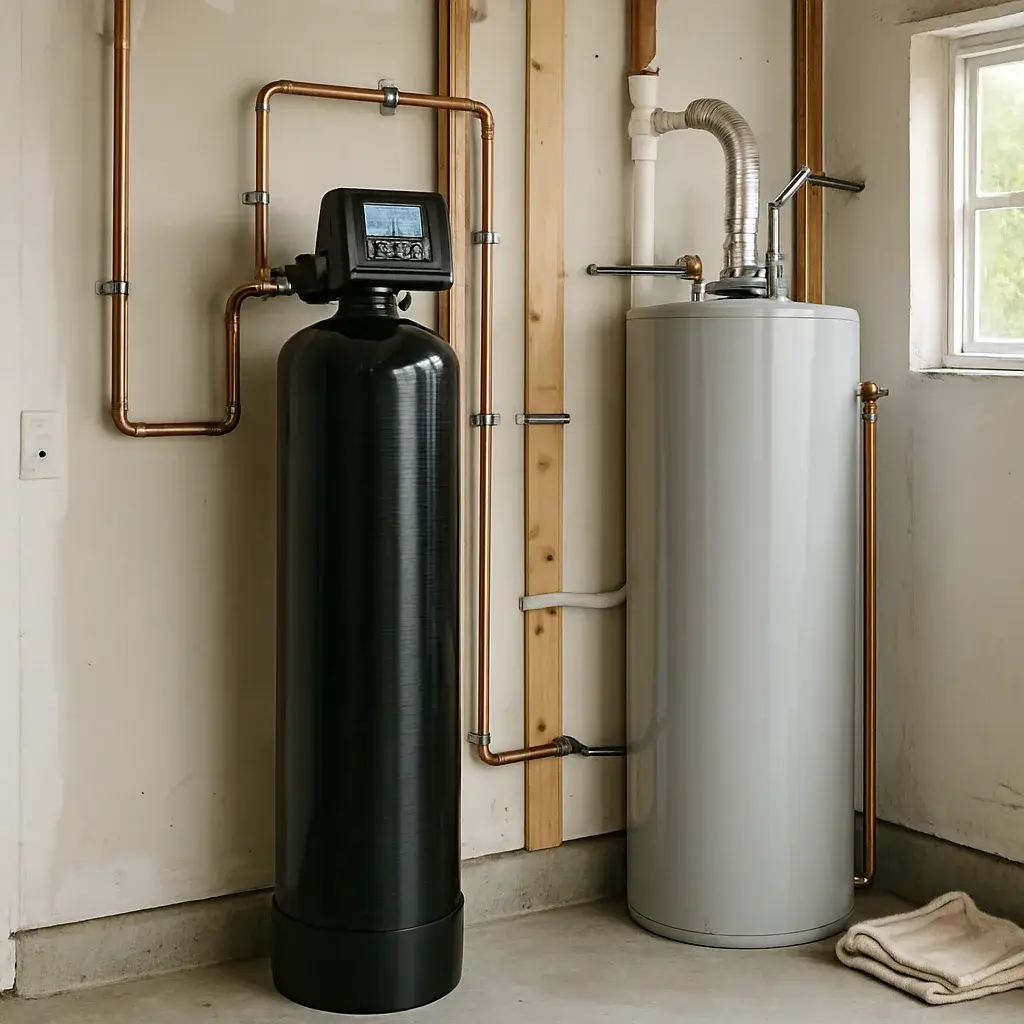
- Loop availability – if there’s already a bypass loop at your main line, install is faster and cheaper. If we have to build one, that adds cost
- Code upgrades – if your current setup doesn’t meet code, that work gets handled separately
A standard install includes the conditioner and materials, professional installation, connections, startup and testing, and hauling away your old unit. It does not include building a plumbing loop from scratch if you don’t have one, electrical work, broader code corrections, or permits unless we’ve stated that upfront. We charge a $26 to $99 service-call fee for the visit. That gets credited toward the job if you move forward with us.
Before you hire anyone for this, ask what’s included. Ask whether your home already has a loop. Ask how they handle surprises found mid-install. Straight answers to those three questions tell you a lot about who you’re hiring.
We offer flexible financing on qualifying installations, on approved credit. Budget doesn’t have to be the reason your water keeps beating up your fixtures.
Need help with Water conditioner installation?
Call Today, Get Service Today. Xtreme Air Services is ready to help.
Permits and Plumbing Requirements Before Installation in Sunnyvale
Here’s something a lot of folks don’t know until we show up: Sunnyvale sits right on the line between Dallas County and Kaufman County. Which side your house falls on can change who signs off on the work. We handle that conversation so you don’t have to chase down the right office.
Most whole-home water conditioner jobs don’t need a separate permit the way a full repipe would. That depends on what we find at your main line. If your home doesn’t already have a loop set up for treatment equipment, we may need to add one. That’s plumbing work, not just a swap-and-go.
- Existing shut-off valves near the main supply line. Older homes sometimes don’t have them where we need them.
- A loop or bypass already in place for treatment equipment.
- Pipe material and condition. Galvanized lines from older builds sometimes need attention first.
- Any code corrections needed to bring the connection up to current standard.
That last point matters. Code corrections aren’t included in a standard install. They’re not something we’d spring on you after the fact. We’ll walk your plumbing with you, point out what’s there, and explain what it’ll take before we start any work.
Xtreme Air Services is fully licensed and insured. Our plumbing work is overseen under Master Plumber Larry Breedlove’s license. That’s not a small thing when it comes to permitted work and code compliance. It means the install gets done right the first time, with someone accountable standing behind it.
What to Expect During Professional Installation
Here’s what happens once we’re at your door. Most homes in Sunnyvale, especially the slab-on-grade ranch homes built between the 1950s and 1990s, have the main water line coming in through a utility closet, garage wall, or exterior hose bib area. We find that spot first and check the pipe size and how much room we’ve got to work with before anything gets cut.
- We shut off the main water supply to the house.
- We cut into the line at the best spot for a whole-home install, usually right after the meter or before the water heater.
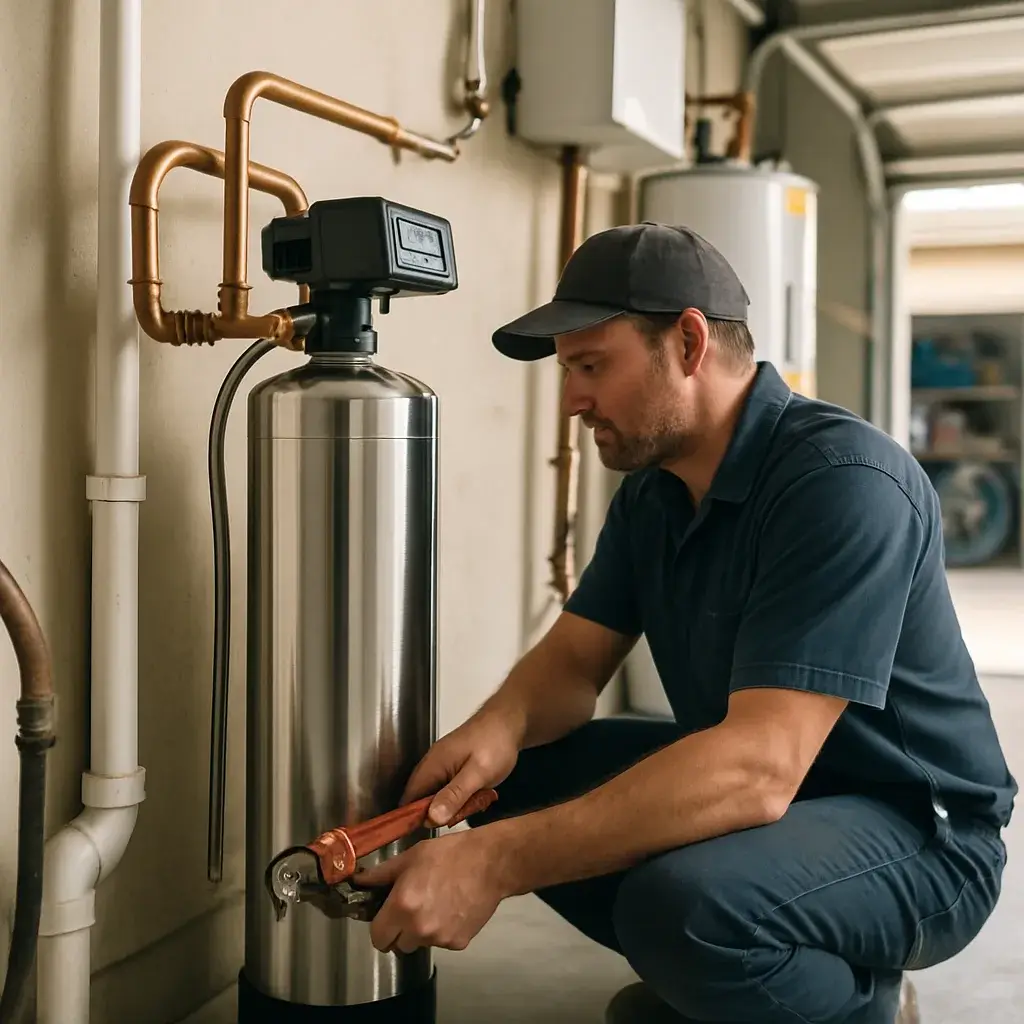
- We mount and connect the salt-free conditioner, including any fittings the plumbing needs.
- We turn the water back on and check every connection for drips.
- We run water through the system and confirm it’s conditioning properly.
- We haul away your old unit if you had one.
- We walk you through how the new system works before we leave.
The water’s off for maybe twenty to thirty minutes during the cutover. Most homeowners don’t even notice because they’re at work or in another room. Since this is a salt-free system, there’s no brine tank to hook up and no drain line to run. That keeps the job simpler than a traditional softener install. It’s a big reason most jobs finish same-day.
If your home’s copper or galvanized plumbing is older, or the loop for a conditioner just isn’t there yet, we’ll flag it before we start cutting. No surprises mid-job. Our technicians are licensed and insured, and every one is background-checked. You’re not letting a stranger loose on your home’s main water line.
No mess left behind. We test the system, clean the work area, and make sure you know how to read it before we head out.
Frequently Asked Questions
Common questions about Water conditioner installation
How fast can you get a water conditioner installed in Sunnyvale?
Most water conditioner jobs in Sunnyvale finish the same day you call. We run service six days a week across the DFW area, so scheduling a visit rarely means a long wait. Once we’re at your home, a standard install with an existing bypass loop usually wraps up in a few hours. If your plumbing needs extra work first, like adding a loop at the main line, that can add time. We’ll tell you upfront if your job needs more than one visit.
What happens when you arrive to install my water conditioner?
We start by checking your main supply line, shut-off valves, and existing plumbing before touching anything. Older Sunnyvale homes, especially those with galvanized pipe from the 1950s through the 1990s, sometimes lack shut-off valves in the right spot. We’ll walk you through what we find and what it means for your install. Once we confirm the setup, we connect the conditioner, run startup testing, and haul away your old unit if there was one.
Does my Sunnyvale home need a permit for water conditioner installation?
Most whole-home conditioner installs don’t need a separate permit, but that depends on what we find at your main line. Sunnyvale sits on the line between Dallas County and Kaufman County, and which side your home falls on can change who reviews the work. If your plumbing needs a new loop or other upgrades to meet code, that work may trigger a permit. We check this before we start so there are no surprises later.
How do I know if my Sunnyvale home has a hard water problem?
Chalky white buildup on faucets, popping sounds from your water heater, and dishes that come out spotty are the clearest signs. North Texas water runs hard, and homes with older plumbing feel it faster because mineral buildup settles inside pipes and tank walls. If your water heater is in the attic, listen for rumbling as the tank heats up. That’s scale breaking loose. A quick water test can confirm hardness in minutes if you’re still unsure.
Will a water conditioner require ongoing maintenance after installation?
A salt-free water conditioner needs far less upkeep than a softener once it’s installed. There’s no salt to haul in, no brine tank to refill, and no backwash cycle sending wastewater down your drain. You should still have your system checked periodically to confirm it’s working the way it should, especially in homes with heavy mineral content. Ask us during your install what a normal check-up schedule looks like for your specific setup.
Ready to Get Started?
Call 972-288-2263 Today, Get Service Today.