


Cleaner-Tasting Water: Carbon Filtration System Installs in Sunnyvale
Whole-home carbon filtration for chlorine taste and odor, with an honest line on when a pitcher filter is genuinely enough.
What’s Covered on This Page
- Signs Your Tap Water Needs Carbon Filtration
- Carbon Filtration vs. Water Softening: Choosing the Right Fix
- When a Pitcher Filter Is Enough (and When It Isn’t)
- What Happens During a Whole-Home Carbon Filter Install in Sunnyvale
- What Drives Carbon Filtration Installation Cost
- How long does a whole-home carbon filtration install take in Sunnyvale?
- What happens when your technician arrives to install my system?
- Why does my tap water smell like chlorine here in Sunnyvale?
- Do I need a carbon filter, a water softener, or both?
- Is a pitcher filter enough, or should I install a whole-home system?
- My well water smells like rotten eggs. Will a carbon filter fix that?
Signs Your Tap Water Needs Carbon Filtration
You fill a glass, take a sip, and there it is. That chlorine bite. When someone calls us about water that tastes off, chlorine or chloramine disinfection is the culprit. It’s not anything wrong with your plumbing.
Sunnyvale sits right on the line between Dallas County and Kaufman County. Depending on which side of town you’re on, your water comes from a different municipal supply or, in some older properties, a private well. Municipal systems in this part of North Texas treat surface water with chlorine to keep it safe. That’s what creates the smell and taste people notice at the tap.
- A chlorine smell when you run the faucet or fill a pot
- Coffee, tea, or ice that tastes flat or slightly chemical
- Skin or hair that feels dry after a shower, even with a good shampoo
- A musty or swampy odor that shows up more in summer months
- Pets that avoid drinking from their water bowl
Not every odd taste means you need a system. Sometimes it’s just a warm spell making the smell more noticeable, or a new water heater breaking in. But if the smell is constant and every faucet in the house has it, that’s your sign.
Well water is a different story. Sulfur or a rotten-egg smell usually points to another issue entirely. Carbon alone won’t fix that.
Carbon Filtration vs. Water Softening: Choosing the Right Fix
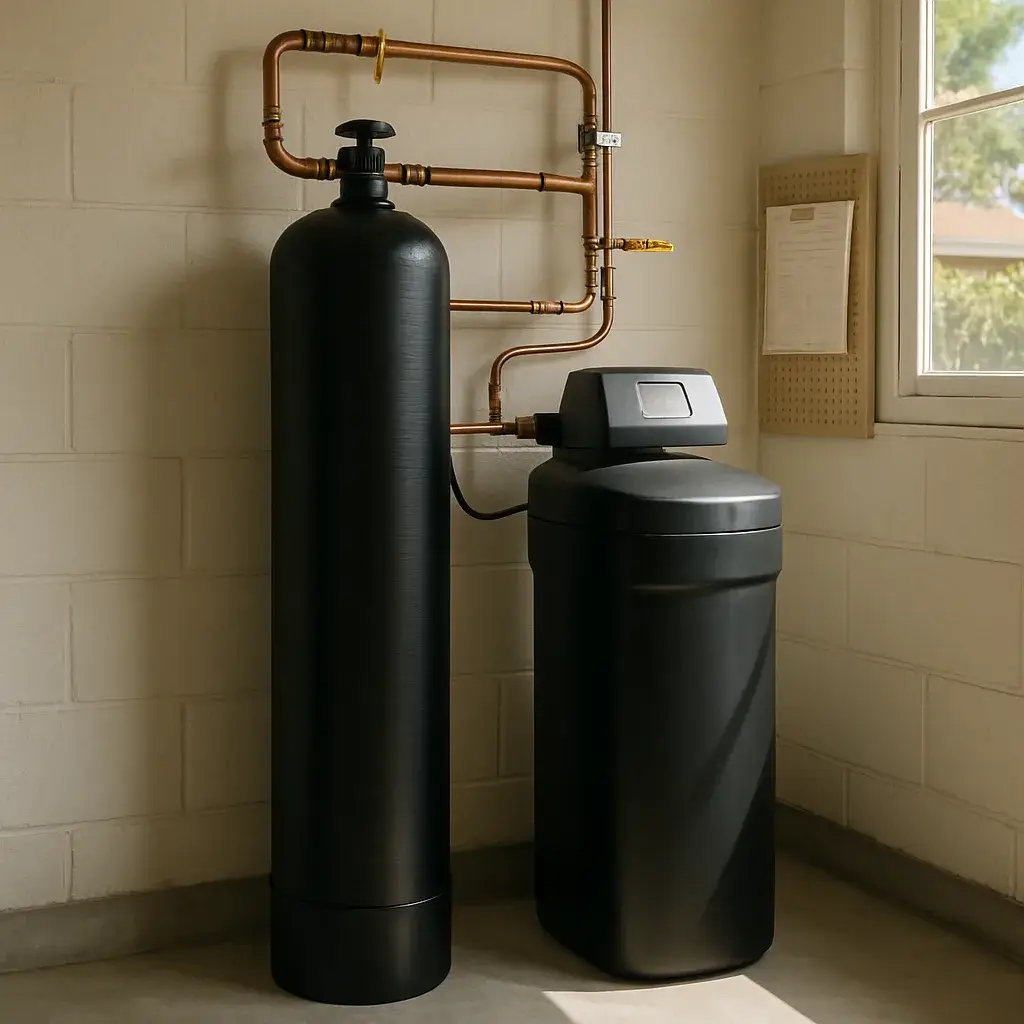
Here’s where a lot of homeowners get confused. We don’t blame them. A carbon filtration system and a water softener look similar sitting in the garage. But they solve two different problems. Carbon filtration pulls chlorine, chloramine, and that flat, chemical taste out of your water. It does nothing for hardness.
Water softeners are built for a different job. They strip calcium and magnesium out of the water. This stops scale on faucets and film on shower glass. Homes around Sunnyvale often pull from surface water sources treated with chlorine or chloramine. Carbon media is designed to grab these. If your water tastes off but your fixtures aren’t crusting up, carbon alone is probably your answer.
- Chlorine smell or a swimming-pool taste from the tap, points to carbon
- White scale on showerheads, faucets, or the water heater element, points to a softener
- Both problems at once, a combo setup with carbon and softening media in sequence
- Sediment or cloudy water on top of taste issues, may need a pre-filter ahead of the carbon tank
We get calls where someone installed a softener years back and still hates the way their water tastes. That’s a carbon gap, not a softener failure. Ask us which problem you’re dealing with before you spend money on the wrong system. We’ll walk your water quality through it with you. No guesswork, no upsell for equipment you don’t need.
When a Pitcher Filter Is Enough (and When It Isn’t)
Look, we’re not going to tell you every Sunnyvale home needs a whole-home system. That would be dishonest.
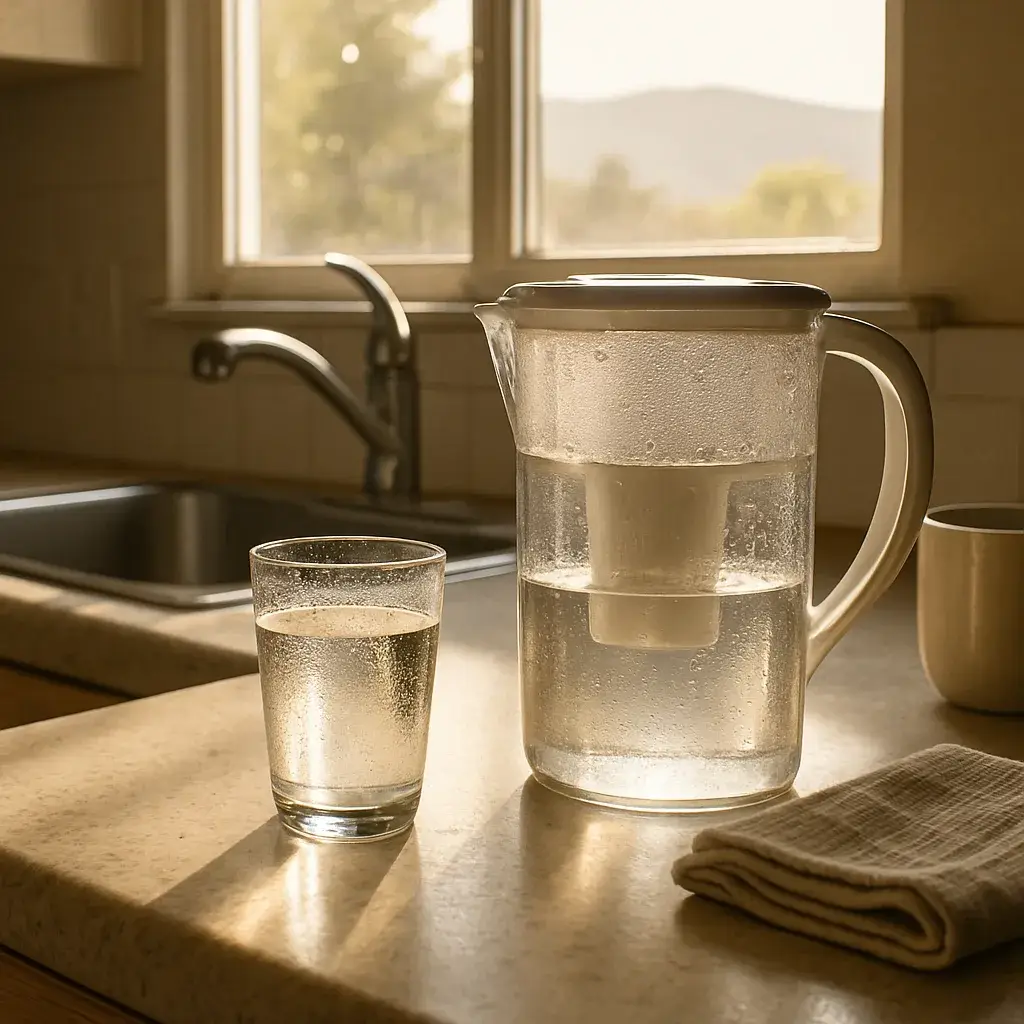
If your only complaint is a chlorine taste in your drinking water and you’re not bothered by anything else, a pitcher filter or a fridge filter might do the trick. Those small carbon filters handle taste and odor fine for drinking and cooking water. They’re cheap, easy, and you can grab one at any store in town.
But here’s where a pitcher filter falls short. It only treats the water you pour into it. Every shower, every load of laundry, every dish washed in the sink still gets the untreated water straight from the Oncor-powered pump station down the line. If you’re noticing the chlorine smell when you shower, or your skin feels dry after washing up, a pitcher isn’t touching that at all.
There’s also the issue of upkeep. Pitcher cartridges need swapping every month or two, and it’s easy to forget. Miss that window and you’re basically drinking through a clogged filter that isn’t doing much.
- Stick with a pitcher filter if it’s just drinking water taste bothering you and nobody in the house has sensitivities
- Consider a whole-home system if the smell hits you in the shower, not just the glass
- Consider a whole-home system if you’re filling a bathtub for a baby or running a fish tank. Both are sensitive to chlorine.
- Skip both for now if you haven’t noticed a taste or smell problem. Don’t fix what isn’t broken.
So if a pitcher’s handling it fine for you, save your money. That’s the honest answer.
Not sure what your Carbon filtration system project needs? Ask us.
Call Today, Get Service Today. Xtreme Air Services is ready to help.
What Happens During a Whole-Home Carbon Filter Install in Sunnyvale
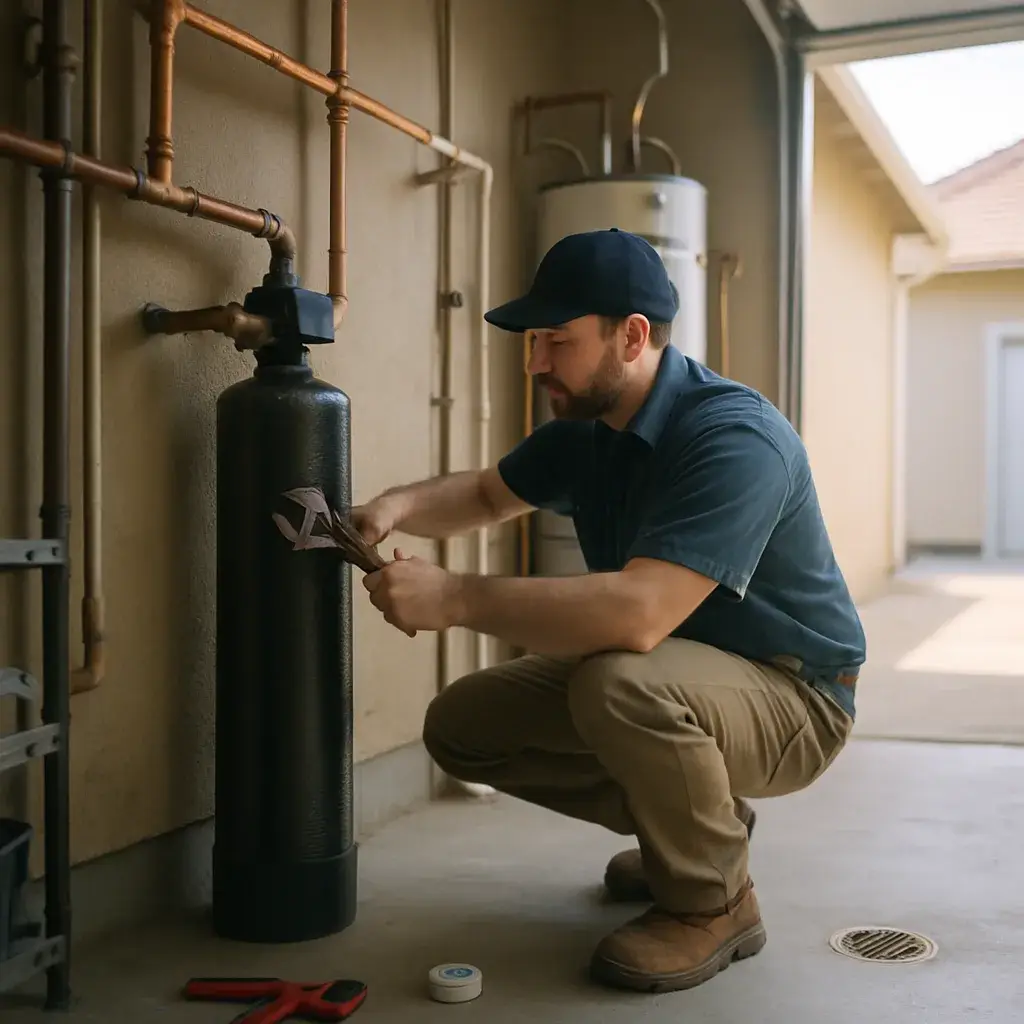
Here’s the thing folks don’t expect: the hardest part of a carbon filtration system install usually isn’t the filter itself. It’s the plumbing around it. Most Sunnyvale homes built between the 1950s and 1990s were plumbed with a straight run to the water heater and nothing else. No loop, no bypass, nothing set up for a whole-home filter. Newer subdivision homes are a little better about it, but not always.
Our team first finds your main water line and checks your existing setup. If there’s no loop for the filter to sit on, we build one. That’s a real factor in how the job goes, not just paperwork.
- Shut off the main supply and inspect the pipe material and existing setup
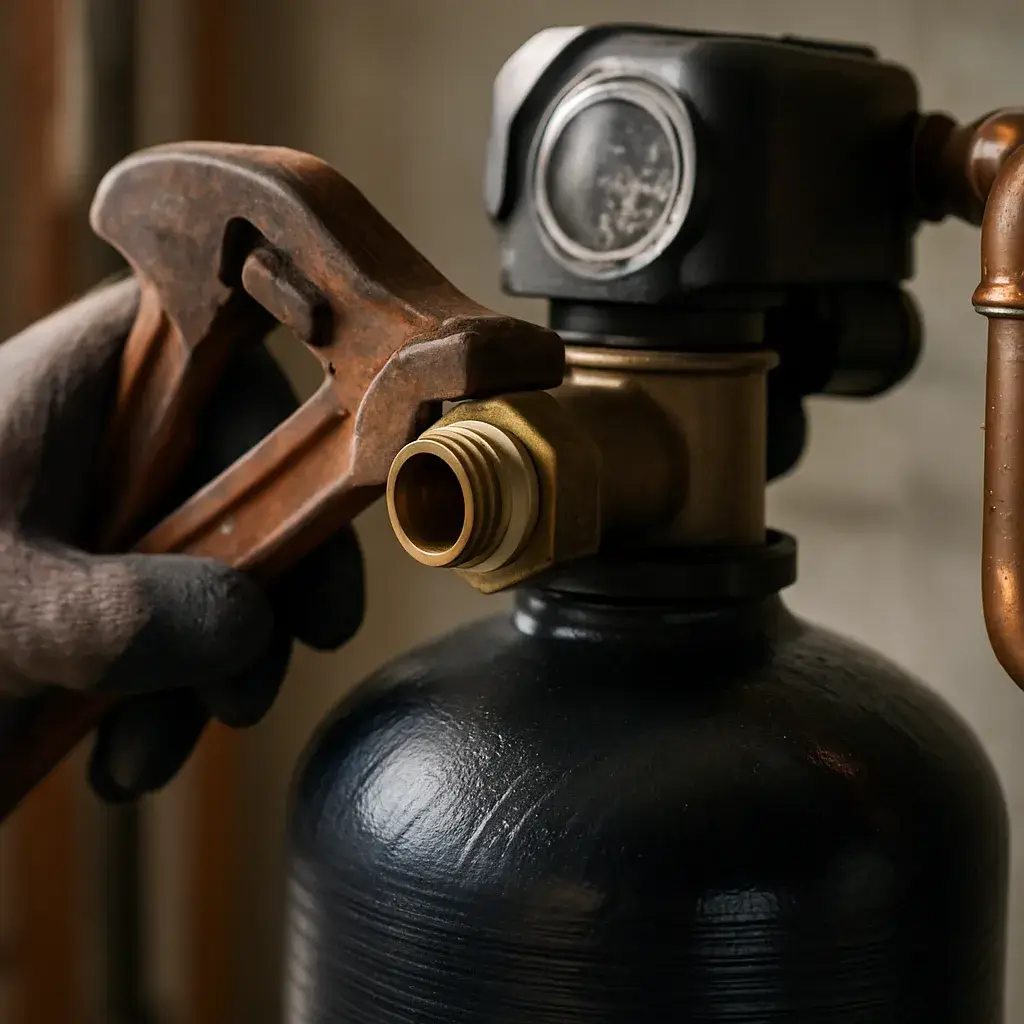
- Size the tank and pick the right media based on your home’s flow rate and household demand
- Install or connect into the plumbing loop near your main shut-off, usually in the garage or utility closet
- Connect the system, run a startup cycle, and check for leaks under real water
- Test the water coming out to confirm the chlorine taste and smell are gone
- Haul away the old unit if you’re replacing one
Most jobs finish same-day. If your property sits on the Kaufman County side of town, permit and inspection rules can differ slightly from the Dallas County side. We check that before we start, not after.
Homes near U.S. 80 with older galvanized supply lines sometimes need a small plumbing correction before the filter can even go in. We’ll tell you upfront if that’s the case. It’s not something we spring on you halfway through.
What Drives Carbon Filtration Installation Cost
Every home is different, so every carbon filtration system job prices out a little different. We don’t guess at this. Before we ever touch a wrench, we look at what your house is working with.
- Tank size and media: a bigger household or higher water use calls for a larger tank and more activated carbon media. This costs more up front but filters longer between service.
- Flow rate and capacity: homes with multiple bathrooms running at once need a system sized to keep steady, not just one built for a single tap.
- Condition of existing plumbing: older galvanized supply lines common in Sunnyvale’s 1950s through 1990s slab homes sometimes need extra fittings or a short repipe before the filter can connect.
- Loop availability: if your main line already has a bypass loop, install goes fast. If it doesn’t, we build one, and that adds labor.
- Code upgrades: Sunnyvale sits right on the Dallas and Kaufman county line. Which side your property falls on can change what the local permit office requires for the connection.
Here’s the honest range. Most carbon filtration system installs run $1,100 to $1,800. The full spread across all setups, simple to complex, is $800 to $2,500. That’s it, no vague ‘starting at’ number that creeps up once we’re in your attic.
We charge a $26 to $99 service call fee to come look at your setup. It gets credited toward the job if you move forward with us. Nobody likes paying twice just to get an answer.
If the number still feels like a lot to swallow at once, we get it. Flexible financing is available on qualifying installs, so you’re not stuck choosing between clean water and a tight month.
Frequently Asked Questions
Common questions about Carbon filtration system
How long does a whole-home carbon filtration install take in Sunnyvale?
Most whole-home carbon filtration installs in Sunnyvale wrap up in a single visit. Older homes built between the 1950s and 1990s often need extra time because the original plumbing was run straight to the water heater with no loop for a filter. If your home needs that loop built first, plan for a bit longer. We check your main line setup before we start so you know what to expect before any work begins.
What happens when your technician arrives to install my system?
Your technician starts by shutting off the main water supply and checking your pipe material and existing plumbing layout. From there, they size the tank and pick the right carbon media for your home’s flow rate and household demand. The system gets installed near your main shut-off, usually in the garage or utility closet, then run through a startup cycle. Before leaving, they test the water coming from your tap to confirm the chlorine taste and smell are gone.
Why does my tap water smell like chlorine here in Sunnyvale?
That smell comes from chlorine or chloramine used to treat surface water before it reaches your home. Sunnyvale sits on the line between Dallas County and Kaufman County, so depending on where your property falls, your water comes from a different municipal supply. Both sides treat water this way to keep it safe, which is exactly what causes that swimming-pool taste and smell at the tap. It’s not a sign of a plumbing problem in your home.
Do I need a carbon filter, a water softener, or both?
It depends on what’s bothering you about your water. A carbon filter removes chlorine, chloramine, and that flat, chemical taste, while a softener strips out calcium and magnesium that cause scale on faucets and shower glass. If you’ve got a chlorine smell but no crusty buildup, carbon alone usually solves it. If you have both problems, a combo setup running carbon and softening media in sequence works better than either system alone.
Is a pitcher filter enough, or should I install a whole-home system?
A pitcher filter works fine if the chlorine taste only bothers you in drinking water. It won’t help with a chlorine smell in the shower, dry skin after washing up, or water going into a baby’s bath or a fish tank, since those situations call for a whole-home system. Pitcher cartridges also need swapping every month or two, and a missed swap means you’re drinking through a filter that’s no longer doing much.
My well water smells like rotten eggs. Will a carbon filter fix that?
No, a rotten-egg or sulfur smell in well water usually points to a different issue than chlorine taste, so carbon filtration alone won’t clear it up. Some older properties on the Kaufman County side of Sunnyvale still run on private wells instead of municipal supply, and sulfur odors in well water need a different treatment approach. If this is your situation, tell us that up front so we can recommend the right fix instead of the wrong equipment.
Ready to Get Started?
Call 972-288-2263 Today, Get Service Today.