


Sediment Filter Installation in Sunnyvale: Clear Water Without the Guesswork
Sediment filtration that catches the grit wearing out your fixtures and shortening the life of every filter downstream of it.
What’s Covered on This Page
- Common Signs You Need a Sediment Filter
- When a Sediment Filter Isn’t the Right Fix Yet
- Sediment Filter vs. Water Softener: Solving the Right Problem
- Why Sunnyvale Homes Often Need Extra Sediment Protection
- How Sediment Filter Installation Works, Start to Finish
- How fast can someone come out to install a sediment filter in Sunnyvale?
- What happens when your technician arrives to install a sediment filter?
- Why do so many Sunnyvale homes deal with sediment in their water?
- How can I tell if I need a sediment filter or a water softener?
- Will a sediment filter get rid of orange or rust-colored water?
- How often does a sediment filter cartridge need to be replaced?
Common Signs You Need a Sediment Filter
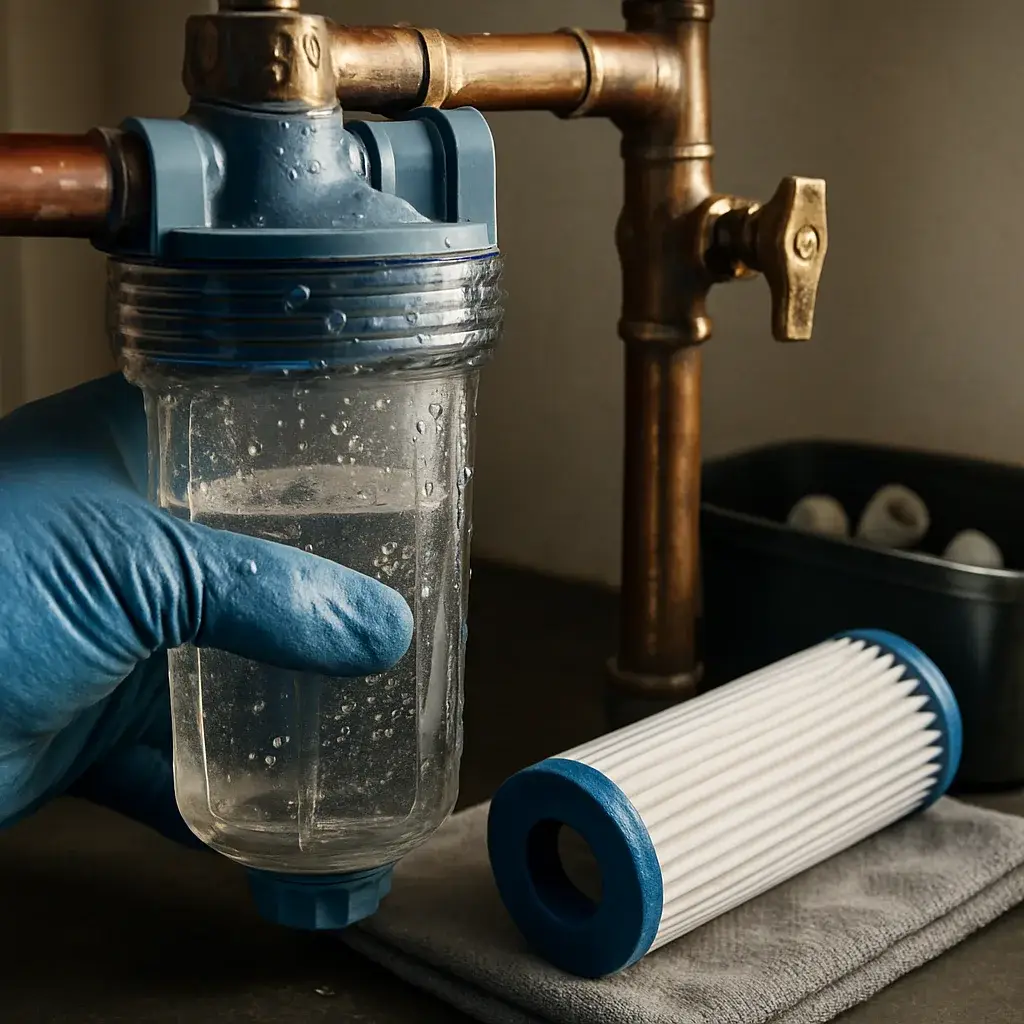
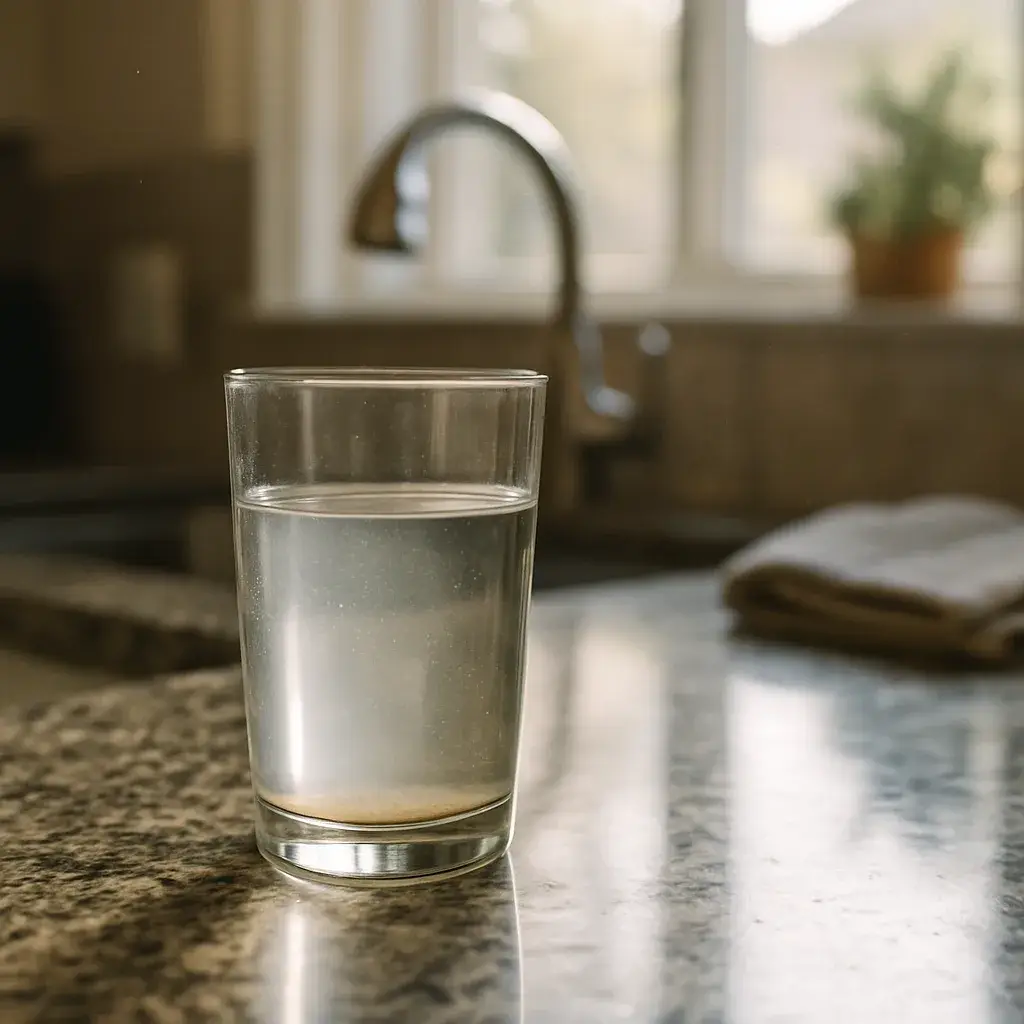
Fill a clear glass and let it sit for a minute. See sand or grit settle at the bottom? That is sediment. It is more common than you would think. We get calls about this constantly. It is always the same story: fine sand, rust flakes, or mineral grit working through the plumbing.
Some of it is just Sunnyvale’s mix of housing stock. Older slab homes built before the 1990s often still run galvanized supply lines that shed rust. Newer subdivisions are not immune either, especially right after a water main break along US 80 stirs up the municipal lines. If your property sits on the Kaufman County side and pulls from a private well, sediment is almost a given.
- Cloudy, gritty, or slightly brown water right at the tap
- Faucet aerators and shower heads clogging every few weeks
- A washing machine or dishwasher filter that fills with fine grit
- Reduced water that got worse gradually
- Sand or sediment settling in a water heater, showing up as popping or rumbling sounds
Not sure if what you are seeing counts? That is a fair question. A little cloudiness after work on the street is normal for a day or two. Grit that keeps coming back week after week is not.
When a Sediment Filter Isn’t the Right Fix Yet
Not every water problem is a sediment problem. We get calls where someone has already bought a filter housing online. What they need is something else entirely. Let’s sort that out first.
If your water leaves white, chalky spots on glasses and shower doors, that is hard water, not grit. A sediment filter will not touch dissolved minerals like calcium and magnesium. You would need a water softener for that, a different fix altogether.
Orange or reddish staining in tubs and toilets usually points to iron or manganese in the water. This is common with well supplies around the edges of Sunnyvale near Kaufman County. That calls for an iron filtration setup, not a basic sediment pre-filter.
- Sudden, dramatic drop in water across the whole house. That is often a bigger plumbing issue, maybe a slab leak, not sediment buildup.
- Cloudy water that clears after running the tap a minute, sometimes just air in newer piping, not grit.
- A rotten egg smell. That is usually a water heater anode rod issue; sediment filters do not fix odor.
- Only one fixture acting up. That points to a local clog or fixture problem, not something at the main line.
If you are on Sunnyvale’s municipal supply with no history of gritty water, you might not need this at all. Before you spend money on a housing and cartridge, ask what is in your water. That is the honest answer, even if it costs us the call.
Sediment Filter vs. Water Softener: Solving the Right Problem
This is where a lot of homeowners get confused. We do not blame them. Cloudy water, rusty streaks in the tub, gritty stuff at the bottom of a glass. All of it feels like the same problem. It is not.
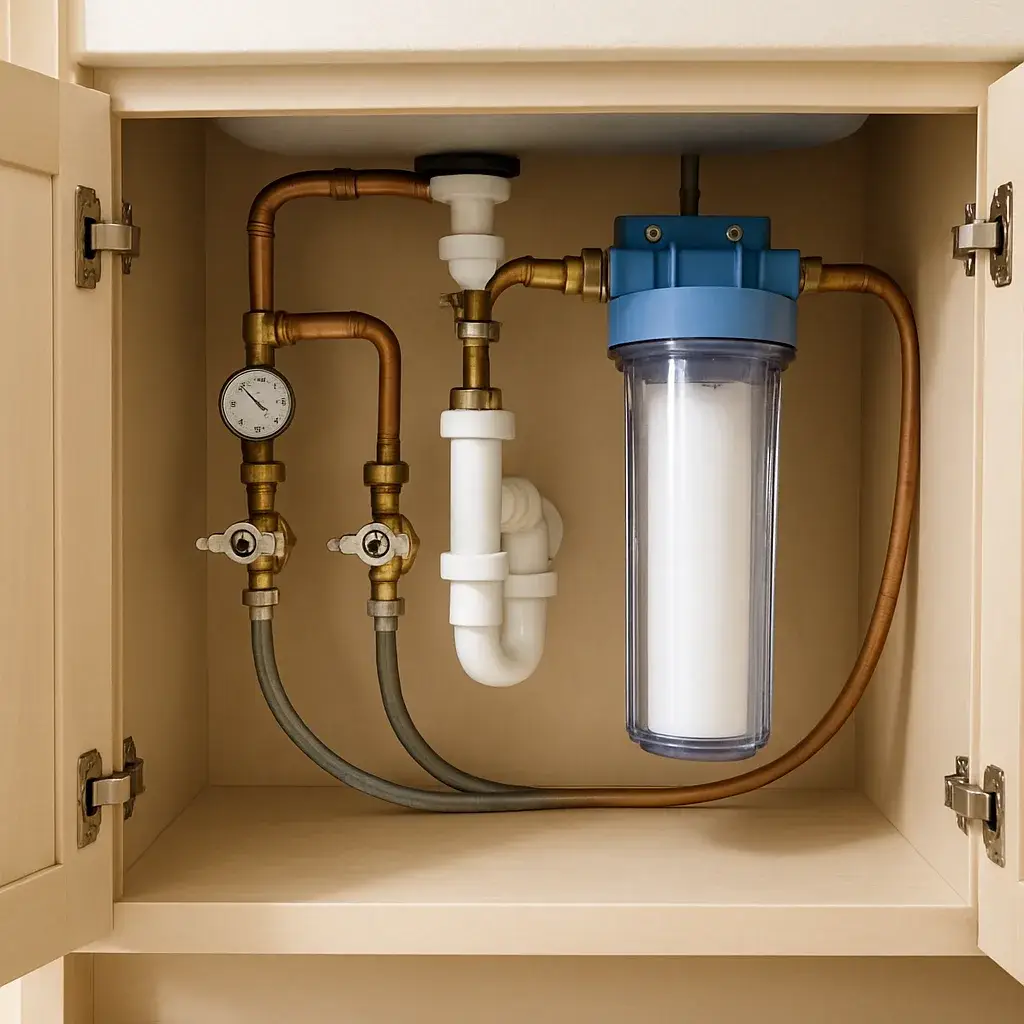
A sediment filter catches physical particles. This includes sand, rust flakes, pipe scale, or dirt that got into the line. It is a mechanical screen. A water softener works on a different issue: dissolved calcium and magnesium. These minerals leave white crust on your showerhead and make soap hard to rinse off. One is filtering out stuff you can see. The other is treating minerals you cannot.
How do you know which one you have? If you see actual grit, sand, or discoloration, especially after a water main break nearby or right after the town flushes hydrants, that is a sediment issue. If your real complaint is spotty dishes, dry skin, or scale buildup inside your water heater over time, that is hardness. A sediment filter alone will not touch it.
Plenty of homes in Sunnyvale need both. Hard water is common across this part of North Texas. A sediment pre-filter is usually installed ahead of a softener to protect it from grit that would otherwise clog the resin bed. But if all you have is sand and rust, do not let anyone sell you a softener system you do not need yet.
Not sure which one is causing your headache? Tell us what you are seeing in the water. We will help you sort it out before you spend a dime.
Ready when you are – get in touch today.
Call Today, Get Service Today. Xtreme Air Services is ready to help.
Why Sunnyvale Homes Often Need Extra Sediment Protection
Sunnyvale sits along U.S. 80. It has a mix of older slab-on-grade homes from the 1950s through the 1990s and newer subdivisions built over the last couple decades. That mix matters for sediment. Older galvanized supply lines corrode from the inside out over the decades. That corrosion breaks loose as rust flakes and fine grit every time water moves through the pipe.
The clay soil under most of Dallas and Kaufman County does not help either. It shifts with the seasons, expanding when wet and pulling back when dry. That movement stresses buried water lines, especially older joints. It can knock loose mineral deposits and sediment that end up in your faucets and appliances.
Sunnyvale straddles the Dallas County and Kaufman County line. Some properties are on municipal water and others rely on private wells, especially toward the edges of town. Well water brings its own sediment load, sand and silt pulled straight from the ground. It tends to hit filters and fixtures harder than treated city water.
We see this every week: a homeowner notices gritty water after a water main repair nearby. Or a well owner starts seeing sand in the bottom of a glass. Neither one means something is broken. It usually just means the water supply, old pipes, or the ground itself is doing what North Texas water sources do.
How Sediment Filter Installation Works, Start to Finish
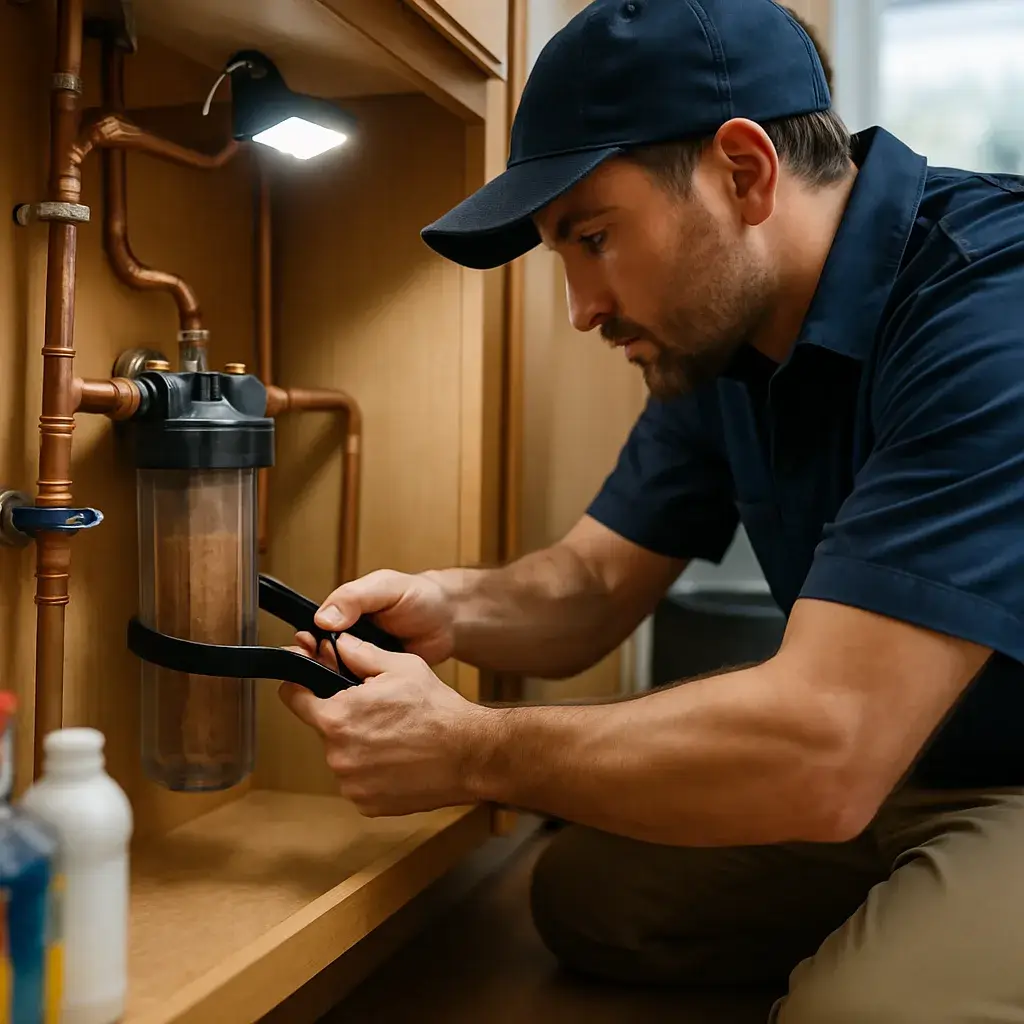
Most Sunnyvale homes sit on a slab. The main water line usually comes up near the water heater, in a utility closet, or right where the line enters the garage wall. That is where we look first. Once we find the best spot, the actual work moves fast.
- We shut off the main water supply. No water sprays when we cut into the line.
- We measure and cut a section of pipe to fit the filter housing, matching it to your pipe size.
- We install the housing with the correct fittings. We check that the flow arrow points the right direction. Get this backwards and the filter will not catch a thing.
- We seal every connection and check the housing bracket. The full weight of a wet filter is not hanging on the pipe alone.
- We turn the water back on slow at first. We watch every joint for drips.
- We run water through a few fixtures to clear air. We test that it looks normal.
- We walk you through changing the filter cartridge yourself down the road.
Most jobs finish same-day. If your existing pipe is old galvanized or corroded, that adds a step. We may need to swap a short section before the housing goes on. We will tell you that before we start cutting, not after.
Frequently Asked Questions
Common questions about Sediment filter installation
How fast can someone come out to install a sediment filter in Sunnyvale?
We offer same-day service six days a week across Sunnyvale and the surrounding DFW area. Most calls about gritty or cloudy water get scheduled within a day or two, especially after a water main break stirs up sediment along US 80. Call ahead so we can bring the right filter housing and cartridge size for your home’s pipe setup.
What happens when your technician arrives to install a sediment filter?
A technician first checks your water for grit, checks your pipe size, and finds the best spot for the filter housing, usually right after the main shutoff valve. Then they install the housing, add the cartridge, and run water through several fixtures to flush out loose sediment. Expect the visit to include a quick walkthrough of how to change the cartridge yourself later on.
Why do so many Sunnyvale homes deal with sediment in their water?
Sunnyvale’s mix of housing stock is the main reason. Older slab homes built before the 1990s often still have galvanized supply lines that rust from the inside, and expansive clay soil across Dallas and Kaufman County shifts with the seasons and stresses buried pipes. Homes on well water near the Kaufman County side see even more sand and silt. Any of these can send grit straight to your faucets.
How can I tell if I need a sediment filter or a water softener?
Look at what’s in your water. Sand, rust flakes, or cloudy grit at the bottom of a glass point to sediment, while white chalky spots on dishes and shower doors point to hard water minerals. A sediment filter only screens out physical particles, it won’t soften water. Many Sunnyvale homes end up needing both, with the sediment filter installed ahead of a softener to protect it from grit.
Will a sediment filter get rid of orange or rust-colored water?
Not always. Orange or reddish staining usually means iron or manganese in the water, which is common in well supplies near the Kaufman County edge of Sunnyvale. A basic sediment filter catches physical grit but won’t remove dissolved iron. That kind of staining calls for an iron filtration setup instead. We test your water first so you don’t pay for the wrong fix.
How often does a sediment filter cartridge need to be replaced?
It depends on how much grit is in your water, but most homes need a cartridge swap every one to three months. Well water or homes with older galvanized pipe tend to clog cartridges faster. A good sign it’s time is when your water pressure drops or the cartridge looks packed with sediment. We show you how to check it yourself during installation.
Ready to Get Started?
Call 972-288-2263 Today, Get Service Today.