


Landscape Lighting in Sunnyvale: Licensed Electrical Work, Not Landscaper Guesswork
Outdoor lighting done as licensed electrical work: what a full installation includes, why clay soil changes how wire gets buried, and how fixtures get aimed.
What’s Covered on This Page
- Signs Your Property Needs Professional Landscape Lighting
- Licensed Electrical Work Versus a DIY Lighting Kit
- What a Full Landscape Lighting Installation Includes
- Why Clay Soil Changes How Wiring Gets Buried
- Testing and Aiming Fixtures for Even Coverage
- How fast can you get someone out for landscape lighting in Sunnyvale?
- What happens when your electrician arrives to install landscape lighting?
- Why does landscape lighting in Sunnyvale stop working after a year or two?
- Can I just install a DIY landscape lighting kit instead of calling an electrician?
- Do I need a permit for landscape lighting in Sunnyvale?
Signs Your Property Needs Professional Landscape Lighting
How do you know if you have a real lighting problem or just a mild annoyance? We hear the same complaints on almost every visit around Sunnyvale. They usually fall into a short list.
- Your front walkway or steps go pitch black once the sun’s down. Guests feel their way to the door.
- There’s a step edge, a raised paver, or a flagstone gap near the patio you can’t see at night. Someone’s already caught a toe on it.
- Backyard get-togethers wrap up the second the sun sets. There’s nothing to see after that.
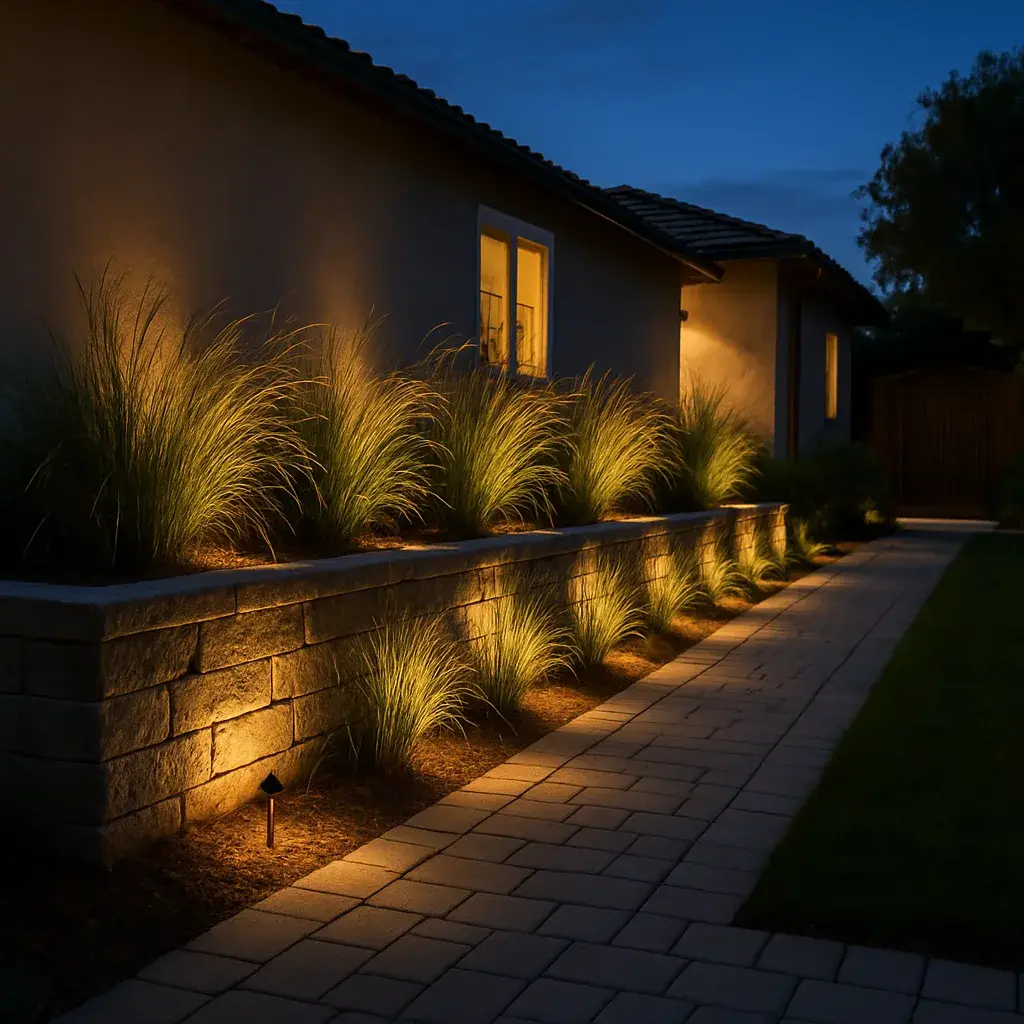
- Mature trees, flower beds, or a nice stone facade just vanish after dark. This is a shame if you spent real money on the landscaping.
- Side yards, gates, or the space behind the garage stay dark year round. It feels like an open invitation to anyone walking by.
Many ranch-style homes built here from the 1950s through the 1990s were never wired for anything past a porch light. Sunnyvale’s clay soil shifts over the years, leaving walkway pavers slightly uneven. This creates a real fall risk once it’s dark. We hear about this often: folks lived with a dark backyard for years and never thought twice about it until a guest tripped or a package thief walked right through an unlit side yard. If two or three of those signs sound familiar, it’s worth a look.
Licensed Electrical Work Versus a DIY Lighting Kit
A box-store kit works for some yards. If you have two pathway stakes and a small flower bed near the porch, a plug-and-play kit works fine for a season or two. We won’t tell you otherwise.
Most Sunnyvale properties aren’t that simple. When you run wire across a full front yard, tie into an outdoor outlet, or light up a long driveway, you’re past kit territory. The clay soil around here shifts with wet and dry spells. Shallow, thin-gauge kit wire doesn’t hold up to that movement. We’ve pulled up many kit systems where the wire nicked, corroded, or just plain snapped underground after a year.
A licensed electrician handles the transformer sizing, the wire gauge for the actual run length, and the connection point back to your home’s power. It’s done to code, not guesswork. That connection point matters. Tie a transformer into the wrong circuit or skip a GFCI-protected outlet, and you have a safety problem waiting on the first rainy night.
- You plan more than 8 to 10 fixtures
- Wire needs to cross a driveway, walkway, or long stretch of yard
- You want the transformer tied cleanly into your home’s electrical system
- You want even, reliable coverage that doesn’t dim at the far end of the run
If any of that sounds like your yard, call us. Our electricians are licensed and insured. That protects your home and your family if something needs to be traced back or repaired.
What a Full Landscape Lighting Installation Includes
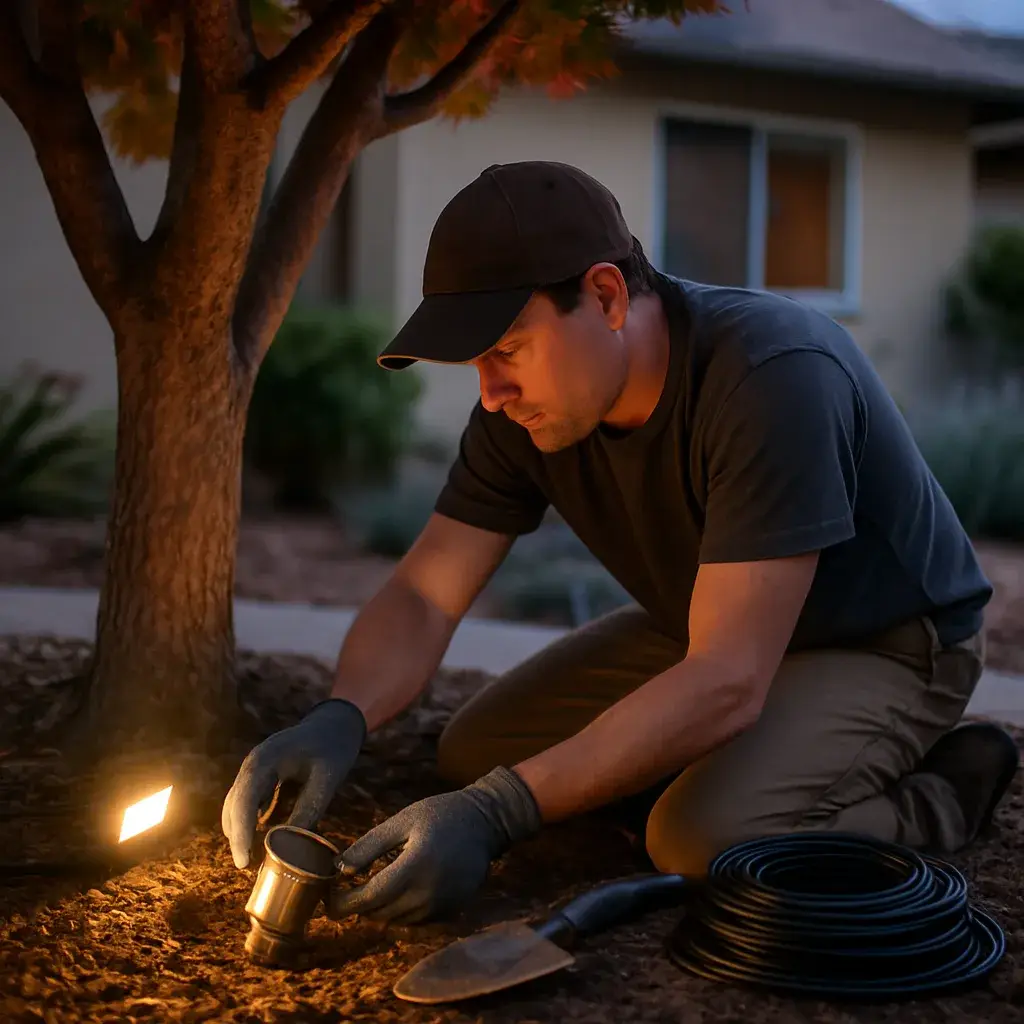
A real landscape lighting system is more than solar stakes from the hardware store. It starts with a transformer sized for your yard, low-voltage wiring buried below the surface, and fixtures placed to do a job, not just glow. We often hear from homeowners who tried a starter kit two summers ago, watched half the lights die, and now they want it done right.
Here in Sunnyvale, clay soil shifts with the seasons. Wiring depth and connections matter more than folks expect. Loose or shallow-buried wire gets pulled apart as the ground moves. That’s why a system that worked fine last spring goes dark by fall.
- A transformer matched to your fixture count and total wattage
- Fixtures and mounting hardware picked for the look and the spot: uplights, path lights, or wash lights
- Buried low-voltage wiring run to each zone, connected and sealed
- Full testing once it’s installed, checking every fixture for even coverage and no dim spots
That includes the transformer, the fixtures and materials, the labor to install it, the wiring, and the testing. What’s not included is major trenching through existing hardscape, adding extra zones beyond what was scoped, any code corrections your property might need, or permits, unless we’ve talked about those ahead of time.
On older Sunnyvale ranch homes with slab foundations, wiring often routes around existing sprinkler lines and root systems. That’s a walk-the-property conversation before anyone digs, not a guess.
Ready when you are – get in touch today.
Call Today, Get Service Today. Xtreme Air Services is ready to help.
Why Clay Soil Changes How Wiring Gets Buried
Here’s something many folks never think about until a light stops working. Sunnyvale sits on expansive clay soil. This soil swells when it rains and shrinks hard during a Texas summer drought. That soil moves a lot. When it moves, anything buried shallow or left loose gets pulled, pinched, or exposed.
We often run into this on service calls. A homeowner had a working system two summers ago. Now half the path lights are dark. Usually, a wire got yanked loose or nicked when the ground shifted, not a bad fixture.
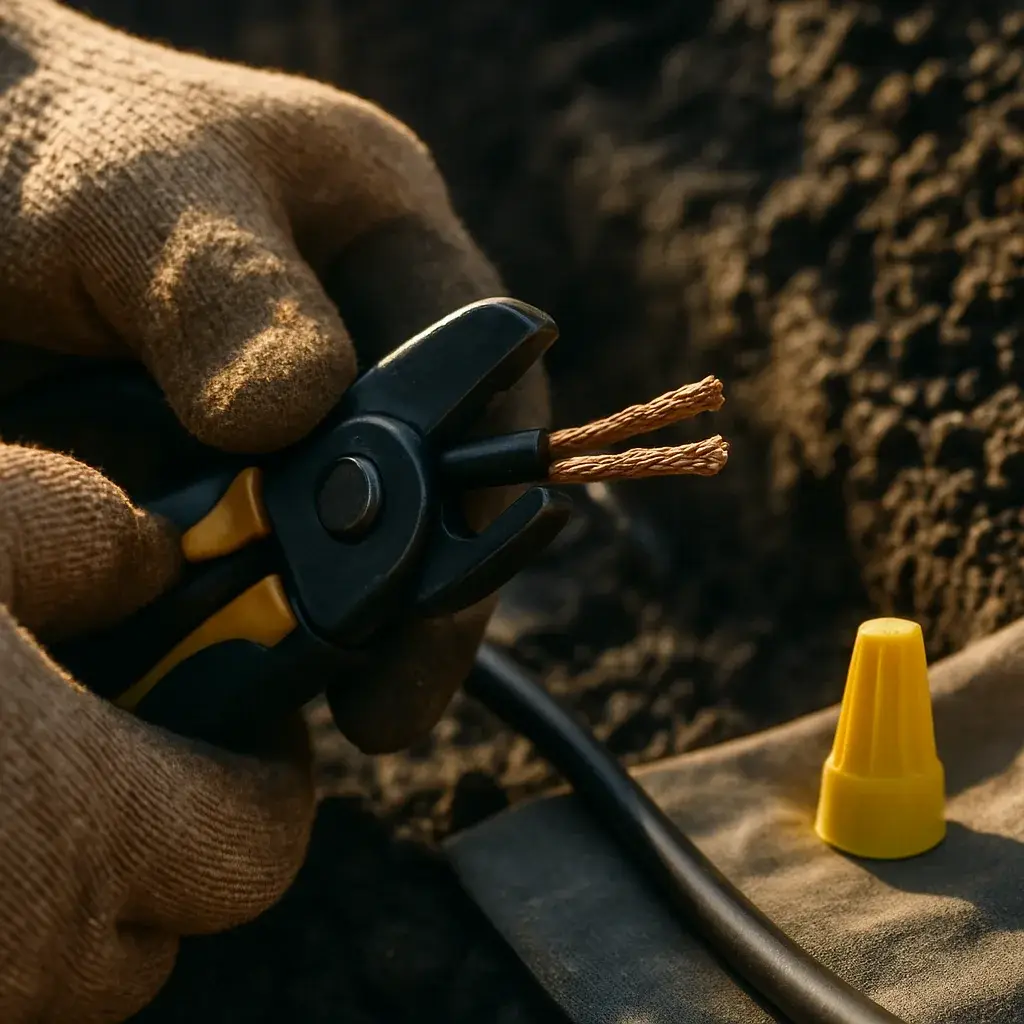
This is why we don’t just lay cable in a shallow slit. Low-voltage wire needs to sit at a consistent depth, tucked below where the soil does most of its moving. It needs enough slack at each connection point to handle the seasonal push and pull without stressing the splice.
- Trench depth stays consistent along the whole run, not just at the ends
- Wire connections get sealed against moisture, since clay holds water longer after rain
- Extra slack at each fixture absorbs ground shift instead of transferring stress to the splice
- Wiring routes avoid tree roots and sprinkler lines where soil disturbance is worst
Whether your property sits on the Dallas County side of town or over toward the Kaufman County line, the clay doesn’t care. It behaves the same everywhere in Sunnyvale. It’s the number one reason a landscape lighting system either lasts for years or needs constant patching.
Testing and Aiming Fixtures for Even Coverage
Many folks don’t think about this. A landscape lighting system can look perfect on paper. It can still throw one path into shadow and blast another with glare. You don’t really know until the sun goes down.
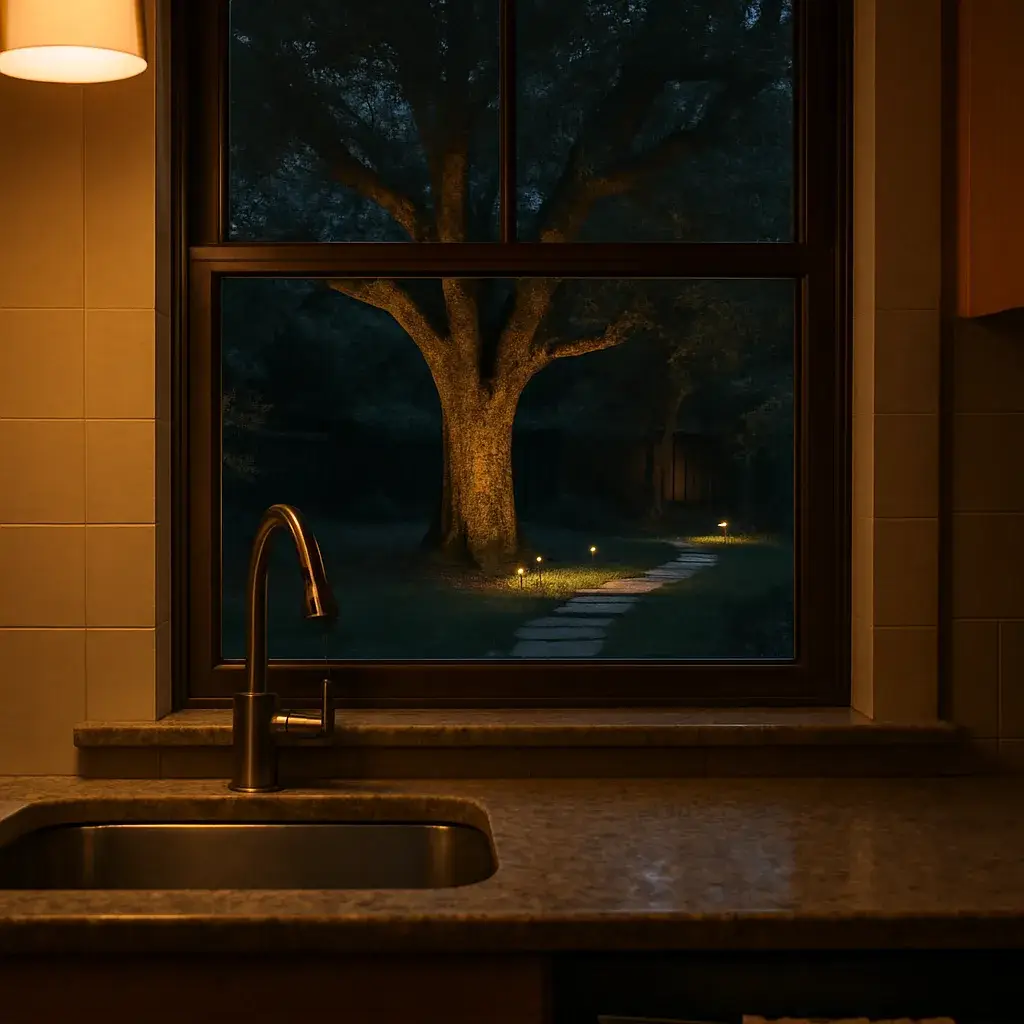
That’s why we don’t call a job done until we’ve walked it after dark. Every fixture gets checked for beam spread, hot spots, and any spot where two lights fight each other and wash out a tree instead of highlighting it. Most times, the fix is a small aim adjustment, not a bigger problem.
- Turn the whole system on at dusk or after dark. This way you’re seeing real conditions, not guessing.
- Walk the property from the street and from the driveway. This is how most people will view it.
- Check voltage at the far end of longer wire runs. Fixtures farthest from the transformer can run dimmer if the run is long. This shows up as uneven brightness across a zone.
- Adjust aim angles on uplights and spotlights so beams land on the target, not the fence or a neighbor’s window.
- Reset stakes that shifted during backfill. Sunnyvale’s clay soil moves fixtures out of alignment more than sandy soil would. This is especially true the first few weeks after install.
- Confirm the timer or photocell setting matches when you want lights on, not just factory default.
Ever had outdoor lights that looked great the day they went in, then started looking uneven a month later? That’s usually a soil settling issue, not a bad fixture. It’s a quick fix, but many installers skip it.
Frequently Asked Questions
Common questions about Landscape lighting
How fast can you get someone out for landscape lighting in Sunnyvale?
We offer same-day service six days a week across Sunnyvale and the surrounding DFW towns. When you call, we schedule a visit around your yard’s size and how many fixtures you want. A tech walks the property first, checks your electrical panel, and confirms there’s a GFCI-protected outlet to tie into before any wire goes in the ground. This keeps the job moving fast without skipping the electrical safety steps that matter here.
What happens when your electrician arrives to install landscape lighting?
Your electrician walks the yard with you first to mark where fixtures, wiring, and the transformer will go. On older Sunnyvale ranch homes, that walk often includes checking around sprinkler lines and root systems before any digging starts. Next, we size the transformer to your fixture count, run buried low-voltage wire to each zone, and connect everything back to a GFCI-protected outlet. Once installed, every fixture gets tested for even light with no dim spots along the run.
Why does landscape lighting in Sunnyvale stop working after a year or two?
Most of the time, it’s the clay soil moving, not a broken fixture. Sunnyvale sits on expansive clay that swells when it rains and shrinks hard during a dry Texas summer. That constant shift pulls, pinches, or exposes wire that was buried too shallow or left without slack at the connections. We bury wire at a consistent depth and leave extra slack at each fixture so the ground can move without snapping a splice.
Can I just install a DIY landscape lighting kit instead of calling an electrician?
A box-store kit works fine for a small setup, like two pathway stakes near the porch. Once you’re covering a full front yard, crossing a driveway, or running more than 8 to 10 fixtures, a kit’s thin wire usually can’t handle Sunnyvale’s shifting clay soil. We’ve pulled up plenty of kit wiring that corroded or snapped underground after just one season. A licensed electrician sizes the transformer and wire gauge correctly, so the whole system holds up over the long run.
Do I need a permit for landscape lighting in Sunnyvale?
It depends on the scope of the work and which side of the Dallas-Kaufman county line your property sits on. Low-voltage lighting tied cleanly into an existing outdoor circuit usually doesn’t require the same review as new panel work. We check this during the initial walk-through and handle the paperwork through the Town of Sunnyvale’s permit portal when the job calls for it, so you’re not stuck sorting that out on your own.
Ready to Get Started?
Call 972-288-2263 Today, Get Service Today.