


What Problems Come Up During Cooling Tower Installation?
Sizing and cooling load checked before quoting, structural pad and rigging readiness, electrical and controls compatibility, the water-treatment handoff after startup, and permit timing.
What’s Covered on This Page
Sizing and Cooling Load Accuracy Before We Quote
A lot of people assume a replacement cooling tower should just match the size of the one coming out. That seems logical. But buildings change. Tenant mix shifts, equipment gets added, insulation ages. The original tower may have been sized wrong from day one. We hear this question a lot: ‘can’t you just match what’s already there?’ We can look at it. But we won’t quote off it alone.
Cooling load calculation is how we figure out the actual heat a building’s chiller plant needs to reject. We base it on square footage, equipment loads, occupancy, and how the building is used day to day. That number drives the tower’s tonnage, the pump sizing, and the piping. Skip this step and you risk two outcomes: a tower that short-cycles and can’t keep up on the hottest North Texas afternoons, or one that’s oversized and wastes water and energy every day it runs.
This is where a lot of quotes end up wildly different for the same job. If someone gives you a number without walking the mechanical room, checking existing piping, and asking about the building’s real occupancy and equipment, that number is a guess dressed up as a quote. We won’t hand over a flat-rate price on cooling tower installation until the load calculation is done. The load is what the whole install is built around.
Our process includes an AC system consultation and cooling load calculation. It’s part of the site visit, before we write anything down. We look at ease of access, existing connections, and whether ductwork, electrical, or piping needs work to support the new tower. That’s part of what shows up as drivers in your written quote, alongside equipment size and efficiency.
- What buyers notice: quotes for the same building vary a lot in tonnage and price
- Why it happens: some installers size off the old unit instead of calculating current load
- What we do: run a cooling load calculation and site walk before any number goes in writing
- What it affects: tower tonnage, pump sizing, piping, and whether the system keeps up on peak days
If you want to see how these factors turn into an actual number, our cooling tower installation pricing guide breaks down what drives cost on a typical job.
Structural Pad and Rigging Readiness
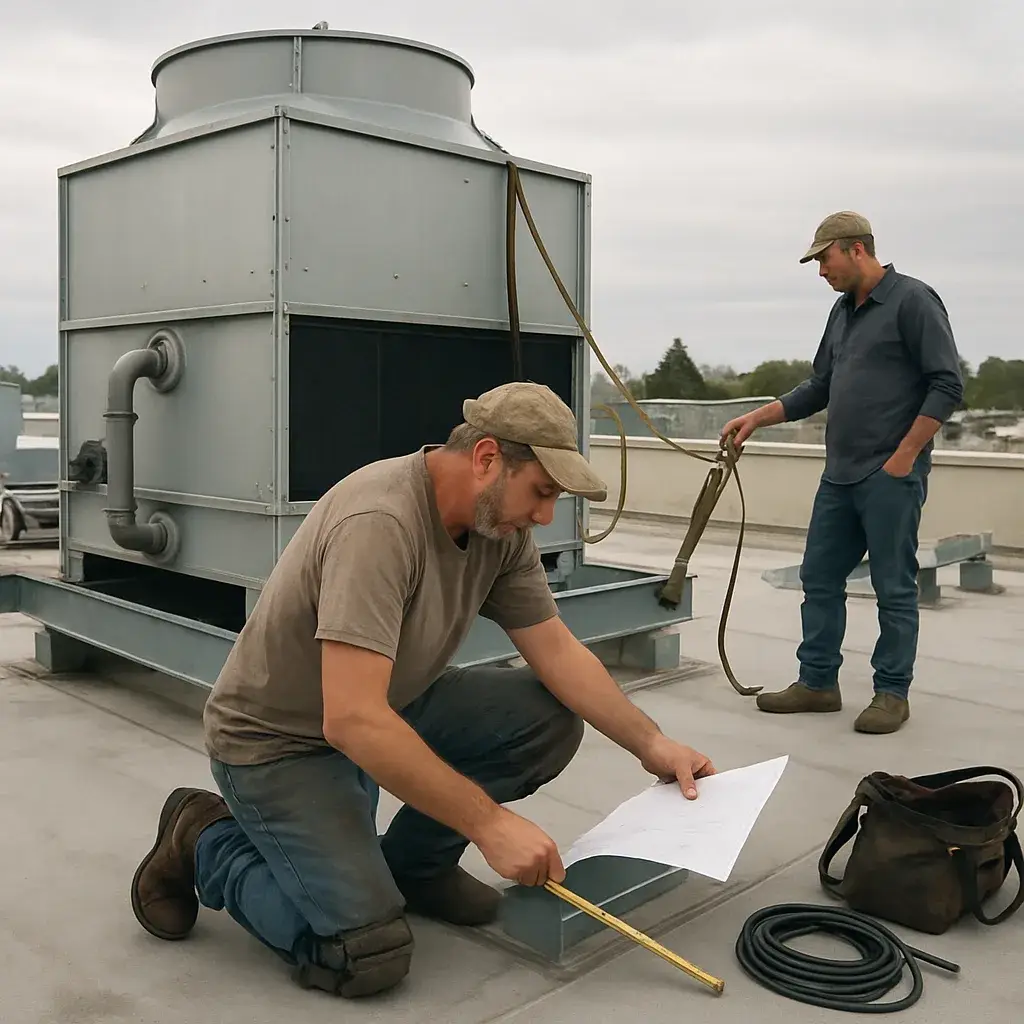
People ask us this early, usually before they ask about the tower itself: will the pad hold it, and can a crane get to it? A cooling tower is heavy once it’s full of water, not just at the shipping weight on the spec sheet. We look at the structural pad and the rigging path before we ever talk about the unit itself.
This comes up because a lot of pads and curbs were built for a smaller or older tower. We’ve walked rooftops where the existing curb was framed fifteen years back for a unit half the size of what’s going up now. Parapets, adjacent rooftop equipment, and low clearance near the mechanical yard can also block a clean rigging path. This changes how a crane has to set the unit.
- Whether the pad or curb is rated for the full operating weight, water-filled, not just the dry shipping weight
- Crane access and swing radius, including anything on the roof or in the yard that’s in the way
- Condition of the existing structural pad if this is a replacement rather than new construction
- Clearance for future service access once the tower is set
- Whether the job needs permits or inspections, and coordinating those before work starts
If a pad isn’t rated for the load, we won’t set a tower on it and call it done. That’s a case where we’d tell a customer the pad needs correction first, even if it adds a step nobody wanted to hear about. Cooling load calculation and mechanical design-build services are part of how we work through that before installation day, not after a crane is already staged.
We handle this kind of review as part of our cooling tower installation work. You can see the full scope of what’s included on our cooling tower installation page.
A rooftop in an older part of Dallas County carries different constraints than a ground-level mechanical yard out toward Forney or Terrell. So we’d rather walk the site and confirm the pad and access in person than guess from a set of drawings alone.
Electrical and Controls Compatibility
People ask us a lot whether their existing electrical service can handle a new cooling tower. A tower fan motor draws a specific voltage and amperage. That has to match what’s run to the mechanical room or rooftop. On older buildings around Sunnyvale and the rest of the DFW Metroplex, we sometimes find panels that were sized for equipment from decades ago, not for a modern tower with a variable-speed fan.
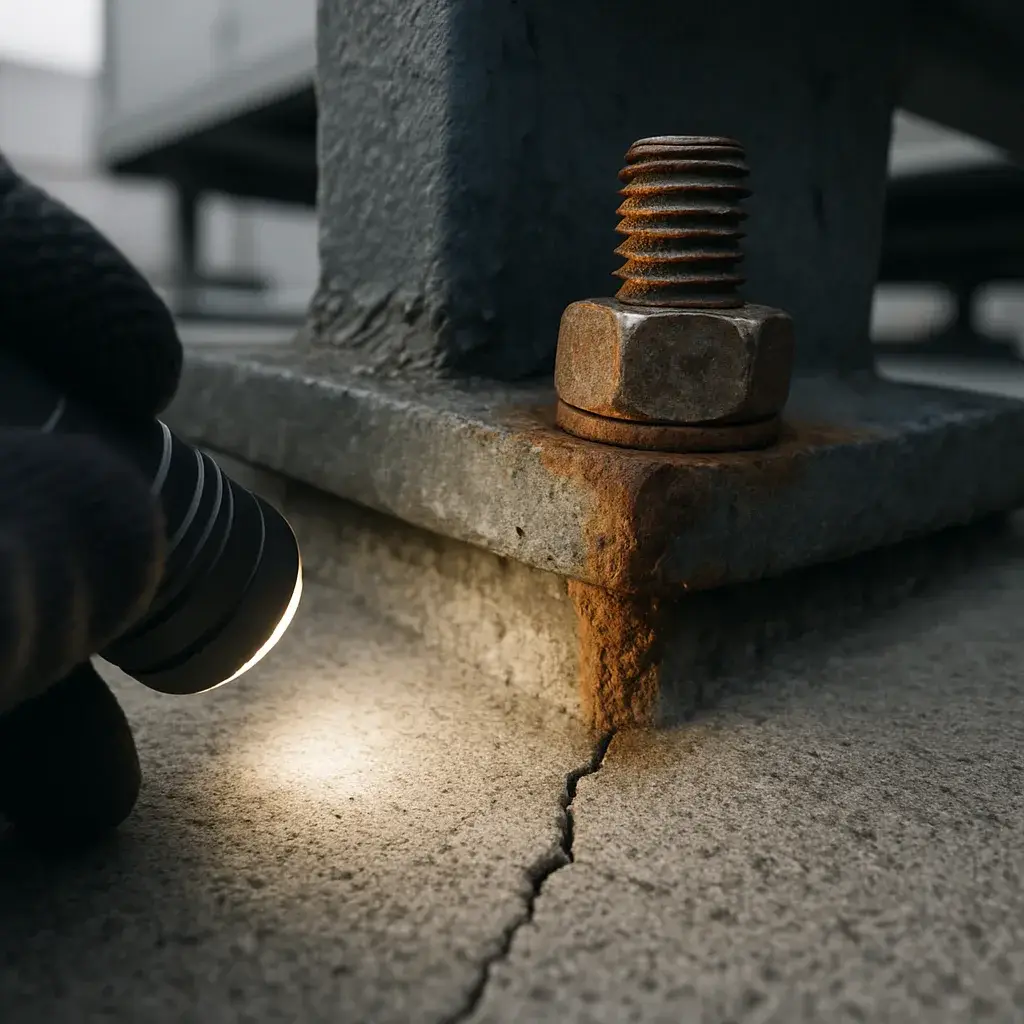
What people notice first is usually a mismatch between the tower’s nameplate requirements and what the building already has. That can mean the wire gauge running to the mechanical room is too small, or the panel doesn’t have an open breaker slot, or there isn’t a dedicated circuit at all. This happens because cooling towers are add-on equipment more often than not. They get installed years after the original electrical plan was drawn, so the supply wasn’t built with them in mind.
The other piece is controls. A cooling tower doesn’t run on its own. It ties into a building automation system, or into the same controls package as a chiller, to cycle the fan and match cooling demand. If the tower’s control signals don’t speak the same protocol as the existing building automation, or the wiring for that signal was never run, the tower can be sitting there fully powered and still not talking to the rest of the plant.
- Panel capacity: does the existing service have room for the tower’s load, or does a subpanel or dedicated circuit need to go in first
- Wire and conduit sizing: is what’s already run rated for the new equipment’s amperage
- Control signal compatibility: does the tower’s control package match the protocol already running the building automation or chiller plant
- Physical wiring path: is there a clean, code-compliant route from the panel to the tower location, especially on a roof
We check all of this before a tower goes in, not after. If the electrical supply needs a dedicated circuit or new wiring, that’s work we can do directly since it’s part of what we handle day to day. If the controls need to integrate with a building automation or energy management system, we work that into the commissioning step. The tower is cycling with the rest of the plant when we walk away, not just spinning on its own.
If you’re weighing this against other equipment options for a mechanical room upgrade, it’s worth looking at our cooling tower installation overview for the bigger picture on how a project like this comes together from start to finish.
Have questions? We’re happy to help.
Call Today, Get Service Today. Xtreme Air Services is ready to help.
Water Treatment Handoff After Startup
People ask us a lot whether the tower is ready to run on its own once we finish startup. It is ready mechanically, but the water inside it still needs an ongoing treatment program. And that part is not something we handle.
A cooling tower is an open system. Water sits in the basin, gets warmed, and evaporates constantly. This concentrates minerals and gives bacteria a place to grow if nothing manages it. The CDC’s guidance on Legionella prevention calls out cooling towers as a system that needs a water management program with regular monitoring. Stagnant or poorly treated water in a tower is one of the more common sources of Legionella growth in buildings.
During our cooling tower installation work, we complete the mechanical piece: setting the unit, connecting piping, wiring controls, and running the acceptance walkthrough. We test the system with you and confirm it operates correctly before we leave. What that walkthrough does not include is an ongoing chemical dosing program, biocide scheduling, or routine water sampling for Legionella and scale control.
That kind of ongoing water chemistry management is its own specialty. It’s run by a dedicated water treatment provider on a recurring schedule, usually weekly or monthly depending on the building. It’s a separate service from mechanical installation. And it’s worth lining up before the tower goes into regular operation rather than after.
- What we complete: equipment setup, piping and control connections, startup, and a tested acceptance walkthrough before we leave the job
- What we don’t include: recurring chemical treatment, biocide dosing, or water sampling programs
- What building owners typically arrange separately: a water treatment vendor for ongoing monitoring once the tower is in service
If you’re comparing quotes for a new tower, it’s worth asking each installer the same question answered here. A tower that’s mechanically sound still needs a water management plan behind it. Knowing who’s responsible for that piece before the job starts saves a scramble later.
Permitting and Inspection Timing
How long permitting takes depends on which side of Sunnyvale your property sits on. Sunnyvale straddles the line between Dallas County and Kaufman County. The authority that reviews and inspects a mechanical permit can differ depending on which side you’re on. We check that before we ever give you a schedule, not after.
A cooling tower installation is a mechanical permit at minimum. Most jobs also touch electrical or plumbing connections that need their own sign-off. That usually means a rough-in inspection once the unit is set and piped, and a final inspection once it’s running and tested. Commercial properties add another layer: building management may want their own walkthrough before the tower goes live, which can shift your timeline by a few days on either end.
People planning a project often ask why we can’t just start the same week we quote it. Permit review time is out of our hands once we submit. A straightforward swap on existing pads and connections tends to move faster through review than a new mechanical layout with added piping or structural work, because there’s less for the reviewing authority to check.
We pull permits and schedule inspections as a standard part of every cooling tower job we do. We build that time into the schedule we give you up front rather than treating it as a surprise later. If a property owner asks us to start work before a permit clears, or to skip an inspection to hit a deadline, we won’t do it, even when it costs us the job. Code requirements exist for a reason on equipment this size, and passing on that kind of shortcut is part of how we do the work.
If you’re comparing timelines across contractors, ask directly whether permits and inspections are included in the schedule they quote you, or added on afterward. You can read more about how we scope a project on our cooling tower installation page, which walks through what a typical job includes before permitting is even factored in.
For most projects, plan on the permit and inspection steps adding real days to your overall timeline, on top of the installation itself. We’ll tell you what to expect for your specific site once we know which jurisdiction applies and what the connection work involves.
Ready to Get Started?
Call 972-288-2263 Today, Get Service Today.