


Cooling Tower Installation in Sunnyvale: Built for North Texas Heat Loads
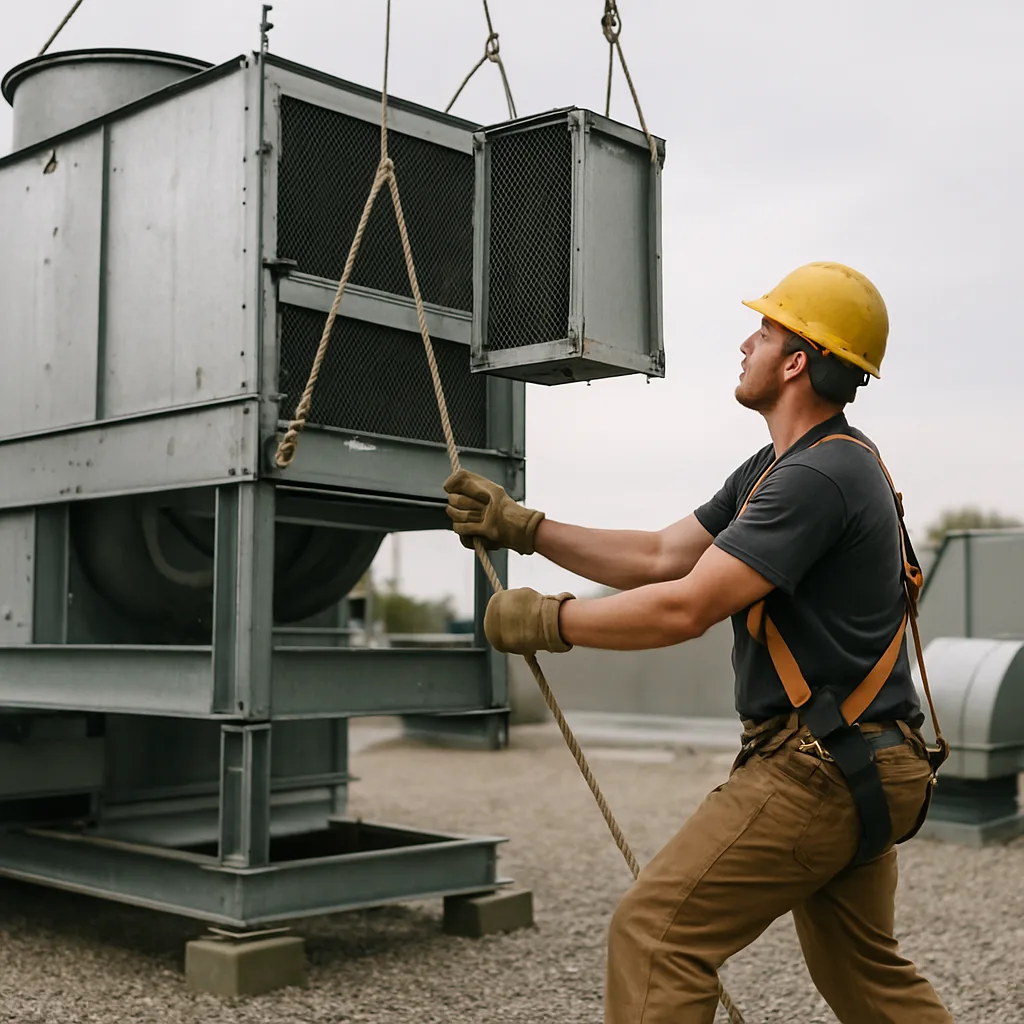
Roof load, crane swing radius and site access confirmed before any lift begins in Sunnyvale – crane-set towers sized for the heat North Texas summers actually put on them.
What’s Covered on This Page
- Diagnosing When a Facility Needs New Cooling Tower Installation
- Deciding Between Cooling Tower Replacement and Repair
- What Doesn’t Need Full Installation: Repair and Maintenance Signs
- Preparing a Sunnyvale Site for Rigging and Crane Access
- The Cooling Tower Installation Process, Step by Step
- How fast can you schedule cooling tower installation in Sunnyvale?
- What happens when your technician first inspects my cooling tower?
- What’s the most common cooling tower issue you see in Sunnyvale buildings?
- How long does cooling tower installation take?
- Do I need a crane for cooling tower installation?
- How do I know if my cooling tower needs replacement instead of repair?
Diagnosing When a Facility Needs New Cooling Tower Installation
Nobody calls us because the cooling tower looks fine. They call because the chiller loop runs hot or the water bill jumps. Sometimes, a technician finds the fill media crumbling in their hand. Before we talk installation, we want to know why the old tower is failing. Get that wrong, and you install the wrong size unit.
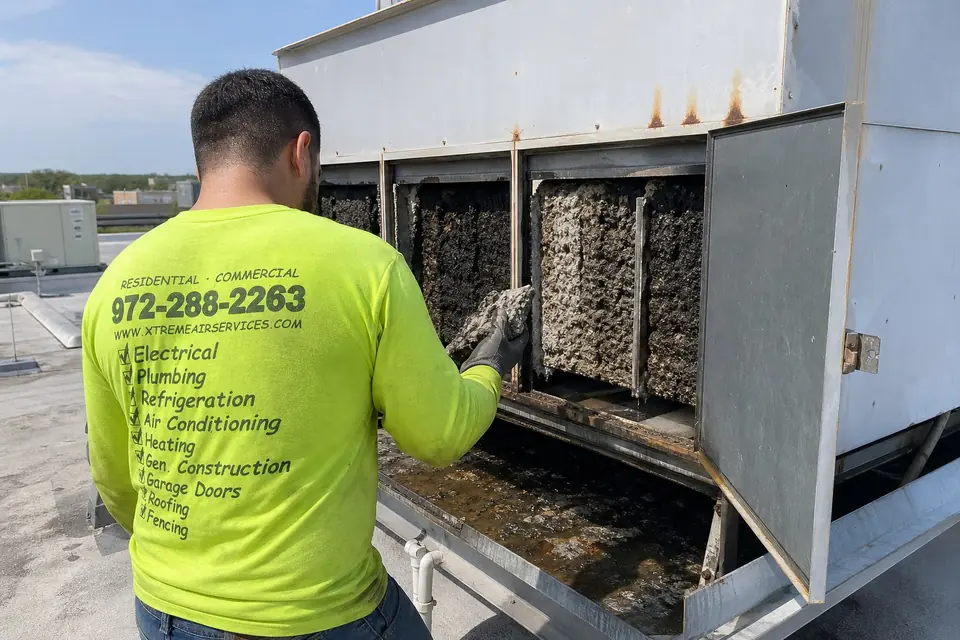
What shows that your facility needs new cooling tower installation instead of another patch? A few patterns keep showing up on our commercial service calls.
- Water loss well beyond normal evaporation, often from cracked basins or corroded shells
- Scale and mineral buildup on fill media that keeps returning after cleaning
- The chiller or process equipment struggling to hit temperature during peak summer load
- Structural rust or wood rot on older towers, especially units past 15 to 20 years old
- A facility expansion or added equipment that’s outgrown the tower’s original tonnage
We see this in older industrial buildings along Sunnyvale’s Highway 80 corridor. Towers installed decades ago may now serve process loads beyond the original system’s capacity. Undersized towers run constantly and still can’t keep up. Oversized towers cycle poorly and waste water treatment chemicals. Neither is cheap to operate. Cooling tower installation is worth the investment when it reflects actual heat load, water flow, and ambient wet-bulb conditions. Otherwise, you move the same problem to a new box.
Deciding Between Cooling Tower Replacement and Repair
How do you know whether you need repair or replacement? The tower tells you. Crumbling fill media, a rusted basin, or constant water top-offs suggest repair will only delay replacement.
We’ve visited mechanical rooms along U.S. 80 in Sunnyvale where old towers serve warehouses or light industrial buildings. Some were patched three or four times before the owner called us for a lasting fix. Each patch bought a few months, not years.
- Tower is past 15-20 years old and parts are getting hard to source
- Corrosion on the basin, casing, or structural steel, not just surface rust
- Fill media breaking down, causing scale buildup and poor heat rejection
- Motor, gearbox, or drive shaft failures happening more than once a year
- Your building’s cooling demand has grown and the tower can’t keep up
A bad belt, failed sensor, or fan motor swap is a straightforward repair. When the structure is failing, though, patching it doesn’t save money. It only spreads out the expense.
This is where cost gets confusing for many building owners.
Several factors determine whether replacement makes financial sense. These include equipment capacity, brand, model, site access, and the condition of existing piping and wiring. A tower that’s easy to crane in costs less to place than one buried behind rooftop equipment. Access alone can change the decision.
What Doesn’t Need Full Installation: Repair and Maintenance Signs
Not every cooling tower problem means you need a new one. We get calls about problems that sound like the end but aren’t.
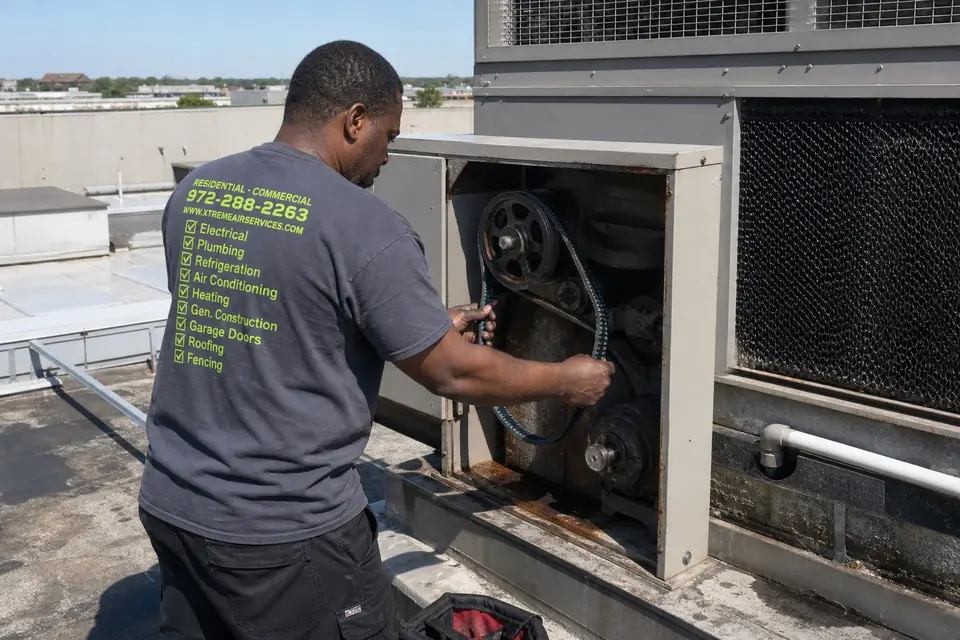
A tower may run hot while its fan makes noise and scale builds up on the fill media. These problems are common and usually fixable. If your tower is under fifteen years old, repair may be enough. Its structure, basin, and drive assembly must still be sound. A solid maintenance plan can then restore normal operating temperatures without replacing the whole unit.
- Water treatment problems causing scale or algae, not structural failure
- A worn fan belt, bearing, or motor that’s easy to swap
- Fill media that’s dirty or partially clogged but not collapsed
- Basin leaks from a cracked fitting rather than a rusted-through shell
- Reduced cooling capacity tied to fouling, not undersized equipment
Mechanical system troubleshooting can usually identify the problem within a visit or two. Your maintenance history can also help, if you have one.
Here’s the honest line we draw. Repair starts costing more than it saves when the shell has rusted through or the structure is flexing. The same applies after three or more breakdowns in one season. If one component has failed on an otherwise sound tower, we’ll tell you straight. That’s true even though installation pays more. Commercial preventive maintenance and regular mechanical system maintenance catch most problems before they become a 2 a.m. emergency call.
Before you assume the worst, have a technician inspect it.
Have questions? We’re happy to help.
Call Today, Get Service Today. Xtreme Air Services is ready to help.
Preparing a Sunnyvale Site for Rigging and Crane Access
A cooling tower doesn’t get carried up a ladder. Most units are set by crane on a roof curb or ground-level pad. The site must be ready before the truck arrives, so we walk the property first. Every time.
Sunnyvale’s newer commercial and light industrial buildings often have good lot setbacks off the main access roads. That helps with boom clearance. Older structures may have tighter parking lots or shared drive aisles. Those conditions can turn a simple lift into a puzzle. Before scheduling crane day, we check overhead power lines, low tree cover, and the roof or ground pad’s bearing capacity.
- Confirm the crane approach path and swing radius around nearby structures, fences, and parked vehicles
- Verify the roof’s structural rating or pour a proper ground pad if the tower sits at grade
- Check clearance from overhead utility lines because this detail is often missed
- Coordinate any street or lane closure needed for the rig
- Walk the rigging plan with the crane operator the day before, not the morning of
Skipping this step can delay the installation or damage the building. We’ve seen both. Our technicians are licensed and insured. We plan rigging logistics as carefully as mechanical connections. A cooling tower that’s hard to reach on day one will be even harder to service later.
The Cooling Tower Installation Process, Step by Step
What happens once we’re on site for a cooling tower installation? The work isn’t as complicated as it sounds, but the steps must happen in order. Skip one, and you can end up with vibration problems or a unit that short-cycles within a year. We’ve seen that happen when someone rushes startup.
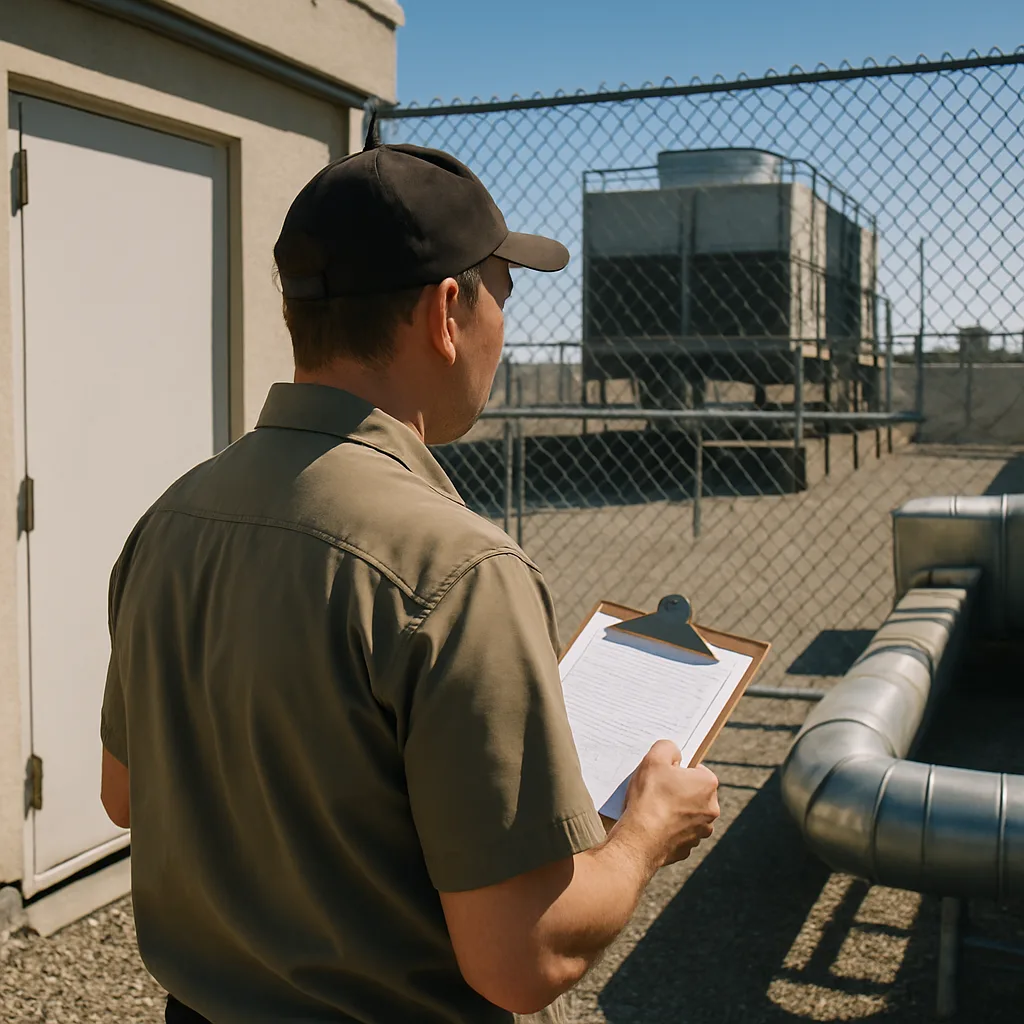
- We confirm the pad or structural support can handle the tower’s operating weight, not just its dry weight.
- We inspect existing piping and connections. At many Sunnyvale industrial park properties, older galvanized lines need attention before the new unit ties in.
- The old tower comes down and gets hauled away as part of the job.
- We set the new tower, level it, and secure it to the pad or roof curb.
- We connect the piping, electrical, and controls to the existing building systems.
- Startup and testing happen last. We run the system and check flow rates. We also verify fan and pump amperage and confirm the water treatment system is working.
That last step matters more than many people think. A tower may look installed but still lack a proper startup. That’s a callback waiting to happen, and we’ve fixed plenty of those for other contractors’ customers.
Frequently Asked Questions
Common questions about Cooling tower installation
How fast can you schedule cooling tower installation in Sunnyvale?
We usually walk your site within a few days of your call. A fast site visit lets us check crane access, roof load, and pad condition before we quote the job. Summer is our busiest season, since chillers work hardest then and towers fail more often. If your water bill jumped or your chiller loop runs hot, call early. Waiting through peak heat only adds stress to a tower that’s already struggling.
What happens when your technician first inspects my cooling tower?
Your technician checks the basin, fill media, motor, and structure before touching anything else. We’re looking for the real cause of the problem, not just the symptom you noticed. That might mean pulling a sample of fill media or checking for rust on the shell. This first look tells us whether you need a repair, a bigger fix, or full replacement. You’ll get a straight answer before we ever talk about next steps.
What’s the most common cooling tower issue you see in Sunnyvale buildings?
Undersized towers struggling to keep up with added equipment is the top issue we see. Many older industrial buildings along the Highway 80 corridor got their towers decades ago, before expansions or new process equipment increased the cooling load. The tower runs constantly but still can’t hit temperature. We also see plenty of scale buildup on fill media in buildings with hard water and no treatment plan. Both problems get worse in peak summer heat.
How long does cooling tower installation take?
Most installations take one to three days once the crane and site prep are ready. The lift itself is usually the fastest part. Site prep takes longer, especially on older Sunnyvale buildings with tighter parking lots or shared drive aisles near U.S. 80. We check overhead lines, roof rating, and crane swing radius before the truck ever shows up. Good planning the day before keeps crane day short and avoids delays.
Do I need a crane for cooling tower installation?
Yes, almost every commercial cooling tower gets set by crane, not carried by hand. We plan the crane path, swing radius, and any needed street or lane closure ahead of time. Buildings with tight lots or nearby power lines need extra planning to keep the lift safe. We walk the rigging plan with the crane operator the day before installation, not the morning of, so nothing gets missed on crane day.
How do I know if my cooling tower needs replacement instead of repair?
If your tower is past 15 to 20 years old with corrosion on the basin or structural steel, replacement usually makes more sense than another repair. A worn belt or motor is a simple fix. A rusted-through shell or fill media that keeps crumbling after cleaning is not. We’ve seen towers along U.S. 80 patched three or four times before the owner called for a lasting fix. Each patch bought months, not years.
Ready to Get Started?
Call 972-288-2263 Today, Get Service Today.