


What Problems Come Up Most Often With Heat Pump Installation?
The sizing questions we hear most and why a load calculation settles them, how backup heat covers a hard freeze, and what the ductwork, panel and R-454B refrigerant checks turn up.
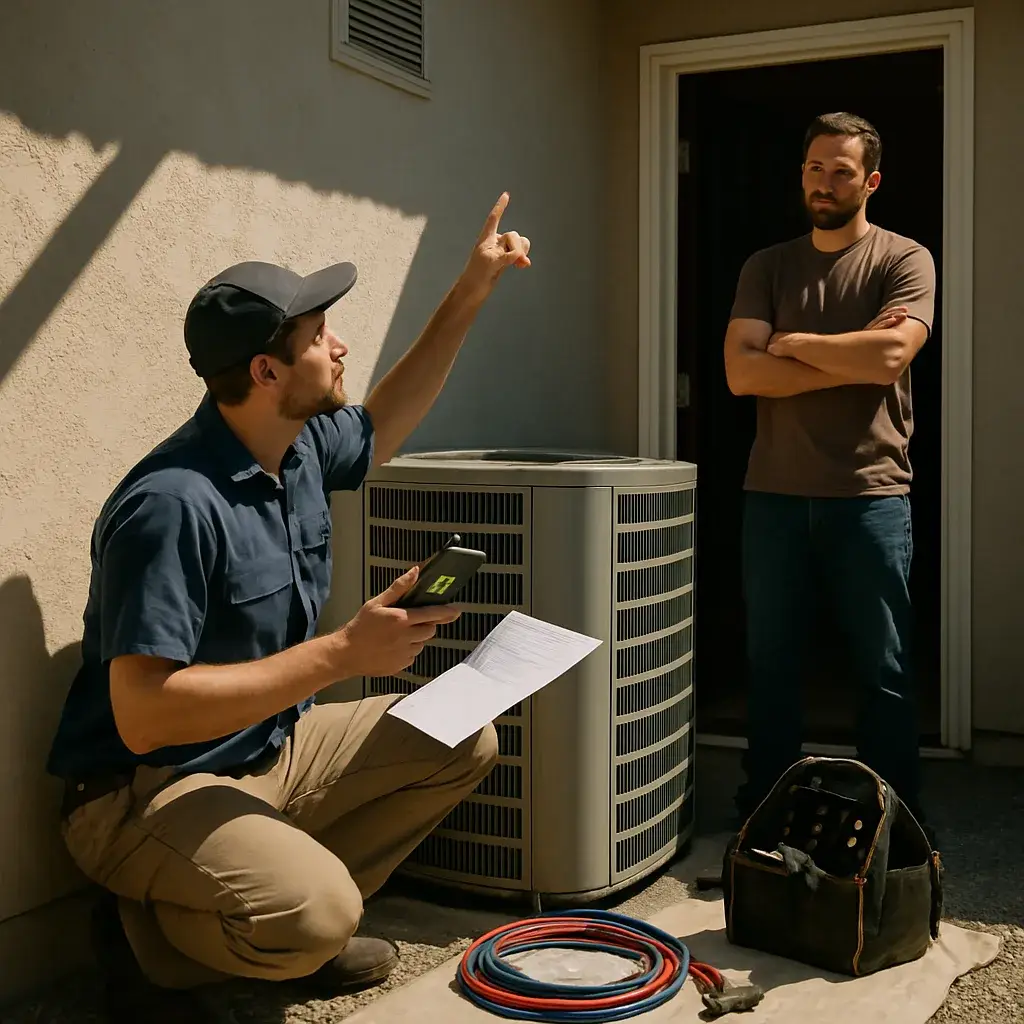
What’s Covered on This Page
- Sizing Confusion Is the Most Common Concern We Hear
- Cold-Weather Performance and Backup Heat Are Part of the Installation Plan
- Ductwork Compatibility Gets Checked Before Work Begins
- Electrical Panel Capacity Is Evaluated as Part of the Site Visit
- Refrigerant Type Affects What Equipment Gets Installed Today
- Related Links
Sizing Confusion Is the Most Common Concern We Hear
This comes up on almost every call. Homeowners ask if we’ll just match the tonnage of their old system. Or if bigger is automatically better, since it feels safer. We hear it from folks in older slab homes near U.S. 80 and from people in newer subdivisions out toward Forney just the same.
Sizing gets confusing. A lot of installs in this region were done off a rule of thumb-square footage divided by a rough number, with nothing else factored in. That works out fine sometimes. Other times it leaves a home with a unit that short cycles, struggles with humidity, or just never quite keeps up on the hottest days.
We do a cooling load calculation before we write a quote for a heat pump installation. That means we look at the actual house, not just its footprint.
- Square footage and ceiling height in each room
- Insulation level and window count and orientation
- Attic location and duct condition, since attic-run systems in North Texas see extreme temperature swings
- How the home is currently zoned, if at all
- Any additions or converted spaces that changed the original layout
This is the part people overthink. Bigger isn’t automatically better. An oversized heat pump cools the air fast but shuts off before it pulls the moisture out, so the house feels cold and clammy at the same time. An undersized one runs constantly and never quite gets there. The right size matches the load calculation for your specific home, not the biggest unit that fits the budget.
The calculation happens during the same visit where we walk through your options for our heat pump installation service, before you approve any pricing. You see the numbers behind the recommendation, not just a quote.
If the conversation turns to cost once sizing is settled, that’s a separate discussion with its own set of factors. We lay those out plainly on our pricing page rather than guessing here.
Cold-Weather Performance and Backup Heat Are Part of the Installation Plan
People ask us this a lot: will a heat pump keep up when a cold front drops through North Texas and temperatures fall into the 20s? A heat pump works by moving heat from the outside air into your home. The colder that outside air gets, the less heat there is to move. Every heat pump loses some capacity in a hard freeze. That’s physics, not a flaw in the equipment.
That’s why backup heat is part of the conversation before we ever install anything, not an afterthought once the system is running. Most heat pump setups pair with a supplemental heat source, either electric heat strips built into the air handler or a gas furnace working alongside the heat pump in what’s called a dual-fuel setup. The system automatically leans on that backup heat once outdoor temps drop below where the heat pump alone can keep your home comfortable.
We size this during a cooling load calculation for your specific home, not a guess based on square footage alone. Attic insulation, window count, ductwork condition, and even which direction your home faces all factor into how much heating and cooling capacity you need. A heat pump that’s undersized for a North Texas winter will run constantly during a freeze and still fall behind. One that’s sized off a real load calculation, with backup heat wired in correctly, holds steady.
For homes with uneven heating between rooms, heating zoning installation is worth discussing at the same time. A heat pump paired with zoning can direct heat where it’s needed instead of running the whole system harder than it has to. And for additions, garages, or rooms that never quite match the rest of the house, ductless heating installation is sometimes the better fix instead of extending ductwork into a space it wasn’t designed to serve.
None of this gets sorted out after the unit is already on your roof or beside your home. It’s part of what we walk through before any equipment gets ordered, alongside the rest of our heat pump installation planning. So the backup heat, the sizing, and the thermostat settings all work together instead of getting figured out during the first freeze.
Ductwork Compatibility Gets Checked Before Work Begins
A heat pump moves a different volume and temperature of air than a straight AC or furnace system. So the ducts already in your attic have to be able to handle it. This comes up on almost every install we quote. Most homes around Sunnyvale and the rest of the DFW area have ductwork that was sized for whatever system was in the house last, not necessarily the one going in now.
What people usually notice before they even call is uneven airflow in certain rooms. Or a system that seems to run longer than expected. Or a friend who mentioned duct problems during their own install. Those are fair things to wonder about. Undersized ducts, leaky connections, or crushed flex duct in an older attic run can all limit how well a heat pump performs, even if the equipment itself is correctly matched to the home.
Older slab homes built in the 1950s through 1990s tend to have narrower duct trunks and more joints that have loosened over the decades. Newer subdivision homes usually have larger, more current duct sizing, but that’s not universal, and we don’t assume either way. Attic temperature swings in North Texas summers also stress duct seals over time. This is part of why leakage shows up more in homes that have been through a few Texas summers already.
During the diagnostic visit, our technician looks at the duct sizing, condition, and connections as part of inspecting the system. He explains what’s found in plain English before any work starts. If duct sealing or a duct modification is needed to get full performance out of the new equipment, that gets written into your flat-rate quote as its own line, separate from the equipment and installation cost. You can see exactly what you’re approving.
Real numbers on where duct work fits into total project cost live on our heat pump installation pricing page. Dollar figures depend on your specific duct condition and access.
If your ducts turn out to be in solid shape, that’s often the case in homes with recent duct work already done, and the quote reflects that too. Either way, nothing gets modified without your approval first. The goal is the same as with any part of a Heat pump installation: get the full picture on the table before you decide.
Need help with Heat pump installation?
Call Today, Get Service Today. Xtreme Air Services is ready to help.
Electrical Panel Capacity Is Evaluated as Part of the Site Visit
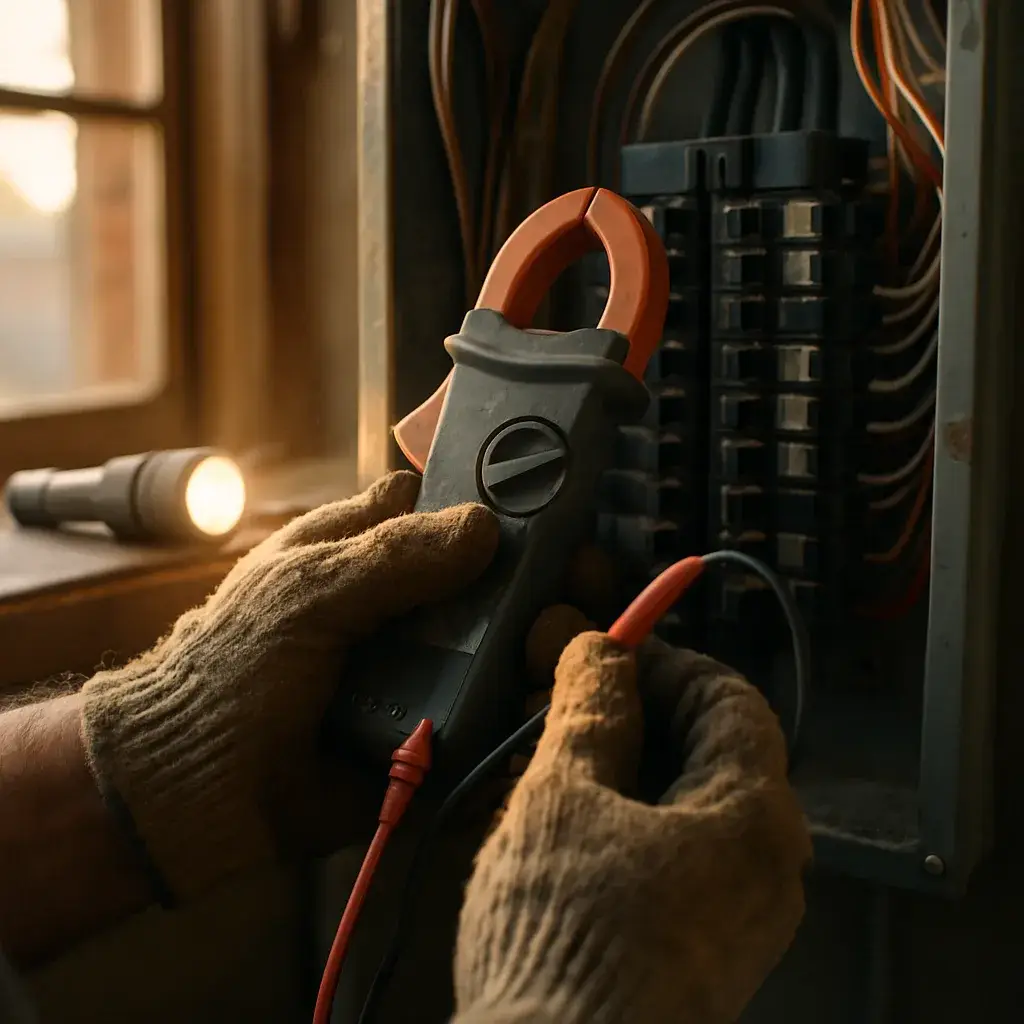
A heat pump runs on electricity, both for heating and cooling. So we check your panel every time we come out for a site visit. It’s part of the same diagnostic step where our technician inspects your system and figures out what your home needs, not a separate trip.
Most heat pumps need a dedicated circuit sized for the compressor and air handler. Older homes across Sunnyvale, Mesquite, and the rest of the DFW area sometimes have panels that were never built for that load. A 100-amp panel installed decades ago in a slab home might handle a window unit fine and still fall short for a modern heat pump paired with electric backup heat.
- Panel amperage and remaining breaker space for a new dedicated circuit
- Wire gauge and condition running to where the outdoor and indoor units will connect
- Whether the panel itself needs a full replacement or upgrade, or just a subpanel to free up room
- Grounding and general safety of the existing electrical setup
If the panel checks out, we run the dedicated circuit and move ahead with installation. If it doesn’t, we tell you plainly during that same visit, not after the equipment is already on order. Some homes need a panel upgrade or a subpanel before a heat pump can go in safely. We won’t wire a new system into a panel that can’t carry the load.
That’s the kind of thing that changes scope. It’s exactly why we give you a written, flat-rate quote before any work begins. The quote reflects what your home needs, panel work included if it’s required, not a generic number pulled off a price sheet. For a general sense of what drives cost on a job like this, our heat pump installation page walks through the factors that typically move the price.
We don’t guess on this part. An undersized panel isn’t a reason to walk away from a heat pump. It’s just one more thing we account for before you approve anything. So there’s no surprise line item once the crew shows up to install.
Refrigerant Type Affects What Equipment Gets Installed Today
If you’re shopping for a heat pump right now, you’ll notice quotes mention a refrigerant called R-454B instead of the older R-410A. That’s not a sales gimmick. Federal rules are phasing down R-410A production. Manufacturers have already shifted new equipment lines to R-454B and similar lower-impact refrigerants. What that means for you is simple: most heat pumps built today, from the compressor to the coil to the line set, are designed and charged for the new refrigerant, not the old one.
Where this catches homeowners off guard is when they want to keep part of an older outdoor unit or add a heat pump onto existing refrigerant lines. Older R-410A equipment and new R-454B equipment aren’t interchangeable. You can’t add new refrigerant to an old system, and you can’t run new equipment on old refrigerant. The coil, the metering device, and the compressor are all matched to one refrigerant type by the manufacturer.
- A heat pump quote today will specify the refrigerant type used in that model
- Existing line sets sized for R-410A often need to be replaced, not reused, with new equipment
- Indoor and outdoor units have to be matched to the same refrigerant type to work as designed
- Older systems already running on R-410A can still be serviced and repaired as usual
We’d tell you plainly if a job called for full line set replacement rather than a straight swap. That’s a real cost factor, not a small detail. We won’t quote a new outdoor unit paired to old refrigerant lines and call it a complete job. During a heat pump installation, we look at what’s already at your home, the existing lines, the indoor coil, and the electrical setup, before we tell you what fits and what has to be replaced.
None of this changes how a heat pump heats and cools your home day to day. It changes what’s under the hood and what a licensed technician has to account for when sizing and installing the system. This is part of why we walk through the equipment and connections with you before any work starts.
Ready to Get Started?
Call 972-288-2263 Today, Get Service Today.