


What Are the Most Common Refrigerant Recharge / Leak Repair Problems Homeowners Ask About?
Cooling that fades over months, ice on the coil or lines, climbing energy bills, hissing near the refrigerant lines, and a system that needs a recharge again – what each sign points to.
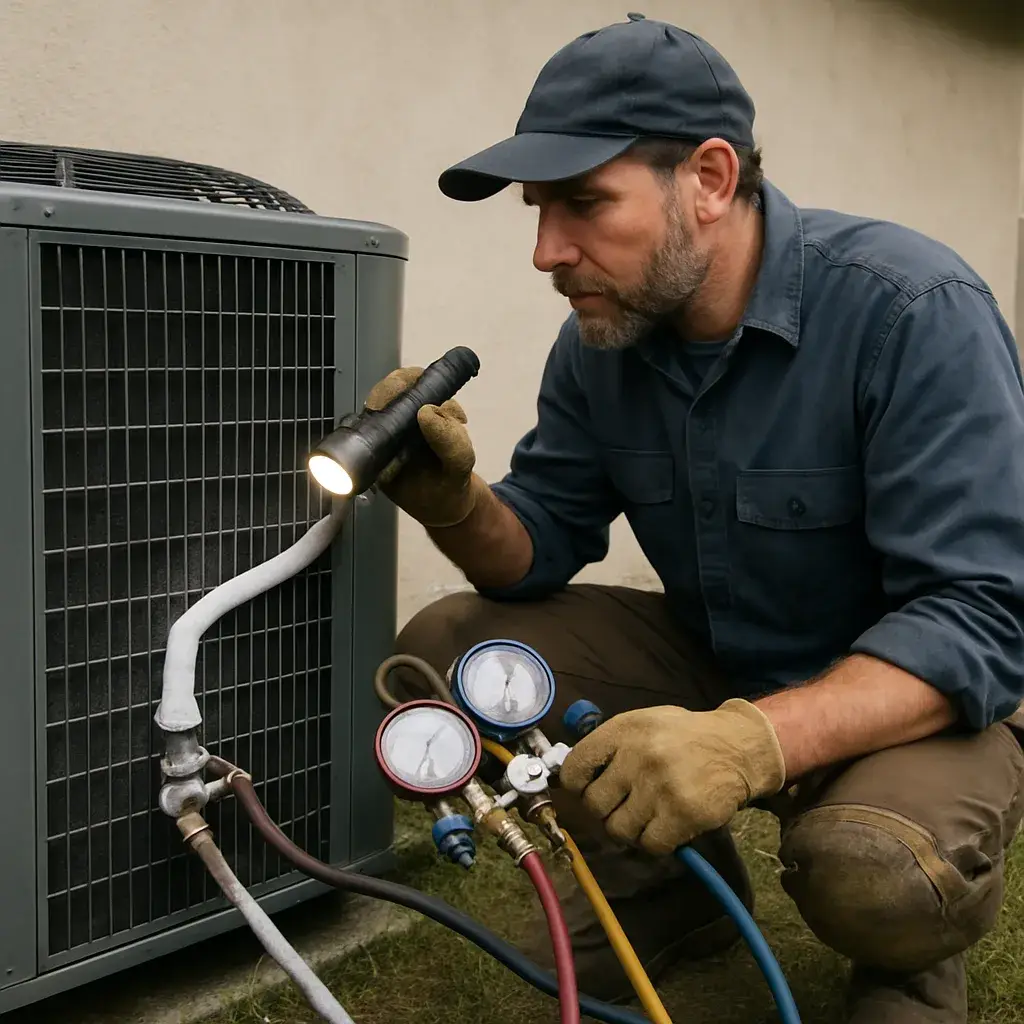
What’s Covered on This Page
- Cooling Gradually Gets Weaker Over Weeks or Months
- Ice or Frost Forms on the Outdoor Unit, Indoor Coil, or Lines
- Energy Bills Rise While Cooling Performance Drops
- Hissing, Bubbling, or Gurgling Sounds Near the Coil or Refrigerant Lines
- A System That Needed Refrigerant Before Now Needs It Again
- Related Links
- When was R-22 phased out?
- Why was R-22 phased out?
- Can I still get R-22 for my system?
- Why does my system need refrigerant again?
Cooling Gradually Gets Weaker Over Weeks or Months
You might notice this one first. It’s easy to explain away. Your house feels fine in April, a little warm by June. By August, the AC runs most of the day just to hold 76 degrees. Nothing broke overnight, and vents still blow air. The outdoor unit still runs. The system still turns on when the thermostat calls for it. It just doesn’t cool like it used to.
That pattern almost always goes back to a small leak. It’s not a sudden failure. A tiny hole in an evaporator or condenser coil, a loose fitting, or a worn valve can let refrigerant escape slowly over months. As the charge drops, the system can’t move heat out of your home. The compressor keeps working. The fan keeps spinning. Less refrigerant does the actual cooling.
Attic-mounted systems in older North Texas homes see this more than most. Coils and line sets sit through wide attic temperature swings for years. Vibration or age can open a joint that was fine when installed. Newer systems using R-410A, or the A2L refrigerants now showing up, behave the same way once a leak starts. The charge doesn’t disappear all at once. It thins out.
Finding the actual leak point separates a real repair from a temporary patch. We use leak detection to find where refrigerant escapes. We repair that specific point. Then we recharge the system to its designed level. We test it under load before we call the job done. We cover what that typically runs and what can push the cost up on our air conditioning repair page. The size of the leak and which part is affected both play into it.
- Cooling drops off over days or weeks, not in one sudden failure
- Your system still turns on, and airflow at the vents feels roughly normal
- Energy bills creep up as the system runs longer to hit the set temperature
- Ice can form on the indoor coil or line set as the charge gets low
Ice or Frost Forms on the Outdoor Unit, Indoor Coil, or Lines
Frost or ice on your outdoor unit, indoor coil, or the copper lines running between them is a common reason people search for refrigerant repair. It shows up as a white or gray coating. Sometimes it’s just on the lines. Sometimes it covers the whole coil. It means the coil runs colder than it should. We think it’s worth having looked at right away.
Two different problems cause the same frost. They don’t fix the same way. A low refrigerant charge, usually from a leak, drops the temperature inside the coil. Moisture in the air freezes on contact. Restricted airflow across the coil does the exact same thing even with a full charge.
- A dirty or clogged air filter cutting off airflow
- A blocked or closed supply and return vent
- A blower motor running weaker than it should
- A dirty evaporator coil that airflow can’t get through
We can’t tell you which one it is over the phone. We don’t guess. A coil covered in ice looks the same whether the cause is a slow leak or a filter nobody’s changed in eight months. That’s the kind of thing a set of gauges and a real look at the airflow settles, not a description.
On the visit, we check airflow first. That’s the cheaper problem to rule out. Then we check pressures and look for signs of a leak along the lines, fittings, and coil. If the charge is low, we find where it’s escaping. We repair that point and recharge the system to the level the equipment calls for. If airflow is the cause, that gets fixed instead. No refrigerant work is needed at all.
If you want the full picture on how this repair works before you call anyone, our refrigerant recharge and leak repair page walks through the diagnostic steps and what the repair itself involves.
Energy Bills Rise While Cooling Performance Drops
This is one pattern we hear about. Your electric bill creeps up over a few weeks. But your house feels less cool than it used to. The system runs and runs, sometimes almost nonstop on hot afternoons. The air coming out of the vents just doesn’t feel as cold as it should.
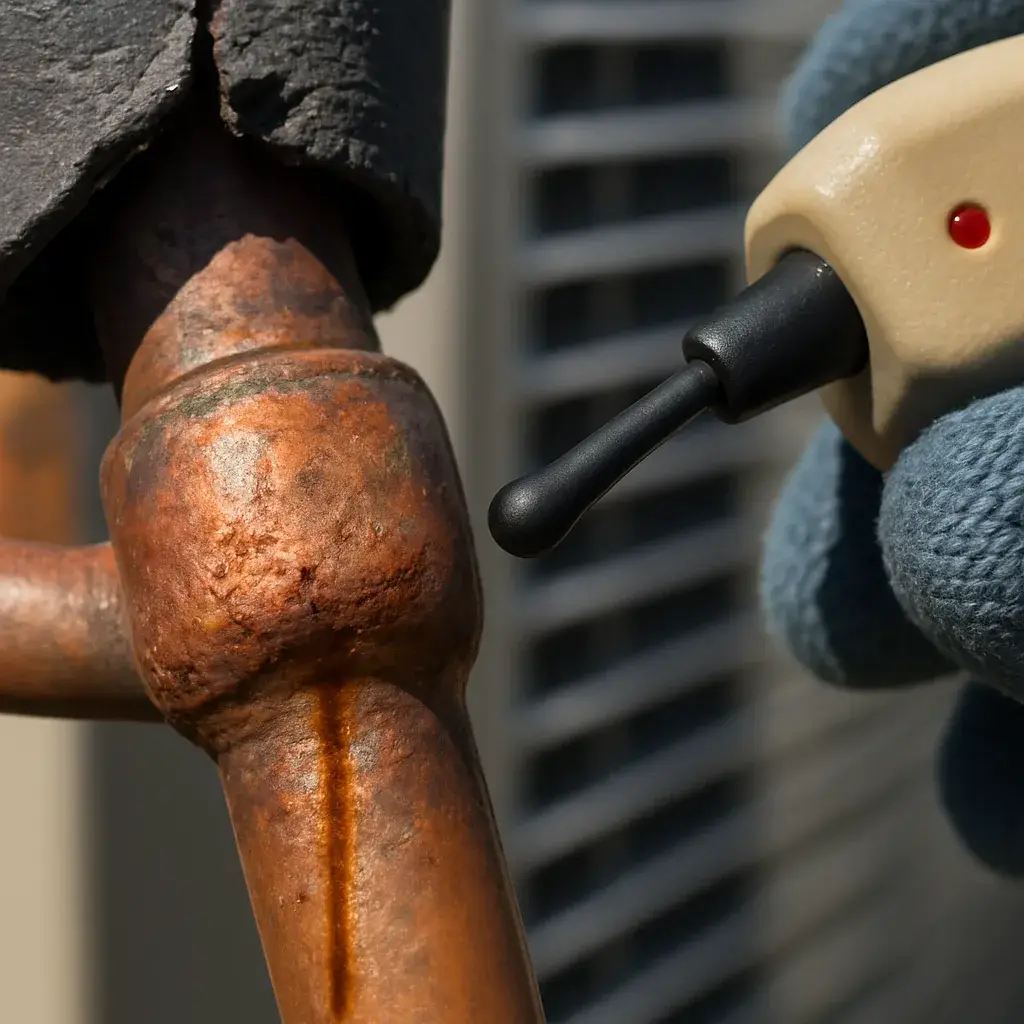
A low refrigerant charge is usually behind it. Refrigerant carries heat out of your home. When the charge drops, the compressor works harder and longer. That extra runtime shows up on your power bill before it becomes an obvious comfort problem.
- Longer cooling cycles or a system that seems to run all day
- Vents blowing air that’s cool but not cold
- Higher summer bills without a matching jump in Oncor rates
- A slow, gradual change rather than a sudden breakdown
That gradual pattern is part of why this issue is easy to miss for a while. A refrigerant leak in a Sunnyvale or DFW home doesn’t usually stop the system cold. It just makes it less efficient. One degree and one dollar at a time. Then the difference is hard to ignore.
Our technicians use leak detection tools and testing to find where refrigerant is escaping. This could be a coil, a fitting, or a line. Once we find it, we repair the leak point and recharge the system to spec. Then we verify performance before we call the job done. You can see how this fits with the rest of what we cover under that service page, including the related coil and diagnostic work.
If your bills have been climbing and the cooling doesn’t match what it used to be, that combination is worth a look before it turns into a bigger repair.
Ready when you are – get in touch today.
Call Today, Get Service Today. Xtreme Air Services is ready to help.
Hissing, Bubbling, or Gurgling Sounds Near the Coil or Refrigerant Lines
A hissing sound near the copper lines or indoor coil usually means refrigerant is escaping. A bubbling or gurgling sound is different. That often means refrigerant is mixing with air or moving through a restriction in the line. This changes how it flows and makes noise as it does.
Both sounds tend to show up alongside weaker cooling. Sometimes ice builds up on the line set outside. That combination tells a technician the system has lost some of its charge, not just a loose panel or a rattling fan.
Sound alone doesn’t tell you where the leak is. A hiss near the indoor coil can go back to a loose fitting outside. Refrigerant lines carry sound along their length. We’ve traced hisses two rooms away from where they seemed to start. That’s why we don’t quote a fix off a description over the phone.
On the visit, we test the system and use an electronic leak detector to find the actual point of failure. We don’t guess. Common spots include the Schrader valve, a flare fitting, a pinhole in the evaporator or condenser coil. Sometimes it’s a spot where the line rubs against metal and wears through over time. Texas attic runs and outdoor line sets that sit in full sun for years are common places for this kind of wear to show up.
- Test the sealed system to confirm a leak versus another cause of the noise
- Locate the exact leak point with an electronic detector, not a guess
- Repair or replace the failed fitting, valve, or coil section
- Evacuate the lines and recharge to the equipment’s rated amount
- Recheck the system under load to confirm the sound and the cooling are both resolved
What the fix looks like depends a lot on where the leak sits. A fitting is a straightforward repair. A tiny hole in a coil is a bigger job. On some older systems using older refrigerant blends, replacing the coil ends up being the more sensible call. It’s better than repeatedly repairing the same aging part. We walk through those options as part of our AC repair service before any work starts. You’re deciding with real information instead of a phone estimate. Costs vary enough by the failure point and refrigerant type. We lay out real ranges on our pricing guide rather than guess here.
A System That Needed Refrigerant Before Now Needs It Again
Refrigerant doesn’t get used up like gas in a car. A sealed system holds the same charge for the life of the equipment. Something has to let it escape. So if your AC needed a recharge a year or two ago and is running low again, the refrigerant didn’t wear out. It leaked out. It’s leaking from the same spot or a new one.
This is a fair thing to ask about before you hire anyone. Common leak points include the evaporator coil, the condenser coil, and the joints and flare fittings where copper lines connect. Coils corrode over years of condensation cycling on and off. Fittings can loosen from vibration or a poor original install. Older systems using R-410A and some newer A2L refrigerants both fail the same way: the seal breaks down and refrigerant escapes slowly.
Adding refrigerant without finding and fixing the leak is a short-term patch. The system will run fine for a while, then run low again. The hole is still there. We’ll tell you plainly if that’s what’s happening on your system. We won’t just top it off and send you an invoice.
A real fix means locating the failed spot. We repair or replace that section. Then we recharge to the correct level and test that the system holds it. Most calls for this end up with one failure found and fixed in a single visit. You can see how this is typically priced, including what moves the number up or down, on our pricing guide before you book anything.
- Weak cooling that comes back after a prior recharge often points to an active leak, not a new problem
- Coil corrosion and loose fittings are the two most common failure points we find
- A recharge by itself, with no leak found, is a temporary measure
- Confirming the system holds after the repair is part of doing the job right
If your system has been recharged more than once with no clear explanation of where the refrigerant went, that’s worth asking about directly. A straight answer about the leak’s location, not just a refill, tells you the work was done to find the actual cause.
Frequently Asked Questions
Common questions about Refrigerant recharge and leak repair
When was R-22 phased out?
Production and import of new R-22 in the United States ended on January 1, 2020. Systems that run on it are still legal to operate and still legal to service, because only the supply of newly manufactured refrigerant stopped. Any R-22 that goes into your system today is reclaimed or recycled, which is why it costs considerably more than it once did. If your system runs on R-22 and has a leak, that cost is worth weighing against replacement.
Why was R-22 phased out?
R-22 is an HCFC, a class of refrigerant that damages the ozone layer, so the United States phased it out under the Clean Air Act as part of the Montreal Protocol. The phase-out happened in steps over about two decades and finished at the start of 2020. Systems built since then use R-410A, and equipment shipping now is moving again toward lower-impact A2L refrigerants. None of that changes whether the system already in your house is legal to run.
Can I still get R-22 for my system?
Yes, but only reclaimed or recycled R-22, and the price reflects how limited that supply is. We can recharge an R-22 system, and we’ll tell you what the refrigerant itself will cost before we start rather than after. On an older system with a genuine leak, that conversation often turns into a repair-or-replace decision. There’s no legal barrier to servicing your system, it’s a supply and cost question.
Why does my system need refrigerant again?
Refrigerant isn’t consumed, so a system that needed it before and needs it again has a leak. Recharging without finding that leak just puts the same failure on a timer, and every recharge costs money and vents refrigerant in the meantime. We locate the leak, repair it, then recharge the system and test it under a full cooling load. If a company tops a system up without mentioning a leak, that’s worth asking about.
Ready to Get Started?
Call 972-288-2263 Today, Get Service Today.