


AC Replacement in Dallas: What to Know Before You Buy
An honest read on whether it's time to replace, what a standard replacement includes, and the permit step explained.
What’s Covered on This Page
- Know If Your AC Needs Replacing, Not Just a Repair
- Skip Replacement If These Signs Point to a Simple Repair
- What Drives the Cost of AC Replacement Up or Down
- Dallas Requires a Permit for AC Replacement – Here’s Why That Protects You
- Why Dallas Summers Push Older AC Systems to the Breaking Point
- What is the $5,000 rule people mention for AC replacement?
- Should I replace my AC before it fully breaks down?
- Can I keep using my AC while I decide on a replacement?
Know If Your AC Needs Replacing, Not Just a Repair
Not every AC that quits needs to be replaced. Plenty of summer breakdowns come down to one worn part, like a capacitor, a fan motor, or a clogged drain line. If your system hasn’t been in long and has run well until now, fixing that one part is often the smart, honest call.
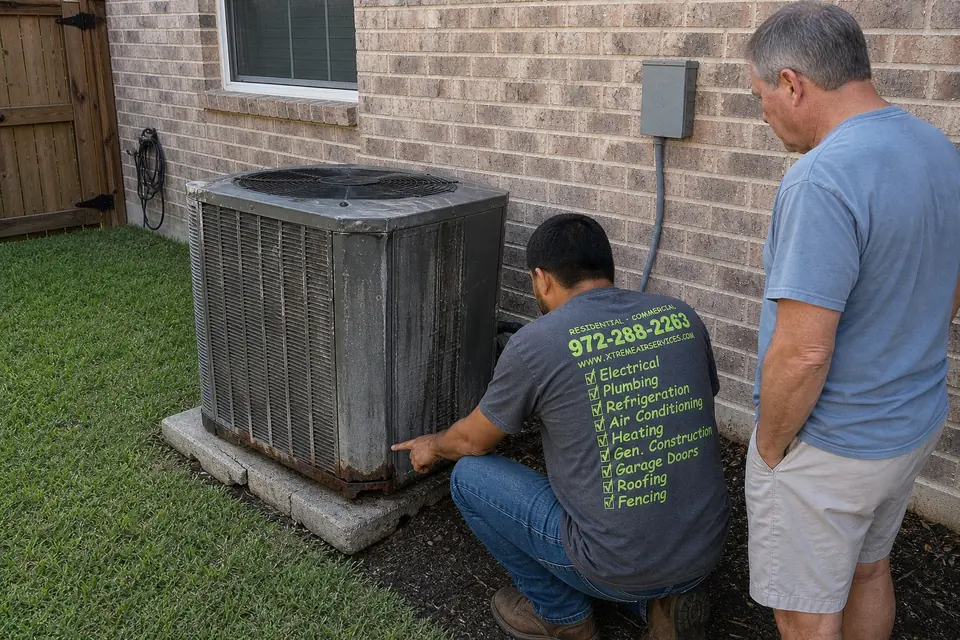
It’s a different story when the system is well into its second decade or when small problems keep stacking up. These are the signs that replacement deserves a serious look:
- The compressor or outdoor coil fails on an older unit. These are the biggest parts of the system. Putting a new one in an aging unit means paying a lot to keep everything else around it running on borrowed time.
- You’re calling for repairs every summer. One fix is normal. A new problem every year usually means the whole system is wearing out.
- It runs on R-22, an older refrigerant that’s no longer made. Recharging it keeps getting harder and more expensive. Check the label on your outdoor unit, or ask your technician to check it.
- Your energy bills keep climbing even though your habits haven’t changed. An older system has to run longer to do the same job.
- It can’t keep up on hot afternoons. It runs nonstop, the house stays warm, and the air feels sticky because the system isn’t pulling out humidity the way it should.
Dallas heat makes these signs show up faster. Many homes here are 1950s through 1990s slab-on-grade ranch houses with the air handler and ductwork up in the attic. In July, that attic gets much hotter than the yard, so the whole system works hard from spring to fall. An older unit that’s struggling in those conditions won’t get easier to live with next year.
Here’s the honest part. If your AC is fairly new and only one part has failed, you probably don’t need a new system. Before you call anyone, try the simple checks you can do yourself. Swap in a clean air filter, make sure the thermostat is set to cool and has fresh batteries, and check your breaker panel for a tripped breaker. A clogged filter alone can make a healthy system blow warm air or freeze up. Also keep in mind that weak airflow to some rooms can come from leaky or crushed ducts, not the AC itself. In that case, duct repair may fix the problem without a new unit.
If those checks don’t solve it, a technician needs to find the actual cause. Our service call runs $26-$99, and that fee is credited toward the repair if you proceed with Xtreme Air Services. You’ll get upfront flat-rate pricing that you approve before any work starts. If replacement is on the table, ask for that price too. That way you’re comparing two real numbers side by side and choosing for yourself, not guessing.
Skip Replacement If These Signs Point to a Simple Repair
Some breakdowns look scary but come down to one small part. If your system is young enough to keep and you notice one of the signs below, a repair is likely the right first step. A new system isn’t.
- The outdoor unit hums, but the fan won’t spin. That often points to a worn capacitor or a stuck contactor. A contactor is the small switch that tells the outdoor unit to start. Both are quick part swaps.
- The AC shut off, and there’s water in the pan under your attic air handler. Many attic systems have a safety switch that turns the AC off when the drain backs up, so water doesn’t come through your ceiling. Once the drain line is cleared, the cooling usually comes right back.
- You see ice on the copper line outside or on the indoor coil. Ice means something is off with airflow or refrigerant. On a younger system, the fix is often a coil cleaning or finding and sealing one leak, not a new unit.
- Hail bent the fins on your outdoor unit. After a North Texas hailstorm, those thin metal fins can look flattened and ruined. If the coil tubes behind them aren’t punctured and leaking, the fins can often be straightened, and the unit keeps working.
- The outdoor coil is caked with grass clippings, dust, or cottonwood fluff. A dirty coil can’t get rid of heat on a hot Dallas afternoon. The system runs longer, and your bills creep up. Cleaning the coil can bring back a lot of that lost cooling.
- There’s a new rattle, buzz, or squeal. Loose panels, a worn fan motor, or a stick in the fan blades can sound terrible. Noise alone isn’t a reason to replace anything.
- The thermostat goes blank or won’t call for cooling, even with fresh batteries. Loose wiring or a worn-out thermostat costs far less to fix than the system it controls.
Sometimes the honest answer is to fix it now and replace it later. Say your system is getting up there in years, but today’s problem is small. A repair can carry you through the summer. Then you can plan your replacement for spring or fall, when you aren’t sweating through the decision and have time to compare options calmly. A system you choose on your own schedule tends to be a better fit than one you pick in a rush on the hottest day of the year.
Whoever comes out, ask them to show you the failed part and explain why it failed. “This capacitor wore out” is a very different answer from “the whole system is going.” You should finish the visit knowing which one you’re dealing with, and why.
What Drives the Cost of AC Replacement Up or Down
Most AC replacements we do fall between $5,000-$12,000. Our most common job is a standard like-for-like swap that uses your existing connections with no major changes. That job runs $6,400-$9,200, and it covers the equipment, professional installation, startup, and testing. Where your home lands in that range comes down to a few things you can understand before anyone hands you a quote.
Three things move the price the most:
- System size. AC size is measured in tons. That’s how much heat the system can pull out of your house, not how much it weighs. A bigger home usually needs more tons, and more tons cost more. Bigger isn’t automatically better, though. A system that’s too large cools fast, shuts off, and leaves the air damp. That’s why sizing should come from a cooling load calculation on your actual home, not just a copy of whatever size was there before.
- Efficiency. SEER2 is the efficiency rating on a new AC. A higher number means the system uses less electricity to cool your home. Higher-SEER2 systems cost more up front, and they can trim your summer bills over the years. Variable-speed models run longer at a lower, steadier speed, which also helps pull humidity out of the air.
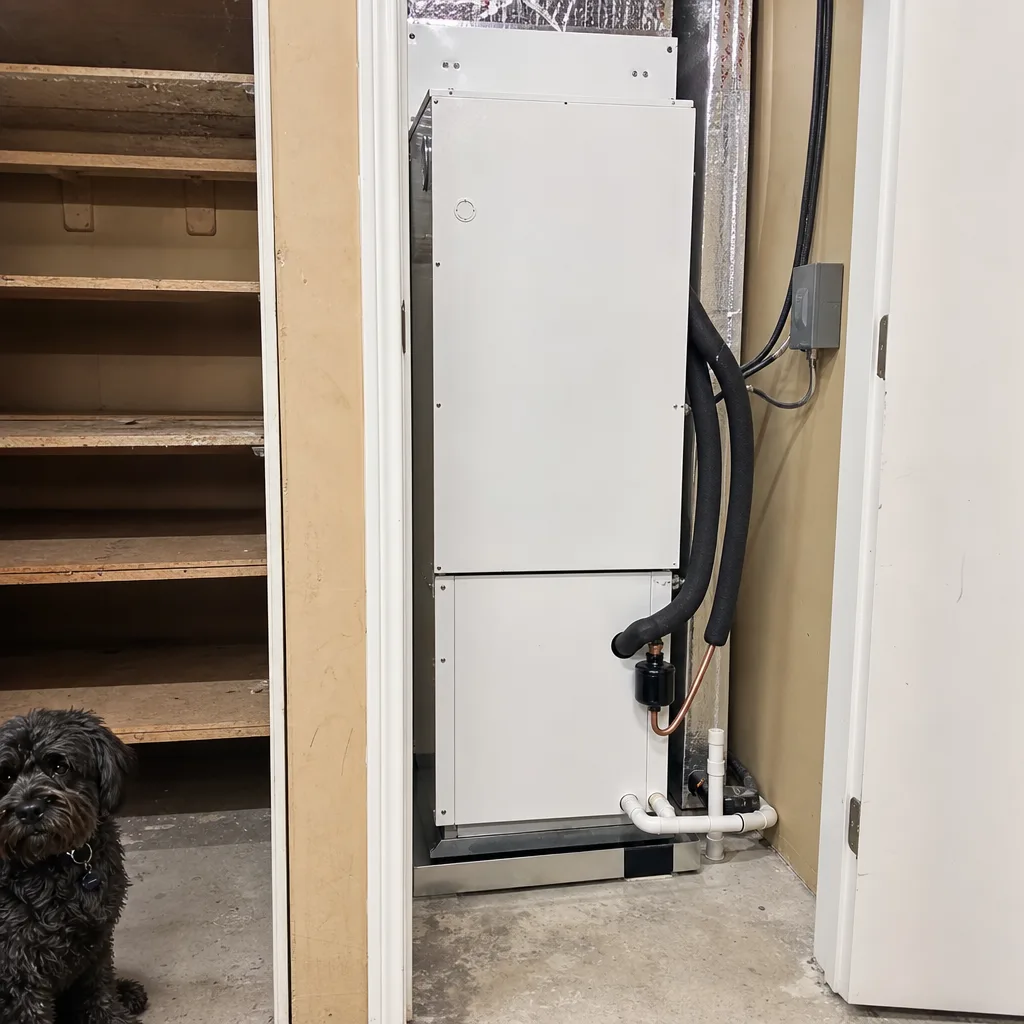
- Access. A unit that’s easy to reach costs less to install than one squeezed into a tight attic. In a lot of Dallas ranch homes, the air handler sits up in a hot, cramped attic, so the crew needs more time to safely get the old equipment out and the new equipment in.
Other factors can also move the number. These include the brand and model you choose, the condition of your existing ductwork, wiring, and plumbing, any code upgrades, permits, and any custom fabrication needed to make new equipment fit an older setup. In an older home, the ducts or electrical may not be ready for a modern system. If something like that needs work, you should hear about it before the job starts, not halfway through.
Here’s what our replacement price includes and what it doesn’t, so you can line it up against any other quote:
- Included: equipment and materials, professional installation, standard connections, startup and testing, and haul-away of your old unit.
- Not included unless the quote says so: duct, electrical, or plumbing changes, code corrections, and permits.
That second list is where quotes get confusing. One contractor’s lower number might leave out permits or duct work that another contractor built into theirs. When you compare prices, ask each company to tell you in writing what’s in the price and what isn’t. Then you’re comparing the same job, not two different jobs with two different price tags.
You’ll get upfront flat-rate pricing that you approve before any work begins. No meter running and no surprises when the job is done.
Thinking about AC replacement? Let’s talk.
Call Today, Get Service Today. Xtreme Air Services — North Dallas is ready to help.
Dallas Requires a Permit for AC Replacement – Here’s Why That Protects You
When you replace your AC in Dallas, the City of Dallas expects a permit to be pulled and the work to be inspected. Some people see that as red tape. It’s really a free second set of eyes on a job you’re paying thousands of dollars for.
A new system isn’t just a box swapped for a box. It ties into your home’s electrical service and carries refrigerant through copper lines. In most Dallas ranch homes, it also drains water from an air handler sitting right above your ceiling. If any of that is done wrong, you might not notice for months. Then a breaker keeps tripping, a line slowly leaks, or a water stain spreads across the hallway ceiling in August.
The inspection is meant to catch those problems while they’re still easy to fix. An inspector looks at the parts of the install that matter for safety and for your home, such as:
- The electrical hookup, including the disconnect near the outdoor unit and the correct breaker size
- How the condensate drain is run, plus the backup drain pan and safety switch under an attic air handler
- Safe access to equipment in the attic, so a technician can reach it later without damaging your ceiling
- Whether the outdoor unit is set level and placed where it should be
A permit protects you in other ways too. If you sell your home, a buyer’s inspector may ask whether the new AC was permitted. Unpermitted work can slow down a sale or turn into a repair you have to make on someone else’s schedule. It can also cause headaches with an insurance claim if something connected to that work ever goes wrong.
Licensing goes hand in hand with permits. In Texas, air conditioning contractors are licensed by the Texas Department of Licensing and Regulation, also known as TDLR. Our HVAC license number is TACLA29023C. You can look up any contractor’s license on the TDLR website before you let them into your attic.
Permits aren’t part of our standard replacement price unless your quote says they are, so it pays to ask about them up front. Before you sign with any contractor, ask these three questions:
- Who pulls the permit, and is it in this price or listed separately?
- Who schedules the city inspection, and do I need to be home for it?
- What happens if the inspector flags something, and who pays to fix it?
Clear answers to those questions tell you a lot about how the rest of the job will go. A contractor who explains the permit plainly is usually the same one who explains the price plainly.
Watch Our Video
See How We Handle AC replacement in Dallas
Xtreme Air Services — North Dallas
Why Dallas Summers Push Older AC Systems to the Breaking Point
An older AC rarely fails out of nowhere. It wears down a little more every summer, and Dallas summers give it a lot of work. When a system finally quits on a 104-degree afternoon, the heat usually didn’t cause the problem. It just exposed a weakness that was already there.

Here’s what a long North Texas cooling season does to a system that’s been running for years:
- It runs for months with very little rest. Your AC may start working hard in May and not slow down until October. Every one of those hours adds wear to the compressor, the fan motors, and the electrical parts.
- Hot nights don’t give it a break. When it’s still in the 80s after dark, your system keeps cycling all night. An older unit that used to catch up overnight now starts the next morning already behind.
- The outdoor unit has to push heat into air that’s already hot. Your AC works by moving heat from inside your house to the outside. When it’s well over 100 degrees outdoors, that job gets much harder. Pressure inside the system rises, and an aging compressor feels it most.
- Heat weakens electrical parts. Capacitors and contactors sitting in a baking-hot outdoor unit wear out faster. On a younger system, that’s a quick fix. On an older one, it’s often the first of several parts that start failing.
- Clay soil can tilt the outdoor unit. North Texas clay swells when it’s wet and shrinks during dry spells. Over time, that can shift the pad under your condenser. A unit that isn’t level can put extra strain on its parts and refrigerant lines.
Add the attic heat we talked about earlier, and you can see why an older system in a Dallas ranch home works harder than the same system would somewhere cooler. None of this means your AC will fail this year. It means age and repair history matter more here, and that it pays to keep an eye on how your system handles each summer.
Pay attention to how your system holds up from one summer to the next. If it struggled to keep up last August, called for more than one repair, or ran almost nonstop on the hottest days, take that seriously. Have it looked at in spring, before the heat sets in. You’ll have time to get real prices for both a repair and a replacement, ask questions, and choose what’s right for your home and budget. That’s a lot easier than choosing in a sweaty hallway with the thermostat reading 88.
And if your system does give out in the middle of a heat wave, you aren’t stuck. Same-day service is available, there’s no extra charge for nights or weekends, and our licensed and insured technicians will give you upfront flat-rate pricing for repair and replacement before any work starts. That way, the choice stays yours.
Call 469-213-3107
Frequently Asked Questions
Common questions about AC replacement
What is the $5,000 rule people mention for AC replacement?
It’s a rule of thumb: multiply the repair cost by the age of your system, and if that number tops $5,000, replacement is usually the better value. A $600 repair on a 9-year-old unit comes out to $5,400, which leans toward replacing. The same repair on a 3-year-old unit only totals $1,800, so fixing it still makes sense. Use it as a quick gut check, not the final word, since your real repair history and a flat-rate quote for both options give you a clearer answer.
Should I replace my AC before it fully breaks down?
It depends on how your system has handled the last couple of summers, not just whether it’s still running today. If it struggled to keep up last August, needed more than one repair call, or ran almost nonstop on the hottest days, it’s worth planning a replacement before next summer instead of waiting for a breakdown. Getting ahead of it means you can compare repair and replacement prices calmly in spring, rather than deciding in a hot house with the AC already down.
Can I keep using my AC while I decide on a replacement?
Yes, if a technician confirms the problem is a single worn part and not a sign the whole system is failing. A repair like a new capacitor or a cleared drain line can carry you through the rest of the season while you plan a replacement on your own timeline. The key is finding out which situation you’re in, since that’s the difference between a quick fix now and a bigger decision you can make later without the pressure of a hot house.
Ready to Get Started?
Call (469) 213-3107 Today, Get Service Today.