


AC Replacement in Allen: How to Know It’s Time and What to Expect
An honest read on whether it's time to replace, what a standard replacement includes, and the permit step explained.
What’s Covered on This Page
- Signs Your AC System Needs Replacing, Not Another Repair
- When Repair Still Makes More Sense Than Replacement
- What a Trustworthy AC Replacement Quote Includes in Allen
- What Happens on AC Replacement Day
- What Drives AC Replacement Cost Up or Down
- How long does an AC replacement take in Allen?
- Can I stay in my home during AC replacement?
- Do I need a permit to replace my AC system in Allen?
- What should I check after my new AC is installed?
Signs Your AC System Needs Replacing, Not Another Repair
Most AC problems come down to one question: is this a one-time fix, or the start of a pattern? A newer system with one worn part should almost always be repaired. An older system that’s failing in bigger ways is a different story. Here are the signs that point toward replacement.
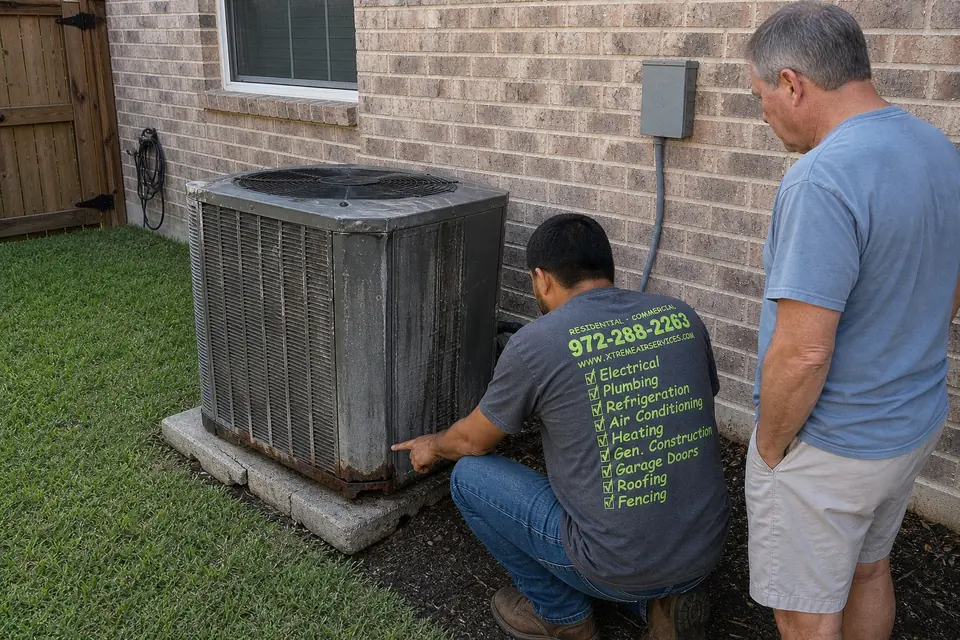
- Your system is around 15 years old or older. Age alone isn’t a reason to replace, but it changes the math. Putting a big repair into an old unit often just buys you time until the next part goes.
- A major part has failed. When the compressor or the outdoor coil goes out on an older system, the repair can cost a large share of a new unit. That’s the point where many homeowners decide to put the money toward new equipment instead.
- Your AC uses an older refrigerant. Many older systems run on R-22, which has been phased out. It’s harder to find and costs more every time a leak needs a recharge.
- You’re calling for repairs every summer. One repair is normal. A new problem every year, or several in one season, tells you the whole system is wearing out.
- It can’t keep up on hot afternoons. If your AC runs nonstop, some rooms stay warm, or the house feels sticky and damp, the system may be too worn or the wrong size for your home.
- Your energy bills keep climbing. If your habits haven’t changed but your bills have, your system is probably working harder to give you less cooling.
Now the honest part. Plenty of problems that feel like the end of the world are small fixes. A system that hums but won’t start often just needs a new capacitor. Water near the indoor unit is usually a clogged drain line. A frozen coil often traces back to a dirty filter or low airflow. A noisy outdoor fan may only need a new motor. If your system is fairly young and the fix is simple, repair it. You shouldn’t replace a good system to solve a small problem.
Here’s a simple rule of thumb many techs use. Multiply the age of your system by the repair price. If the number comes out above about $5,000, replacement is usually worth a serious look. It isn’t a hard rule, but it’s a helpful way to see the tradeoff clearly.
Allen summers make this decision more urgent. Many homes here have the indoor unit in the attic, where it sits in extreme heat all season. An aging system in that spot works harder, and small weaknesses tend to show up on the hottest days. If you’re not sure where your system stands, ask your technician to show you what they found and explain your repair and replacement options side by side. With upfront flat-rate pricing approved before any work starts, you get to make that choice with real numbers in front of you, not pressure.
When Repair Still Makes More Sense Than Replacement
Repair is the better call when your system is still in the middle of its life, the problem is one part and not the whole machine, or the real trouble isn’t in the AC at all. In those cases, a new system would cost you thousands and leave you right where you started.
Here’s when we’d tell you to keep what you have:
- The problem is in your ducts, not your AC. If one bedroom never cools down, a torn or crushed duct in the attic may be the cause. A new AC pushing air into a leaky duct still leaves that room warm. Duct repair or duct sealing fixes the actual problem for far less.
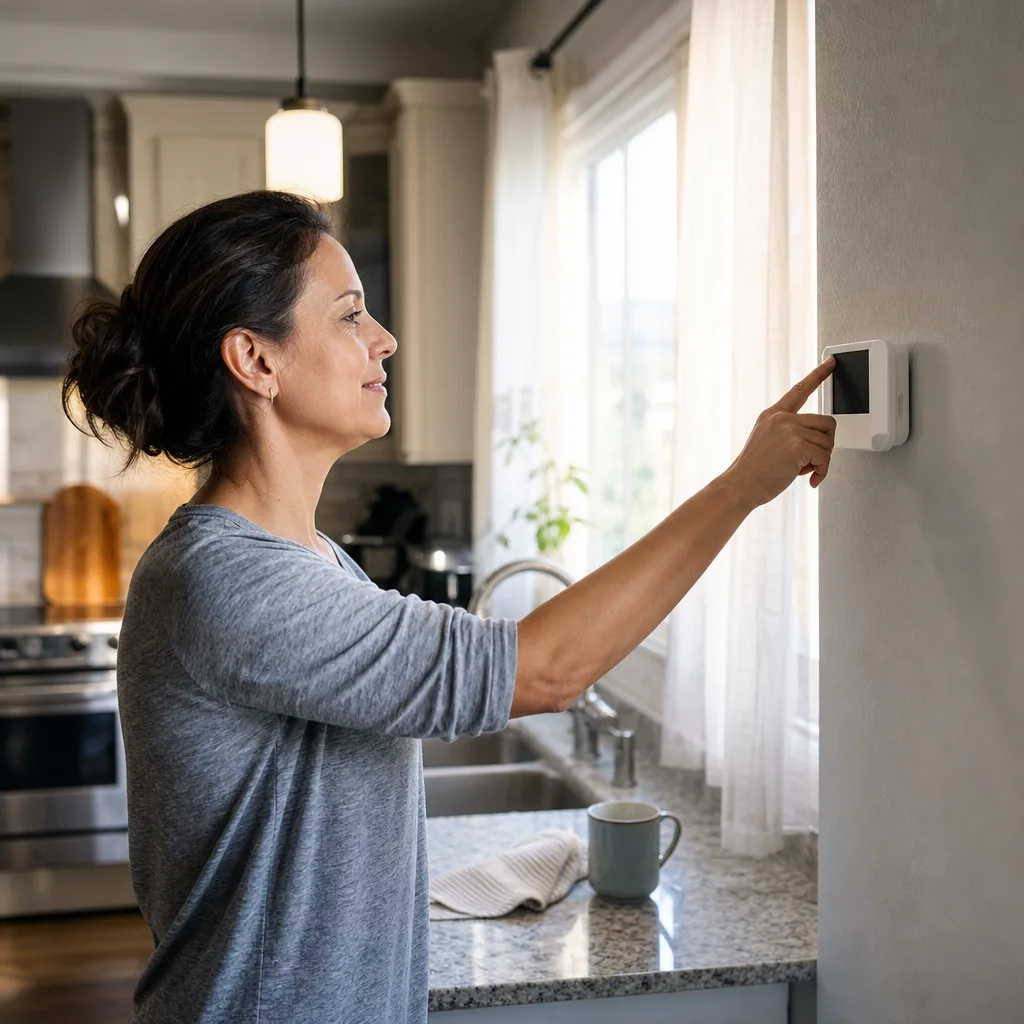
- The thermostat is the culprit. A thermostat that reads the wrong temperature or loses its settings can make a healthy system look broken. Repairing or replacing the thermostat is a small job.
- Your system is fairly new and has a refrigerant leak. On a newer system that runs on today’s refrigerant, finding and fixing the leak usually makes more sense than replacing equipment that still has years left in it.
- A single electrical part failed. A burned contactor, a bad sensor, or a failed circuit board can stop a system cold. On a mid-life unit, swapping that part gets you running again.
- Your system still keeps up. If the house stays comfortable on hot afternoons and your bills haven’t crept up, one breakdown doesn’t change that.
There’s also a timing reason to repair. If your older AC quits in the middle of a July heat wave, you may not want to choose a whole new system while the house is 88 degrees. A reasonable repair can get you through summer. Then you can plan a replacement in the milder months, when you have time to compare options and think it over with a clear head. That’s a fair plan, and you shouldn’t let anyone talk you out of it.
Before you call anyone, check a few simple things yourself. Make sure the thermostat is set to cool and set below the room temperature. Swap the batteries if it uses them. Check your breaker panel for a tripped breaker. Look at your air filter, and change it if it’s clogged. Sometimes that’s all it takes.
If those checks don’t solve it, a diagnosis tells you which side of the line you’re on. Our service-call fee runs $26 to $99, and it’s credited toward the repair if you go ahead with Xtreme Air Services. So you’re not paying extra just to find out a repair is the right answer.
When a technician looks at your system, ask four questions. What failed? Why did it fail? Is the rest of the system in good shape? What does the repair cost compared with replacement? Clear answers to those will tell you whether a fix makes sense. If the answer is repair, that’s the job you should get.
What a Trustworthy AC Replacement Quote Includes in Allen
A good AC replacement quote tells you exactly what you’re buying, what it costs, and what isn’t covered, all before anyone touches your system. If a quote is just one number on a page, you can’t tell whether it’s fair. You also can’t compare it with anyone else’s.
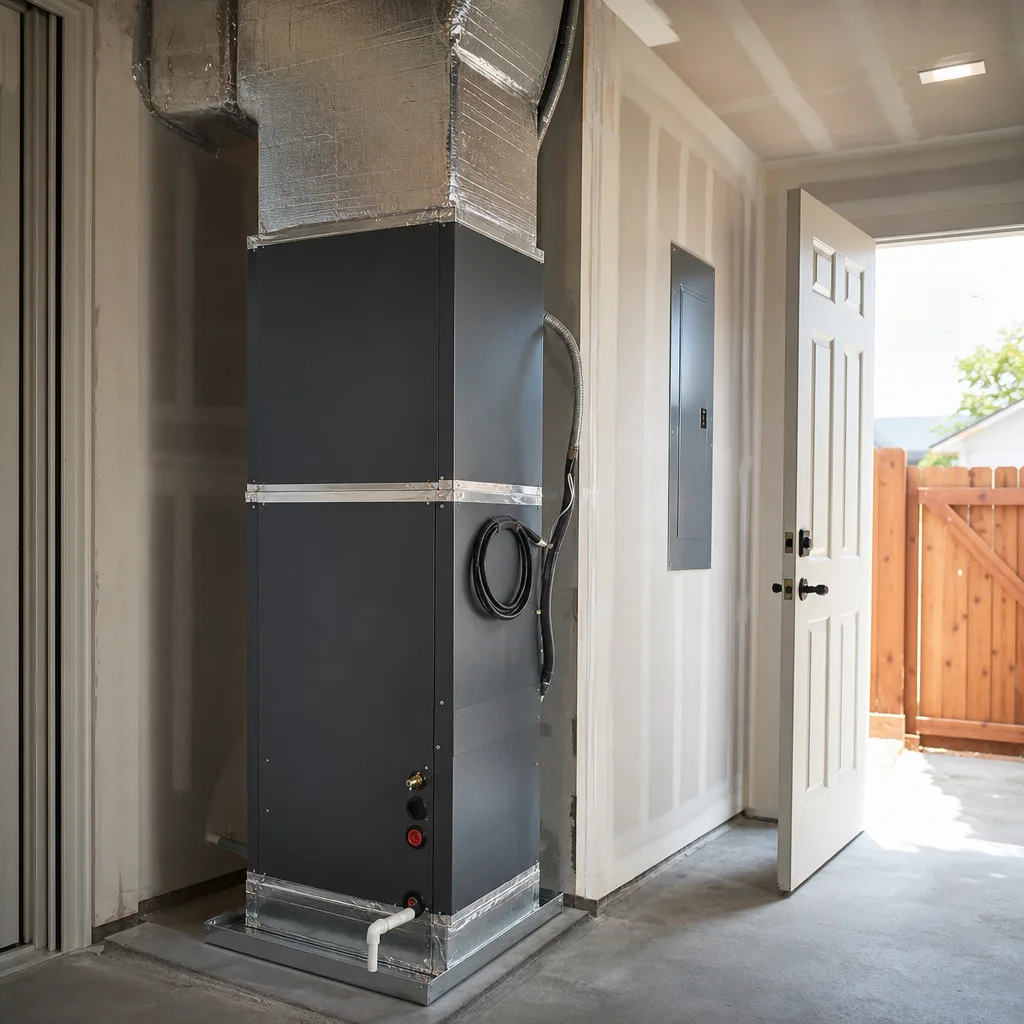
Here’s what real numbers look like with us. Most of our AC replacements fall between $5,000 and $12,000. Our most common job is a standard like-for-like swap that uses your existing connections with no major changes. That job runs $6,400 to $9,200, and it covers the equipment and materials plus professional installation, startup, and testing.
Your quote should spell out the following:
- The size of the new system. AC size is measured in tons, and that’s about cooling power, not weight. The right size should come from your home, not just from the label on your old unit.
- The efficiency rating. SEER2 tells you how much cooling you get for each dollar of electricity. A higher number costs more up front, but it costs less to run through a long Allen summer.
- What’s included. With us, that means equipment and materials, professional installation, standard connections, startup and testing, and haul-away of your old unit.
- What’s not included. Duct, electrical, or plumbing changes, code corrections, and permits aren’t included unless the quote says they are. A fair quote names these up front so they don’t show up later as a surprise.
Three things move the price more than anything else: system size, SEER2 rating, and how easy your equipment is to reach. Access matters a lot in Allen. When the indoor unit sits in a cramped attic, the work takes more time and care than it does with a unit in a hall closet or garage. Brand and model matter too, as does the condition of your ductwork and wiring, plus any code upgrades or custom fabrication the job needs.
Watch out for a quote that sizes your new system just by copying your old one. Houses change. You might have new windows, added insulation, or a finished bonus room. An oversized unit cools the house fast but shuts off before it pulls the moisture out, and that leaves your home cool but clammy. An undersized one runs all afternoon and still can’t keep up. A cooling load calculation looks at your actual home and gets the size right, and we offer one.
Before you sign any quote, ask these questions:
- How did you decide on this size?
- What’s the SEER2 rating, and what would a step up or down change?
- Does this price include the permit and haul-away?
- Did you check my ductwork and electrical, and do they need any work?
- Is this the final price, or could it change once the job starts?
With upfront flat-rate pricing, that last answer should be simple. You approve the price before the work begins, and that’s the price. If the full amount is a stretch right now, we offer flexible financing on qualifying installations on approved credit, so you don’t have to settle for a smaller or less efficient system just to get cool air back in your home.
Thinking about AC replacement? Let’s talk.
Call Today, Get Service Today. Xtreme Air Services — Allen is ready to help.
What Happens on AC Replacement Day
On replacement day, your old system comes out, the new one goes in, and it gets started and tested before anyone packs up. A simple like-for-like swap that uses your existing connections can often be finished in one day. If your job includes duct or electrical changes, plan for extra time.
A few small steps make the day go smoother for you:
- Clear a path to your attic access and to the outdoor unit. If the attic opening is in the garage, move the car out.
- Keep pets in a closed room so doors can stay open while equipment moves in and out.
- Expect the AC to be off for part of the day. If you can pick a morning start, the house will be without cooling during the cooler hours.
Here’s what a proper installation looks like, step by step:
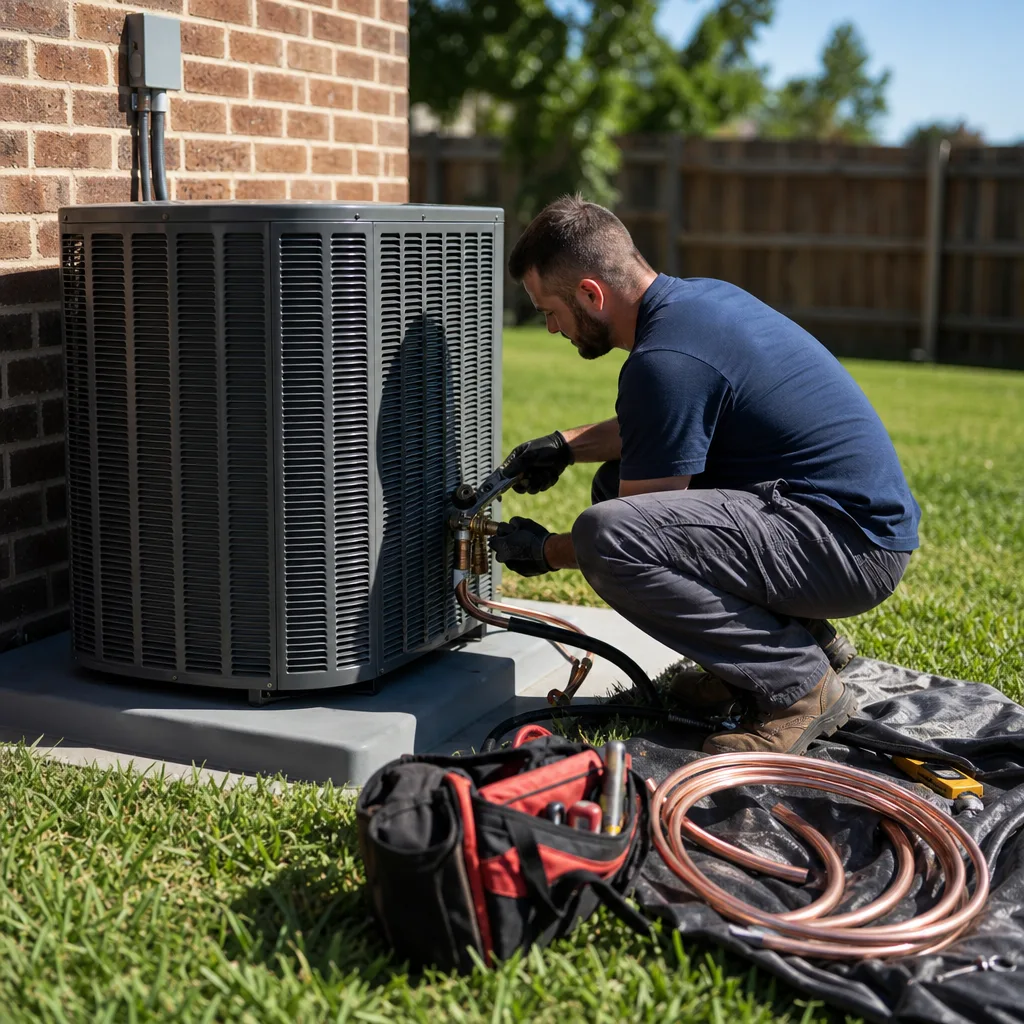
- The power is shut off and the old refrigerant is recovered with special equipment. Federal rules don’t allow it to be released into the air, and only certified technicians can handle it.
- The old outdoor unit and indoor coil come out. With us, haul-away of your old unit is part of the job.
- The new outdoor unit is set level on its pad, and the new indoor coil goes in, often up in the attic.
- The refrigerant lines are connected and pressure tested. This finds leaks before any refrigerant goes in.
- The lines are vacuumed down to pull out air and moisture. Moisture left inside can slowly damage a brand-new compressor.
- The system is charged to the manufacturer’s specs, started up, and tested while it runs.
Those last three steps are easy to rush, and you can’t see them happen. A system that’s charged by guesswork may still blow cold air on day one. Then it struggles on the first 100-degree afternoon, when your attic is at its hottest and the system has the least room for error. Startup and testing are included in every replacement we do, because that’s where a good install proves itself.
Before the crew leaves, take a few minutes to check the work:
- Stand at a vent and feel for steady, cold air. Listen at the outdoor unit for a smooth, even hum.
- Ask what readings they took during startup and what those numbers mean for your system.
- Find out where your filter goes, what size it is, and how often to change it.
- Make sure the old equipment is gone and the attic, yard, and indoor areas are cleaned up.
- If your quote included a permit, ask when the inspection will happen.
You should walk away knowing what was installed, how it was tested, and how to take care of it. If anything isn’t clear, ask. A good installer will be glad to show you.
Watch Our Video
See How We Handle AC replacement in Allen
Xtreme Air Services — Allen
What Drives AC Replacement Cost Up or Down
Your price mostly comes down to one thing: how much the job changes from what’s already in your home. A straight swap that reuses your existing connections stays near our most common job price of $6,400 to $9,200. Every change beyond that, like new ductwork, electrical updates, or custom metal work, moves you toward the higher end of our $5,000 to $12,000 range.
Size, SEER2, and attic access set the starting point, as covered in the quote section. These are the things that tend to add to it:
- A refrigerant change. If your old system runs on R-22, the new outdoor unit and the indoor coil are replaced together because they have to match. That’s a bigger job than swapping one piece.
- A coil that doesn’t fit. New indoor coils are often a different size than the old ones. When the new coil doesn’t line up with the metal box it sits on, someone has to build a custom piece to connect them.
- Electrical updates. A different unit may need a new breaker, a new outdoor disconnect, or new wire. Older or worn wiring may also need fixing before new equipment can safely run on it.
- Duct problems found during the job. Crushed, torn, or badly leaking attic ducts can make a new system work just as hard as the old one. Fixing them adds cost, but skipping that work wastes money on the new system.
- Code corrections and permits. Equipment that was installed years ago may not meet today’s code. Bringing it up to standard is extra work, and so is the permit when it’s needed.
- Moving or changing the system. Moving the indoor unit to a new spot, adding capacity for a finished bonus room, or changing the type of system all add labor and materials.
Some things keep the cost down, and some of them are up to you:
- Ductwork, wiring, and a pad that are still in good shape. When the parts that stay with your home are sound, the job stays simple.
- Getting the size right. A cooling load calculation sometimes shows that your home needs less capacity than your old unit had. A smaller system costs less to buy and less to run.
- Choosing an efficiency level that fits your plans. If you’re planning to stay in your home for years, a higher SEER2 rating has more time to pay you back on your power bill. If you might move in a few years, a middle option can make more sense. Neither choice is wrong.
- Planning ahead. When you replace an aging system before it fails, you have time to compare options. You aren’t stuck making a fast decision during a heat wave.
One more thing to know: a lower number on paper isn’t always the lower final price. If one quote leaves out duct repair, a needed electrical update, or the permit, that work doesn’t go away. It just shows up later. When you compare quotes, look at what each one includes, not just the total.
With upfront flat-rate pricing, any of these extras are found and priced before you say yes. You’ll know which items your home needs and which choices are yours to make. Then you can decide with the full picture in front of you.
Frequently Asked Questions
Common questions about AC replacement
How long does an AC replacement take in Allen?
A standard like-for-like swap often finishes in one day. If your job needs duct or electrical changes, plan for extra time. Your installer should tell you upfront which type of job yours will be before work starts.
Can I stay in my home during AC replacement?
Yes, but expect the AC to be off for part of the day. If you can schedule a morning start, your house will be without cooling during the cooler hours instead of the afternoon heat. Clearing a path to the attic access and outdoor unit ahead of time helps the crew work faster.
Do I need a permit to replace my AC system in Allen?
It depends on your job, and your quote should state this clearly. Code corrections and permits aren’t included in a price unless the quote says so, and a fair quote names these details upfront so you’re not surprised later. Ask your installer directly whether your replacement requires a permit before work begins.
What should I check after my new AC is installed?
Feel the air at a vent for steady, cold airflow and listen for a smooth, even hum at the outdoor unit. Ask what readings the technician took during startup and what they mean for your system. Confirm your filter size and location, and make sure the old equipment and any mess are cleared from your attic and yard.
Ready to Get Started?
Call (469) 299-8996 Today, Get Service Today.