


Emergency HVAC Service in Dallas: Know When to Call Now
Real emergencies handled fast – with simple checks to try first and the cost explained before anyone is dispatched.
What’s Covered on This Page
- What Counts as a True HVAC Emergency
- Quick Checks Before You Call for Emergency Service
- What Happens When You Call Xtreme Air Services for a Dallas Emergency
- What Emergency HVAC Repair Costs in Dallas
- Common Failures Behind Dallas Emergency Calls
- Can I keep running my AC or furnace while I wait for the technician?
- What if the technician finds more than one failed part during an emergency visit?
- Does a power surge from a storm count as an HVAC emergency?
What Counts as a True HVAC Emergency
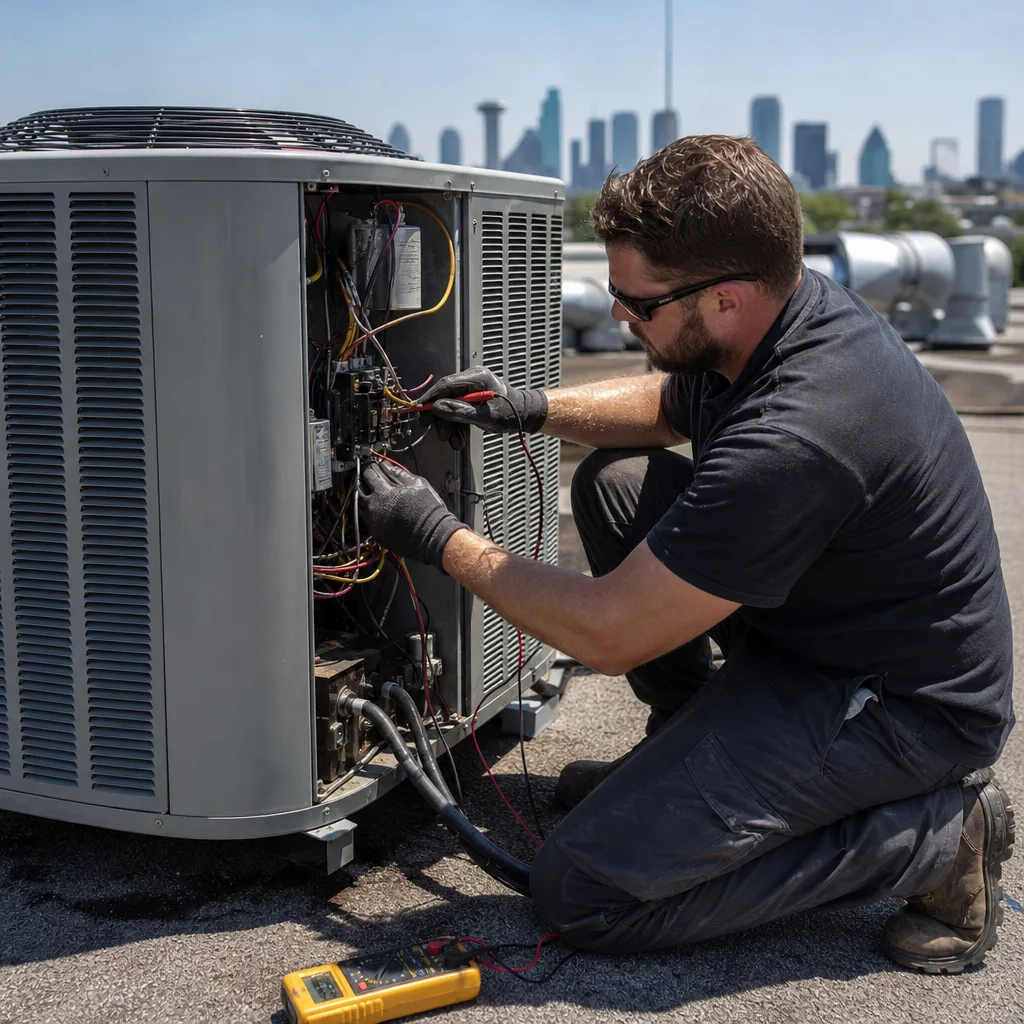
Not every breakdown needs a call at midnight. The real question is simple. Will waiting until tomorrow hurt someone in your home or damage the house itself? If the answer is yes, it’s an emergency. If the answer is no, you’ve got some breathing room.
These are the situations where you shouldn’t wait:
- No cooling during a Dallas heat wave when someone at home is elderly, a baby, sick, or pregnant. A house can heat up fast once the AC stops, and an attic in a North Texas summer runs far hotter than the air outside.
- No heat during a hard freeze. Your comfort matters, and so do your pipes. Water lines in exterior walls or the attic are the ones most likely to freeze when the house gets cold.
- A burning, electrical, or hot-metal smell from the vents or the unit, or a breaker that trips again right after you reset it. These point to an electrical problem, and it’s not something to keep running.
- Water dripping through a ceiling or spilling out of the air handler’s drain pan. A lot of Dallas homes have the indoor unit in the attic, so a clogged drain line can soak insulation and drywall before you notice anything.
- A gas smell near the furnace. Treat that as a gas safety problem first and an HVAC repair second.
Here’s the honest other side. Plenty of problems feel urgent but can wait for a regular appointment:
- Your AC is running and the house is still comfortable, but it falls a few degrees behind on the hottest afternoons.
- One room runs warmer than the rest of the house.
- You hear a new noise, but the system still cools or heats normally.
- The house cools back down fine overnight, even if it struggled during the day.
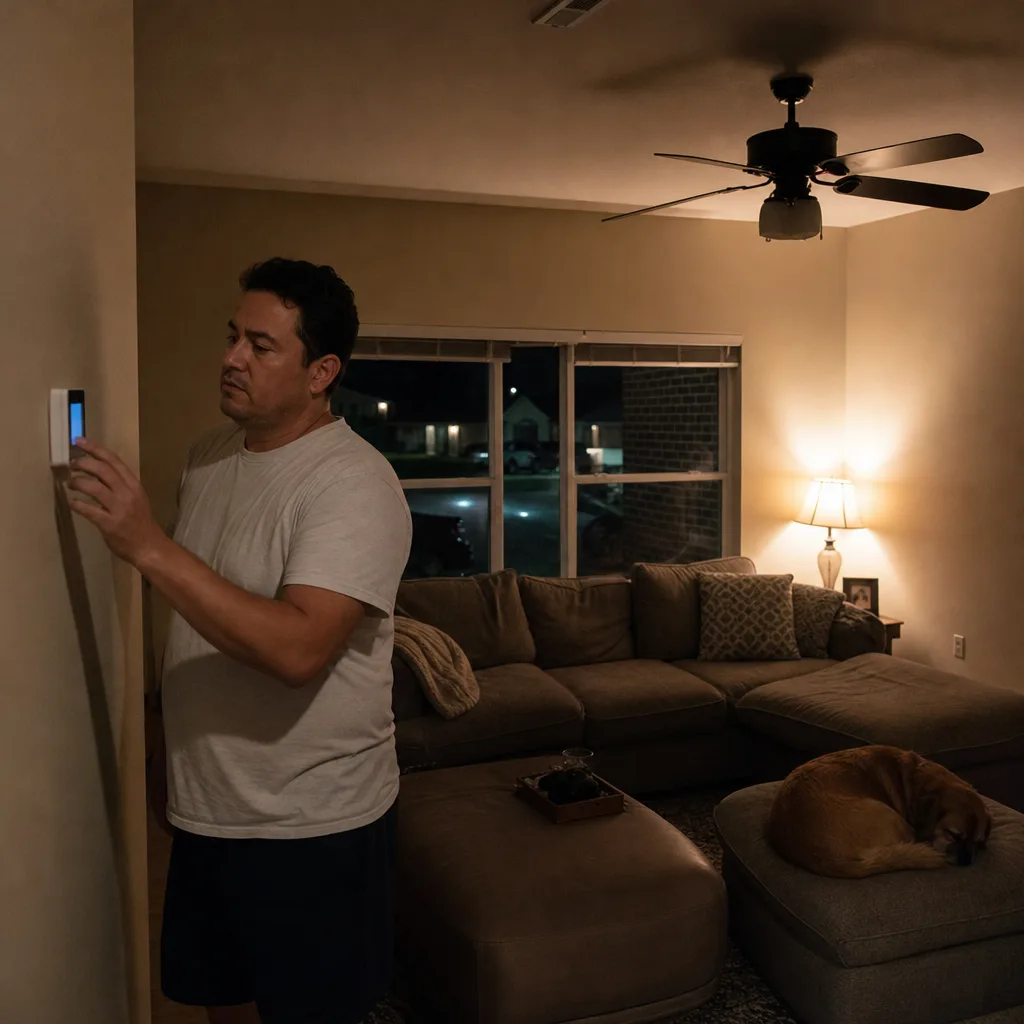
Before you call, try a few quick checks. Make sure the thermostat is set to cool or heat, and swap the batteries if the screen is blank. Look at your air filter. A filter caked with dust can choke airflow and even freeze the indoor coil. Then check the breaker panel and reset a tripped HVAC breaker one time. If the system comes back and keeps running, you may have just saved yourself a visit. If that breaker trips again, stop resetting it.
One thing shouldn’t factor into your decision, and that’s the clock. Xtreme Air Services charges no extra for nights or weekends, so choosing between tonight and tomorrow morning comes down to your family’s comfort and safety, not an overtime bill. If you’re on the fence, you can talk to a real person and describe what you’re seeing. Together we’ll figure out whether it can wait.
Quick Checks Before You Call for Emergency Service
You’ve already looked at the thermostat, the filter, and the breaker. A few more spots can shut your system down without anything being broken. Each one takes a minute, and none of them needs tools.
- The outdoor disconnect. This is a small gray box on the wall next to your outdoor unit. A lawn crew or a curious kid can bump it or pull it out. Make sure it’s switched on or fully seated. If the box is wet, cracked, or the wires look damaged, leave it alone.
- The furnace or air handler switch. It looks like a regular light switch, mounted on or near the indoor unit in the attic, closet, or garage. People flip it off by mistake all the time, thinking it’s a light.
- The front panel on the indoor unit. Most units have a safety switch that cuts power when the panel isn’t pushed all the way closed. If someone just changed the filter, press the door firmly back into place.
- Water in the drain pan. Many attic units have a float switch that turns the AC off when the drain line backs up. That’s the switch doing its job and protecting your ceiling. If you see standing water and the system won’t run, the drain line needs cleaning. Don’t tape or bypass the switch to get it going again.
- Ice on the copper line or indoor unit. Set the thermostat to off and the fan to on so the ice melts. Don’t chip at it. It can take a few hours to thaw. If it freezes again once you’re cooling, something’s wrong with airflow or refrigerant, and it’s time to call.
- The outdoor unit itself. Is the fan spinning? If you hear a hum but the fan isn’t moving, turn the system off at the thermostat so the motor doesn’t keep straining. Never push the blades with a stick. Also look for grass clippings or leaves packed against the sides, or fins flattened by a North Texas hailstorm.
- Vents and returns. Closed registers or a couch pushed over a return grille can choke airflow more than you’d think.
If none of that brings your system back, take two minutes to jot a few things down before you pick up the phone:
- What you’re noticing: warm air, no air, water, a noise, or a smell.
- When it started, and whether it happened suddenly or slowly got worse.
- Any blinking light on the furnace or air handler. Many units flash a code through a small window in the panel. Count the blinks if you can.
- What you’ve already tried, like resetting the breaker or changing the filter.
- Roughly how old the system is, if you know.
You don’t need to diagnose anything yourself. These notes just make the call quicker and help the technician start in the right place once they’re at your door. And if one of these checks gets your house cooling again, that’s a good outcome too. Keep an eye on it, and set up a regular repair visit if the same thing happens again.
What Happens When You Call Xtreme Air Services for a Dallas Emergency
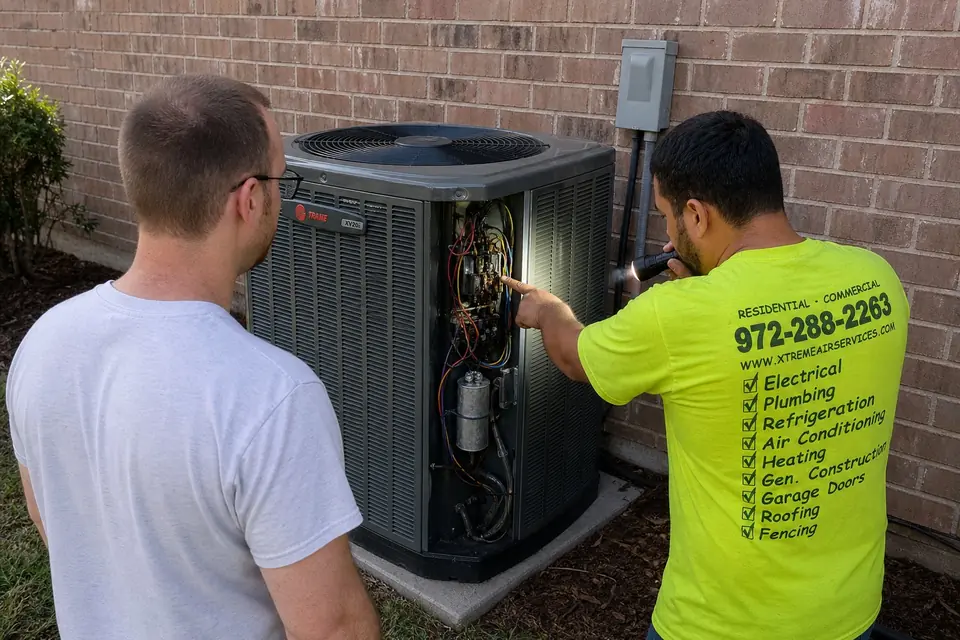
When you call, you talk to a real person. We answer the phone around the clock, and our goal is to get a technician to your Dallas home the same day. Have the notes you jotted down ready. Tell us what you’re seeing, and we’ll help you decide if it needs someone tonight or can wait until morning.
Here’s how the visit goes from there:
- A licensed and insured technician comes to your door. Our team members are background-checked and drug-tested, and our HVAC license number is TACLA29023C.
- The technician finds the part that failed. Most calls come down to one common failure that gets fixed on the first visit.
- You get an upfront, flat-rate price before any work starts. You approve it first. There’s no meter running while you wait.
- The technician repairs or replaces the failed part.
- We test the system to make sure it runs correctly, then clean up before we leave.
Now for what most people really want to know, which is what this costs. The service-call fee is $26-$99, and it’s credited toward the repair if you go ahead with Xtreme Air Services. The most common emergency job, finding a single failed part and fixing it, runs $200-$525. Emergency HVAC calls overall typically fall between $200-$900.
That price covers the diagnosis, the labor, the standard replacement part, testing, and cleanup. It doesn’t include extra failed parts, major components, code upgrades, or permits. If any of those come up, we quote them separately so you can decide before anything changes. A few things push the cost up or down: how much has failed, what the part costs and whether it’s in stock, and how old your equipment is and what brand it is. The time of night doesn’t, as we covered above.
Sometimes the technician finds a bigger problem, like a major component that’s worn out or more than one part that’s failed. When that happens, you’ll get a clear quote and time to think it over. Financing usually isn’t needed for a smaller emergency fix, but it is available on larger repairs and replacements if you go that route.
It also helps that we’re one team for HVAC, plumbing, and electrical. Say an overflowing drain line has soaked part of your ceiling, or the trouble turns out to be the wiring and not the AC. You won’t have to start over with a second company. We’re a Trane Comfort Specialist with a 4.8-star reputation across 2,900+ reviews on Google, Angi, and HomeAdvisor, and our Dallas office is on Hillcrest Road.
Call 469-213-3107
Have questions? We’re happy to help.
Call Today, Get Service Today. Xtreme Air Services — North Dallas is ready to help.
What Emergency HVAC Repair Costs in Dallas
You’ve already seen our numbers. The bigger question is how to tell if any emergency quote is fair. That comes down to two things: how the company prices the job, and which part failed.
In this trade, you’ll run into two pricing models. With hourly billing, also called time and materials, the bill grows the longer the technician works, and many companies add a higher rate after hours. You won’t know your total until the job is done. With flat-rate pricing, the price is set for the repair itself, and you see it before any work starts. If the fix takes longer than expected, that’s on the company, not on you. A slow repair on a hot attic afternoon shouldn’t cost you more than a quick one.
Inside any range, the failed part does most of the work in setting the price. Here’s how common repairs tend to line up:
- Lower end: small parts like a capacitor, which gives the motors a kick to start, a contactor, a furnace ignitor, a dirty flame sensor, or a clogged drain line.
- Middle: bigger parts like a blower motor, an outdoor fan motor, or a circuit board.
- Quoted separately: major components like a compressor or a coil, or a refrigerant leak that has to be found before it can be fixed.
Age and refrigerant matter too. Many older Dallas homes still run systems that use R-22 refrigerant, which isn’t made new anymore. That makes a recharge on those units cost more than on a newer system.
Sometimes a major part fails on an older system. That’s when it’s worth slowing down and asking whether a repair or a replacement makes more sense. A fair technician will lay out both choices and let you decide. You don’t have to choose at the door. A cooling unit can get you through the night while you think it over, and financing is there for the bigger jobs, as we covered above.
Before you let anyone start work, ask these questions:
- Is this a flat price or an hourly rate?
- Do you charge more for nights, weekends, or holidays?
- Does the service-call fee count toward the repair?
- Does the price include the part, labor, testing, and cleanup?
- If you find another problem, will you stop and quote it before doing the work?
- Is your company licensed for HVAC work in Texas? You can check any license through the Texas Department of Licensing and Regulation.
If a company won’t answer these clearly over the phone, that tells you something. Our answers don’t change at 2 a.m. You get one flat price, no after-hours charge, and you approve it before we pick up a tool.
Call now: 469-213-3107
Watch Our Video
See How We Handle Emergency HVAC service in Dallas
Xtreme Air Services — North Dallas
Common Failures Behind Dallas Emergency Calls
Most emergency breakdowns trace back to a short list of parts. You don’t need to fix any of them yourself. Knowing what each part does and how it acts when it fails will help you follow the technician’s explanation. You’ll also know whether the flat-rate quote you’re asked to approve makes sense.
In a Dallas summer, your outdoor unit sits in direct sun for months, and the indoor unit often sits in an attic that gets hotter than the yard. Heat wears parts out. These are the ones that tend to give up first:
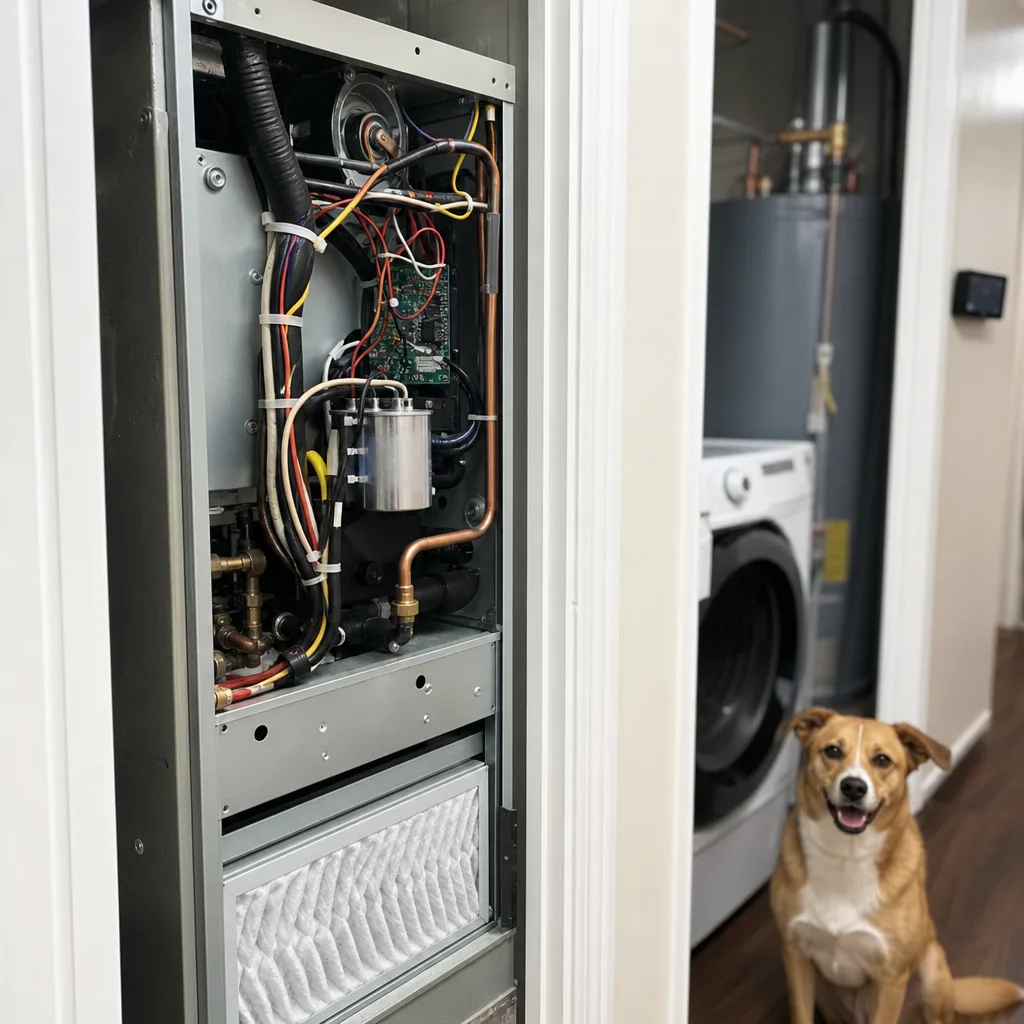
- Capacitor. This small can stores a jolt of power that helps the motors start. Heat breaks it down over time. When it weakens, the outdoor unit may hum without the fan turning, or the AC may run while blowing warm air.
- Contactor. This is the switch that turns the outdoor unit on when your thermostat calls for cooling. Its metal contacts can burn and pit, and insects sometimes crawl inside and block it. You’ll notice the indoor fan running while the outdoor unit stays silent.
- Outdoor fan motor or blower motor. These motors run nonstop on hot days. When one starts to fail, you may hear grinding or squealing, notice weak airflow from the vents, or smell something hot. If the outdoor fan stops, the system can overheat and shut itself off.
- Refrigerant leak. Refrigerant doesn’t get used up like gas in a car. If it’s low, there’s a leak somewhere. Common signs are warm air, a hissing sound, or the ice buildup we covered earlier. Just adding more refrigerant without finding the leak only buys a little time.
- Clogged drain line. Humid days pull a lot of water out of the air, and that water has to drain away. Slime and algae can build up in the line until the safety switch shuts the AC off, as covered in the quick checks.
North Texas weather causes its own problems. Spring and summer thunderstorms bring lightning and power surges that can burn out a circuit board or scorch wires at the unit. If your system went dead right after a storm, tell us that when you call. It points the technician toward the electrical side first.
Winter breakdowns usually come from a different set of parts, often during the first hard cold front, when the heat hasn’t run in months:
- Furnace ignitor. This part glows hot to light the gas. Ignitors are fragile and can crack after sitting unused. A furnace with a bad ignitor clicks and tries to start, but it never lights.
- Flame sensor. This part confirms the burner is lit. When it gets coated with grime, the furnace lights and then shuts off a few seconds later, over and over.
- Heat pump defrost problems. In a freeze, a heat pump has to melt frost off its outdoor coil now and then. If that defrost cycle fails, the unit gets covered in ice and the house slowly cools down.
Each of these is usually a single-part repair. The technician confirms which part failed, shows you, and gives you the price before any work starts. If more than one part has failed, or a major component is involved, you’ll hear that plainly too. Then you can decide what to do next.
Call 469-213-3107
Frequently Asked Questions
Common questions about Emergency HVAC service
Can I keep running my AC or furnace while I wait for the technician?
It depends on what’s happening with your system. If the outdoor fan has stopped but the system is still running, switch it off at the thermostat so the motor doesn’t keep straining or overheat. If ice has formed on the copper line or indoor unit, set the thermostat to off and the fan to on so it can thaw, since running it iced up can cause more damage. If you just smell a burning or electrical odor, shut the whole system down and call right away.
What if the technician finds more than one failed part during an emergency visit?
You’ll get a clear, upfront quote for the added work before anything changes. Most emergency calls come down to one failed part, like a capacitor or contactor, but sometimes a second part has also given out, especially on an older system. The technician stops and explains what they found and what it costs, so you can decide before they move forward.
Does a power surge from a storm count as an HVAC emergency?
It can, especially if your system went dead right after a storm. North Texas spring and summer thunderstorms bring lightning and power surges strong enough to burn out a circuit board or scorch wires at the outdoor unit. If that happens, tell us the system quit right after a storm when you call, since that points the technician toward checking the electrical side first.
Ready to Get Started?
Call (469) 213-3107 Today, Get Service Today.